

Omega-3: Benefits, Dosage & Side Effects (2026)
Omega-3 is the umbrella for EPA and DHA — long-chain marine fatty acids that incorporate into cell membranes, generate resolvins, and produce measurable cardiovascular, mood, and cognitive effects at 1-3 g combined daily.
The Omega-3 market in numbers
Our independent analysis of 13 omega-3 products, scored on three proprietary indices — the SAC Product Score™, Transparency Index™, and real Cost-Per-Effective-Dose™. Updated October 2026.
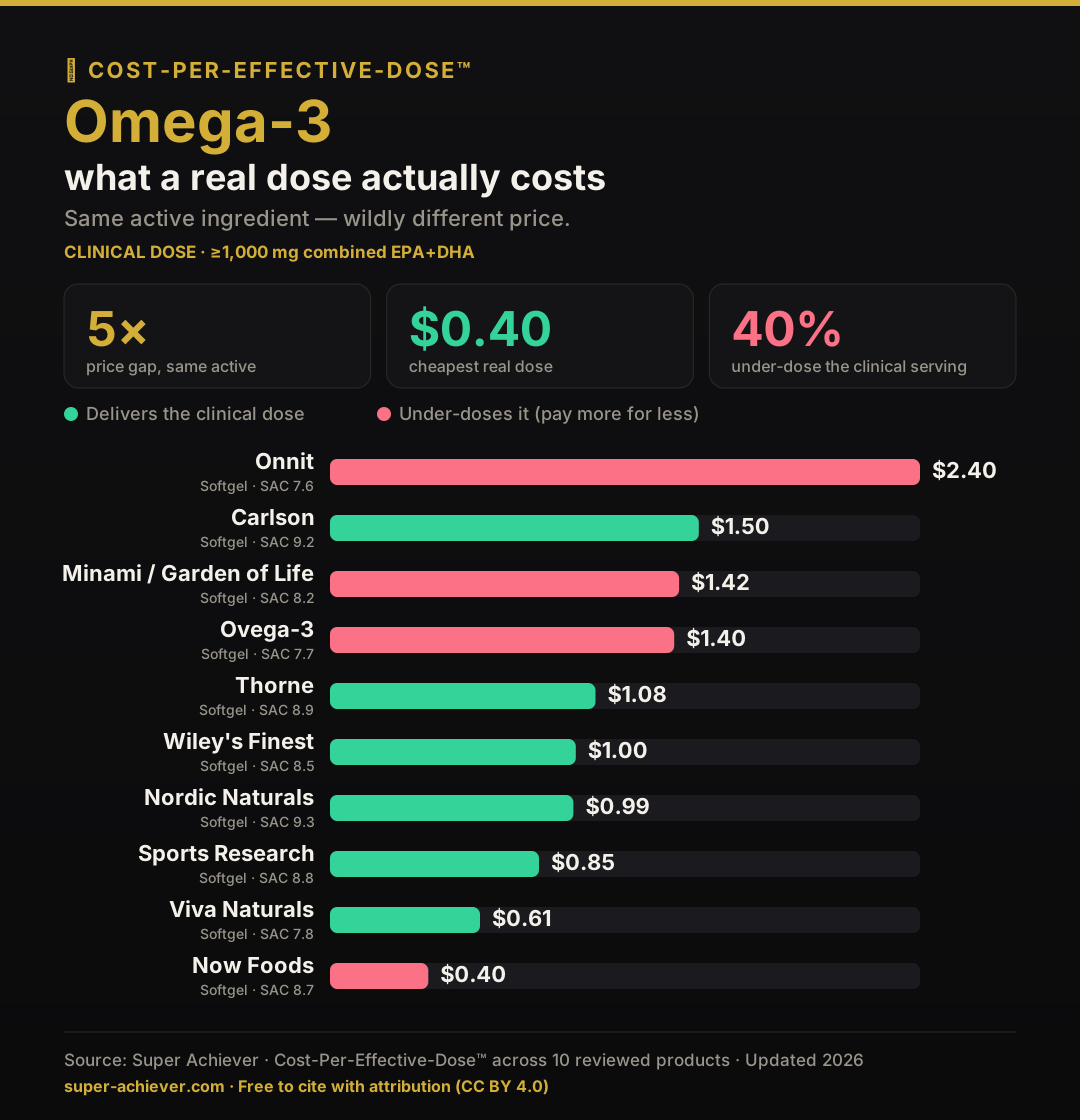
| # | Product | SAC Product Score™ | TXI™ | CPED™ | |
|---|---|---|---|---|---|
| 1 | Nordic Naturals Ultimate Omega 1280 mgSoftgel | 9.0 | 50 | $0.99 | |
| 2 | Carlson Elite EPA 1600 mgSoftgel | 8.9 | 50 | $1.50 | |
| 3 | Sports Research Triple Strength Omega-3 1250 mgSoftgel | 8.8 | 50 | $0.85 | Under-dosed |
| 4 | Thorne Super EPA ProSoftgel | 8.7 | 70 | $1.08 | Most transparent |
| 5 | Now Foods Ultra Omega-3 SoftgelsSoftgel | 8.6 | 0 | $0.40 | Under-dosed |
| 6 | Ovega-3 Algal Oil Vegan Omega-3Softgel | 8.5 | 0 | $1.40 | Under-dosed |
| 7 | Viva Naturals Triple-Strength Omega-3 Fish OilSoftgel | 8.4 | 20 | $0.61 | |
| 8 | Wiley's Finest Wild Alaskan Fish Oil 1000 mgSoftgel | 8.3 | 20 | $1.00 | |
| 9 | Micro Ingredients Triple Strength Omega-3 Fish OilSoftgel | 7.9 | 20 | $0.20 | Best value |
| 10 | Garden of Life Minami Supercritical Platinum Omega-3Softgel | 7.7 | 30 | $1.42 | Under-dosed |
| 11 | NatureBell Vegan Omega-3 Algae OilSoftgel | 7.4 | 0 | $1.00 | Under-dosed |
| 12 | Onnit Krill Oil 1000 mgSoftgel | 7.1 | 0 | $5.25 | Under-dosed |
| 13 | Nutricost Krill Oil 1000 mg (Superba2)Softgel | 6.9 | 0 | $3.87 | Under-dosed |
Methodology. SAC Product Score™ blends our editorial rating (RCT quality, dose, safety, value) 50/50 with community ratings. Transparency Index™ (0-100) = third-party certification (0-50) + public batch COA (0-30) + dose honesty (0-20). Cost-Per-Effective-Dose™ is the real price of one clinical dose, not one marketed "serving". Free to cite with attribution to Super Achiever.

Nordic Naturals Ultimate Omega 1280 mg
What is Omega-3?
Omega-3 fatty acids are a family of polyunsaturated fats your body cannot synthesise from scratch — they have to come from diet or supplementation. The category has three players that matter: ALA (alpha-linolenic acid, found in flax + chia + walnuts), EPA (eicosapentaenoic acid, found in fatty fish), and DHA (docosahexaenoic acid, found in fatty fish + algae). ALA is the plant-source precursor; the body converts it to EPA + DHA at painfully low efficiency (~5% to EPA, <0.5% to DHA). For all the endpoints the trial literature actually measures — cardiovascular, cognitive, mood, anti-inflammatory — what matters is EPA and DHA directly, not the ALA precursor.
The complication is FORM and SOURCE. Most fish oil on the shelf is in the ethyl ester (EE) form — a synthetic concentration step that bonds the fatty acid to an ethanol molecule. EE is cheap to produce and stable, but absorption is 30-50% lower vs the natural triglyceride (TG) or re-esterified triglyceride (rTG) forms that your body actually recognises. "Fish oil" without a form spec is mostly ethyl ester; "triglyceride form omega-3, third-party tested for oxidation" is the supplement category the cardiovascular trials anchor on.
Source matters too. Krill oil delivers EPA + DHA bound to phospholipids (better absorption per mg, but at several times the cost per gram of EPA+DHA) and a small dose of astaxanthin. Algae oil is the vegan-friendly source — direct DHA + EPA from the same micro-algae that fish eat to accumulate it. Algae is the cleanest form (zero heavy metal load), commands a premium price (~$40-60/month for clinical dose), and is the right choice for anyone avoiding marine sources. Standard fish oil from anchovies, sardines, mackerel is the volume play — IFOS-certified brands deliver 2-3 g combined EPA+DHA per dollar that algae and krill cannot match.
How it works
Omega-3's primary mechanism is membrane incorporation. EPA and DHA replace omega-6 arachidonic acid in cell membrane phospholipids over 4-12 weeks of supplementation — measurable as the "Omega-3 Index" (RBC EPA+DHA as % of total fatty acids). A target index of 8%+ is associated with the lowest cardiovascular event rates in Harris's epidemiological work; the modern Western average is 4-5%. Closing that gap with 1-2 g EPA+DHA/day is the foundational mechanism behind every downstream effect.
The second mechanism is resolvin and protectin generation. When EPA and DHA are mobilised from the membrane during inflammation, they're enzymatically converted into a family of specialised pro-resolving mediators (SPMs) — resolvins from EPA, protectins from DHA — that actively turn OFF inflammation rather than just blocking it. This is mechanistically different from how NSAIDs work (which block prostaglandin synthesis upstream); SPMs accelerate the body's natural inflammation-resolution program. Serhan's work at Harvard mapped this pathway over 20+ years and it's the cleanest explanation for omega-3's anti-inflammatory effects without immunosuppression.
The cardiovascular effect operates through multiple parallel levers: triglyceride reduction (10-30% at 2-4 g/day, the strongest and most-replicated effect, Mozaffarian 2008), modest blood pressure reduction (2-5 mmHg systolic at 3 g/day), reduced platelet aggregation, and the membrane-incorporation effect on arrhythmia resistance. The REDUCE-IT trial (Bhatt 2019) used 4 g/day of icosapent ethyl (pure EPA) and produced a 25% reduction in major cardiovascular events in statin-treated high-risk adults — the strongest CV outcome evidence in the omega-3 literature, and the trial that anchored EPA's elevated regulatory status (FDA-approved as Vascepa).
The cognitive + mood effects are modest but real. DHA is the dominant fatty acid in brain membranes (especially synaptic membranes); supplementation supports membrane fluidity and BDNF expression. Yurko-Mauro 2010 showed measurable verbal memory improvements at 900 mg DHA/day in older adults over 24 weeks. Sublette 2011's depression meta-analysis pooled 15 RCTs and found EPA-dominant formulations (EPA:DHA ratio >2:1) effective for unipolar depression — DHA-dominant formulations were not. The ADHD signal (Bloch 2011 meta-analysis) is modest but consistent across 10+ trials, particularly at EPA-dominant ratios.
At-a-glance facts
- Active compounds
- EPA + DHA (long-chain marine omega-3 fatty acids)
- Typical dose
- 1-3 g/day combined EPA+DHA · 4 g/day for triglyceride or REDUCE-IT-style cardiovascular protocols
- Best form
- Triglyceride (TG) or re-esterified triglyceride (rTG) — ~30-50% better absorption than ethyl ester (EE)
- Time to felt effect
- Omega-3 Index rising: weeks 4-8 · Triglyceride drop: weeks 6-12 · Mood/cognition: weeks 8-16
- Source ranking
- Algae (cleanest, vegan, premium price) ~ Krill (phospholipid-bound, premium) > Fish (best $/gram, IFOS-certified)
- Certifications
- IFOS (International Fish Oil Standards), Friend of the Sea, GOED — verify TOTOX <26 and heavy-metal limits
- Cost range (US)
- $15-40 / month for IFOS fish oil at clinical dose · $40-60 for algae · $35-55 for krill
- Stack synergy
- Vitamin D (anti-inflammatory pairing), Magnesium (HRV + cardiovascular), CoQ10 (post-MI protocols)
Evidence: 100+ placebo-controlled human RCTs across cardiovascular, metabolic, mood, and cognitive endpoints. The REDUCE-IT trial (Bhatt 2019, PMID 30415628) produced a 25% reduction in major cardiovascular events at 4 g/day icosapent ethyl — the strongest non-statin CV outcome evidence in the supplement category. Triglyceride reduction (10-30% at 2-4 g/day) is the most-replicated effect; mood and cognition signals are smaller but consistent across meta-analyses (Sublette 2011, Bloch 2011, Yurko-Mauro 2010). Among non-prescription levers for cardiovascular risk and Omega-3 Index correction, fish oil has the strongest evidence base in the entire supplement category.
Who it's for — and who it isn't
- Anyone eating fatty fish less than 2-3 servings/week — the population where the Omega-3 Index gap is largest and the supplementation effect is most measurable
- Adults with elevated triglycerides (>150 mg/dL) — the strongest endpoint in the omega-3 trial record; 2-4 g/day combined EPA+DHA drops TGs 10-30%
- Post-MI or high cardiovascular risk patients (REDUCE-IT-style profile) — Vascepa-grade icosapent ethyl at 4 g/day has FDA-approval-tier evidence for event reduction
- Adults dealing with low-grade chronic inflammation, autoimmune flares, or joint stiffness — the resolvin pathway is the mechanism here
- Anyone managing unipolar depression or ADHD as a complement to standard care — EPA-dominant formulations (EPA:DHA >2:1) have the strongest mood evidence
- Adults 50+ wanting cognitive preservation — DHA-dominant formulations show modest verbal memory and processing speed benefits over 6-12 months
- Anyone already eating 3+ servings/week of fatty fish (salmon, sardines, mackerel, anchovies) — your Omega-3 Index is likely already at target and incremental supplementation effects are negligible
- Patients on warfarin, apixaban, or other anticoagulants without clinician supervision — the additive antiplatelet effect raises bleeding risk, especially above 3 g/day
- Anyone with documented fish or shellfish allergy — use algae-source DHA+EPA instead
- Buyers attracted to cheap, undated, no-certification fish oil — oxidised omega-3 (TOTOX >26) is mechanistically pro-inflammatory, the opposite of the intended effect
Week-by-week, what happens
- Days 1-7No felt effect for most users. Some report mild GI changes (fishy burps from low-quality EE formulations) — switch to TG form if persistent. Membrane incorporation begins but is far from target.
- Week 2-4Subtle skin improvements in some responders (less dry, more even tone). Joint stiffness reductions begin in users starting from inflammatory baseline. Omega-3 Index moving but still below 8% target.
- Week 4-8Omega-3 Index reaches near-target levels (5-7%) at 2 g/day clinical dose. Triglyceride drops become detectable on bloodwork. Resolvin pathway fully active — inflammatory markers (hs-CRP) trending down in elevated-baseline subjects.
- Week 8-16Mood and cognition signals emerge if responsive — EPA-dominant formulations show depression scale improvements (PHQ-9, HAM-D) at this window. DHA-dominant cognition trials peak around week 16-24. Cardiovascular outcomes (event reduction) require 1-3 years to materialise statistically.
- Month 6+Steady-state Omega-3 Index at or above 8% (the cardiovascular-protective threshold from Harris's epidemiological work). Continue indefinitely at maintenance dose — no tolerance or down-regulation documented. Re-test Omega-3 Index annually to confirm.
Safety & contraindications
- Generally well-tolerated at 1-4 g/day combined EPA+DHA. Most reported side effects are mild GI (fishy burps, loose stools) — usually a sign of oxidised oil or ethyl ester form. Switch to TG form and store refrigerated.
- Bleeding risk increases above 3 g/day, especially when combined with warfarin, apixaban, clopidogrel, aspirin, or NSAIDs. The additive antiplatelet effect is mechanism-real. Inform your clinician before starting if you take anticoagulants; some protocols pause omega-3 1-2 weeks pre-surgery.
- Oxidation is the #1 quality risk. Omega-3 oils oxidise rapidly when exposed to heat, light, or air — oxidised oil (TOTOX score >26) is mechanistically pro-inflammatory, the opposite of the intended effect. Buy from brands publishing TOTOX, store refrigerated, and trust the smell test: rancid fish oil smells aggressively fishy, fresh fish oil barely does.
- Mercury, PCB, and dioxin contamination risk is real in cheap, uncertified fish oil. Buy IFOS-certified (5-star rating) or Friend-of-the-Sea brands that publish heavy-metal testing. Small-fish sources (anchovies, sardines) accumulate less mercury than large-fish sources (tuna, swordfish, shark oils).
- Fish + shellfish allergies extend to fish oil for some sensitised individuals — use algae-source DHA+EPA as the safe alternative.
- Pregnancy: DHA (specifically) is required for fetal brain development; the conventional recommendation is 200-300 mg DHA/day during pregnancy + lactation. Avoid mercury-heavy sources; algae-sourced DHA is the cleanest pregnancy option.
All articles on Omega-3
Best Algae Oil Omega-3
The 9 best vegan algae-oil omega-3 supplements ranked on actual DHA + EPA milligrams per serving, form and absorption (triglyceride vs ethyl ester), purity and oxidation testing, value and sustainability — with the honest catch that many algae oils are DHA-dominant and low in EPA, so the milligrams matter.
Read →Best Krill Oil Supplements
Krill oil ranked by actual EPA/DHA per serving, phospholipid + astaxanthin content, and cost-per-mg — with the honest verdict on when fish oil is the smarter buy.
Read →Best Omega-3 Fish Oil
Omega-3s ranked by EPA+DHA dose, triglyceride vs ethyl-ester form, IFOS/TOTOX oxidation testing, sustainability — the bottles that survive the rancidity audit.
Read →Best Omega-3 for Inflammation
EPA-dominant omega-3 drives the anti-inflammatory effect via resolvins; 2-4 g/day for joint/inflammation endpoints. Ranked by EPA dose, triglyceride form, and IFOS/TOTOX freshness (rancid oil is pro-inflammatory).
Read →Best Omega-3 for Women
Eleven omega-3 products re-scored for women — prenatal/preconception DHA (Coletta 2010), postpartum + perimenopausal mood (Freeman 2006), post-menopause heart, skin/hair/nails, swallowability, and a higher-ranked vegan algal pick.
Read →Best Omega-3 Supplements
The definitive omega-3 buying guide — the single best pick for each need across fish oil, algae, and krill. Total EPA+DHA per serving, triglyceride form, and IFOS freshness separate the real ones from under-dosed ethyl ester.
Read →Bronson Antarctic Krill Oil 1000 mg Review
Lowest price per gram of EPA+DHA in krill ($2.50), but EPA/DHA declared as esters and no source certification. 7.4/10.
Read →Calgee Vegan Omega 3 Review
The cheapest verified omega-3 per milligram — Eurofins-tested, 120-count value.
Read →Carlson Elite EPA 1600 mg Review
EPA/DHA-per-dollar review — purity, oxidation, and how the bottle compares against the trial-dose ranges from the literature.
Read →Future Kind Vegan Omega-3 (500 mg DHA + EPA) Review
A clean, ethical, DHA-forward algae oil — lighter on EPA than the top picks.
Read →Garden of Life Minami Algae Omega-3 Vegan DHA Review
The highest pure DHA here, verifiably fresh — but DHA-only, not a complete omega-3.
Read →Garden of Life Minami Supercritical Platinum Omega-3 Review
EPA/DHA-per-dollar review — purity, oxidation, and how the bottle compares against the trial-dose ranges from the literature.
Read →iwi life Omega-3 Whole-Body (AlmegaPL) Review
The most sustainable algae omega-3 — but you're buying the story, not a stated dose.
Read →Jarrow Formulas Krill Oil 1200 mg Review
A respected science-forward formulator's krill that leads on no single axis. 7.2/10.
Read →Kori Krill Oil 1200 mg Review
A dedicated krill brand with 250 mg EPA+DHA in one softgel at $2.66/g — no named certifier. 8.4/10.
Read →MaryRuth Organics Omega-3 Liquid Drops (400 mg DHA) Review
The best no-pill omega-3 here — effectively DHA-only, and it oxidizes faster once opened.
Read →MegaRed Advanced Antarctic Krill Oil 500 mg Review
The most-advertised drugstore krill — brand trust and availability, but the lowest EPA+DHA per softgel. 6.8/10.
Read →Micro Ingredients Triple Strength Omega-3 Review
2,100 mg EPA+DHA per 3 softgels at low cost per gram, but no oil form printed and no IFOS listing. 7.9/10.
Read →NatureBell Vegan Omega-3 Algae Oil Review
DHA-only vegan algae oil: 500 mg DHA and 100 mg DPA per 3 softgels, no EPA line, testing claim unverified. 7.4/10.
Read →Nordic Naturals Algae Omega Review
Best vegan omega-3 audit — algae EPA+DHA per softgel, cost per mg vs fish oil, and who should choose plant-based over marine.
Read →Nordic Naturals Algae Omega Review
The balanced, verified vegan omega-3 that actually carries EPA — the right default.
Read →Nordic Naturals Prenatal DHA Review
Prenatal DHA audit — DHA/EPA per serving, the rTG form, third-party testing, and an honest pregnancy verdict (it's not a full prenatal multi — talk to your OB).
Read →Nordic Naturals Ultimate Omega 1280 mg Review
EPA/DHA-per-dollar review — purity, oxidation, and how the bottle compares against the trial-dose ranges from the literature.
Read →NOW Foods Neptune Krill Oil 500 mg Review
Original NKO krill from a trusted value brand with in-house QC — a lower per-cap dose. 8.3/10.
Read →Now Foods Ultra Omega-3 Softgels Review
EPA/DHA-per-dollar review — purity, oxidation, and how the bottle compares against the trial-dose ranges from the literature.
Read →Nutricost Krill Oil 1000 mg Review
Superba2 krill oil with 175 mg EPA+DHA per two softgels, sold as a 3-bottle pack, testing claim unverified. 6.9/10.
Read →Onnit Krill Oil 1000 mg Review
EPA/DHA-per-dollar review — purity, oxidation, and how the bottle compares against the trial-dose ranges from the literature.
Read →Ovega-3 Vegan Algae Omega-3 Review
The budget gateway — a genuinely balanced vegan omega-3 at the lowest price here.
Read →Sports Research Antarctic Krill Oil 1000 mg Review
Superba2 Antarctic krill, MSC-certified and IKOS-listed, 196 mg EPA+DHA in one softgel at $2.63/g. 8.5/10.
Read →Sports Research Triple Strength Omega-3 1250 mg Review
EPA/DHA-per-dollar review — purity, oxidation, and how the bottle compares against the trial-dose ranges from the literature.
Read →Sports Research Vegan Omega-3 (Carrageenan Free) Review
Both omega-3s in one clean, carrageenan-free capsule — the convenience pick.
Read →Testa Omega-3 DHA + EPA Review
Maximum DHA that still carries EPA — rTG form, low contaminants, two-month bottle.
Read →Thorne Super EPA Pro Review
EPA/DHA-per-dollar review — purity, oxidation, and how the bottle compares against the trial-dose ranges from the literature.
Read →Viva Naturals Antarctic Krill Oil 1250 mg Review
Highest phospholipid + astaxanthin on the list, IKOS-listed — but $4.11 per gram of EPA+DHA. 8.1/10.
Read →Viva Naturals Triple Strength Omega-3 Review
EPA/DHA-per-dollar review — purity, oxidation, and how the bottle compares against the trial-dose ranges from the literature.
Read →Wiley's Finest Wild Alaskan Fish Oil 1000 mg Review
EPA/DHA-per-dollar review — purity, oxidation, and how the bottle compares against the trial-dose ranges from the literature.
Read →FAQ
Triglyceride form vs ethyl ester — does it really matter?
Yes — and this is the single biggest quality lever after IFOS certification. Ethyl ester (EE) is the cheaper, synthetic form most generic fish oil ships in; absorption studies (Dyerberg 2010, Schuchardt 2011) show 30-50% lower bioavailability vs the natural triglyceride (TG) or re-esterified triglyceride (rTG) forms. EE also oxidises faster and produces the classic 'fishy burp' that drives most users to quit. If a fish oil bottle doesn't say 'triglyceride form' or 'rTG' on the panel, assume it's ethyl ester. Pay the extra $5-10/month for the TG form — it's the difference between a clinical dose at 2 g/day vs needing 3 g/day to hit the same blood level.
Krill vs fish vs algae — which one should I buy?
Default to IFOS-certified fish oil in triglyceride form for the best $/gram of clinical-dose EPA+DHA. Krill oil delivers omega-3 bound to phospholipids (modestly better absorption per mg) plus a small dose of astaxanthin (antioxidant) — but krill caps typically contain only ~95-250 mg combined EPA+DHA each, so reaching clinical dose costs several times more per month. Algae oil is the right choice for vegetarians/vegans, anyone with fish allergies, and people prioritising the cleanest possible source (zero ocean-pollutant exposure) — it costs ~$40-60/month for the clinical dose but the EPA+DHA is identical to fish-source. Krill is mostly status-tier marketing; fish (IFOS, TG form) is the volume play that the trial literature actually used.
Do I need EPA-dominant or DHA-dominant — and what's the ratio?
Depends on the goal. For mood and depression, the meta-analyses (Sublette 2011, Martins 2009) converge on EPA-dominant formulations with EPA:DHA ratio of 2:1 or higher — EPA appears to drive the antidepressant effect, DHA does not. For cardiovascular outcomes (REDUCE-IT) and triglyceride reduction, pure EPA (icosapent ethyl) is the prescription-grade formulation. For cognitive preservation and pregnancy, DHA-dominant formulations are appropriate — DHA is the brain's structural fatty acid. For general health / Omega-3 Index correction, a balanced formulation (EPA:DHA 1:1 or 1.5:1) is the default. Most general-purpose IFOS fish oils land at ~EPA:DHA 1.5:1, which is fine for baseline supplementation; only optimise the ratio if you're solving a specific endpoint.
What dose for cardiovascular vs mood vs general health?
General health / Omega-3 Index correction: 1-2 g/day combined EPA+DHA, indefinitely. Triglyceride reduction or cardiovascular risk: 2-4 g/day combined, sustained — the REDUCE-IT protocol used 4 g/day of pure EPA (icosapent ethyl). Mood / depression complement: 1-2 g/day with EPA:DHA ratio of 2:1 or higher. ADHD: 1-2 g/day, EPA-dominant, in children + adolescents per Bloch 2011. Cognitive preservation (older adults): 900 mg-2 g/day DHA-dominant, per Yurko-Mauro 2010. Note that 'fish oil 1000 mg' on the bottle label typically delivers only ~300-400 mg combined EPA+DHA — read the actives panel, not the gross oil weight.
Why does IFOS certification matter?
IFOS (International Fish Oil Standards) is the gold-standard third-party testing program for omega-3 supplements. Every batch tested gets a public, batch-specific report showing: actual EPA + DHA content (vs label claim), TOTOX oxidation score, heavy metals (mercury, lead, cadmium, arsenic), PCB and dioxin levels, and a 1-5 star overall rating. The unregulated fish oil market is full of products that fail one or more of these — under-dosed actives, oxidised oil (TOTOX >26), or measurable heavy metals. Looking up your bottle's batch on the IFOS site (ifosprogram.com) takes 30 seconds and is the single best quality assurance step. Friend of the Sea and GOED are decent alternatives but less granular.
Is the fishy burp a sign my fish oil is bad?
Often, yes. Fresh, high-quality omega-3 in triglyceride form barely smells fishy — there should be at most a faint marine note. Aggressive fishy taste or persistent fishy burps after dosing are usually a sign of one of three things: (1) ethyl ester form rather than triglyceride, (2) oxidised oil from poor storage or aged stock, or (3) excessive single-dose taken on an empty stomach. Fix: switch to TG-form IFOS-certified product, store the bottle refrigerated after opening, take with a meal containing fat, and split larger doses across two meals. If a fresh bottle smells aggressively rancid on day one, return it — that batch failed quality control.
Should I worry about mercury and other heavy metals?
Less than you'd think — IF you buy certified product. The ocean-pollutant load in fish increases up the food chain: small fish (anchovies, sardines, mackerel) accumulate far less mercury, PCBs, and dioxins than large predators (tuna, swordfish, shark). Reputable fish oil brands source from small-fish stocks and run molecular distillation that removes residual heavy metals to well below FDA limits. IFOS-certified product publishes the exact heavy-metal content per batch — typically 10-100x below regulatory thresholds. Algae oil sidesteps the question entirely (zero marine pollutant exposure). The mercury concern is real for cheap, uncertified, unsourced fish oil; it's effectively eliminated by buying IFOS-certified product.
Can I get enough omega-3 from food alone?
Yes, if you genuinely eat fatty fish 2-3 servings per week, every week — salmon, sardines, mackerel, anchovies, herring deliver 1-2 g of combined EPA+DHA per serving. Reality check: most adults in the US, UK, and Europe average less than 1 serving per week, which lands the Omega-3 Index in the 4-5% range vs the 8%+ target associated with the lowest cardiovascular event rates. Plant sources (flax, chia, walnuts) are NOT a substitute — they deliver ALA, which converts to EPA at ~5% efficiency and to DHA at <0.5%. If you can sustain 3+ weekly servings of fatty fish, skip the supplement. If you can't (most people), the 1-2 g/day capsule is the simplest fix.
Sources & further reading
- Bhatt 2019 (REDUCE-IT)Cardiovascular Risk Reduction with Icosapent Ethyl for Hypertriglyceridemia
4 g/day of icosapent ethyl (pure EPA, prescription-grade) over 4.9 years reduced major adverse cardiovascular events by 25% vs placebo in statin-treated high-risk adults. The strongest non-statin cardiovascular outcome evidence in the omega-3 literature — anchored Vascepa's FDA approval.
- Mozaffarian 2011Omega-3 fatty acids and cardiovascular disease: effects on risk factors, molecular pathways, and clinical events
Comprehensive review of omega-3 effects on cardiovascular risk factors and outcomes: triglyceride reduction of 10-33% at 2-4 g/day, modest blood pressure reduction, anti-arrhythmic effects, and reduced platelet aggregation. The reference review for the cardiovascular mechanism map.
- Sublette 2011 (depression meta)Meta-analysis of the effects of eicosapentaenoic acid (EPA) in clinical trials in depression
Meta-analysis of 15 RCTs found EPA-dominant omega-3 formulations (EPA:DHA ratio ≥60%) significantly improved depression scores vs placebo; DHA-dominant formulations did not. The reference meta-analysis establishing EPA-dominance as the formulation requirement for the mood endpoint.
- Yurko-Mauro 2010Beneficial effects of docosahexaenoic acid on cognition in age-related cognitive decline
900 mg/day of DHA over 24 weeks improved verbal recognition memory in older adults with age-related cognitive decline vs placebo. The cornerstone DHA-cognition trial used to anchor omega-3 supplementation in older-adult cognitive preservation protocols.
- Bloch 2011 (ADHD meta)Omega-3 fatty acid supplementation for the treatment of children with attention-deficit/hyperactivity disorder symptomatology: systematic review and meta-analysis
Meta-analysis of 10 RCTs in children with ADHD found a modest but statistically significant benefit of omega-3 supplementation on ADHD symptoms, with EPA-dominant formulations showing the largest effect. The reference meta-analysis for the omega-3 + ADHD evidence base.
- Harris 2008 (Omega-3 Index)The omega-3 index as a risk factor for coronary heart disease
Defined the Omega-3 Index (RBC EPA+DHA as % of total fatty acids) as a cardiovascular risk biomarker. Index of 8%+ associated with the lowest CHD mortality; modern Western average is 4-5%. The biomarker most fish-oil intervention trials now use as their primary surrogate endpoint.
- Serhan 2014 (resolvins)Pro-resolving lipid mediators are leads for resolution physiology
Mapped the resolvin and protectin biosynthesis pathway from EPA + DHA, demonstrating that omega-3 fatty acids drive active resolution of inflammation through specialised pro-resolving mediators (SPMs) — mechanistically distinct from NSAIDs. The molecular mechanism behind omega-3's anti-inflammatory effect.
- Dyerberg 2010 (TG vs EE bioavailability)Bioavailability of marine n-3 fatty acid formulations
Direct head-to-head bioavailability comparison of omega-3 forms: triglyceride (TG) and re-esterified triglyceride (rTG) forms showed 30-50% higher EPA+DHA incorporation into blood lipids than ethyl ester (EE) form at identical dose. The trial that anchored the 'buy TG form' recommendation across the supplement category.