
MaryRuth Organics Omega-3 Liquid Drops (400 mg DHA) Review
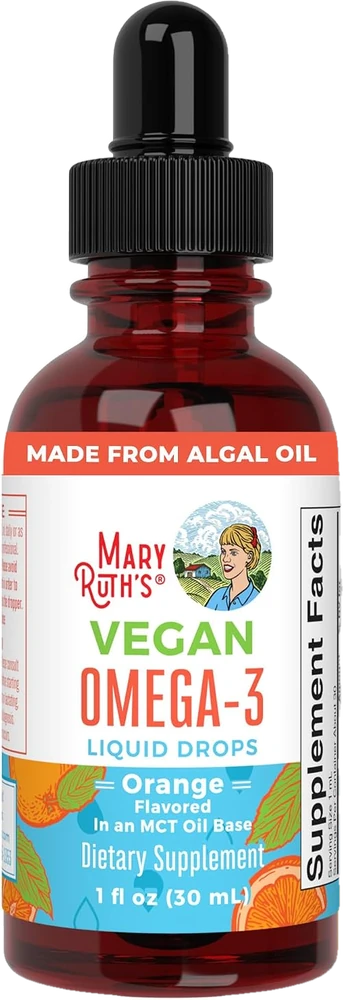 #10 of 10 · Best liquid✓ Label verified · Supplement Facts read Sep 7, 2026
Real retailer photo, cut out. Label unedited.
Consider it. The best no-pill omega-3 here — effectively DHA-only, and it oxidizes faster once opened. MaryRuth's drops are a true liquid omega-3 — orange-flavored, family-friendly, solvent-free, with flexible dropper dosing — at 400 mg DHA per serving, the best no-pill option in the lineup.
$25
Why It Scores 7.0 — And The Label Line Behind Each Number
DHA + EPA dose per serving
30% of scoreA solid 400 mg of DHA per serving — a genuinely useful DHA dose for brain and eye support. But this axis rewards balanced DHA+EPA, and MaryRuth carries only ~4 mg EPA, a trace, so it's effectively DHA-ONLY. As a DHA source it's fine; as a complete omega-3 it leaves the EPA side essentially uncovered, which holds the score to the middle of the range.
- DHA per serving
- 400 mg DHA
- EPA per serving
- 4 mg EPA (trace — effectively DHA-only)
Form & absorption
25% of scoreThe product's reason to exist: a true liquid with no softgel shell, so it's the no-pill option for anyone who can't swallow capsules, with flexible dropper dosing and a solvent-free extraction. Oil taken as a liquid with food is well absorbed. Scored well for the format win, with the honest asterisk that an opened liquid is exposed to air and oxidizes faster than a sealed capsule — a handling trade-off, not an absorption one.
- Form
- Liquid drops; wild-strain microalgae; solvent-free, chemical-free extraction
- Carrageenan-free
- N/A — liquid (no softgel shell); orange-flavored
- Handling
- Refrigerate after opening; use within the stated window (liquid oxidizes faster than capsules)
Purity & testing
20% of scoreThe weak axis, and credited only on what's stated: vegan, solvent-free, and sourced from sustainably grown, ocean-friendly microalgae — real sourcing/processing points, but NO third-party seal is stated, so we don't credit independent verification of potency or oxidation. That gap matters more for a liquid, which oxidizes faster: picks that publish testing — Calgee's per-batch Eurofins, Garden of Life's verified-low-oxidation — are clearly stronger here.
- Testing
- Vegan, solvent-free, ocean-friendly algae (no third-party seal stated)
Value per mg omega-3
15% of scoreReasonable for the format. At roughly $25 for a 1 oz bottle with flexible dropper dosing, it's a fair price for the only no-pill option in the lineup, and the format flexibility has real value for households dosing kids. It's not the cheapest DHA per milligram — capsules generally win on raw cost-efficiency and stability — but for buyers who need a liquid, the value is defensible.
- Servings / size
- 1 oz liquid; flexible dropper dosing
- Price
- ≈$25 for 1 oz
Sustainability & label honesty
10% of scoreGood on both. The sourcing is a genuine plus — solvent-free, chemical-free extraction from sustainably grown, ocean-friendly wild-strain microalgae. And the label is honest where it counts: it discloses the ~4 mg EPA rather than hiding behind the 400 mg DHA headline, so a buyer can see it's DHA-led. That candor about the trace EPA is exactly what this axis rewards.
Label verified. Every figure read from the Supplement Facts photo, Sep 7, 2026.
Marketing Claims Vs. Reality
400 mg of DHA per serving in a great-tasting liquid.
The 400 mg DHA per serving is the stated label figure and a genuinely useful DHA dose, and the orange-flavored liquid format is the product's core feature for no-pill users. Accurate as a DHA-and-format claim — provided it's understood as DHA-led, not a complete EPA+DHA omega-3.
Solvent-free, ocean-friendly, sustainably grown algae omega-3.
Consistent with the listing's stated solvent-free, chemical-free extraction from sustainably grown wild-strain microalgae. Genuine sourcing and processing strengths — though note these are sourcing claims, not the same as independent third-party verification of potency or freshness, which the listing doesn't state.
A complete vegan omega-3 for the whole family.
Not supported as a complete-omega-3 claim: the product carries only ~4 mg EPA, so it's effectively DHA-only and doesn't deliver the balanced DHA+EPA profile 'complete omega-3' implies. It's a fine family-friendly DHA source, but a buyer wanting EPA should not read it as covering that side — it doesn't.
What Our Test Actually Found
The best — and only — no-pill option in the lineup
MaryRuth's whole value proposition is the format: a true liquid omega-3 for the substantial group of people who can't or won't swallow softgels, children very much included. Orange-flavored, dosed from a dropper for flexibility, and solvent-free, it's the pick that makes omega-3 possible for a household where pills are a non-starter. On that specific job it has no real competition in this ranking — every other pick is a capsule.
Effectively DHA-only — a fine DHA source, not a complete omega-3
The label is honest, and so is our flag: at ~4 mg EPA per serving, this is effectively a DHA-only product. The 400 mg DHA is a solid, useful dose for brain and eye support, but the EPA side — the cardiovascular and anti-inflammatory half of omega-3 — is essentially absent. For a no-pill DHA source it's excellent; for anyone replacing fish oil for the full omega-3 picture, it needs to be paired with an EPA-inclusive product or swapped for a balanced pick.
Liquid means freshness is on you — refrigerate and use it in time
This is the handling caveat that separates a liquid from a capsule. A softgel seals each dose from air; an opened liquid bottle meets oxygen every time you use it, so it oxidizes faster, and oxidized omega-3 is mechanistically counterproductive. The fix is straightforward — refrigerate after opening, cap it tightly, and use it within the window MaryRuth states rather than letting it sit for months. Treat it like a fresh food oil. Buyers who won't manage that are better off with a more stable capsule.
No stated third-party testing — the trust gap to weigh
The listing states vegan, solvent-free, ocean-friendly sourcing, but no third-party seal — so we don't credit independent verification of potency or oxidation. That gap matters more for a liquid, precisely because freshness is the format's weak point. If documented testing is important to you, Calgee (#2) is Eurofins-verified every batch and Garden of Life Minami (#8) states a verified-low-oxidation credential. MaryRuth asks you to trust the sourcing story; the right buyer, who needs a liquid, will accept that trade.
Full analysis: all pros & cons (7), buy if / skip if
- True liquid format — no softgels to swallow; orange-flavored and family-friendly
- Solid 400 mg DHA per serving for brain and eye support, with flexible dropper dosing
- Solvent-free extraction from sustainably grown, ocean-friendly microalgae
- Honest label — discloses the ~4 mg EPA rather than hiding behind the DHA headline
- Effectively DHA-ONLY — just ~4 mg EPA, so it's not a complete omega-3 on its own
- Liquid oxidizes faster than capsules once opened — needs refrigeration and timely use
- No third-party seal stated — independent potency/oxidation testing isn't documented
- You or someone you buy for can't or won't swallow softgels — including kids
- You mainly want DHA and a no-pill, orange-flavored liquid format
- You want flexible dropper dosing and solvent-free, ocean-friendly sourcing
- You'll refrigerate it after opening and use it within the stated window
- You want a complete omega-3 — this is effectively DHA-ONLY at ~4 mg EPA
- You want documented third-party testing — none is stated on the listing
- You want maximum shelf stability and lowest cost per mg — a capsule is more stable and often cheaper
MaryRuth's drops are a true liquid omega-3 — orange-flavored, family-friendly, solvent-free, with flexible dropper dosing — at 400 mg DHA per serving, the best no-pill option in the lineup. Two honest flags: it's effectively DHA-ONLY (~4 mg EPA, a trace), so it's not a complete omega-3 on its own, and liquid oxidizes faster than capsules, so it needs refrigeration and timely use. No third-party seal is stated. Consider it if you or a child can't swallow softgels and mainly want DHA; buy a capsule pick if you want balanced EPA or documented testing.
MaryRuth's Omega-3 Liquid Drops are the no-pill answer in this ranking: an orange-flavored vegan algae omega-3 in liquid form for anyone — children included — who can't or won't swallow softgels, at a solid 400 mg DHA per serving, with solvent-free, ocean-friendly sourcing and the flexible dropper dosing a liquid allows. For the buyer who needs a format without a pill, this is the best pick here, full stop. It sits at #9 because of two honest flags, neither of which is a quality problem so much as a fit-and-handling one. First, it's effectively DHA-ONLY — just ~4 mg of EPA per serving, a trace — so it's a fine DHA source but not a complete omega-3; if you want the EPA side, pair it with an EPA-inclusive product or buy higher up the list. Second, liquid omega-3 oxidizes faster than capsules once opened, so it needs refrigeration and should be used within the stated window. No third-party seal is stated, either, so we don't credit one. For no-pill DHA, it's the right tool; for balanced, tested omega-3, it isn't.
The best no-pill omega-3 here — for DHA, not balanced EPA, and handle it like a fresh oil.

MaryRuth's Omega-3 Liquid Drops are the easy recommendation to one specific reader: anyone who can't or won't swallow softgels — including kids — and mainly wants DHA. As a true liquid, orange-flavored, solvent-free and ocean-friendly, with flexible dropper dosing and a solid 400 mg DHA per serving, it's the best no-pill option in this ranking, and on that job nothing else here competes. The label is also honest about what it is, which we credit. It lands at #9 because of fit and handling, not quality. It's effectively DHA-ONLY at ~4 mg EPA, so it's a fine DHA source but not a complete omega-3 — pair it with an EPA-inclusive product or buy higher up the list if you want EPA. Being a liquid, it oxidizes faster than capsules once opened, so it needs refrigeration and timely use. And no third-party seal is stated, so we don't credit one. The call is clean: buy MaryRuth if a no-pill format is what you need and DHA is the goal; buy Nordic Naturals (#5) for the best balance, or Calgee (#2) for verified, tested value, if you want balanced EPA and documented testing in a capsule.
If This Doesn’t Fit — Try These
 01
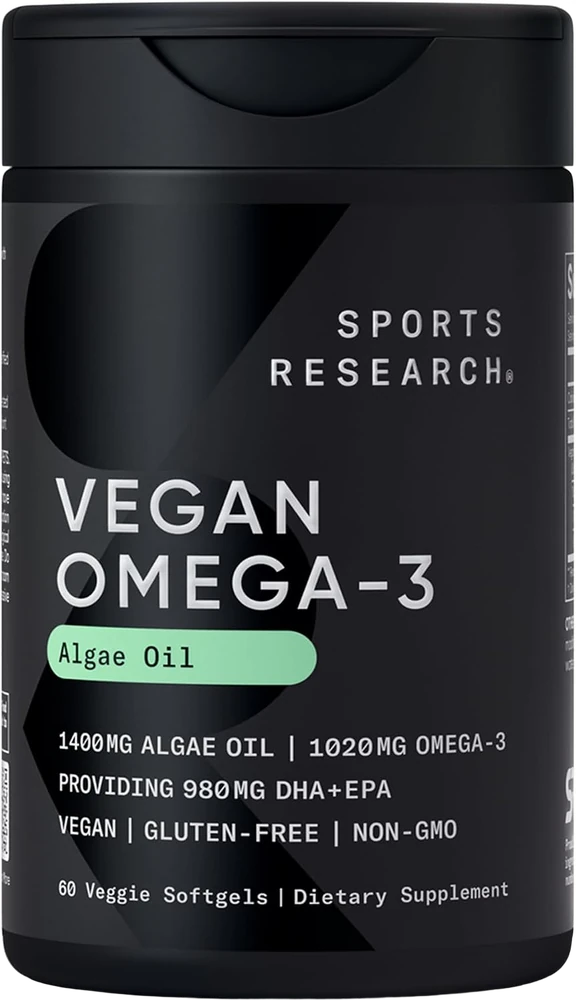
Sports Research
Sports Research is the cleanest one-a-day here: a single carrageenan-free tapioca softgel delivers 300 mg DHA plus 150 mg EPA, so you get both with no second pill and no carrageenan — the allergen-conscious detail most algae brands skip.
 03
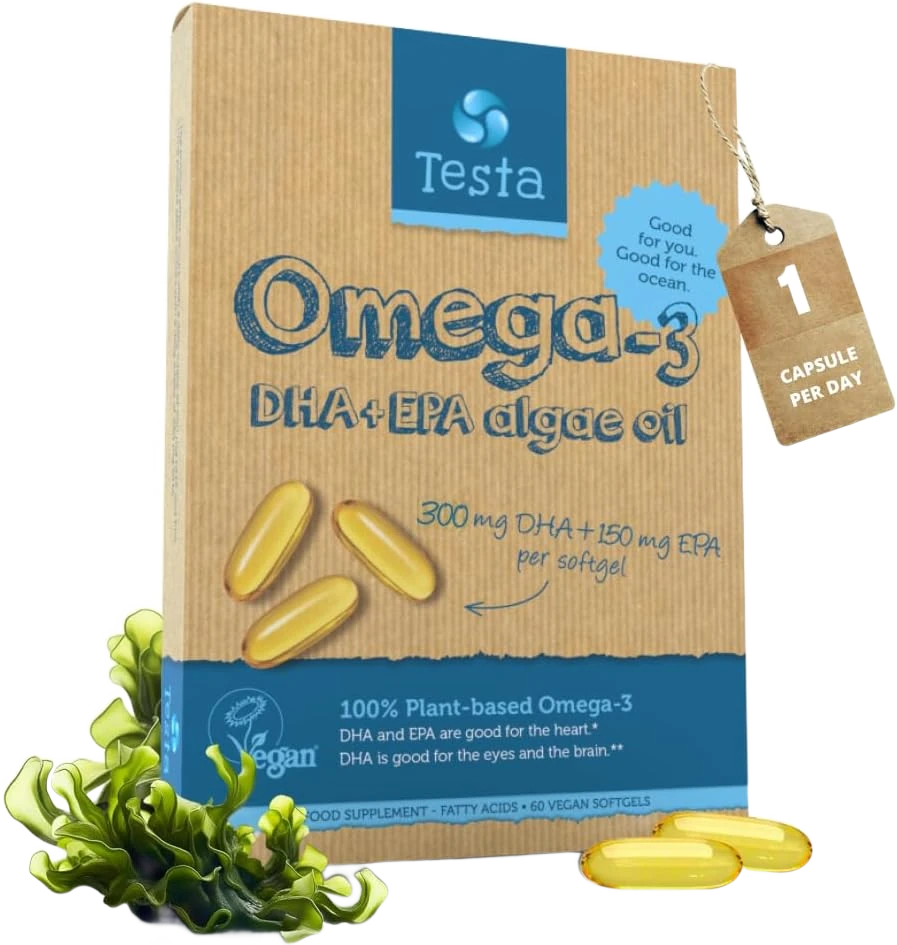
Testa
Testa is for the buyer who wants maximum DHA without sacrificing EPA entirely: 325 mg DHA — the highest here among picks that still carry EPA — plus 150 mg EPA, in absorbable re-esterified triglyceride form, and a 60-count bottle is a genuine two-month supply.
 09
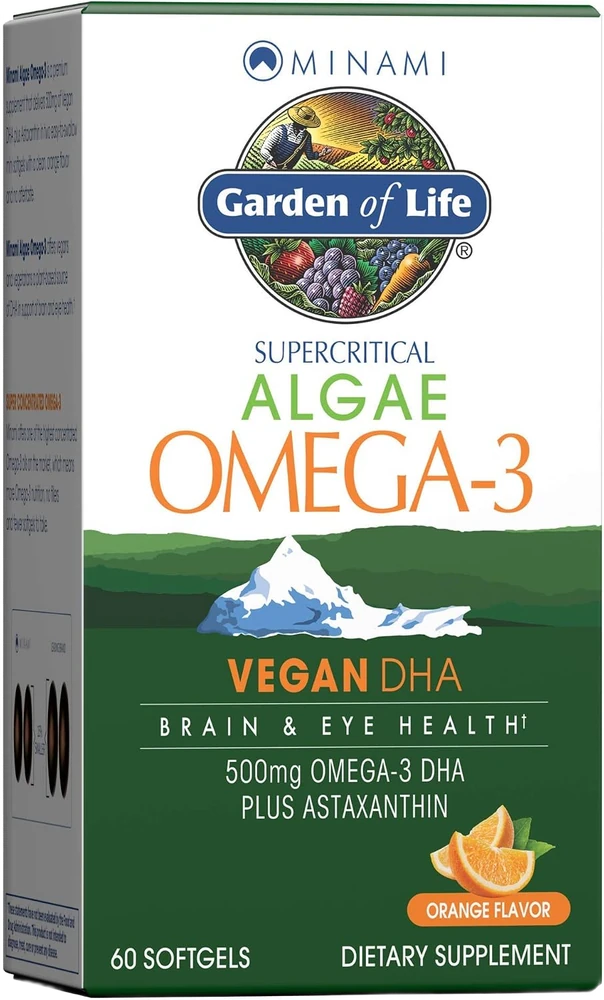
Garden of Life Minami
Garden of Life's Minami line is the DHA maximizer: 500 mg of pure DHA per serving — the most here — with added astaxanthin, hexane-free Supercritical CO2 extraction, and verified-low oxidation, which is a genuinely strong purity credential.
Quick Answers
Does MaryRuth's omega-3 contain EPA?
Only a trace — about 4 mg per serving — so it's effectively DHA-ONLY. The product delivers a solid 400 mg of DHA, but the EPA is negligible. That makes it a fine DHA source (DHA is the omega-3 most studied for brain and eye support) but not a complete omega-3: it doesn't meaningfully cover the EPA side, which is the form most associated with cardiovascular and anti-inflammatory effects. If DHA is what you want — for yourself or a child who won't swallow pills — MaryRuth works. If you want balanced omega-3, pair it with an EPA-inclusive product or buy a balanced pick: Nordic Naturals (#5) at 390/195, or Sports Research (#1) and Calgee (#2) at 300/150.
Why choose a liquid over softgels?
Because some people can't or won't swallow capsules — and for them a liquid isn't a downgrade, it's the only format that works. MaryRuth's drops are the no-pill answer: orange-flavored, family-friendly, and dosed straight from the dropper, which also makes the dose flexible (useful for kids or anyone titrating). It's the best liquid algae omega-3 in our lineup for exactly that reason. The trade-off is freshness, covered in the next question. If you have no problem with softgels, a capsule is more stable and usually cheaper per milligram — but if pills are a non-starter, this is your pick.
Does liquid omega-3 go bad faster than capsules?
Yes, and it's the most important practical caveat. A softgel seals each dose away from air; an opened liquid bottle exposes the oil to oxygen every time you use it, so liquid omega-3 oxidizes (goes rancid) faster than capsules. That matters because oxidized omega-3 is mechanistically counterproductive — oxidation products are pro-inflammatory, the opposite of what you're taking it for. The practical fix is simple: refrigerate the bottle after opening, keep the cap closed tightly, and use it within the window MaryRuth states on the label rather than letting it linger for months. Treat it like a fresh food oil, not a shelf-stable pill, and you'll be fine.
Is MaryRuth's omega-3 third-party tested?
No third-party seal is stated on the listing, and we won't imply one it doesn't carry. What the listing does state is that the product is vegan, solvent-free, and made from sustainably grown, ocean-friendly microalgae — genuine sourcing and processing points, but not the same as an independent lab verifying potency or oxidation. That's the main reason it scores lower on the purity-and-testing axis than picks that do publish testing: Calgee (#2) is third-party verified every batch by Eurofins, and Garden of Life Minami (#8) states a verified-low-oxidation credential. If documented third-party testing is a hard requirement for you, those are the stronger choices.
Who should buy MaryRuth's omega-3 drops?
Anyone who needs a no-pill omega-3 — children, older adults, or anyone with difficulty swallowing softgels — and who mainly wants DHA. On those terms it's the best pick here: a true liquid, orange-flavored, solvent-free and ocean-friendly, with flexible dropper dosing. Skip it as a standalone if you want balanced EPA (it's effectively DHA-only) or if you want documented third-party testing (none is stated). And whoever buys it should refrigerate it after opening and use it within the stated window, because liquid omega-3 oxidizes faster than capsules.
Sources & Further Reading
3 peer-reviewed sources, each linked to PubMed
- [1] Stonehouse 2013 PMID 23515006 — DHA supplementation improved both memory and reaction time in healthy young adults: a randomized controlled trial. In 176 healthy young adults with low dietary DHA, 1.16 g/day DHA for 6 months improved episodic memory and working-memory reaction time versus placebo. Randomized evidence that DHA specifically supports cognition — the rationale for a DHA-led product like MaryRuth's, even with EPA only a trace.
- [2] Arterburn 2008 PMID 18589030 — Algal-oil capsules and cooked salmon: nutritionally equivalent sources of docosahexaenoic acid. In 32 healthy adults, 600 mg/day DHA from algal-oil capsules raised plasma and red-cell DHA as much as DHA from cooked salmon. Confirms algal-oil DHA is nutritionally equivalent to fish DHA — so MaryRuth's 400 mg algal DHA is a legitimate, well-absorbed DHA source regardless of format.
- [3] Bailey 2025 PMID 41096614 — Comparative Bioavailability of DHA and EPA from Microalgal and Fish Oil in Adults. A randomized, double-blind, placebo-controlled trial in 74 adults found microalgal oil non-inferior to fish oil for DHA and EPA bioavailability. Establishes microalgal oil as a reliable omega-3 source — and, by measuring both fatty acids, highlights what a DHA-only product like MaryRuth's leaves out on the EPA side.
Affiliate disclosure: every Amazon link uses our Associates tag (superachieverclub-20). We earn a small commission at no cost to you; it funds independent reviews. We never accept payment to change a ranking.