
Nordic Naturals Algae Omega Review
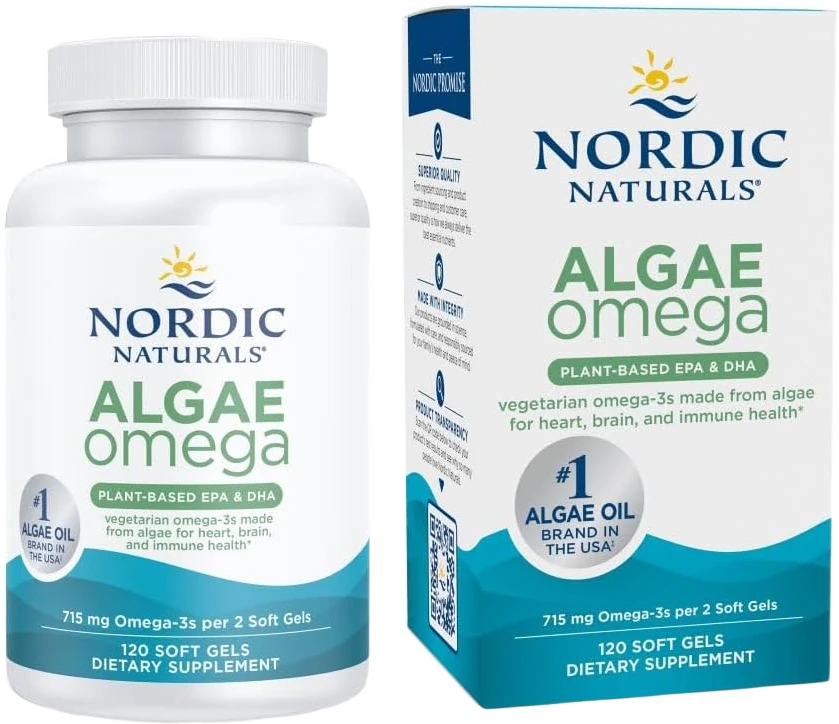 #4 of 10 · Balanced 2:1 DHA:EPA✓ Label verified · Supplement Facts read Oct 18, 2026
Real retailer photo, cut out. Label unedited.
Buy it. A balanced 2:1 DHA:EPA algae oil from a well-known brand, with carrageenan and sorbitol in the shell. Algae Omega prints 390 mg DHA plus 195 mg EPA per 2-softgel serving in triglyceride form, with every batch stated to be third-party tested for environmental toxins.
$43.34$0.72 / serving (about $1.23 per gram of DHA+EPA)
Why It Scores 8.5 — And The Label Line Behind Each Number
DHA + EPA dose per serving
30% of score390 mg DHA plus 195 mg EPA per 2-softgel serving (585 mg, 715 mg total omega-3s) — a 2:1 DHA:EPA ratio with meaningful EPA, where most algae oils run DHA-dominant or DHA-only. Read straight off the panel. Second-highest dose on the list after Sports Research's 700/280, and above Calgee's and Testa's 300/150.
- DHA per serving
- 390 mg DHA per 2 soft gels
- EPA per serving
- 195 mg EPA per 2 soft gels
- Total omega-3
- 715 mg total omega-3s per 2-soft-gel serving (includes EPA, DHA and other omega-3s in triglyceride form)
Form & absorption
25% of scoreThe panel footnote says the omega-3s are in triglyceride form (TG), the better-absorbed family (Dyerberg 2010). Held below the leaders because the softgel shell lists carrageenan and sorbitol (modified cornstarch, glycerin, carrageenan, sorbitol, water, carob color), where Sports Research's and Calgee's lists have neither.
- Form
- Marine algal oil (Schizochytrium sp.); omega-3s listed in triglyceride form (TG)
- Carrageenan status
- Not carrageenan-free — the soft gel shell lists modified cornstarch, glycerin, carrageenan, sorbitol, water and carob color
Purity & testing
20% of scoreThe box says every batch is tested by a third-party certified lab for environmental toxins including heavy metals, and carries 3rd Party Purity Tested, igen Non-GMO Tested and Certified Vegan badges. No lab or certifier is named in the images and we did not check them at the certifier, so this is credited as stated, below the picks that name a lab or a testing mark.
- Label check
- Supplement Facts panel read from listing gallery frame 2 (box back) on Oct 18, 2026
- Testing
- Box text: every batch tested by a third-party certified lab for environmental toxins including heavy metals; badges 3rd Party Purity Tested, igen Non-GMO Tested, Certified Vegan — no lab or certifier named, not checked at the certifiers
Value per mg omega-3
15% of score$43.34 for the 120-count bottle (Amazon buy box, 2026-10-18) is 60 servings, roughly $0.72 a serving and about $1.23 per gram of DHA+EPA — above Sports Research (about $0.92) and Testa (about $1.11) per gram, below Calgee (about $1.69 at its last listed price; not currently in stock). Scored 8.0 on the list's per-gram scale (7.8 before, when the dose could not be verified; 8.2 on the earlier $40 price).
- Count
- 120 softgels = 60 servings (2-month supply)
- Price
- $43.34 (Amazon buy box, 2026-10-18; 120-count): about $0.72 / serving; about $1.23 per gram of DHA+EPA
Sustainability & label honesty
10% of scoreFish-free marine-microalgae sourcing is the category's core appeal, with US-produced algae oil and US manufacturing printed on the panel. The panel prints the exact DHA, EPA and total omega-3 amounts, which restores the transparency credit withdrawn on Sep 7, 2026 when no legible panel existed in the gallery.
Label verified. Every figure read from the Supplement Facts photo, Oct 18, 2026.
Marketing Claims Vs. Reality
A complete vegan omega-3 with both EPA and DHA.
The Supplement Facts panel prints 390 mg DHA and 195 mg EPA per 2-soft-gel serving (715 mg total omega-3s) — a balanced split with meaningful EPA, not the DHA-only profile common to algae oils.
Triglyceride form for better absorption.
The panel footnote says the omega-3s are in triglyceride form (TG), and Dyerberg 2010 (PMID 20638827) found triglyceride/rTG forms substantially more bioavailable than ethyl ester. The form is printed; the absorption benefit rests on that study.
Third-party tested and certified vegan.
The box text says every batch is tested by a third-party certified lab for environmental toxins including heavy metals, and the badges read 3rd Party Purity Tested, igen Non-GMO Tested and Certified Vegan. No lab or certifier is named in the images, and we did not check them at the certifier.
What Our Test Actually Found
Correction: the panel is readable — the earlier 'label not verifiable' finding is withdrawn
On Sep 7, 2026 this ASIN's gallery had only two front-facing renders, so we marked the label not verifiable and lowered the score from 9.4 to 7.6. The gallery now has eleven images, and frame 2 is the box back with a legible Supplement Facts panel: serving size 2 soft gels, 60 servings per container, 715 mg total omega-3s, 195 mg EPA, 390 mg DHA, triglyceride form, and a shell that lists carrageenan and sorbitol. We re-read it on Oct 18, 2026 and re-scored the dose, form, purity, value and honesty criteria on that basis.
The rare algae oil that carries real EPA
The defining feature is the printed 390/195 DHA:EPA split. Most algae oils are DHA-dominant or outright DHA-only because the Schizochytrium microalgae make plenty of DHA and little EPA, so a listing can read '500 mg omega-3' and deliver almost no EPA. Algae Omega prints a meaningful 195 mg EPA, which makes it a credible fish-oil replacement on the side of omega-3 that algae products most often skip.
Triglyceride form and stated batch testing
Two quality signals are on the box: the omega-3s are listed in triglyceride form (the better-absorbed family per Dyerberg 2010), and every batch is stated to be tested by a third-party certified lab for environmental toxins. Freshness matters because oxidized omega-3 is the real category risk, but no lab or certificate is named, so treat the testing as the brand's claim.
Two softgels, a premium price and a carrageenan shell
The full dose is two softgels, so the 120-count bottle is a 60-day supply, and about $1.23 per gram of DHA+EPA sits above Sports Research and Testa. The shell lists carrageenan and sorbitol. If a one-softgel serving, a lower price or a carrageenan-free shell matters more to you, those picks address them.
Full analysis: all pros & cons (8), buy if / skip if
- 195 mg EPA alongside 390 mg DHA per serving, both printed on the panel — a complete omega-3, not DHA-only
- Omega-3s listed in triglyceride form (TG) on the panel
- Box text states every batch is third-party tested for environmental toxins; certified-vegan and non-GMO-tested badges
- A well-known omega-3 brand with algae oil produced and manufactured in the US
- Premium price: about $0.72 a serving, about $1.23 per gram of DHA+EPA
- Full dose is 2 softgels, so a 120-count bottle is a 60-day supply
- The softgel shell lists carrageenan and sorbitol
- No lab or certifier is named for the testing and certification badges
- You want a fish-oil replacement with real EPA (195 mg) printed on the panel, not a DHA-only algae oil
- You value triglyceride-form omega-3 and stated batch testing from an established brand
- You want a certified-vegan badge and non-GMO testing badge on the box
- You're fine taking two softgels per serving for a balanced dose
- You want the lowest sticker price — Testa (#3) is about $0.50 a serving
- You want a carrageenan-free shell — this panel's shell lists carrageenan and sorbitol
- You want the highest dose — Sports Research (#1) prints 700 mg DHA and 280 mg EPA per serving
Algae Omega prints 390 mg DHA plus 195 mg EPA per 2-softgel serving in triglyceride form, with every batch stated to be third-party tested for environmental toxins. It's the rare algae oil with a 2:1 split and real EPA. The catches: premium price (about $1.23 per gram of DHA+EPA), a two-softgel dose (a 120-count bottle lasts 60 days), a shell that lists carrageenan and sorbitol, and no named lab or certifier. Buy it if you want a balanced EPA+DHA oil from an established brand.
Algae Omega prints 390 mg DHA and 195 mg EPA per 2-softgel serving (715 mg total omega-3s) on its Supplement Facts panel — a 2:1 balance most algae oils don't match — with the omega-3s listed in triglyceride form, from a well-known omega-3 brand. In a market where the front of the label routinely hides a near-zero EPA number, the EPA here is printed. The trade-offs are honest. It's premium-priced at about $0.72 a serving (about $1.23 per gram of DHA+EPA) at $43.34 on Amazon on 2026-10-18, the full dose is two softgels so a 120-count bottle is a 60-day supply, and the softgel shell lists carrageenan and sorbitol. The box says every batch is third-party tested but names no lab. We read the full panel in the listing gallery on Oct 18, 2026; the earlier version of this review could not, because the gallery then had only two images.
A balanced 2:1 vegan omega-3 from a well-known brand, with a carrageenan shell and a premium price.

Algae Omega prints the one thing the category routinely fails at: real EPA. 390 mg DHA plus 195 mg EPA per 2-softgel serving, omega-3s listed in triglyceride form, with every batch stated to be third-party tested for toxins, from a well-known omega-3 brand. That makes it a complete fish-oil replacement, not a DHA-only product dressed up as one. The caveats are practical. It is premium-priced per gram of DHA+EPA, the dose is two softgels (120 softgels for 60 days), the shell lists carrageenan and sorbitol, and no lab or certifier is named for the testing and vegan badges. If you want the highest dose, Sports Research (#1) prints 700 mg DHA and 280 mg EPA; if you want a lower sticker, Testa (#3) is about $0.50 a serving; if you want a carrageenan-free shell, Sports Research and Calgee (#2) list none on their panels. For a balanced EPA+DHA oil from an established brand, this is a solid pick.
If This Doesn’t Fit — Try These
 01
Sports Research
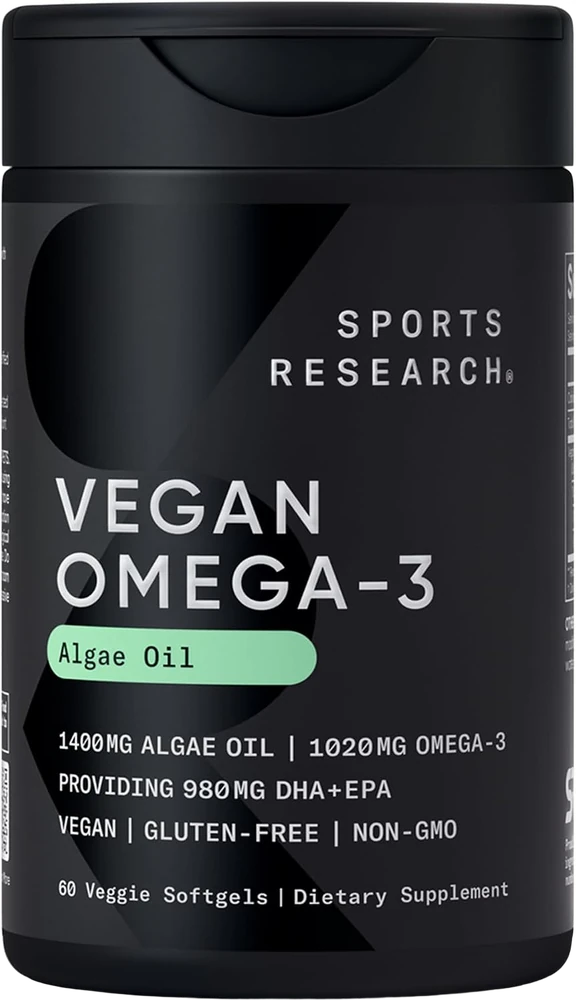
Sports Research prints the highest dose on this list: 700 mg DHA plus 280 mg EPA per 2-softgel serving, 980 mg combined, listed as triglyceride-form omega-3 on the panel.
 02
Calgee
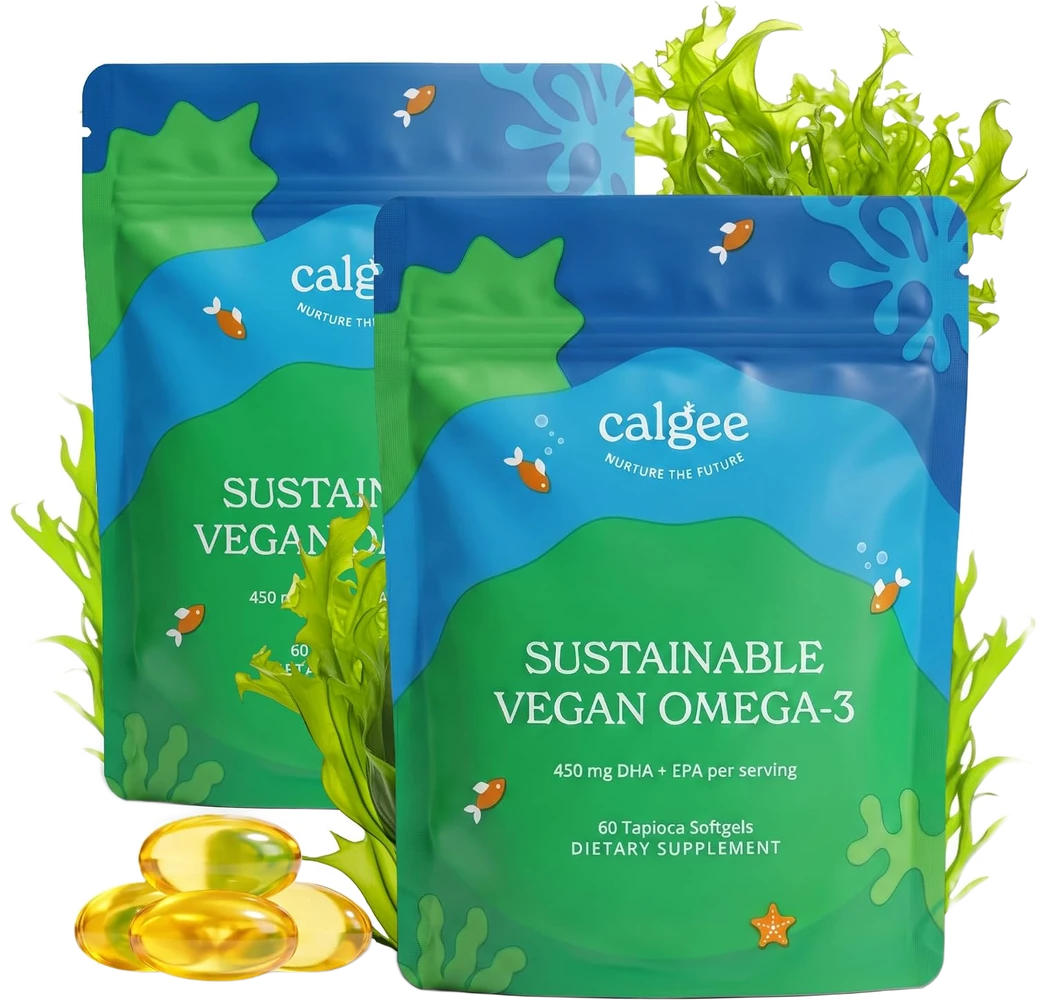
Calgee puts 300 mg DHA and 150 mg EPA in each 2-softgel serving (450 mg), in a tapioca shell with no carrageenan and no sorbitol, and prints that Eurofins tests every batch.
 05
Ovega-3
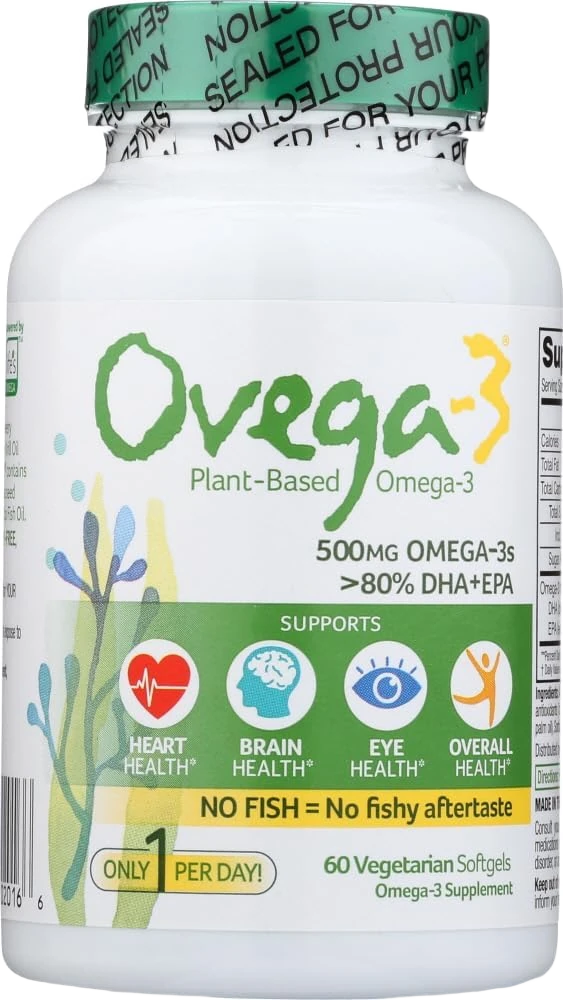
Ovega-3 is the easy entry point: a long-established, drugstore-familiar vegan omega-3 that still pairs real EPA with DHA (270/135) in one once-daily softgel, at the lowest sticker here when last listed (out of stock on Amazon, 2026-10-18).
Quick Answers
Does Algae Omega actually contain EPA, or is it DHA-only like a lot of algae oils?
It contains real EPA. The Supplement Facts panel on the box prints, per serving of 2 soft gels, 715 mg total omega-3s, of which 195 mg is EPA and 390 mg is DHA — a 2:1 DHA:EPA split. The microalgae most brands culture make abundant DHA but little EPA, so many competitors leave EPA near zero while advertising a big omega-3 number. Here the EPA is printed. If you want the EPA side of omega-3 from a vegan source, this is one of the algae oils that prints it in meaningful amounts; Sports Research prints more (280 mg per serving).
How many softgels is a serving, and how long does a bottle last?
The panel prints a serving size of 2 soft gels and 60 servings per container, so the 120-softgel bottle is a two-month supply at one serving a day. Do this math before you compare prices: at $43.34 (Amazon buy box, 2026-10-18) that is roughly $0.72 a serving, or about $1.23 per gram of DHA+EPA. The trade-off is that you swallow two softgels instead of one.
Is the triglyceride form worth caring about?
On absorption, yes. Marine omega-3 comes in a few molecular forms, and re-esterified triglyceride (rTG) and natural triglyceride forms are absorbed better than the cheaper ethyl ester form — Dyerberg 2010 (PMID 20638827) measured triglyceride/rTG as substantially more bioavailable than ethyl ester. The panel footnote says the total omega-3s (EPA, DHA and other omega-3s) are in triglyceride form (TG), and the box says triglyceride-form omega-3s are better absorbed than ethyl ester. It's not a magic multiplier, but between two otherwise similar oils the triglyceride one is the better-absorbed choice on paper.
Is it third-party tested, vegan and free of carrageenan?
The box text says every batch of Nordic Naturals algae oil is tested by a third-party certified lab for environmental toxins, including heavy metals, and the box carries 3rd Party Purity Tested, igen Non-GMO Tested and Certified Vegan badges. No lab or certifier is named in the images, and we did not check any of them at the certifier. The softgel shell is vegan (modified cornstarch, glycerin, carrageenan, sorbitol, water, carob color) but it is not carrageenan-free: the ingredient list prints both carrageenan and sorbitol. If a carrageenan-free shell is a hard requirement, Sports Research's and Calgee's panels list none.
Why pick this over a cheaper algae oil?
Because it prints a complete, balanced dose from a well-known brand: 390 mg DHA and 195 mg EPA per serving in triglyceride form, with batch testing stated on the box. You're paying a premium per serving versus Testa (about $0.50 a serving), and the shell lists carrageenan and sorbitol. If you want a lower sticker, Testa prints 300/150 in one softgel for about $0.50 a serving; if you want the highest dose, Sports Research prints 700 mg DHA and 280 mg EPA per serving at a lower cost per gram.
Sources & Further Reading
3 peer-reviewed sources, each linked to PubMed
- [1] Arterburn 2008 PMID 18589030 — Algal-oil capsules and cooked salmon: nutritionally equivalent sources of docosahexaenoic acid. In 32 healthy adults, 600 mg/day DHA from algal-oil capsules raised plasma phospholipid and erythrocyte DHA to the same extent as DHA from cooked salmon. The foundation for treating algae oil as a genuine fish-oil alternative for DHA.
- [2] Bailey 2025 PMID 41096614 — Comparative Bioavailability of DHA and EPA from Microalgal and Fish Oil in Adults. A randomized, double-blind, placebo-controlled trial in 74 adults found microalgal-oil DHA and EPA bioavailability in plasma phospholipids was non-inferior to fish oil at 6 and 14 weeks — confirming algae oil delivers both omega-3s, not just DHA.
- [3] Dyerberg 2010 PMID 20638827 — Bioavailability of marine n-3 fatty acid formulations. In 72 volunteers, re-esterified triglyceride form gave the highest omega-3 bioavailability (124% vs fish-oil triglyceride) while ethyl ester was lowest (~73%). The basis for ranking triglyceride algae oils above ethyl-ester forms.
Affiliate disclosure: every Amazon link uses our Associates tag (superachieverclub-20). We earn a small commission at no cost to you; it funds independent reviews. We never accept payment to change a ranking.