
Viva Naturals Antarctic Krill Oil 1250 mg Review
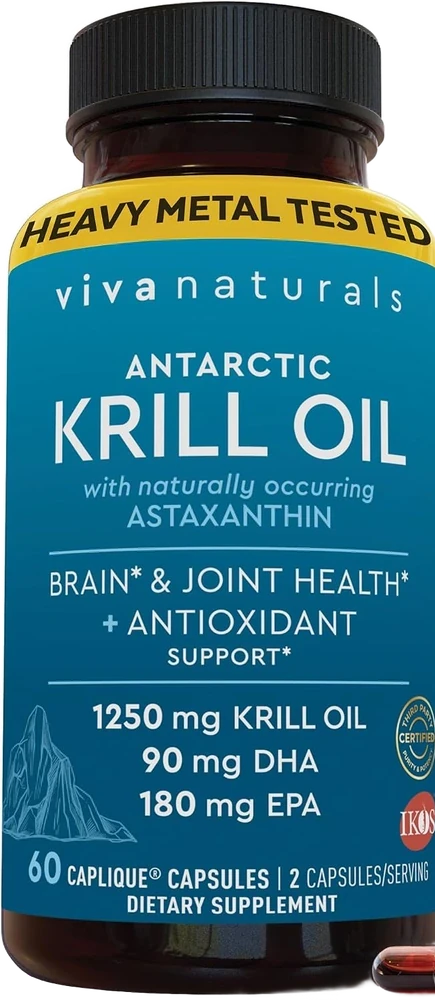 #4 of 9 · Best phospholipid + astaxanthin load✓ Label verified · Supplement Facts read Oct 18, 2026
Real retailer photo, cut out. Label unedited.
Consider it. The phospholipid-and-astaxanthin maximiser of the krill tier. Highest phospholipid load (575 mg) and most astaxanthin (1.6 mg) per serving on our krill list, plus a solid 270 mg combined EPA+DHA and a Caplique capsule built to kill fishy burps, IKOS-listed — at about $1.11/serving.
$33.30 / 60 capsules (30 servings; iHerb offer, no Amazon buy box)~$1.11 / 2-capsule serving
Why It Scores 8.1 — And The Label Line Behind Each Number
EPA+DHA per serving + phospholipid %
30% of score270 mg combined EPA+DHA per 2-capsule serving (180 EPA / 90 DHA) plus the highest disclosed phospholipid load on our krill list — 575 mg/serving. Phospholipid delivery is krill's one real absorption edge, and Viva leads the tier on it. Absolute EPA+DHA is still modest vs a fish-oil capsule (500-900 mg), but among krill this is a strong, well-disclosed actives line.
- Active form
- Phospholipid-bound EPA + DHA (Antarctic krill oil) + esterified astaxanthin
- Per serving
- 1250 mg krill oil (2 Caplique caps) = 270 mg combined EPA+DHA (180 EPA / 90 DHA)
- Trial-dose alignment
- Lands the 250-500 mg/day general-wellness floor at 2 caps; the 1-2 g/day cardiovascular range needs 6-10 caps — impractical at krill pricing
Third-party + heavy-metal testing
25% of scoreIKOS-listed: Nutrasource's register shows Viva Naturals krill oil under IKOS, the krill counterpart of IFOS (checked October 18, 2026), and the panel image prints the IKOS seal. Antarctic krill bioconcentrates contaminants far less than large fish — krill sit at the lowest trophic level eating phytoplankton, so mercury and PCB exposure is naturally near-zero, and astaxanthin guards against oxidation. Same testing tier as Sports Research, the other IKOS-listed pick.
- Testing
- IKOS-listed (Nutrasource, checked October 18, 2026); IKOS seal on the label
- Manufacturer
- Viva Naturals — popular online value-and-wellness supplement brand
Sustainability + source
20% of scoreAntarctic-sourced krill, the same fishery managed under CCAMLR quotas (~1% of estimated biomass/year) that supplies the rest of the tier. Viva does not headline an MSC or Friend of the Sea certificate the way the Superba and NKO picks do, so it sits a notch below them on provenance transparency despite drawing from the same well-managed source.
- Source
- Antarctic krill (Euphausia superba), CCAMLR-managed fishery
Cost per gram of EPA+DHA
15% of scoreAbout $33.30 for 30 servings (iHerb's offer on Amazon; no buy box on October 18, 2026) = $1.11/serving, or $4.11/g of combined EPA+DHA — among the dearest on our krill list and well above Bronson ($2.50/g), Sports Research ($2.63/g) and Kori ($2.66/g). Genuinely fine for a phospholipid-and-astaxanthin-led krill, but if cost-per-mg of actives is the goal, this is not the axis Viva wins on, and fish oil is cheaper still.
- Bottle size
- 60 Caplique capsules · 30 servings (30 days at 2 caps/day)
- Price
- $33.30 / 30 servings = about $1.11 per 2-capsule serving ($4.11/g of EPA+DHA; iHerb offer on Amazon, no buy box, October 18, 2026)
Astaxanthin + burp tolerance
10% of scoreHighest astaxanthin on the entire krill list at 1.6 mg esterified per serving — more than four times NOW Neptune (360 mcg) and over 6× Jarrow (240 mcg). Combined with the Caplique liquid-capsule format and phospholipid-bound delivery, the oil resists oxidation and produces virtually no fishy repeat. This is the axis Viva most clearly leads.
- Astaxanthin
- 1.6 mg esterified per serving — highest on the list
- More Specs
- Phospholipids
- 575 mg per serving — highest disclosed load on the best-krill-oil list
- Format
- Caplique liquid-filled capsule, engineered to minimise fishy burps
Label verified. Every figure read from the Supplement Facts photo, Oct 18, 2026.
Marketing Claims Vs. Reality
Highest phospholipid load — superior absorption.
Viva does carry the highest disclosed phospholipid load on our krill list (575 mg/serving), and phospholipid delivery is a real, mechanistically-grounded absorption edge (Ramprasath 2013, Ulven 2011). But the practical advantage is modest (~10-20% per mg of EPA+DHA), not 'dramatically superior' — and it improves uptake of the 270 mg of actives present, it does not add actives. The leading-phospholipid claim is true; the 'superior absorption' framing is on the right side of the truth but easy to overread.
1.6 mg astaxanthin — powerful antioxidant.
Astaxanthin is a genuine carotenoid antioxidant and 1.6 mg is the most on our krill list — both true. But dedicated astaxanthin trials use 4-12 mg/day, so even the list-leading 1.6 mg is below the standalone-therapy threshold. It is a real best-in-tier oil-stability feature and a small antioxidant bonus, not a therapeutic astaxanthin dose. Accurate claim, but not a substitute for a dedicated astaxanthin supplement.
Caplique capsule — no fishy burps.
Krill oil's phospholipid-bound format plus astaxanthin's oxidation resistance genuinely produces far less marine-oil reflux than fish oil, and a sealed liquid capsule keeps the oil stable until the gut. The near-zero-burp profile is one of krill oil's most reliable, well-documented real-world advantages — true for Viva as for the category.
Antarctic-sourced — pure, sustainable krill.
Antarctic krill is harvested from a CCAMLR-managed fishery with conservative quotas and is one of the lowest-contaminant marine omega-3 sources (krill eat phytoplankton, so mercury/PCB bioconcentration is near-zero). The 'pure' part is well-supported. The 'sustainable' claim is true of the fishery in general but Viva does not headline an MSC or Friend of the Sea certificate the way some competitors do — so the sourcing is real, the third-party sustainability credential is not prominently disclosed.
Supports heart, brain, and joint health.
All three are real omega-3 effects backed by the broader EPA+DHA literature (Mozaffarian 2008 cardiovascular, Yurko-Mauro 2010 cognition, Serhan 2014 resolvin-driven anti-inflammatory). The framing is accurate in spirit, but at 270 mg EPA+DHA/serving you are at the general-wellness floor — reaching the clinically-studied cardiovascular range (1-2 g/day) would require 6-10 capsules. Standard marketing simplification, true at the mechanism level.
What Our Test Actually Found
Viva genuinely leads the krill tier on phospholipids and astaxanthin
On the two axes that are unique to krill — phospholipid load and astaxanthin content — Viva Naturals tops our entire eight-product list. 575 mg of phospholipids per serving is the highest disclosed figure here, and 1.6 mg of esterified astaxanthin is more than four times NOW Neptune's 360 mcg and over six times Jarrow's 240 mcg. If your reason for choosing krill at all is the phospholipid delivery and the astaxanthin — the actual structural arguments for the format — Viva is the most concentrated expression of that argument we found. That is a real, specific reason to pick this bottle over a cheaper krill.
The EPA+DHA dose is solid for krill, but still krill-light
At 270 mg combined EPA+DHA per serving (180 EPA / 90 DHA), Viva is on the stronger end of the krill tier — above Sports Research's 196 mg and roughly level with Kori — and the higher phospholipid load means that dose absorbs efficiently per milligram. But 'strong for krill' is still modest against fish oil: a single concentrated fish-oil capsule carries 500-900 mg of actives. Two Viva capsules cover the 250-500 mg/day general-wellness floor; chasing the 1-2 g/day cardiovascular range would mean 6-10 capsules a day, which is exactly where krill stops making economic sense. Read the serving as a tolerability-and-quality play, not a high-dose omega-3 source.
Cost lands mid-pack — you pay for the extras, not for more omega-3
At about $1.11/serving ($33.30 for 30 servings), Viva sits near the top of the krill list on price per gram — above Bronson, Sports Research, Kori and NOW Neptune. That works out to $4.11 per gram of combined EPA+DHA, several times fish oil's $0.40-1.00/g. The honest read: the premium over the value krill picks buys you the leading phospholipid and astaxanthin load, not additional actives. If those extras are why you are here, the math is defensible. If they are not, a value krill or a fish oil gives you more omega-3 per dollar.
The burp profile is the reliable day-one win
The single most dependable difference you will notice is the absence of fishy repeat. Krill's phospholipid-bound format plus astaxanthin's oxidation resistance — delivered here in a sealed Caplique capsule — means almost none of the marine-oil reflux that drives people off even premium fish oil. The measurable endpoints (a rising Omega-3 Index) take 8-12 weeks and you will not feel them; the tolerability advantage is immediate and is the practical reason krill buyers stick with the category. If you abandoned fish oil over the burps, this is the lever Viva pulls well.
Sustainability sourcing is real but the certificate isn't headlined
Viva draws from the same CCAMLR-managed Antarctic krill fishery as the rest of the tier — conservative quotas at roughly 1% of estimated biomass per year, one of the better-managed marine fisheries currently. What it does not prominently carry is a named MSC or Friend of the Sea certificate, the way the Superba (Sports Research) and NKO (NOW Neptune) picks do. The source is sound; the third-party sustainability credential is simply less transparent here. If MSC/FoS certification on the label is a hard requirement for you, the Superba or NKO picks document it more explicitly.
Full analysis: all pros & cons (10), buy if / skip if
- Highest phospholipid load on the krill list (575 mg/serving) — krill's one real absorption edge, maxed
- Highest astaxanthin on the list (1.6 mg) — best oil-stability + antioxidant bonus in the tier
- Solid 270 mg combined EPA+DHA per serving — strong for the krill category
- Caplique liquid-capsule format with a clean, near-zero fishy-burp profile
- IKOS-listed, with the seal on the label; Antarctic krill is naturally low-contaminant
- About $1.11/serving ($4.11/g EPA+DHA) — well above the value krill picks per gram of actives
- Full serving is 2 capsules, not a single once-a-day cap
- Astaxanthin leads the list but is still below standalone-trial doses (4-12 mg)
- No headline MSC / Friend of the Sea certificate like the Superba and NKO picks
- Shellfish allergen — disqualifier for shellfish-allergic users
- You chose krill specifically for phospholipid delivery + astaxanthin, not lowest $/g
- You want the highest astaxanthin (1.6 mg) and phospholipid (575 mg) load on the krill list
- Fishy burps made you quit fish oil — the Caplique + phospholipid format is near-burp-free
- You eat fish under 2-3×/week and want a clean, well-tolerated route to a higher Omega-3 Index
- You have a shellfish allergy — krill are crustaceans; use a vegan algal-oil omega-3 instead
- Cost per gram of EPA+DHA is your priority — Sports Research and Bronson are cheaper
- You need the 1-2 g/day cardiovascular range — that takes 6-10 krill caps; use fish oil for bulk actives
- You want a once-a-day single cap — Viva's full serving is 2 capsules (Kori is single-cap)
Highest phospholipid load (575 mg) and most astaxanthin (1.6 mg) per serving on our krill list, plus a solid 270 mg combined EPA+DHA and a Caplique capsule built to kill fishy burps, IKOS-listed — at about $1.11/serving. The right krill if you chose the format specifically for phospholipid delivery and astaxanthin. If you are optimising cost-per-mg of EPA+DHA, the value krill picks (Sports Research, Bronson) win, and fish oil wins outright.
Viva Naturals Antarctic Krill Oil is the bottle to consider when your reason for buying krill is the format itself — the phospholipid delivery and the astaxanthin — rather than squeezing the most EPA+DHA out of every dollar. At about $33.30 for 60 Caplique capsules (a 30-serving month at 2/day; iHerb's offer on Amazon, October 18, 2026), it carries the highest phospholipid load on our entire krill list (575 mg/serving) and the most astaxanthin (1.6 mg esterified), alongside a respectable 270 mg of combined EPA+DHA (180 EPA / 90 DHA). The phospholipid load is krill's one genuine delivery edge, the astaxanthin keeps the oil stable and the burp profile clean, and the Caplique capsule is built to eliminate fishy repeat. The catch is price: at about $1.11/serving ($4.11 per gram of EPA+DHA) you pay more per gram of actives than most krill on our list and far more than fish oil — the phospholipid-and-astaxanthin story is the reason to pay it, or it isn't. Here is the honest breakdown against the five criteria that decide a krill oil.
The phospholipid-and-astaxanthin maximiser — buy it for the right reason.

Viva Naturals Antarctic Krill Oil is what we recommend to a specific krill buyer: someone whose reason for choosing krill over fish oil is the format itself — the phospholipid delivery and the astaxanthin — rather than the lowest possible cost per gram of actives. On exactly those axes Viva leads our entire eight-product list: 575 mg of phospholipids and 1.6 mg of astaxanthin per serving, more than any other krill here, delivered in a Caplique capsule built to kill fishy burps, alongside a genuinely solid-for-krill 270 mg of combined EPA+DHA. If the phospholipid-and-astaxanthin story is the reason you are buying krill at all, this is the most concentrated expression of it on the list. The honest caveat is the one that applies to every krill oil, and to this mid-pack-priced one specifically. At about $1.11/serving — $4.11 per gram of EPA+DHA — you are paying a real premium for the format. The phospholipid absorption edge is modest (~10-20% per mg), the list-leading astaxanthin is still below standalone-therapy doses, and 270 mg of actives is a fraction of a fish-oil capsule's 500-900 mg. So pick Viva when phospholipid delivery and astaxanthin are genuinely why you want krill. If you are optimising cost-per-mg of omega-3, Sports Research and Bronson give you more krill per dollar, and a concentrated triglyceride fish oil gives you far more EPA+DHA still. And if you have any shellfish allergy, skip krill entirely and use a vegan algal-oil omega-3 — same actives, zero crustacean exposure.
If This Doesn’t Fit — Try These
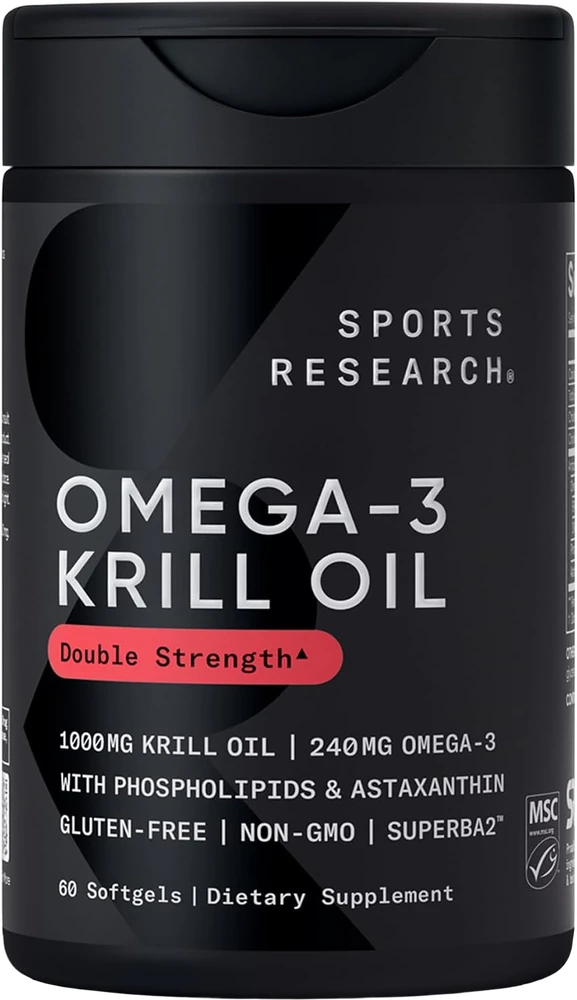 01
01Sports Research Antarctic Krill Oil
The default krill buy.
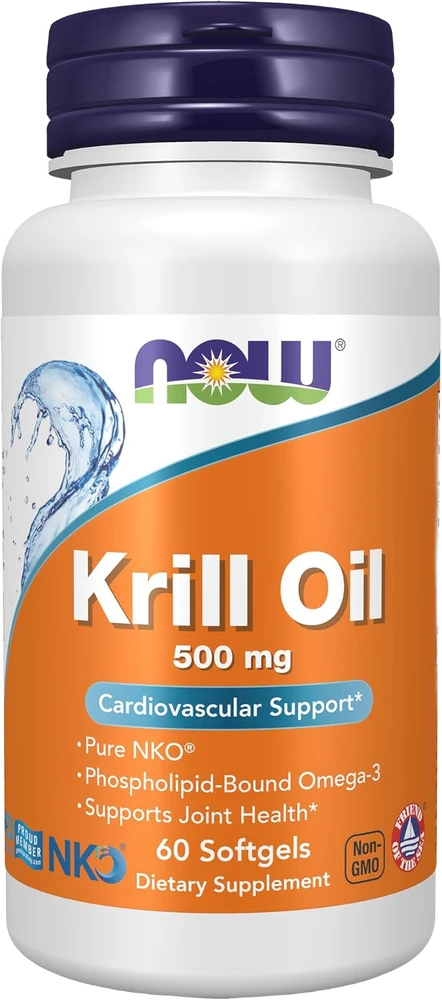 03
03NOW Neptune Krill Oil
The pick for buyers who want the most-researched krill formulation with deep manufacturer QC.
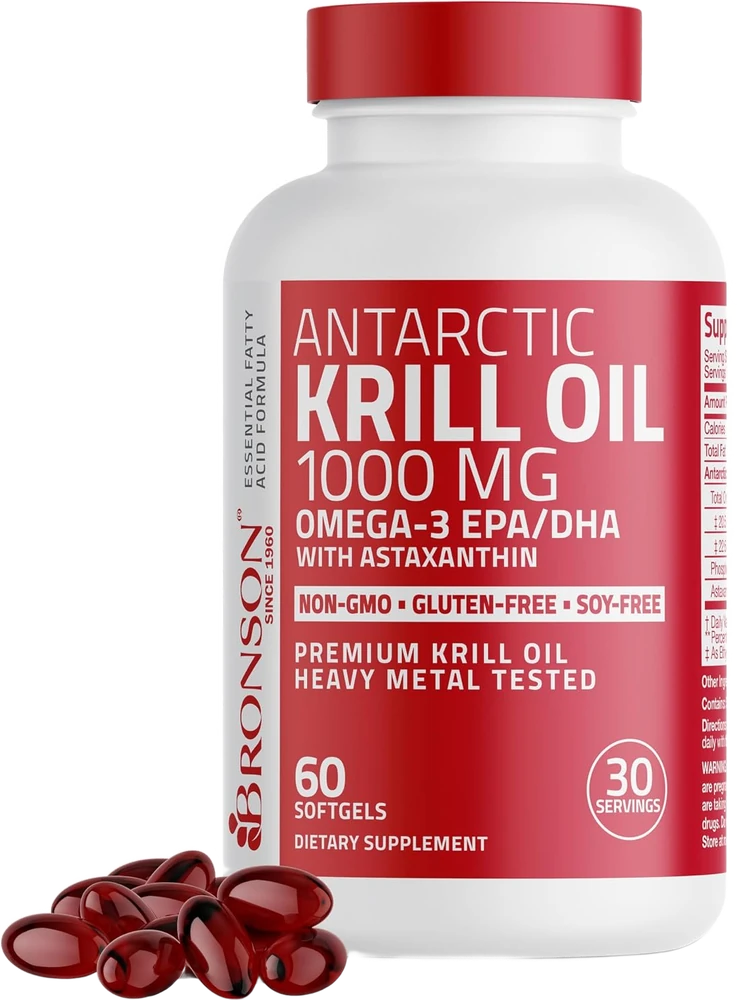 05
05Bronson Antarctic Krill Oil
The value play.
Quick Answers
Is the 575 mg phospholipid load actually meaningful, or is it just a bigger number?
Modestly meaningful, with honest limits. Phospholipids are krill's one genuine delivery edge: EPA+DHA bound to phospholipids integrate into cell membranes without needing lipase hydrolysis the way triglyceride fish oil does, so the Omega-3 Index rises per gram of actives roughly on par with — or ~10-20% above — fish oil (Ramprasath 2013, Ulven 2011). Viva Naturals carries the highest disclosed phospholipid load in our krill round-up (575 mg/serving), so on that specific axis it leads. But the phospholipid percentage improves absorption of the EPA+DHA you already have — it does not add EPA+DHA. With 270 mg combined actives per serving, the absorption edge is real but you are still nowhere near a concentrated fish-oil capsule's 500-900 mg. Treat the high phospholipid load as a delivery-quality feature, not a dose substitute.
1.6 mg astaxanthin is the most on the list — is that a therapeutic dose?
No, and that is the honest framing. Viva Naturals leads our krill list on astaxanthin (1.6 mg esterified per serving) — meaningfully more than NOW Neptune (360 mcg) or Jarrow (240 mcg). Astaxanthin is a genuine red carotenoid antioxidant that keeps the oil from oxidising (this is why krill rarely goes rancid and produces almost no fishy repeat) and has its own modest evidence on cardiovascular and skin endpoints. But dedicated astaxanthin clinical trials use 4-12 mg/day — so even the list-leading 1.6 mg sits below the standalone-therapy threshold. The correct read: Viva's astaxanthin is a best-in-tier oil-stability feature and a small antioxidant bonus, not a reason to skip a dedicated astaxanthin supplement if that endpoint is your actual goal.
What is a 'Caplique' capsule and does it really stop fishy burps?
Caplique is Viva Naturals' liquid-filled capsule format for the krill oil. The burp-control benefit is mostly inherent to krill itself, not the capsule branding: phospholipid-bound omega-3 plus astaxanthin's oxidation resistance means krill oil produces far less of the marine-oil reflux that even premium fish oil triggers in sensitive users. A well-sealed liquid capsule helps keep the oil stable until it reaches the gut. In practice krill oil — Caplique or otherwise — is among the cleanest-tolerated marine omega-3 formats available, which is a legitimate day-to-day advantage if fish-oil burps are why you are reading a krill review at all.
Viva Naturals krill vs Sports Research (the #1 pick) — which should I buy?
Depends on your reason for choosing krill. Sports Research wins on dose-per-dollar: 196 mg EPA+DHA in a single softgel at about $0.52 ($2.63 per gram of actives against Viva's $4.11), plus MSC-certified Superba2 krill. Both are IKOS-listed. Viva Naturals wins on the krill-unique extras: the highest phospholipid load (575 mg) and the most astaxanthin (1.6 mg) per serving, plus a slightly higher absolute EPA+DHA (270 mg, though across 2 capsules). If you chose krill to optimise cost-per-mg of omega-3, buy Sports Research. If you chose krill specifically for phospholipid delivery and astaxanthin — the actual structural reasons krill exists — Viva is the most concentrated expression of that on our list, at about $1.11/serving.
Why is Viva Naturals more expensive per gram of actives than the value picks?
Two reasons, both honest. First, krill itself is a structurally expensive omega-3 source — it is naturally only ~25% EPA+DHA by lipid (vs 30-50% for concentrated fish oil), harvested at depth in Antarctic waters, and the phospholipid-extraction process is more complex than pressing fish oil. That is why the krill oils on our list run about $2.50-5.25 per gram of actives vs fish oil's $0.40-1.00/g. Second, within the krill tier, Viva costs about $1.11/serving (Amazon showed no buy box on October 18, 2026; the only offer was iHerb at $33.30 for 30 servings), which is $4.11 per gram of EPA+DHA — well above Bronson ($2.50), Sports Research ($2.63) and Kori ($2.66). You are paying for the leading phospholipid + astaxanthin load, not for more EPA+DHA. If cost-per-mg is your priority, the value picks win.
Can I take Viva Naturals krill oil if I have a shellfish allergy?
No — and this is an absolute rule, not a Viva-specific one. Krill are crustaceans (tiny shrimp-like animals), and krill oil contains residual crustacean proteins that can trigger reactions in shellfish-allergic users. Most krill oil, Viva's included, is processed to minimise allergenic protein content, but documented allergic reactions exist in the literature and residual exposure is possible. If you have any shellfish allergy, do not buy Viva Naturals or any other krill oil regardless of how 'purified' the listing claims to be. Switch to a vegan algal-oil omega-3 — it delivers the same EPA+DHA with zero crustacean exposure.
Sources & Further Reading
5 peer-reviewed sources, each linked to PubMed
- [1] Ramprasath 2013 PMID 24304605 — Enhanced increase of omega-3 index in healthy individuals with response to 4-week n-3 fatty acid supplementation from krill oil versus fish oil. Head-to-head trial: krill oil raised the Omega-3 Index more than an equivalent dose of fish oil over 4 weeks — direct support for the phospholipid-delivery advantage Viva's 575 mg phospholipid load leans on, though the effect size is modest, not 'dramatically superior'.
- [2] Ulven 2011 PMID 21042875 — Metabolic effects of krill oil are essentially similar to those of fish oil but at lower dose of EPA and DHA, in healthy volunteers. Krill oil produced metabolic effects and plasma EPA+DHA increases comparable to fish oil at a lower absolute dose — evidence for krill's per-milligram absorption edge, while underscoring how little EPA+DHA krill (including Viva's 270 mg/serving) actually contains.
- [3] Tou 2007 PMID 17345959 — Krill for human consumption: nutritional value and potential health benefits. Comprehensive review documenting krill's phospholipid-bound EPA+DHA structure and its naturally occurring astaxanthin — the mechanistic basis for the oxidation resistance and near-zero-burp profile that Viva's 1.6 mg astaxanthin load maximises within the tier.
- [4] Harris 2004 PMID 15208005 — The Omega-3 Index: a new risk factor for death from coronary heart disease?. Established the Omega-3 Index (RBC EPA+DHA %) as a cardiac-risk marker, with an Index above 8% tied to the lowest CHD-mortality risk — the real endpoint to test after 8-12 weeks on Viva, and the reason 270 mg/serving is a wellness floor, not a cardiovascular dose.
- [5] Mozaffarian 2011 PMID 22051327 — Omega-3 fatty acids and cardiovascular disease: effects on risk factors, molecular pathways, and clinical events. Comprehensive omega-3 cardiovascular review establishing the 1-2 g/day combined EPA+DHA window for cardiovascular endpoints — the dose Viva reaches only at 6-10 capsules/day, which is why it is a tolerability/quality play, not a high-dose route.
Affiliate disclosure: every Amazon link uses our Associates tag (superachieverclub-20). We earn a small commission at no cost to you; it funds independent reviews. We never accept payment to change a ranking.