
Top 11 Best Omega-3 for Women (2026)
 01 · Best overall✓ Label verified · Supplement Facts read Sep 7, 2026
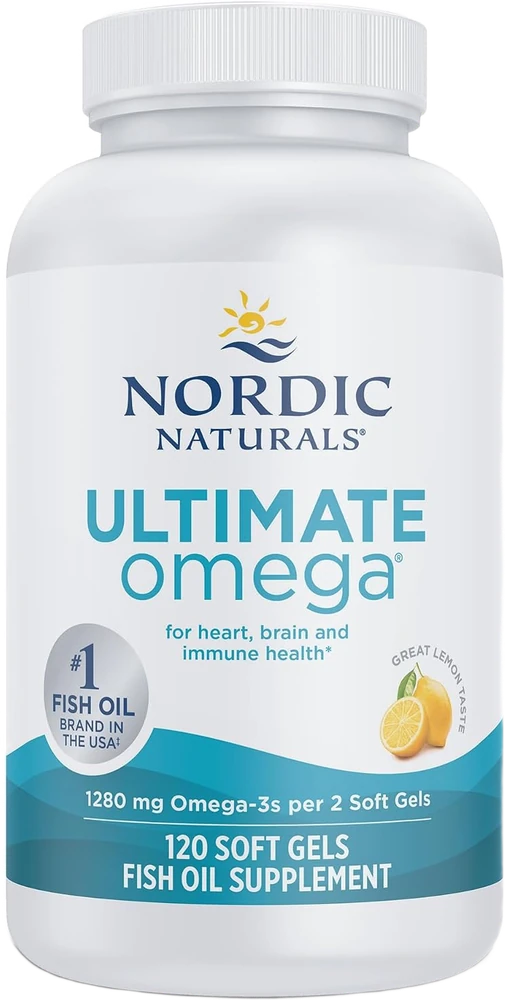
Best overall: Nordic Naturals Ultimate Omega 1280 mg
Balanced rTG form, Friend of the Sea certified, 1280 mg omega-3s per 2-softgel serving, $38/month — the safe default for women who want mood, skin, and post-menopause heart support in one clean lemon-flavoured bottle.
$38 / month$0.63 / 1280 mg omega-3 serving (2 softgels)
Why it wins: all five scores, pros & cons, full label
- Balanced EPA+DHA ratio covers the widest range of women's goals — mood, skin, joint comfort, and post-menopause cardiovascular support — from a single bottle
- The Friend of the Sea registry lists Nordic Naturals as an active certificate holder, and the brand returns a Certificate of Analysis by lot number — brand-published, not an independent database. Not IFOS-listed (checked Oct 3, 2026)
- Anchovy + sardine sourced from Norwegian waters — low bioconcentration of mercury and PCBs
- Lemon flavour and rTG form keep the marine note minimal — the most-tolerated fish oil on this list for burp-sensitive women
- Most-trusted brand pricing — $20/month more than the household-budget pick (#6)
- Large softgels — if swallowability is a dealbreaker, the single-softgel Sports Research (#4) or once-daily Garden of Life Minami (#10) suit better
- Per serving
- 1280 mg omega-3s (650 EPA / 450 DHA)
- Bottle
- 120 softgels (60 servings · ~2 months at 2 caps/day)
- Testing
- '3rd Party Purity Tested' and Friend of the Sea Certified Sustainable label seals; lot-number Certificate of Analysis from the brand (nordic.com/nordic-promise, not an independent database); non-GMO tested per the IGEN listing
- Form
- Re-esterified triglyceride (rTG)

Our take — The default first-time pick for women across almost every use case except specific DHA-dominance (preconception/pregnancy, where Prenatal DHA #2 wins) and EPA-dominant mood (Carlson #3). You get the rTG form (top-tier absorption), Friend of the Sea certification, small-fish provenance, the cleanest taste on the list, and a balanced ratio that does a bit of everything women want — mood, skin, heart. If you've never bought omega-3 before and you're not pregnant, start here.
 02
02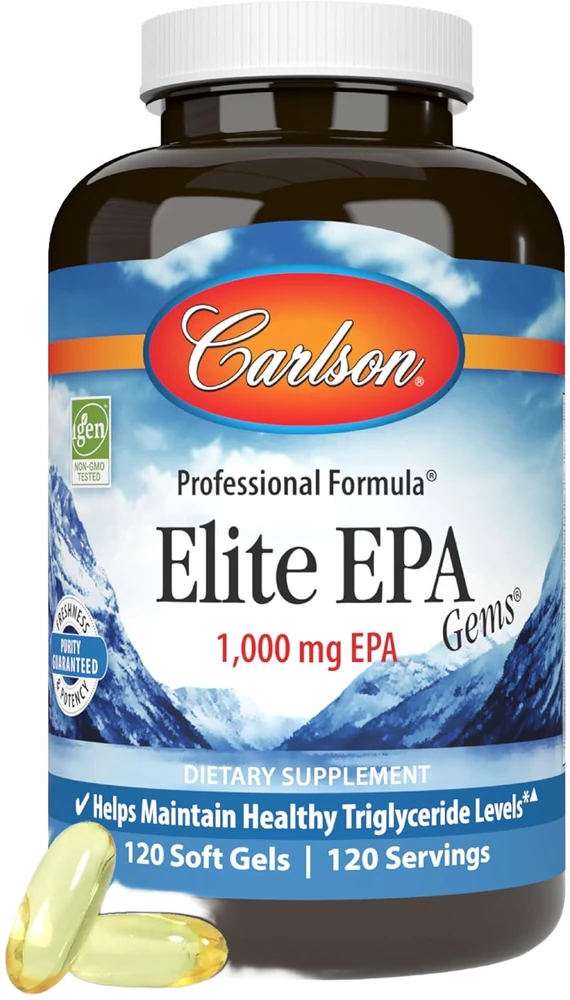 03
03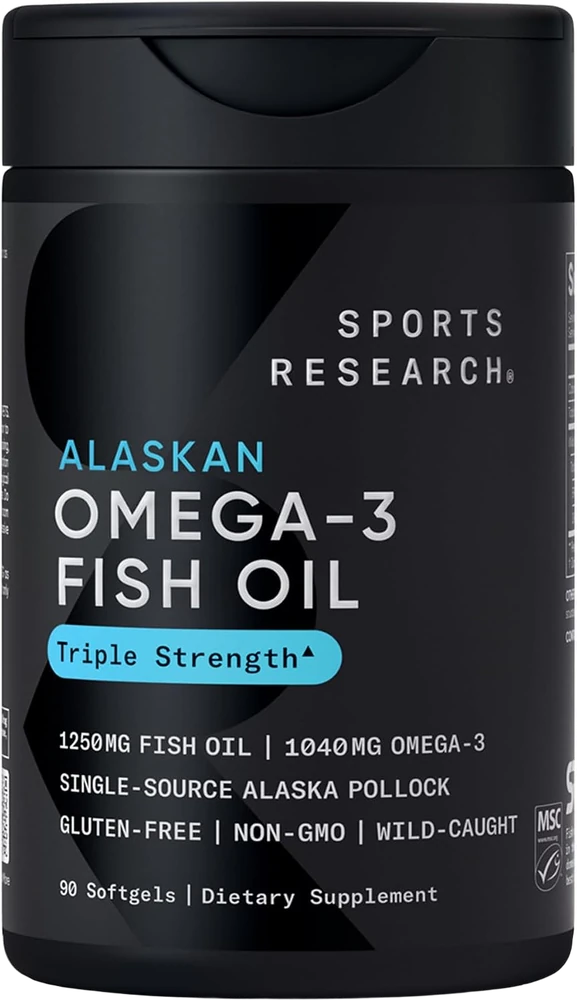 04
04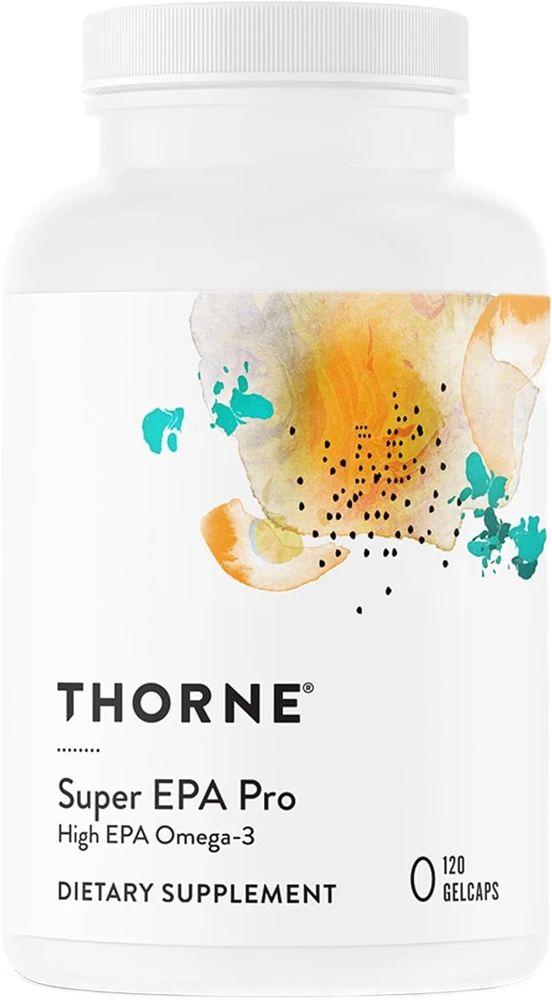 05
05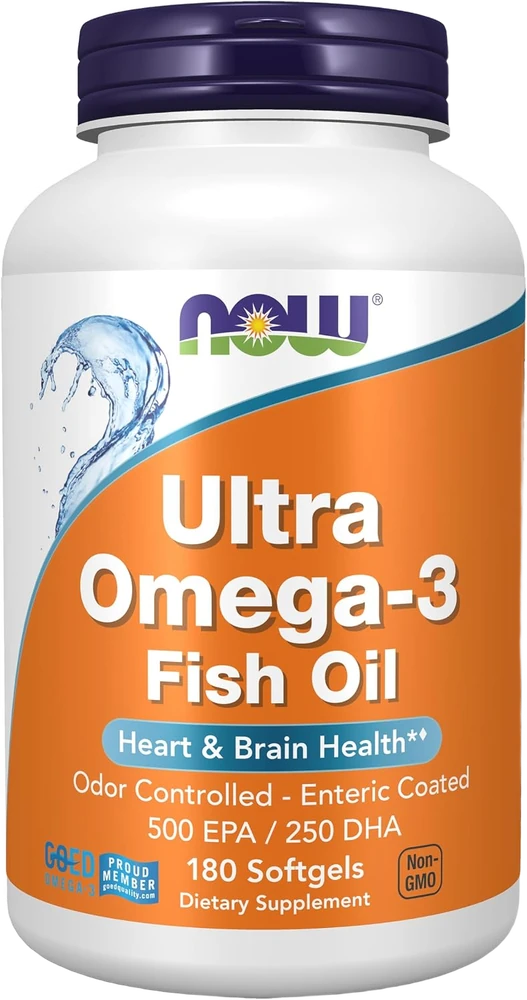 06
06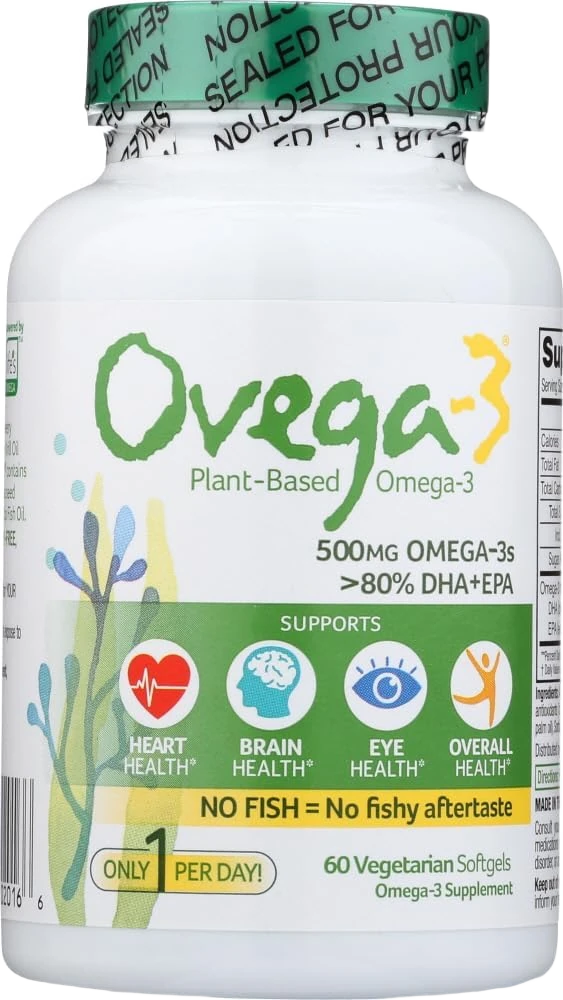 07
07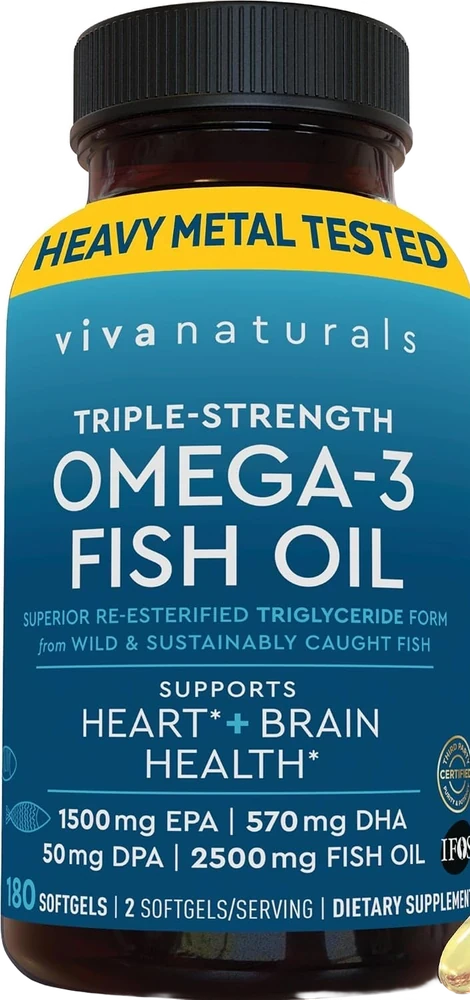 08
08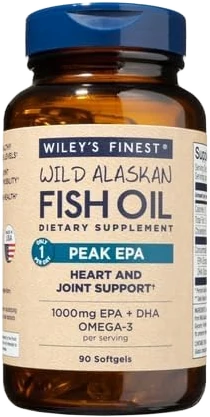 09
09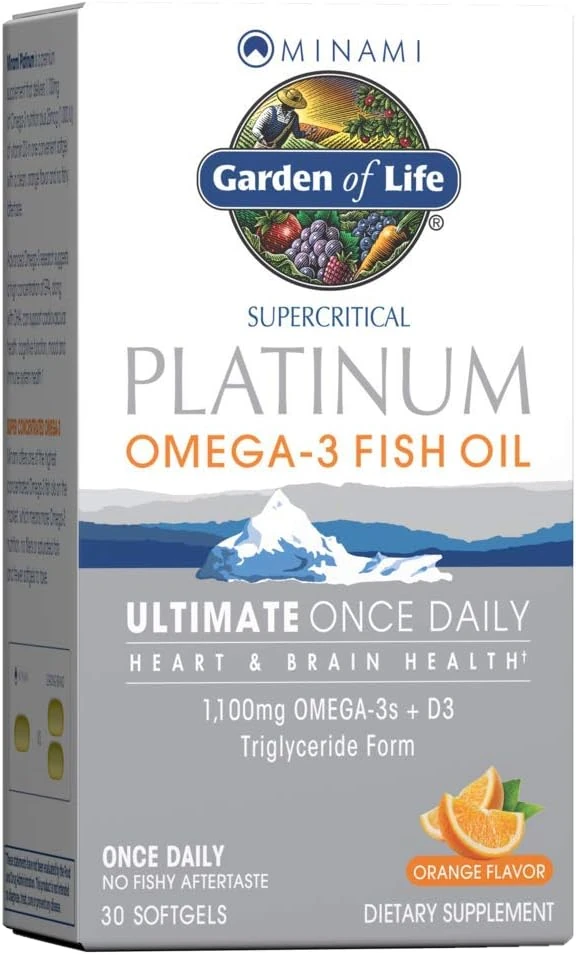 10
10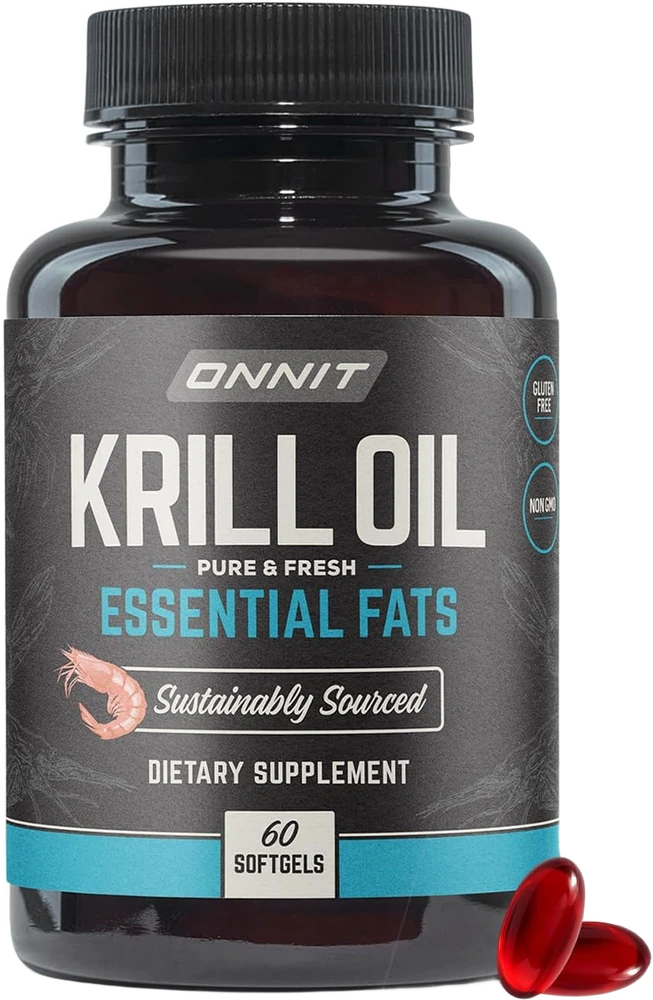 11
11Who Wins Which Aspect
Sorted by overall SAC Product Score™ — the official ranking.
| # | Pick | Score | EPA+DHA dose + form30% | IFOS25% | Source sustainability + provenance20% | Cost per gram EPA+DHA15% | Real-world response + tolerance10% | Cost Per Dose | Buy |
|---|---|---|---|---|---|---|---|---|---|
| 01 | | 9.0 | 9.51 | 8.53 | 9.03 | 8.53 | 9.52 | $0.63 / 1280 mg omega-3 serving | Check price |
| Balanced EPA+DHA ratio covers the widest range of women's goals — mood, skin, joint comfort, and post-menopause cardiovascular support — from a single bottleMost-trusted brand pricing — $20/month more than the household-budget pick (#6) | |||||||||
| 02 | | 9.0 | 9.51 | 9.02 | 9.52 | 7.5 | 9.03 | ~$0.65 / day at 2 softgels | Check price |
| 480 mg DHA per serving, DHA-dominant — above the 200-300 mg/day DHA commonly cited for pregnancyNot a prenatal multivitamin: no folate, iron or iodine | |||||||||
| 03 | | 8.9 | 8.53 | 10.01 | 9.03 | 7.5 | 9.03 | — | Check price |
| 1000 mg EPA per softgel — the exact ratio profile Freeman 2006 (perinatal/perimenopausal mood) and Sublette 2011 (depression meta) validate for the mood endpointEthyl ester form, not the triglyceride/rTG form most of this list uses — and DHA isn't listed on the panel — so it's not appropriate for preconception, pregnancy, or DHA-targeted cognition (use Prenatal DHA #2 or Ovega-3 #7 there) | |||||||||
| 04 | | 8.8 | 8.53 | 9.02 | 10.01 | 7.5 | 9.03 | $0.36 / softgel | Check price |
| IFOS listing (Nutrasource, product SPRT0048) and MSC chain of custody (MSC-C-55162), both confirmed at the certifiersNordic Naturals at a similar dose suits general use better and costs less | |||||||||
| 05 | | 8.7 | 9.02 | 9.02 | 8.5 | 7.5 | 9.03 | $0.70 / 1780 mg total omega-3 serving | Check price |
| EPA-dominant balance (~4:1 EPA:DHA) hits the Freeman 2006 / Sublette 2011 mood profile while still delivering meaningful DHA — a good all-round midlife pickPricier than Carlson per gram of total actives for the EPA-dominance use case | |||||||||
| 06 | | 8.6 | 8.53 | 7.5 | 8.5 | 10.01 | 10.01 | $0.20 / 750 mg EPA+DHA softgel | Check price |
| 500 EPA / 250 DHA balance lands inside the general-health window at 2 softgels/dayLot-coded third-party testing is less documented than the IFOS-listed Carlson (#3) and Sports Research (#4) | |||||||||
| 07 | | 8.5 | 8.4 | 8.4 | 8.2 | 9.22 | 9.03 | — | Check price |
| Direct DHA + EPA from algae — same actives as fish oil with zero marine pollutant exposure, the cleanest source for the pregnancy cohort405 mg EPA+DHA per softgel — far less per softgel than the fish-oil picks, so cost per gram is higher | |||||||||
| 08 | | 8.4 | 9.02 | 9.02 | 7.5 | 7.5 | 8.0 | $0.24 / 2070 mg EPA+DHA serving | Check price |
| Triple-strength formulation clears the cardiovascular/triglyceride dose window at 2 softgels/dayLabel doesn't print an IFOS star rating — the IFOS listing is confirmed, but the testing depth behind the seal is less visible to a buyer | |||||||||
| 09 | | 8.3 | 8.0 | 7.5 | 10.01 | 7.5 | 8.5 | $0.33 / 1000 mg EPA+DHA softgel | Check price |
| EPA-leaning 3:1 ratio (750 mg EPA / 250 mg DHA) — suits mood and cardiovascular goals better than DHA-led onesNot a DHA-led or prenatal pick: 250 mg DHA per softgel in an EPA-leaning 3:1 ratio — for preconception or pregnancy use Prenatal DHA (#2) or Ovega-3 (#7) | |||||||||
| 10 | | 7.7 | 8.0 | 7.0 | 8.0 | 7.5 | 8.0 | — | Check price |
| 756 mg EPA against 228 mg DHA (~3.3:1) — an EPA-dominant ratio, so it works as a secondary mood option alongside standard careOnly 30 softgels per bottle — a one-month supply at the labeled serving, so it restocks more often than the larger bottles on this list | |||||||||
| 11 | | 7.1 | 7.0 | 7.5 | 8.0 | 4.3 | 9.03 | $1.00 / 2-softgel serving | Check price |
| Phospholipid-bound omega-3 — modestly better absorption per mg vs free-form fatty acidsTotal omega-3 per serving (240 mg across 2 softgels; 130 EPA / 60 DHA) is a fraction of the triple-strength fish oil picks — reaching a clinical dose costs several times more per month | |||||||||
The Other 10, Ranked
- 02
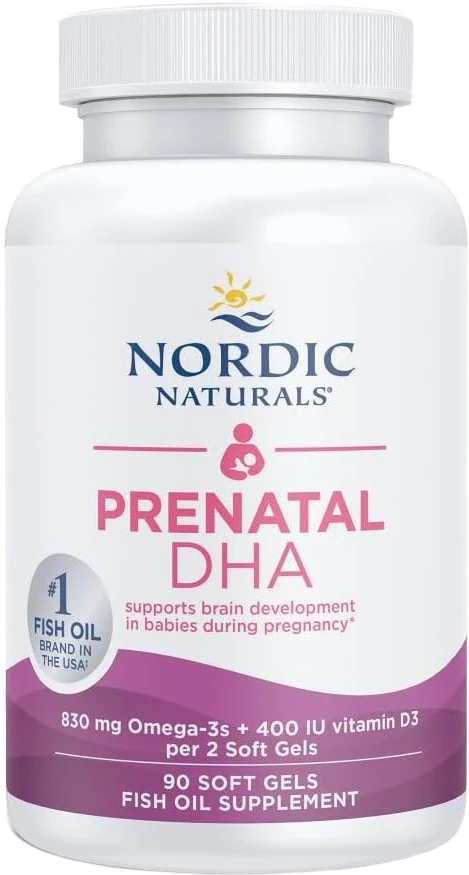
Best for pregnancy: Nordic Naturals Prenatal DHA
9.0SAC Score™The dedicated prenatal omega-3: 480 mg DHA per 2-softgel serving in the triglyceride form, DHA-dominant as pregnancy needs it, with 400 IU vitamin D3 and an unflavored softgel for nausea-prone weeks. It adds to a prenatal multivitamin and does not replace one.
StrongestEPA+DHA dose + form9.51WeakestCost per gram EPA+DHA7.5- Per 2 softgels
- 830 mg total omega-3 (480 DHA / 205 EPA) + 400 IU vitamin D3
- Bottle
- 90 softgels (45 servings · ~45 days at 2 softgels/day)
- Testing
- '3rd Party Purity Tested' and 'Friend of the Sea Certified Sustainable' seals on the label; the brand returns a Certificate of Analysis by lot number
All five scores, pros & cons, full label
What We Like- 480 mg DHA per serving, DHA-dominant — above the 200-300 mg/day DHA commonly cited for pregnancy
- Triglyceride form, the better-absorbed form of fish oil
- 400 IU vitamin D3 in the same softgel, a modest top-up that does not collide with a prenatal multivitamin
- Unflavored softgel, the safer default when smells and tastes trigger nausea
What You Live With- Not a prenatal multivitamin: no folate, iron or iodine
- Two softgels a day, and about $0.65 a day across pregnancy and breastfeeding
- The Unflavored 90-count was unavailable on Amazon when we checked on Oct 11, 2026
- Fish-based: not for vegan, vegetarian or fish-allergic women, who need the algal pick (#7)
- Form
- Triglyceride-form fish oil (label: 'in triglyceride form (rTG)')
- Fish source
- Anchovies, sardines, mackerel and herring (label)
- Availability
- On Oct 11, 2026 Amazon showed the Unflavored 90-count as unavailable; the Strawberry 90-count was in stock at $26.31
Our take — The pick for women who are pregnant, trying to conceive or breastfeeding. Pregnancy calls for DHA more than for a balanced EPA/DHA oil, and this is the only bottle on the list built for that: 480 mg DHA and 205 mg EPA per two softgels in the triglyceride form, with 400 IU of vitamin D3. It ties our #1 on score (9.0) and ranks second because Ultimate Omega serves more women outside pregnancy. Two things to know before buying. It is a DHA supplement and not a full prenatal, so it goes alongside a prenatal multivitamin with folate, iron and iodine. And on Oct 11, 2026 Amazon listed the Unflavored 90-count as unavailable while the Strawberry version was in stock. Run every supplement in pregnancy past your OB or midwife.
- 03
Best for mood: Carlson Elite EPA Gems 1,000 mg
8.9SAC Score™Pure EPA-dominant ethyl ester at 1000 mg EPA per softgel — the cleanest expression of the EPA-dominant ratio Freeman 2006 and Sublette 2011 point to for postpartum and perimenopausal mood.
StrongestIFOS10.01WeakestCost per gram EPA+DHA7.5- Per serving
- 1000 mg EPA as ethyl ester (1 softgel; DHA not listed on the panel)
- Bottle
- 120 softgels (120 servings · ~4 months at 1 cap/day)
- Testing
- IFOS and IGEN Non-GMO certified (per listing), Friend of the Sea
All five scores, pros & cons, full label
What We Like- 1000 mg EPA per softgel — the exact ratio profile Freeman 2006 (perinatal/perimenopausal mood) and Sublette 2011 (depression meta) validate for the mood endpoint
- Ethyl ester form stated plainly on the panel, IFOS and IGEN Non-GMO certified — documented oxidation and heavy-metal testing per listing
- Friend-of-the-Sea sustainability sourcing and Carlson's 50+ year QC pedigree
- EPA-dominance also feeds the resolvin pathway hardest — useful for the skin and joint-comfort goals women search for
What You Live With- Ethyl ester form, not the triglyceride/rTG form most of this list uses — and DHA isn't listed on the panel — so it's not appropriate for preconception, pregnancy, or DHA-targeted cognition (use Prenatal DHA #2 or Ovega-3 #7 there)
- Most expensive per softgel on the list — justified only if you specifically need EPA-dominance for mood
- Form
- Ethyl ester (EE), EPA-dominant — printed on the panel as "(as ethyl ester)"
Our take — If your goal is postpartum or perimenopausal mood support, Carlson Elite EPA is the cleanest non-prescription answer — 1000 mg EPA per softgel easily clears the EPA-dominant ratio Sublette 2011 points to at 1-3 softgels/day. Treat it as a complement to standard care, not a replacement, and loop in your clinician if you're managing diagnosed depression. For general health, pregnancy, or cognition, the balanced (#1) and DHA-dominant (#2, #7) picks are better-aligned. Buy this for the specific mood use case.
- 04
Best one-softgel dose: Sports Research Triple Strength Omega-3 1250 mg
8.8SAC Score™Single smaller softgel with 1040 mg total omega-3 (690 EPA / 260 DHA) as re-esterified TG, with an IFOS listing and MSC chain of custody confirmed at the certifiers. Informed Sport per the brand (not confirmed by us).
StrongestSource sustainability + provenance10.01WeakestCost per gram EPA+DHA7.5- Per softgel
- 1250 mg fish oil concentrate = 1040 mg total omega-3 (690 EPA / 260 DHA)
- Bottle
- 90 softgels (90 servings · 3-month at 1 cap/day)
- Testing
- IFOS listing and MSC chain of custody confirmed at the certifiers; Informed Sport per the brand (not confirmed by us; check the batch at sport.wetestyoutrust.com)
All five scores, pros & cons, full label
What We Like- IFOS listing (Nutrasource, product SPRT0048) and MSC chain of custody (MSC-C-55162), both confirmed at the certifiers
- Triple-strength rTG: a single softgel delivers a near-clinical dose (1040 mg total omega-3) — the most convenient one-cap dose on this list for women
- Fish-gelatin softgels are slightly easier to swallow than bovine-gelatin equivalents
- Non-GMO and gluten-free (front label)
What You Live With- Nordic Naturals at a similar dose suits general use better and costs less
- Informed Sport is the brand's claim only (not confirmed by us); tested athletes should check the batch at sport.wetestyoutrust.com
- Single-softgel dosing means a 1250 mg fish-oil capsule — still a large softgel for women who struggle to swallow
- Form
- Re-esterified triglyceride (rTG)
Our take — Sports Research is the right answer if you want a clinical dose in a single smaller softgel: triple-strength rTG at 1040 mg total omega-3 (690 EPA / 260 DHA), with an IFOS listing and MSC chain of custody confirmed at the certifiers, which many women prefer to swallowing two large softgels. It is not a confirmed pick for tested athletes: the brand states Informed Sport (not confirmed by us; check the batch at sport.wetestyoutrust.com), and no fish oil on this list is confirmed as NSF Certified for Sport; nsfsport.com lists Nordic Naturals Ultimate Omega 2X Sport and Thorne Super EPA (different products from the picks here), so tested athletes should buy from that list.
- 05
Best clinical-tier mood: Thorne Super EPA Pro
8.7SAC Score™EPA-dominant clinical-tier omega-3 from Thorne's clinician channel. NSF contents-certified — a ~4:1 EPA:DHA ratio with 1300 mg EPA per 2-gelcap serving.
StrongestEPA+DHA dose + form9.02WeakestCost per gram EPA+DHA7.5- Per serving
- 1780 mg total omega-3 (1300 EPA / 320 DHA, ~4:1 ratio) — 2 gelcaps
- Bottle
- 120 softgels (60 servings · 2-month at 2 caps/day)
- Testing
- NSF contents-certified — declared ingredients verified, contaminants screened (no banned-substance testing)
All five scores, pros & cons, full label
What We Like- EPA-dominant balance (~4:1 EPA:DHA) hits the Freeman 2006 / Sublette 2011 mood profile while still delivering meaningful DHA — a good all-round midlife pick
- NSF contents-certified — declared ingredients verified and contaminants screened by an independent certifier; NSF's sport list carries Thorne's Super EPA (the EPA & DHA formula), a different product
- Thorne's clinician-channel QC reputation — 35+ years used by integrative-medicine practices many women already see
- Triglyceride form, molecular distilled, sustainably sourced
What You Live With- Pricier than Carlson per gram of total actives for the EPA-dominance use case
- Thorne premium is partly clinician-brand markup, not pure formulation cost
- Form
- Triglyceride (TG), EPA-dominant
Our take — If you want the clinician-grade label with NSF contents certification on top of an EPA-dominant ratio that still keeps useful DHA, Thorne Super EPA Pro is the answer — and the ~4:1 balance makes it a more flexible midlife pick than pure-EPA Carlson. Whether the premium is justified depends on whether you value Thorne's clinician-channel pedigree. For mood specifically at the cleanest EPA-dominance, Carlson (#3) edges it; Thorne is the right answer for women already inside the integrative-medicine ecosystem. This is not a drug-tested-athlete pick — it carries no banned-substance certification; for that, choose a product listed by name at nsfsport.com.
- 06
Best budget: Now Foods Ultra Omega-3 Softgels
8.6SAC Score™Household-brand QC with 35+ years of pedigree, 750 mg EPA+DHA per softgel, $18/month — the right answer for women when budget is the constraint.
StrongestCost per gram EPA+DHA10.01WeakestIFOS7.5- Per softgel
- 750 mg EPA+DHA (500 EPA / 250 DHA)
- Bottle
- 180 softgels (~3 months at 2 caps/day)
- Testing
- Lot-coded third-party, NPA-certified facility
All five scores, pros & cons, full label
What We Like- 500 EPA / 250 DHA balance lands inside the general-health window at 2 softgels/day
- Now Foods' QC pedigree is among the most consistent in the supplement industry — 35+ years
- Household-name availability — easy to backstop if your primary is out of stock
- $0.20 per softgel is the lowest cost-per-EPA+DHA at the trusted-brand tier
What You Live With- Lot-coded third-party testing is less documented than the IFOS-listed Carlson (#3) and Sports Research (#4)
- Form spec is 'concentrated softgels' rather than explicit rTG — likely a TG/EE blend, so burp tolerance is more variable
- Form
- Concentrated softgel (TG-blend, not pure EE)
Our take — The smart-budget answer for women. Now Foods Ultra Omega-3 delivers 750 mg EPA+DHA per softgel at one-third the cost of the premium picks. The QC track record is real and the formulation lands inside the general-health window; the only meaningful trades vs Nordic Naturals (#1) are testing depth and a slightly more variable burp profile. Run 2 softgels/day for 12 weeks — if you respond on bloodwork or felt symptoms, upgrade to Nordic Naturals or a DHA-dominant pick on cycle two.
- 07
Best vegan / plant-based: Ovega-3 Vegan Algae Omega-3
8.5SAC Score™Algae-source omega-3 at 500 mg per softgel (270 DHA / 135 EPA), sold as a vegan softgel. Same actives as fish oil, zero ocean-pollutant load, DHA-dominant — the right answer for plant-based women and a strong clean prenatal pick.
StrongestCost per gram EPA+DHA9.22WeakestSource sustainability + provenance8.2- Per softgel
- 500 mg total omega-3 (270 DHA / 135 EPA)
- Bottle
- 60 softgels (60 servings · ~2 months at the labeled 1 softgel/day)
- Testing
- No third-party seal printed on the panel; the front label and listing title call it plant-based / vegan
All five scores, pros & cons, full label
What We Like- Direct DHA + EPA from algae — same actives as fish oil with zero marine pollutant exposure, the cleanest source for the pregnancy cohort
- Vegan, vegetarian-, and fish/shellfish-allergy-safe — the only category-appropriate omega-3 for these women
- DHA-dominant formulation — doubly right for plant-based women who are also preconception, pregnant, or focused on cognition
- No fishy burps at all — algal oil is the most tolerable format on this list
What You Live With- 405 mg EPA+DHA per softgel — far less per softgel than the fish-oil picks, so cost per gram is higher
- DHA-dominant ratio (2:1 DHA:EPA) is wrong for EPA-driven mood protocols
- Form
- Algal oil (schizochytrium-derived)
Our take — Promoted well up from the general ranking because it serves two female-audience cohorts at once: plant-based women (for whom it's the only correct answer) and the clean-prenatal cohort (DHA-dominant, zero pollutant load). Ovega-3 is the most-trusted algal brand at a fair price, with the most tolerable burp-free format on the list. For everyone else the dose-per-dollar math still favours IFOS fish oil — but for vegans, vegetarians, the fish-allergic, and pregnant women who avoid fish, this is the pick.
- 08
Best mass-market value: Viva Naturals Triple-Strength Omega-3 Fish Oil
8.4SAC Score™Mass-market value pick with a genuine triple-strength rTG formulation at $22/month — 2,070 mg EPA+DHA per 2-softgel serving with an IFOS seal and Labdoor's 2025 accuracy-and-purity testing, the most-reviewed bottle in the category.
StrongestEPA+DHA dose + form9.02WeakestSource sustainability + provenance7.5- Per serving
- 2250 mg total omega-3 (1500 EPA / 570 DHA / 50 DPA, as rTG) — 2 softgels
- Bottle
- 180 softgels (90 servings · 3-month at 2 caps/day)
- Testing
- IFOS, Labdoor "Tested for Accuracy & Purity 2025" and "Tested for Sport" seals
All five scores, pros & cons, full label
What We Like- Triple-strength formulation clears the cardiovascular/triglyceride dose window at 2 softgels/day
- EPA-dominant ratio (~2.6:1 EPA:DHA) works for the mood use case at a fraction of Carlson's price
- Highest Amazon review volume in this category — strong real-world adherence data among women
- IFOS seal plus Labdoor's 2025 accuracy-and-purity and sport-testing claims — real third-party documentation, not just a generic GMP claim
What You Live With- Label doesn't print an IFOS star rating — the IFOS listing is confirmed, but the testing depth behind the seal is less visible to a buyer
- Mid-tier sustainability documentation — sources not as transparently disclosed
- Form
- Re-esterified triglyceride (rTG)
Our take — Viva Naturals is the mass-market middle ground for women — better than Now Foods (#6) on raw EPA+DHA dose, behind Nordic Naturals (#1) overall. For a buyer who wants a genuine triple-strength rTG dose and an EPA-leaning ratio without paying premium pricing, and still wants real third-party testing (IFOS, Labdoor) on the label, this is the answer. Cycle 2-3 of this and re-evaluate against Nordic Naturals or a DHA-dominant pick for the upgrade.
- 09
Best wild-source (MSC): Wiley's Finest Wild Alaskan Fish Oil 1000 mg
8.3SAC Score™MSC chain of custody confirmed for wild Alaska pollock, one softgel a day with 750 mg EPA / 250 mg DHA (read from the manufacturer's panel on Oct 6, 2026), as an ethyl ester. EPA-leaning at 3:1, so not the DHA-led or prenatal pick on this list; those are Prenatal DHA (#2) and Ovega-3 (#7).
StrongestSource sustainability + provenance10.01WeakestIFOS7.5- Per softgel
- 1,250 mg concentrated fish oil: 750 EPA + 250 DHA = 1000 mg EPA+DHA (3:1 EPA to DHA), read from the manufacturer's Supplement Facts panel on Oct 6, 2026
- Bottle
- 90 softgels (90 servings · 3-month at 1 cap/day)
- Testing
- MSC chain of custody confirmed (MSC supplier directory); 'SQF certified quality' on the front label; the brand says 'third party tested' and gives results on request — no public batch reports, not IFOS- or NSF-listed
All five scores, pros & cons, full label
What We Like- EPA-leaning 3:1 ratio (750 mg EPA / 250 mg DHA) — suits mood and cardiovascular goals better than DHA-led ones
- MSC-certified wild Alaskan fishery — the strictest sustainability standard in marine supplements
- MSC chain of custody is independently checkable in the MSC supplier directory at msc.org, separate from the listing's own photos; the brand says 'third party tested' and gives test results on request, but publishes no batch reports
- Single-softgel clinical dose (1000 mg EPA+DHA, read from the panel) — easier on swallow-sensitive women than two large caps
What You Live With- Not a DHA-led or prenatal pick: 250 mg DHA per softgel in an EPA-leaning 3:1 ratio — for preconception or pregnancy use Prenatal DHA (#2) or Ovega-3 (#7)
- Wild-source pricing sits above the budget anchovy/sardine blends
- Ethyl ester form, not rTG: absorbs less than the TG-form picks with low-fat meals
- Form
- Omega-3 ethyl ester from wild Alaska pollock oil (ingredient line); not rTG
Our take — Sits at #9 for women: it is an EPA-leaning ethyl ester (750 mg EPA / 250 mg DHA per softgel, read from the manufacturer's panel on Oct 6, 2026), so it does not earn the preconception, pregnancy, or cognition slot; Prenatal DHA (#2) and Ovega-3 (#7) are the DHA-led picks on this list. The testing documentation is also thin — not IFOS-listed and not NSF-listed (checked Oct 3, 2026), the brand says 'third party tested' and gives results on request, and there are no public batch reports. MSC chain of custody is independently verifiable. A single softgel covers the 1000 mg EPA+DHA dose. This is not a prenatal product: if you are preconception or pregnant, coordinate any omega-3 with your OB. Buy it for MSC-certified wild sourcing in one EPA-leaning softgel a day.
- 10
Best once-daily with D3: Garden of Life Minami Supercritical Platinum Omega-3
7.7SAC Score™A once-daily orange-flavoured softgel with 1,100 mg total omega-3 (756 EPA / 228 DHA) plus 1,000 IU vitamin D3, printed on the front label as triglyceride form — an EPA-leaning single-capsule option for women who want omega-3 and D3 in one dose.
StrongestEPA+DHA dose + form8.0WeakestIFOS7.0- Per softgel
- 1,100 mg total omega-3 (756 EPA / 228 DHA / 96 other) + 25 mcg (1,000 IU) vitamin D3
- Bottle
- 30 softgels (30 servings · 1-month supply at the labeled 1 softgel/day)
- Testing
- No third-party testing seal printed on the supplement panel
All five scores, pros & cons, full label
What We Like- 756 mg EPA against 228 mg DHA (~3.3:1) — an EPA-dominant ratio, so it works as a secondary mood option alongside standard care
- 1,000 IU vitamin D3 is built into every softgel — one capsule instead of two bottles for women who already want both
- Triglyceride form is printed on the front label, with an orange flavour and a 'no fishy aftertaste' claim aimed at burp-sensitive women
- Deep-sea anchovy, sardine and mackerel oil — small oily fish, named on the panel
What You Live With- Only 30 softgels per bottle — a one-month supply at the labeled serving, so it restocks more often than the larger bottles on this list
- The 1,000 IU of D3 is fixed in every softgel — factor it in if you already take vitamin D, and note the bovine gelatin shell
- No third-party testing seal on the panel — less documented testing depth than Nordic Naturals (#1) or the IFOS-listed Carlson (#3)
- Form
- Triglyceride form (printed on the front label)
Our take — Garden of Life Minami's Platinum is a once-daily, orange-flavoured softgel that packs 756 mg EPA, 228 mg DHA and 1,000 IU vitamin D3 into a single capsule, with the triglyceride form printed on the front. The EPA-leaning ratio also works as a secondary mood option, and the bundled D3 simplifies a stack. Where it loses to Nordic Naturals (#1) is testing documentation and bottle size: no testing seal is printed on the panel, and 30 softgels is one month at the labeled serving. Buy this if a once-daily capsule with D3 included is what keeps you consistent.
- 11
Best krill / astaxanthin: Onnit Krill Oil 1000 mg
7.1SAC Score™Phospholipid-bound EPA + DHA with astaxanthin — the krill alternative for women who tolerate fish oil poorly and want the antioxidant skin angle, if you don't mind paying premium for a low absolute dose.
StrongestReal-world response + tolerance9.03WeakestCost per gram EPA+DHA4.3- Per serving
- 1000 mg krill oil = 240 mg combined omega-3 (130 EPA / 60 DHA) + 200 mcg astaxanthin — 2 softgels
- Bottle
- 60 softgels (30 servings · 30 days at 2 softgels/day)
- Testing
- Antarctic-sourced krill (CCAMLR-managed fishery, per the brand); no third-party testing seal printed on the supplement panel
All five scores, pros & cons, full label
What We Like- Phospholipid-bound omega-3 — modestly better absorption per mg vs free-form fatty acids
- Astaxanthin co-factor — a potent antioxidant with its own skin-support following among women, that also stabilises the oil against oxidation
- Smaller fishy-burp profile than ethyl-ester fish oil — krill is generally well-tolerated
- Antarctic krill from a CCAMLR-managed fishery, per the brand; the front label says 'Sustainably Sourced'
What You Live With- Total omega-3 per serving (240 mg across 2 softgels; 130 EPA / 60 DHA) is a fraction of the triple-strength fish oil picks — reaching a clinical dose costs several times more per month
- Phospholipid-bound omega-3 has weaker trial documentation than TG-form fish oil
- Shellfish allergens — not appropriate for fish/shellfish-allergic women
- Form
- Phospholipid-bound EPA + DHA (krill oil)
Our take — Krill is a niche pick for women, not a replacement. The phospholipid format, the astaxanthin (with its skin-support following), and the gentle burp profile are real draws — but the dose-per-dollar math is brutal: at $29.95/month for a 60-softgel (30-day) bottle, the 240 mg combined omega-3 per 2-softgel serving is a small fraction of what the fish-oil picks deliver for a similar spend. Buy this if fish-oil burps are intolerable for you regardless of brand, you have budget headroom, and the astaxanthin angle appeals. For everyone else, the fish and algal picks on this list deliver more usable omega-3 per dollar.
Omega-3 In Four Short Lessons
Why form and oxidation are the entire game
- 30-50%
- Bioavailability gap of ethyl ester vs triglyceride form (Dyerberg 2010)
- 200-300mg
- DHA/day general-wellness target in pregnancy + lactation (Coletta 2010)
- 8%+
- Omega-3 Index target for lowest CHD risk (Harris 2008)
- 4-5%
- Modern Western adult average Omega-3 Index
Sources: Coletta 2010 DHA in pregnancy (PMID 21364848); Freeman 2006 perinatal/perimenopausal mood (PMID 16930971); Harris 2004 Omega-3 Index (PMID 15208005); Dyerberg 2010 TG vs EE bioavailability (PMID 20638827); Sublette 2011 depression meta (PMID 21939614).
Check the form before the milligrams.
Ethyl ester is 30-50% less bioavailable than triglyceride forms (Dyerberg 2010) and is the source of the fishy burp that makes most women quit.
Match the ratio to your life stage.
DHA-dominant oil fits pregnancy, lactation and cognition, at a 200-300 mg a day general-wellness target. Mood evidence is EPA-dominant, at ratios of 2:1 or higher (Sublette 2011).
Coordinate pregnancy use with your OB.
This list is general-wellness framing, not a prenatal protocol. Mood support layers on top of standard care, not instead of it.
Dyerberg 2010 (PMID 20638827) TG vs EE bioavailability; Coletta 2010 (PMID 21364848) DHA in pregnancy; Freeman 2006 (PMID 16930971) perinatal/perimenopausal mood; Sublette 2011 (PMID 21939614) EPA depression meta; Harris 2004 (PMID 15208005) Omega-3 Index; Mozaffarian 2011 (PMID 22051327) cardiovascular; Yurko-Mauro 2010 (PMID 20434961) DHA cognition.
Each pick was scored 0-10 across five criteria, then weighted to a final composite. EPA+DHA dose and form carries the most weight because it determines whether the milligrams on the label become usable omega-3 in your bloodstream and membranes — a 2 g/day EE bottle delivers what a 1.3 g/day TG bottle does, so the form-adjusted dose is the only number that matters. IFOS or equivalent third-party testing acts as a quality filter for oxidation (TOTOX) and heavy metals — non-negotiable, and doubly so for the pregnancy cohort. The criterion that diverges most from our general ranking is life-stage fit: DHA-dominant formulations move up for the preconception/pregnancy and cognition cohorts (Coletta 2010), EPA-dominant bottles hold the top for postpartum/perimenopausal mood (Freeman 2006, Sublette 2011), and balanced formulations win for post-menopause heart and general use. Swallowability + tolerance (softgel size, burp profile, dose flexibility) is weighted higher than on the general list because it's the single biggest adherence lever for women. Cost per gram of EPA+DHA is the price tiebreaker.
EPA+DHA dose + form · 30%
Triglyceride (TG) and re-esterified triglyceride (rTG) get +3 base. Phospholipid-bound (krill) +2. Ethyl ester (EE) -2 unless the brand demonstrably mitigates with high concentration and IFOS testing. Per-serving combined EPA+DHA in the 500-1600 mg range scores full marks; below 300 mg you can't reach clinical dose without 4+ caps.
IFOS / oxidation + heavy-metal testing · 25%
IFOS 5-star public batch reports = full credit. IFOS without 5-star or Friend-of-the-Sea / GOED equivalent = 80%. Generic 'third-party tested' without published TOTOX or batch lookup = 50%. No testing claim = 0. The heavy-metal piece weighs heaviest for the preconception and pregnancy cohort.
Life-stage fit (DHA / EPA / balanced) · 20%
DHA-dominant scores highest for preconception, pregnancy, and cognition (Coletta 2010). EPA-dominant (≥2:1) scores highest for postpartum and perimenopausal mood (Freeman 2006, Sublette 2011). Balanced formulations win for general health and post-menopause cardiovascular protection (Harris 2008, Mozaffarian 2008). A bottle is scored against the life stage it best serves.
Swallowability + tolerance · 15%
Softgel size, burp profile, and dose flexibility. Smaller or enteric-coated TG-form softgels and single-softgel clinical doses score highest; large EE softgels that produce the dropout-driving fishy burp score lowest. This is the biggest real-world adherence lever for women.
Cost per gram of EPA+DHA · 10%
Monthly cost divided by daily EPA+DHA delivered. Algae and krill are expected to score lower here (krill runs $2.50-5.25/g EPA+DHA on our krill list) vs fish (~$0.50-1.00/g) — they justify the gap on provenance and source-cleanliness, not price.

How omega-3 rebuilds your cell membranes and resolves inflammation
- 1
EPA + DHA absorbed into plasma lipids
TG-form omega-3 hydrolyses to free fatty acids in the small intestine, packages into chylomicrons, and enters plasma. Within 2-4 hours plasma EPA+DHA rises — earlier and higher with the TG/rTG form than ethyl ester.
- 2
Membrane incorporation over 4-12 weeks
EPA and DHA progressively replace omega-6 arachidonic acid in cell-membrane phospholipids — including skin cells and brain synaptic membranes. Measurable as the Omega-3 Index (RBC EPA+DHA as % of total fatty acids). Reaches steady state at week 12.
- 3
Resolvin + protectin synthesis on demand
When inflammation triggers mobilise membrane EPA and DHA, they're enzymatically converted into resolvins (from EPA) and protectins (from DHA) — specialised pro-resolving mediators that calm skin, joints, and low-grade inflammation. Mechanistically distinct from NSAIDs.
What to expect on a 16-week omega-3 protocol
Burp profile + tolerance
If burps are aggressive or oil tastes rancid, you bought EE or oxidised oil. Switch to a smaller TG-form softgel before week 3. No felt effects yet — membrane incorporation just starting.
Skin + Omega-3 Index climbing
RBC Omega-3 Index moves from baseline ~4-5% toward the 8% target. Skin feels less dry and more even in inflammatory-baseline women; joint comfort improves. Triglyceride drops become detectable on bloodwork at clinical dose.
Mood signals + steady state
EPA-dominant formulations show postpartum/perimenopausal mood improvements at this window if responsive. DHA-dominant cognitive support peaks around week 16-24. Omega-3 Index at steady state ≥8% if dose was adequate.
The bottom line
Nordic Naturals Ultimate Omega (#1) is the default buy for most women.
For first-time and general-wellness women it covers mood, skin, and post-menopause heart in one balanced rTG bottle — Friend of the Sea certified, 1280 mg omega-3s per serving, $38/month. It's the safe default across almost every use case except specific DHA-dominance (pregnancy) or EPA-dominant mood.
The right pick changes with your life stage and goal.
Nordic Naturals Prenatal DHA (#2) if you're preconception, pregnant or breastfeeding; Ovega-3 Algal Oil (#7) if you're plant-based or fish-allergic; Now Foods Ultra Omega-3 (#6) if budget is tight. Carlson Elite EPA (#3) or Thorne Super EPA Pro (#5) for postpartum and perimenopausal mood; picks #4, #8-11 are situational (single-softgel dose, mass-market value, MSC wild sourcing, once-daily omega-3 + D3, krill). Wiley's Finest (#9) is EPA-leaning (750 mg EPA / 250 mg DHA per softgel) and is not a prenatal pick. Tested athletes: no fish oil on this list is confirmed as NSF Certified for Sport; nsfsport.com lists Nordic Naturals Ultimate Omega 2X Sport and Thorne Super EPA (different products from the picks here), so tested athletes should buy from that list.
Verify TG form, match the ratio to your life stage, and keep the framing honest.
The biggest mistake is buying ethyl ester from the grocery aisle — it absorbs 30-50% worse and oxidises faster. Verify TG form on the label, match the EPA:DHA ratio to your life stage, look up your batch on ifosprogram.com if it's IFOS-certified, and refrigerate after opening. The pregnancy guidance is general-wellness supplementation, not medical advice, and omega-3 for mood is a complement to standard care, never a substitute.
Quick Answers
Which omega-3 should I take if I'm pregnant or trying to conceive?
Prioritise a clean, DHA-dominant source. Coletta 2010 (PMID 21364848) frames DHA as foundational for fetal brain and retinal development, with a general-wellness target of 200-300 mg DHA/day through pregnancy and lactation. Nordic Naturals Prenatal DHA (#2, 480 mg DHA / 205 mg EPA per two softgels) is the dedicated prenatal pick on this list. Ovega-3 algal oil (#7, 270 mg DHA / 135 EPA per softgel) is the fish-free DHA-led alternative. Wiley's Finest (#9) is not a prenatal pick: its panel shows 750 mg EPA / 250 mg DHA per softgel, EPA-leaning. Important framing: this is general-wellness supplementation, not a substitute for a prescription prenatal. Coordinate your full prenatal protocol (folate, iron, iodine, DHA) with your OB or midwife, and avoid mercury-heavy large-fish sources.
Can omega-3 help with postpartum or perimenopausal mood?
The evidence points to EPA-dominant formulations as a complement to standard care, not a replacement. Freeman 2006 (PMID 16930971) reviewed omega-3 across perinatal and perimenopausal mood, and Sublette 2011 (PMID 21939614) confirmed that EPA:DHA ratios of 2:1 or higher are the antidepressant-effective profile — DHA-dominant bottles aren't. Carlson Elite EPA Gems (#3, 1,000 mg EPA per softgel as ethyl ester) and Thorne Super EPA Pro (#5, ~4:1) are the cleanest expressions of that ratio on this list. If you're managing postpartum depression or significant perimenopausal mood changes, talk to your clinician — omega-3 layers on top of treatment, it doesn't substitute for it.
Does omega-3 actually help skin, hair, and nails?
There's a real mechanism, with modest evidence. EPA and DHA incorporate into skin-cell membranes and feed the resolvin pathway that calms low-grade inflammation — which is why women starting from an inflammatory or dry-skin baseline often report smoother, less-dry skin and calmer breakouts over 8-12 weeks. The effect on hair and nails is more indirect (membrane and follicle support) and slower. Don't expect a cosmetic miracle: the strongest, best-replicated omega-3 effects are still cardiovascular and mood. Treat skin/hair/nail improvements as a welcome bonus on top of the systemic benefits, not the primary reason to buy.
Do women need a lower dose than men?
Often, yes — and a smaller softgel. Women average lower body weight and frequently prefer to sit at the lower end of the general-health window (1-1.5 g combined EPA+DHA/day) rather than the 2-4 g cardiovascular range, unless they're specifically targeting triglycerides or post-menopause heart protection. Dose to your goal and tolerance, not your gender per se: pregnancy needs 200-300 mg DHA minimum, mood protocols need ~2 g of EPA-dominant oil, general correction needs 1-2 g. The triple-strength bottles (Sports Research #4, Viva Naturals #8) let you hit a clinical dose in a single smaller softgel, which many women prefer to swallowing two large ones.
Why are my fish oil burps so bad — does that mean it's working?
It means the opposite — it's oxidised, ethyl-ester, or both. Fresh, TG-form, properly stored fish oil barely smells fishy. Aggressive repeating fishy burps usually signal: (1) ethyl ester form, (2) oxidised oil from poor storage or aged shelf stock, or (3) too-large a single dose on an empty stomach. Fix: switch to a TG-form IFOS-certified product, choose a smaller or enteric-coated softgel, refrigerate the bottle after opening, take with a fat-containing meal, and split larger doses across two meals. Some women also freeze the capsules — it slows gastric release without affecting absorption.
I'm vegan or vegetarian — what's the best plant-based option?
Algae-source omega-3, and it ranks materially higher on this list than on our general ranking. Ovega-3 Algal Oil (#7) delivers DHA + EPA directly from schizochytrium algae — the same micro-algae fish eat to accumulate omega-3 — with zero ocean-pollutant load and a vegan-marketed softgel (no third-party vegan seal is printed on the label). The actives are identical to fish oil; you get fewer milligrams per softgel, so a clinical dose takes more softgels and costs more per gram than fish oil. It's DHA-dominant, which also makes it a strong preconception/pregnancy and cognition pick. For plant-based women it's not just an alternative, it's the correct first choice.
Will omega-3 interfere with my medications or birth control?
No meaningful interaction with hormonal birth control or hormone therapy. The interaction that matters is with blood thinners: omega-3 has a mild antiplatelet effect that's additive with warfarin, apixaban, rivaroxaban, clopidogrel, aspirin, and chronic NSAID use, becoming relevant above 3 g/day. Below 3 g/day the bleeding-risk increment is small but real in women already on anticoagulants. Many surgical and obstetric protocols pause omega-3 1-2 weeks before a procedure or delivery. Statins are not a contraindication — omega-3 is commonly co-prescribed. If you take any anticoagulant or are approaching a scheduled procedure, clear your dose with your clinician.
Every Claim Ranked Above Traces Back To One Of These
7 peer-reviewed sources, each linked to PubMed
- [1] Coletta 2010 (DHA in pregnancy) PMID 21364848 — Omega-3 fatty acids and pregnancy. Review of omega-3 in pregnancy: DHA is essential for fetal brain and retinal development, with a general recommendation of 200-300 mg DHA/day during pregnancy and lactation and a preference for low-mercury and algal sources. The reference citation for the DHA-dominant, clean-source positioning of the prenatal picks on this list.
- [2] Freeman 2006 (perinatal/perimenopausal mood) PMID 16930971 — Omega-3 fatty acids and perinatal depression: a review of the literature and recommendations for future research. Reviewed omega-3 supplementation for mood across the female reproductive lifespan, including perinatal (postpartum) and perimenopausal depression, supporting EPA-containing formulations as a complement to standard care. The basis for the postpartum/perimenopause mood angle and the EPA-dominant pick positioning.
- [3] Sublette 2011 (depression meta) PMID 21939614 — Meta-analysis of the effects of eicosapentaenoic acid (EPA) in clinical trials in depression. Meta-analysis of 15 RCTs found EPA-dominant omega-3 formulations (EPA:DHA ratio ≥60%) significantly improved depression scores vs placebo; DHA-dominant formulations did not. Establishes EPA-dominance as the formulation requirement for the mood endpoint and the basis for Carlson Elite EPA and Thorne Super EPA Pro's positioning.
- [4] Yurko-Mauro 2010 PMID 20434961 — Beneficial effects of docosahexaenoic acid on cognition in age-related cognitive decline. 900 mg/day of DHA over 24 weeks improved verbal recognition memory in older adults with age-related cognitive decline vs placebo. The cornerstone DHA-cognition trial behind the DHA-dominant pick positioning for the cognition and midlife cohorts.
- [5] Mozaffarian 2011 PMID 22051327 — Omega-3 fatty acids and cardiovascular disease: effects on risk factors, molecular pathways, and clinical events. Comprehensive review of omega-3 effects on cardiovascular risk: triglyceride reduction of 10-33% at 2-4 g/day, modest blood pressure reduction, anti-arrhythmic effects, reduced platelet aggregation. The dose justification behind the post-menopause cardiovascular protocol on this list.
- [6] Harris 2008 (Omega-3 Index) PMID 15208005 — The omega-3 index: a new risk factor for death from coronary heart disease?. Defined the Omega-3 Index (RBC EPA+DHA as % of total fatty acids) as a cardiovascular risk biomarker. An index of 8%+ associated with the lowest CHD mortality; the modern Western average sits at 4-5%. The biomarker behind the post-menopause heart-protection target as estrogen's cardio-protection fades.
- [7] Dyerberg 2010 (TG vs EE bioavailability) PMID 20638827 — Bioavailability of marine n-3 fatty acid formulations. Direct head-to-head bioavailability comparison of omega-3 forms: triglyceride (TG) and re-esterified triglyceride (rTG) forms showed 30-50% higher EPA+DHA incorporation into blood lipids than ethyl ester (EE) at identical doses. The trial that anchored the 'buy TG form' recommendation across the entire supplement category.
More Omega-3 Guides
- Best Omega-3 SupplementsThe definitive omega-3 buying guide — the single best pick for each need across fish oil, algae, and krill. Total EPA+DHA per serving, triglyceride form, and IFOS freshness separate the real ones from under-dosed ethyl ester.
- Best Krill Oil SupplementsKrill oil ranked by actual EPA/DHA per serving, phospholipid + astaxanthin content, and cost-per-mg — with the honest verdict on when fish oil is the smarter buy.
- Best Omega-3 Fish OilOmega-3s ranked by EPA+DHA dose, triglyceride vs ethyl-ester form, IFOS/TOTOX oxidation testing, sustainability — the bottles that survive the rancidity audit.
- Best Omega-3 for InflammationEPA-dominant omega-3 drives the anti-inflammatory effect via resolvins; 2-4 g/day for joint/inflammation endpoints. Ranked by EPA dose, triglyceride form, and IFOS/TOTOX freshness (rancid oil is pro-inflammatory).
Affiliate disclosure: every Amazon link uses our Associates tag (superachieverclub-20). We earn a small commission at no cost to you; it funds independent reviews. We never accept payment to change a ranking.