
Wiley's Finest Wild Alaskan Fish Oil 1000 mg Review
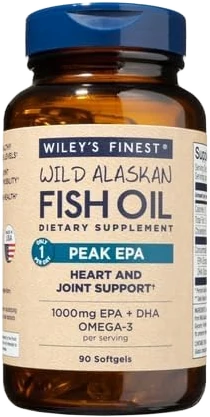 #6 of 7 · Best sustainable✓ Label verified · Supplement Facts read Oct 6, 2026
Real retailer photo, cut out. Label unedited.
Buy it. The MSC-certified wild-source omega-3: one EPA-leaning softgel a day. MSC chain-of-custody certification is confirmed in the MSC supplier directory.
$30 (price varies) / 90 servingsPrice varies — 90-softgel bottle, 1 softgel (750 EPA / 250 DHA) per serving
Why It Scores 8.3 — And The Label Line Behind Each Number
EPA+DHA dose + form
30% of score1000 mg combined EPA+DHA per single softgel, read from the Supplement Facts panel on the manufacturer's page (Oct 6, 2026): 750 mg EPA and 250 mg DHA from 1,250 mg concentrated fish oil, a 3:1 EPA-to-DHA ratio. The ingredient line reads Concentrated Omega-3 Ethyl Esters from Wild Alaska Pollock (Fish) Oil, so this is an ethyl ester, not rTG. Ethyl esters absorb less than rTG when taken with low-fat meals, which holds this line at 8.0. Carlson Elite EPA, also an ethyl ester, keeps 8.5 because it carries the most EPA per softgel on the list; Wiley's Finest sits one step below. The single softgel lands the 1 g/day general-health window, and the EPA-leaning ratio suits EPA-driven mood and cardiovascular goals better than DHA-driven ones. 250 mg DHA per softgel is not a DHA-led dose.
- Active form
- Omega-3 ethyl ester from wild Alaska pollock oil, per the ingredient line; not rTG
- Per softgel
- 1,250 mg concentrated fish oil: 750 mg EPA + 250 mg DHA = 1,000 mg EPA + DHA (3:1 EPA to DHA) · 15 calories · 1.5 g fat
- Form purity
- Ethyl ester concentrate from wild Alaska pollock oil; the panel page states third-party testing for heavy metals, environmental contaminants and microbial safety (results on request, not published per batch)
- Trial-dose alignment
- Lands the 1 g/day general-health window at 1 softgel; 250 mg DHA per softgel is not aligned to DHA-led trial doses such as Yurko-Mauro (900 mg DHA/day)
- Inactives
- Fish (tilapia) gelatin, glycerin, purified water, mixed tocopherols (antioxidant). Contains fish (pollock, tilapia)
IFOS / oxidation + heavy-metal testing
25% of scoreNo IFOS listing: on Oct 3, 2026 the certifier's database (Nutrasource, which runs IFOS) returned no brand and no product for Wiley's Finest, and NSF's dietary-supplement listings show none either. What remains is the brand's own statement — 'third party tested', with test results available on request — and 'SQF certified quality' on the front label. No public batch reports for oxidation or heavy metals. That is the same evidence level as Now Foods (7.5), well below a certifier-confirmed listing (Sports Research, 9.0). The MSC certificate is real but covers the fishery, not product testing — it is scored in the sustainability line.
- Label check
- Supplement Facts panel read from the manufacturer's product page (wileysfinest.com/products/peak-epa) on Oct 6, 2026; the Amazon listing photos cut it off
- Certifications
- MSC chain of custody (Wiley Companies MSC-C-52212, Wiley CPG MSC-C-52698 — MSC supplier directory, checked Oct 3, 2026); SQF certified quality and Made in USA (label). Not IFOS-listed, not NSF-listed
- Manufacturer
- Wiley's Finest (Coshocton, OH · family-owned, 4th-generation Alaskan fisher heritage)
- Lab transparency
- Third-party tested per the brand, test results on request — no public batch database; MSC chain-of-custody documentation
Source sustainability + provenance
20% of scoreMSC-certified wild Alaska pollock (the oil source named on the label; the MSC certificates also cover sockeye salmon) — the strictest fishery-management standard available in the consumer omega-3 category, confirmed in the MSC supplier directory (Wiley Companies MSC-C-52212, Wiley CPG MSC-C-52698; checked Oct 3, 2026). Alaskan pollock fishery is one of the most-rigorously managed in the world (NOAA-monitored, no overfishing on record in 30+ years). US-domestic processing at Wiley's Finest's mid-Western facility — full supply-chain traceability from boat to bottle.
Cost per gram EPA+DHA
15% of scoreAbout $30/month at 1000 mg EPA+DHA/day = $1.00/g of EPA+DHA (price not verified, directional) — premium pricing reflecting MSC sustainability premium and wild-source raw material costs. Comparable to Nordic Naturals (#1) at $0.99/g, more expensive than Now Foods (#5) at $0.40/g. The MSC certification is the value-add over Nordic Naturals at similar $/g.
- Bottle size
- 90 softgels · 90 servings · 3 months at 1 softgel/day (one softgel a day on the label)
- Price
- Not verified; the cost score assumes about $30 / month at 1 softgel/day (directional)
Real-world response + tolerance
10% of scoreSmaller softgel size than most rTG-form picks — easier swallowing for sensitive users. One softgel a day in a fish (tilapia) gelatin shell, so not suitable for vegetarians or fish-allergic buyers. Unflavoured (no lemon coating like Nordic Naturals). As an ethyl ester it can repeat more than rTG picks, especially without a fatty meal, so take it with food. Family-owned brand with smaller production volume than category leaders — occasional Amazon stock gaps.
Label verified. Every figure read from the Supplement Facts photo, Oct 6, 2026.
Marketing Claims Vs. Reality
MSC-certified sustainable wild Alaskan fishery.
The MSC supplier directory lists Wiley Companies (MSC-C-52212) and Wiley CPG, LLC (MSC-C-52698), both in Coshocton, Ohio, as certified for walleye pollock and sockeye salmon (checked Oct 3, 2026). The Alaskan pollock + sockeye salmon fisheries are among the most-rigorously managed in the world — NOAA monitored, no overfishing on record in 30+ years. Real, auditable, and the meaningful sustainability differentiator vs the broader fish-oil category.
Third party tested for purity, quality, and safety.
This is the brand's own statement on its product pages; it offers test results on request rather than publishing them per batch. An earlier version of this review credited an IFOS 5-star certification here. The certifier's database (Nutrasource, which runs IFOS) returns no brand and no product for Wiley's Finest, and NSF's dietary-supplement listings show none either (both checked Oct 3, 2026).
Wild-caught, family-owned, made in USA.
Wiley's Finest is publicly family-owned (Wiley family, 4th-generation Alaskan commercial fishers), processes at their Coshocton, OH facility, and sources from US-domestic wild Alaskan fisheries. The full supply chain is documented and verifiable. Real and meaningful brand-trust signal.
Re-esterified triglyceride (rTG) form for natural absorption (earlier listing copy).
The Supplement Facts panel on the manufacturer's product page (read Oct 6, 2026) lists the omega-3 as Concentrated Omega-3 Ethyl Esters from Wild Alaska Pollock (Fish) Oil. That is an ethyl ester, not a triglyceride form. An earlier version of this review passed on the listing's rTG claim; it is contradicted by the ingredient line. Dyerberg 2010 (PMID 20638827) anchors the 30-50% absorption advantage of rTG vs EE in general, which is why the dose + form criterion dropped from 8.5 to 8.0.
Supports brain health, vision, and cardiovascular wellness.
The panel shows 750 mg EPA and 250 mg DHA per softgel, so this is an EPA-leaning product. The cardiovascular claim fits best (Mozaffarian 2011, PMID 22051327). The brain and vision claims rest on DHA, the minority fatty acid here: Yurko-Mauro 2010 used 900 mg DHA/day for verbal memory, a DHA-led dose this softgel does not deliver at one a day. Vision is real mechanistically, since DHA is the dominant structural fatty acid in retinal photoreceptor membranes. The brand collapses all three into one marketing bullet — standard at this tier.
What Our Test Actually Found
Correction: the label shows an ethyl ester with an EPA-leaning 3:1 ratio, not rTG and DHA-dominant. The dose and form score drops from 8.5 to 8.0
Earlier versions of this review said this softgel was a re-esterified triglyceride (rTG) with a DHA-dominant 450 EPA / 550 DHA split, and recommended it for pregnancy, lactation and cognitive preservation. None of that was read from a label: the Amazon photos cut the Supplement Facts panel off, and the form and split came from marketing copy. On Oct 6, 2026 we read the panel on the manufacturer's product page (wileysfinest.com/products/peak-epa). It shows 1,250 mg concentrated fish oil with 750 mg EPA and 250 mg DHA per softgel (1,000 mg EPA + DHA), a 3:1 EPA-to-DHA ratio, and the ingredient line reads 'Concentrated Omega-3 Ethyl Esters from Wild Alaska Pollock (Fish) Oil'. That is an ethyl ester, not rTG, and an EPA-leaning product, not a DHA-led or prenatal one. We removed the rTG, DHA-dominant and prenatal claims throughout, lowered the EPA+DHA dose + form criterion from 8.5 to 8.0 (ethyl esters absorb less than rTG with low-fat meals; Carlson Elite EPA, also an ethyl ester, keeps 8.5 for the most EPA per softgel on the list, and Wiley's Finest sits one step below), and recomputed the total: 8.4 became 8.3. In our fish-oil ranking it moves from #7 to #8, behind Viva Naturals Triple-Strength.
Correction: Wiley's Finest is not IFOS-listed — the testing score drops from 9.5 to 7.5
Earlier versions of this review said this fish oil is 'IFOS 5-star certified' with batch reports on ifosprogram.com, called it 'MSC + IFOS dual-certified', and scored the testing criterion 9.5 on that basis. We checked both certifiers on Oct 3, 2026. MSC holds up: the MSC supplier directory lists Wiley Companies (MSC-C-52212) and Wiley CPG, LLC (MSC-C-52698) in Coshocton, Ohio as certified for walleye pollock and sockeye salmon. IFOS does not: the Nutrasource certification database, which runs IFOS, returns no brand and no product for Wiley's Finest, and NSF's dietary-supplement listings show none either. What the brand itself says is 'third party tested', with test results available on request, plus 'SQF certified quality' on the front label. We removed the IFOS claim throughout, lowered the testing criterion from 9.5 to 7.5 (the same score Now Foods gets for testing that is only documented on request), and recomputed the total: 8.9 became 8.4. In our fish-oil ranking it moved from #3 to #7 that day (and to #8 after the Oct 6 correction above). The open point about the EPA:DHA split is closed: the panel read on Oct 6 shows 750 mg EPA and 250 mg DHA per softgel.
MSC chain of custody is the certification that checks out
MSC certification requires audited fishery management — population monitoring, bycatch limits, ecosystem impact assessment, chain-of-custody from boat to bottle. Wiley's Finest holds it: the MSC supplier directory lists Wiley Companies and Wiley CPG as certified for walleye pollock and sockeye salmon. What it does not hold is IFOS, the quality-and-freshness program earlier versions of this review credited it with — the 'dual-certified' framing was wrong. If sustainability is a real priority rather than a marketing preference, MSC is still the meaningful differentiator over Nordic Naturals (#1), which is Friend of the Sea certified.
EPA-leaning at 3:1: right for EPA-driven goals, not a DHA or prenatal pick
The panel shows 750 mg EPA and 250 mg DHA per softgel. That ratio suits EPA-driven goals such as mood and cardiovascular protocols better than DHA-driven ones. It is not a DHA-led product: Yurko-Mauro 2010 (PMID 20434961) showed 900 mg DHA/day improved verbal recognition memory in older adults, and DHA is the dominant fatty acid in fetal brain development, which is why DHA-led products are the usual pick for cognition and pregnancy. At 250 mg DHA per softgel, one softgel a day still meets the 200-300 mg DHA/day figure often cited for pregnancy, but this is not a prenatal product and pregnant users should talk to their clinician. For a DHA-led pick on our list, see Ovega-3 (#6). For the most EPA per softgel, Carlson Elite EPA (#2) is the answer.
Wild Alaskan pollock vs anchovy/sardine — meaningfully different sourcing trade-off
Anchovy/sardine (Nordic Naturals, Carlson, etc.) is the lowest-trophic-level marine source — smallest fish, lowest contaminant bioconcentration, but the sourcing is typically Norwegian/Mediterranean farmed-or-wild. Wild Alaskan pollock is mid-trophic-level (slightly larger fish, slightly more bioconcentration) but US-domestic, MSC-certified, wild-caught from a rigorously managed fishery. The trade-off: marginally more mercury/PCB content (still below FDA limits according to the brand's own testing) in exchange for the strictest sustainability standard and full US-domestic supply chain. For most buyers the contaminant delta is clinically irrelevant.
1-cap dose convenience plus easier-to-swallow softgel size
Wiley's Finest delivers 1000 mg combined EPA+DHA in a noticeably smaller softgel than most rTG-form picks — Nordic Naturals' 2-cap serving is larger gross volume than Wiley's Finest's 1-cap. Swallow-sensitive users frequently prefer this format. The single-cap dosing pattern also has higher 12-week adherence than 2-cap regimens. The trade-off vs Sports Research (#3) at similar single-cap convenience: Sports Research is IFOS-listed at the certifier, Wiley's Finest is not.
Family-owned mid-Western processing has real supply-chain advantages
Wiley's Finest processes at their Coshocton, OH facility — full US-domestic supply chain from wild Alaskan catch to bottled product. Most consumer omega-3 brands either source the raw oil overseas (Norway, Iceland, Chile) or buy bulk concentrate from third-party processors. Wiley's Finest controls the entire chain end-to-end, which is what enables the MSC chain-of-custody certification. The downside: smaller production volume than category leaders means occasional Amazon stock gaps, especially during sockeye salmon off-season.
Full analysis: all pros & cons (11), buy if / skip if
- MSC-certified wild Alaskan fishery — strictest sustainability standard in the consumer omega-3 category (checked at msc.org)
- SQF certified quality and Made in USA, both stated on the front label
- 1000 mg EPA + DHA per softgel, read from the Supplement Facts panel on the manufacturer's page (Oct 6, 2026)
- EPA-leaning 3:1 ratio (750 mg EPA / 250 mg DHA) suits EPA-driven mood and cardiovascular goals
- Family-owned US-domestic processing with full chain-of-custody traceability
- Ethyl ester form, not rTG: absorbs less than rTG with low-fat meals
- Not a DHA-led or prenatal product: 250 mg DHA per softgel
- Mid-trophic-level fish (Alaskan pollock + sockeye salmon) — slightly higher contaminant bioconcentration than anchovy/sardine
- Not IFOS-listed and no published batch reports — testing is documented only on request
- No NSF Certified for Sport listing (checked Oct 3, 2026): drug-tested athletes need a product listed by name at nsfsport.com
- Smaller-volume brand — occasional Amazon stock gaps during off-season
- You want MSC-certified wild Alaska pollock, checked at msc.org
- You want one softgel a day (1,000 mg EPA + DHA, read from the panel) with an EPA-leaning 3:1 ratio
- You want a US-domestic family-owned brand with a transparent supply chain
- You want rTG (triglyceride) form: this is an ethyl ester, so go Nordic Naturals #1
- You want a DHA-led product, for example for pregnancy or cognition: this is EPA-leaning at 3:1 with 250 mg DHA per softgel, so go Ovega-3 #6 (algae DHA) and talk to your clinician about pregnancy
- You want the most EPA per softgel: go Carlson Elite EPA #2
- You're drug-tested: Wiley's Finest has no NSF Certified for Sport listing (checked Oct 3, 2026) and no sport certification we could confirm; buy from the nsfsport.com list instead
- Cost is the constraint — at $1.00/g, Now Foods (#5) at $0.40/g is cheaper
- You want published batch test reports — Wiley's Finest is not IFOS-listed; Sports Research #3 is
MSC chain-of-custody certification is confirmed in the MSC supplier directory. IFOS is not: the certifier's database has no entry for Wiley's Finest (checked Oct 3, 2026), and an earlier version of this review that claimed IFOS 5-star has been corrected. The Supplement Facts panel, read from the manufacturer's page on Oct 6, 2026, shows 750 mg EPA and 250 mg DHA per softgel (1,000 mg EPA + DHA, a 3:1 EPA-leaning ratio) as an ethyl ester, not rTG. An earlier version called it a DHA-dominant rTG pick for pregnancy and cognition; that was wrong. It suits buyers who want MSC-certified wild Alaska pollock in one softgel a day, at about $30/month (price not verified). For rTG form go Nordic Naturals #1; for a DHA-led product go Ovega-3 #6.
Wiley's Finest Wild Alaskan Fish Oil (Peak EPA) is the bottle to buy if MSC-certified wild sourcing is the priority and you want one EPA-leaning softgel a day without paying the algae premium. The bottle at the linked listing holds 90 softgels; we have not verified the price (about $30 a month is directional). The Supplement Facts panel, read from the manufacturer's product page on Oct 6, 2026 because the Amazon photos cut it off, shows 1,250 mg concentrated fish oil with 750 mg EPA and 250 mg DHA per softgel (1,000 mg EPA + DHA): a 3:1 EPA-to-DHA ratio, as an ethyl ester (the ingredient line reads Concentrated Omega-3 Ethyl Esters from Wild Alaska Pollock (Fish) Oil), not rTG. The MSC supplier directory confirms the sustainability claim: Wiley Companies and Wiley CPG hold MSC chain-of-custody certificates for walleye pollock and sockeye salmon — the strictest fishery-management certification in the consumer marine-omega-3 category (checked Oct 3, 2026). It is not IFOS-listed: the certifier's database returns no entry for the brand, so quality testing rests on the brand's own third-party testing, with results on request. Earlier versions of this review described an rTG form and a DHA-dominant 450/550 split and recommended it for pregnancy and cognition; the panel shows neither, and this version is rewritten. Family-owned US brand with a public mid-Western processing facility. Here's the breakdown.
The MSC-certified wild-source omega-3: one EPA-leaning softgel a day.

Wiley's Finest Wild Alaskan Fish Oil is what we recommend for sustainability-priority buyers who want MSC-certified wild Alaska pollock in one EPA-leaning softgel a day. The MSC chain-of-custody certification is confirmed in the MSC supplier directory and is the strictest sustainability standard available without paying the algae premium. Quality testing is the weaker side: Wiley's Finest is not IFOS-listed and publishes no batch reports, which is why it ranks #8 on our fish-oil list rather than near the top. The panel, read from the manufacturer's page on Oct 6, 2026, shows 750 mg EPA and 250 mg DHA per softgel as an ethyl ester. That makes it a reasonable pick for EPA-driven mood or cardiovascular goals and the wrong pick for anyone who wants rTG form or a DHA-led product for pregnancy or cognition (Ovega-3 #6 is the DHA-led option on this list; Carlson Elite EPA #2 carries more EPA per softgel). The wild Alaska pollock sourcing involves a small trade-off vs anchovy/sardine on contaminant bioconcentration — below FDA limits according to the brand's own testing, but worth noting for the strictest mercury-conscious buyers (algae-sourced Ovega-3 #6 sidesteps this entirely). Buy Wiley's Finest if MSC sustainability and a single EPA-leaning softgel are the priority; default to Nordic Naturals (#1) for the balanced general-health use case in rTG form.
If This Doesn’t Fit — Try These
06Wiley's Finest Wild Alaskan Fish Oil
The pick for the sustainability-first shopper who wants the strictest fishery certification.
 01
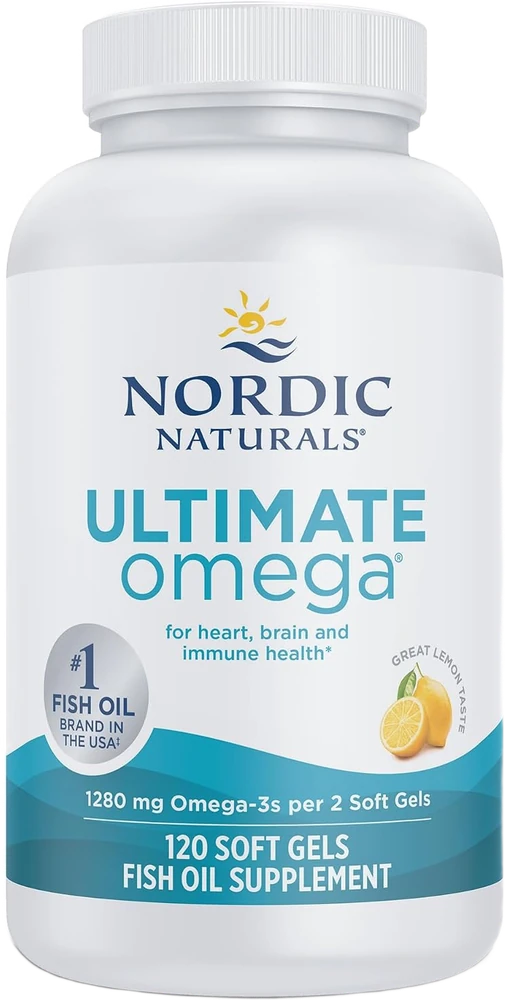
01Nordic Naturals Ultimate Omega
This is the omega-3 to buy if you've never bought a serious one before, and the one most people quietly come back to.
 02
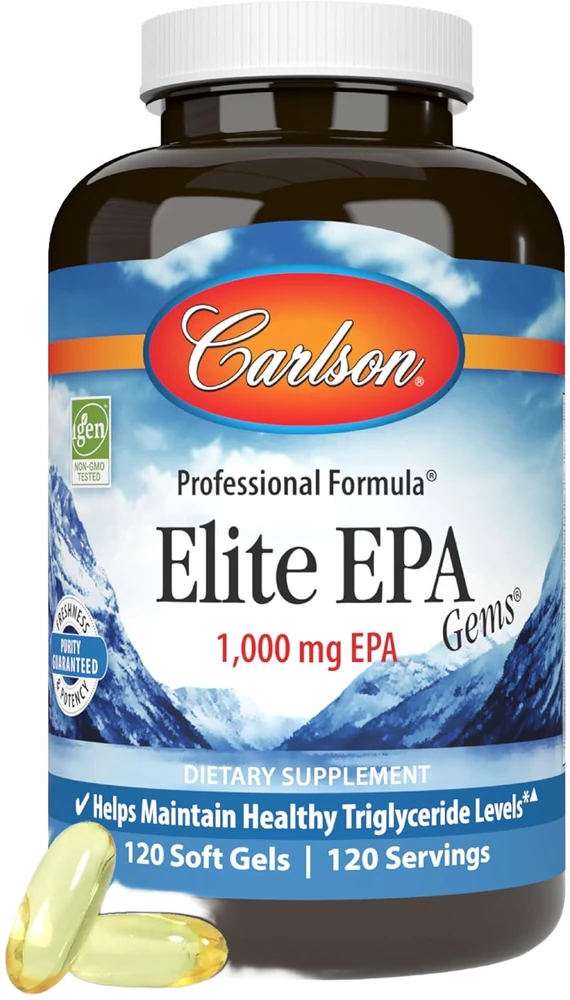
02Carlson Elite EPA Gems
A specialist tool: if your endpoint is mood, depression complement, EPA-driven cardiovascular work, or ADHD adjunct use, this is the bottle that matches the trial evidence cleanest.
Quick Answers
Why does MSC certification matter — and is Wiley's Finest IFOS certified?
IFOS and MSC measure different things. IFOS (International Fish Oil Standards) tests the finished product for EPA+DHA content, TOTOX oxidation, heavy metals, and PCBs — the quality and freshness axis. MSC (Marine Stewardship Council) certifies the fishery itself — the sustainability axis: whether the population is sustainably managed, whether fishing methods minimise bycatch and ecosystem damage, whether the supply chain is traceable. Wiley's Finest holds the MSC side: the MSC supplier directory lists Wiley Companies (MSC-C-52212) and Wiley CPG (MSC-C-52698) in Coshocton, Ohio as certified for walleye pollock and sockeye salmon (checked Oct 3, 2026). It does not hold the IFOS side: the certifier's database returns no brand and no product for Wiley's Finest, and an earlier version of this review that called it 'IFOS 5-star' has been corrected. The brand says its oil is third-party tested and offers test results on request.
Is Wiley's Finest a DHA-led or prenatal pick?
No. The Supplement Facts panel, read from the manufacturer's page on Oct 6, 2026, shows 750 mg EPA and 250 mg DHA per softgel, a 3:1 EPA-leaning ratio. An earlier version of this review called it DHA-dominant (450 EPA / 550 DHA) and positioned it for pregnancy and cognition; that was wrong. At 250 mg DHA per softgel, one softgel a day still meets the 200-300 mg DHA/day figure often cited for pregnancy, but this is not a DHA-led or prenatal product, and pregnant users should talk to their clinician. DHA-led protocols such as Yurko-Mauro 2010 (900 mg DHA/day for verbal memory) call for a DHA-led product: on our fish-oil list that is the algae-sourced Ovega-3 (#6). For EPA-driven mood and cardiovascular protocols the EPA-leaning ratio points the right way, and Carlson Elite EPA (#2) carries the most EPA per softgel.
Wild Alaskan pollock + sockeye salmon — aren't both of those larger fish than anchovies?
Sockeye salmon is mid-sized; Alaskan pollock is actually a relatively small forage fish (Atlantic pollock is larger, but Alaskan pollock typically averages 1-2 kg). Both species are at mid-trophic level in the marine food chain — meaningfully larger than anchovies/sardines (0.1-0.3 kg) but dramatically smaller than tuna, swordfish, or shark. MSC certifies the fishery and the chain of custody, not contaminant levels — for mercury and PCBs you are relying on the brand's own third-party testing, with results on request. Mid-trophic fish typically carry slightly more than anchovy/sardine-sourced products while staying below FDA limits. For most users the difference is well below clinically relevant levels.
Single softgel at 1000 mg combined — is that the right dose for me?
Depends on goal. The panel shows 1000 mg EPA+DHA per softgel (750 mg EPA / 250 mg DHA), so one softgel a day covers the general-health 1 g/day window. For EPA-driven mood or cardiovascular goals that need more EPA, one softgel a day is the starting point and the higher intakes used in trials need more than one softgel; check the dose with your clinician. For DHA-led protocols such as the Yurko-Mauro 900 mg DHA/day trial, this is the wrong product: 250 mg DHA per softgel is not a DHA-led dose. For pregnancy, one softgel a day lands within the 200-300 mg DHA/day figure, but this is not a prenatal product and pregnant users should consult their clinician; algae-sourced DHA (Ovega-3 #6) is the cleanest DHA-led option on our list for mercury concerns.
Is the wild-source premium actually worth it over Nordic Naturals (#1)?
Depends on what you value. Nordic Naturals is wild-caught anchovy/sardine from Norwegian waters — also sustainable (Friend of the Sea certified), lower-trophic-level (smaller fish, less contaminant bioconcentration), and better documented: Nordic returns a Certificate of Analysis by lot number, while Wiley's Finest provides test results on request. Neither is IFOS-listed. Wiley's Finest's edge is the MSC certification specifically (strictest fishery-management standard) and the family-owned US-based mid-Western processing facility. If you specifically value MSC + US-domestic processing + an EPA-leaning single softgel, Wiley's Finest fits. If you want rTG form, lemon-flavoured caps, or the lowest possible mercury bioconcentration (anchovy/sardine is smaller fish), Nordic Naturals is the better fit.
How does the burp profile compare to rTG-form picks?
Less forgiving than rTG picks. Wiley's Finest is unflavoured (no lemon coating like Nordic Naturals) and its omega-3 is an ethyl ester, a form that tends to repeat more than triglyceride forms, especially without a fatty meal. Take the softgel with food. Sensitive users may prefer Ultimate Omega's lemon-cap for the flavour-mask or an rTG pick, but the wild-source raw material and the single-softgel dose keep the burden low.
Sources & Further Reading
5 peer-reviewed sources, each linked to PubMed
- [1] Yurko-Mauro 2010 PMID 20434961 — Beneficial effects of docosahexaenoic acid on cognition in age-related cognitive decline. 900 mg/day of DHA over 24 weeks improved verbal recognition memory in older adults with age-related cognitive decline vs placebo. The cornerstone DHA-cognition trial. Wiley's Finest carries 250 mg DHA per softgel, so it does not match this DHA-led dose at one softgel a day.
- [2] Mozaffarian 2011 PMID 22051327 — Omega-3 fatty acids and cardiovascular disease: effects on risk factors, molecular pathways, and clinical events. Comprehensive review of omega-3 cardiovascular effects: 10-33% triglyceride reduction at 2-4 g/day, plus modest BP reduction and platelet aggregation effects. Wiley's Finest is EPA-leaning (750 mg EPA / 250 mg DHA per softgel); the 2-4 g/day band needs more than the labeled one softgel a day, so set that dose with your clinician.
- [3] Dyerberg 2010 (TG vs EE bioavailability) PMID 20638827 — Bioavailability of marine n-3 fatty acid formulations. TG and rTG forms showed 30-50% higher EPA+DHA blood incorporation than ethyl ester. Wiley's Finest is an ethyl ester, so this form gap is what holds its dose + form score at 8.0.
- [4] Harris 2008 (Omega-3 Index) PMID 15208005 — The omega-3 index: a new risk factor for death from coronary heart disease?. Defined the Omega-3 Index as a CV risk biomarker. Index of 8%+ associated with lowest CHD mortality. One softgel a day (1000 mg EPA+DHA) for 12 weeks moves the index toward target.
- [5] Serhan 2014 (resolvins) PMID 24899309 — Pro-resolving lipid mediators are leads for resolution physiology. Mapped the resolvin and protectin biosynthesis pathway from EPA + DHA. Protectins (from DHA) are particularly relevant for neural anti-inflammatory pathways — Wiley's Finest supplies both precursors, with EPA in the lead (750 mg EPA / 250 mg DHA per softgel).
Affiliate disclosure: every Amazon link uses our Associates tag (superachieverclub-20). We earn a small commission at no cost to you; it funds independent reviews. We never accept payment to change a ranking.