
Top 9 Best Beetroot Supplements (2026)
 01 · Best overall
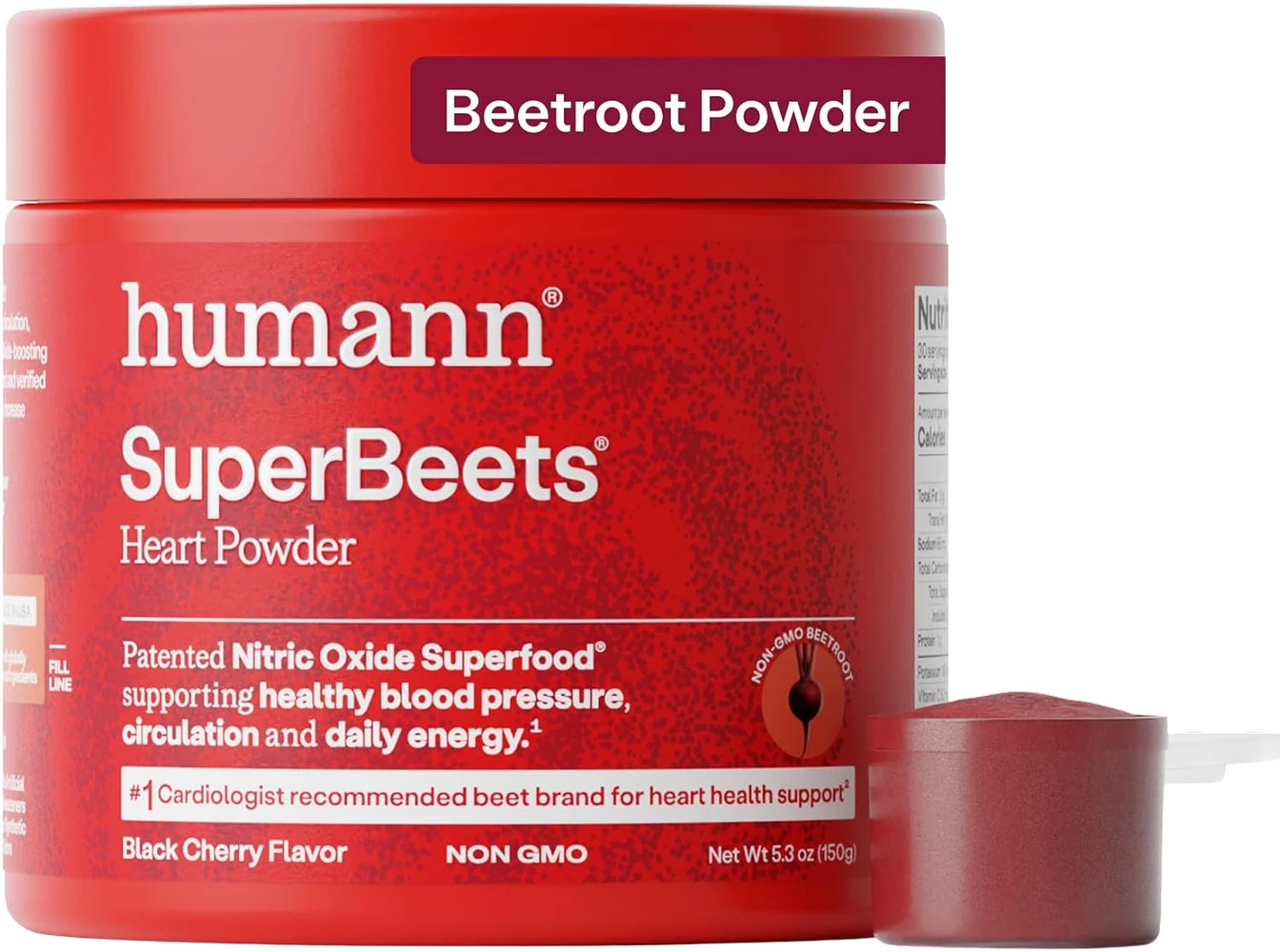
Best overall: HumanN SuperBeets Black Cherry
The category benchmark — a clinically-marketed, fermentation-processed beet crystal powder positioned around nitric-oxide activity, with a black-cherry flavor that dissolves cleanly. The recognized default, even though (like almost all beet products) it doesn't print a nitrate number.
$39 / 5.3 oz canister (30 servings)$1.30 / serving (1 tsp, ~5 g crystals)
Why it wins: all five scores, pros & cons, full label
- The most recognized, heavily-studied-and-marketed beet brand for NO and blood-pressure support
- Black cherry flavor is widely liked and dissolves cleanly in water
- Non-GMO, US-grown beets, concentrated crystals rather than just dried whole beet
- Fermentation step is positioned around preserving nitric-oxide activity
- Premium price per serving versus plain beet powders
- Does not disclose actual nitrate mg per serving — you can't verify the active dose
- Contains stevia and natural flavor — not a plain single-ingredient beet
- Nitrate disclosed
- Not disclosed — no nitrate mg on label
- Dose
- 1 tsp (~5 g) concentrated beet crystals per serving
- Form
- Powder (concentrated beet crystals)
- Count
- 30 servings (5.3 oz canister)

Our take — SuperBeets earns the top slot as the category default: it's the most recognized, most-marketed beet product, the black-cherry crystals dissolve cleanly and taste good enough to take daily, and the whole product is built around nitric-oxide activity rather than raw beet mass. The honest asterisk — and it applies to almost everything here — is that it does not print a nitrate number, so you're trusting the brand's process rather than a verified dose. If you want the easy, well-liked, widely-trusted starting point and you'll judge it by how you feel over a couple of weeks, this is the one to buy first. No pick on this list currently prints a nitrate dose.
 02
02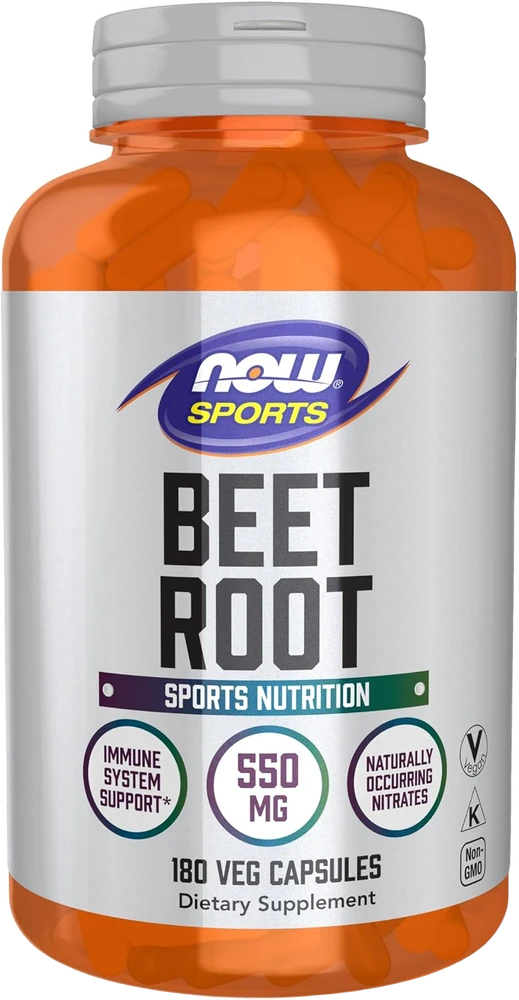 03
03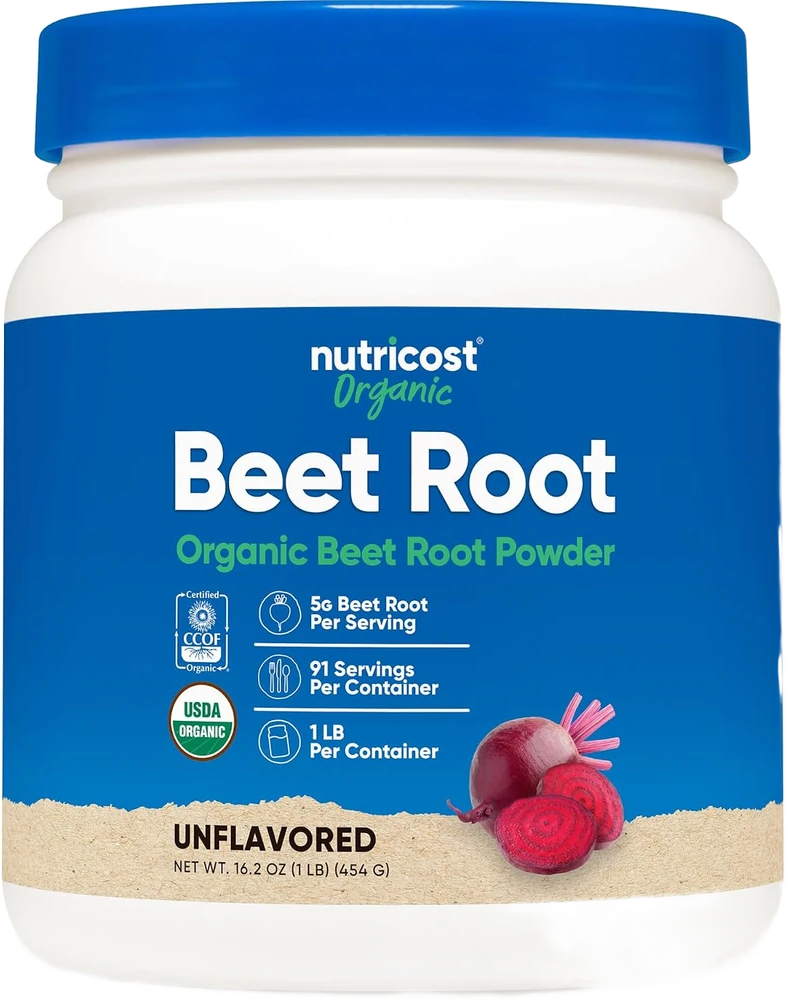 04
04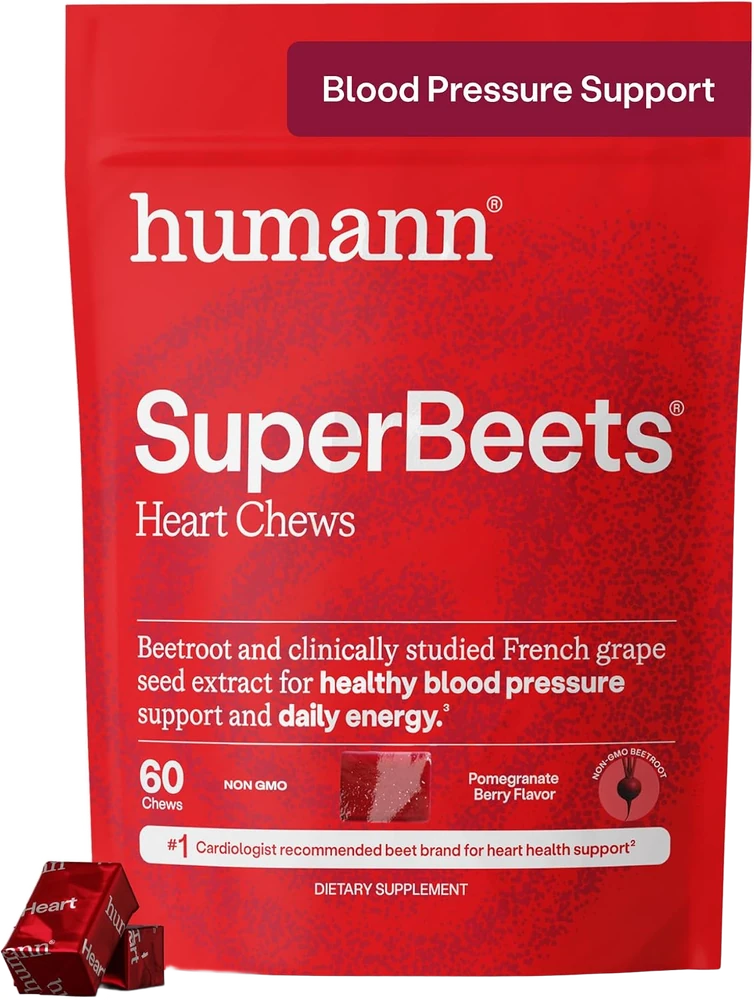 05
05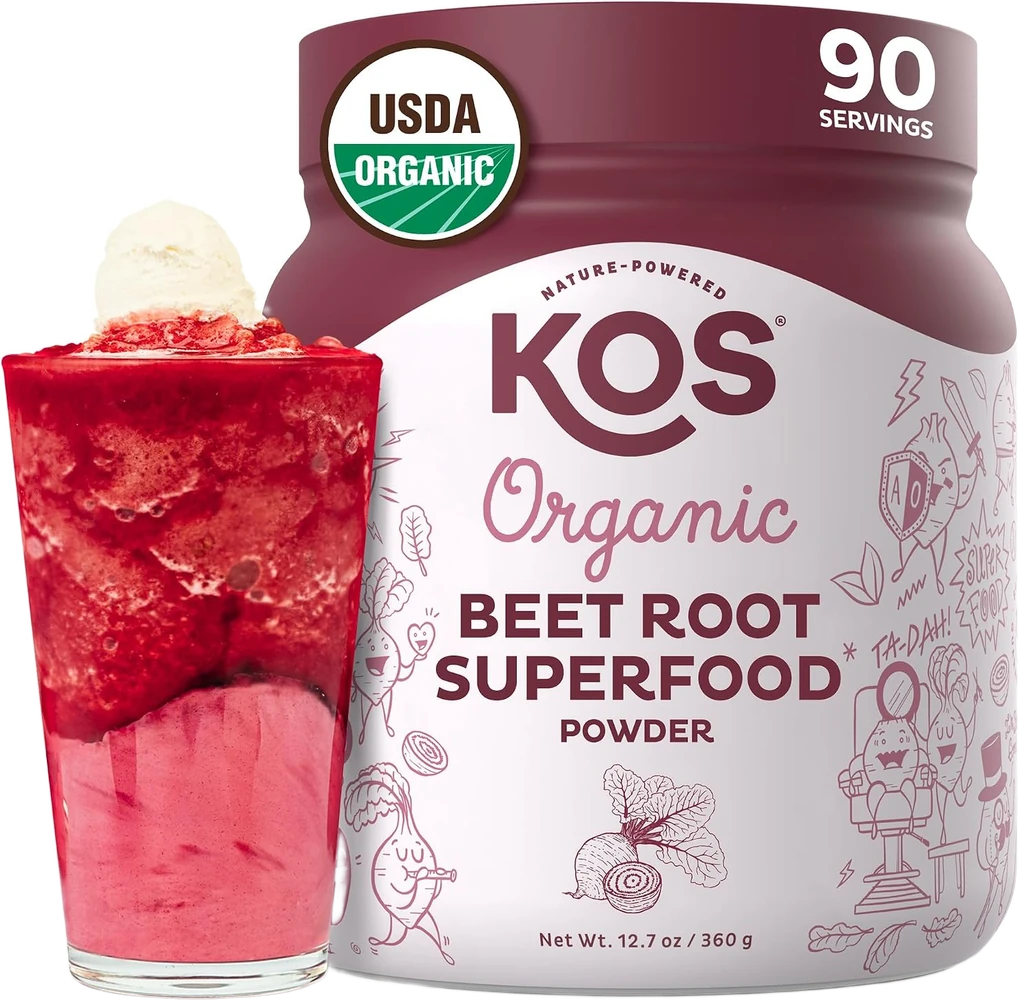 06
06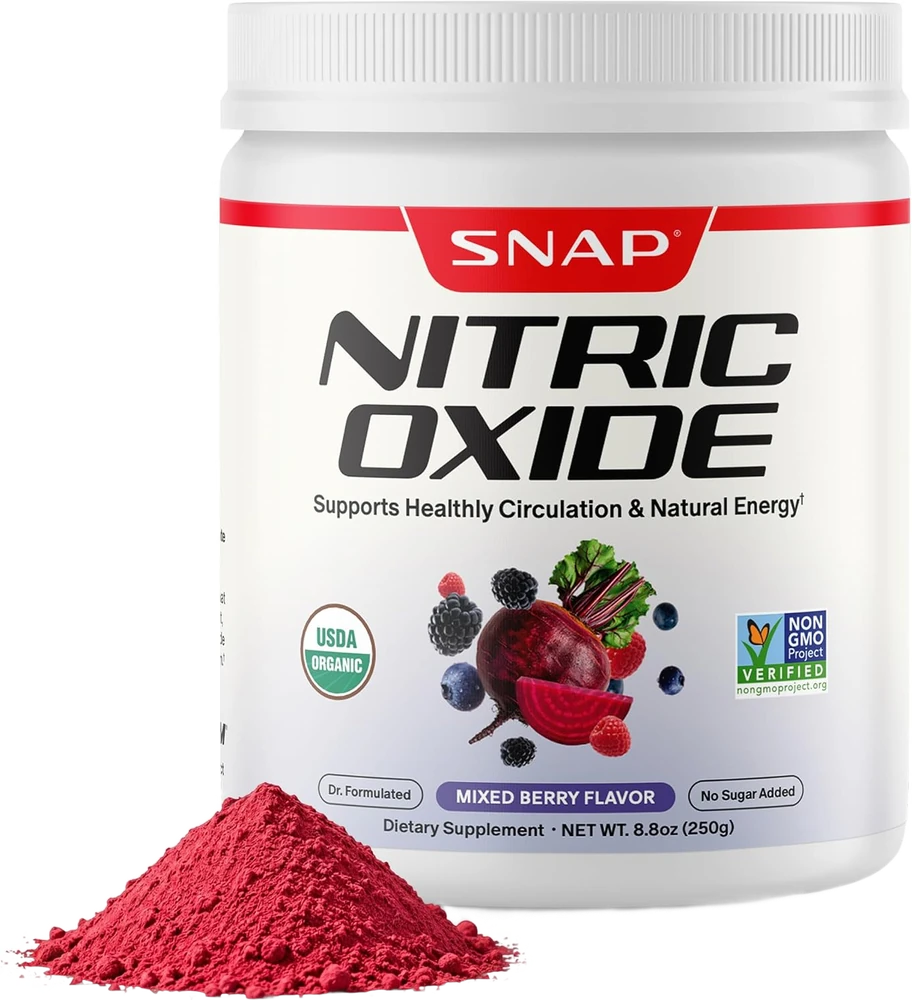 07
07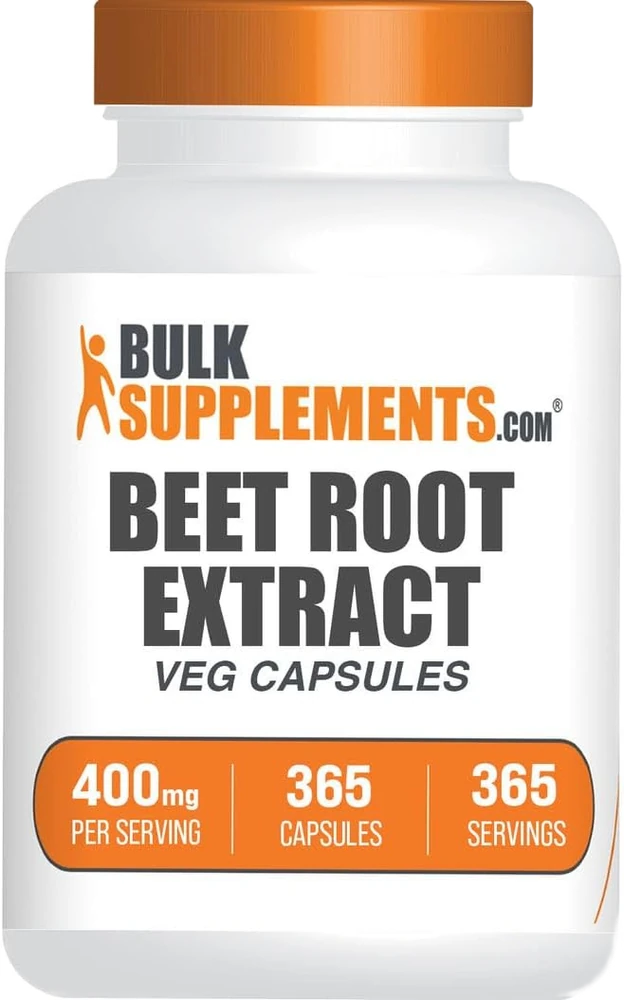 08
08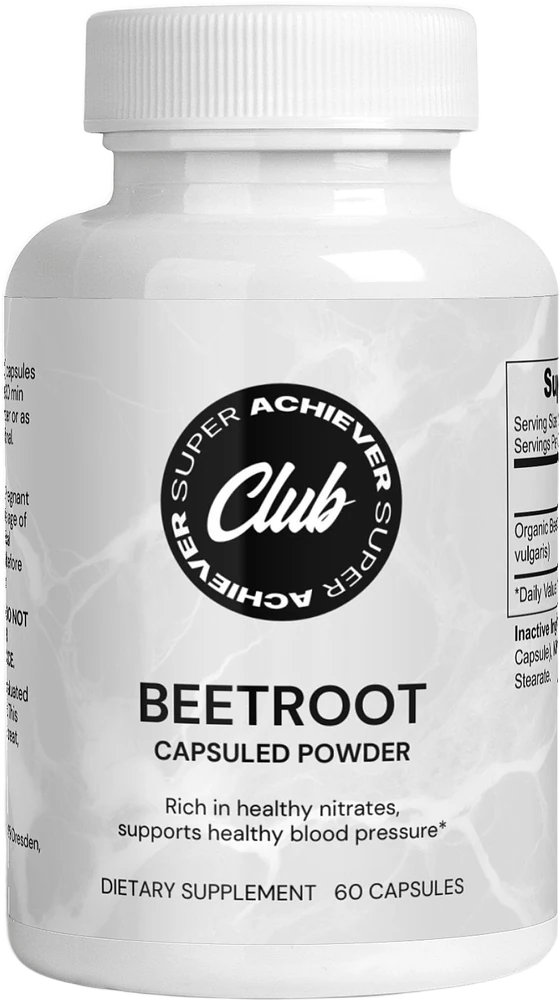 09
09Who Wins Which Aspect
Sorted by overall SAC Product Score™ — the official ranking.
| # | Pick | Score | Nitrate content & potency30% | Dose vs studied range25% | Purity & label transparency20% | Value per serving15% | Taste & real-world use10% | Cost Per Dose | Buy |
|---|---|---|---|---|---|---|---|---|---|
| 01 | | 8.8 | 9.02 | 9.01 | 9.02 | 7.0 | 10.01 | $1.30 / serving | Check price |
| The most recognized, heavily-studied-and-marketed beet brand for NO and blood-pressure supportPremium price per serving versus plain beet powders | |||||||||
| 02 | | 8.4 | 9.51 | 7.52 | 7.5 | 8.52 | 9.02 | $0.90 / serving | Check price |
| Combines whole beet root with added NO3-T nitrates — the actual NO precursor, not just beetTotal nitrate mg per serving still not disclosed despite adding nitrates | |||||||||
| 03 | | 7.5 | 6.5 | 6.5 | 9.02 | 8.52 | 8.53 | $0.26 / serving | Check price |
| Reputable manufacturer (NOW) with in-house GMP testing labsWhole dried beet, not concentrated — modest nitrate per capsule | |||||||||
| 04 | | 7.5 | 6.0 | 7.52 | 9.02 | 10.01 | 5.5 | $0.24 / serving | Check price |
| Excellent value — a full pound of organic beet powder for about $22 (~$0.24/serving)Plain earthy beet flavor (unflavored bag) | |||||||||
| 05 | | 7.4 | 7.5 | 6.0 | 8.03 | 7.0 | 10.01 | $1.33 / serving | Check price |
| No mixing or water needed — easy daily compliance and travel-friendlyLow actual beet mass (~500 mg) — chews are a low-dose format versus powders | |||||||||
| 06 | | 7.3 | 6.5 | 7.03 | 9.51 | 7.53 | 6.0 | $0.37 / serving | Check price |
| USDA Organic (CCOF certified), non-GMO, vegan, gluten- and soy-freeUnflavored raw beet taste is earthy and divides users | |||||||||
| 07 | | 7.2 | 8.03 | 6.5 | 8.03 | 5.0 | 8.53 | $1.13 / serving | Check price |
| Adds Oxystorm red spinach — a recognized concentrated dietary-nitrate source — on top of beetOnly 30 servings — higher cost per serving than plain powders (~$1.13) | |||||||||
| 08 | | 7.1 | 5.5 | 6.0 | 8.03 | 10.01 | 8.0 | $0.06 / serving | Check price |
| 365 capsules — roughly a year's supply for about $23, extremely low cost per serving (~$0.06)Extract ratio not disclosed — true potency versus whole beet is unclear | |||||||||
| 09 | | 6.5 | 6.5 | 6.5 | 7.0 | 4.5 | 8.0 | $0.97 | Check price |
| Organic beetroot as the only active ingredientNo nitrate content on the label | |||||||||
The Other 8, Ranked
- 02
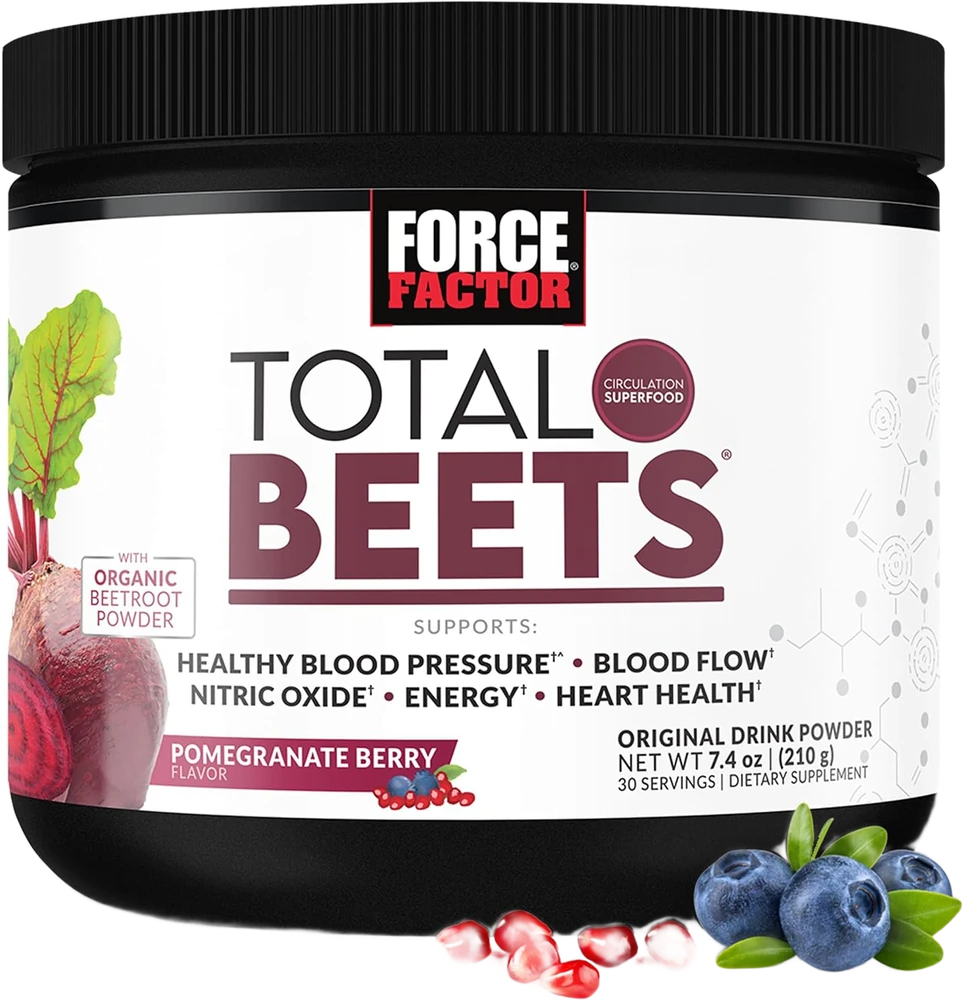
Best added-nitrate formula: Force Factor Total Beets Drink Mix
8.4SAC Score™One of the few mainstream beet powders that openly ADDS standardized NO3-T nitrates on top of whole beet — squarely targeting the nitric-oxide pathway rather than relying on beet mass alone. The pick for people who want the actual NO precursor in the mix.
StrongestNitrate content & potency9.51WeakestDose vs studied range7.5- Nitrate disclosed
- Adds NO3-T nitrates; total nitrate mg not disclosed
- Dose
- 3 g beet root powder per serving (plus NO3-T nitrates)
All five scores, pros & cons, full label
What We Like- Combines whole beet root with added NO3-T nitrates — the actual NO precursor, not just beet
- Performance and endurance positioning with energy and circulation framing
- Widely available, strong review base, mixes easily
- Good value per serving for a fortified formula (~$0.90)
What You Live With- Total nitrate mg per serving still not disclosed despite adding nitrates
- Flavored drink mix contains sweeteners and natural flavor — not a plain beet
- Beet mass per serving (3 g) is modest versus bulk powders
- Form
- Powder (flavored drink mix)
- Count
- 30 servings
Our take — Total Beets lands at #2 for one substantive reason: it's among the very few mainstream products that adds standardized NO3-T nitrates on top of beet root, which means it's targeting the nitric-oxide pathway with the actual precursor rather than hoping the beet mass carries enough nitrate. It still doesn't print a total nitrate figure — so it isn't fully transparent — but adding a named nitrate source is a real step beyond a plain powder, and at about $0.90 a serving it's well-priced. The beet mass itself is modest at 3 g, and it's a flavored, sweetened drink mix rather than a clean single ingredient. For someone who wants the NO precursor explicitly in the formula and likes a flavored daily drink, this is the sharpest pick on the list.
- 03
Best trusted-brand capsule: NOW Sports Beet Root Capsules
7.5SAC Score™A trusted-brand, single-ingredient whole-beet capsule from NOW's Sports line — the no-frills convenient option for people who won't drink powder, backed by NOW's in-house GMP testing.
StrongestPurity & label transparency9.02WeakestNitrate content & potency6.5- Nitrate disclosed
- Not disclosed (naturally-occurring nitrates from dried beet)
- Dose
- 2 capsules = 1,100 mg beet root (550 mg per capsule)
All five scores, pros & cons, full label
What We Like- Reputable manufacturer (NOW) with in-house GMP testing labs
- Clean single-ingredient dried whole beet — non-GMO and vegan
- Capsules mean no taste and no mixing — easy to dose
- 180-count bottle is good value (~$0.26/serving)
What You Live With- Whole dried beet, not concentrated — modest nitrate per capsule
- No disclosed nitrate content
- You need several capsules to approach a meaningful beet dose
- Form
- Capsule (dried whole beet, not an extract)
- Count
- 180 veg capsules (90 servings at 2/day)
Our take — NOW Sports Beet Root is the dependable, trusted-name capsule for the person who simply won't drink an earthy powder. You get clean, single-ingredient dried whole beet from a manufacturer with genuine in-house QC, in a no-taste, no-mixing format, at a fair ~$0.26 per serving. The honest limitation is potency: this is dried whole beet rather than a concentrated extract, so the nitrate per capsule is modest and — as with most of the field — undisclosed, which means hitting an endurance-level dose would take a lot of capsules. As a convenient, reputable daily beet capsule for general support, it's a solid pick; no capsule on this list currently states its nitrate dose.
- 04
Best value: Nutricost Organic Beet Root Powder
7.5SAC Score™The value pick — a full pound of USDA Organic single-ingredient beet powder at one of the lowest cost-per-gram prices on the market. Maximum real beet per dollar, no frills.
StrongestValue per serving10.01WeakestTaste & real-world use5.5- Nitrate disclosed
- Not disclosed
- Dose
- ~5 g organic beet root per serving
All five scores, pros & cons, full label
What We Like- Excellent value — a full pound of organic beet powder for about $22 (~$0.24/serving)
- USDA Organic, non-GMO, vegan, single ingredient
- Made in a GMP-compliant, FDA-registered facility
- ~5 g per serving is a solid beet mass for the price
What You Live With- Plain earthy beet flavor (unflavored bag)
- No disclosed nitrate content
- Bag (not jar) packaging is less convenient for daily scooping
- Form
- Powder (single-ingredient)
- Count
- ~90 servings (1 lb / 16 oz bag)
Our take — If your priority is the most real beet per dollar, Nutricost wins outright: a full pound of USDA Organic, single-ingredient beet powder for around $22 works out to roughly $0.24 a serving at a solid ~5 g scoop, made in a GMP-compliant facility. For high-dose experimenters who want to push beet mass without spending much, it's the obvious value play. The compromises are exactly what you'd expect at this price — an earthy unflavored taste, undisclosed nitrate content like nearly everything here, and a bag rather than a jar, which is fussier to scoop from. Buy it to dose beet cheaply and generously; pay more only if you want flavor (SuperBeets, #1) or capsule convenience (NOW, #3).
- 05
Best no-mix convenience: HumanN SuperBeets Heart Chews
7.4SAC Score™The convenience pick — a no-water, no-mixing soft chew that pairs beet root with grape seed extract for blood-pressure support on the go. Lowest-effort format here, at the cost of a low actual beet dose.
StrongestTaste & real-world use10.01WeakestDose vs studied range6.0- Nitrate disclosed
- Not disclosed (label reports ~500 mg beet + 150 mg grape seed extract)
- Dose
- 2 chews (~500 mg beet root powder + grape seed extract) per serving
All five scores, pros & cons, full label
What We Like- No mixing or water needed — easy daily compliance and travel-friendly
- Adds grape seed extract, which has its own blood-pressure evidence
- Pleasant pomegranate-berry flavor, trusted HumanN brand
- Convenient format makes consistency (the thing that matters most) realistic
What You Live With- Low actual beet mass (~500 mg) — chews are a low-dose format versus powders
- Contains added sugars and sweeteners typical of chews
- Premium price per serving, and nitrate content not disclosed
- Form
- Soft chew
- Count
- 60 chews (30 servings)
Our take — The Heart Chews exist to solve the real problem with beetroot — compliance. A chew you can take anywhere with no water and no earthy-beet taste is far easier to keep up for the weeks or months the blood-pressure benefit actually requires, and pairing beet with grape seed extract (which has its own modest BP evidence) is a sensible combination for that goal. The trade-off is dose: about 500 mg of beet per serving is a fraction of what a powder delivers, so this is a maintenance-and-convenience product, not a high-dose endurance one. It's also premium-priced and, like the rest, doesn't disclose nitrate. Buy it for effortless daily blood-pressure support; skip it if your goal is an endurance dose, where a powder or concentrated extract makes more sense.
- 06
Best organic powder: KOS Organic Beet Root Powder
7.3SAC Score™A clean USDA Organic single-ingredient beet powder in a large 90-serving jar — the organic everyday driver with no flavors or sweeteners, for people who want just beet and nothing else.
StrongestPurity & label transparency9.51WeakestTaste & real-world use6.0- Nitrate disclosed
- Not disclosed
- Dose
- ~4 g organic beet root per serving
All five scores, pros & cons, full label
What We Like- USDA Organic (CCOF certified), non-GMO, vegan, gluten- and soy-free
- Single ingredient — nothing but beet, no added sugar or flavor
- 90 servings per jar is strong value for an organic powder (~$0.37/serving)
- Jar packaging is convenient for daily scooping
What You Live With- Unflavored raw beet taste is earthy and divides users
- No disclosed nitrate content
- Whole beet powder, not a concentrated extract — modest, unverifiable nitrate load
- Form
- Powder (single-ingredient)
- Count
- 90 servings (12.7 oz jar)
Our take — KOS is the clean-label organic powder for buyers who want beet and literally nothing else — USDA Organic, single ingredient, no sweeteners — in a generous 90-serving jar at a fair per-serving price. As an honest, transparent product it's easy to recommend on its own terms. Its ranking reflects the category's central limitation, though: it's a plain whole-beet powder, so the nitrate is both modest and undisclosed, and the earthy unflavored taste is genuinely divisive (you'll want to blend it into a smoothie). Buy it if organic, single-ingredient purity is your priority and you don't mind the flavor; if cost is the main driver, Nutricost (#4) gives you a full pound of similar organic powder for less.
- 07
Best nitrate-stacked blend: Snap Supplements Organic Beet Root Powder
7.2SAC Score™A nitric-oxide-focused organic blend that stacks beet with Oxystorm red spinach — one of the most nitrate-dense plants — plus pomegranate, for a circulation-targeted formula with a pleasant mixed-berry flavor.
StrongestTaste & real-world use8.53WeakestValue per serving5.0- Nitrate disclosed
- Not disclosed (adds Oxystorm red spinach, a high-nitrate source)
- Dose
- 1 scoop per serving (organic beet blended with red spinach & pomegranate)
All five scores, pros & cons, full label
What We Like- Adds Oxystorm red spinach — a recognized concentrated dietary-nitrate source — on top of beet
- USDA Organic, non-GMO, vegan, caffeine-free, no added sugar
- Pleasant mixed-berry flavor improves daily compliance
- Circulation/NO positioning built on two nitrate sources, not one
What You Live With- Only 30 servings — higher cost per serving than plain powders (~$1.13)
- Total nitrate mg not disclosed despite the NO positioning
- A blend (beet + red spinach + pomegranate) rather than a pure beet product
- Form
- Powder (blend: beet + red spinach + pomegranate)
- Count
- 30 servings (8.8 oz)
Our take — Snap is the most interesting blend on the list: stacking Oxystorm red spinach — among the most nitrate-dense plants available — on top of organic beet is a smart, NO-targeted move, and the mixed-berry flavor and clean organic, no-added-sugar formula make it genuinely pleasant to take daily. It sits at #7 mainly on value and transparency: at ~$1.13 a serving with only 30 servings it's one of the pricier options, and despite leaning hard on the nitric-oxide angle it still doesn't disclose total nitrate. It's also a multi-ingredient blend, not a pure beet. Buy it if you like the idea of two concentrated nitrate sources in a tasty organic formula and don't mind paying for it.
- 08
Best value extract capsule: BulkSupplements Beet Root Extract Capsules
7.1SAC Score™The value extract capsule — a full year of single-capsule beet root extract servings at a very low cost-per-serving, from a bulk-focused manufacturer that publishes COAs. Cheapest path to a daily beet capsule.
StrongestValue per serving10.01WeakestNitrate content & potency5.5- Nitrate disclosed
- Not disclosed (extract ratio also not disclosed)
- Dose
- 1 capsule = 400 mg beet root extract
All five scores, pros & cons, full label
What We Like- 365 capsules — roughly a year's supply for about $23, extremely low cost per serving (~$0.06)
- One capsule per serving of beet extract — convenient, vegan, and gluten-free
- BulkSupplements third-party tests and publishes COAs
- No flavor, no mixing, easy to add to a daily stack
What You Live With- Extract ratio not disclosed — true potency versus whole beet is unclear
- No nitrate content stated
- Plain bag-style supplement with minimal branding or flavor
- Form
- Capsule (beet root extract)
- Count
- 365 capsules (365 servings)
Our take — BulkSupplements is the rock-bottom-cost way to take a daily beet extract capsule: about a year's supply for ~$23, which is roughly six cents a serving, from a manufacturer that does at least publish COAs. For a low-effort, low-cost addition to an existing supplement stack, that value is hard to argue with. The catch is the one that keeps it at #8: neither the extract ratio nor the nitrate content is disclosed, so the true potency relative to whole beet is genuinely unclear — you're buying an unknown-strength extract cheaply. It's a fine budget capsule for general support; if you want a capsule from a brand with in-house QC, NOW Sports (#3) is worth the small step up in price.
- 09
Our own brand: Super Achiever Organic Beetroot
6.5SAC Score™Our own beetroot: organic beet powder in capsules. It ranks here because the label gives no nitrate figure, the dose is small and it costs $0.97 a serving.
StrongestTaste & real-world use8.0WeakestValue per serving4.5- Per serving
- 1,300 mg organic beetroot powder, 2 capsules
- Cost per serving
- $0.97
- Bottle
- 60 capsules · 30 servings
All five scores, pros & cons, full label
What We Like- Organic beetroot as the only active ingredient
- Capsules: no taste, no mixing
- Amount per serving is printed
What You Live With- No nitrate content on the label
- 1.3 g of powder is a fraction of the beet used in the trials
- Nitrate content
- Not stated
- Certifications
- None on the label
Our take — Clean and convenient, but small and unmeasured for a nitrate effect. The concentrated powders at the top are the better buy.
Beetroot In Four Short Lessons
Look for a nitrate number, not grams of beet.
Nitrate is beetroot's only active, and a label reading 5 g of beet root powder gives beet mass, not nitrate load. Only one product in this list quantifies its nitrate; the rest are marked 'not disclosed'.
Dose high enough to matter.
Wylie 2013 mapped the dose: 8.4 and 16.8 mmol of nitrate raised time-to-exhaustion, while 4.2 mmol did nothing. A low dose is a wasted one.
Expect a modest, real effect.
Beetroot juice lowered blood pressure by about 10/8 mmHg at its peak (Webb 2008), and the pooled systolic drop is roughly 4.4 mmHg (Siervo 2013). Useful, not dramatic.
Lansley 2011 (PMID 21071588, PMID 21471821), Wylie 2013 (PMID 23640589), Webb 2008 (PMID 18250365), and the Siervo 2013 meta-analysis (PMID 23596162) — full scoring in the methodology below.
Beetroot supplements can't be ranked on the marketing-friendly numbers (the "28,000 mg" or "5 g" on the front of the pack), because the active that the trials dose is nitrate — and almost nobody discloses it. So we built the ranking around the nitrate question first. Nitrate content and potency carries the most weight: a product that actually quantifies its nitrate (none of the current picks does) or adds a recognized nitrate source on top of beet (NO3-T nitrates, Oxystorm red spinach) is doing the thing the science says matters, and scores higher than an opaque whole-beet powder of unknown nitrate load. Dose versus the studied range is next — how much real beet, or concentrated beet-equivalent, you get per serving relative to the beet mass the trials used, acknowledging that beet mass is only a proxy for nitrate. Purity and label transparency is the fraud-and-trust filter: single-ingredient, USDA-Organic, third-party-tested, and honest labeling earn credit; big raw-equivalence marketing numbers and undisclosed blends lose it. Value per serving is the tiebreaker within a tier. Taste and real-world use — mixability, capsule-vs-powder format, flavor, daily compliance — settles the rest, because a beet product only works if you actually take it consistently. One rule we held throughout: where a brand does not state nitrate mg, we mark it "not disclosed" and never invent a figure.
Nitrate content & potency · 30%
The active is inorganic nitrate, the NO precursor. Products that quantify nitrate (none of the current picks does) or add a recognized nitrate source on top of beet (Force Factor's NO3-T nitrates; Snap's Oxystorm red spinach) score highest because they target the studied pathway. Plain whole-beet powders of undisclosed nitrate content score lower here — not because they're bad, but because you can't verify the dose that the endurance and blood-pressure trials actually used.
Dose vs studied range · 25%
How much real beet — or concentrated beet-equivalent — you get per serving, against the beet mass the trials worked with (treating beet mass as a rough proxy for nitrate, since most labels give nothing better). Concentrated extracts and higher-mass powders (5 g organic scoops) rate above low-mass formats like 500 mg chews. Honest caveat baked into the score: more beet mass does not guarantee more nitrate when the nitrate isn't disclosed.
Purity & label transparency · 20%
Single-ingredient, USDA-Organic, non-GMO, third-party-tested, and an honest label earn credit — this is an animal-free plant concentrate, so the main trust issues are accurate labeling and not over-claiming. Big raw-equivalence marketing numbers ('28,000 mg'), undisclosed blends, and white-label-style listings cost points. A product that openly states what it is (and isn't) ranks above one that leans on a headline number.
Value per serving · 15%
Street price divided by a serving, with serving count factored in. A year of capsules for ~$23 (BulkSupplements) or a full pound of organic powder for ~$22 (Nutricost) is excellent value; a 30-serving premium canister or chew is the costly end. Tiebreaker within a tier — usability and the nitrate question come first.
Taste & real-world use · 10%
Beetroot only works if you take it daily for weeks, so format and palatability matter. Flavored crystals and berry blends (SuperBeets black cherry, Snap mixed berry) win on compliance; flavorless capsules win on zero-effort dosing; plain earthy organic powders divide opinion on taste. Mixability, no-water convenience, and flavor settle ties at the margin.
How beetroot works
- 1
Nitrate to nitric oxide
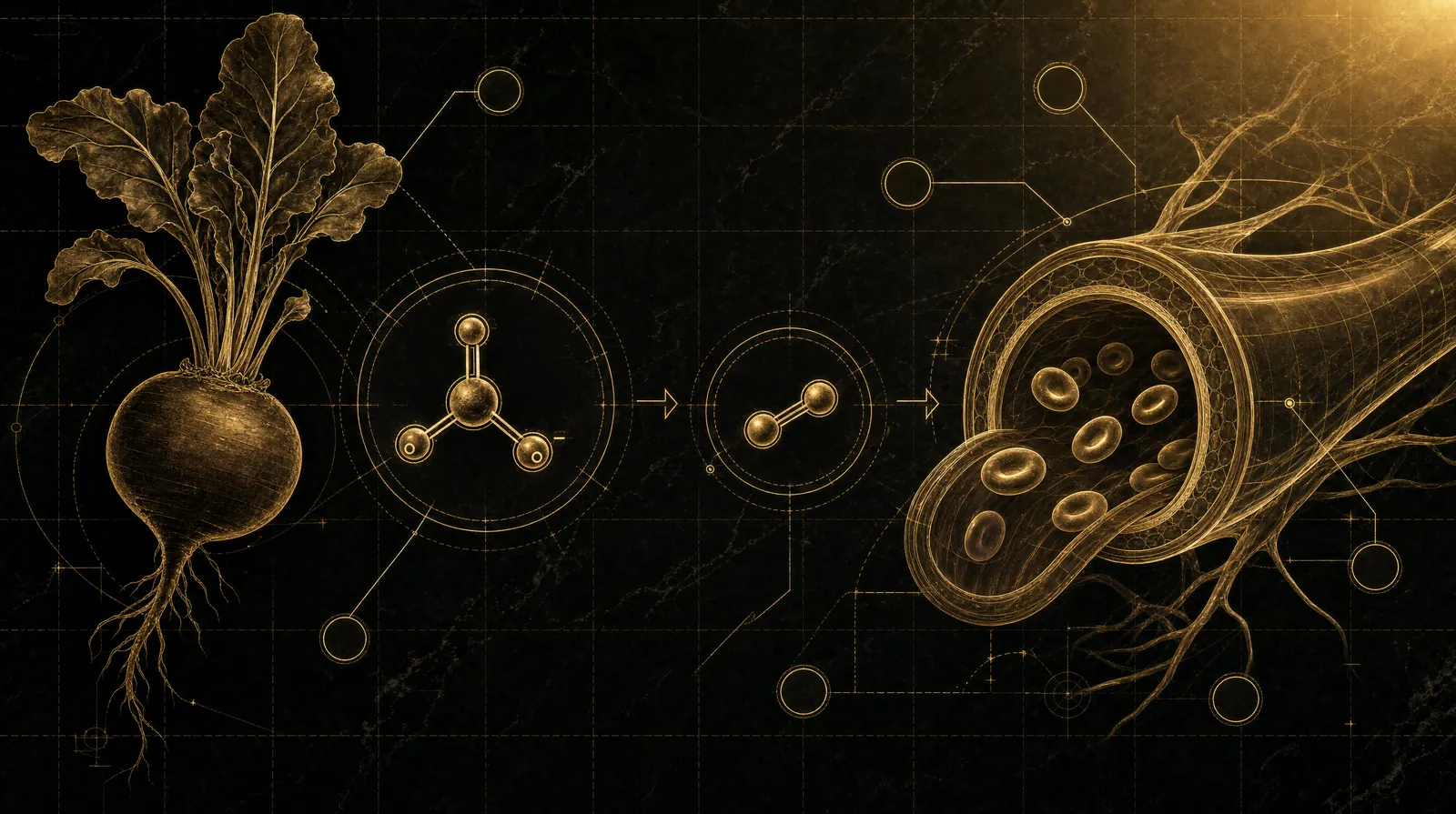
Beetroot is rich in dietary nitrate; bacteria in your mouth and gut convert it to nitrite and then nitric oxide (NO). NO relaxes and widens blood vessels — the entire mechanism behind beetroot's effects, so nitrate content is our heaviest axis.
- 2
Blood pressure and blood flow
Widened vessels lower blood pressure modestly and improve circulation — the best-supported beetroot benefit, meaningful for cardiovascular margins.
- 3
Exercise economy
More NO can improve oxygen efficiency, letting you sustain submaximal effort at a lower oxygen cost — the endurance edge cyclists and runners chase. Real but small, and dose-dependent.
- 4
Dose and the mouthwash trap
Trials used a specific nitrate dose (often ~400-800 mg) taken 2-3 hours pre-exercise. Antibacterial mouthwash kills the mouth bacteria that start the conversion and blunts the effect — a practical detail behind honest dosing.
What to expect from beetroot
Acute pre-exercise effect
Taken 2-3 hours before training, a real nitrate dose can improve endurance and perceived effort that same session. Harmless pink urine/stool is just betalain pigment.
Blood-pressure trend
With daily dosing, the modest blood-pressure-lowering effect builds and holds. This is the most reliable, best-evidenced beetroot benefit.
Endurance margin
Regular use supports steadier submaximal endurance. Effect size is small — a few percent — so judge it on data, not drama, and skip the antibacterial mouthwash.
Dose and time it
Match the studied nitrate dose, take it a couple of hours pre-effort for performance or daily for blood pressure. Whole beets and beet juice work too — the supplement is just concentrated convenience.
The bottom line
HumanN SuperBeets Black Cherry (#1) is the recognized default you judge by feel.
The most recognized, most-marketed beet product, with fermentation-processed black-cherry crystals that dissolve cleanly and are built around nitric-oxide activity. The honest asterisk, shared by almost everything here, is that it doesn't print a nitrate number.
The alternatives split cleanly by goal, format, and price.
Want the NO precursor added explicitly: Force Factor Total Beets (#2) stacks NO3-T nitrates onto beet. Cheapest real beet is Nutricost Organic (#7) at around $22 a pound; NOW Sports (#5) is the trusted-brand capsule; the SuperBeets Heart Chews (#3) are no-water blood-pressure maintenance; Snap (#9) is a tasty organic blend with a second nitrate source.
Dose for the goal — and accept you can't see the dose directly.
The endurance trials used roughly 6-13 mmol of nitrate, so for performance lean toward higher beet mass (Nutricost, KOS) or the only disclosed-nitrate extract, Toniiq (#4), and give it two weeks. For blood pressure, consistency beats heroics: a moderate daily dose for weeks is what moved the numbers.
Quick Answers
What is the best beetroot pick overall?
HumanN SuperBeets Black Cherry by HumanN is our #1 pick (SAC score 8.8/10). SuperBeets earns the top slot as the category default: it's the most recognized, most-marketed beet product, the black-cherry crystals dissolve cleanly and taste good enough to take daily, and the whole product is built around nitric-oxide activity rather than raw beet mass. The honest asterisk — and it applies to almost everything here — is that it does not print a nitrate number, so you're trusting the brand's process rather than a verified dose. If you want the easy, well-liked, widely-trusted starting point and you'll judge it by how you feel over a couple of weeks, this is the one to buy first. No pick on this list currently prints a nitrate dose.
What is the best budget option?
Nutricost Organic Beet Root Powder at $22 / 1 lb bag (~90 servings). If your priority is the most real beet per dollar, Nutricost wins outright: a full pound of USDA Organic, single-ingredient beet powder for around $22 works out to roughly $0.24 a serving at a solid ~5 g scoop, made in a GMP-compliant facility. For high-dose experimenters who want to push beet mass without spending much, it's the obvious value play. The compromises are exactly what you'd expect at this price — an earthy unflavored taste, undisclosed nitrate content like nearly everything here, and a bag rather than a jar, which is fussier to scoop from. Buy it to dose beet cheaply and generously; pay more only if you want flavor (SuperBeets, #1) or capsule convenience (NOW, #3).
How much do these picks cost?
Across our ranked picks, prices run from about $22 to $40 — exact price and cost per serving are listed on every pick card above.
How were these picks ranked?
Beetroot supplements can't be ranked on the marketing-friendly numbers (the "28,000 mg" or "5 g" on the front of the pack), because the active that the trials dose is nitrate — and almost nobody discloses it. So we built the ranking around the nitrate question first. Nitrate content and potency carries the most weight: a product that actually quantifies its nitrate (none of the current picks does) or adds a recognized nitrate source on top of beet (NO3-T nitrates, Oxystorm red spinach) is doing the thing the science says matters, and scores higher than an opaque whole-beet powder of unknown nitrate load. Dose versus the studied range is next — how much real beet, or concentrated beet-equivalent, you get per serving relative to the beet mass the trials used, acknowledging that beet mass is only a proxy for nitrate. Purity and label transparency is the fraud-and-trust filter: single-ingredient, USDA-Organic, third-party-tested, and honest labeling earn credit; big raw-equivalence marketing numbers and undisclosed blends lose it. Value per serving is the tiebreaker within a tier. Taste and real-world use — mixability, capsule-vs-powder format, flavor, daily compliance — settles the rest, because a beet product only works if you actually take it consistently. One rule we held throughout: where a brand does not state nitrate mg, we mark it "not disclosed" and never invent a figure.
Every Claim Ranked Above Traces Back To One Of These
5 peer-reviewed sources, each linked to PubMed
- [1] Wylie 2013 PMID 23640589 — Beetroot juice and exercise: pharmacodynamic and dose-response relationships. Mapped the dose-response for beetroot nitrate and endurance: moderate (8.4 mmol NO3-) and high (16.8 mmol NO3-) doses raised time-to-exhaustion by ~14% and ~12%, while a low 4.2 mmol dose did NOT significantly improve performance. The key reason dose matters — and why the near-universal failure of beet supplements to disclose nitrate is a real problem for endurance buyers.
- [2] Lansley 2011 (O2 cost) PMID 21071588 — Dietary nitrate supplementation reduces the O2 cost of walking and running: a placebo-controlled study. In a placebo-controlled crossover, dietary nitrate (from beetroot juice) reduced the oxygen cost of both walking and running — meaning the same submaximal effort required less O2. A core mechanism behind beetroot's endurance benefit: better efficiency, so a given pace feels easier.
- [3] Lansley 2011 (time trial) PMID 21471821 — Acute dietary nitrate supplementation improves cycling time trial performance. A single acute dose of dietary nitrate (beetroot juice) improved 4-km and 16.1-km cycling time-trial performance versus placebo. Direct performance evidence — not just physiology — that beetroot nitrate can make athletes faster over a fixed distance.
- [4] Webb 2008 PMID 18250365 — Acute blood pressure lowering, vasoprotective, and antiplatelet properties of dietary nitrate via bioconversion to nitrite. In healthy volunteers, ~500 mL of beetroot juice lowered blood pressure by roughly 10/8 mmHg about 3 hours after ingestion, tracking the peak rise in plasma nitrite. The landmark trial establishing that beetroot's dietary nitrate acutely reduces blood pressure via the nitrate-nitrite-NO pathway.
- [5] Siervo 2013 (meta-analysis) PMID 23596162 — Inorganic nitrate and beetroot juice supplementation reduces blood pressure in adults: a systematic review and meta-analysis. Pooling randomized controlled trials, inorganic nitrate and beetroot juice supplementation significantly reduced systolic blood pressure (on the order of ~4-5 mmHg). The meta-analytic confirmation that the blood-pressure effect is real and replicable across studies, not a one-off finding.
Affiliate disclosure: every Amazon link uses our Associates tag (superachieverclub-20). We earn a small commission at no cost to you; it funds independent reviews. We never accept payment to change a ranking.