
KOS Organic Beet Root Powder Review
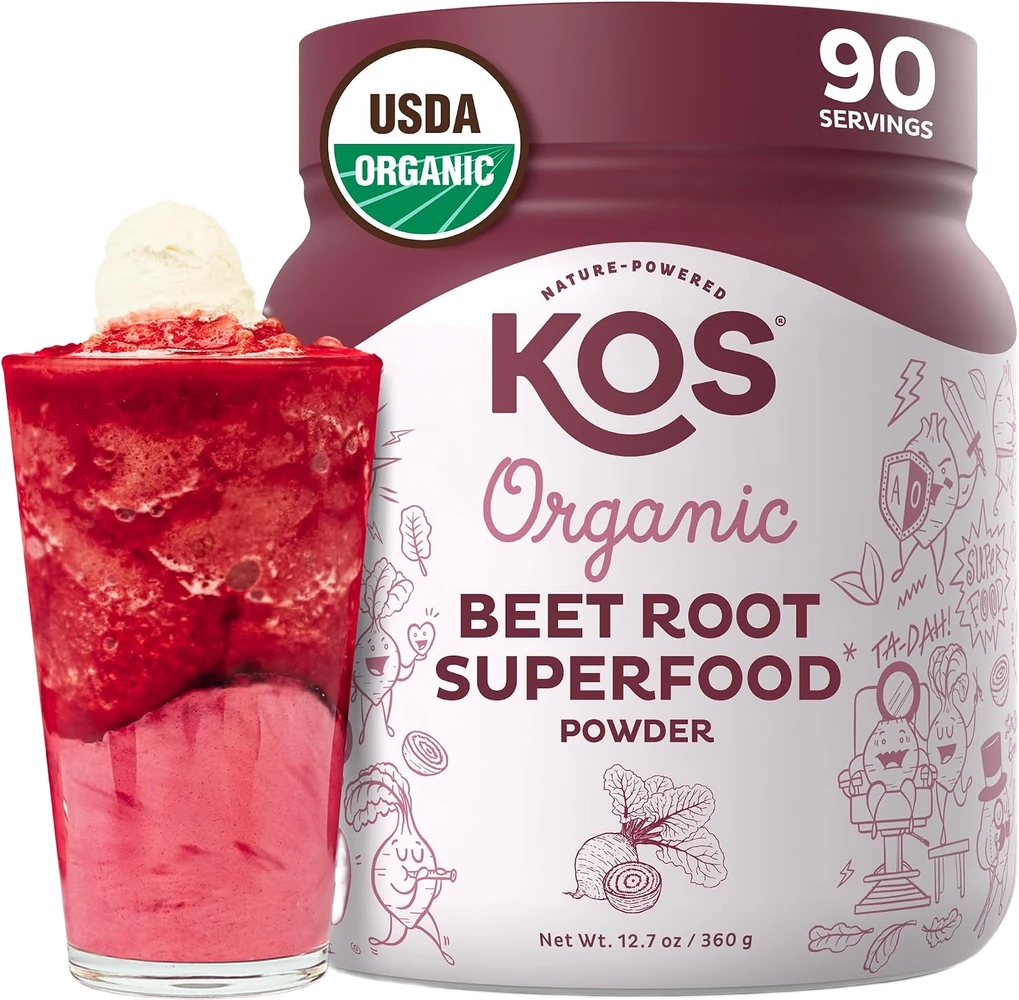 #6 of 9 · Best organic powder
Real retailer photo, cut out. Label unedited.
Consider it. The cleanest organic beet powder — buy it for purity, tolerate the taste. USDA Organic, CCOF-certified, single-ingredient beet powder with nothing added, in a generous 90-serving jar at ~$0.37/serving — best-in-class on purity and label transparency.
$33 / 12.7 oz jar (90 servings)$0.37 / serving (~4 g)
Why It Scores 7.3 — And The Label Line Behind Each Number
Nitrate content & potency
30% of scoreA plain single-ingredient whole-beet powder, so the nitrate is whatever's naturally in ~4 g of organic beet — modest, and (like the category) undisclosed. Not concentrated, so no potency boost over the raw mass. This is the product's main limitation on the axis that matters most: clean beet, but a modest and unverifiable nitrate dose.
Dose vs studied range
25% of scoreAbout 4 g of organic beet per serving is a decent mass — more than a chew, comparable to other powders — and reasonable for daily support. The usual caveat applies: beet mass is only a proxy, and without a disclosed nitrate figure you can't confirm ~4 g reaches the ~6.4-13 mmol endurance range (Wylie 2013). Solid everyday dose; for endurance you'd likely want more or a concentrated extract.
Purity & label transparency
20% of scoreThe standout axis and the reason to buy it: USDA Organic (CCOF-certified), non-GMO, vegan, gluten- and soy-free, single ingredient with nothing added. About as clean and transparent a panel as the category offers — there's simply nothing on the label but organic beet. Near-top score; the only gap is the category-wide undisclosed nitrate.
- Certifications
- USDA Organic (CCOF), non-GMO, vegan, gluten- and soy-free
Value per serving
15% of scoreAbout $0.37 per serving across 90 servings is fair value for a USDA Organic powder, and the jar is convenient. It's pricier per serving than Nutricost's pound-in-a-bag (~$0.24) but cheaper than the premium canisters and chews. Reasonable value for organic purity in a usable jar.
- Per serving
- ~4 g organic beet root
- Count
- 90 servings (12.7 oz jar)
- Price
- $33 / 12.7 oz jar (90 servings) = ~$0.37 per serving
Taste & real-world use
10% of scoreThe weak point: an unflavored single-ingredient beet powder tastes earthy and genuinely divides users on its own. It needs blending into a smoothie or something flavorful rather than plain water. The jar is convenient to scoop, but the taste makes daily compliance harder than a flavored drink or a flavorless capsule — a real consideration since consistency drives the benefit.
- Active form
- Single-ingredient organic beet root powder (not an extract)
- Taste
- Earthy, unflavored — best in a smoothie, divides users in plain water
- More Specs
- Nitrate disclosed
- No — no nitrate mg stated
- Best for
- Buyers who prioritize clean organic single-ingredient purity and will blend it
- Trial context
- ~4 g is a proxy dose; nitrate undisclosed vs the endurance range (Wylie 2013)
Marketing Claims Vs. Reality
USDA Organic, CCOF-certified, single-ingredient beet root.
Accurate and the product's defining strength — USDA Organic (CCOF-certified), non-GMO, vegan, single-ingredient beet with nothing added. One of the cleanest, most transparent labels in the category, and a genuine differentiator on the purity axis.
Supports natural energy, stamina, and circulation.
Directionally plausible via the nitrate-NO pathway (Lansley 2011, PMIDs 21071588/21471821). Marked partial because this is a modest-dose, non-concentrated whole-beet powder with undisclosed nitrate, so the per-serving effect on energy/stamina can't be quantified against the studied doses — adequate for general support, not a performance claim.
Supports healthy blood pressure and nitric-oxide production.
The beetroot/dietary-nitrate effects on blood pressure and NO are real (Webb 2008, PMID 18250365; Siervo 2013, PMID 23596162). The claim has mechanistic basis, but partial because the modest, undisclosed nitrate of ~4 g whole-beet powder means the effect size for this product isn't quantifiable from the label — consistent daily dosing is what would deliver it.
90 servings of pure organic beet per jar.
Consistent with the product — a 12.7 oz jar at ~4 g per serving providing roughly 90 servings of single-ingredient organic beet. A straightforward, accurate quantity claim and a genuine value point for an organic powder.
Clean, no added sugar or fillers.
Accurate — it's a single-ingredient powder with no sweeteners, flavors, or fillers. This clean panel is the heart of the product's appeal and is well-supported by its certifications and ingredient list.
What Our Test Actually Found
Best-in-class purity is the whole reason to buy it
KOS's case rests on one thing it does better than almost anything else in the category: clean, single-ingredient organic purity. USDA Organic, CCOF-certified, non-GMO, vegan, gluten- and soy-free, with nothing in the jar but beet — there's simply nothing on the label to scrutinize. For the buyer whose priority is the cleanest possible organic beet, KOS scores near the top of the category on exactly that axis, and that's what earns it a respectable ranking despite the category-wide nitrate gap.
The undisclosed, non-concentrated nitrate is the ceiling
Like nearly every beet product, KOS is a plain whole-beet powder, so its nitrate is modest and unstated — and because it isn't concentrated, there's no potency boost over the raw ~4 g of beet. That's the honest ceiling on the product: it's clean and transparent on everything except the one number that matters most for the active, the nitrate. For general and blood-pressure support that's acceptable; for a verifiable or potent nitrate dose, a concentrated disclosed-nitrate extract (Toniiq #4) is the better tool.
The earthy taste is the real friction — plan to blend it
The practical reason KOS scores lower on real-world use is taste: an unflavored single-ingredient beet powder is genuinely earthy and divides users. Mixed into plain water it's a chore for many people; blended into a smoothie with fruit it's easy. Since the benefit depends on consistent daily dosing, that taste friction matters — if you won't bother masking it, a flavored product (SuperBeets #1, Snap #7) or a flavorless capsule (NOW #3, Toniiq #4) will be easier to keep up. Buy KOS knowing you'll blend it.
Fair value in a usable jar — but Nutricost is cheaper
At about $0.37 a serving across 90 servings, KOS is fairly priced for a USDA Organic powder, and the jar is genuinely nicer to scoop from daily than a bag. That said, Nutricost (#4) offers a very similar organic single-ingredient powder for less per serving (a full pound for ~$22), trading the jar for a bag. So KOS is the pick if you'll pay a small premium for the jar and packaging; if cost is your main driver and you don't mind a bag, Nutricost gives you essentially the same clean organic beet for less.
The clean-organic choice — for the buyer who values purity over taste and dose-disclosure
The honest way to place KOS: it's the product for someone whose priority is clean organic single-ingredient purity and dose flexibility, who will tolerate (or blend away) the earthy taste, and whose goal is general or blood-pressure support rather than a verified performance dose. On those terms it's excellent. If taste-driven compliance, lowest cost, or a stated nitrate dose is what you actually care about most, the better fits are a flavored product, Nutricost, or Toniiq respectively — and you should choose accordingly.
Full analysis: all pros & cons (8), buy if / skip if
- USDA Organic (CCOF-certified), non-GMO, vegan, gluten- and soy-free — best-in-class clean label
- Single ingredient — nothing but organic beet, no sweeteners, flavors, or fillers
- Generous 90-serving jar that's convenient to scoop from daily
- Reasonable ~4 g beet dose per serving for general / blood-pressure support
- Fair value (~$0.37/serving) for a certified-organic powder
- Earthy unflavored taste divides users — needs blending into a smoothie
- No disclosed nitrate content, and not concentrated — modest, unverifiable nitrate
- Pricier per serving than Nutricost's organic pound-in-a-bag (#7)
- Clean, single-ingredient organic purity is your top priority (USDA Organic, non-GMO, vegan)
- You want a jar that's convenient to scoop from daily, with a generous 90 servings
- You'll blend it into a smoothie and don't need a flavored product
- Your goal is general / blood-pressure support at a reasonable ~4 g daily beet dose
- You won't tolerate or mask the earthy beet taste — a flavored product or capsule is easier
- You want the lowest cost per serving — Nutricost (#4) is a full pound for ~$22
- You want a stated or concentrated nitrate dose — Toniiq (#4) discloses ~56 mg/serving
USDA Organic, CCOF-certified, single-ingredient beet powder with nothing added, in a generous 90-serving jar at ~$0.37/serving — best-in-class on purity and label transparency. Two honest limits: like the category it doesn't disclose nitrate (and isn't concentrated), and the earthy unflavored taste divides users, so plan to blend it into a smoothie. Buy it if clean organic purity is your priority; for lower cost get Nutricost (#4), for a stated nitrate dose get Toniiq.
KOS is the clean-label organic powder for buyers who want beet and literally nothing else — USDA Organic (CCOF-certified), single-ingredient, no sweeteners, no flavors — in a generous 90-serving jar at a fair per-serving price. On the purity-and-transparency axis it's one of the best products in the category: a genuinely clean panel with nothing to scrutinize but the beet itself. As an honest, transparent product, it's easy to recommend on its own terms. Its ranking reflects the category's central limitation, though, plus one of its own. Like nearly every beet product, it's a plain whole-beet powder, so the nitrate is both modest and undisclosed — you can't verify the dose against the trials. And the earthy unflavored taste is genuinely divisive; you'll want to blend it into a smoothie rather than stir it into water. Buy it if organic, single-ingredient purity is your priority and you don't mind the flavor; if cost is the main driver, Nutricost (#4) gives you a similar organic powder for less. Here's the full breakdown.
The cleanest organic beet powder — buy it for purity if you'll handle the taste.

KOS is the pick for the buyer whose priority is the cleanest possible organic beet: USDA Organic, CCOF-certified, non-GMO, vegan, single-ingredient, with nothing added, in a generous 90-serving jar at a fair price. On the purity-and-transparency axis it's one of the best products in the category, and as an honest, clean-label powder it's easy to recommend on its own terms to anyone who values exactly that. Two honest limits set its ranking. Like nearly the whole category, it's a plain, non-concentrated whole-beet powder with undisclosed nitrate, so the dose is modest and unverifiable against the trials — fine for daily and blood-pressure support, not ideal for a performance dose. And the earthy unflavored taste genuinely divides people, so you'll want to blend it into a smoothie rather than stir it into water. Buy KOS if clean organic single-ingredient purity is what you care about most and you'll handle the flavor. If the lowest cost is your driver, Nutricost (#4) gives you a similar organic powder for less; if you want a stated, potent nitrate dose, Toniiq is the choice. Dose ~4 g daily, blend it, and judge it over a couple of weeks.
If This Doesn’t Fit — Try These
 07
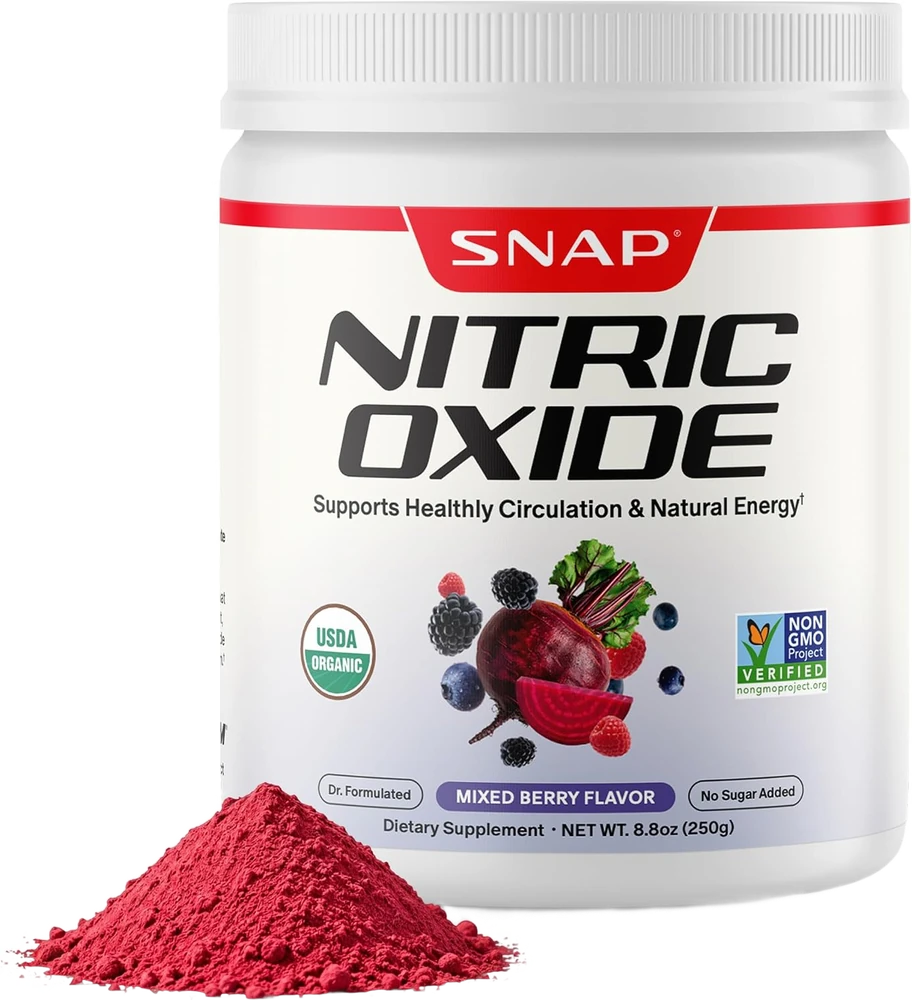
Snap Organic Beet Root Powder
Snap is the most interesting blend on the list: stacking Oxystorm red spinach — among the most nitrate-dense plants available — on top of organic beet is a smart, NO-targeted move, and the mixed-berry flavor and clean organic, no-added-sugar formula make it genuinely pleasant to take daily.
 01
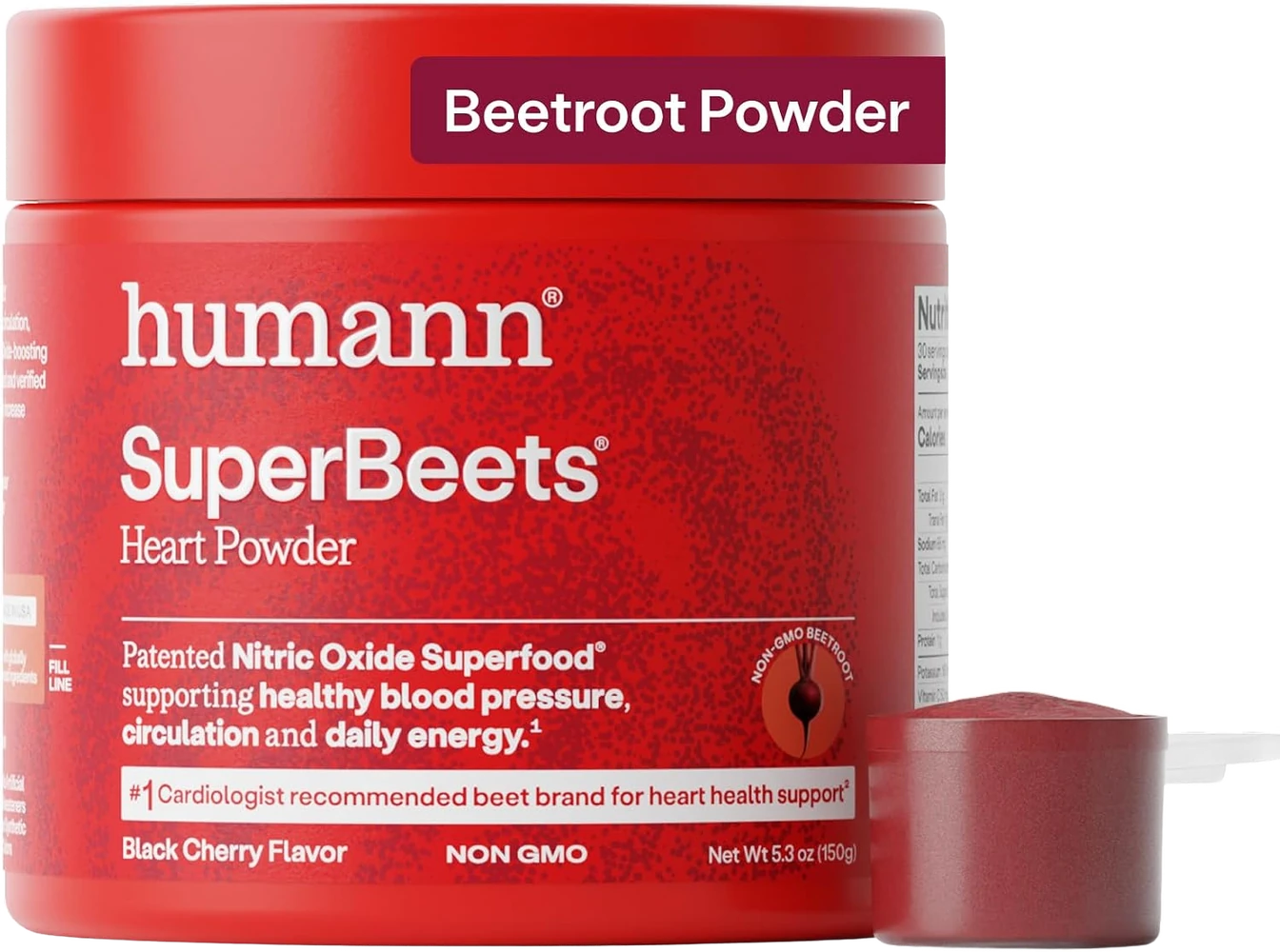
HumanN SuperBeets Black Cherry
SuperBeets earns the top slot as the category default: it's the most recognized, most-marketed beet product, the black-cherry crystals dissolve cleanly and taste good enough to take daily, and the whole product is built around nitric-oxide activity rather than raw beet mass.
 04
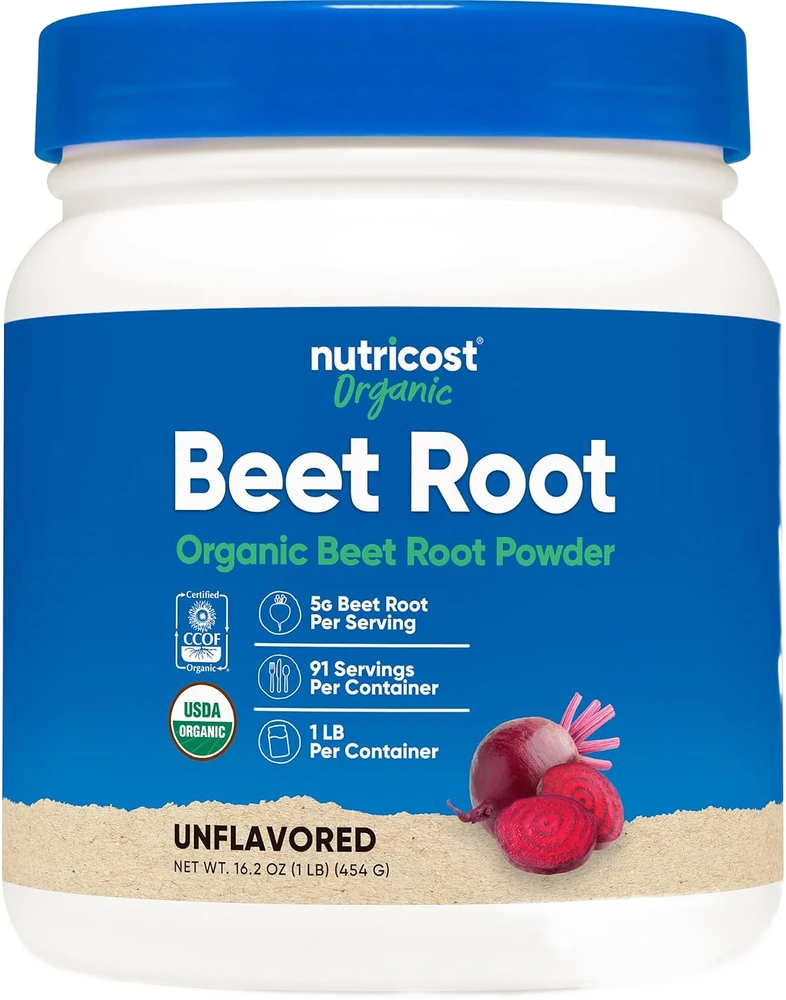
Nutricost Organic Beet Root Powder
If your priority is the most real beet per dollar, Nutricost wins outright: a full pound of USDA Organic, single-ingredient beet powder for around $22 works out to roughly $0.24 a serving at a solid ~5 g scoop, made in a GMP-compliant facility.
Quick Answers
Is KOS worth more than the cheaper Nutricost organic powder?
They're close, and the choice comes down to packaging and price-versus-convenience. Both are USDA Organic, single-ingredient beet powders with modest, undisclosed nitrate — genuinely similar products. KOS comes in a 90-serving jar (easier to scoop from daily) at about $0.37 a serving; Nutricost (#4) gives you a full pound in a bag for ~$22, which is cheaper per serving but fussier to scoop. If you want the lowest cost and don't mind a bag, Nutricost wins on value; if you'll pay a little more for a jar that's nicer to use every day, KOS is the pick. Neither has a meaningful edge on the active, since both leave nitrate undisclosed.
How bad is the taste?
Honestly earthy, and it divides people — this is the product's real weak point. As an unflavored single-ingredient beet powder, KOS tastes like raw beet, which some find pleasant and many find off-putting on its own. The fix is simple: blend it into a smoothie with fruit, or stir it into something with its own strong flavor, rather than mixing it into plain water. If taste-driven compliance matters to you and you won't bother masking it, a flavored product (SuperBeets black cherry #1, Snap mixed berry #7) or flavorless capsules (NOW #3, Toniiq #4) will be easier to keep up daily.
Does it disclose nitrate?
No — like nearly the entire category, KOS gives you the beet amount (~4 g per serving) but no nitrate figure. Because it's a plain whole-beet powder rather than a concentrated extract, the nitrate is both modest and unstated, so you can't verify the dose against the trial range (Wylie 2013, PMID 23640589). Where KOS does excel is everything else on the label: USDA Organic, CCOF-certified, non-GMO, vegan, single ingredient. So it's a best-in-class clean-label product whose one unavoidable gap is the same undisclosed nitrate that affects the whole category. For a stated nitrate dose, Toniiq (#4) is the only option on the list.
Is ~4 g of beet per serving a good dose?
It's a decent beet mass — comparable to or slightly below the 5 g you'll see in some powders, and clearly more than a chew's ~500 mg. For general and blood-pressure support, a ~4 g daily scoop is reasonable. The honest caveat is the same one that applies to every undisclosed product: beet mass is only a proxy for nitrate, and without a nitrate figure you can't be sure ~4 g reaches the endurance range. For endurance specifically, you might use a larger or second scoop, or choose a concentrated disclosed-nitrate extract; for daily support, ~4 g of clean organic beet is a sensible dose.
What makes KOS's organic certification matter?
It's the strongest part of the product. KOS is USDA Organic (CCOF-certified), non-GMO, vegan, and gluten- and soy-free — a genuinely clean, single-ingredient profile with nothing added. For a root vegetable concentrate, organic certification gives some assurance about how the beets were grown, and the single-ingredient panel means no sweeteners, flavors, or fillers to scrutinize. If purity and a clean label are your priorities, KOS scores near the top of the category on exactly that axis — it's the reason to choose it over a non-organic or additive-containing product.
Powder or capsules for me?
It depends on whether you'll tolerate the taste and want to control the dose. KOS powder lets you scoop a flexible amount and keep a clean organic single ingredient, but you have to deal with the earthy flavor (best blended into a smoothie). Capsules (NOW #3, Toniiq #4) are flavorless and effortless but deliver a fixed, often smaller dose per serving. If you value organic purity and dose flexibility and will blend it, KOS powder is great; if you want zero-taste convenience, a capsule is the better format. For organic specifically, KOS is the cleanest powder; for a stated dose, Toniiq is the capsule.
Sources & Further Reading
3 peer-reviewed sources, each linked to PubMed
- [1] Webb 2008 PMID 18250365 — Acute blood pressure lowering, vasoprotective, and antiplatelet properties of dietary nitrate via bioconversion to nitrite. ~500 mL beetroot juice lowered blood pressure ~10/8 mmHg ~3 hours post-ingestion. The mechanism behind KOS's blood-pressure support — realized through consistent daily dosing of its clean organic beet.
- [2] Siervo 2013 PMID 23596162 — Inorganic nitrate and beetroot juice supplementation reduces blood pressure in adults: a systematic review and meta-analysis. Pooled RCTs: nitrate / beetroot significantly reduced systolic blood pressure (~4-5 mmHg) with sustained dosing. Supports KOS's daily blood-pressure use case — consistency with a clean organic beet is the lever.
- [3] Wylie 2013 PMID 23640589 — Beetroot juice and exercise: pharmacodynamic and dose-response relationships. 8.4/16.8 mmol nitrate raised time-to-exhaustion ~14%/~12%; 4.2 mmol did not. The dose-response that explains why KOS's undisclosed, non-concentrated nitrate is a limitation for endurance — you can't confirm ~4 g of beet reaches the studied range.
Affiliate disclosure: every Amazon link uses our Associates tag (superachieverclub-20). We earn a small commission at no cost to you; it funds independent reviews. We never accept payment to change a ranking.