
HumanN SuperBeets Black Cherry Review
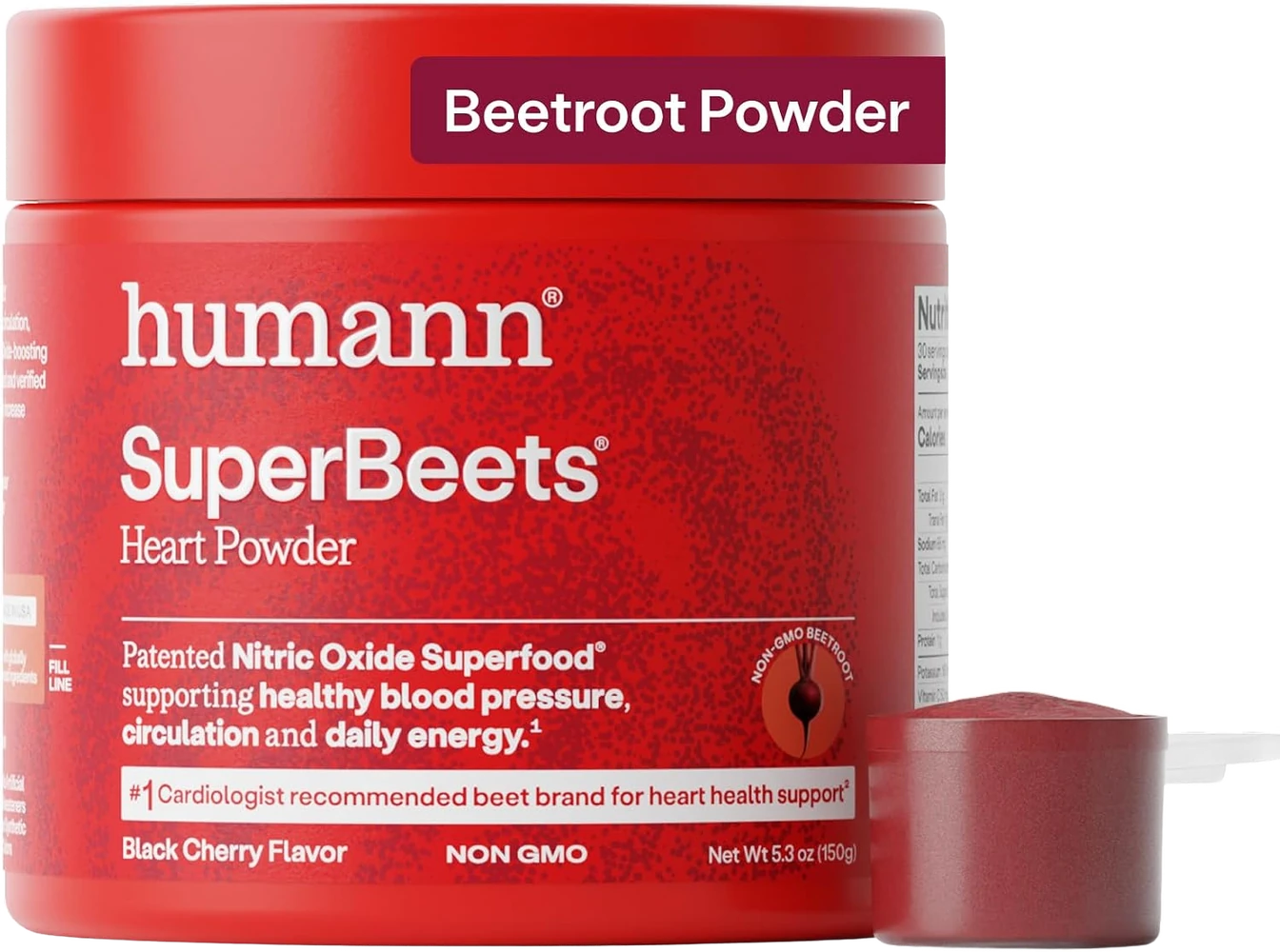 #1 of 9 · Best overall
Real retailer photo, cut out. Label unedited.
Buy it. The recognized beet default — easiest to take daily, just no disclosed nitrate. The most recognized, best-tasting beet product: fermentation-processed crystals built around nitric-oxide activity, in a black-cherry flavor that dissolves cleanly and makes daily use effortless.
$39 / 5.3 oz canister (30 servings)$1.30 / serving (1 tsp, ~5 g crystals)
Why It Scores 8.8 — And The Label Line Behind Each Number
Nitrate content & potency
30% of scoreBuilt and marketed around nitric-oxide activity, with a fermentation step positioned to preserve NO-active compounds in concentrated beet crystals — a more NO-oriented product than plain dried beet. Held below the top because, like nearly the whole category, it does NOT disclose a nitrate mg, so the active dose can't be verified against the trial range. Strong positioning, unverifiable number.
Dose vs studied range
25% of scoreAbout 5 g of concentrated beet crystals per serving is a solid beet mass, and concentration via fermentation suggests more nitrate than the same mass of plain dried beet. Reasonable dose for daily support. The unavoidable caveat: with no nitrate figure, beet mass is only a proxy, so we can't confirm it reaches the ~6.4-13 mmol the endurance trials used.
Purity & label transparency
20% of scoreNon-GMO, made from US-grown beets, and honest about being a fermentation-processed crystal rather than whole beet — good transparency on what it is. Two marks against: it contains stevia and natural flavor (not a single ingredient), and it prints no nitrate number despite the NO positioning. Transparent about process, less so about the active dose.
- Manufacturer
- HumanN · clinically-marketed NO-focused brand
Value per serving
15% of score$1.30 per serving (30-serving canister at ~$39) is the premium end of the category — roughly 5× the per-serving cost of a plain organic powder like Nutricost (#4). You're paying for the brand, the fermentation process, and the flavor, not for a verified higher nitrate dose. Acceptable for a default buyer; the weakest axis for a value optimizer.
- Per serving
- 1 tsp (~5 g) concentrated beet crystals
- Count
- 30 servings (5.3 oz canister)
- Price
- $39 / 30-serving canister = ~$1.30 per serving
Taste & real-world use
10% of scoreThe category benchmark for compliance. The black-cherry crystals dissolve cleanly in water with no grit and a genuinely pleasant flavor that masks the earthy beet taste plain powders can't escape. Because beetroot only delivers if you take it consistently for weeks, this frictionless, well-liked daily experience is a real functional advantage — not just a nicety.
- Active form
- Concentrated beet crystals (fermentation-processed powder)
- Other ingredients
- Stevia + natural flavor (black cherry); non-GMO, US-grown beets
- More Specs
- Nitrate disclosed
- No — built around NO activity but no nitrate mg on label
- Best for
- Daily nitric-oxide / blood-pressure support where taste-driven compliance matters
- Trial context
- Endurance dose-response from Wylie 2013; acute BP drop from Webb 2008 — both dose-dependent on nitrate
Marketing Claims Vs. Reality
Supports healthy nitric-oxide production and circulation.
Mechanistically sound — beetroot nitrate is converted to nitric oxide, which supports circulation, and the product is built around that pathway. Marked partial because the magnitude depends on the nitrate dose, which SuperBeets does not disclose, so the specific NO contribution per serving can't be verified against the trial doses (Wylie 2013, PMID 23640589).
Supports healthy blood pressure already in the normal range.
The beetroot-nitrate blood-pressure effect is real and replicated (Webb 2008, PMID 18250365; Siervo 2013 meta-analysis, PMID 23596162, ~4-5 mmHg systolic). The claim is fair for the category and the mechanism; partial because the trials used defined nitrate doses and SuperBeets doesn't state its nitrate, so the effect size for this specific product isn't quantifiable from the label.
Made from non-GMO, US-grown beets via a unique fermentation process.
Consistent with HumanN's documented sourcing and process — non-GMO, US-grown beets, fermentation-processed into concentrated crystals. The sourcing-and-process claim is accurate; note it describes how the product is made, not a guarantee of a specific nitrate dose.
One teaspoon equals the nitric-oxide benefit of a large serving of whole beets.
Plausible given the concentration, but not verifiable: SuperBeets doesn't disclose its nitrate content and whole-beet nitrate varies widely by cultivar and soil, so any 'equals X beets' equivalence can't be confirmed from the data on the label. Treat it as marketing shorthand for 'concentrated,' not a measured equivalence.
Dissolves easily and tastes good.
Well-supported across the product's very large review base — the black-cherry crystals dissolve cleanly in water with no grit and a flavor that masks the earthy beet taste. This real-world usability is a genuine, repeatable strength and the main driver of its daily-compliance advantage.
What Our Test Actually Found
The recognized default — bought for trust and taste, not a printed dose
SuperBeets is the most recognized beet brand for a reason: it's clinically marketed, fermentation-processed into concentrated crystals, and built around nitric-oxide activity rather than raw beet mass. For a buyer who wants the safe, well-known starting point and doesn't want to research the category, it's the obvious first purchase. Just be clear-eyed about what you're buying: brand reliability, a concentrated NO-oriented product, and a great daily experience — not a verified nitrate dose, which it doesn't disclose.
Compliance is the real moat — the black-cherry crystals you'll actually keep taking
The practical reason SuperBeets became the default is that it's pleasant to take every day. The black-cherry crystals dissolve cleanly and taste good, masking the earthy beet flavor that makes plain powders a chore. That matters more than it sounds: the blood-pressure benefit specifically comes from a moderate dose taken consistently over weeks (Webb 2008, Siervo 2013), and a flavor you don't dread is what makes that consistency realistic. Frictionless daily use is the whole ballgame with beetroot, and this is the category benchmark for it.
No disclosed nitrate — the category-wide gap, and the main limitation here
The endurance trials dose by millimoles of nitrate, and Wylie 2013 showed an adequate dose works while a low one does nothing. SuperBeets, despite its NO positioning, prints no nitrate number — so you cannot verify whether a serving reaches a performance dose. This isn't unique to SuperBeets (almost the whole category does the same), but it's the honest ceiling on the product: it's a strong daily-support and blood-pressure pick, and a less certain choice if your goal is a guaranteed pre-exercise nitrate dose. For that, the disclosed-nitrate Toniiq extract (#4) is the surer buy.
You're paying a premium for brand and flavor, not for more nitrate
At about $1.30 a serving, SuperBeets is roughly 5× the per-serving cost of a plain organic powder like Nutricost (#4). The premium buys the recognized brand, the fermentation process, and the black-cherry experience — all real, but none of it a verified higher nitrate dose, since neither product discloses nitrate. That premium is defensible for a default buyer who values not thinking about it and will take it daily because it tastes good; it's not defensible if your optimization target is beet (or nitrate proxy) per dollar, in which case a cheap powder is the rational pick.
Dose for the goal, and give it a couple of weeks
Because you can't see the nitrate dose directly, judge SuperBeets by feel over time rather than expecting a single-serving effect. For blood pressure, take it consistently every day and reassess after a couple of weeks — that's the pattern the trials reward. For endurance, take it 2-3 hours before exercise (when plasma nitrite peaks) and pay attention to perceived effort over a few sessions; if you don't notice anything, the honest possibility is that the undisclosed nitrate dose is below your threshold, and a higher-mass powder or a disclosed-nitrate extract may serve you better.
Full analysis: all pros & cons (8), buy if / skip if
- The most recognized, heavily-marketed beet brand — the trusted category default
- Black-cherry crystals dissolve cleanly and taste good, making daily compliance effortless
- Fermentation-processed concentrated crystals built around nitric-oxide activity, not just dried beet
- Non-GMO and made from US-grown beets
- Convenient flavored powder ideal for the consistent daily dosing that drives the blood-pressure benefit
- Does not disclose nitrate mg — the active dose can't be verified against the trial range
- Premium price (~$1.30/serving), roughly 5× a plain organic powder
- Contains stevia and natural flavor — not an additive-free single ingredient
- You want the recognized, well-liked default and value a flavor you'll actually take daily
- Your main goal is daily nitric-oxide / blood-pressure support, where consistency beats a one-off dose
- You prefer a clean-dissolving flavored drink over an earthy plain powder
- You trust a clinically-marketed, fermentation-processed brand and will judge it by feel over a couple of weeks
- You specifically want a stated nitrate dose — SuperBeets doesn't disclose one; Toniiq (#4) does
- You want maximum beet per dollar — Nutricost (#4) is roughly a fifth the cost per serving
- You want an additive-free single ingredient — this contains stevia and natural flavor; KOS (#6) or Nutricost (#4) are cleaner
The most recognized, best-tasting beet product: fermentation-processed crystals built around nitric-oxide activity, in a black-cherry flavor that dissolves cleanly and makes daily use effortless. Compliance is its real edge, which matters most for the blood-pressure benefit. The trade-offs are a premium price (~$1.30/serving) and — like almost the whole category — no disclosed nitrate, so you trust the process rather than a verified dose. Buy it as the easy default; for a stated nitrate dose, get Toniiq (#4).
SuperBeets Black Cherry is the bottle the rest of the beet category gets measured against. It's the most recognized, most heavily marketed beet brand, the black-cherry crystals dissolve cleanly and taste good enough to take every day, and the whole product is built around nitric-oxide activity rather than raw beet mass — the fermentation step is positioned to preserve that NO activity. For the buyer who wants the easy, well-liked, widely-trusted starting point, this is the default. The honest asterisk — and it applies to almost everything in this category, not just SuperBeets — is that it does not print a nitrate number. Because the human trials dose by millimoles of nitrate (and Wylie 2013 showed a low dose does nothing while an adequate one works), the absence of a figure means you're trusting HumanN's process and concentration rather than a verified active dose. For daily nitric-oxide and blood-pressure support, where taste-driven consistency matters most, that's an acceptable trade. For a guaranteed endurance dose, a nitrate-disclosed extract is the surer route. Here's the full breakdown.
The recognized beet default — buy it for easy daily NO/blood-pressure support.

SuperBeets Black Cherry is what we hand to any reader who wants one beet product to start with and doesn't want to study the category. It's the recognized brand, it's a fermentation-processed, NO-oriented concentrate rather than plain dried beet, and — most importantly — the black-cherry crystals taste good enough that you'll actually take it every day. Since the blood-pressure benefit specifically rewards consistent daily dosing (Webb 2008, Siervo 2013), that compliance edge is a genuine functional advantage, and it earns SuperBeets the top slot as the all-round default. Two honest limits. First, it doesn't disclose nitrate — so if your goal is a guaranteed pre-exercise endurance dose, the disclosed-nitrate Toniiq extract (#4) is the surer choice, because Wylie 2013 showed the endurance benefit is dose-dependent and an undisclosed dose can't be verified. Second, it's premium-priced and flavored; if you want maximum beet per dollar or an additive-free single ingredient, a plain organic powder (Nutricost #4, KOS #6) is the rational pick. For everyone else — the buyer who wants the easy, trusted, great-tasting default for daily nitric-oxide and blood-pressure support — take it consistently for a couple of weeks and judge it by feel.
If This Doesn’t Fit — Try These
Toniiq 20x Concentrated Beet Root Extract
The product to buy if you want a STATED nitrate dose — a 20:1 extract standardized to min 4% nitrates (~56 mg/serving), in flavorless capsules at a fraction of the per-serving cost.
 02
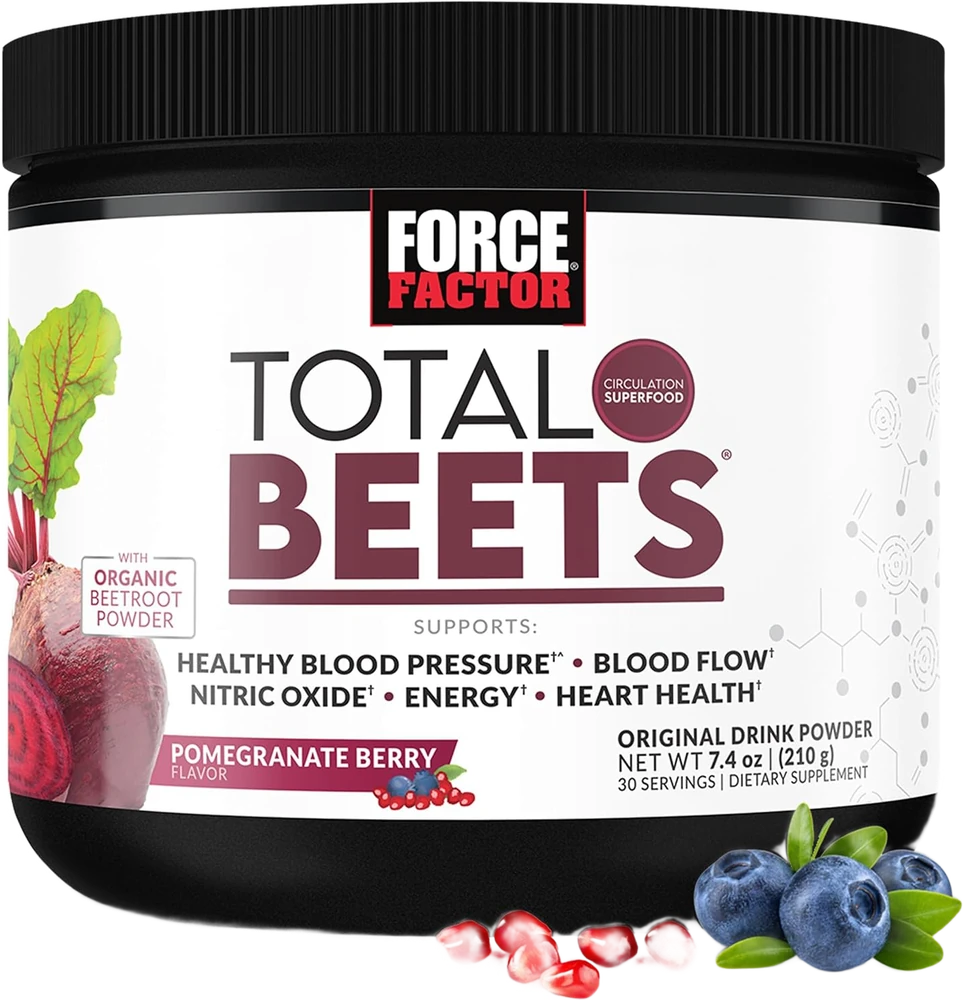
Force Factor Total Beets
Total Beets lands at #2 for one substantive reason: it's among the very few mainstream products that adds standardized NO3-T nitrates on top of beet root, which means it's targeting the nitric-oxide pathway with the actual precursor rather than hoping the beet mass carries enough nitrate.
 04
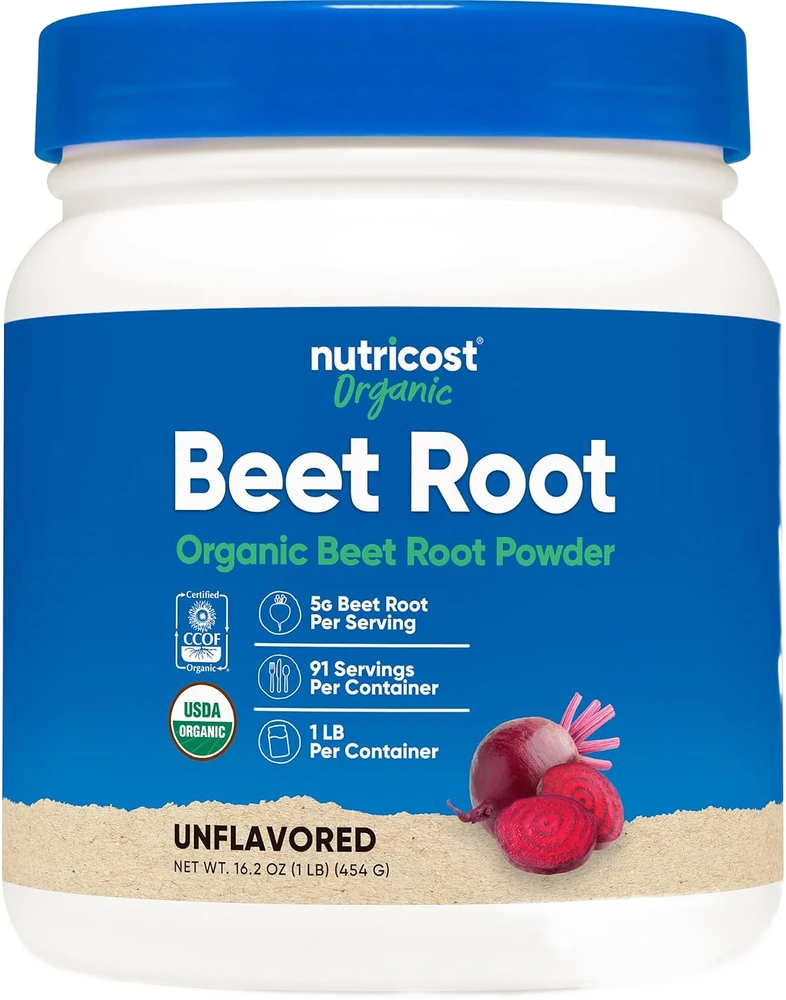
Nutricost Organic Beet Root Powder
If your priority is the most real beet per dollar, Nutricost wins outright: a full pound of USDA Organic, single-ingredient beet powder for around $22 works out to roughly $0.24 a serving at a solid ~5 g scoop, made in a GMP-compliant facility.
Quick Answers
Does SuperBeets disclose how much nitrate is in each serving?
No — and this is the honest caveat for almost the entire beet category, SuperBeets included. The product is built and marketed around nitric-oxide activity, and the fermentation step is positioned around preserving that activity, but there is no nitrate mg printed on the label. Because the endurance trials dose by millimoles of nitrate (Wylie 2013, PMID 23640589, found 8.4 mmol worked while 4.2 mmol did not), the lack of a number means you can't verify whether a serving hits a performance dose. You're trusting HumanN's process and concentration rather than a stated figure. If a disclosed nitrate dose is what you want, the concentrated Toniiq extract (#4) is the only product on our list that quantifies it.
What does the 'fermentation' actually do?
HumanN positions the fermentation step as a way to preserve nitric-oxide-active compounds in the beet crystals rather than just drying whole beet. The practical upshot the brand markets is that you're getting a concentrated, NO-oriented product rather than plain beet powder. What it does NOT do is give you a verifiable nitrate dose — there's still no number on the label. Treat the fermentation as part of why this is the recognized premium default and why it dissolves and tastes the way it does, not as a substitute for disclosed nitrate content.
Will it help my endurance or my blood pressure more?
Both are plausible because both run through the same nitrate-to-nitric-oxide mechanism, but the honest answer depends on dose and consistency. For blood pressure, a moderate daily dose taken consistently is what moved the numbers across trials (Webb 2008, PMID 18250365; Siervo 2013 meta-analysis, PMID 23596162), and SuperBeets' easy taste makes daily use realistic — a real advantage for that goal. For endurance, you'd want to be confident you're hitting an adequate nitrate dose 2-3 hours before exercise, which is harder here because the nitrate isn't disclosed. So: strong, convenient pick for daily blood-pressure/NO support; for a verified endurance dose, a nitrate-disclosed extract is the surer bet.
Why does it cost more than a plain beet powder?
You're paying for the recognized brand, the fermentation-processed concentrated crystals, and the black-cherry flavor that makes it genuinely pleasant to drink daily — not for a verified higher nitrate dose. At about $1.30 a serving it's the premium end of the category; a single-ingredient organic powder like Nutricost (#4) costs roughly a fifth of that per serving. The trade is compliance and trust versus raw value: SuperBeets is the easy, well-liked default you'll actually keep taking, while the cheap powders give you more beet mass per dollar but an earthy taste and a bag to scoop from. Neither discloses nitrate, so the premium buys experience, not a proven dose.
Is the black cherry flavor better than the plain version?
For daily compliance, yes — and compliance is most of what matters with beetroot. The black-cherry crystals dissolve cleanly in water and mask the earthy beet taste that makes plain powders hard to keep up. Because the blood-pressure benefit specifically rewards taking a moderate dose every day for weeks, a flavor you don't dread is a real functional advantage, not just a nicety. The flavoring does mean added stevia and natural flavor rather than a pure single-ingredient beet, so if an additive-free product is your priority, a plain organic powder (KOS #6, Nutricost #4) is the cleaner choice — at the cost of taste.
Will it turn my urine pink?
It might, and that's completely harmless. Beetroot's deep-red betalain pigments can pass through and tint urine (and sometimes stool) pink or red — a phenomenon called beeturia. It's not blood, it's not a problem, and it has nothing to do with whether the product is working: the active ingredient, nitrate, is colorless and unrelated to the pigment. If you notice it after starting SuperBeets, it's just the beet doing what beets do. Carry on.
Sources & Further Reading
3 peer-reviewed sources, each linked to PubMed
- [1] Webb 2008 PMID 18250365 — Acute blood pressure lowering, vasoprotective, and antiplatelet properties of dietary nitrate via bioconversion to nitrite. ~500 mL beetroot juice lowered blood pressure ~10/8 mmHg about 3 hours after ingestion, tracking peak plasma nitrite. The landmark trial behind beetroot's blood-pressure effect — the benefit SuperBeets' easy daily compliance is well-suited to deliver, given consistent dosing.
- [2] Siervo 2013 PMID 23596162 — Inorganic nitrate and beetroot juice supplementation reduces blood pressure in adults: a systematic review and meta-analysis. Pooled RCTs: inorganic nitrate / beetroot significantly reduced systolic blood pressure (~4-5 mmHg). Confirms the blood-pressure effect is real and replicable — and that it rewards the consistent daily dosing SuperBeets' flavor makes realistic.
- [3] Wylie 2013 PMID 23640589 — Beetroot juice and exercise: pharmacodynamic and dose-response relationships. 8.4/16.8 mmol nitrate raised time-to-exhaustion ~14%/~12%; 4.2 mmol did not. Cited here as the reason SuperBeets' undisclosed nitrate is a real limitation for endurance — the benefit is dose-dependent, and an unstated dose can't be verified.
Affiliate disclosure: every Amazon link uses our Associates tag (superachieverclub-20). We earn a small commission at no cost to you; it funds independent reviews. We never accept payment to change a ranking.