
Viva Naturals Triple Strength Omega-3 Review
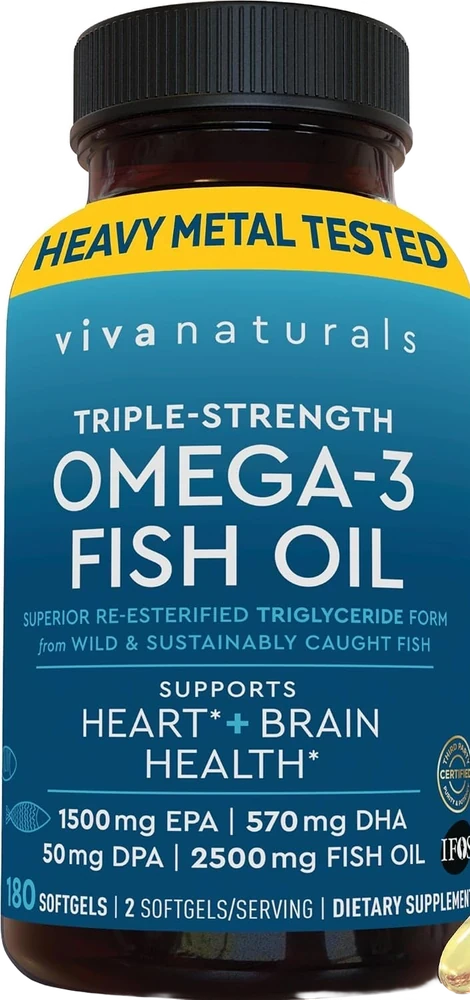 #6 of 7 · Highest EPA per serving✓ Label verified · Supplement Facts read Oct 1, 2026
Real retailer photo, cut out. Label unedited.
Buy it. The verified triple-strength rTG value pick. A panel-confirmed 1,500 mg EPA / 570 mg DHA / 50 mg DPA per 2-softgel serving in rTG form, IFOS and Labdoor seals on the label, fish-gelatin softgels and mass-market pricing.
$22 / month$0.24 / 2,250 mg omega-3 serving (2 softgels)
Why It Scores 8.4 — And The Label Line Behind Each Number
EPA+DHA dose + form
30% of scoreThe panel prints 1,500 mg EPA, 570 mg DHA and 50 mg DPA per 2-softgel serving — 2,250 mg total omega-3 as rTG, from 2,500 mg of fish oil — and the front label names the re-esterified triglyceride form. That is about 2,070 mg of EPA+DHA per serving (750 mg EPA and 285 mg DHA per softgel), a genuine triple-strength dose in the form the bioavailability literature favours (Dyerberg 2010). Scored 9.5: verified dose, verified rTG form, and a serving that covers the 1-2 g general-health window on its own. It is not a 10 only because we have no assay of our own on a specific lot.
- Active form
- Re-esterified triglyceride (rTG), printed on the panel — anchovy + sardine + mackerel oil
- Per serving
- 2 softgels: 2,500 mg fish oil · 2,250 mg total omega-3 (as rTG) · 1,500 mg EPA · 570 mg DHA · 50 mg DPA
- Per softgel
- 750 mg EPA + 285 mg DHA + 25 mg DPA (1,125 mg omega-3)
- EPA:DHA ratio
- About 2.6:1 (1,500 mg EPA to 570 mg DHA) — EPA-leaning
- Trial-dose alignment
- One serving lands the Sublette 2011 mood ratio (EPA:DHA ≥2:1) and the 1-2 g general-health window; a second serving a day reaches the upper cardiovascular protocol range
- Inactives
- Fish oil (anchovy, sardine, mackerel); softgel capsule (fish gelatin from tilapia, glycerin, purified water); mixed tocopherols
IFOS / oxidation + heavy-metal testing
25% of scoreThe label prints an IFOS seal, a 'Third Party Certified – Purity & Potency' mark and 'Heavy Metal Tested' on the front, plus Labdoor's 'Tested for Accuracy & Purity 2025' and 'Tested for Sport' seals — a far deeper documentation stack than a generic GMP claim. We read the seals on the label; we did not pull the IFOS lot report or Labdoor's published test, and the label prints no star rating, so we stop short of full marks. Nordic Naturals (#1) remains the pick where a lot-number Certificate of Analysis on the brand's site is the whole point.
- Label check
- Verified — Supplement Facts panel read in full on 2026-10-01 (the photo on file in earlier versions belonged to a different Viva Naturals product)
- Certifications
- IFOS; Labdoor 'Tested for Accuracy & Purity 2025' and 'Tested for Sport'; Third Party Certified – Purity & Potency; non-GMO; gluten-free; dairy-free — seals as printed on the label, batch reports not checked
- Manufacturer
- Viva Naturals (Toronto, Canada · ~10 years, Amazon-native brand)
- Lab transparency
- IFOS and Labdoor seals on the label; lot reports not checked; no IFOS star rating printed
Source sustainability + provenance
20% of scoreThe front label says 'Wild & Sustainably Caught Fish' and the panel lists the oil as anchovy, sardine and mackerel — appropriate small-fish, low-trophic sourcing — but no MSC or Friend of the Sea seal is printed, so 'sustainably caught' is the brand's wording rather than a third-party chain of custody. Good sourcing, no certified chain: 7.5, unchanged.
Cost per gram EPA+DHA
15% of scoreCost per gram is computed from the listed price, which we can't verify and which moves, so this score is directional. What the panel does fix is the denominator: about 2,070 mg of EPA+DHA per serving across 90 servings is a large amount of actives per bottle, which keeps the cost per gram in the mass-market value band even at a mid-tier bottle price. Check the current price before you order.
- Bottle size
- 180 softgels · 90 servings · about 3 months at 2 softgels/day
- Price
- Price varies by retailer — check the current listing; 90 servings per bottle
Real-world response + tolerance
10% of scoreReview volume for this brand is among the highest in the category, which is real adherence signal. The softgels are fish gelatin (tilapia) with mixed tocopherols as the antioxidant, and the panel lists no flavouring, so the burp profile is that of a plain, high-concentration rTG oil — taking it with a fat-containing meal is the fix. At 2 softgels per serving, one serving a day is easy to sustain.
Label verified. Every figure read from the Supplement Facts photo, Oct 1, 2026.
Marketing Claims Vs. Reality
Triple strength: 2500 mg fish oil per serving with 2250 mg omega-3 (1500 mg EPA, 570 mg DHA, 50 mg DPA).
The Supplement Facts panel prints exactly these amounts per 2-softgel serving: Fish Oil 2,500 mg, Total Omega-3 Fatty Acids (as rTG) 2,250 mg, EPA 1,500 mg, DHA 570 mg, DPA 50 mg. Against ordinary 'fish oil 1000 mg' softgels, which deliver roughly 300 mg of EPA+DHA, the roughly 2,070 mg of EPA+DHA here is about seven times more per serving.
Superior re-esterified triglyceride (rTG) form.
The panel prints 'Total Omega-3 Fatty Acids (as rTG)', with EPA, DHA and DPA each also marked 'as rTG', and the front label says 'Superior Re-Esterified Triglyceride Form'. TG and rTG forms absorb better than ethyl ester (Dyerberg 2010, PMID 20638827), so the form claim is both on the label and the right one.
IFOS and Labdoor third-party certified (Purity & Potency; Accuracy & Purity 2025; Tested for Sport).
Every seal is printed on the label. We did not independently check IFOS's database for this lot or Labdoor's published report, and the label shows no IFOS star rating. Treat it as 'seals printed, batch reports unchecked' — meaningful documentation, short of the per-batch 5-star reports some premium brands publish.
Wild & sustainably caught fish.
The panel names the source fish (anchovy, sardine, mackerel) and the front label says 'Wild & Sustainably Caught Fish', but no MSC or Friend of the Sea certification is printed, so 'sustainably caught' is the brand's wording, not a third-party chain-of-custody claim.
Non-GMO, gluten-free, dairy-free.
All three are printed on the label as claims or seals, and are consistent with a plain formula whose other ingredients are only fish oil, the fish-gelatin softgel shell materials and mixed tocopherols.
Supports heart + brain health.
Both are real omega-3 effects backed by Mozaffarian 2011 (PMID 22051327) and Yurko-Mauro 2010 (PMID 20434961). The framing collapses multiple mechanisms into one bullet, and at 570 mg DHA per serving the cognition side is lighter than the heart and mood side — the EPA-leaning ratio is more cardio-and-mood leaning than cognition-leaning.
What Our Test Actually Found
Label re-read: the real fish-oil panel now confirms the dose and the rTG form
An earlier version of this review treated the listing's EPA and DHA numbers as unverified, because the label photo on file for this ASIN was a different Viva Naturals product (organic coconut oil) and its ~1,200 mg combined / 3.4:1 figures did not come from this product's own panel. The ASIN now points at the real fish-oil listing and its Supplement Facts panel reads in full: per 2 softgels, 2,500 mg fish oil, 2,250 mg total omega-3 as rTG, 1,500 mg EPA, 570 mg DHA and 50 mg DPA. Those figures replace the earlier ones, and the dose, form and testing scores have been raised to match.
A verified high-dose rTG fish oil at mass-market pricing
1,500 mg EPA plus 570 mg DHA per serving is about 2,070 mg of EPA+DHA in the form the absorption literature prefers (Dyerberg 2010), and the seals printed on the label — IFOS and Labdoor — put it ahead of generic GMP-only claims. That is a combination you normally pay premium-brand prices for, and it is why this review moved from 'consider' to 'buy'.
The ~2.6:1 EPA:DHA ratio suits mood and cardiovascular goals; DHA-led goals need another bottle
The panel's 1,500 mg EPA to 570 mg DHA clears the Sublette 2011 mood-trial threshold (EPA:DHA ≥2:1) and suits EPA-driven cardiovascular protocols. For cognition and pregnancy use cases the DHA is on the low end — one serving carries 570 mg, below the 900 mg/day Yurko-Mauro 2010 cognition protocol — so Ovega-3 (#6) is better aligned for DHA-led goals.
Seals printed, batch reports not checked
The label prints IFOS and two Labdoor seals (Tested for Accuracy & Purity 2025, Tested for Sport), a Third Party Certified – Purity & Potency mark and 'Heavy Metal Tested' on the front. What we did not do is pull the IFOS lot report or Labdoor's published test, and no IFOS star rating is printed. If a lot-number Certificate of Analysis from the brand is the point for you, Nordic Naturals (#1) is the documented-testing option; for everyone else, a printed IFOS seal plus Labdoor testing is a meaningful step above GMP-only claims.
Mass-market brand without long-term track record
Viva Naturals has been on Amazon since ~2013-2014 — meaningful track record but not the 30+ year pedigree of Nordic Naturals, Carlson, or Now Foods. The QC infrastructure is real (GMP-certified, third-party testing) and there are no recalls on record, but the brand history is short enough that long-tail QC consistency hasn't been fully established. Viva also expanded into multiple supplement categories simultaneously rather than specialising — the fish oil SKU benefits from the brand's overall QC discipline but isn't a dedicated specialist product.
Cycle 1 here; upgrading is optional, not assumed
Because the panel already verifies a high dose, the rTG form and the IFOS and Labdoor seals, there is less reason to 'upgrade' than with a typical budget bottle. Run Viva at 2 softgels a day with a fat-containing meal for 12 weeks, with a baseline and follow-up Omega-3 Index. Move to Nordic Naturals (#1) on cycle 2 only if you specifically want a lot-number Certificate of Analysis.
Full analysis: all pros & cons (10), buy if / skip if
- Verified 1,500 mg EPA + 570 mg DHA + 50 mg DPA per 2-softgel serving (2,250 mg total omega-3) — a genuine triple-strength dose
- Re-esterified triglyceride (rTG) form printed on the panel — the better-absorbed form
- IFOS and Labdoor (Accuracy & Purity 2025, Tested for Sport) seals on the label
- EPA-leaning ratio of about 2.6:1 — appropriate for mood and cardiovascular protocols
- 90 servings per 180-softgel bottle — about three months at 2 softgels a day
- No IFOS star rating printed and no lot report checked — Nordic Naturals #1 offers a lot-number Certificate of Analysis on the brand's site instead
- 570 mg DHA per serving is light for DHA-led cognition and pregnancy goals
- No MSC or Friend of the Sea certification printed — 'sustainably caught' is the brand's wording
- Fish-gelatin softgels — fine for pescatarians, not for vegetarians or vegans
- Shorter brand history (~10 years vs 30+ year category leaders)
- You want a verified high-dose rTG fish oil — about 2,070 mg EPA+DHA per 2-softgel serving
- An EPA-leaning ratio (~2.6:1) for mood or cardiovascular goals at value pricing
- You want IFOS and Labdoor seals on the label at a mass-market price
- A 90-serving, 180-softgel bottle (about three months at 2 softgels a day) suits you
- You want a lot-number Certificate of Analysis on the brand's site — go Nordic Naturals #1 (we did not check Viva's batch reports)
- You want an MSC or Friend of the Sea mark — none is printed on the panel; Wiley's Finest #8 carries MSC
- You're a vegetarian or vegan — the softgel is fish gelatin
- DHA is the goal (pregnancy, cognition) — 570 mg per serving is light; Ovega-3 #6 is better aligned
A panel-confirmed 1,500 mg EPA / 570 mg DHA / 50 mg DPA per 2-softgel serving in rTG form, IFOS and Labdoor seals on the label, fish-gelatin softgels and mass-market pricing. The right pick when you want a high-dose, EPA-leaning rTG fish oil without paying premium-brand prices. For a lot-number Certificate of Analysis on the brand's site, Nordic Naturals (#1) is the documented-testing choice; for DHA-led goals, Ovega-3 (#6) fits better.
Viva Naturals Triple-Strength Omega-3 Fish Oil is the bottle to buy when you want a verified, high-dose rTG fish oil at mass-market pricing. The Supplement Facts panel prints 1,500 mg EPA, 570 mg DHA and 50 mg DPA per 2-softgel serving — 2,250 mg total omega-3 from 2,500 mg of fish oil — in re-esterified triglyceride form, with 90 servings in the 180-softgel bottle. The label carries an IFOS seal plus Labdoor's "Tested for Accuracy & Purity 2025" and "Tested for Sport" seals (we read the seals, not the batch reports), and the oil comes from anchovy, sardine and mackerel in a fish-gelatin softgel. The EPA:DHA ratio is about 2.6:1 — comfortably EPA-leaning for mood and cardiovascular protocols. Viva built its Amazon scale on exactly this value/dose sweet spot, and review volume is among the highest in the category. Here's the breakdown.
The verified triple-strength rTG value pick.

Viva Naturals Triple-Strength Omega-3 Fish Oil is what we recommend to buyers who want a verified, high-dose rTG fish oil at mass-market pricing. The panel prints 1,500 mg EPA, 570 mg DHA and 50 mg DPA per 2-softgel serving (2,250 mg total omega-3) as re-esterified triglyceride, the label carries IFOS and Labdoor seals, and the EPA-leaning ratio of about 2.6:1 suits mood and cardiovascular goals. It sits in the value sweet spot between Now Foods' (#5) budget tier and Nordic Naturals' (#1) lot-documented premium tier — with, unusually at this price, a verified label behind it. The trade-offs are real but small: no IFOS star rating printed and no lot report checked, no MSC or Friend of the Sea mark, 570 mg DHA per serving is light for DHA-led goals (Ovega-3 #6 fits those better), fish-gelatin softgels, and a brand history that is solid but not category-leading. For first-time buyers of a triple-strength oil, or buyers who've responded to omega-3 before and want a verified, sustainable budget option, this is the right answer. Take a serving with a fat-containing meal, re-test your Omega-3 Index at about 12 weeks, and move to Nordic Naturals only if you specifically want a lot-number Certificate of Analysis.
If This Doesn’t Fit — Try These
 01
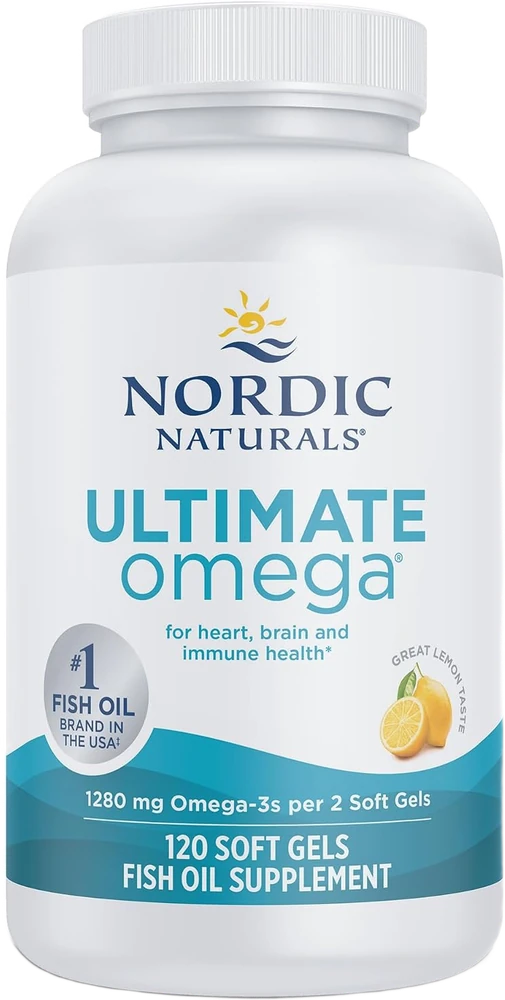
Nordic Naturals Ultimate Omega
The pick if you want a single bottle that does a real job on inflammation while also covering everything else omega-3 is good for.
 05
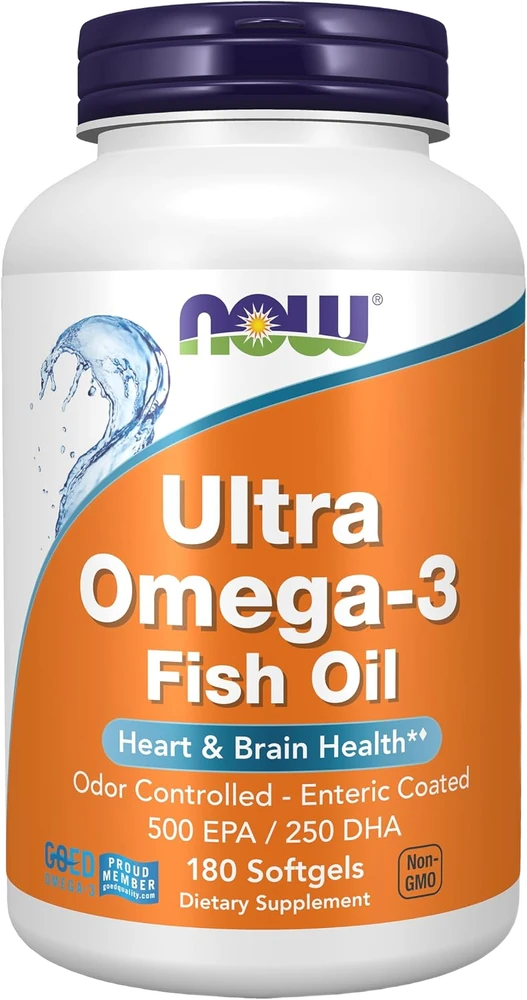
NOW Ultra Omega-3
The smart-budget answer.
 02
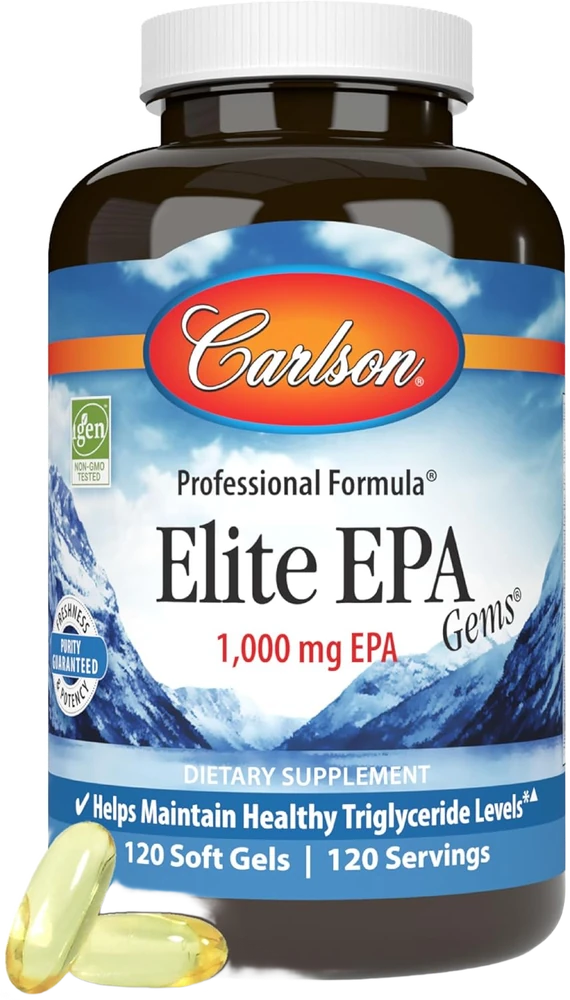
Carlson Elite EPA Gems
If your goal is inflammation, joints, or an RA adjunct and you want the most EPA in a single softgel, this is the bottle that matches the mechanism most directly.
Quick Answers
Viva Naturals is a high-Amazon-review brand — does that translate to actual quality?
More than most mass-market brands, on this SKU. The panel is verified: 1,500 mg EPA, 570 mg DHA and 50 mg DPA per 2-softgel serving in rTG form, with IFOS and Labdoor seals printed on the label. We read the seals but did not check batch reports, and no IFOS star rating is printed, so you get certifier-listed testing but no lot-level report checked by us. Nordic Naturals (#1) offers a different kind of documentation: a Certificate of Analysis you can pull by lot number on the brand's site. For most non-clinical buyers the difference is small; for buyers who specifically want a lot-level report in hand, Nordic Naturals is the better answer.
The ~2.6:1 EPA:DHA ratio is EPA-leaning — is this a mood-protocol bottle?
Functionally yes. The panel prints 1,500 mg EPA to 570 mg DHA per serving (about 2.6:1), which clears the Sublette 2011 mood threshold (EPA:DHA ≥2:1 required for the depression endpoint) and suits EPA-leaning budget buyers — and unlike the figures an earlier version of this review carried, it is a verified read. The trade-offs vs Carlson Elite EPA Gems (#2): Carlson delivers 1,000 mg EPA per softgel as ethyl ester with no DHA listed, while Viva is rTG with both EPA and DHA — but Viva prints no IFOS star rating.
What does 'triple strength' actually mean — is it real or marketing?
Real, and now label-backed. 'Triple strength' refers to the EPA+DHA concentration vs standard 'fish oil 1000 mg' softgels, which deliver roughly 300 mg of actives. This product's panel prints 2,500 mg fish oil with 2,250 mg total omega-3 per 2-softgel serving — 1,500 mg EPA and 570 mg DHA, about 2,070 mg of EPA+DHA — so each softgel carries about 1,035 mg of EPA+DHA. Sports Research (#3) delivers 1,040 mg omega-3 per softgel, slightly below Viva's 1,125 mg per softgel.
Does it have a flavour or burp coating?
The panel lists no flavouring — just fish oil (anchovy, sardine, mackerel), a fish-gelatin softgel with glycerin and purified water, and mixed tocopherols as the antioxidant — so expect the burp profile of a plain, high-concentration rTG oil. The practical fixes are the usual ones: take it with a fat-containing meal, split the 2 softgels across two meals if needed, and keep the bottle cool. Apply the smell test at the half-bottle mark — fresh oil barely smells; if the marine note has turned aggressive and rancid, discard it.
Should I pick Viva Naturals over Now Foods (#5)?
Depends what you optimise for. Viva's panel prints 1,500 mg EPA + 570 mg DHA per 2 softgels in rTG form, with IFOS and Labdoor seals; Now Foods' verified panel prints 500 mg EPA + 250 mg DHA in a single enteric-coated softgel (750 mg). Per softgel that is about 1,035 mg of EPA+DHA for Viva against 750 mg for Now Foods. Now Foods wins on brand QC pedigree (35+ years vs Viva's ~10) and odour control; Viva wins on the rTG form, the verified dose density and the IFOS and Labdoor seals.
Mid-tier picks like Viva — when does it make sense to choose this vs upgrading?
Viva Naturals occupies a specific middle ground: better documented than grocery-aisle fish oil (verified rTG panel, IFOS and Labdoor seals), cheaper than the premium brands with lot-level documentation, mass-market familiar with high Amazon trust. The buyer it fits: someone who knows they want a triple-strength concentrate, isn't fussed about published per-batch IFOS stars, and wants a sustainable budget option. If you respond well on cycle 1, upgrading is optional rather than a given — move to Nordic Naturals (#1) on cycle 2 only if you specifically want a lot-number Certificate of Analysis.
Sources & Further Reading
5 peer-reviewed sources, each linked to PubMed
- [1] Sublette 2011 (depression meta) PMID 21939614 — Meta-analysis of the effects of eicosapentaenoic acid (EPA) in clinical trials in depression. Meta-analysis of 15 RCTs found EPA-dominant formulations (EPA:DHA ratio ≥60%) significantly improved depression scores; DHA-dominant did not. Viva's panel-verified ~2.6:1 EPA:DHA ratio (1,500 mg EPA to 570 mg DHA) sits above the trial threshold — appropriate formulation for mood-protocol use.
- [2] Mozaffarian 2011 PMID 22051327 — Omega-3 fatty acids and cardiovascular disease: effects on risk factors, molecular pathways, and clinical events. Comprehensive review establishing 10-33% triglyceride reduction at 2-4 g/day combined EPA+DHA. One Viva serving (about 2.1 g EPA+DHA) lands at the low end of that window and two servings a day (about 4.1 g) at the top, on a panel-verified dose.
- [3] Dyerberg 2010 (TG vs EE bioavailability) PMID 20638827 — Bioavailability of marine n-3 fatty acid formulations. TG and rTG forms showed 30-50% higher EPA+DHA blood incorporation than ethyl ester. Viva's panel prints its omega-3 'as rTG', which puts it on the better-absorbed side of the TG-versus-ethyl-ester comparison.
- [4] Harris 2008 (Omega-3 Index) PMID 15208005 — The omega-3 index: a new risk factor for death from coronary heart disease?. Defined the Omega-3 Index as a CV risk biomarker. Index of 8%+ associated with lowest CHD mortality. Viva at 2 softgels a day for 12 weeks should move the index toward target.
- [5] Bhatt 2019 (REDUCE-IT) PMID 30415628 — Cardiovascular Risk Reduction with Icosapent Ethyl for Hypertriglyceridemia. 4 g/day icosapent ethyl reduced major cardiovascular events by 25% — the strongest non-statin CV outcome trial. Four Viva softgels a day (two servings) deliver about 3 g EPA plus about 1.1 g DHA — an EPA-leaning, mixed-form approximation of this dose, not the same drug.
Affiliate disclosure: every Amazon link uses our Associates tag (superachieverclub-20). We earn a small commission at no cost to you; it funds independent reviews. We never accept payment to change a ranking.