
Top 7 Best Omega-3 for Inflammation (2026)
 01 · Best overall✓ Label verified · Supplement Facts read Sep 7, 2026
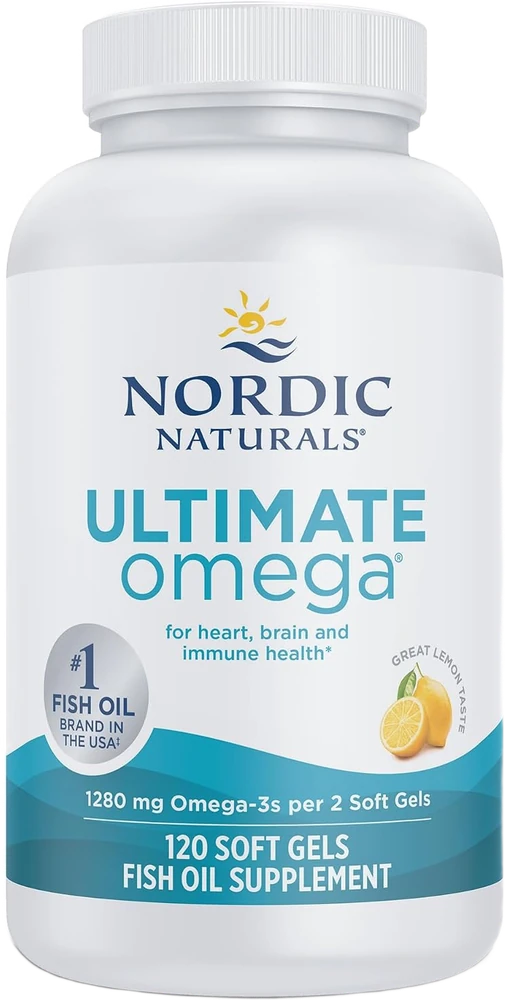
Best overall: Nordic Naturals Ultimate Omega 1280 mg
The balanced all-rounder if you want one bottle that fights inflammation AND covers everything else: 1280 mg omega-3s per serving in rTG form, 3rd Party Purity Tested and Friend of the Sea certified with a brand-published Certificate of Analysis by lot number, lemon softgels that don't burp. It under-shoots the EPA-dominant ratio, but the lot-level documentation and tolerance are strong.
$38 / 60 servings~$0.99 / g EPA+DHA (2 softgels = 1280 mg)
Why it wins: all five scores, pros & cons, full label
- Certificate of Analysis by lot number from the brand (nordic.com/nordic-promise) — a way to check your own batch, which matters because rancid oil is pro-inflammatory; brand-published rather than an independent database
- Re-esterified triglyceride form — 30-50% better absorption than ethyl ester (Dyerberg 2010)
- Lemon softgels produce almost no fishy burp — the best adherence on the list for running a high dose long-term
- Balanced 1.4:1 ratio covers general health, mood, and cardiovascular too — the one-bottle pick if inflammation isn't your only goal
- Balanced ratio under-shoots the EPA-dominant inflammation target — Carlson (#2) and Thorne (#4) feed the resolvin pathway harder
- 650 mg EPA per serving means 3-4 softgels/day to hit a high EPA dose, raising the effective cost
- Not IFOS-listed and not NSF / Informed Sport — drug-tested athletes should choose a product listed by name at nsfsport.com
- EPA+DHA per serving
- 1280 mg (650 EPA / 450 DHA) — 2 lemon softgels, balanced ~1.4:1
- Supply
- 120 softgels · 60 servings · ~2 months at 2 caps/day (3-4 for an inflammation dose)
- Testing
- Label seals: 3rd Party Purity Tested + Friend of the Sea Certified Sustainable; non-GMO tested (IGEN). Certificate of Analysis by lot number at nordic.com/nordic-promise (brand-published, not an independent database). Not IFOS-listed (checked Oct 3, 2026)
- Form
- Re-esterified triglyceride (rTG) — anchovy + sardine, molecular-distilled

Our take — The pick if you want a single bottle that does a real job on inflammation while also covering everything else omega-3 is good for. On the two non-ratio inflammation criteria it's strong: lot-level purity documentation (3rd Party Purity Tested, plus a brand-published Certificate of Analysis by lot number — it is not IFOS-listed, checked Oct 3, 2026) and rTG absorption, plus the lemon softgels that make a high daily dose actually sustainable. Where it gives ground for THIS goal is the ratio — at a balanced ~1.4:1 it under-shoots the EPA-dominant ≥2:1 the resolvin pathway wants, so you're leaning on total EPA grams rather than the optimal ratio, and at 650 mg EPA/serving that means 3-4 softgels a day. If inflammation is your only goal, the EPA-dominant picks (Carlson #2, Thorne #4) are the sharper tools; if you want one clean, fresh, well-tolerated bottle for inflammation plus general health, this is it. For the across-the-board ranking where this is our overall #1, see Best Omega-3.
 02
02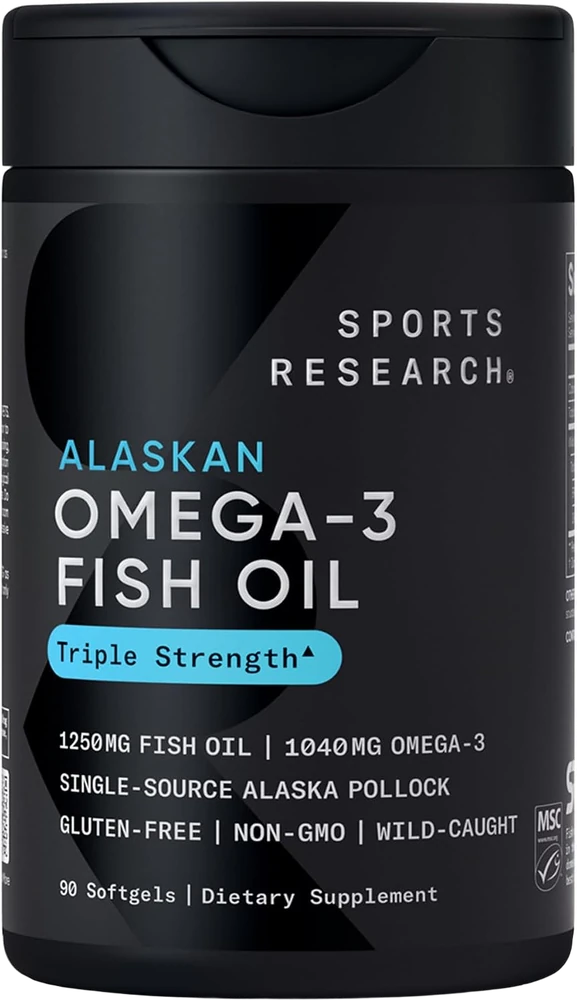 03
03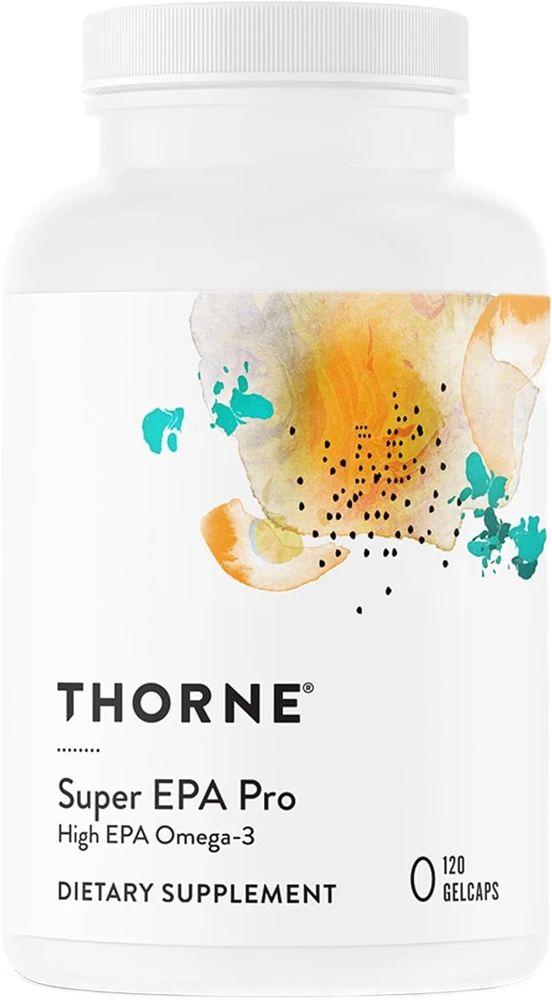 04
04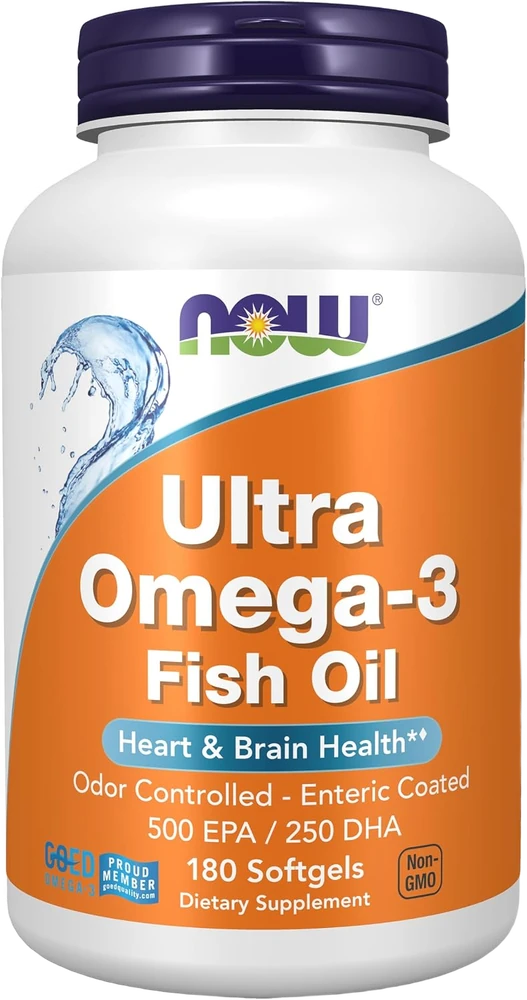 05
05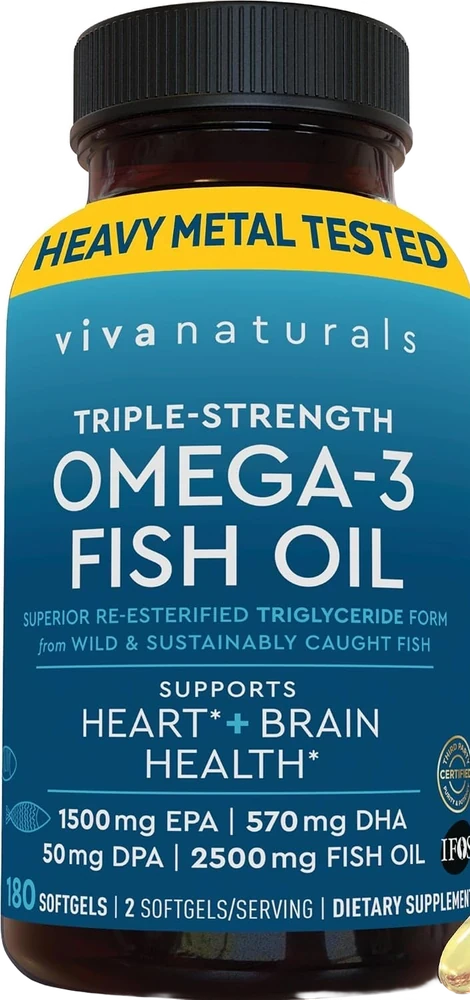 06
06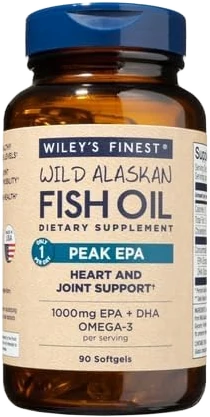 07
07Who Wins Which Aspect
Sorted by overall SAC Product Score™ — the official ranking.
| # | Pick | Score | EPA+DHA dose + form30% | IFOS25% | Source sustainability + provenance20% | Cost per gram EPA+DHA15% | Real-world response + tolerance10% | Cost Per Dose | Buy |
|---|---|---|---|---|---|---|---|---|---|
| 01 | | 9.0 | 9.51 | 8.53 | 9.02 | 8.52 | 9.52 | ~$0.99 / g EPA+DHA | Check price |
| Certificate of Analysis by lot number from the brand (nordic.com/nordic-promise) — a way to check your own batch, which matters because rancid oil is pro-inflammatory; brand-published rather than an independent databaseBalanced ratio under-shoots the EPA-dominant inflammation target — Carlson (#2) and Thorne (#4) feed the resolvin pathway harder | |||||||||
| 02 | | 8.9 | 8.53 | 10.01 | 9.02 | 7.53 | 9.03 | — | Check price |
| 1,000 mg EPA per soft gel — the most EPA per capsule on the list, near-pure EPA for the resolvin / SPM pathway (Sublette 2011)Ethyl-ester form, not rTG — triglyceride forms absorb 30-50% better (Dyerberg 2010), so take it with a fat-containing meal | |||||||||
| 03 | | 8.8 | 8.53 | 9.02 | 10.01 | 7.53 | 9.03 | — | Check price |
| 1,040 mg omega-3 per softgel (690 EPA / 260 DHA) — stacking to a 2-4 g/day inflammation dose takes just 2-3 softgels~2.7:1 clears the ≥2:1 EPA-dominant bar, but Carlson (#2, no DHA listed) and Thorne (#4, ~4:1) sit further toward EPA | |||||||||
| 04 | | 8.7 | 9.02 | 9.02 | 8.53 | 7.53 | 9.03 | — | Check price |
| ~4:1 EPA:DHA (1,300 mg EPA / 320 mg DHA) clears the EPA-dominant ≥2:1 inflammation ratio (Sublette 2011) while still keeping 320 mg DHA per servingNot pure re-esterified TG — the absorption edge vs an rTG bottle is small but real | |||||||||
| 05 | | 8.6 | 8.53 | 7.5 | 8.53 | 10.01 | 10.01 | $0.20 / 750 mg EPA+DHA softgel | Check price |
| 500 EPA / 250 DHA balance lands inside the general-health trial window at 2 softgels/dayNot IFOS 5-star — third-party documentation is less granular than the IFOS-listed Carlson (#2) or Sports Research (#3) | |||||||||
| 06 | | 8.4 | 9.02 | 9.02 | 7.5 | 7.53 | 8.0 | $0.24 / 2,250 mg omega-3 serving | Check price |
| Triple-strength rTG formulation — 2,250 mg omega-3 per 2 softgels clears the trial windowThe label shows the IFOS seal but no star tier — check your batch at ifosprogram.com before assuming 5-star | |||||||||
| 07 | | 8.3 | 8.0 | 7.5 | 10.01 | 7.53 | 8.5 | — | Check price |
| Brand says 'third party tested' and gives test results on request, with 'SQF certified quality' on the front label — useful for an inflammation buyer wary of rancid oil, though no batch reports are publicEthyl ester form, not rTG: absorbs less than the TG-form picks with low-fat meals, and 750 mg EPA per softgel is below Carlson's 1,000 mg | |||||||||
The Other 6, Ranked
- 02
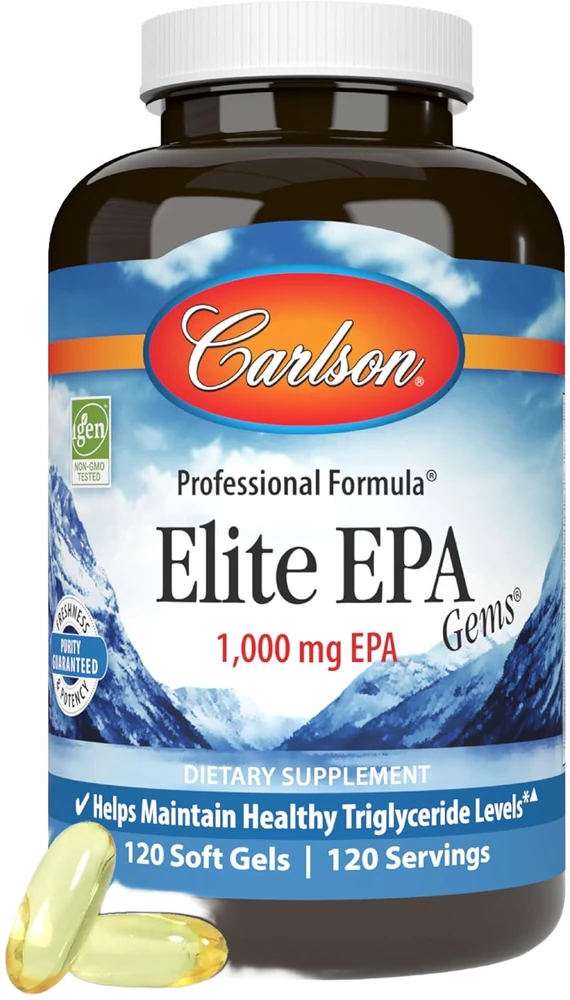
Most EPA per softgel: Carlson Elite EPA Gems 1,000 mg
8.9SAC Score™The most EPA in one softgel on this list: 1,000 mg of EPA per soft gel, with no DHA listed on the panel — the most EPA-dominant profile you can buy here for the resolvin pathway. The honest trade-off is form: the label prints the EPA 'as ethyl ester', not triglyceride. IFOS-certified and Friend of the Sea per the listing.
StrongestIFOS10.01WeakestCost per gram EPA+DHA7.5- EPA per serving
- 1,000 mg EPA per soft gel (1 soft gel = 1 serving) — DHA is not listed on the panel
- Supply
- 120 soft gels · 120 servings · 4 months at 1 soft gel/day, 2 months at 2/day (2-3 soft gels for an inflammation dose)
- Testing
- IFOS-certified per the listing ('IFOS and IGEN certified') + Friend of the Sea (listing) — confirm the lot's star rating and TOTOX at ifosprogram.com
All five scores, pros & cons, full label
What We Like- 1,000 mg EPA per soft gel — the most EPA per capsule on the list, near-pure EPA for the resolvin / SPM pathway (Sublette 2011)
- IFOS-certified per the listing — look the lot up at ifosprogram.com for the star rating and TOTOX, the freshness check that matters most for inflammation
- EPA as ethyl ester — the same ester form as prescription icosapent ethyl (Vascepa, the 4 g pure-EPA drug used in REDUCE-IT), here in a 1.3 g fish-oil concentrate
- 120 soft gels per bottle — 4 months at one a day, 2 months at the 2-soft-gel dose
What You Live With- Ethyl-ester form, not rTG — triglyceride forms absorb 30-50% better (Dyerberg 2010), so take it with a fat-containing meal
- DHA is not listed on the panel — if you also want DHA for cognition or general balance, this is single-purpose (pair with Nordic Naturals #1 or go Thorne #4)
- Beef-gelatin soft gel — not suitable for vegetarians or anyone avoiding bovine gelatin
- Form
- Ethyl ester (EE) — the panel prints 'EPA (as ethyl ester)'; 1.3 g fish oil concentrate per soft gel
Our take — If your goal is inflammation, joints, or an RA adjunct and you want the most EPA in a single softgel, this is the bottle that matches the mechanism most directly. The resolution pathway runs on EPA (Sublette 2011 found EPA-dominance, EPA:DHA ≥2:1, drove the effect while DHA-dominant formulas showed nothing), and Elite EPA Gems puts 1,000 mg of EPA in each soft gel with no DHA listed on the panel. The honest trade-off is form: the label prints the EPA 'as ethyl ester', so it is not the triglyceride / rTG form that absorbs 30-50% better (Dyerberg 2010) — take it with a fatty meal. On freshness, the listing says IFOS-certified; check the lot at ifosprogram.com before you commit to a daily dose, because rancid oil is pro-inflammatory. At 1 g of EPA per soft gel, 2-3 soft gels a day puts you at 2-3 g of EPA, and a 120-count bottle lasts 40-60 days at that dose. Need DHA too? Nordic Naturals (#1) or Thorne (#4). For the across-the-board ranking, see Best Omega-3.
- 03
Best value: Sports Research Triple Strength Omega-3 1250 mg
8.8SAC Score™The value way to run a high anti-inflammatory dose: 1,040 mg of omega-3 per softgel (690 EPA / 260 DHA, ~2.7:1 — EPA-dominant) from single-source wild Alaska pollock, printed 'as TG', with an IFOS listing and MSC chain of custody confirmed at the certifiers. Two softgels is about 1.9 g EPA+DHA a day — a real inflammation dose in a MSC-labelled oil.
StrongestSource sustainability + provenance10.01WeakestCost per gram EPA+DHA7.5- Omega-3 per serving
- 1,040 mg total omega-3 (690 EPA / 260 DHA = 950 mg EPA+DHA) — ONE softgel, EPA-dominant (~2.7:1)
- Supply
- 90 softgels · 90 servings · ~3 months at 1 cap/day (2-3 caps for an inflammation dose)
- Testing
- IFOS listing and MSC (Marine Stewardship Council) chain of custody confirmed at the certifiers; Informed Sport per the brand (not confirmed by us; check the batch at sport.wetestyoutrust.com)
All five scores, pros & cons, full label
What We Like- 1,040 mg omega-3 per softgel (690 EPA / 260 DHA) — stacking to a 2-4 g/day inflammation dose takes just 2-3 softgels
- Value-tier pick for running a high dose long-term — 90 softgels per bottle
- Triglyceride form (the label prints the omega-3 'as TG') — 30-50% better absorption than ethyl ester (Dyerberg 2010)
- IFOS listing (Nutrasource, product SPRT0048) and MSC chain of custody (MSC-C-55162), both confirmed at the certifiers
What You Live With- ~2.7:1 clears the ≥2:1 EPA-dominant bar, but Carlson (#2, no DHA listed) and Thorne (#4, ~4:1) sit further toward EPA
- Informed Sport is the brand's claim only (not confirmed by us); the IFOS listing (confirmed in the certifier's database) is where to check freshness for your lot
- Larger single softgel — swallow-sensitive users may prefer two smaller caps
- Form
- Triglyceride (the panel prints the omega-3 'as TG') — wild Alaska pollock fish oil concentrate, 1,250 mg per softgel
Our take — A strong value bottle for running a high anti-inflammatory dose without overspending. One softgel carries 1,040 mg of omega-3 (690 EPA / 260 DHA), printed 'as TG', from wild Alaska pollock — a ~2.7:1 ratio that clears the EPA-dominant ≥2:1 bar the resolvin pathway wants, so two or three softgels a day (about 1.9-2.85 g EPA+DHA) put you inside the 2-4 g/day window. The honest trade-offs for this goal: Carlson (#2) and Thorne (#4) sit further toward EPA, and the IFOS listing is confirmed at the certifier, so check your lot there for freshness; Informed Sport is the brand's statement only (not confirmed by us). For a budget-conscious buyer who'll run a genuinely high total dose it's the smart pick, but it is not a confirmed pick for drug-tested athletes: no fish oil on this list is confirmed as NSF Certified for Sport; nsfsport.com lists Nordic Naturals Ultimate Omega 2X Sport and Thorne Super EPA (different products from the picks here), so tested athletes should buy from that list. Want more EPA per capsule? Step up to Carlson (#2) or Thorne (#4). For the across-the-board ranking, see Best Omega-3.
- 04
Best clinical-tier: Thorne Super EPA Pro
8.7SAC Score™The clinical-tier anti-inflammatory pick: an EPA-dominant ~4:1 ratio (1,300 mg EPA vs 320 mg DHA per 2 gelcaps), meaningful DHA on top, and NSF contents-certified (declared ingredients verified, contaminants screened) — from the brand integrative clinicians and US Olympic teams stock by default. The cleanest RA-adjunct bottle on the list; it has no banned-substance testing, so it is not a pick for drug-tested athletes.
StrongestEPA+DHA dose + form9.02WeakestCost per gram EPA+DHA7.5- Omega-3 per serving
- 1,780 mg total omega-3 (1,300 EPA / 320 DHA) — 2 gelcaps, ~4:1 EPA:DHA
- Supply
- 120 gelcaps · 60 servings · ~2 months at 2 gelcaps/day (stack up for 2-4 g/day)
- Testing
- NSF contents-certified (NSF/ANSI 173) — declared ingredients verified and contaminants screened; no banned-substance testing
All five scores, pros & cons, full label
What We Like- ~4:1 EPA:DHA (1,300 mg EPA / 320 mg DHA) clears the EPA-dominant ≥2:1 inflammation ratio (Sublette 2011) while still keeping 320 mg DHA per serving
- NSF contents-certified — verifies the declared ingredients and screens for contaminants (not a banned-substance sport certification)
- 1,620 mg EPA+DHA per 2-gelcap serving — two servings a day (4 gelcaps) reach ~3.2 g, squarely inside a 2-4 g/day inflammation dose
- Clinical-grade brand QC — Mayo Clinic, Cleveland Clinic, US Olympic Committee, UFC supplier; the default RA-adjunct bottle
What You Live With- Not pure re-esterified TG — the absorption edge vs an rTG bottle is small but real
- Premium-priced for the clinical-grade tier — compare the listed price per gram with Sports Research (#3)
- Less EPA per capsule than Carlson (#2) — 650 mg per gelcap vs 1,000 mg per Carlson soft gel — if you want the absolute maximum EPA per capsule, Carlson edges it
- Form
- Triglyceride (TG), EPA-dominant — anchovy/sardine/mackerel, molecular-distilled
Our take — The right buy when you want the inflammation ratio in a clinical-grade, NSF contents-certified bottle. The ~4:1 EPA:DHA (1,300 mg EPA / 320 mg DHA per 2 gelcaps) sits well above the EPA-dominant threshold the effect literature points to (Sublette 2011) while still delivering meaningful DHA — most balanced fish oils under-shoot the ratio, and near-pure EPA bottles (Carlson #2) list no DHA at all; Thorne sits between them. NSF contents-certification verifies the declared ingredients and screens for contaminants, which supports a high anti-inflammatory dose and is why it's the cleanest RA-adjunct pick here. It carries no banned-substance testing, so drug-tested athletes should choose a product listed by name at nsfsport.com. The premium reflects the clinical-grade QC and the EPA-concentration step. For the most EPA per capsule, Carlson (#2) packs more; for high-dose value, Sports Research (#3) is the value pick. Buy Thorne when you want EPA-dominance + DHA + NSF contents-certification in one bottle.
- 05
Best value EPA: Now Foods Ultra Omega-3 Softgels
8.6SAC Score™500 mg EPA and 250 mg DHA per softgel, a 2:1 EPA lead at a budget price. Four softgels reach the 2-3 g a day of EPA+DHA that inflammation studies use without breaking the bank.
StrongestCost per gram EPA+DHA10.01WeakestIFOS7.5- Per softgel
- 750 mg EPA+DHA (500 EPA / 250 DHA)
- Bottle
- 180 softgels (~3 months at 2 softgels/day)
- Testing
- Lot-coded third-party, NPA-certified facility
All five scores, pros & cons, full label
What We Like- 500 EPA / 250 DHA balance lands inside the general-health trial window at 2 softgels/day
- Now Foods' QC pedigree is among the most consistent in the supplement industry — 35+ years
- Household-name brand availability — easy to backstop if your primary is out of stock
- $0.20 per softgel is the lowest cost-per-EPA+DHA at the trusted-brand tier
What You Live With- Not IFOS 5-star — third-party documentation is less granular than the IFOS-listed Carlson (#2) or Sports Research (#3)
- Form spec is 'concentrated softgels' rather than explicit rTG — likely a TG/EE blend
- Form
- Concentrated, enteric-coated softgel (TG/EE form not printed on the label)
Our take — The smart-budget answer. Now Foods Ultra Omega-3 delivers 750 mg EPA+DHA per softgel at one-third the cost of premium picks. The QC track record is real; the formulation lands inside the trial window; the only meaningful trade vs the IFOS-listed picks (Carlson #2, Sports Research #3) is third-party documentation depth. Run 2 softgels/day for 12 weeks — if you respond on bloodwork or felt symptoms, upgrade to Nordic Naturals (#1) for the explicit rTG form or to Carlson or Sports Research for the IFOS listing on cycle two.
- 06
Highest EPA per serving: Viva Naturals Triple-Strength Omega-3 Fish Oil
8.4SAC Score™1,500 mg EPA and 570 mg DHA per serving, the most EPA per dose on this list. The fastest way to the 2-4 g a day inflammation range with the fewest softgels.
StrongestEPA+DHA dose + form9.02WeakestSource sustainability + provenance7.5- Per serving
- 2,250 mg omega-3 as rTG from 2,500 mg fish oil (1,500 EPA / 570 DHA / 50 DPA) — 2 softgels
- Bottle
- 180 softgels (90 servings · 3 months at 2 softgels/day)
- Testing
- IFOS seal + Labdoor tested for accuracy & purity (2025) and for sport, per the label
All five scores, pros & cons, full label
What We Like- Triple-strength rTG formulation — 2,250 mg omega-3 per 2 softgels clears the trial window
- EPA-dominant ratio (~2.6:1) suits the Sublette 2011 mood profile
- IFOS seal plus Labdoor accuracy-and-purity and sport testing are printed on the label
- Highest Amazon review volume in this category — strong real-world adherence data
What You Live With- The label shows the IFOS seal but no star tier — check your batch at ifosprogram.com before assuming 5-star
- Mid-tier sustainability documentation — sources not as transparently disclosed
- Form
- Re-esterified triglyceride (rTG) — printed on the panel
Our take — Viva Naturals is the mass-market middle ground — better than Now Foods (#5) on formulation strength, and on the testing label it carries the IFOS seal plus Labdoor, but without a stated star tier. For a buyer who wants a triple-strength rTG dose without paying premium pricing, this is the answer. The ~2.6:1 EPA:DHA ratio is appropriate for mood protocols. Cycle 2-3 of this and re-evaluate against Nordic Naturals (#1) if you want the top-ranked pick.
- 07
Best wild-source / sustainable: Wiley's Finest Wild Alaskan Fish Oil 1000 mg
8.3SAC Score™A wild-source anti-inflammatory bottle with an EPA-dominant ratio: 750 mg EPA and 250 mg DHA per one-a-day softgel (3:1, read from the manufacturer's panel on Oct 6, 2026). MSC chain of custody is confirmed in the MSC supplier directory; the brand says 'third party tested' and gives test results on request, but there is no IFOS listing and no public batch reports. The pick if you want a wild-source, sustainability-certified, single-softgel dose.
StrongestSource sustainability + provenance10.01WeakestIFOS7.5- EPA+DHA per serving
- 1,000 mg — ONE softgel: 750 EPA / 250 DHA (3:1), read from the manufacturer's panel on Oct 6, 2026
- Supply
- 90 count · 90 servings · ~3 months at 1 cap/day (2-4 for an inflammation dose)
- Testing
- MSC chain of custody (listed in the MSC supplier directory); 'SQF certified quality' on the front label; 'third party tested' per the brand, results on request. Not IFOS-listed, not NSF-listed, no public batch reports (checked Oct 3, 2026)
All five scores, pros & cons, full label
What We Like- Brand says 'third party tested' and gives test results on request, with 'SQF certified quality' on the front label — useful for an inflammation buyer wary of rancid oil, though no batch reports are public
- MSC chain of custody for the wild Alaskan fish, confirmed in the MSC supplier directory — the strictest sustainability standard in the category
- EPA-dominant 3:1 ratio (750 mg EPA / 250 mg DHA) clears the ≥2:1 profile Sublette 2011 points to
- 1,000 mg EPA+DHA per softgel, 750 mg of it EPA — a real anti-inflammatory contribution
What You Live With- Ethyl ester form, not rTG: absorbs less than the TG-form picks with low-fat meals, and 750 mg EPA per softgel is below Carlson's 1,000 mg
- Mid-trophic fish (pollock + salmon) — slightly higher contaminant bioconcentration than anchovy/sardine, and with no public batch reports you can't check the level for your lot
- Not IFOS-listed and not NSF / Informed Sport — drug-tested athletes should choose a product listed by name at nsfsport.com
- Form
- Omega-3 ethyl ester from wild Alaska pollock oil (ingredient line); not rTG
Our take — A wild-source bottle with one real strength for THIS goal and two weak spots. The strength is the ratio: the panel, read from the manufacturer's page on Oct 6, 2026, shows 750 mg EPA and 250 mg DHA per softgel (3:1), which clears the EPA-dominant ≥2:1 profile the resolvin pathway wants. The weak spots are form and testing. It is an ethyl ester, not rTG, so it absorbs less than the TG-form picks with low-fat meals, and 750 mg EPA per softgel is below Carlson's 1,000 mg. On freshness the evidence is the brand's own word — 'third party tested', results on request, 'SQF certified quality' on the front label — with no IFOS listing and no public batch reports, so the rancid-oil defence is weaker here than with the IFOS-listed Carlson (#2) and Sports Research (#3); that is why it sits at #7. MSC chain of custody is confirmed. Buy it if you want a sustainable wild-source bottle in one softgel a day with an EPA-leaning ratio; it is not a DHA-led or prenatal pick. For maximum anti-inflammatory effect, Carlson (#2) or Thorne (#4). For the across-the-board ranking, see Best Omega-3.
Omega-3 In Four Short Lessons
Why EPA, dose, and freshness decide an anti-inflammatory bottle
- ≥2:1
- EPA:DHA ratio the effect literature converges on — EPA drives the resolvin pathway (Sublette 2011)
- 2-4 g
- Daily combined EPA+DHA for joint / RA / inflammation endpoints (Mozaffarian 2008)
- <26
- GOED TOTOX freshness ceiling — above it the oil is oxidised and pro-inflammatory
- 30-50%
- Better EPA+DHA absorption from triglyceride/rTG vs ethyl ester (Dyerberg 2010)
Sources: Sublette 2011 EPA-dominance (PMID 21939614); Bhatt 2019 REDUCE-IT (PMID 30415628); Mozaffarian 2011 (PMID 22051327); Dyerberg 2010 TG vs EE (PMID 20638827); Harris 2004 Omega-3 Index (PMID 15208005).
Buy an EPA-dominant oil.
EPA is the fatty acid the body turns into inflammation-resolving mediators. Formulations with an EPA to DHA ratio of 2:1 or higher drove the effect in Sublette 2011; DHA-dominant ones did not.
Dose to 2-4 g of actives a day.
Inflammatory endpoints ran on a real 2-4 g a day of combined EPA and DHA, not the 1 g floor inside a '1000 mg fish oil' label. That is often 2-4 quality softgels.
Verify freshness by batch.
Rancid oil is itself pro-inflammatory. Look for IFOS 5-star with a public TOTOX score under 26, and prefer triglyceride or rTG over ethyl ester.
Sublette 2011 EPA-dominance (PMID 21939614); Bhatt 2019 REDUCE-IT (PMID 30415628); Mozaffarian 2011 (PMID 22051327); Dyerberg 2010 TG vs EE (PMID 20638827); Harris 2004 Omega-3 Index (PMID 15208005).
Every pick was scored 0-10 across five inflammation-specific criteria, then weighted to a composite. EPA dose and EPA:DHA ratio carries the most weight because EPA is the substrate for the resolvins that actively resolve inflammation, and the effect literature converges on EPA-dominance (EPA:DHA ≥2:1, Sublette 2011) — so near-pure and EPA-dominant bottles (Carlson, Thorne, Sports Research) earn the most on that axis while DHA-skewed ones (algae) are marked down. IFOS / TOTOX freshness is weighted higher than on any other omega-3 list because oxidised oil is mechanistically pro-inflammatory — a rancid bottle can push in the exact wrong direction, so a public, verifiable per-batch TOTOX score is close to non-negotiable here. Triglyceride (rTG) form is the absorption axis, and it compounds at the high 2-4 g/day doses inflammation protocols use (Dyerberg 2010). Third-party testing (heavy metals, NSF / Informed Sport) is the quality and athlete-safety filter. Cost per gram of EPA is the tiebreaker — and it bites harder here than on a general-health list, because the dose is high. The final rank follows each product's score; algae and krill are on their own lists for the buyers who need them.
EPA dose + EPA:DHA ratio · 30%
The core inflammation lever. EPA is the substrate for the resolvin / SPM pathway, and the effect literature converges on EPA-dominance (EPA:DHA ≥2:1, Sublette 2011). Near-pure EPA (Carlson) scores highest; EPA-dominant (Thorne ~4:1, Sports Research ~2.7:1) next; balanced (Nordic Naturals) is workable but under-shoots; DHA-dominant (algae) is marked down for this goal. Per-serving EPA in the high-dose range scores best because inflammation runs on 2-4 g/day.
IFOS / TOTOX freshness · 25%
Weighted higher than on any other omega-3 list, because oxidised (rancid) oil is mechanistically PRO-inflammatory — the opposite of the goal. IFOS 5-star with a public per-batch TOTOX score (<26 GOED ceiling, best <10) = full credit; a sport cert covering freshness + metals (NSF / Informed Sport) = high credit; generic 'third-party tested' without published TOTOX = partial; no freshness claim = 0. The one signal a buyer can verify by lot.
Triglyceride (rTG) form · 20%
Triglyceride and re-esterified triglyceride (rTG) absorb 30-50% better than ethyl ester at the same dose (Dyerberg 2010) and oxidise slower — and at the high 2-4 g/day doses inflammation needs, that gap compounds into materially more delivered EPA. rTG scores highest among fish oils; ethyl ester is marked down; algae (TG-form) and krill (phospholipid) judged in context.
Third-party testing & athlete safety · 15%
Heavy-metal panels and sport certifications. IFOS heavy-metal reports, NSF Certified for Sport, and Informed Sport all score well — the sport certs are decisive for drug-tested athletes running a high anti-inflammatory dose. Internal-only QC scores lowest. Overlaps with the freshness axis but graded separately for the metals + banned-substance dimension.
Cost per gram of EPA · 10%
Monthly cost divided by daily EPA delivered — the tiebreaker, and it bites harder here than on a general-health list because the dose is high. Quality fish oil costs far less per gram than algae (the vegan tax) or krill (a tiny ~95 mg EPA+DHA per softgel). A high-dose buyer feels per-gram price most, so it breaks ties between otherwise-comparable EPA-dominant bottles.

How omega-3 resolves inflammation — and why EPA, dose, and freshness decide it
- 1
EPA absorbed into plasma lipids (form matters here)
TG/rTG omega-3 hydrolyses to free fatty acids, packages into chylomicrons, and enters plasma — 30-50% more efficiently than ethyl ester (Dyerberg 2010), and best taken with a fatty meal (~3x uptake vs water). At a 2-4 g/day inflammation dose, that absorption edge compounds into meaningfully more EPA delivered.
- 2
Membrane incorporation over 4-12 weeks
EPA and DHA progressively replace omega-6 arachidonic acid in cell-membrane phospholipids, building the substrate pool the resolution pathway draws on. Measurable as the Omega-3 Index (Harris 2008); reaches steady state around week 12 — which is why inflammation effects land at week 8-12, not week 2.
- 3
Resolvin / SPM synthesis switches inflammation off
When inflammation triggers mobilise membrane EPA (and DHA), enzymes convert them into resolvins and other specialised pro-resolving mediators that ACTIVELY resolve inflammation — distinct from NSAIDs, which block prostaglandin synthesis upstream (Serhan's resolvin work). EPA-dominance feeds this pathway hardest, which is why the ratio leads the ranking. Oxidised oil short-circuits it — rancid omega-3 is itself pro-inflammatory.
What to expect on a 16-week anti-inflammatory omega-3 protocol
Freshness + tolerance check
If burps are aggressive or the oil reeks, you bought EE or oxidised (pro-inflammatory) oil — switch to a fresh IFOS rTG bottle before week 3. No felt effects yet; membrane incorporation is just starting and that's normal.
Omega-3 Index climbing, early joint signals
RBC Omega-3 Index moves from ~4-5% toward 8%, building the EPA substrate pool. Joint comfort and morning stiffness begin to ease in inflammatory-baseline users toward the end of this window; CRP drops may become detectable at the high dose.
Inflammation resolution + steady state
Joint-comfort and stiffness improvements are clearest in this window for responders; RA-adjunct benefit (alongside treatment) accrues similarly. Omega-3 Index at steady state ≥8% if the dose was adequate. No change by week 12 at an honest high dose points to non-response.
The bottom line
Nordic Naturals Ultimate Omega (#1) is the default anti-inflammatory buy for one-bottle buyers.
rTG form for absorption, 3rd Party Purity Tested and Friend of the Sea certified with a brand-published Certificate of Analysis by lot number (it has no IFOS listing), and lemon softgels that make a high daily dose sustainable — the tolerance and lot-level documentation that help you avoid a rancid, pro-inflammatory bottle. It under-shoots the EPA-dominant ratio, so if inflammation is your only goal, Carlson Elite EPA Gems (#2) packs 1,000 mg of EPA into each soft gel (ethyl-ester form, IFOS-certified per the listing).
From there it's a decision tree, not a popularity contest — match the bottle to your case.
Running a genuinely high dose on a budget? Sports Research Triple Strength (#3), the value pick at ~2.7:1 EPA:DHA. Want EPA-dominance plus meaningful DHA and NSF contents-certification in one clinical-grade bottle — the cleanest RA-adjunct pick? Thorne Super EPA Pro (#4). Most EPA per serving: Viva Naturals (#6); budget EPA: NOW Ultra Omega-3 (#5). Vegan or fish-allergic: our algae oil list; krill fans: our krill oil list.
The buying rule, with the honest caveats: EPA-dominant, high-dose, verified fresh — and patient.
For inflammation, pick EPA-dominant (EPA:DHA ≥2:1, because EPA feeds the resolvin pathway), read the EPA+DHA actives and dose to a real 2-4 g/day taken with a fatty meal, and verify freshness with IFOS 5-star and a public TOTOX score. Don't judge it by feel in week one — joints, stiffness, and CRP move over 8-12 weeks, not days. And if you're using omega-3 as an RA adjunct, coordinate the high dose with your rheumatologist — it complements treatment, it doesn't replace it.
Quick Answers
Is EPA or DHA better for inflammation?
EPA, for the active anti-inflammatory mechanism. EPA is the substrate the body converts into resolvins and other specialised pro-resolving mediators (SPMs) — the signalling molecules mapped by Serhan's group that actively switch inflammation off, as opposed to NSAIDs that block prostaglandin synthesis upstream. The clinical effect literature reflects this: Sublette 2011 (PMID 21939614) found EPA-dominant formulations (EPA:DHA ≥2:1) drove the effect while DHA-dominant ones did not. DHA still incorporates into membranes and has its own benefits, but if inflammation, joints, or RA are the goal, you want an EPA-dominant bottle — Carlson Elite EPA Gems (#2, near-pure EPA) or Thorne Super EPA Pro (#4, ~4:1) on this list.
How much omega-3 should I take for joint or RA inflammation?
Higher than the general-health dose — target a real 2-4 g/day of combined EPA+DHA, weighted toward EPA. Joint, rheumatoid-arthritis, and inflammatory endpoints in the literature ran at 2-4 g/day (Mozaffarian 2011, PMID 22051327; REDUCE-IT used 4 g/day of pure EPA, Bhatt 2019, PMID 30415628), well above the 1 g general-wellness floor. The catch: a '1000 mg fish oil' softgel may deliver only 250-300 mg of actives, so hitting an anti-inflammatory dose often means 3-4 quality softgels. Add the EPA and DHA lines on the panel, dose to your target, take it with a fatty meal, and if you're using it as an RA adjunct, coordinate the dose with your rheumatologist.
Can fish oil actually make inflammation worse?
Yes — if the oil is oxidised (rancid). This is the under-appreciated risk that makes freshness matter more for inflammation than for any other goal. Lipid oxidation produces compounds that are themselves pro-inflammatory, so a high-TOTOX bottle can push in the exact wrong direction, and a flavour coat can hide the off-taste well past the point the oil has gone bad. The defence is verifiable: buy IFOS 5-star with a public per-batch TOTOX score (target <26, the best run under 10; look the lot up at ifosprogram.com), refrigerate after opening, finish within 60-90 days, and smell-test — an aggressive rancid-ocean note means discard it. On this list, Carlson (#2) and Sports Research (#3) are IFOS-listed.
How long until omega-3 helps my joints or inflammation?
Plan on 8-12 weeks at a real anti-inflammatory dose, not days. EPA and DHA have to incorporate into cell membranes before the resolvin pathway has more substrate to draw on — the Omega-3 Index reaches steady state around week 12 (Harris 2008). Joint comfort and morning-stiffness improvements in inflammatory-baseline users typically land in the week 8-12 window at 2-4 g/day EPA-dominant; some report earlier, but judging it before week 8 is premature. If you track CRP or other inflammatory markers, re-test at week 12. No felt or measured change by then at an honest high dose, taken with food and from a fresh IFOS bottle, points to non-response for that endpoint.
Triglyceride vs ethyl-ester — does the form matter for an anti-inflammatory dose?
More than ever, because the dose is high. Most grocery-aisle fish oil is ethyl ester (EE), the cheap concentrate form. Triglyceride (TG) and re-esterified triglyceride (rTG) oils absorb 30-50% more EPA+DHA into your blood at the same labelled dose (Dyerberg 2010, PMID 20638827), oxidise more slowly, and burp less — and at the 2-4 g/day an inflammation protocol needs, that absorption gap compounds into a meaningful difference in delivered EPA. rTG also oxidises slower, which matters because oxidised oil is pro-inflammatory. Carlson Elite EPA Gems and Wiley's Finest are the exceptions on this list: Carlson's label prints the EPA 'as ethyl ester' and Wiley's ingredient line reads omega-3 ethyl esters. The other fish-oil picks (Thorne, Sports Research, Nordic Naturals) are TG or rTG per their listings; if a bottle is unusually cheap per gram and silent on form, assume EE.
I'm vegan or allergic to fish — what's the best anti-inflammatory option?
Algae oil — Nordic Naturals Algae Omega, on our algae oil list rather than this one because it is DHA-dominant. Flax and chia provide ALA, a short-chain omega-3 your body converts to EPA and DHA badly (roughly 5-10% to EPA, under 1-5% to DHA), so you can eat flax daily and stay functionally short on the EPA that drives the resolvin pathway. Algae oil delivers pre-formed EPA+DHA directly — it's where fish get theirs — in a genuinely vegan softgel, and a 2025 RCT found it non-inferior to fish oil for raising blood EPA+DHA. The honest trade-offs for inflammation: it's DHA-dominant rather than EPA-dominant, costs 2-3x per gram, and is lower-dose per softgel, so reaching an anti-inflammatory dose takes more capsules and more money. For a vegan or the fish-allergic it's still the only option that works. (Avoid krill if you have a shellfish allergy — krill are crustaceans.)
Every Claim Ranked Above Traces Back To One Of These
5 peer-reviewed sources, each linked to PubMed
- [1] Sublette 2011 (EPA-dominance) PMID 21939614 — Meta-analysis of the effects of eicosapentaenoic acid (EPA) in clinical trials in depression. Meta-analysis of 15 RCTs found EPA-dominant formulations (EPA:DHA ≥60%, i.e. ≥2:1) significantly drove the effect vs placebo, while DHA-dominant formulations did not. The reference establishing EPA-dominance as the formulation requirement — the basis for scoring the EPA-dominant bottles (Carlson #2, Sports Research #3, Thorne #4) well on this inflammation cohort and the 'lead with EPA' rule.
- [2] Bhatt 2019 (REDUCE-IT) PMID 30415628 — Cardiovascular Risk Reduction with Icosapent Ethyl for Hypertriglyceridemia. 4 g/day of icosapent ethyl (pure EPA) over 4.9 years reduced major adverse cardiovascular events by 25% vs placebo in statin-treated high-risk adults. The landmark high-dose pure-EPA outcome trial — it anchors both the EPA-dominant case and the 2-4 g/day high-dose window used throughout this inflammation ranking.
- [3] Mozaffarian 2011 PMID 22051327 — Omega-3 fatty acids and cardiovascular disease: effects on risk factors, molecular pathways, and clinical events. Comprehensive review of omega-3 effects, including the anti-inflammatory and molecular pathways, at 2-4 g/day combined EPA+DHA. The reference review behind the 2-4 g/day high-dose window this inflammation cohort doses to, above the 1 g general-health floor.
- [4] Dyerberg 2010 (TG vs EE bioavailability) PMID 20638827 — Bioavailability of marine n-3 fatty acid formulations. Direct head-to-head bioavailability comparison: triglyceride (TG) and re-esterified triglyceride (rTG) forms showed 30-50% higher EPA+DHA incorporation into blood lipids than ethyl ester (EE) at identical doses. The trial that anchors the 'rTG form' axis — and it compounds at the high doses an inflammation protocol uses.
- [5] Harris 2008 (Omega-3 Index) PMID 15208005 — The omega-3 index: a new risk factor for death from coronary heart disease?. Defined the Omega-3 Index (RBC EPA+DHA as % of total fatty acids) as a risk biomarker — 8%+ associated with the lowest CHD mortality, against a Western average of 4-5%. The biomarker behind the week-8-12 steady-state timeline and the honest way to confirm an inflammation protocol has built enough EPA substrate.
More Omega-3 Guides
- Best Omega-3 SupplementsThe definitive omega-3 buying guide — the single best pick for each need across fish oil, algae, and krill. Total EPA+DHA per serving, triglyceride form, and IFOS freshness separate the real ones from under-dosed ethyl ester.
- Best Krill Oil SupplementsKrill oil ranked by actual EPA/DHA per serving, phospholipid + astaxanthin content, and cost-per-mg — with the honest verdict on when fish oil is the smarter buy.
- Best Omega-3 Fish OilOmega-3s ranked by EPA+DHA dose, triglyceride vs ethyl-ester form, IFOS/TOTOX oxidation testing, sustainability — the bottles that survive the rancidity audit.
- Best Omega-3 for WomenEleven omega-3 products re-scored for women — prenatal/preconception DHA (Coletta 2010), postpartum + perimenopausal mood (Freeman 2006), post-menopause heart, skin/hair/nails, swallowability, and a higher-ranked vegan algal pick.
Affiliate disclosure: every Amazon link uses our Associates tag (superachieverclub-20). We earn a small commission at no cost to you; it funds independent reviews. We never accept payment to change a ranking.