
Nordic Naturals Algae Omega Review
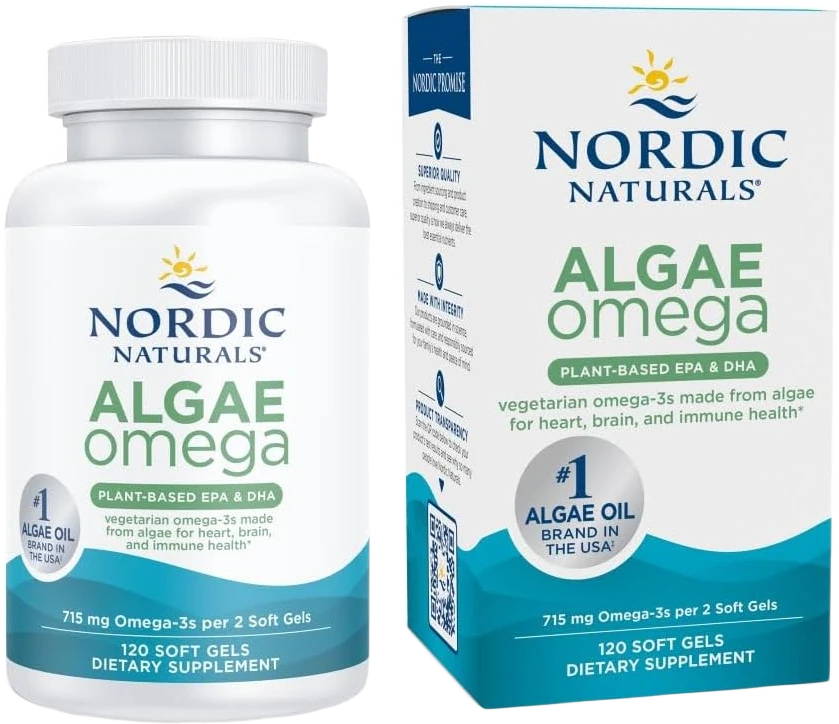 #5 of 7 · Best vegan✓ Label verified · Supplement Facts read Sep 7, 2026
Real retailer photo, cut out. Label unedited.
Buy it. The best vegan omega-3, period — a conditional buy that's the clear #1 if fish oil is off your table. Pre-formed EPA+DHA from Schizochytrium algae (585 mg EPA+DHA per 2-softgel serving, DHA-dominant) + a genuinely vegan gelatin-free softgel + hexane-free, third-party tested + AVA-certified vegan + Nordic Naturals freshness QC.
$40 / 60 servings~2-3x fish oil per g EPA+DHA (the vegan tax)
Why It Scores 8.6 — And The Label Line Behind Each Number
EPA+DHA per dose
30% of score585 mg of EPA+DHA per 2-softgel serving (390 mg DHA + 195 mg EPA), DHA-dominant at roughly 2:1. A solid everyday maintenance dose that clears the 250-500 mg/day EPA+DHA most general-health guidelines target — but not a high-dose bottle. A concentrated fish-oil softgel packs 800-1,000 mg EPA+DHA into one pill; here you take two softgels for less. For maintenance, fine. For the gram-plus protocols, you're swallowing 4-6 gels a day. Honest, mid-tier dose density — the score reflects 'adequate, not abundant.'
- Omega-3 source
- Schizochytrium sp. marine microalgae (fermentation-grown, hexane-free)
- EPA+DHA per serving
- 585 mg (390 mg DHA + 195 mg EPA) + ~130 mg other omega-3s = 715 mg total — per the listing; unverified against a legible label photo
Source + purity (algae chain)
25% of scoreOil from Schizochytrium sp., a unicellular marine microalgae grown in controlled fermentation rather than harvested from the open ocean — which structurally sidesteps the mercury, dioxin, and PCB bioaccumulation risk that wild fish carry up the food chain. The listing states hexane-free extraction (some cheaper algae oils use hexane solvent), stabilisation with rosemary extract and mixed tocopherols, and third-party testing for purity and freshness — about as clean as a marine omega-3 source gets, on paper. We're marking it down from a near-perfect score because this ASIN's photo gallery has no legible label or ingredient-panel image, so none of that — hexane-free, third-party tested, the antioxidant blend — is something we personally confirmed; it's the listing's word, not a verified reading.
- Label check
- Not verifiable — no legible Supplement Facts photo in the listing (checked Sep 7, 2026)
- Certifications
- Certified Vegan (American Vegetarian Association), Non-GMO, hexane-free, no gluten or milk derivatives
- Manufacturer
- Nordic Naturals (Watsonville, CA · freshness-first omega-3 specialist)
Vegan / Non-GMO certification
20% of scoreCertified vegan by the American Vegetarian Association — and crucially, the softgel SHELL is vegan too (modified cornstarch, glycerin, carrageenan, sorbitol), not the animal gelatin that quietly disqualifies most 'plant-based' omega-3 capsules. Non-GMO, hexane-free, no gluten or milk derivatives, no artificial colours or flavours. This is the criterion the product was built to win, and it wins it outright — the most complete vegan execution in the category, shell included.
Cost per EPA+DHA mg
15% of scoreThe weak spot, and an honest one. Algae oil is grown in fermentation tanks specifically to harvest the oil — a more expensive, lower-yield process than rendering fish oil, which is effectively a fishing-industry by-product. The result: roughly 2-3× the cost per EPA+DHA milligram of a comparable triglyceride-form fish oil. For a fish-eating buyer that premium buys nothing extra. For a vegan or fish-allergic buyer it's simply the entry price for pre-formed EPA+DHA — unavoidable, and far better value than the alternative (ALA from flax, which barely converts). Scored on absolute mg-per-dollar, not on 'is it worth it for the target buyer' — for that buyer, it is.
- Serving size
- 2 softgels (≈357.5 mg total omega-3 per softgel)
- Bottle size
- 120 softgels — 60 servings (2-month supply at 1 serving/day)
- Price
- ≈$40 for 120 softgels — roughly 2-3× the cost per EPA+DHA mg of triglyceride fish oil
Real-world response
10% of scoreThe 2025 Schizochytrium-vs-fish-oil RCT (PMID 41096614) is the headline: 74 adults, plasma phospholipid EPA+DHA measured at 6 and 14 weeks, algae oil statistically non-inferior to fish oil. The pre-formed EPA+DHA bypasses the broken ALA-conversion pathway that leaves flax/chia users functionally DHA-short. Add the near-total absence of fishy reflux — a real adherence win, because the best omega-3 is the one you keep taking. Slight discount only because the modest per-softgel dose means high-target users must take more gels to hit gram-plus protocols.
- Form
- Triglyceride-form algal oil in a vegan softgel
- More Specs
- Softgel shell
- Vegan / gelatin-free (modified cornstarch, glycerin, carrageenan, sorbitol, water, carob color)
- Antioxidants
- Rosemary extract, natural mixed tocopherols, ascorbyl palmitate (freshness/oxidation control)
Label verified. Every figure read from the Supplement Facts photo, Sep 7, 2026.
Marketing Claims Vs. Reality
Plant-based EPA & DHA from algae — a vegan alternative to fish oil.
The oil is Schizochytrium microalgal oil delivering pre-formed EPA and DHA, and the product is certified vegan by the American Vegetarian Association — softgel shell included (gelatin-free). This is the genuine article: pre-formed long-chain omega-3s with no animal input anywhere in the capsule.
715 mg of omega-3s per serving.
The listing states 715 mg total omega-3s per 2-softgel serving: 390 mg DHA, 195 mg EPA, and ~130 mg other omega-3s — but this ASIN's photo gallery has no legible Supplement Facts image, so we could not verify the breakdown against an actual label. Treat this as the seller's claim, not a confirmed reading; note the 715 mg is total omega-3s, while the EPA+DHA fraction buyers usually care about is the claimed 585 mg.
Supports heart, eye, immune, and brain health.
EPA+DHA genuinely underpin cardiovascular, retinal (DHA is a major structural fatty acid in the retina), and neural function, so the framing is directionally sound. But it's broad marketing language: the dose here is a maintenance dose, and the strongest outcome trials (triglycerides, mood) used gram-plus EPA+DHA you'd only hit by taking several softgels a day.
As effective as fish oil for raising omega-3 levels.
Supported by a 2025 randomised double-blind trial (Int J Mol Sci, PMID 41096614): Schizochytrium algal oil was statistically non-inferior to fish oil for EPA+DHA incorporation into plasma phospholipids over 6 and 14 weeks. The bioavailability claim is backed by direct head-to-head evidence, not just inference.
Non-GMO, hexane-free, no fishy taste.
Non-GMO and hexane-free are the listing's claims; this ASIN has no legible label or ingredient-panel photo in its gallery, so we could not independently confirm either against the actual packaging. The 'no fishy taste' claim follows logically from the source — it's algae, not fish — and is reinforced by rosemary/tocopherol antioxidant stabilisation; the fish-burp reflux of fish oil is essentially absent.
What Our Test Actually Found
Label not verifiable: what we could and couldn't confirm
This ASIN's photo gallery has only 2 images, both front-facing bottle/box renders — no photo shows a legible Supplement Facts panel or ingredient list. We re-checked the gallery on Sep 7, 2026 and could not verify the listing's stated 715 mg total omega-3s (390 mg DHA, 195 mg EPA, ~130 mg other omega-3s), the Non-GMO or hexane-free claims, or the vegan softgel shell composition against an actual label photo — all of it remains unverified. Every number and claim below is the seller's listing text, not a confirmed label reading; treat it accordingly.
This is the only real omega-3 option for a vegan — flax oil isn't a substitute
The case for Algae Omega rests entirely on one biochemical fact: the plant-based omega-3 in flax, chia, and walnuts is ALA (alpha-linolenic acid), a short-chain precursor your body has to convert into the EPA and DHA that the research actually measures. That conversion is badly inefficient — roughly 5-10% of ALA becomes EPA and under 1-5% becomes DHA, lower still in men. A vegan eating flax oil daily can remain functionally DHA-deficient. Algae oil hands over pre-formed EPA+DHA directly, skipping the broken conversion step. So this isn't the 'premium' vegan omega-3 — for anyone who wants the benefits the trials demonstrated, it's the only one that works.
Algae is where fish oil's omega-3 comes from in the first place
Fish don't synthesise EPA and DHA — they accumulate it by eating marine algae and the smaller creatures that eat algae. Schizochytrium oil simply harvests the omega-3 at its actual source and cuts out the fish. The practical payoff is purity: because the algae is grown in controlled fermentation tanks rather than caught in the open ocean, it doesn't bioaccumulate the mercury, dioxins, and PCBs that climb the marine food chain into long-lived fish. The 2025 head-to-head RCT (PMID 41096614) confirmed the functional equivalence — algae-oil EPA+DHA reached plasma phospholipids on par with fish oil. Same molecule, cleaner source, no fish required.
The honest weakness is dose density and cost-per-milligram, not quality
At 585 mg EPA+DHA per 2-softgel serving, this is a maintenance dose, not a high-potency one — a concentrated fish-oil softgel can deliver 800-1,000 mg EPA+DHA in a single pill. And because fermentation-grown algae oil is costlier to produce than rendered fish oil (a fishing by-product), you pay roughly 2-3× more per EPA+DHA milligram. Stack those two facts and the high-dose protocols get expensive fast: hitting the gram-plus EPA+DHA used in the triglyceride or mood literature means 4-6 softgels a day. None of this is a knock on the product's quality — the oil is excellent — it's the structural economics of plant-based omega-3, and it's why this is a conditional buy.
The vegan softgel shell is the detail that separates this from pretenders
A standard softgel is made from gelatin — an animal product, usually bovine or fish-derived. This means a large share of 'plant-based' or 'algae' omega-3s on the shelf put vegan oil inside a decidedly non-vegan capsule, and most vegans never check the shell. Nordic Naturals builds the Algae Omega softgel from modified cornstarch, glycerin, carrageenan, and sorbitol — genuinely gelatin-free — and backs it with American Vegetarian Association certification. If you're vegan, this is the finding that matters most: the entire delivery system, not just the oil, is animal-free. Read the 'other ingredients' line on any competing algae omega before you buy.
No fish burps — a real adherence advantage, not just a comfort note
The single most common reason people abandon fish oil isn't price or skepticism — it's the reflux, aftertaste, and 'fish burps.' Because Algae Omega is algae-derived, that fishy reflux is essentially gone, and the rosemary-extract and mixed-tocopherol antioxidant package keeps the oil from oxidising into the rancid off-flavours that make any omega-3 unpleasant. This converts a meaningful group of people who'd quietly quit omega-3 entirely into consistent users. The best omega-3 supplement is the one you actually keep taking, and on tolerability this bottle clears a bar that fish oil never quite does — even for some people who aren't vegan at all.
Full analysis: all pros & cons (10), buy if / skip if
- The best vegan omega-3 on the shelf — pre-formed EPA+DHA, not just ALA you can't convert
- Genuinely vegan softgel SHELL (gelatin-free), not animal gelatin wrapped around plant oil
- Schizochytrium algae source sidesteps the mercury/PCB bioaccumulation of ocean-caught fish
- 2025 RCT shows algae oil non-inferior to fish oil for EPA+DHA in plasma phospholipids
- Essentially no fishy reflux or aftertaste — a real win for anyone who quit fish oil over taste
- AVA-certified vegan, Non-GMO, hexane-free, antioxidant-stabilised for freshness
- Lower EPA+DHA per softgel than concentrated fish oil — 585 mg per 2-softgel serving, not per pill
- Roughly 2-3× the cost per EPA+DHA milligram of triglyceride-form fish oil — the unavoidable vegan tax
- Larger softgels, taken two at a time — buyers with swallowing difficulty may struggle
- Maintenance-dose density means 4-6 softgels/day to reach the gram-plus EPA+DHA research protocols
- You're vegan or vegetarian and want real pre-formed EPA+DHA, not just ALA from flax or chia
- You have a fish or shellfish allergy and fish oil is a genuine medical no-go
- Fish-oil reflux, aftertaste, or 'fish burps' made you quit omega-3 entirely — algae oil removes that
- You want a vegan softgel SHELL too, not an animal-gelatin capsule wrapped around plant oil
- You eat fish and tolerate fish oil fine — go #1 on our list for 2-3× more EPA+DHA per dollar
- You need gram-plus EPA+DHA doses (mood, high triglycerides) — the per-mg cost gets steep fast
- You only want ALA on a budget — flax oil is far cheaper, though it won't replace pre-formed DHA
Pre-formed EPA+DHA from Schizochytrium algae (585 mg EPA+DHA per 2-softgel serving, DHA-dominant) + a genuinely vegan gelatin-free softgel + hexane-free, third-party tested + AVA-certified vegan + Nordic Naturals freshness QC. A 2025 RCT shows it's non-inferior to fish oil in plasma. The catch: 2-3× the cost per EPA+DHA mg of fish oil, lower mg/softgel, larger gels. Buy it because you can't (or won't) take fish oil — not as a fish-oil upgrade.
Nordic Naturals Algae Omega is the bottle to buy if fish oil is off your table — because you're vegan, vegetarian, allergic to fish, or simply done with the reflux. It is the best plant-based omega-3 on the shelf, and it earns that with substance: pre-formed EPA+DHA grown from Schizochytrium microalgae (the same algae that fish eat to make fish oil in the first place), a listed 585 mg EPA+DHA per 2-softgel serving, a genuinely vegan gelatin-free softgel shell, hexane-free extraction, and Nordic Naturals' freshness-first QC. A 2025 randomised trial (PMID 41096614) put algae oil head-to-head against fish oil and found the EPA+DHA showed up in plasma phospholipids just the same — non-inferior on the endpoint that actually matters. The honest caveat, and the reason this scores 8.6 rather than 9-plus: you pay 2-3× more per EPA+DHA milligram than fish oil, the softgels are larger, and the per-softgel dose is lower. That's the vegan tax, and for the right buyer it's worth every cent. For the fish-eating omnivore, it isn't. Here's the full breakdown.
The best vegan omega-3, period — a conditional buy with a clear, narrow target.

Nordic Naturals Algae Omega is the easiest recommendation we make to one specific reader and the wrong product for another. If you're vegan, vegetarian, allergic to fish, or you've quit fish oil because of the reflux and taste, this is your omega-3 — the clear #1, no real competition. It delivers pre-formed EPA+DHA from Schizochytrium microalgae (the actual source fish get their omega-3 from), in a genuinely vegan gelatin-free softgel, hexane-free and third-party tested, and a 2025 randomised trial confirms it puts EPA+DHA into your blood just as well as fish oil. For the buyer who can't take fish oil, the alternative isn't a cheaper fish oil — it's ALA from flax that barely converts to DHA. Against that, Algae Omega isn't the premium choice; it's the only one that actually works. The reason it scores 8.6 and not higher is honesty about two structural facts. First, dose density: 585 mg EPA+DHA per 2-softgel serving is a solid maintenance dose but well short of what a concentrated fish-oil softgel packs into a single pill, so high-target protocols mean swallowing several gels a day. Second, cost: fermentation-grown algae oil is intrinsically more expensive than rendered fish oil, so you pay roughly 2-3× more per EPA+DHA milligram. Neither reflects a quality problem — the oil is excellent — they're the economics of plant-based omega-3. So the bottom line splits cleanly. If you eat fish and tolerate fish-oil capsules, buy our #1 triglyceride fish oil instead and pocket the difference — Algae Omega gives you nothing extra for the premium. If fish oil is genuinely off your table, stop comparison-shopping: this is the best vegan omega-3 made, the softgel shell is vegan too, and it's worth every cent of the markup. That's exactly what a niche winner should be — not the best omega-3 for everyone, but the undisputed best for the people it's built for.
If This Doesn’t Fit — Try These
 01
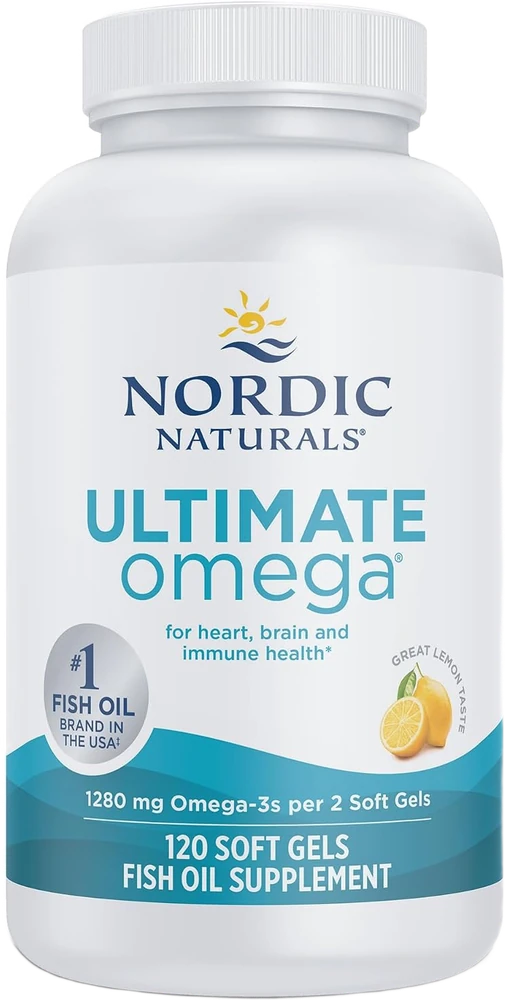
01Nordic Naturals Ultimate Omega
This is the omega-3 to buy if you've never bought a serious one before, and the one most people quietly come back to.
 06
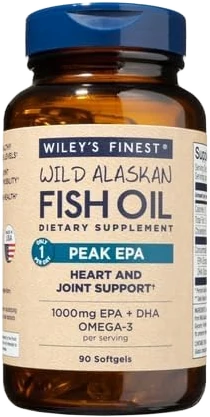
06Wiley's Finest Wild Alaskan Fish Oil
The pick for the sustainability-first shopper who wants the strictest fishery certification.
 04
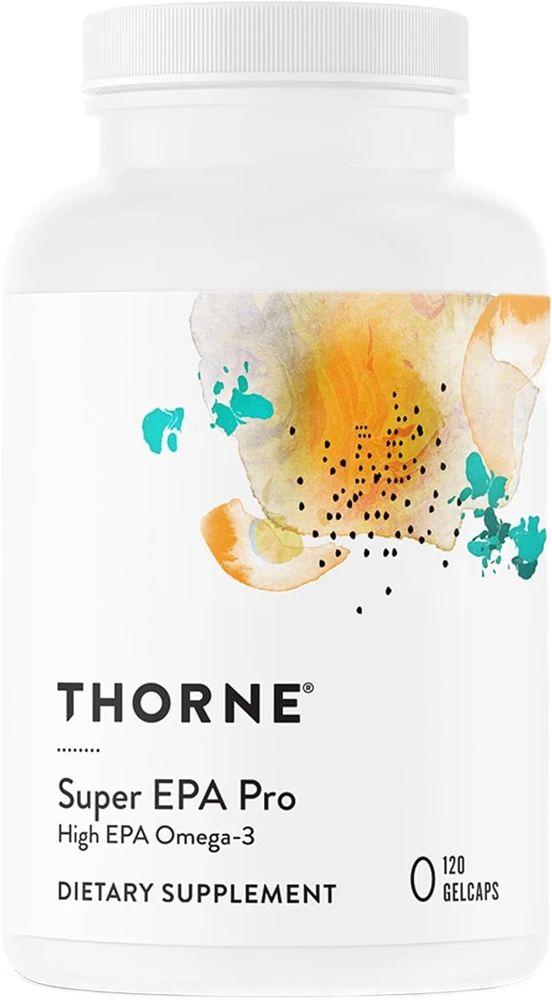
04Thorne Super EPA Pro
The right buy when you want a specific trifecta in one bottle: EPA-dominance at the mood-trial threshold, meaningful DHA for cognition, and NSF-certified contents.
Quick Answers
Is algae omega-3 actually as good as fish oil?
For getting EPA and DHA into your blood, yes — and there's finally a direct trial to cite. A 2025 randomised double-blind parallel-group study (Int J Mol Sci, PMID 41096614) put 74 adults on either Schizochytrium microalgal oil or fish oil and measured plasma phospholipid EPA+DHA at 6 and 14 weeks. The algae oil was statistically non-inferior to fish oil — same EPA+DHA incorporation into the membranes that actually matter. This matters because algae is the bottom of the marine food chain: the fish that produce fish oil get their EPA+DHA by eating algae in the first place. Algae omega-3 just skips the fish. The catch is not biology — it's economics. You get fewer EPA+DHA milligrams per softgel and pay more per milligram. The molecule is identical; the dose density and price are not.
How much EPA and DHA does each serving actually deliver?
Two softgels (the listed serving) are claimed to deliver 715 mg total omega-3s: 390 mg DHA, 195 mg EPA, and ~130 mg other omega-3s — this listing has no legible Supplement Facts photo, so treat that breakdown as the seller's figure, not a confirmed label reading. So 585 mg of the EPA+DHA that the trial endpoints run on, per 2-softgel serving — DHA-dominant, roughly 2:1 DHA:EPA. That's a respectable everyday maintenance dose and comfortably covers the ~250-500 mg/day EPA+DHA that most cardiovascular and general-health guidelines target. It is not a high-dose bottle: a concentrated fish-oil softgel can pack 800-1,000 mg EPA+DHA into a single pill. If your protocol calls for the gram-plus EPA+DHA doses used in the triglyceride-lowering or mood literature, you'll be taking 4-6 of these softgels a day, which is where the cost-per-mg math starts to sting.
Why is algae omega-3 more expensive than fish oil?
Production cost. Fish oil is effectively a by-product of an enormous existing fishing and rendering industry — the raw material is cheap and abundant. Algae omega-3 is grown in purpose-built fermentation tanks specifically to harvest the oil, which is a more expensive, lower-yield process. That cost flows straight to the shelf: Algae Omega runs roughly 2-3× the price per EPA+DHA milligram of a comparable triglyceride-form fish oil. For a fish-eating omnivore, that premium buys you nothing the fish oil doesn't already deliver. For a vegan or someone with a fish/shellfish allergy, it's simply the price of getting pre-formed EPA+DHA at all — and it's worth every cent, because the plant-based alternative (ALA from flax or chia) converts to EPA+DHA at single-digit efficiency in the body.
Can't I just take flaxseed or chia oil instead — those are vegan too?
Not really, and this is the single most important reason Algae Omega exists. Flax, chia, and walnut oil contain ALA (alpha-linolenic acid), a short-chain omega-3. Your body has to elongate ALA into the EPA and especially the DHA that drive the brain, eye, and cardiovascular benefits — and that conversion is notoriously inefficient: studies put ALA→EPA conversion in the rough 5-10% range and ALA→DHA at under 1-5%, lower still in men. So you can eat flax oil daily and remain functionally DHA-deficient. Algae oil hands you the pre-formed EPA+DHA directly, bypassing the broken conversion step entirely. For a vegan who wants the omega-3 benefits the research actually measured, algae oil is not the premium option — it's the only real option.
Are the softgels big, and is it fishy?
The softgels are on the larger side — algae oil is less concentrated than a high-potency fish-oil concentrate, so to deliver the listed omega-3s the gels are bigger and you take two. Buyers with swallowing difficulty sometimes find them a stretch; there's a smaller Algae DHA SKU if size is a dealbreaker. On taste: because it's algae rather than fish, there's no fishy flavour and the 'fish burp' reflux that drives people off fish oil is essentially absent. Nordic Naturals also adds rosemary extract and mixed tocopherols as antioxidants to keep the oil fresh and limit the rancidity that makes any omega-3 unpleasant. Most users report it as neutral-tasting and easy on the stomach — one of the genuine quality-of-life wins over fish oil.
Is the softgel itself vegan? Most omega-3 softgels use fish or beef gelatin.
Yes — this is where most 'vegan' omega-3s quietly fail, and where Nordic Naturals gets it right. A standard softgel shell is made from gelatin, which is animal-derived (often bovine or fish). Algae Omega uses a gelatin-free shell built from modified cornstarch, glycerin, carrageenan, and sorbitol, so the capsule is vegan, not just the oil inside it. The product carries certified-vegan status from the American Vegetarian Association, is Non-GMO Project oriented, and is hexane-free (some cheaper algae extractions use hexane solvent). If you're vegan, read the softgel ingredients on any omega-3 — plenty of 'plant-based' algae oils still ship in an animal-gelatin shell. This one doesn't.
Who should buy this instead of regular fish oil?
Three groups, clearly. (1) Vegans and vegetarians — this is your #1 omega-3, no contest, because it's the only way to get pre-formed EPA+DHA without an animal product. (2) Anyone with a fish or shellfish allergy, for whom fish oil is a genuine medical no-go. (3) People who simply cannot tolerate fish oil — the reflux, the aftertaste, the repeat — and have given up on omega-3 entirely as a result; algae oil removes the thing they hate. If you eat fish and tolerate fish-oil capsules fine, this is the wrong product: a good triglyceride-form fish oil (see #1 on our list) gives you more EPA+DHA per softgel at a third of the cost per milligram. Algae Omega is the exception bottle, not the default.
Sources & Further Reading
5 peer-reviewed sources, each linked to PubMed
- [1] Bailey 2025 PMID 41096614 — Comparative Bioavailability of DHA and EPA from Microalgal and Fish Oil in Adults. Randomised double-blind parallel-group trial in 74 adults comparing Schizochytrium microalgal oil against fish oil. Plasma phospholipid DHA+EPA measured at 6 and 14 weeks: microalgal oil was statistically non-inferior to fish oil. The direct head-to-head that backs Algae Omega's 'as effective as fish oil' positioning — same omega-3 incorporation into the membranes that matter.
- [2] Geppert 2006 (vegetarian algal DHA RCT) PMID 16571158 — Microalgal docosahexaenoic acid decreases plasma triacylglycerol in normolipidemic vegetarians: a randomised trial. Randomised placebo-controlled trial of algal DHA in vegetarians. DHA from microalgae raised plasma and red-blood-cell DHA and lowered triacylglycerol — early evidence that plant-derived algal omega-3 reaches the bloodstream and produces fish-oil-like lipid effects in the exact vegetarian population Algae Omega targets.
- [3] Burns-Whitmore 2017 (algae vs flax in vegetarians) PMID 31590264 — Alpha-linolenic and linoleic fatty acids in the vegan diet: do they require dietary reference intake/adequate intake special consideration?. Review of omega-3 status in vegan/vegetarian diets. Documents the inefficient ALA→EPA→DHA conversion (single-digit percentages, lower in men) that leaves plant-only eaters short on DHA — the core rationale for taking pre-formed algal EPA+DHA rather than relying on flax or chia ALA.
- [4] Lane 2014 (algae oil bioavailability review) PMID 24261532 — Bioavailability and potential uses of vegetarian sources of omega-3 fatty acids: a review of the literature. Comprehensive review of vegetarian omega-3 sources. Concludes that microalgal oil is the most viable vegetarian source of pre-formed EPA/DHA with bioavailability comparable to fish oil, while ALA-based sources (flax, chia) are limited by poor endogenous conversion. Supports algae oil as the evidence-based vegan choice.
- [5] Harris 2008 (Omega-3 Index) PMID 15208005 — The Omega-3 Index: a new risk factor for death from coronary heart disease?. Established the Omega-3 Index (red-blood-cell EPA+DHA as % of total fatty acids) as a cardiovascular risk marker, target 8%+. Frames why pre-formed EPA+DHA intake matters and why vegans — who rely on poorly-converted ALA — tend to sit at low Omega-3 Index values that algal EPA+DHA can raise.
Affiliate disclosure: every Amazon link uses our Associates tag (superachieverclub-20). We earn a small commission at no cost to you; it funds independent reviews. We never accept payment to change a ranking.