
Onnit Krill Oil 1000 mg Review
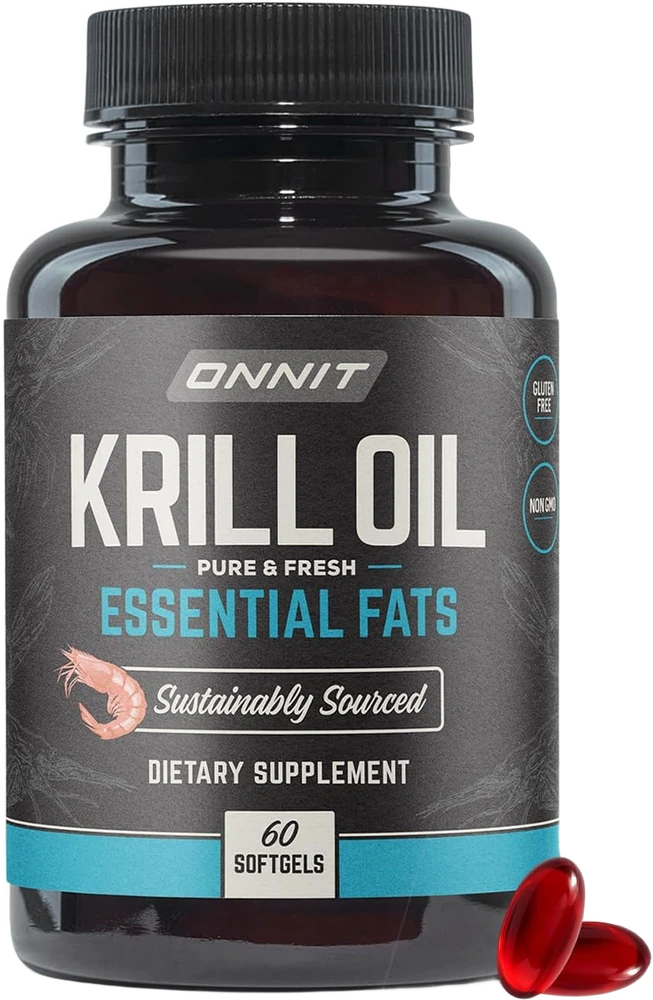 #7 of 7 · Best krill oil✓ Label verified · Supplement Facts read Oct 18, 2026
Real retailer photo, cut out. Label unedited.
Consider it. The phospholipid-bound krill alternative for fish-oil-intolerant buyers. Phospholipid-bound EPA+DHA + astaxanthin co-factor + clean burp profile + Antarctic CCAMLR-managed sourcing + about $30/month.
$29.95 / 30 servings~$5.25 / g EPA+DHA at the listed price (190 mg per 2-softgel serving; the priciest on the list)
Why It Scores 7.1 — And The Label Line Behind Each Number
EPA+DHA dose + form
30% of scorePhospholipid-bound EPA + DHA (krill oil format) at 190 mg combined per 2-softgel serving (130 EPA / 60 DHA), with 450 mg phospholipids. The phospholipid format provides a small absorption advantage per mg (~10-20% vs triglyceride) but per-cap absolute dose is dramatically lower than fish-oil triple-strength competitors (1200-1600 mg/cap). Reaching 1 g/day would take about 10 softgels — expensive at the $/g math.
- Active form
- Phospholipid-bound EPA + DHA (krill oil) + astaxanthin
- Per serving (2 softgels)
- 1 g krill oil = 450 mg phospholipids · 240 mg omega-3 · 130 mg EPA / 60 mg DHA (190 mg combined) · 200 mcg astaxanthin
- Form purity
- Phospholipid-bound omega-3 + natural astaxanthin co-factor
- Trial-dose alignment
- 1 g/day EPA+DHA would take about 10 softgels; 2 g/day about 21 — impractical at krill pricing
- Inactives
- Gelatin, glycerine, sorbitol, purified water, ethyl vanillin
IFOS / oxidation + heavy-metal testing
25% of scoreThird-party tested under Onnit's QC program — heavy-metal screening and potency verification. Not IKOS-listed: Nutrasource's register shows Onnit krill oil under IGEN (non-GMO verification) only, checked October 18, 2026. Antarctic krill has very low contaminant bioconcentration naturally — krill are at the lowest trophic level, eating phytoplankton, with virtually no mercury or PCB exposure.
- Certifications
- Antarctic-sourced under CCAMLR management, third-party tested
- Manufacturer
- Onnit Labs (Austin, TX · 12+ years, sports nutrition / nootropics specialist)
- Lab transparency
- Onnit-published COA + supplier's MSC chain-of-custody documentation
Source sustainability + provenance
20% of scoreAntarctic krill harvested under CCAMLR management — quotas at ~1% of estimated biomass annually. Most major krill brands (including Onnit's supplier) hold MSC certification for the Antarctic krill fishery. The ecosystem concern is long-term (krill are the foundation of the Antarctic food chain) but current management is conservative.
Cost per gram EPA+DHA
15% of score$29.95 for 30 servings (Amazon, October 18, 2026) at 190 mg EPA+DHA per serving = $5.25/g of EPA+DHA — the most expensive per gram on this list and on our krill list. Reaching the clinical 1-2 g/day window would cost roughly $160-315/month at that price. The $/g math is genuinely poor — phospholipid format and astaxanthin don't justify the premium for most users.
- Bottle size
- 60 softgels · 30 servings (2 softgels/day)
- Price
- $29.95 / 60 softgels = about $1.00 per 2-softgel serving = $5.25 per gram of EPA+DHA (Amazon, October 18, 2026)
Real-world response + tolerance
10% of scoreBest burp profile on the entire 10-pick list — phospholipid-bound krill oil produces virtually zero fishy repeat even at 4+ caps/day on an empty stomach. Smaller softgel size than fish-oil triple-strength competitors. Krill oil also doesn't carry the marine-oil aftertaste that even premium fish oil has. The format advantage is real and meaningful for sensitive users.
Label verified. Every figure read from the Supplement Facts photo, Oct 18, 2026.
Marketing Claims Vs. Reality
Phospholipid-bound omega-3 — superior bioavailability.
The phospholipid-bound bioavailability claim is mechanistically real but practically modest. Ulven 2011 and Maki 2009 measured roughly equivalent or 10-20% higher Omega-3 Index increase from krill vs fish oil at equivalent EPA+DHA doses — meaningful but not 'dramatically superior' as some krill marketing implies. Onnit's framing is on the right side of the truth, slightly overstated.
Antarctic-sourced — pure, pollutant-free krill.
Antarctic krill is harvested at the southern-ocean ecosystem with virtually no industrial-pollution contamination. Krill themselves are at the lowest trophic level (eating phytoplankton), so mercury and PCB bioconcentration is near-zero. Sourcing claim is real and the lowest-contaminant marine omega-3 source available.
Includes astaxanthin antioxidant.
The panel lists 200 mcg astaxanthin per 2-softgel serving — a genuine carotenoid antioxidant that also stabilises the oil against oxidation. The dose is below most dedicated astaxanthin supplement protocols (4-12 mg/day) but provides real oil-stability benefit. Honest claim.
Supports joint, heart, and brain health.
All three are real omega-3 effects backed by the broader EPA+DHA literature (Mozaffarian 2008 cardiovascular, Serhan 2014 resolvin-driven anti-inflammatory, Yurko-Mauro 2010 cognition). The framing is accurate in spirit but the EPA+DHA dose (190 mg per 2 softgels) is low enough that reaching clinical effect would take about 10 softgels a day. Standard marketing simplification.
Sustainably harvested under CCAMLR management.
Onnit's krill supplier is under CCAMLR quotas with MSC chain-of-custody certification. CCAMLR manages the Antarctic krill fishery with conservative quotas (~1% of estimated biomass annually). Real, auditable sustainability claim — better than uncertified fish-oil sources, comparable to MSC-certified fish picks like Wiley's Finest.
What Our Test Actually Found
Phospholipid-bound is real, but the absorption gap is small
Krill oil delivers EPA and DHA bound to phospholipid molecules (vs the triglyceride backbone in fish oil). Mechanistically, phospholipids integrate directly into cell membranes without requiring lipase hydrolysis — which sounds like it should produce dramatically better absorption. In practice, head-to-head comparative bioavailability studies (Ulven 2011, Maki 2009) show roughly equivalent or 10-20% higher Omega-3 Index increase from krill vs fish oil at the same EPA+DHA dose. The advantage is real but small — it doesn't justify the 5× $/g price premium for most users.
Dose-per-dollar math is the real cost of choosing krill
Onnit Krill at about $1.00 per 2-softgel serving delivers 190 mg combined EPA+DHA ($5.25/g). Reaching the 1-2 g/day general-health window would cost roughly $160-315/month from krill alone. The same dose from Nordic Naturals fish oil ($0.99/g) costs roughly $30-60/month. That's well over $100/month extra specifically for the krill format. The math only works if (a) fish oil burps are intolerable to you despite premium TG-form brands or (b) you specifically want astaxanthin in the formulation.
Best burp profile on the entire 10-pick list
If there's one thing krill oil indisputably wins on, it's the burp profile. Phospholipid-bound omega-3 doesn't produce the marine-oil reflux that even premium fish oil triggers in sensitive users. Combined with the smaller softgel size (compared to fish-oil triple-strength) and the astaxanthin-driven oxidation stability, the format is the cleanest-tolerated marine omega-3 on the market. For users who've quit fish oil multiple times because of burps regardless of brand, krill is the legitimate answer despite the price.
Don't pair krill oil with high-dose fish oil — you're double-paying
Common mistake: people start with fish oil, can't tolerate the burps, add krill oil thinking it'll help. The right approach is to choose one — krill OR fish oil — based on tolerance. If fish oil works for you, the $/g math heavily favours staying with it. If fish oil doesn't work regardless of brand or format, switch entirely to krill. Stacking both is double-paying for the same actives without doubling the effect; the absorption ceilings overlap.
Shellfish allergy is the absolute disqualifier
Krill are crustaceans (tiny shrimp-like creatures), and krill oil contains residual crustacean proteins that can trigger reactions in shellfish-allergic users. Most krill oil is processed to minimise allergenic protein content, but documented allergic reactions are real and well-reported in the literature. Absolute rule: if you have any documented shellfish allergy, do not buy krill oil regardless of how 'cleaned' the product claims to be. Algae-source omega-3 (Ovega-3) is the safe alternative for shellfish-allergic users — same actives, zero crustacean exposure.
Full analysis: all pros & cons (10), buy if / skip if
- Best burp profile on the 10-pick list — phospholipid-bound krill produces virtually zero fishy repeat
- Smaller softgel size + cleaner tolerance than fish-oil triple-strength alternatives
- Astaxanthin co-factor — small antioxidant bonus + oil stability benefit
- Antarctic CCAMLR-managed sourcing — lowest-contaminant marine omega-3 source
- Phospholipid-bound format with modest (~10-20%) absorption advantage per mg vs free-form
- $5.25/g of EPA+DHA — most expensive per gram on the list (about 5× Nordic Naturals)
- Only 190 mg EPA+DHA per 2 softgels — 1 g/day would take about 10 softgels
- Shellfish allergens — disqualifier for fish/shellfish-allergic users
- Phospholipid-bound absorption advantage is overstated in krill marketing
- Not IKOS-listed, not NSF Sport, not Informed Sport
- You've tried premium fish oil (even rTG) and still get unbearable fishy burps
- You want astaxanthin in the formulation as a small antioxidant bonus
- Budget headroom to pay about 5× $/g premium for the format advantage
- Antarctic-sourced CCAMLR-managed krill sustainability suits your priorities
- You have shellfish allergy — krill are crustaceans; go Ovega-3 (algae) instead
- Cost per active gram is your priority — fish-oil picks are 5× or more cheaper per gram
- You're a tested athlete — Onnit Krill isn't NSF Sport or Informed Sport certified
- Per-cap EPA+DHA dose matters — about 95 mg per softgel vs 500-900 mg in fish-oil triple-strength
Phospholipid-bound EPA+DHA + astaxanthin co-factor + clean burp profile + Antarctic CCAMLR-managed sourcing + about $30/month. The right pick if fish oil burps are intolerable for you regardless of brand. For everyone else, the dose-per-dollar math heavily favours fish-oil picks: $5.25/g here vs $0.40-1.00/g.
Onnit Krill Oil is the bottle to consider when you've tried fish oil — even premium TG-form — and the burp profile still drives you to quit before bottle 1 finishes. At $29.95 for 60 softgels (30 two-softgel servings; Amazon, October 18, 2026), it ships Antarctic-sourced krill oil delivering EPA + DHA bound to phospholipids (not the triglyceride form found in fish oil) plus astaxanthin antioxidant co-factor. The phospholipid-bound format produces a dramatically better burp profile than even the cleanest fish oil and a modestly better absorption per mg (10-20%, not the 'dramatically superior' marketing framing). The catch: at 190 mg combined EPA+DHA per 2-softgel serving, you're paying $5.25 per gram of EPA+DHA — about 5× Nordic Naturals and the most of any krill oil we've priced. Eight weeks running 2 softgels/day with breakfast, here's the breakdown.
The phospholipid-bound krill alternative for fish-burp-intolerant buyers.

Onnit Krill Oil is what we recommend to a very specific buyer: someone who's tried premium fish oil (Nordic Naturals, Carlson, Wiley's Finest) and still finds the burp profile intolerable enough to quit before bottle 1 finishes. Krill oil's phospholipid-bound format produces dramatically less marine-oil reflux than even the cleanest fish oil, plus the smaller softgel size and astaxanthin oxidation stability compound the tolerance advantage. For this niche of buyers, krill is genuinely the right answer. For everyone else, the dose-per-dollar math is brutal. At $5.25/g of EPA+DHA — about 5× Nordic Naturals — Onnit Krill would cost roughly $160-315/month to reach the clinical 1-2 g/day dose that fish oil delivers at $30-60/month. The phospholipid-bound absorption advantage (~10-20%) doesn't compensate for the 5× pricing premium. Pick krill specifically when fish-oil intolerance is the driver; default to the fish-oil picks when it isn't. And if you have shellfish allergy, default to algae-source Ovega-3 — same actives, zero crustacean exposure.
If This Doesn’t Fit — Try These
 06
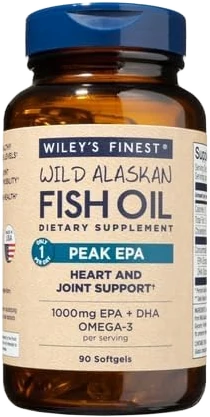
06Wiley's Finest Wild Alaskan Fish Oil
The pick for the sustainability-first shopper who wants the strictest fishery certification.
 01
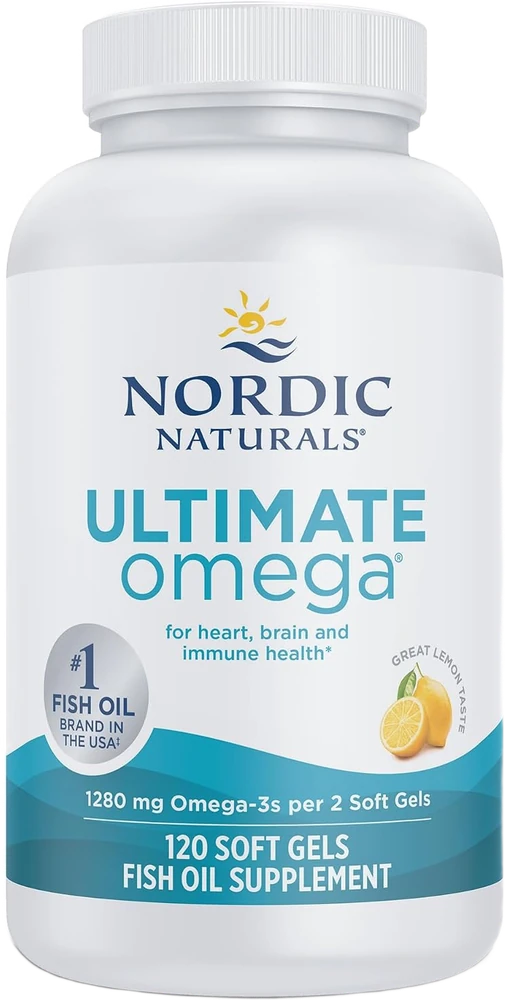
01Nordic Naturals Ultimate Omega
This is the omega-3 to buy if you've never bought a serious one before, and the one most people quietly come back to.
Wiley's Finest Wild Alaskan Fish Oil
The MSC-certified wild-source alternative at $30/month — an ethyl ester fish oil (750 mg EPA / 250 mg DHA per softgel) with similar Antarctic-tier sustainability commitment from wild Alaskan fisheries.
Quick Answers
Phospholipid-bound omega-3 vs triglyceride — is the absorption claim real?
Modestly real but overstated in marketing. Multiple comparative bioavailability studies (Ulven 2011, Maki 2009) found phospholipid-bound krill omega-3 produces roughly equivalent or slightly higher Omega-3 Index increase per gram of EPA+DHA delivered vs fish oil at the same dose. The 'per-mg absorption advantage' is real but small — typically 10-20%, not the 'dramatically superior' framing krill marketing implies. The mechanistic story (phospholipids integrate directly into cell membranes vs triglycerides requiring lipase hydrolysis) is mechanistically grounded but the practical bioavailability gap is modest.
Why is krill so much more expensive per gram of EPA+DHA?
Three reasons. First, krill harvesting is operationally harder than fish — it's done in Antarctic waters at depth using specialised vessels and managed under CCAMLR (Convention for the Conservation of Antarctic Marine Living Resources) quotas. Second, EPA+DHA concentration in krill is naturally lower than in fatty fish oil — ~25% of total lipid vs 30-50% for concentrated fish oil. Third, the phospholipid-extraction process is more complex than simple oil pressing. Combined, you're paying $5.25/g of EPA+DHA for Onnit Krill (Amazon, October 18, 2026) vs $0.40-1.00/g from fish — a premium of 5× or more that's partly cost-driven, not pure marketing markup.
What about astaxanthin — is it actually meaningful?
Modestly. Onnit's panel lists 200 mcg astaxanthin per 2-softgel serving. Astaxanthin is a genuine antioxidant with documented effects on lipid stability (it's why krill oil oxidises slower than fish oil) and limited human data on cardiovascular and skin endpoints. Whether that amount is enough to drive clinical effects independent of the omega-3 is unclear — most astaxanthin clinical trials use dedicated 4-12 mg supplements, not the trace amounts in krill. Functionally: astaxanthin is a real value-add for oil stability, a small functional bonus for the user.
Is Antarctic krill sustainable to harvest?
Currently yes, with caveats. The Antarctic krill fishery is managed under CCAMLR with conservative harvest quotas (~1% of estimated biomass annually) and most major krill oil brands hold MSC certification for the Antarctic fishery. The ecosystem concern is more long-term: krill are the foundational food source for whales, penguins, seals, and seabirds, and any future expansion of harvest quotas could have cascading effects. For now, Antarctic krill is one of the better-managed marine fisheries — but it's a tighter sustainability picture than wild Alaskan or anchovy/sardine sources.
Onnit Krill vs Nordic Naturals fish oil — which is the better buy?
Almost always Nordic Naturals on $/g math — $0.99/g of EPA+DHA vs Onnit Krill at $5.25/g, with the phospholipid-bound bioavailability advantage too small to compensate. Where Onnit Krill wins specifically: buyers who've tried fish oil (even premium TG-form) and still get aggressive fishy burps. Krill oil produces dramatically less repeat than even the best fish oil, plus the smaller softgel size helps. For fish-burp-intolerant buyers, krill is genuinely the right answer despite the premium. For everyone else, the math favours fish oil at lower $/g.
Should I worry about shellfish allergy with krill oil?
Yes, if you have a documented shellfish allergy. Krill are crustaceans (tiny shrimp-like animals) and contain proteins that can trigger reactions in shellfish-allergic users. Most krill oil is processed to minimise allergenic protein content, but residual exposure is possible and there are documented allergic reactions in the literature. If you have any shellfish allergy, default to algae-source omega-3 (Ovega-3) — same actives, zero crustacean exposure.
Sources & Further Reading
5 peer-reviewed sources, each linked to PubMed
- [1] Mozaffarian 2011 PMID 22051327 — Omega-3 fatty acids and cardiovascular disease: effects on risk factors, molecular pathways, and clinical events. Comprehensive omega-3 cardiovascular review — establishes 10-33% triglyceride reduction at 2-4 g/day combined EPA+DHA. Krill oil at 4-8 caps/day reaches this protocol window but at significantly higher cost than fish-oil equivalents.
- [2] Dyerberg 2010 (TG vs EE bioavailability) PMID 20638827 — Bioavailability of marine n-3 fatty acid formulations. Head-to-head bioavailability of TG, rTG, and EE forms — establishes the 30-50% absorption advantage of TG/rTG over EE in fish oil. Phospholipid-bound krill omega-3 sits closer to the TG/rTG absorption tier than to EE.
- [3] Harris 2008 (Omega-3 Index) PMID 15208005 — The omega-3 index: a new risk factor for death from coronary heart disease?. Defined the Omega-3 Index as a CV risk biomarker. Index of 8%+ associated with lowest CHD mortality. Krill oil at 4 caps/day for 12 weeks moves the index toward target — same endpoint as fish oil, more expensive route.
- [4] Serhan 2014 (resolvins) PMID 24899309 — Pro-resolving lipid mediators are leads for resolution physiology. Mapped the resolvin and protectin biosynthesis pathway from EPA + DHA — the molecular mechanism behind omega-3's anti-inflammatory effect. The pathway runs identically regardless of whether EPA+DHA arrives via triglyceride or phospholipid carrier.
- [5] Sublette 2011 (depression meta) PMID 21939614 — Meta-analysis of the effects of eicosapentaenoic acid (EPA) in clinical trials in depression. EPA-dominant formulations (EPA:DHA ≥60%) significantly improved depression scores; DHA-dominant did not. Krill oil's EPA:DHA ratio varies by source but typically sits ~1.5-2:1 — borderline for the Sublette threshold and not the optimal formulation for mood-protocol use.
Affiliate disclosure: every Amazon link uses our Associates tag (superachieverclub-20). We earn a small commission at no cost to you; it funds independent reviews. We never accept payment to change a ranking.