
Nordic Naturals Prenatal DHA Review
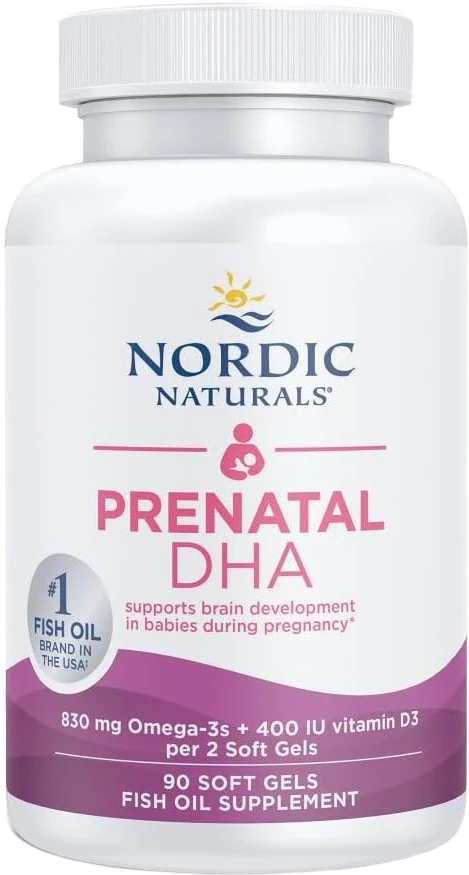 #2 of 11 · Best for pregnancy✓ Label verified · Supplement Facts read Sep 7, 2026
Real retailer photo, cut out. Label unedited.
Buy it. The default prenatal omega-3 — DHA-dominant, clean, pregnancy-appropriate. Pairs with (not replaces) a prenatal multi. 480 mg DHA per serving in the rTG form + 205 mg EPA + 400 IU D3 + small-fish sourcing + third-party purity testing + unflavored softgels for nausea-prone weeks.
~$28-32 / 90 softgels (45 servings)~$0.65 per day at 2 softgels (480 mg DHA + 205 mg EPA)
Why It Scores 9.0 — And The Label Line Behind Each Number
DHA dose + form (pregnancy fit)
30% of score480 mg DHA per 2-softgel serving in the re-esterified triglyceride (rTG) form — DHA-dominant (480 DHA / 205 EPA), which is the correct skew for pregnancy where DHA, not EPA, is the structural priority for fetal brain and retinal development. Comfortably clears the commonly cited 200-300 mg/day DHA pregnancy floor with margin. rTG carries the bioavailability edge over ethyl-ester concentrates. The single most important axis for a prenatal omega-3, and this nails it.
- Active form
- Re-esterified triglyceride (rTG) fish oil from anchovies, sardines, mackerel and herring
- DHA per serving
- 480 mg DHA (2 softgels) — the dominant omega-3 in the formula
Purity + heavy-metal testing
25% of scoreThe label lists anchovies, sardines, mackerel and herring as the source: oily fish lower in the food chain than the large predatory species pregnant women are told to limit. Molecularly distilled, mixed-tocopherol stabilised against oxidation, and third-party tested. Documentation works the same way as for Nordic's flagship Ultimate Omega: the brand returns a Certificate of Analysis by lot number on its site — brand-published testing rather than an independent batch database.
- Certifications
- Non-GMO, gluten-free, milk-free; Friend of the Sea–aligned sourcing; third-party tested
Pregnancy-safe formulation
20% of scoreClean, pregnancy-appropriate formulation: fish oil + 400 IU vitamin D3 + mixed tocopherols, with no high-dose preformed vitamin A (retinol), no artificial colours, and a non-GMO, gluten-free, milk-free profile. The modest 400 IU D3 is a sensible top-up that won't collide with a separate prenatal multi. No megadose ingredients that would raise a pregnancy red flag. (Not a substitute for OB-directed supplementation — see the verdict.)
- Vitamin D3
- 400 IU (10 mcg) per serving
- Inactives
- Softgel (gelatin, water, glycerin), natural mixed tocopherols (antioxidant)
Cost per 100 mg DHA
15% of scoreRoughly $28-32 for the 90-softgel (45-serving) bottle — about $0.13-0.14 per 100 mg DHA, or ~$0.65/day at the 2-softgel serving. That's a premium versus generic prenatal fish oil, and it's a daily cost you carry for 9+ months of pregnancy plus lactation, so it adds up. The price buys the rTG form, small-fish sourcing, and brand QC — fair value for the quality tier, but the weakest axis on an otherwise premium product. Budget-constrained buyers have cheaper algal and fish-oil prenatals that still clear the DHA floor.
- Price
- ~$28-32 / 90 softgels (45 servings) ≈ $0.65/day at the 2-softgel serving
Real-world tolerance in pregnancy
10% of scoreRelatively small, fresh, unflavored softgels with low fishy-burp signal for most users — a meaningful advantage during nausea-prone weeks. Taken with food and split across meals, tolerance is good. Slight real-world discount because first-trimester nausea, reflux, and smell sensitivity are unpredictable and can make any oil-based softgel temporarily hard to keep down regardless of quality — a known pattern, not a product flaw.
- Serving size
- 2 softgels daily, with food
- Flavour options
- Unflavored (default for pregnancy) or strawberry; also 60 / 120 / 180 ct
- More Specs
- EPA per serving
- 205 mg EPA (2 softgels)
- Total omega-3 per serving
- 830 mg (480 DHA / 205 EPA / balance other omega-3s)
- Bottle size
- 90 softgels · 45 servings · ~45 days at 2 softgels/day
- Manufacturer
- Nordic Naturals (Watsonville, CA · 35+ years in marine omega-3, family-owned)
- Availability
- On Oct 11, 2026 Amazon showed the Unflavored 90-count as unavailable; the Strawberry 90-count was in stock at $26.31 from Nordic Naturals' own store
Label verified. Every figure read from the Supplement Facts photo, Sep 7, 2026.
Marketing Claims Vs. Reality
Supports baby's brain, eye, and nervous-system development during pregnancy.
DHA is a primary structural lipid of the fetal brain and retina and accumulates rapidly in the third trimester — the developmental rationale for DHA supplementation in pregnancy is well established and reflected in expert perinatal-nutrition guidance recommending ≥200-300 mg DHA/day. The mechanism and the 'supports development' framing are sound. Note that omega-3 supplementation's most robust randomised outcome is reduced preterm birth (Cochrane 2018); measurable long-term childhood cognitive benefit is biologically plausible but less consistent across trials, so 'supports development' is accurate while specific IQ-type promises would overstate it.
480 mg DHA — a meaningful, DHA-forward dose for pregnancy.
The supplement-facts panel lists 480 mg DHA and 205 mg EPA per 2-softgel serving — genuinely DHA-dominant, and above the commonly cited 200-300 mg/day DHA pregnancy floor. The dose claim matches the label and the dosing rationale for the prenatal use-case. Verified.
Re-esterified triglyceride form for better absorption.
Nordic Naturals uses the rTG form across its fish-oil line, and the triglyceride/rTG form shows higher EPA+DHA blood incorporation than ethyl ester at matched doses (Dyerberg 2010). The absorption-advantage claim is mechanistically grounded and consistent with the brand's broader manufacturing. Verified for the form; individual absorption still depends on taking it with dietary fat.
Pure, fresh, third-party tested, low in contaminants.
Sourcing from anchovies, sardines, mackerel and herring, molecular distillation, mixed-tocopherol stabilisation, and third-party testing are all real and appropriate for a pregnancy product. We mark this PARTIAL only because the testing is documented by the brand — a Certificate of Analysis by lot number on Nordic's site, the same as for the flagship Ultimate Omega — rather than by an independent certifier's batch database. The sourcing and process are strong; the auditability stops at the brand's own certificate.
Supports a healthy pregnancy and can be continued during lactation.
Continuing DHA through breastfeeding is reasonable and supported — maternal DHA influences breast-milk DHA and infant neurodevelopment. The claim is accurate in direction. It's marked PARTIAL because 'supports a healthy pregnancy' is broad marketing language: this product supplies DHA + a little D3, not the folate/iron/iodine that a 'healthy pregnancy' also depends on. It supports one important piece, within an OB-directed prenatal plan — not the whole thing on its own.
What Our Test Actually Found
This is the exception to our normal fish-oil pick — and the DHA skew is exactly why
For general health we send buyers to Nordic Naturals Ultimate Omega, which runs a balanced ~1.4:1 EPA:DHA split. Pregnancy flips that logic. DHA is the structural fatty acid that the fetal brain and retina are physically assembled from, and it accumulates fastest during the third-trimester brain-growth spurt; EPA is more about the adult mood/triglyceride/inflammation axis. Prenatal DHA's deliberate 480 DHA / 205 EPA inversion is therefore the correct design for the use-case, not a quirk. If you're pregnant or breastfeeding, the DHA-forward profile is the feature — and the single best reason to choose this over the balanced bottle.
It is NOT a prenatal multivitamin — pair it, don't substitute it
The most important thing to get right: Prenatal DHA contains DHA, EPA, and 400 IU of vitamin D3 — and that's it. No folate or folic acid, no iron, no iodine, no choline, no broad vitamin/mineral panel. Folate in particular is non-negotiable in early pregnancy for neural-tube-defect prevention, and it is not in this bottle. The standard, well-supported stack is a folate-containing prenatal multivitamin PLUS a dedicated DHA supplement like this one, because most prenatal multis under-dose DHA. Treat this as the DHA half of a two-part system your OB or midwife signs off on — never as a one-pill solution.
Small-fish sourcing is the right answer to the pregnancy mercury question
Pregnant women are correctly warned off high-mercury fish (tuna, swordfish, king mackerel). A purified fish-oil supplement sidesteps that concern: the label lists anchovies, sardines, mackerel and herring, which sit lower on the food chain than those species, and the oil is distilled. Nordic Naturals molecularly distills the oil to strip residual contaminants and third-party tests the result. For a buyer who wants DHA's benefits without the contaminant tradeoff of eating more large fish, a tested small-fish oil is a sound route — though anyone with a seafood allergy should choose an algal-DHA prenatal instead.
The 400 IU vitamin D3 is a sensible bonus, not a full D strategy
Bundling 400 IU of D3 into the softgel is a thoughtful touch — vitamin D matters in pregnancy and many women run low. But 400 IU is a modest top-up, often below what a deficient woman needs and frequently already covered (or exceeded) by a separate prenatal multivitamin. Read your multi's label so you understand your total D intake and don't assume this bottle handles your vitamin D needs by itself. It's a helpful add-on, not a standalone vitamin D plan — and if your OB has flagged low D, that's a conversation about total dose, not something to solve with this softgel alone.
First-trimester nausea is the real-world wildcard, and there are tactics for it
On paper the unflavored softgels are small and low-burp. In practice, the first trimester brings heightened smell sensitivity, reflux, and food aversions that can make any oil softgel temporarily hard to keep down — a near-universal pattern, not a defect in this product. The fixes that actually work: take both softgels with a full, fat-containing meal rather than on an empty stomach; split them across two meals; or freeze the softgels so they clear the stomach before dissolving. If the worst weeks make it genuinely intolerable, pausing and reintroducing in the second trimester (when DHA demand climbs anyway) is a reasonable plan to run past your OB.
Price is the honest weak point on a daily, multi-month purchase
At roughly $0.65/day, Prenatal DHA is a premium prenatal omega-3, and you're buying it every day across pregnancy and ideally lactation — so the lifetime cost is real, not trivial. The money buys the rTG form, small-fish sourcing, and Nordic's QC, which is fair for the tier. But if budget is tight, the thing that matters most is simply clearing the DHA floor: a cheaper fish-oil or algal-DHA prenatal that still delivers 200-300+ mg DHA/day gets your baby the structural fatty acid that counts. This is the best-in-class option, not the only acceptable one.
Full analysis: all pros & cons (12), buy if / skip if
- DHA-dominant by design (480 mg DHA / 205 mg EPA) — the correct profile for pregnancy and lactation
- Re-esterified triglyceride (rTG) form — better absorption than ethyl-ester concentrates
- Made from anchovies, sardines, mackerel and herring, molecularly distilled and third-party tested
- Adds a sensible 400 IU vitamin D3 and skips high-dose retinol / artificial colours
- Small, fresh, unflavored softgels with low fishy-burp signal — easier during nausea-prone weeks
- From the brand that owns the marine-omega-3 quality tier, with a long clean track record
- Not a complete prenatal multivitamin — no folate, iron, iodine, or choline; must be paired with one
- Lower EPA (205 mg) by design — fine for pregnancy, but not the bottle for adult mood/cardiovascular goals
- Premium price (~$0.65/day) carried daily across 9+ months of pregnancy plus lactation
- Testing is documented by the brand's own Certificate of Analysis by lot number — no independent certifier listing for purity
- Oil softgels can still be tough during first-trimester nausea, reflux, or heightened smell sensitivity
- Fish-derived — not suitable for vegetarians, vegans, or anyone with a seafood allergy (choose algal DHA)
- You're pregnant, trying to conceive, or breastfeeding and want a dedicated, DHA-forward omega-3
- Your prenatal multivitamin has little or no DHA (most don't dose it adequately)
- You want small-fish, third-party-tested, re-esterified triglyceride DHA from a trusted brand
- You get fishy burps from cheap fish oil and want a small, fresh, low-reactivity softgel
- You also want a modest vitamin D3 top-up (400 IU) folded into the same softgel
- You want one pill that covers everything — this is DHA + D3 only, not a full prenatal multivitamin
- You're not pregnant/TTC/breastfeeding — for general health the balanced Ultimate Omega (#1) is the better pick
- You're vegetarian/vegan or avoid fish — choose an algal-DHA prenatal (e.g. Nordic's vegan prenatal) instead
480 mg DHA per serving in the rTG form + 205 mg EPA + 400 IU D3 + small-fish sourcing + third-party purity testing + unflavored softgels for nausea-prone weeks. The correct DHA-forward profile for pregnancy and lactation, from the brand that owns the marine-omega-3 quality tier. It is NOT a full prenatal vitamin and contains no folate/iron/iodine — run your combination past your OB.
Nordic Naturals Prenatal DHA is the omega-3 bottle to buy if you're pregnant, trying to conceive, or breastfeeding — the one situation where our general fish-oil winner (Nordic Naturals Ultimate Omega) is the wrong pick. Pregnancy doesn't need balanced EPA/DHA; it needs DHA, the structural fatty acid the fetal brain and retina are physically built out of. Prenatal DHA delivers 480 mg DHA per 2-softgel serving (DHA-dominant by design), in the re-esterified triglyceride form Nordic Naturals is known for, made from anchovies, sardines, mackerel and herring (the label's list), third-party tested for purity, and rounded out with 400 IU of vitamin D3. One important framing up front: this is a focused DHA supplement, not a complete prenatal multivitamin — it pairs with a folate-containing prenatal multi, it doesn't replace one. And because this is a pregnancy product, every dose and safety call below defers to your OB or midwife. Here's the honest breakdown.
The default prenatal omega-3 — buy it as the DHA half of an OB-directed prenatal stack.

Nordic Naturals Prenatal DHA is the bottle we recommend for the pregnancy, trying-to-conceive, and breastfeeding buyer — the one clear exception to our general fish-oil winner. It gets the thing that matters most exactly right: a DHA-dominant 480 mg dose in the re-esterified triglyceride form, from small low-contaminant fish, third-party tested, with a sensible 400 IU of vitamin D3 folded in and none of the high-dose retinol or junk you don't want in pregnancy. The DHA-forward skew that would be 'unbalanced' for a general adult is precisely the correct design for a developing baby's brain and eyes, which is why the prenatal SKU beats the balanced Ultimate Omega for this audience. Two honest caveats define how to use it. First, it is not a prenatal multivitamin — it has no folate, iron, or iodine — so it pairs with a folate-containing prenatal multi rather than replacing one; that two-part stack is the standard. Second, this is a pregnancy product, so nothing here is a substitute for medical advice: your dose, whether you need higher DHA for preterm-birth risk, how it fits with the rest of your prenatal regimen, and whether to continue near your delivery date (omega-3s mildly thin the blood) are all decisions for your OB or midwife. Within those guardrails — paired with a proper prenatal multi and cleared with your provider — this is the best-in-class prenatal DHA, and an easy buy. If budget is tight, any tested fish or algal DHA that clears 200-300 mg/day still does the essential job; if you're vegetarian, vegan, or fish-allergic, switch to an algal-DHA prenatal instead.
If This Doesn’t Fit — Try These
 01
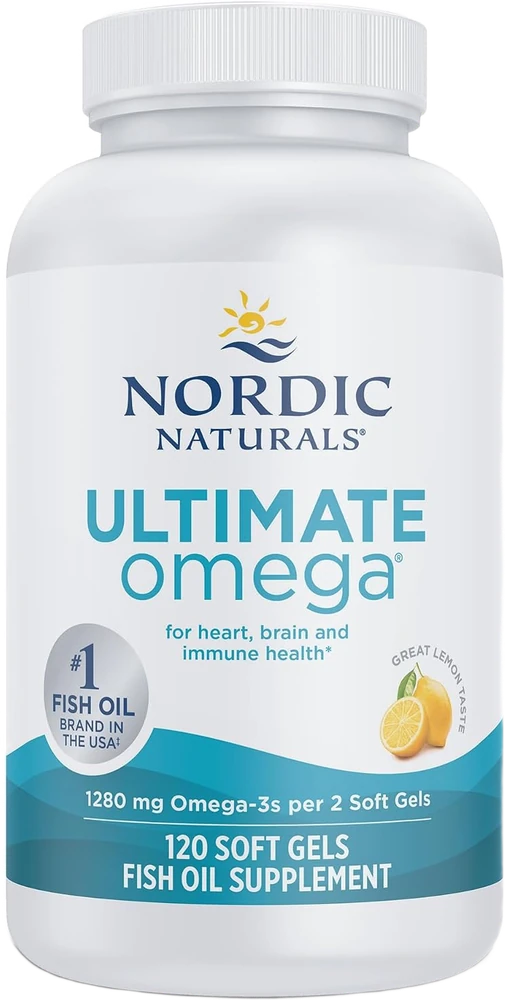
01Nordic Naturals Ultimate Omega
The default first-time pick for women across almost every use case except specific DHA-dominance (preconception/pregnancy, where Prenatal DHA #2 wins) and EPA-dominant mood (Carlson #3).
Nordic Naturals Vegan Prenatal DHA (algal)
The plant-based prenatal alternative — algae-sourced DHA for vegetarians, vegans, and anyone with a seafood allergy.
 07
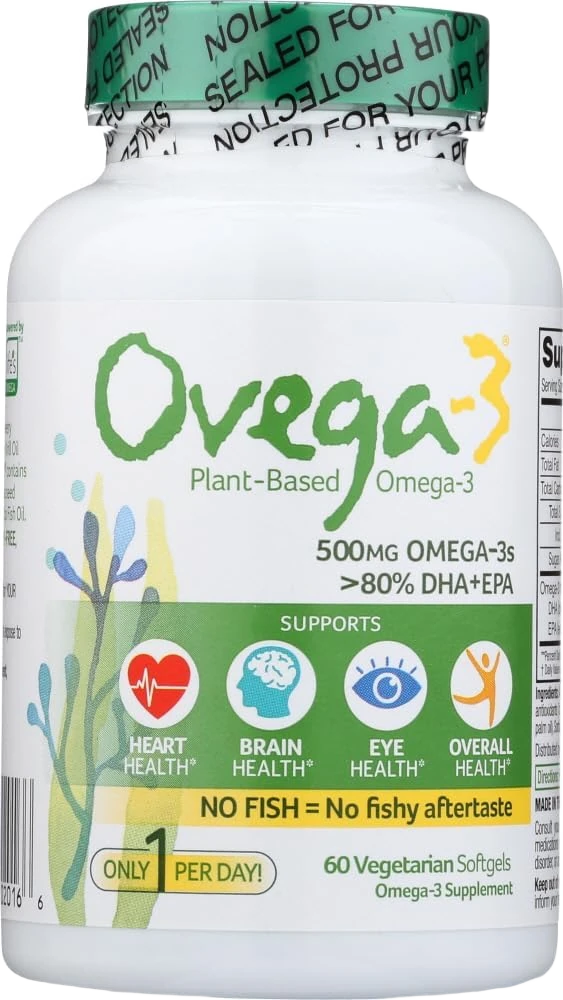
07Ovega-3
Promoted well up from the general ranking because it serves two female-audience cohorts at once: plant-based women (for whom it's the only correct answer) and the clean-prenatal cohort (DHA-dominant, zero pollutant load).
Quick Answers
Is Nordic Naturals Prenatal DHA a complete prenatal vitamin, or do I still need one?
You still need a separate prenatal multivitamin — this is a focused DHA omega-3 supplement, not a replacement. Prenatal DHA delivers the one nutrient most standard prenatal multis under-dose or skip: DHA (480 mg per serving) plus a modest 400 IU of vitamin D3. It does NOT contain folate/folic acid, iron, iodine, choline, or the broader vitamin/mineral panel your OB is tracking. The standard, well-supported pregnancy stack is a folate-containing prenatal multivitamin PLUS a dedicated DHA supplement like this one. Always confirm your specific combination with your OB or midwife — they may already have you on a multi that contains some DHA, in which case you'd adjust the dose to avoid doubling up.
Why is this DHA-dominant instead of balanced EPA/DHA like Ultimate Omega?
Because pregnancy is the one use-case where the ratio genuinely should skew toward DHA. DHA is the structural fatty acid that accumulates in the fetal brain and retina, especially during the third-trimester growth spurt — it's the omega-3 the developing baby is physically built out of. EPA is more associated with the mood, triglyceride, and inflammation-resolution endpoints in adults. So while our general omega-3 winner (Nordic Naturals Ultimate Omega) runs a balanced ~1.4:1 EPA:DHA split for all-purpose use, Prenatal DHA deliberately inverts that to 480 mg DHA / 205 mg EPA. The DHA-forward profile is the correct design choice for a pregnancy product — this is exactly why the prenatal SKU is the exception to our normal fish-oil pick.
How much DHA do I actually need in pregnancy, and does 480 mg cover it?
Major expert bodies (including the perinatal-nutrition consensus that informs most OB guidance) suggest pregnant and breastfeeding women get at least 200-300 mg of DHA per day, on top of dietary intake, because most women fall well short from food alone. Prenatal DHA's 480 mg per 2-softgel serving comfortably clears that floor with margin. Some clinicians recommend higher DHA (in the 600-1,000 mg/day range) specifically for women at elevated risk of preterm birth — the evidence there is promising but still being refined, and that's a decision for your OB, not a label. Don't free-style high-dose DHA in pregnancy; clear the target dose with your provider.
Is fish oil safe in pregnancy — what about mercury and contaminants?
Purified fish oil from small forage fish is generally considered one of the safer ways to get DHA in pregnancy precisely because it sidesteps the mercury concern that applies to eating large predatory fish. The label lists anchovies, sardines, mackerel and herring as the source — oily fish that sit lower in the marine food chain than tuna, swordfish, or king mackerel and carry less mercury. Nordic Naturals molecularly distills the oil and third-party tests for heavy metals and oxidation. That said, 'generally safe' is not the same as 'right for you' — if you have a seafood allergy, a bleeding disorder, or are near your delivery date, talk to your OB before starting or continuing, since omega-3s have a mild blood-thinning effect.
Can I keep taking it while breastfeeding?
Yes — and continuing through lactation is one of the better-supported reasons to stay on it. DHA passes into breast milk and supports the infant's continued brain and visual development through the first months of life, when the brain is still growing rapidly. Maternal DHA intake directly influences breast-milk DHA content, and most postpartum diets remain DHA-deficient. Nordic Naturals markets Prenatal DHA explicitly for both pregnancy and lactation for this reason. As always, fold it into the postpartum supplement plan your OB or pediatrician signs off on rather than treating the label as medical advice.
I'm nauseous in the first trimester — will this make fishy burps worse?
The unflavored softgels are relatively small and the oil is fresh rTG with mixed-tocopherol antioxidant, so the fishy-burp signal is low for most users — but in early-pregnancy nausea, all bets are partly off, because heightened smell sensitivity and reflux are common regardless of the supplement. Practical tactics that help: take both softgels with a full meal containing some fat (not on an empty stomach), split them to two different meals, or freeze the softgels so they pass the stomach before dissolving. If even that triggers nausea during the worst of the first trimester, it's reasonable to pause and reintroduce in the second trimester when DHA demand ramps up anyway — but run that timing by your OB.
Should I choose the unflavored or the strawberry version?
For pregnancy, unflavored is usually the safer default. Heightened smell-and-taste sensitivity is one of the hallmarks of early pregnancy, and a flavour you tolerate pre-pregnancy can become a trigger in the first trimester. The unflavored softgel is taken with food and swallowed whole, minimising taste exposure. The strawberry version exists for buyers who get a fishy aftertaste and prefer a fruit note — it's a legitimate option, just a slightly higher reactivity risk during nausea-prone weeks. Both ship the same 480 mg DHA / 205 mg EPA / 400 IU D3 per serving. If you're unsure, start unflavored.
Sources & Further Reading
5 sources — studies link to PubMed, product specs to the manufacturer
- [1] Middleton 2018 (Cochrane — omega-3 in pregnancy) PMID 30480773 — Omega-3 fatty acid addition during pregnancy. Systematic review of 70 randomised trials (~19,900 women). Omega-3 supplementation in pregnancy reduced preterm birth (<37 weeks) by ~11% and early preterm birth (<34 weeks) by ~42%, and increased birth weight slightly. The strongest randomised evidence behind prenatal omega-3 supplementation, and the core rationale for a dedicated DHA-forward bottle like this one. (Childhood cognitive outcomes were less consistent — supports 'development' framing, not specific IQ claims.)
- [2] Koletzko 2008 (perinatal DHA consensus) PMID 17688705 — Dietary fat intakes for pregnant and lactating women. Expert consensus recommending pregnant and lactating women obtain at least 200 mg DHA per day, noting most fall short from diet alone and that DHA is preferentially transferred to the fetus and into breast milk. The dose-floor basis for prenatal DHA supplementation — Prenatal DHA's 480 mg/serving clears it with margin.
- [3] Carlson 2013 (DHA + preterm birth RCT) PMID 23426033 — DHA supplementation and pregnancy outcomes. Randomised trial of 600 mg/day DHA vs placebo in pregnancy. DHA supplementation increased gestation length and birth size and reduced early preterm birth in the supplemented group. Supports the developmental and preterm-birth rationale for adequate prenatal DHA — and the principle that higher-DHA protocols (≥600 mg) are an OB-directed decision for at-risk women, not a default.
- [4] Dyerberg 2010 (TG vs EE bioavailability) PMID 20638827 — Bioavailability of marine n-3 fatty acid formulations. Head-to-head bioavailability comparison: triglyceride (TG) and re-esterified triglyceride (rTG) forms showed 30-50% higher EPA+DHA blood incorporation than ethyl ester at matched doses. Supports the absorption advantage of the rTG form Nordic Naturals uses in Prenatal DHA.
- [5] FDA/EPA (fish & mercury guidance in pregnancy) — Advice About Eating Fish — for those who are or might become pregnant or breastfeeding. Federal advisory encouraging pregnant and breastfeeding women to consume lower-mercury fish for omega-3s while avoiding high-mercury species (shark, swordfish, king mackerel, bigeye tuna). Anchors why purified oil from smaller fish is a low-mercury route to prenatal DHA — context for the sourcing, not an endorsement of any product.
Affiliate disclosure: every Amazon link uses our Associates tag (superachieverclub-20). We earn a small commission at no cost to you; it funds independent reviews. We never accept payment to change a ranking.