
Jarrow Formulas Krill Oil 1200 mg Review
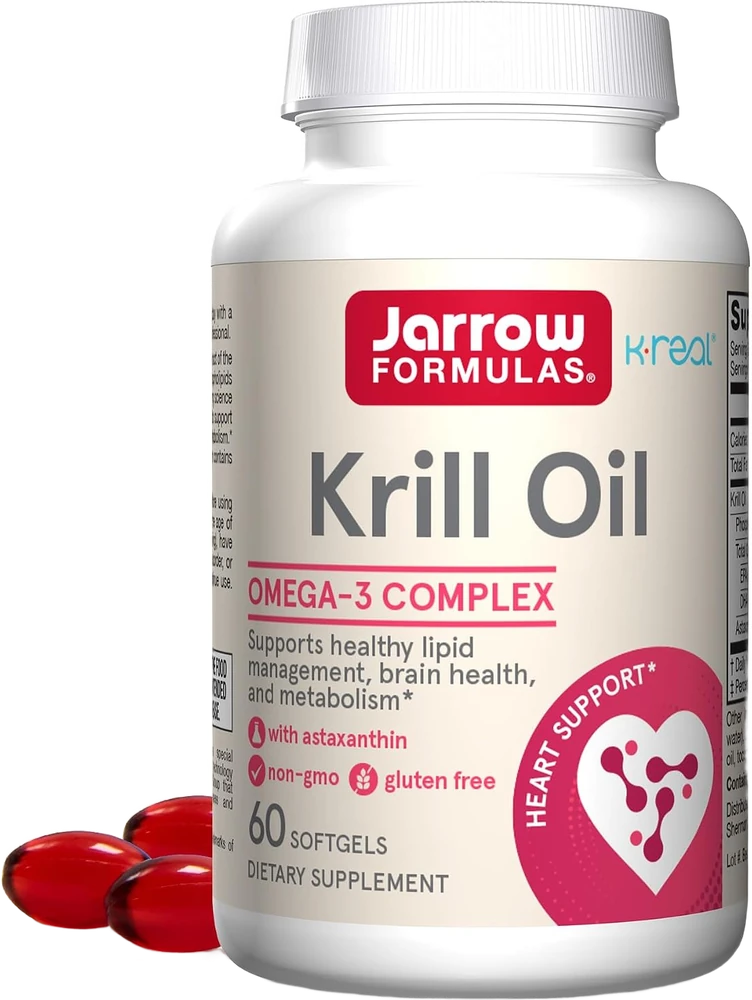 #6 of 9 · Best legacy brand✓ Label verified · Supplement Facts read Oct 18, 2026
Real retailer photo, cut out. Label unedited.
Consider it. The legacy-brand safe pick — trustworthy QC, but it leads on no single axis. Phospholipid-bound EPA+DHA (185 mg/serving) + 240 mcg astaxanthin + non-GMO/gluten-free + a respected formulator's decades-long third-party-testing reputation, at about $0.78/serving ($4.21/g).
$23.39 / 60 softgels (30 servings)~$0.78 / 2-softgel serving
Why It Scores 7.2 — And The Label Line Behind Each Number
EPA+DHA dose + form
30% of scorePhospholipid-bound EPA + DHA at 185 mg combined (120 EPA / 65 DHA; 250 mg total omega-3) per 2-softgel serving. The phospholipid format earns a small per-mg absorption edge (~10-20% vs triglyceride), but the absolute per-serving dose is a fraction of a concentrated fish-oil capsule's 500-900 mg. Solid for the krill tier, modest in absolute terms — reaching clinical dose would take 8-16 softgels/day.
- Active form
- Phospholipid-bound EPA + DHA (Antarctic krill oil) + astaxanthin
- Per serving
- 2 softgels = 1200 mg krill oil → 700 mg phospholipid-omega-3 complex · 250 mg total omega-3 · 120 EPA / 65 DHA (185 mg combined) · 240 mcg astaxanthin
- Form purity
- Phospholipid-bound omega-3 complex + naturally occurring astaxanthin co-factor
- Trial-dose alignment
- Lands the 250-500 mg general-wellness floor at 1 serving; reaching 1-2 g/day needs 8-16 softgels — impractical at krill pricing
- Inactives
- Softgel (gelatin, glycerin, water); non-GMO, gluten-free per label
Third-party + oxidation + heavy-metal testing
25% of scoreJarrow's strongest axis. The company has a long, well-documented third-party-testing reputation and labels the product non-GMO and gluten-free. Antarctic krill naturally carries very low contaminant load — krill sit at the lowest trophic level, eating phytoplankton, so mercury and PCB bioconcentration is near-zero. The QC pedigree is a genuine reason cautious buyers reach for Jarrow.
- Certifications
- Antarctic-sourced krill, non-GMO, gluten-free, third-party tested (specific MSC/FOS cert not headlined on listing)
- Manufacturer
- Jarrow Formulas (Los Angeles · founded 1988, science-forward reference-cited formulator)
- Lab transparency
- Documented label + long-standing third-party-testing reputation
Source sustainability + provenance
20% of scoreAntarctic krill oil. The Antarctic krill fishery is managed under CCAMLR with conservative quotas (~1% of estimated biomass annually), and krill is one of the better-managed marine fisheries overall. We score this 7.5 rather than higher because the listing does not headline a specific MSC / Friend of the Sea certification or a branded traceable source (Superba/NKO) — so the sustainability story is good by category default, not verified at the brand level.
Cost per gram EPA+DHA
15% of score$23.39 for 30 servings (Amazon, October 18, 2026) at 185 mg EPA+DHA per serving = $4.21 per gram of EPA+DHA — among the higher krill prices per gram (Bronson $2.50, Sports Research $2.63) and roughly 4-10× fish-oil picks at $0.40-1.00/g. Reaching the clinical 1-2 g/day window from Jarrow Krill alone would cost well over $100/month. The phospholipid format and astaxanthin don't justify that premium for cost-focused buyers.
- Bottle size
- 60 softgels · 30-day supply at the labelled 2-softgel serving
- Price
- $23.39 / 60 softgels = about $0.78 per 2-softgel serving = $4.21 per gram of EPA+DHA (Amazon, October 18, 2026)
Astaxanthin + real-world tolerance
10% of scoreClean phospholipid burp profile with virtually no fishy repeat — the format works as intended. 240 mcg astaxanthin per serving sits mid-list (100 mcg Sports Research, 360 mcg NOW Neptune, 1.6 mg Viva). In practice all krill astaxanthin doses sit far below therapeutic levels, so tolerance is excellent but the astaxanthin is a stability feature, not a selling point here.
Label verified. Every figure read from the Supplement Facts photo, Oct 18, 2026.
Marketing Claims Vs. Reality
Phospholipid omega-3 complex — superior absorption.
The phospholipid-bound absorption advantage is mechanistically real but practically modest. Ramprasath 2013 and Ulven 2011 measured roughly equivalent or 10-20% higher Omega-3 Index / plasma EPA+DHA from krill vs fish oil at equivalent doses — meaningful but not 'dramatically superior.' Jarrow's complex-form framing is on the right side of the truth, slightly overstated as with all krill marketing.
Contains naturally occurring astaxanthin.
The label discloses 240 mcg of astaxanthin per serving — a genuine carotenoid antioxidant that stabilises the oil against oxidation. The figure is real and honestly stated — mid-list among our krill picks and well below the 4-12 mg used in dedicated astaxanthin trials. Accurate claim.
Antarctic krill source.
Antarctic krill is harvested in the southern-ocean ecosystem with virtually no industrial-pollution exposure; krill sit at the lowest trophic level (eating phytoplankton), so mercury and PCB bioconcentration is near-zero. The Antarctic-source claim is real and represents one of the lowest-contaminant marine omega-3 origins available.
Non-GMO and gluten-free.
Both are label claims consistent with Jarrow's documented formulation standards and long third-party-testing track record. Krill oil is inherently free of gluten-containing grains, and the non-GMO designation is a standard, auditable Jarrow claim. Honest and verifiable.
Supports heart, brain, and joint health.
All three are real EPA+DHA effects backed by the broader omega-3 literature (Mozaffarian 2008 cardiovascular, Serhan 2014 resolvin-driven anti-inflammatory, Yurko-Mauro 2010 cognition). The framing is accurate in spirit, but at 185 mg EPA+DHA per serving the dose is low enough that reaching clinical effect requires several servings/day. Standard marketing simplification.
What Our Test Actually Found
Jarrow's QC reputation is the real reason to buy this one
Jarrow Formulas has spent since 1988 building a science-forward, reference-cited identity, and its third-party-testing record is among the more credible in the legacy-supplement tier. That QC pedigree — non-GMO, gluten-free, documented label — is the genuine differentiator here. If you're a cautious buyer who wants a phospholipid-bound krill oil from a name with a long clean track record rather than the highest-spec bottle on the shelf, Jarrow earns the slot. It's a trust play, not a numbers play.
Read the EPA and DHA lines, not the '1200 mg krill oil' headline
The front of the bottle says 1200 mg, but that's total krill oil across a 2-softgel serving. The supplement-facts panel discloses the numbers that matter: 120 mg EPA and 65 mg DHA, 185 mg combined (250 mg total omega-3). Only ~25% of krill oil is EPA+DHA, so a single concentrated fish-oil capsule (500-900 mg) carries two to three servings' worth of actives. This isn't a Jarrow flaw — it's true of every krill oil — but it's the core reason krill is a tolerability/astaxanthin play, not a high-dose omega-3 source.
The astaxanthin is honest and mid-list
Jarrow discloses 240 mcg of astaxanthin per serving. That's a transparent figure — more than Sports Research (100 mcg) or Kori (120 mcg), less than NOW Neptune (360 mcg) or Viva Naturals (1.6 mg). Astaxanthin's job in krill oil is oxidative stability and the near-zero burp profile, both of which Jarrow still delivers fine. But if your specific reason for choosing krill is to bundle in as much astaxanthin as possible, Jarrow is not the bottle to optimise for — Viva Naturals leads the list on that single axis. Even there, remember 1.6 mg is far below the 4-12 mg standalone-trial dose.
Cost per gram runs high for krill — fish oil is far cheaper for actives
At about $0.78 per serving ($23.39 for 30; Amazon, October 18, 2026) and 185 mg EPA+DHA, Jarrow Krill works out to $4.21 per gram of EPA+DHA. That's among the higher prices in the krill tier and roughly 4-10× the $0.40-1.00/g you'd pay for concentrated triglyceride-form fish oil. If you're optimising cost-per-mg of omega-3 — or you need the 1-2 g/day cardiovascular range — fish oil wins decisively. Jarrow's price is fair for what it is; it just can't escape krill's structural cost premium.
Shellfish allergy is the absolute disqualifier
Krill are crustaceans, and krill oil — Jarrow's included — contains residual crustacean proteins that can trigger reactions in shellfish-allergic users. Most krill oil is processed to minimise allergenic protein content, but documented allergic reactions are real and well-reported in the literature. Absolute rule: if you have any documented shellfish allergy, do not buy krill oil regardless of brand or processing claims. A vegan algal-oil omega-3 delivers the same EPA+DHA with zero crustacean exposure and is the safe alternative.
Full analysis: all pros & cons (10), buy if / skip if
- Respected science-forward formulator (Jarrow, since 1988) with a strong third-party-testing reputation
- 185 mg EPA+DHA (120 EPA / 65 DHA) per serving in phospholipid form, fully disclosed
- Non-GMO and gluten-free with a well-documented, transparent label
- Clean phospholipid burp profile — virtually no fishy repeat
- Trusted, long-standing brand — the safe choice for cautious buyers
- Astaxanthin is mid-list (240 mcg/serving vs 1.6 mg on Viva)
- $4.21/g of EPA+DHA — among the higher krill prices, 4-10× fish-oil picks
- Only 185 mg EPA+DHA per serving — reaching clinical dose needs about 11-22 softgels/day
- No headlined MSC / Friend of the Sea certification or branded traceable source on the listing
- Shellfish allergens — disqualifier for fish/shellfish-allergic users
- You already trust Jarrow Formulas' QC and want to stay inside a known brand
- You want a clean, well-documented non-GMO / gluten-free phospholipid krill oil
- Brand reputation and label transparency rank above squeezing the most EPA+DHA per dollar
- You quit fish oil over fishy burps and want the krill format from a name you recognise
- You have a shellfish allergy — krill are crustaceans; use a vegan algal-oil omega-3 instead
- Cost per active gram is your priority — fish-oil picks are ~2-3× cheaper per gram
- You specifically want maximum astaxanthin — Viva Naturals prints 1.6 mg against Jarrow's 240 mcg
- You want the cheapest EPA+DHA per softgel — Sports Research delivers more per cap for less
Phospholipid-bound EPA+DHA (185 mg/serving) + 240 mcg astaxanthin + non-GMO/gluten-free + a respected formulator's decades-long third-party-testing reputation, at about $0.78/serving ($4.21/g). The right pick if you already trust Jarrow and want a clean, no-surprises krill oil. For a clearer reason to buy — more EPA+DHA per cap, headlined MSC certification, or a lower price per gram — Sports Research or NOW Neptune NKO edge it out.
Jarrow Formulas Krill Oil is the bottle to reach for when brand trust matters more to you than topping any single spec sheet. At $23.39 for 60 softgels (a 30-day supply at 2/day; Amazon, October 18, 2026), it ships a phospholipid omega-3 complex from a Los Angeles formulator that's been publishing reference-cited, third-party-tested supplements since 1988. Each 2-softgel serving delivers 185 mg EPA+DHA (120 mg EPA / 65 mg DHA; 250 mg total omega-3) bound to phospholipids, plus 240 mcg of astaxanthin — the carotenoid that keeps krill oil from going rancid and gives it a clean, near-zero-burp profile. The honest framing: Jarrow's krill is solid and trustworthy but unremarkable on the axes that separate the field. Its astaxanthin sits mid-list, its price per gram of EPA+DHA ($4.21) is among the higher ones, and the listing doesn't headline a sustainability certification. Eight weeks running 2 softgels/day with breakfast, here's the breakdown.
The legacy-brand safe pick — buy it for the QC, not the spec sheet.

Jarrow Formulas Krill Oil is what we recommend to a specific buyer: someone who's decided on the krill format — usually because fish-oil burps drove them to quit — and wants it from a formulator with a long, clean, science-forward reputation rather than the flashiest numbers on the shelf. Jarrow has been publishing reference-cited, third-party-tested supplements since 1988, and its krill complex delivers 185 mg of phospholipid-bound EPA+DHA (250 mg total omega-3) per serving, non-GMO and gluten-free, with the clean burp profile krill buyers come for. For the trust-first buyer, it's a perfectly sound choice. What it isn't is a category leader. The astaxanthin (240 mcg) sits mid-list, the price runs high at $4.21 per gram of EPA+DHA, and the listing doesn't headline a sustainability certification or a branded traceable source. Anyone who wants a clearer, single-axis reason to buy will find it elsewhere: Sports Research for more EPA+DHA per softgel, MSC-certified Superba2 krill, an IKOS listing, and a lower price per gram; NOW Neptune NKO for the most clinically-studied branded oil. And the universal krill caveats apply — if you're optimising cost-per-mg of omega-3, fish oil is ~2-3× cheaper per gram, and if you have any shellfish allergy, skip krill entirely and use a vegan algal-oil omega-3.
If This Doesn’t Fit — Try These
 01
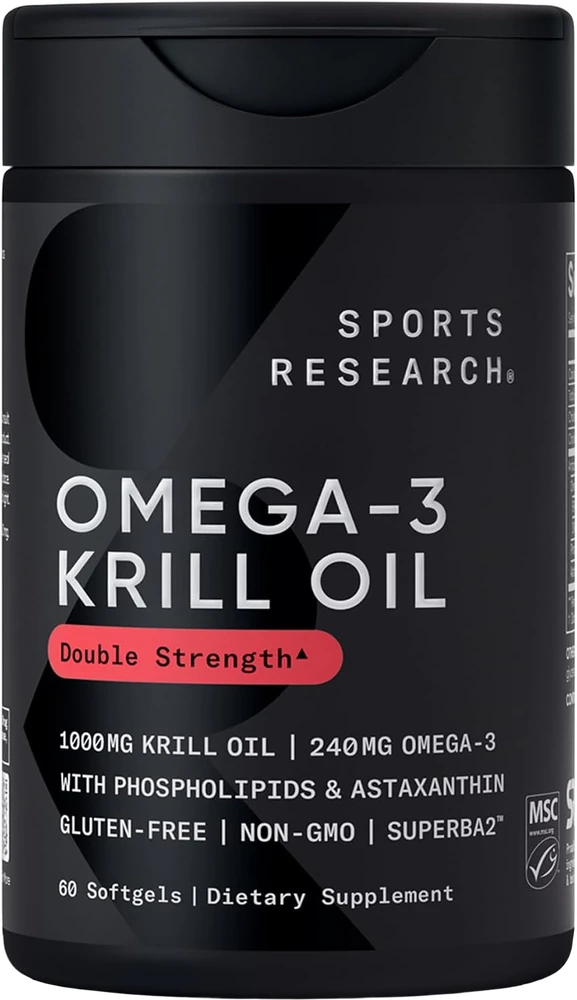
01Sports Research Antarctic Krill Oil
The default krill buy.
 03
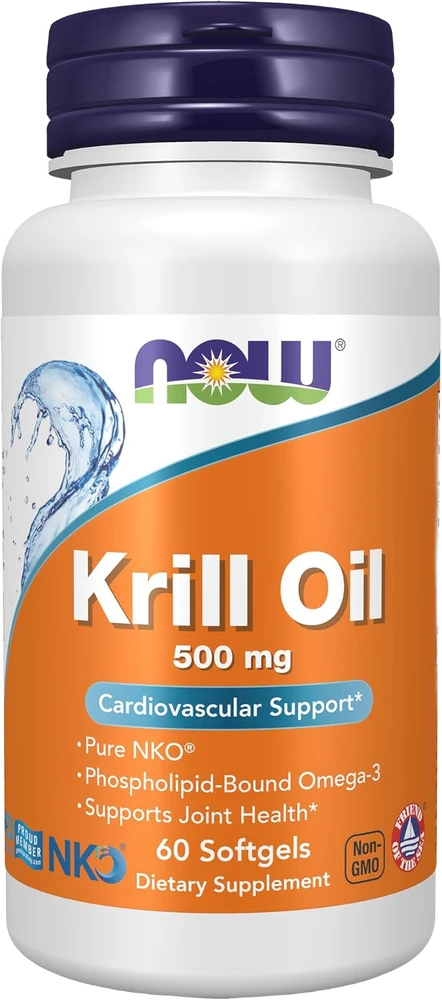
03NOW Neptune Krill Oil
The pick for buyers who want the most-researched krill formulation with deep manufacturer QC.
 04
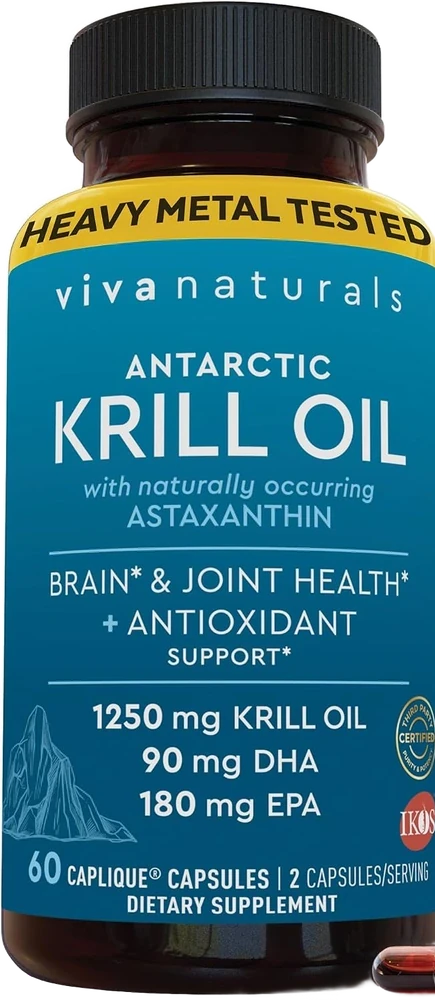
04Viva Naturals Antarctic Krill Oil
The pick for buyers who specifically want to maximize the krill-unique extras.
Quick Answers
Is Jarrow Formulas a trustworthy krill oil brand?
Yes — Jarrow Formulas is one of the more credible legacy supplement formulators. Founded in Los Angeles in 1988, the company built its reputation on a science-forward, reference-cited approach and a strong record of third-party testing. Its krill oil is a phospholipid omega-3 complex with astaxanthin, labelled non-GMO and gluten-free. The caveat is not about trust but about positioning: Jarrow's krill doesn't lead on any single buying axis — the astaxanthin (240 mcg/serving) sits mid-list, the price per gram of EPA+DHA ($4.21) is among the higher ones, and the listing doesn't headline a sustainability certification. Buy it because you already trust Jarrow's QC, not because it out-specs the field.
How much EPA and DHA does Jarrow Krill actually deliver?
185 mg EPA+DHA (120 mg EPA / 65 mg DHA) within 250 mg total omega-3 per 2-softgel serving. That's the same trap every krill oil shares: the front-of-bottle '1200 mg' is total krill oil, of which only ~25% is EPA+DHA. A single concentrated fish-oil capsule carries 500-900 mg combined. To reach the 1-2 g/day cardiovascular range on Jarrow Krill alone you'd swallow about 11-22 softgels daily — which is exactly where krill stops making economic sense versus fish oil. Read the supplement-facts panel, not the headline milligrams.
How does Jarrow's astaxanthin compare with other krill oils?
Jarrow discloses 240 mcg (0.24 mg) of astaxanthin per serving — mid-list: above Sports Research and Nutricost (100 mcg) and Kori (120 mcg), below NOW Neptune (360 mcg) and Viva Naturals (1.6 mg). Astaxanthin is the red carotenoid that keeps krill oil from oxidising and gives it a near-zero fishy-burp profile, so a lower dose means slightly less oxidative buffer on paper. In practice it's a minor difference: even the highest krill astaxanthin doses (1-1.6 mg) sit far below the 4-12 mg used in dedicated astaxanthin trials, so none of these products deliver a therapeutic astaxanthin dose. Treat astaxanthin as an oil-stability feature; if you specifically want the most of it, Viva Naturals leads the list.
Is the 'phospholipid absorption' advantage real?
Real, but modest and overstated in marketing. Krill's EPA+DHA are bound to phospholipids, which integrate directly into cell membranes without needing lipase hydrolysis like the triglycerides in fish oil. Ramprasath 2013 found krill raised the Omega-3 Index more than an equivalent fish-oil dose over 4 weeks, and Ulven 2011 reached comparable plasma EPA+DHA at a lower krill dose — so per milligram, krill modestly out-absorbs fish oil. But the edge is roughly 10-20%, not the 'dramatically superior' framing on some bottles, and it doesn't come close to compensating for krill's far lower EPA+DHA per softgel and ~2-3× cost per gram.
Jarrow Krill vs Sports Research — which should I buy?
Sports Research for most buyers. It packs more EPA+DHA into a single softgel (196 mg vs Jarrow's 185 mg across two softgels), carries MSC-certified Superba2 krill with the certification headlined, is IKOS-listed, and costs $2.63 per gram of EPA+DHA versus Jarrow's $4.21 (Amazon, October 18, 2026). Jarrow has more astaxanthin (240 vs 100 mcg). Jarrow wins in exactly one scenario: you already trust Jarrow's decades-long QC reputation and want to stay inside a brand you know. Both are legitimate phospholipid-bound krill oils — Sports Research simply gives you a clearer, evidence-led reason to choose it.
Can I take Jarrow Krill Oil with a shellfish allergy?
No — default to an algal-oil omega-3 instead. Krill are crustaceans (tiny shrimp-like animals) and contain proteins that can trigger reactions in shellfish-allergic people. Most krill oil, Jarrow's included, is processed to minimise allergenic protein, but residual exposure is possible and allergic reactions are documented in the literature. If you have any shellfish allergy, skip every krill product and use a vegan algal-oil omega-3 — same EPA+DHA, zero crustacean exposure.
Sources & Further Reading
5 peer-reviewed sources, each linked to PubMed
- [1] Ramprasath 2013 PMID 24304605 — Enhanced increase of omega-3 index in healthy individuals with response to 4-week n-3 fatty acid supplementation from krill oil versus fish oil. Head-to-head trial: krill oil raised the Omega-3 Index more than an equivalent dose of fish oil over 4 weeks, supporting krill's phospholipid-delivery absorption advantage — though the effect size is modest, not the 'dramatically superior' marketing framing. The basis for Jarrow's phospholipid-complex claim being scored 'partial.'
- [2] Ulven 2011 PMID 21042875 — Metabolic effects of krill oil are essentially similar to those of fish oil but at lower dose of EPA and DHA, in healthy volunteers. Krill oil produced metabolic effects and plasma EPA+DHA increases comparable to fish oil despite a lower absolute EPA+DHA dose — direct evidence for the per-milligram phospholipid edge, while underscoring how little EPA+DHA krill actually delivers (Jarrow's 185 mg/serving included).
- [3] Maki 2009 PMID 19854375 — Krill oil supplementation increases plasma concentrations of eicosapentaenoic and docosahexaenoic acids in overweight and obese men and women. Krill oil raised plasma EPA+DHA to a degree comparable to menhaden (fish) oil at a similar omega-3 dose, confirming bioequivalence of the phospholipid form — the basis for treating Jarrow's krill complex as a legitimate but expensive omega-3 source.
- [4] Tou 2007 PMID 17345959 — Krill for human consumption: nutritional value and potential health benefits. Comprehensive review of krill composition documenting the phospholipid-bound EPA+DHA structure and the naturally occurring astaxanthin that gives krill oil its oxidative stability — the mechanistic basis for Jarrow's clean, rancidity-resistant burp profile despite its modest 240 mcg astaxanthin disclosure.
- [5] Harris 2004 PMID 15208005 — The Omega-3 Index: a new risk factor for death from coronary heart disease?. Established the Omega-3 Index (RBC EPA+DHA %) as a cardiac-risk marker, with an Index above 8% tied to the lowest risk of coronary-heart-disease death — the endpoint that justifies tracking actives intake regardless of source, and the reason Jarrow's 185 mg/serving needs multiple servings to move the needle.
Affiliate disclosure: every Amazon link uses our Associates tag (superachieverclub-20). We earn a small commission at no cost to you; it funds independent reviews. We never accept payment to change a ranking.