

Top 5 Best Ways To Ease Menopause (2026)
Ease hot flashes, sleep, mood and bone changes — the supplements with real menopause evidence, ranked by impact.
Ranked Solutions
Ranked by how much each one actually moves the needle — our SAC Efficacy Score™, explained further down.
 #1
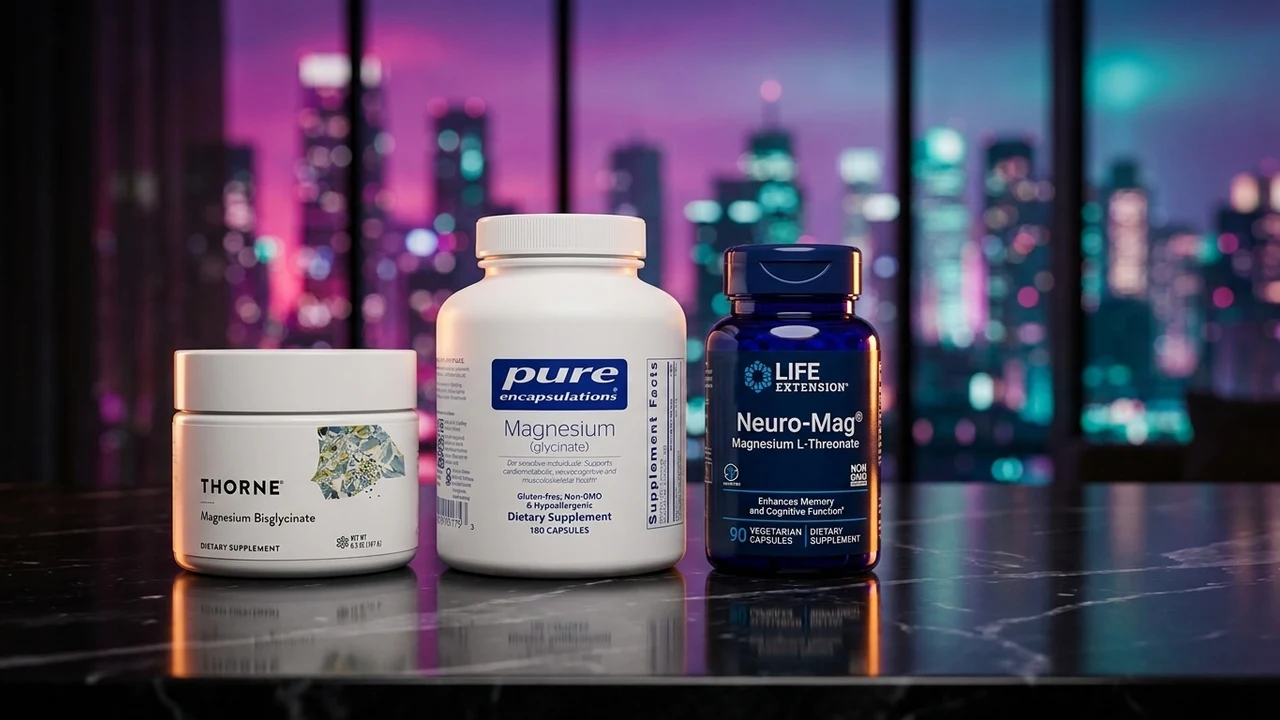
#1Magnesium Glycinate
Supplementhits sleep, mood, cramps + bone at once — and most women run low
7.1/10SAC Efficacy Score™- Effect size45%Moderate
- Evidence40%Strong
- Reliability15%Works for many
Quietly the most useful — it hits the menopausal cluster of poor sleep, low mood, cramps and bone loss at once, and most women run low. 300-400 mg elemental, evenings.
 #2
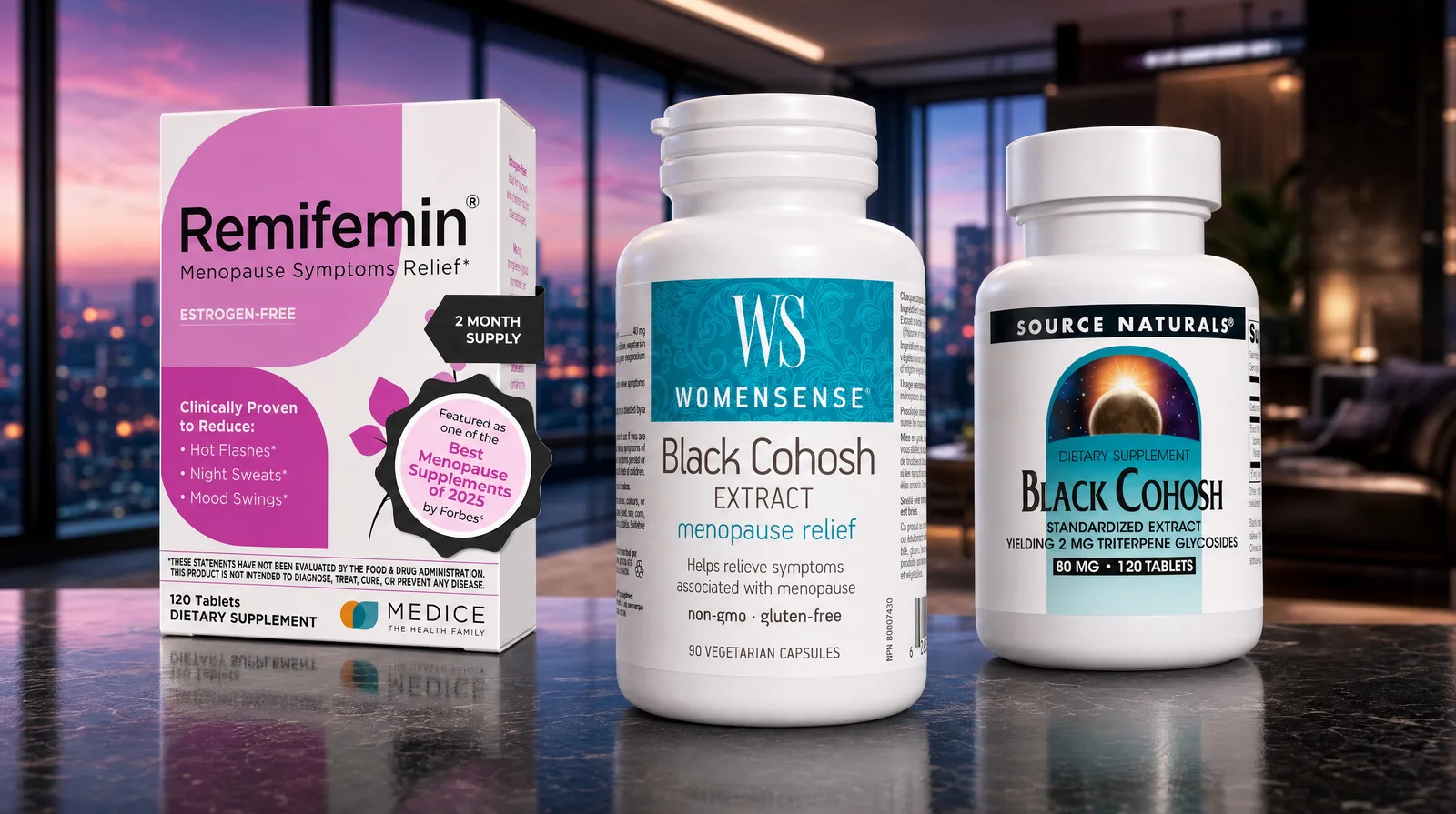
#2Black Cohosh
Supplementthe best-studied botanical for hot flashes + night sweats
⚑ mainly vasomotor symptoms; evidence is mixed6.8/10SAC Efficacy Score™- Effect size45%Moderate
- Evidence40%Moderate
- Reliability15%Works for many
The most-studied botanical for hot flashes and night sweats — real relief for many women, though the evidence is mixed. 20-40 mg standardised extract.
 #3
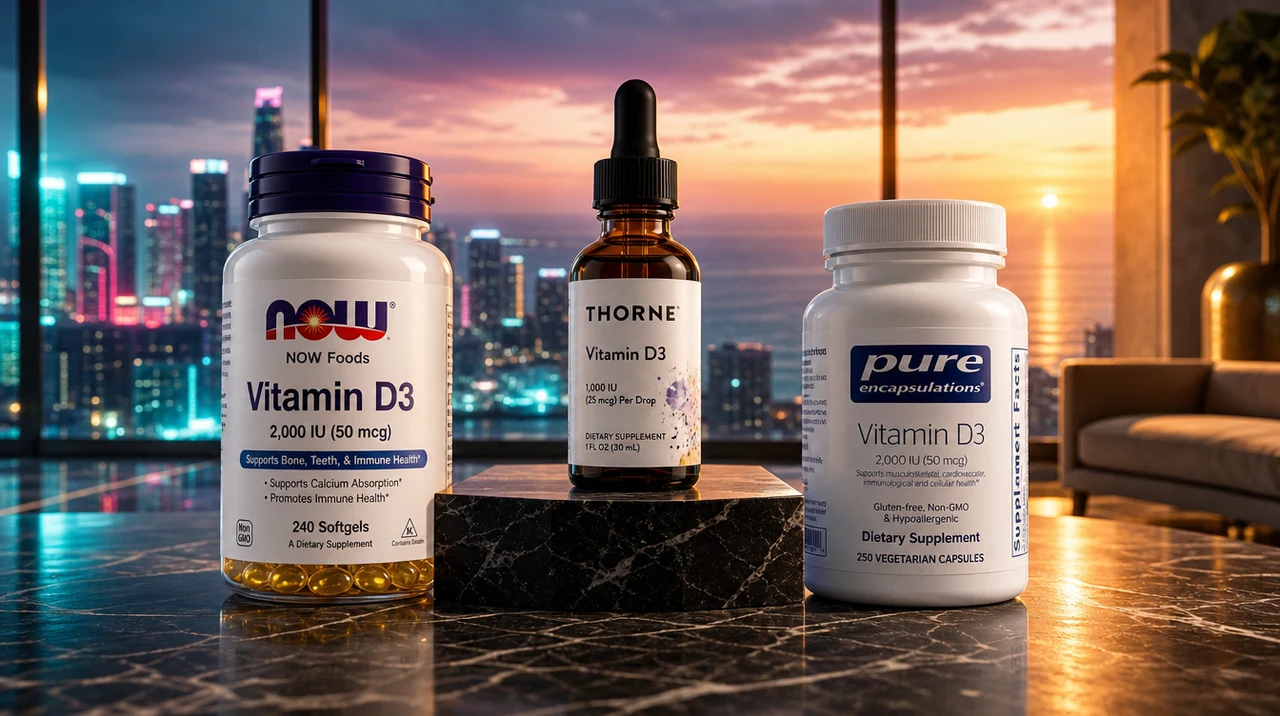
#3Vitamin D3 + K2
Supplementprotects against accelerated post-menopausal bone loss
⚑ biggest for bone + if deficient6.7/10SAC Efficacy Score™- Effect size45%Modest
- Evidence40%Strong
- Reliability15%Works for many
Bone loss accelerates after menopause — vitamin D (with K2) is foundational for protecting it, especially if your level is low. 2,000-5,000 IU D3 + 100 mcg MK-7.
 #4
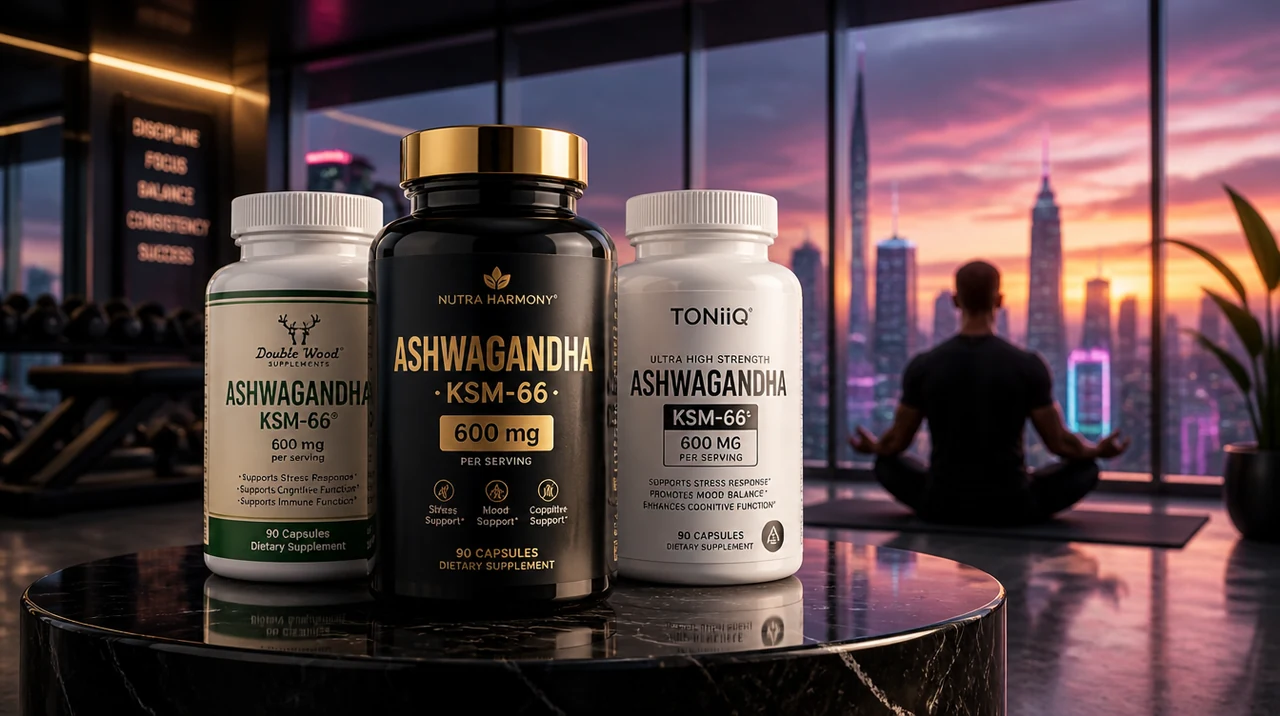
#4Ashwagandha (KSM-66)
Supplementeases stress, sleep disruption + mood via lower cortisol
6.6/10SAC Efficacy Score™- Effect size45%Modest
- Evidence40%Strong
- Reliability15%Works for many
Lowers cortisol to ease the stress, sleep disruption and mood swings of the transition. 600 mg/day KSM-66 for 8 weeks.
 #5
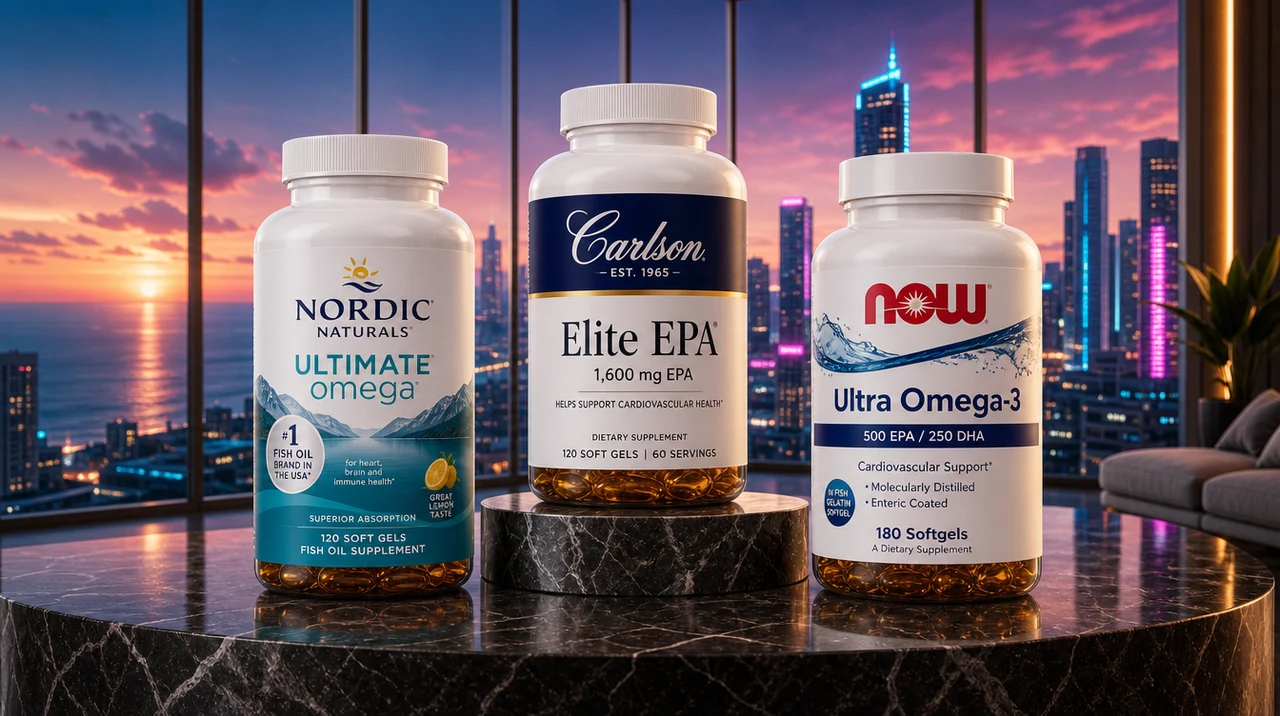
#5Omega-3 (EPA/DHA)
Supplementmood + cardiovascular support as heart risk rises post-menopause
6.5/10SAC Efficacy Score™- Effect size45%Modest
- Evidence40%Strong
- Reliability15%Works for many
Supports mood and the rising cardiovascular risk that comes with menopause. 1-2 g/day EPA/DHA.
Our Methodology
How every score on this page is calculated — transparent and free to cite.
Best-Of Buyer Guides
Curated product roundups for menopause — every pick tested for evidence, quality, and price-per-active-mg.
Best Black Cohosh Supplements
9 black cohosh supplements ranked on standardization and form, third-party testing, dose against the clinical range, tolerability and value.
Best Magnesium Supplements
The definitive magnesium buying guide — the single best pick for each need across glycinate, L-threonate, and citrate. Glycinate is the default for sleep & anxiety; threonate for cognition; citrate for regularity; oxide is junk.
Best Ashwagandha Supplements
The definitive ashwagandha buying guide — the single best pick for each buyer across KSM-66 and Sensoril extracts. Standardisation % and extract patent matter far more than milligrams.
Best Vitamin D Supplements
Vitamin D3 forms with the strongest evidence for testosterone, mood, and immune-resilience — ranked by form (D3 > D2), dose accuracy, K2 cofactor, third-party testing.
Best Omega-3 Fish Oil
Omega-3s ranked by EPA+DHA dose, triglyceride vs ethyl-ester form, IFOS/TOTOX oxidation testing, sustainability — the bottles that survive the rancidity audit.
Research & Sources
The key human trials behind the rankings above — every PMID verified against its primary source.
- Magnesium GlycinateHeld 2002 — Oral Mg(2+) supplementation reverses age-related neuroendocrine and sleep EEG changes in humans · Pharmacopsychiatry · PMID 12163983
- Magnesium GlycinateAbbasi 2012 — The effect of magnesium supplementation on primary insomnia in elderly: A double-blind placebo-controlled clinical trial · Journal of Research in Medical Sciences · PMID 23853635
- Vitamin D3 + K2Holick 2007 — Vitamin D deficiency · New England Journal of Medicine · PMID 17634462
- Vitamin D3 + K2Pludowski 2018 — Vitamin D supplementation guidelines · Journal of Steroid Biochemistry and Molecular Biology · PMID 28216084
- Ashwagandha (KSM-66)Lopresti 2019 (testosterone) — A randomized, double-blind, placebo-controlled, crossover study examining the hormonal and vitality effects of ashwagandha (Withania somnifera) in aging, overweight males · American Journal of Men's Health · PMID 30854916
- Ashwagandha (KSM-66)Lopresti 2019 (stress) — An investigation into the stress-relieving and pharmacological actions of an ashwagandha (Withania somnifera) extract: a randomized, double-blind, placebo-controlled study · Medicine (Baltimore) · PMID 31517876
- Omega-3 (EPA/DHA)Bhatt 2019 (REDUCE-IT) — Cardiovascular Risk Reduction with Icosapent Ethyl for Hypertriglyceridemia · New England Journal of Medicine · PMID 30415628
- Omega-3 (EPA/DHA)Mozaffarian 2011 — Omega-3 fatty acids and cardiovascular disease: effects on risk factors, molecular pathways, and clinical events · Journal of the American College of Cardiology · PMID 22051327