
Bronson Antarctic Krill Oil 1000 mg Review
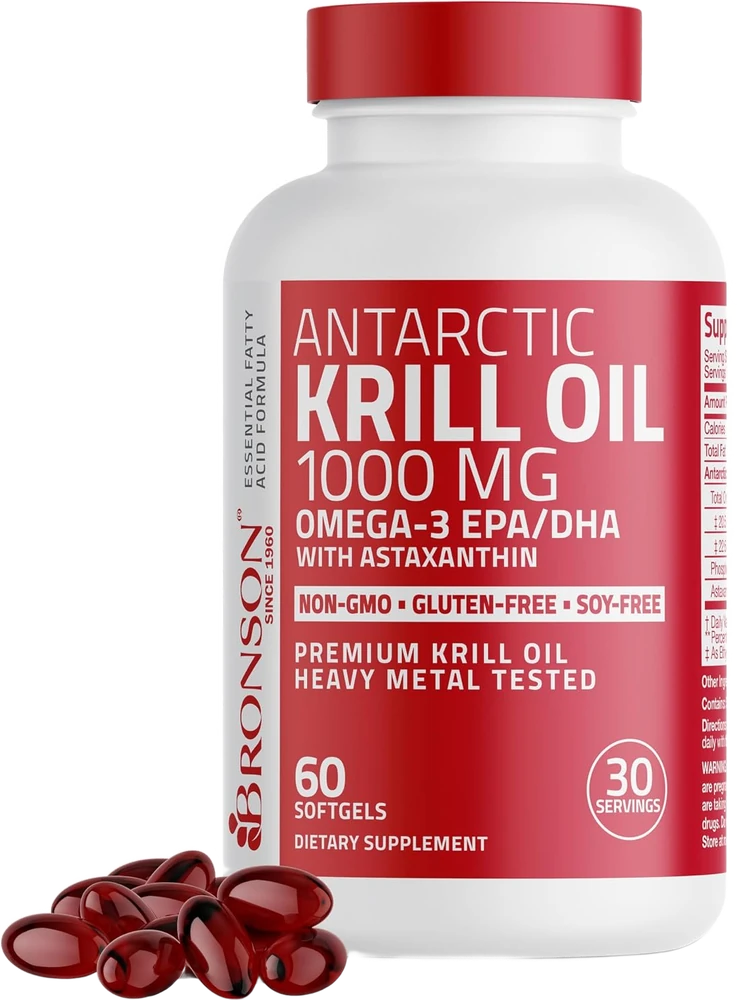 #5 of 9 · Best value✓ Label verified · Supplement Facts read Oct 18, 2026
Real retailer photo, cut out. Label unedited.
Consider it. The cheapest krill per gram — real pedigree, with a form question and no sustainability certificate. 200 mg EPA+DHA (120 EPA / 80 DHA) + 200 mcg astaxanthin per serving + heavy-metal testing + 1960 pharmacist-founded brand + the lowest cost per gram on our krill list ($2.50/g, about $0.50/serving).
$14.99 / 60 softgels (30 servings)~$0.50 / 2-softgel serving
Why It Scores 7.4 — And The Label Line Behind Each Number
EPA+DHA dose + phospholipid form
30% of scoreThe panel lists 200 mg EPA+DHA (120 EPA / 80 DHA) per 2-softgel serving from 1000 mg Antarctic krill oil — in line with NOW Neptune (195 mg) and Sports Research (196 mg in one softgel). The form is the problem: the panel footnotes EPA and DHA 'As Ethyl Esters/Triglycerides', and phospholipids are 200 mg, against 400-575 mg on the other two-softgel krill picks. Krill's one absorption edge is phospholipid binding, and this label does not show how much of the EPA and DHA has it. That is why the dose axis scores below NOW Neptune (7.5) at the same milligrams.
- Active form
- Antarctic krill oil; EPA and DHA footnoted 'As Ethyl Esters/Triglycerides' on the panel; 200 mg phospholipids
- Per serving
- 1000 mg krill oil per 2 softgels = 200 mg total omega-3 (120 mg EPA / 80 mg DHA)
- Inactives
- Gelatin, glycerin, purified water, ethyl vanillin
Third-party + heavy-metal testing
25% of scoreHeavy-metal tested and manufactured in an FDA-registered, cGMP-certified facility, with third-party verification for purity and potency — backed by a pharmacist-founded brand (1960) with a long QC track record. That's a solid quality floor. What's missing is public, batch-level proof: no published COA, no IKOS listing (Nutrasource shows none for Bronson, checked October 18, 2026), no oxidation (TOTOX) number on the listing. Krill also concentrates contaminants far less than large fish (krill sit at the lowest trophic level eating phytoplankton), so the contaminant risk is structurally low regardless.
- Certifications
- Heavy-metal tested, Non-GMO, Gluten-Free, Soy-Free — NO MSC / Friend of the Sea / branded-source (Superba/NKO) mark
- Manufacturer
- Bronson (founded 1960, California · pharmacist-founded · FDA-registered cGMP facility, Long Island, NY)
- Lab transparency
- Third-party tested for purity + potency, but no public batch COA / TOTOX; not IKOS-listed
Source sustainability + provenance
20% of score'100% Antarctic krill, harvested in the waters of Antarctica' — and the Antarctic krill fishery overall is CCAMLR-managed under conservative quotas, so the source category is one of the better-managed marine fisheries. But Bronson carries NO MSC or Friend of the Sea certification and names no traceable branded source (no Superba, no NKO), so this specific product's chain of custody can't be independently audited. That uncertified, unbranded sourcing is the gap that keeps it below the MSC/NKO-certified picks on the list.
- Source
- 100% Antarctic krill, harvested in Antarctic waters (CCAMLR-managed fishery; product not independently certified)
Cost per gram EPA+DHA
15% of scoreThe clear strength. At $14.99 for 60 softgels (Amazon, October 18, 2026) a 2-softgel serving costs about $0.50 for 200 mg EPA+DHA — $2.50 per gram, the lowest on our krill list, just ahead of Sports Research ($2.63) and Kori ($2.66). (The usual krill caveat still applies: even the cheapest krill runs well above fish oil per gram of actives.)
- Bottle size
- 60 softgels · 30 servings (2 softgels/day) · ~30-day supply
- Price
- $14.99 / 60 softgels = about $0.50 per 2-softgel serving = $2.50 per gram of EPA+DHA (Amazon, October 18, 2026) — lowest on our krill list
Astaxanthin + real-world tolerance
10% of scoreThe panel lists 200 mcg astaxanthin (an oil-stability co-factor), and the real-world tolerance is excellent: users report small, easy-to-swallow softgels with no fishy burps — krill's signature advantage, delivered. One honest caveat from reviews: a strong marine 'dirty aquarium' smell when opening the bottle for some buyers. That's cosmetic, not rancidity (astaxanthin keeps the oil stable), but smell-sensitive buyers should note it.
- More Specs
- Phospholipids / astaxanthin
- 200 mg phospholipids · 200 mcg astaxanthin per serving
Label verified. Every figure read from the Supplement Facts photo, Oct 18, 2026.
Marketing Claims Vs. Reality
1000 mg of Antarctic krill oil with Omega-3s EPA, DHA, astaxanthin and phospholipids.
Accurate and quantified on the panel: 1000 mg krill oil per 2 softgels with 200 mg total omega-3 (120 mg EPA, 80 mg DHA), 200 mg phospholipids and 200 mcg astaxanthin. Note the footnote that EPA and DHA are 'As Ethyl Esters/Triglycerides', and that only about a fifth of the '1000 mg' is EPA+DHA.
100% pure Antarctic krill, sustainably sourced from the pristine waters of Antarctica.
The Antarctic source is credible and the broader Antarctic krill fishery is CCAMLR-managed under conservative quotas. But 'sustainably sourced' is uncertified here — there's no MSC or Friend of the Sea mark and no named traceable source, so the sustainability claim rests on the fishery's general reputation rather than an auditable certificate for this product. Directionally fair, not independently verified.
Heavy-metal tested, non-GMO, gluten-free and soy-free.
Consistent with Bronson's FDA-registered cGMP manufacturing and stated third-party purity/potency testing, and Antarctic krill structurally carries near-zero mercury/PCB load (lowest trophic level, phytoplankton diet). The contaminant-safety and free-from claims are credible and verifiable at the brand/process level.
Pharmacist-founded, physician-recommended quality since 1960.
Bronson was founded in 1960 in California by pharmacists who originally sold direct to physicians, and continues to manufacture in an FDA-registered cGMP facility. The heritage and manufacturing-standard claims are accurate. (This speaks to brand legitimacy, not to this product's specific actives dose.)
Supports heart, brain, joint and immune health.
These are real EPA+DHA effects backed by the broader omega-3 literature (Mozaffarian 2008 cardiovascular; Serhan 2014 resolvin-driven anti-inflammatory). The mechanism is sound — but 200 mg EPA+DHA per serving sits at the 250-500 mg/day wellness floor at best, far below the 1-4 g/day used in cardiovascular trials. Standard category framing; accurate in spirit, low-dose in practice.
What Our Test Actually Found
The dose is on the panel — the form is the question
The Supplement Facts panel prints 200 mg total omega-3 per 2-softgel serving: 120 mg EPA and 80 mg DHA, plus 200 mg phospholipids and 200 mcg astaxanthin. That puts Bronson level with Sports Research (196 mg) and NOW Neptune NKO (195 mg) on EPA+DHA. What sets it apart is a footnote: EPA and DHA are declared 'As Ethyl Esters/Triglycerides', and 200 mg phospholipids is the lowest of the two-softgel krill picks (Viva prints 575 mg, NOW Neptune 450 mg). Phospholipid binding is the reason to pay krill prices at all, and this label does not show how much of the EPA and DHA carries it. (An earlier version of this review said Bronson does not disclose EPA and DHA. That was wrong; corrected on 2026-10-18 from the panel.)
Genuine brand pedigree at a white-label price
It's easy to assume the cheapest krill on a list is a disposable Amazon white-label. Bronson isn't. Founded in 1960 by California pharmacists who sold direct to physicians, it manufactures in an FDA-registered, cGMP-certified facility and third-party tests for purity and potency. That 60-year track record plus heavy-metal testing is a real quality floor — well above an anonymous bulk krill. What you give up for the low price is public proof (no batch COA, no sustainability certificate), not basic legitimacy. That's a very different — and more acceptable — trade-off than buying an unknown brand.
Lowest cost per gram in the krill tier — but krill is still the expensive omega-3
At about $0.50 per 2-softgel serving ($14.99 for 60 softgels, Amazon, October 18, 2026), Bronson costs $2.50 per gram of EPA+DHA, the lowest on our krill list, just ahead of Sports Research ($2.63) and Kori ($2.66). If you've already decided krill is your format and price per gram leads, this is the value pick. Keep the bigger picture honest though: even the cheapest krill runs well above fish oil per gram of EPA+DHA (krill is naturally ~25% actives and costlier to harvest). So Bronson wins the krill-vs-krill price war, but if your real goal is the most omega-3 per dollar, a concentrated triglyceride fish oil still beats every krill on this list.
No fishy burps — but a strong bottle smell for some
Krill oil's structural payoff is tolerability, and Bronson delivers it: small, easy-to-swallow softgels with essentially no fishy repeat — the exact reason buyers leave fish oil for krill. The honest caveat from real reviews: while the burps are gone, several users describe a strong marine 'dirty aquarium' smell when they open the bottle. That's a cosmetic odour, not a rancidity flag (astaxanthin keeps the oil stable), but if you're smell-sensitive it's worth knowing before you buy.
Uncertified sourcing is the sustainability asterisk
Bronson is '100% Antarctic krill,' and Antarctic krill as a category is harvested under CCAMLR's conservative quotas — so the source pool is one of the better-managed marine fisheries. But Bronson carries no MSC or Friend of the Sea certification and names no traceable branded source (no Superba, no NKO). You're trusting the fishery's general reputation, not an auditable chain of custody for this specific oil. For a value buyer that's usually fine; for anyone who wants verified, certified sustainability, Sports Research (MSC) or NOW Neptune (Friend of the Sea) are the honest upgrades.
Full analysis: all pros & cons (11), buy if / skip if
- Lowest cost per gram of EPA+DHA on our krill list ($2.50/g, about $0.50/serving)
- Genuine pedigree — pharmacist-founded brand (1960), FDA-registered cGMP facility
- 200 mg EPA+DHA (120 EPA / 80 DHA) and 200 mcg astaxanthin, all on the panel
- Heavy-metal tested, non-GMO, gluten- and soy-free
- Small softgels and essentially no fishy burps
- Lowest sticker price on the list: $14.99 for a 30-serving bottle
- EPA and DHA declared 'as ethyl esters/triglycerides'; only 200 mg phospholipids per serving
- No MSC / Friend of the Sea certification and no named traceable krill source
- No public batch COA, TOTOX, or third-party potency certificate to audit
- 2 softgels per serving for the full 1000 mg (vs 1 cap on Sports Research / Kori)
- Some buyers report a strong marine 'dirty aquarium' smell when opening the bottle
- You've chosen krill (for burps or astaxanthin) and want the lowest cost per bottle
- You trust a 60-year pharmacist-founded brand with heavy-metal testing over premium labels
- You care more about EPA+DHA per dollar than about phospholipid content
- You want the lowest price per gram of EPA+DHA in krill
- You have shellfish allergy — krill are crustaceans; go vegan algal-oil omega-3 instead
- You want krill specifically for phospholipid-bound omega-3 — Bronson declares only 200 mg phospholipids and EPA/DHA as esters
- Verified sustainability matters — no MSC / Friend of the Sea / branded krill source here
- You're optimising cost-per-mg of actives overall — fish oil still beats any krill on $/g
200 mg EPA+DHA (120 EPA / 80 DHA) + 200 mcg astaxanthin per serving + heavy-metal testing + 1960 pharmacist-founded brand + the lowest cost per gram on our krill list ($2.50/g, about $0.50/serving). The right pick if you've committed to krill and value cost over certification. The caveats are real: EPA and DHA are declared 'as ethyl esters/triglycerides' with only 200 mg phospholipids, no sustainability certification, and a 2-softgel serving. If you want certified sourcing and testing, pay a little more for Sports Research or NOW Neptune NKO.
Bronson Antarctic Krill Oil is the bottle to reach for when you've decided krill is your omega-3 — for the burp profile or the astaxanthin — and you want the most EPA+DHA per dollar. At $14.99 for 60 softgels (30 two-softgel servings, about $0.50/serving; Amazon, October 18, 2026), each serving delivers 200 mg EPA+DHA (120 EPA / 80 DHA), which works out to $2.50 per gram — the lowest on our krill list. It comes from a pharmacist-founded brand that's been around since 1960 and manufactures in an FDA-registered cGMP facility, and the oil is heavy-metal tested, non-GMO, gluten- and soy-free, with 200 mcg astaxanthin. The honest catches: the panel declares the EPA and DHA 'as ethyl esters/triglycerides' with only 200 mg phospholipids, so the phospholipid-bound share is not shown; and Bronson carries no MSC or Friend of the Sea certification and names no traceable branded krill source.
The budget krill — consider it for the price per gram, with eyes open on form and certification.

Bronson Antarctic Krill Oil is the value play. If you've already decided krill is your omega-3 — because fish-oil burps drove you off, or you want astaxanthin bundled in — and your priority is EPA+DHA per dollar, Bronson is the honest answer: 200 mg EPA+DHA per serving at $2.50 per gram, the lowest on our krill list, from a pharmacist-founded brand with a 60-year track record, heavy-metal tested in an FDA-registered cGMP facility, with the clean small-softgel, no-burp profile krill buyers come for. What keeps it out of the top four is form and proof, and we won't soften either. The panel declares EPA and DHA 'as ethyl esters/triglycerides' with only 200 mg phospholipids, so you can't tell how much of the omega-3 is phospholipid-bound. And Bronson carries no MSC or Friend of the Sea sustainability certification, names no traceable branded source, and posts no batch COA. Sports Research (MSC-certified Superba2, IKOS-listed) costs only about 5% more per gram and proves what's in the bottle and where it came from. So choose Bronson when the lowest price per gram is what you want; pay a little more for the certified picks when it isn't. And if you have any shellfish allergy, skip krill entirely — krill are crustaceans — and use a vegan algal-oil omega-3 for the same EPA+DHA with zero crustacean exposure.
If This Doesn’t Fit — Try These
 01
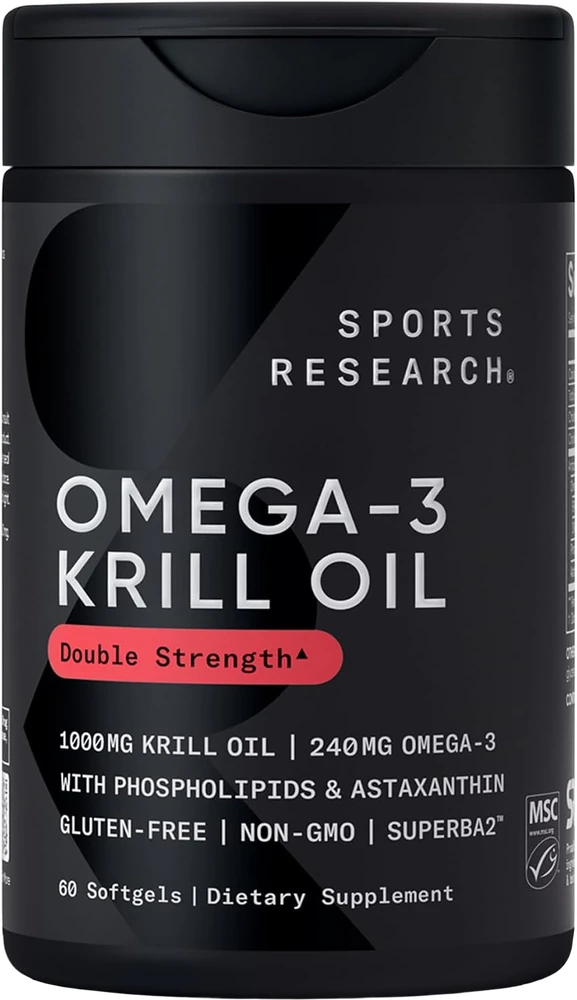
01Sports Research Antarctic Krill Oil
The default krill buy.
 03
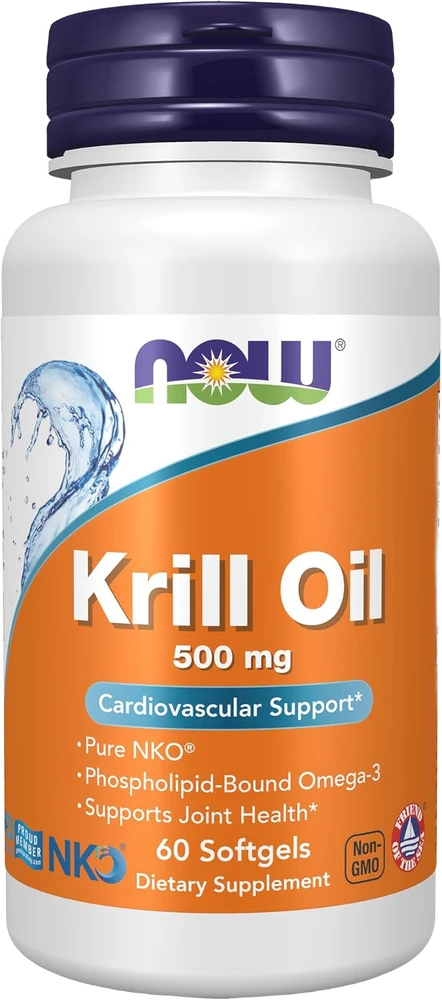
03NOW Neptune Krill Oil
The pick for buyers who want the most-researched krill formulation with deep manufacturer QC.
 07
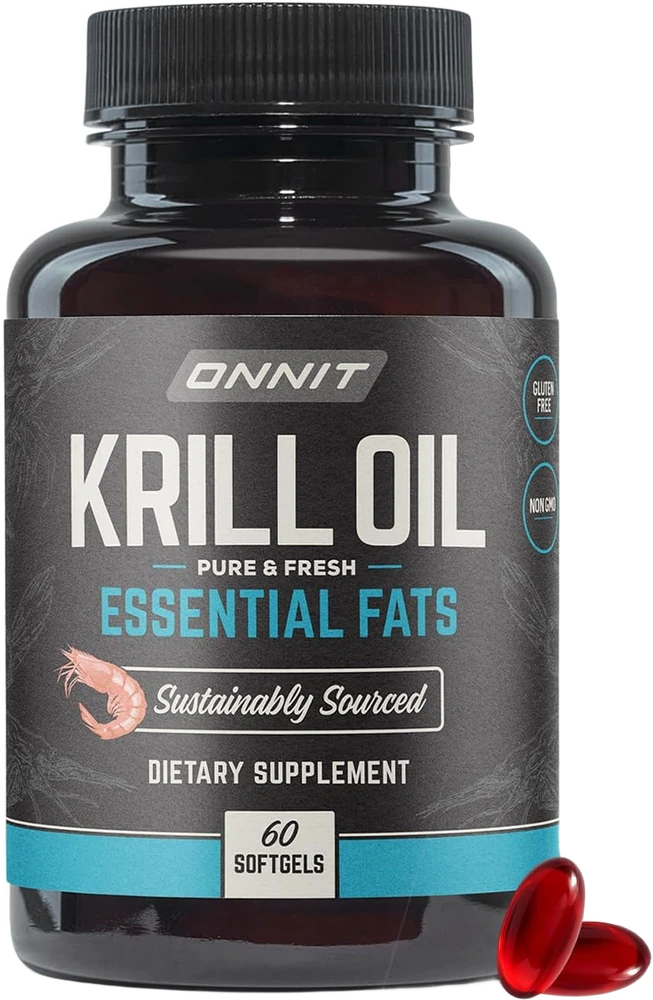
07Onnit Krill Oil
The niche pick for the truly burp-intolerant.
Quick Answers
How much EPA and DHA does Bronson krill oil actually deliver per serving?
200 mg per 2-softgel serving: the Supplement Facts panel lists 120 mg EPA and 80 mg DHA (total omega-3 200 mg), plus 200 mg phospholipids and 200 mcg astaxanthin. That is in line with Sports Research (196 mg in one softgel) and NOW Neptune NKO (195 mg per 2 softgels). One detail matters: the panel footnotes EPA and DHA 'As Ethyl Esters/Triglycerides', and 200 mg of phospholipids is the lowest of the two-softgel krill picks, so the label does not show how much of the EPA and DHA is phospholipid-bound — the main reason people choose krill. An earlier version of this review said Bronson does not disclose EPA and DHA; that was wrong.
Is Bronson a legitimate brand or a cheap white-label?
Legitimate, with a long pedigree. Bronson was founded in 1960 in California by a group of pharmacists who sold their supplements directly to physicians, and the company still manufactures in an FDA-registered, cGMP-certified facility (Long Island, NY) with third-party testing for purity and potency. It's a genuine mid-market value brand with 60+ years of history — not a fly-by-night Amazon white-label. The krill oil is heavy-metal tested, non-GMO, gluten-free, and soy-free. What you're trading down on versus the premium tier is public proof (no batch COA, no sustainability certificate), not basic legitimacy.
Why is Bronson so much cheaper than Sports Research or Onnit krill?
Mostly because it skips the cost drivers that premium krill brands pay for: branded traceable krill sources (Superba from Aker, NKO from Neptune), MSC or Friend of the Sea sustainability certification, and prominent third-party potency labelling. Bronson uses '100% Antarctic krill' without naming a branded source or carrying a sustainability mark, and declares less phospholipid on the panel (200 mg). None of that necessarily makes the oil worse — but the certifications and traceability you pay extra for at the top of the list are exactly what Bronson leaves off to hit the lowest price. For a value-first buyer that's a fair trade; for a buyer who needs auditable sourcing it isn't.
Does Bronson krill oil cause fishy burps?
Rarely — that's krill oil's structural advantage and Bronson delivers it. Krill oil carries phospholipids and naturally occurring astaxanthin (the antioxidant that resists oxidation), and users consistently report small, easy-to-swallow softgels with no fishy repeat. One honest caveat from reviews: while the burps are absent, several buyers note a strong marine 'dirty aquarium' smell when they open the bottle. That's cosmetic, not a sign of rancidity (astaxanthin keeps the oil stable), but it's worth knowing if smell sensitivity matters to you.
Is the Antarctic krill in Bronson sustainably sourced?
Probably, but it's not certified — and that distinction matters here. The global Antarctic krill fishery as a whole is managed under CCAMLR with conservative quotas (~1% of estimated biomass per year), so any Antarctic krill is drawn from one of the better-managed marine fisheries. But Bronson's listing carries no MSC or Friend of the Sea certification and names no traceable branded source, so you can't independently audit this specific product's chain of custody the way you can with Sports Research (MSC) or NOW Neptune (Friend of the Sea). If verified sustainability is a priority, those picks are the safer buy.
Should I worry about shellfish allergy with Bronson krill oil?
Yes — this applies to every krill oil, Bronson included. Krill are crustaceans (tiny shrimp-like animals), and krill oil contains residual crustacean proteins that can trigger reactions in shellfish-allergic people. Most krill oil is processed to minimise allergenic protein, but documented allergic reactions exist in the literature. If you have any shellfish allergy, do not buy Bronson or any krill product — switch to a vegan algal-oil omega-3, which delivers the same EPA+DHA with zero crustacean exposure.
Sources & Further Reading
6 peer-reviewed sources, each linked to PubMed
- [1] Ramprasath 2013 PMID 24304605 — Enhanced increase of omega-3 index in healthy individuals with response to 4-week n-3 fatty acid supplementation from krill oil versus fish oil. Head-to-head trial: krill oil raised the Omega-3 Index more than an equivalent dose of fish oil over 4 weeks, supporting the phospholipid-delivery advantage of krill — though the effect size is modest, and Bronson's label (200 mg phospholipids, EPA/DHA declared as esters) does not show how much of its omega-3 carries it.
- [2] Ulven 2011 PMID 21042875 — Metabolic effects of krill oil are essentially similar to those of fish oil but at lower dose of EPA and DHA, in healthy volunteers. Krill oil produced metabolic effects and plasma EPA+DHA increases comparable to fish oil despite a lower absolute EPA+DHA dose — direct evidence for krill's per-milligram phospholipid edge, while underscoring how little EPA+DHA krill actually contains (200 mg per Bronson serving).
- [3] Maki 2009 PMID 19854375 — Krill oil supplementation increases plasma concentrations of eicosapentaenoic and docosahexaenoic acids in overweight and obese men and women. Krill oil raised plasma EPA+DHA comparably to menhaden (fish) oil at a similar omega-3 dose, confirming bioequivalence of the phospholipid form — the basis for treating any legitimate krill, Bronson included, as a real (if expensive) omega-3 source.
- [4] Harris 2004 PMID 15208005 — The Omega-3 Index: a new risk factor for death from coronary heart disease?. Established the Omega-3 Index (RBC EPA+DHA %) as a cardiac-risk marker, with an Index above 8% tied to the lowest CHD-death risk — the endpoint that justifies tracking actives intake, and the reason the 200 mg EPA+DHA per Bronson serving matters more than the '1000 mg' on the front.
- [5] Mozaffarian 2011 PMID 22051327 — Omega-3 fatty acids and cardiovascular disease: effects on risk factors, molecular pathways, and clinical events. Comprehensive omega-3 cardiovascular review establishing dose-dependent triglyceride reduction across the 2-4 g/day combined EPA+DHA range — the literature behind Bronson's heart-health claim, and a reminder that 200 mg EPA+DHA per serving is far below that range.
- [6] Tou 2007 PMID 17345959 — Krill for human consumption: nutritional value and potential health benefits. Comprehensive review of krill composition documenting the phospholipid-bound EPA+DHA structure and naturally occurring astaxanthin that give krill oil its oxidative stability — the mechanistic basis for krill's no-burp, rancidity-resistant profile (and why the bottle smell isn't a spoilage signal).
Affiliate disclosure: every Amazon link uses our Associates tag (superachieverclub-20). We earn a small commission at no cost to you; it funds independent reviews. We never accept payment to change a ranking.