
Sports Research Antarctic Krill Oil 1000 mg Review
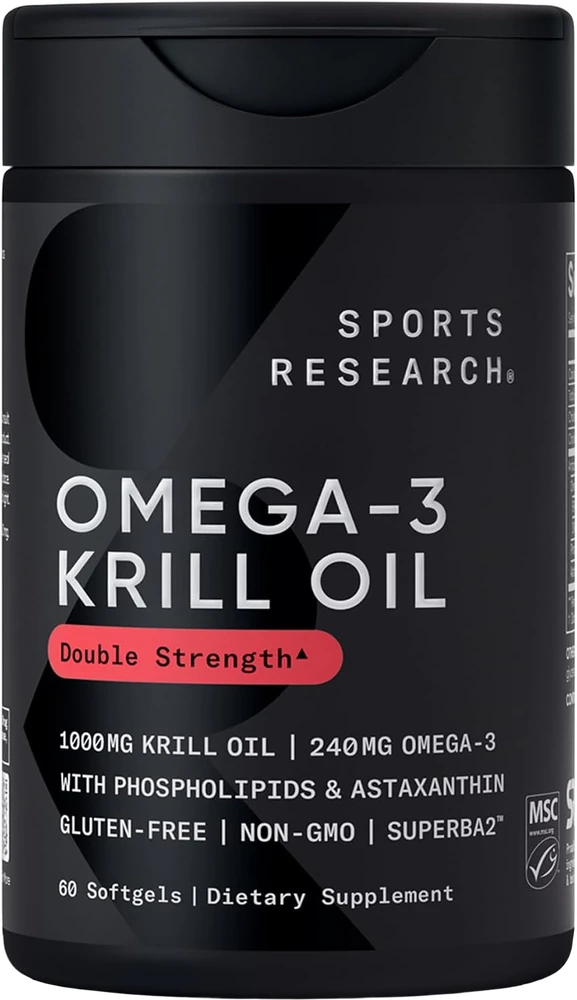 #1 of 9 · Best overall✓ Label verified · Supplement Facts read Oct 18, 2026
Real retailer photo, cut out. Label unedited.
Buy it. The best-sourced krill oil at a near-lowest $/g — the default buy for the krill-appropriate buyer. 196 mg EPA+DHA in a single softgel, MSC-certified Superba2 Antarctic krill with full traceability, 400 mg phospholipids + 100 mcg astaxanthin, IKOS-listed, and about $2.63 per gram of actives — within a few cents of the cheapest krill on our list.
$30.95 / 60 softgels (60 servings)~$0.52 / softgel
Why It Scores 8.5 — And The Label Line Behind Each Number
EPA+DHA dose + form
30% of score196 mg combined EPA+DHA (136 EPA / 60 DHA) per single softgel — second only to Kori's 250 mg among single-cap krill — bound to phospholipids with 400 mg phospholipids per cap. The phospholipid format adds a small per-mg absorption edge (~10-20%, Ulven 2011). Held back from a 9+ only because krill is inherently EPA+DHA-light: 196 mg/cap is still a fraction of a concentrated fish-oil capsule's 500-900 mg.
- Active form
- Phospholipid-bound EPA + DHA (Superba2 Antarctic krill oil) + astaxanthin
- Per softgel
- 1000 mg krill oil = 196 mg combined EPA+DHA (136 EPA / 60 DHA) + 400 mg phospholipids + 100 mcg astaxanthin
- Trial-dose alignment
- 1 softgel ≈ the 250-500 mg/day wellness floor; reaching 1-2 g/day would take 6-10 softgels (use fish oil instead)
- Inactives
- Softgel shell (gelatin, glycerin, purified water); naturally astaxanthin-stabilised
IFOS / oxidation + heavy-metal testing
25% of scoreThird-party tested via IKOS (the krill-oil analogue of IFOS) plus heavy-metal screening — genuinely strong QC for the category. Antarctic krill also sit at the lowest trophic level (eating phytoplankton), so mercury and PCB bioconcentration is near-zero before testing even begins. Astaxanthin's built-in antioxidant action keeps the oil oxidation-resistant on the shelf.
- Testing
- IKOS-tested + third-party heavy-metal screened; astaxanthin-stabilised against oxidation
- Certifications
- MSC-certified Superba2 source, IKOS-tested, non-GMO
- Manufacturer
- Sports Research (Carlsbad, CA · family-owned, IFOS/IKOS-tested marine-oil specialist)
Source sustainability + provenance
20% of scoreSuperba2 from Aker BioMarine — the most traceable Antarctic krill source alongside Neptune's NKO. Aker holds MSC certification for its krill fishery and runs Eco-Harvesting with published chain-of-custody. CCAMLR manages the broader fishery at conservative quotas (~1% of biomass/year). Category-leading provenance; the long-term ecosystem-load caveat applies to all krill, not this brand specifically.
- Source
- Superba2 Antarctic krill (Aker BioMarine) · MSC certified · CCAMLR-managed fishery
Cost per gram EPA+DHA
15% of score$30.95 for 60 softgels (Amazon, October 18, 2026) = about $0.52/softgel for 196 mg EPA+DHA = $2.63 per gram of actives — essentially tied with Kori ($2.66) and just above Bronson ($2.50), the cheapest on the krill list. Still scored below a perfect mark because even the cheapest krill runs above concentrated fish oil per gram of EPA+DHA; the krill premium is structural, not brand markup.
- Bottle size
- 60 softgels · 60 servings (1 softgel/day) · ~2 months at the wellness floor
- Price
- $30.95 / 60 softgels = about $0.52 per 196 mg EPA+DHA softgel = $2.63 per gram of EPA+DHA (Amazon, October 18, 2026)
Real-world response + tolerance
10% of scoreNear-zero fishy burp — phospholipid-bound krill means almost no marine-oil reflux, and the single daily softgel is easy to swallow. No fishy aftertaste. Held to 8.0 because the astaxanthin is only 100 mcg per softgel on the panel, among the lowest on the list (Viva prints 1.6 mg, NOW Neptune 360 mcg).
Label verified. Every figure read from the Supplement Facts photo, Oct 18, 2026.
Marketing Claims Vs. Reality
Made with Superba2 Antarctic krill — sustainably sourced and traceable.
Superba2 is Aker BioMarine's MSC-certified Antarctic krill oil with published sea-to-bottle chain-of-custody and Eco-Harvesting. The fishery is managed under CCAMLR at conservative quotas. A real, auditable sourcing and sustainability claim — among the best in the category.
Phospholipid-bound omega-3 for better absorption.
Mechanistically real but modest. Ramprasath 2013 and Ulven 2011 measured roughly equivalent or 10-20% higher Omega-3 Index gain per gram of EPA+DHA from krill vs fish oil — a genuine per-mg edge, not the 'dramatically superior' framing krill marketing often implies. Sports Research's wording stays on the right side of the truth.
Contains naturally occurring astaxanthin.
True — the panel lists 100 mcg astaxanthin per softgel. That is a small amount, among the lowest on our krill list and far below dedicated astaxanthin protocols (4-12 mg/day); an earlier version of this review said 1 mg, corrected on 2026-10-18 from the panel. In krill oil its main job is to help stabilise the oil against oxidation.
196 mg of EPA + DHA per softgel.
The supplement-facts panel lists 136 mg EPA + 60 mg DHA = 196 mg combined per single softgel — one softgel per serving, where most krill picks need two. Honest, panel-accurate dosing claim; just note it's still a fraction of a concentrated fish-oil capsule's 500-900 mg.
IKOS / third-party tested for purity.
Sports Research participates in IKOS (the International Krill Oil Standards program, the krill analogue of IFOS) with heavy-metal screening. Antarctic krill's lowest-trophic-level position means near-zero mercury/PCB bioconcentration to begin with — the testing is a real, verifiable QC layer on an already-clean source.
What Our Test Actually Found
Best single-softgel EPA+DHA in the krill tier — but read it as 196 mg, not 1000 mg
The front of the bottle says '1000 mg krill oil'; the supplement-facts panel says 196 mg combined EPA+DHA (136 EPA / 60 DHA). Both are true — only ~25% of krill oil is EPA+DHA. Part of what earns Sports Research the #1 spot is that 196 mg comes in one softgel, so you reach the 250-500 mg/day wellness floor in one or two softgels rather than three or four. Always score krill on the panel number; on that basis this is the most actives-dense single-cap krill you can buy.
Superba2 sourcing is the real differentiator
Most of the quality gap between krill oils isn't the omega-3 — it's whether you can trust the source. Sports Research builds on Superba2 from Aker BioMarine: MSC-certified, Eco-Harvested, with published chain-of-custody. That's the difference between a verifiable 400 mg phospholipid / 100 mcg astaxanthin spec and an uncertified bulk-krill bottle whose label you can't audit. Combined with IKOS testing and heavy-metal screening, the provenance here is category-leading and the single biggest reason to pick this bottle over a cheaper unbranded krill.
Near-lowest cost per gram of actives in the category — but still above fish oil
At $30.95 for 60 softgels (about $0.52/cap) carrying 196 mg EPA+DHA each, Sports Research works out to $2.63 per gram of actives — essentially tied with Kori ($2.66) and a little above Bronson ($2.50), with better sourcing and testing than either. But honesty matters: even this works out to a higher $/g than concentrated triglyceride fish oil, which delivers 500-900 mg per capsule. The krill premium is structural (harder harvest, lower EPA+DHA density, complex phospholipid extraction), not Sports Research markup. If cost-per-mg is your only axis, fish oil still wins; if you want krill, this is one of the cheapest honest ways to get it.
Near-zero burp profile is the day-one win
The reliable, immediate difference versus fish oil is tolerability. Phospholipid-bound krill means almost no marine-oil reflux, no fishy aftertaste, and a single small softgel that's easy to swallow. If you've abandoned fish oil multiple times over burps regardless of brand, this is the lever — and Sports Research delivers it at the best price and best sourcing in the krill tier.
Shellfish allergy is the absolute disqualifier
Krill (Euphausia superba) are crustaceans, and krill oil contains residual crustacean proteins that can trigger reactions in shellfish-allergic users. Sports Research's oil is processed like other premium krill to minimise allergenic protein, but documented allergic reactions to krill are real. The rule is absolute: if you have any shellfish allergy, do not buy this regardless of how clean the processing is. A vegan algal-oil omega-3 is the safe alternative — same EPA+DHA, zero crustacean exposure.
Full analysis: all pros & cons (10), buy if / skip if
- Highest combined EPA+DHA per single softgel in the krill tier (196 mg: 136 EPA / 60 DHA)
- MSC-certified Superba2 krill (Aker BioMarine) with full sea-to-bottle traceability
- About $2.63 per gram of actives ($30.95 for 60) — within a few cents of the cheapest krill on our list
- 400 mg phospholipids per cap, fully disclosed (astaxanthin is a modest 100 mcg)
- IKOS-tested + heavy-metal screened; near-zero fishy-burp profile, single easy softgel
- Even 196 mg EPA+DHA is a fraction of a concentrated fish-oil capsule's 500-900 mg
- Cost per gram of actives still sits above any fish-oil pick — the krill premium is structural
- Reaching the 1-2 g/day cardiovascular range would take 6-10 softgels — impractical on krill
- Shellfish allergens — a hard disqualifier for shellfish-allergic users
- Phospholipid absorption edge is real but modest (~10-20%), not the marketing 'dramatically superior'
- You've tried fish oil (even premium rTG) and the fishy burps make you quit
- You want astaxanthin and phospholipids bundled into your omega-3
- You want the best-sourced krill — MSC-certified Superba2 with full traceability
- You want a low cost per gram of actives without giving up sourcing or testing
- You have a shellfish allergy — krill are crustaceans; use vegan algal oil instead
- Cost per active gram is your priority — concentrated fish oil is 3-5× cheaper per gram
- You need 1-2 g/day of EPA+DHA — that's 6-10 krill softgels; run fish oil for bulk actives
- You specifically want the clinically-studied NKO branded oil — choose NOW Neptune instead
196 mg EPA+DHA in a single softgel, MSC-certified Superba2 Antarctic krill with full traceability, 400 mg phospholipids + 100 mcg astaxanthin, IKOS-listed, and about $2.63 per gram of actives — within a few cents of the cheapest krill on our list. If you've decided krill is your omega-3 — because of fish-oil burps or because you want astaxanthin bundled in — start here. If you're optimising raw cost-per-mg of EPA+DHA, fish oil still wins; krill earns its place on burp profile, sourcing, and astaxanthin.
Sports Research Antarctic Krill Oil is the bottle we point almost every krill-appropriate buyer to first. At $30.95 for 60 softgels (60 servings, about $0.52/cap), each single softgel delivers 196 mg of combined EPA+DHA (136 EPA / 60 DHA) bound to phospholipids — one softgel, where most krill picks need two — plus 400 mg phospholipids and 100 mcg of astaxanthin, the carotenoid that helps keep the oil from oxidising. Crucially, the krill is Superba2 from Aker BioMarine: MSC-certified, fully sea-to-bottle traceable, and IKOS + heavy-metal tested. The phospholipid format buys a modest per-mg absorption edge (~10-20% vs triglyceride, Ulven 2011, Ramprasath 2013), not the 'dramatically superior' framing on most krill bottles. The honest catch is the same one that governs the whole category: at 196 mg EPA+DHA per cap you're paying more per gram of actives than any fish-oil pick. Here's the full breakdown.
The default krill oil buy — best sourcing, near-best $/g, cleanest tolerance.

Sports Research Antarctic Krill Oil is the krill we recommend to almost everyone who has decided krill is their omega-3. It puts 196 mg EPA+DHA into a single softgel, sources it from MSC-certified Superba2 Antarctic krill with full traceability, is IKOS-listed, carries 400 mg phospholipids (astaxanthin is a modest 100 mcg), and costs about $2.63 per gram of actives, within a few cents of the cheapest on the list. The phospholipid format and astaxanthin give it a near-zero burp profile, which is the day-one reason most people choose krill at all. If you're a krill-appropriate buyer, start here and don't overthink it. The honest caveats are the category's, not the product's. At 196 mg EPA+DHA per cap, krill is inherently actives-light versus the 500-900 mg in a concentrated fish-oil capsule, and even at about $0.52/softgel the cost per gram of actives runs above any fish-oil pick. If you're optimising raw cost-per-mg of EPA+DHA, or you need the 1-2 g/day cardiovascular range, concentrated triglyceride fish oil is the better buy and you should read our omega-3 fish oil guide instead. Pick Sports Research specifically when fish-oil burps drove you away or you want astaxanthin bundled in — and if you have any shellfish allergy, skip krill entirely and use a vegan algal-oil omega-3.
If This Doesn’t Fit — Try These
 03
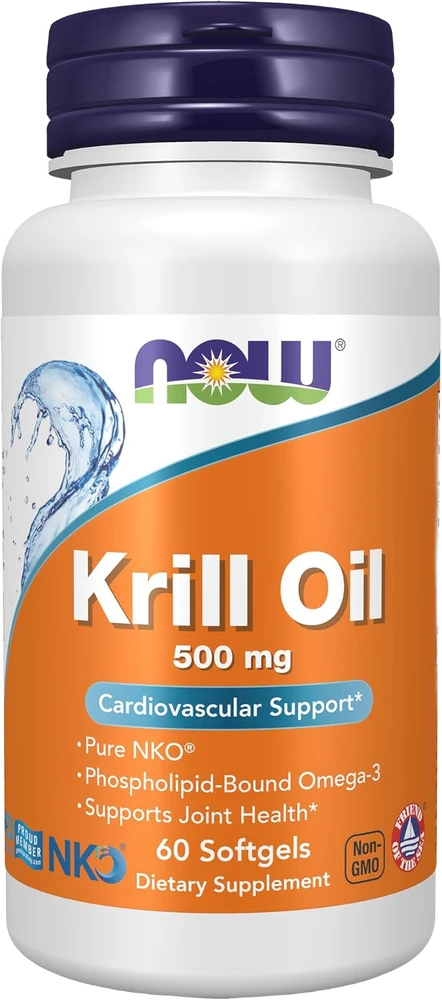
03NOW Neptune Krill Oil
The pick for buyers who want the most-researched krill formulation with deep manufacturer QC.
 02
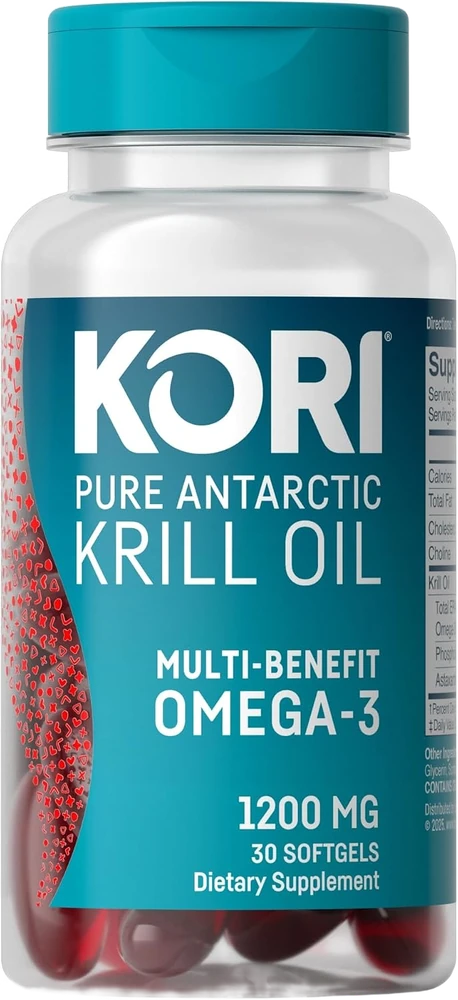
02Kori Krill Oil
The mainstream pick for buyers who value simplicity and brand familiarity over price optimization.
 05
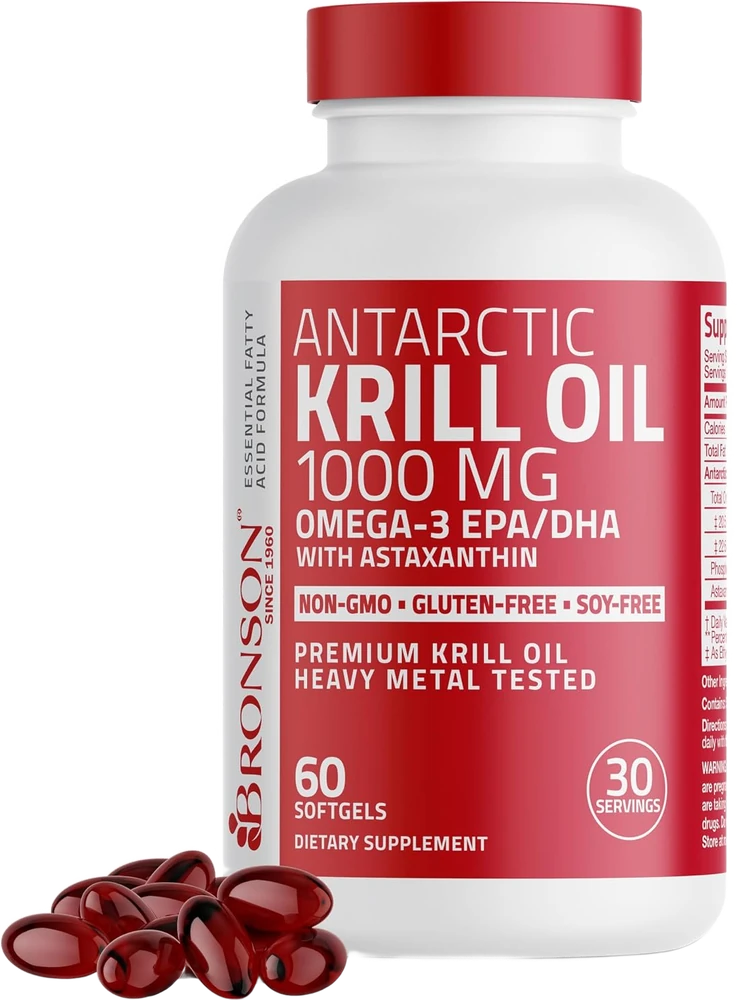
05Bronson Antarctic Krill Oil
The value play.
Quick Answers
Is Sports Research Krill Oil actually the best krill oil to buy?
For most krill-appropriate buyers, yes. It delivers 196 mg combined EPA+DHA (136 EPA / 60 DHA) in a single softgel, sources it from Superba2 — Aker BioMarine's MSC-certified, fully traceable Antarctic krill — is IKOS-listed, and costs about $2.63 per gram of actives ($30.95 for 60), within a few cents of the cheapest on our list. The phospholipid-bound format gives a small per-mg absorption edge (Ulven 2011, Ramprasath 2013), 400 mg phospholipids per cap is a solid load (the 100 mcg astaxanthin is small), and the burp profile is near-zero. The only honest reasons to look elsewhere: you want the clinically-studied NKO branded oil (NOW Neptune) or you're optimising raw cost-per-mg of EPA+DHA, where concentrated fish oil wins decisively.
What is Superba2 krill, and why does it matter here?
Superba2 is Aker BioMarine's branded Antarctic krill oil — the most prominent traceable krill source alongside Neptune's NKO. It signals a real supply chain: Aker holds MSC certification for its Antarctic krill fishery, runs Eco-Harvesting at sea, and publishes chain-of-custody documentation. Practically, a branded source like Superba2 (versus uncertified bulk krill) is the difference between a verifiable phospholipid + astaxanthin spec and a front-of-bottle 'krill oil mg' number you can't trust. Sports Research building on Superba2 is the single biggest reason this bottle ranks #1.
How much EPA and DHA do I actually get per softgel?
196 mg of combined EPA+DHA per softgel — 136 mg EPA and 60 mg DHA — from 1000 mg of krill oil. That's a strong single-softgel dose for krill (only Kori's 250 mg is higher), but it's still a fraction of the 500-900 mg combined a concentrated fish-oil capsule delivers. This is the core krill trade: the '1000 mg krill oil' on the front is total oil, of which only ~25% is EPA+DHA. To reach the 250-500 mg/day general-wellness floor, one softgel is close; chasing the 1-2 g/day cardiovascular range on krill alone would take 6-10 softgels, which is exactly where fish oil becomes the cheaper route.
What does the 100 mcg astaxanthin per softgel actually do?
Two things, one meaningful and one minor. The meaningful one: astaxanthin is the carotenoid that gives krill its red colour and acts as a built-in antioxidant, keeping the fragile omega-3s from oxidising — which is why this oil resists rancidity and produces almost no fishy repeat. At 100 mcg per softgel, Sports Research carries one of the lower astaxanthin loads on our krill list (Viva prints 1.6 mg per serving). The minor one: astaxanthin has its own modest cardiovascular/skin evidence, but dedicated trials use 4-12 mg/day, so 100 mcg is a stability feature, not a therapeutic dose. Don't buy this expecting standalone astaxanthin benefits.
Sports Research Krill vs a concentrated fish oil — which should I buy?
If you're optimising cost-per-mg of EPA+DHA, fish oil — it delivers 3-5× more actives per dollar, and concentrated triglyceride-form fish oil already absorbs well. Krill's phospholipid edge is real but small (~10-20% per mg, Ulven 2011) and doesn't close that gap. Sports Research Krill wins specifically when (a) you've tried fish oil — even premium rTG — and the fishy burps make you quit, or (b) you want astaxanthin bundled in. In those two cases this is the krill to buy; it's the cleanest-tolerated, best-sourced, near-lowest-$/g option in the category. For everyone else chasing a high Omega-3 Index, run fish oil and put the savings into more actives.
Can I take it if I have a shellfish allergy?
No — default to a vegan algal-oil omega-3 instead. Krill (Euphausia superba) are crustaceans, and krill oil contains residual crustacean proteins that can trigger reactions in shellfish-allergic people. Sports Research's oil is processed like other premium krill to minimise allergenic protein, but residual exposure is possible and allergic reactions to krill are documented in the literature. If you have any shellfish allergy, skip every krill product — algal oil delivers the same EPA+DHA with zero crustacean exposure.
Sources & Further Reading
6 peer-reviewed sources, each linked to PubMed
- [1] Ramprasath 2013 PMID 24304605 — Enhanced increase of omega-3 index in healthy individuals with response to 4-week n-3 fatty acid supplementation from krill oil versus fish oil. Head-to-head trial: krill oil raised the Omega-3 Index more than an equivalent dose of fish oil over 4 weeks, supporting the phospholipid-delivery absorption advantage — though the effect size is modest, not the 'dramatically superior' marketing framing.
- [2] Ulven 2011 PMID 21042875 — Metabolic effects of krill oil are essentially similar to those of fish oil but at lower dose of EPA and DHA, in healthy volunteers. Krill oil produced metabolic effects and plasma EPA+DHA increases comparable to fish oil despite a lower absolute dose — direct evidence for krill's per-milligram phospholipid absorption edge, while underscoring how little EPA+DHA krill actually contains.
- [3] Maki 2009 PMID 19854375 — Krill oil supplementation increases plasma concentrations of eicosapentaenoic and docosahexaenoic acids in overweight and obese men and women. Krill oil raised plasma EPA+DHA comparably to menhaden (fish) oil at a similar omega-3 dose, confirming bioequivalence of the phospholipid form — the basis for treating krill as a legitimate but expensive omega-3 source.
- [4] Köhler 2015 PMID 25884846 — Bioavailability of fatty acids from krill oil, krill meal and fish oil in healthy subjects — a randomized, single-dose, cross-over trial. Cross-over bioavailability study comparing krill oil, krill meal, and fish oil: confirmed efficient incorporation of EPA+DHA from the phospholipid krill form, with source differences that are real but small relative to the dose and cost gap.
- [5] Harris 2008 (Omega-3 Index) PMID 15208005 — The Omega-3 Index: a new risk factor for death from coronary heart disease?. Established the Omega-3 Index (RBC EPA+DHA %) as a cardiac-risk marker, with an Index above 8% tied to the lowest risk of death from coronary heart disease — the endpoint that justifies tracking actives intake regardless of source.
- [6] Tou 2007 (krill composition) PMID 17345959 — Krill for human consumption: nutritional value and potential health benefits. Comprehensive review of krill composition documenting the phospholipid-bound EPA+DHA structure and naturally occurring astaxanthin that gives krill oil its oxidative stability — the mechanistic basis for the no-burp, rancidity-resistant profile.
Affiliate disclosure: every Amazon link uses our Associates tag (superachieverclub-20). We earn a small commission at no cost to you; it funds independent reviews. We never accept payment to change a ranking.