
Creatine Statistics & Facts
We measured the real price of one clinical 5 g dose across 17 creatine products. Three findings:
Creatine in numbers
Safety headline: no measurable kidney or liver harm in healthy adults — including up to 30 g/day for 5 years[1,14,15].
Creatine, scored across goals
The fact that matters most for a decision: how strongly creatine actually moves each goal, on our SAC Efficacy Score™ — the same 0–100 score we rank every substance by (45% effect size, 40% evidence strength, 15% reliability). Tap a goal to see the full ranking against everything else.
The Creatine market in numbers
Our independent analysis of 20 creatine products, scored on three proprietary indices — the SAC Product Score™, Transparency Index™, and real Cost-Per-Effective-Dose™. Updated June 2026.
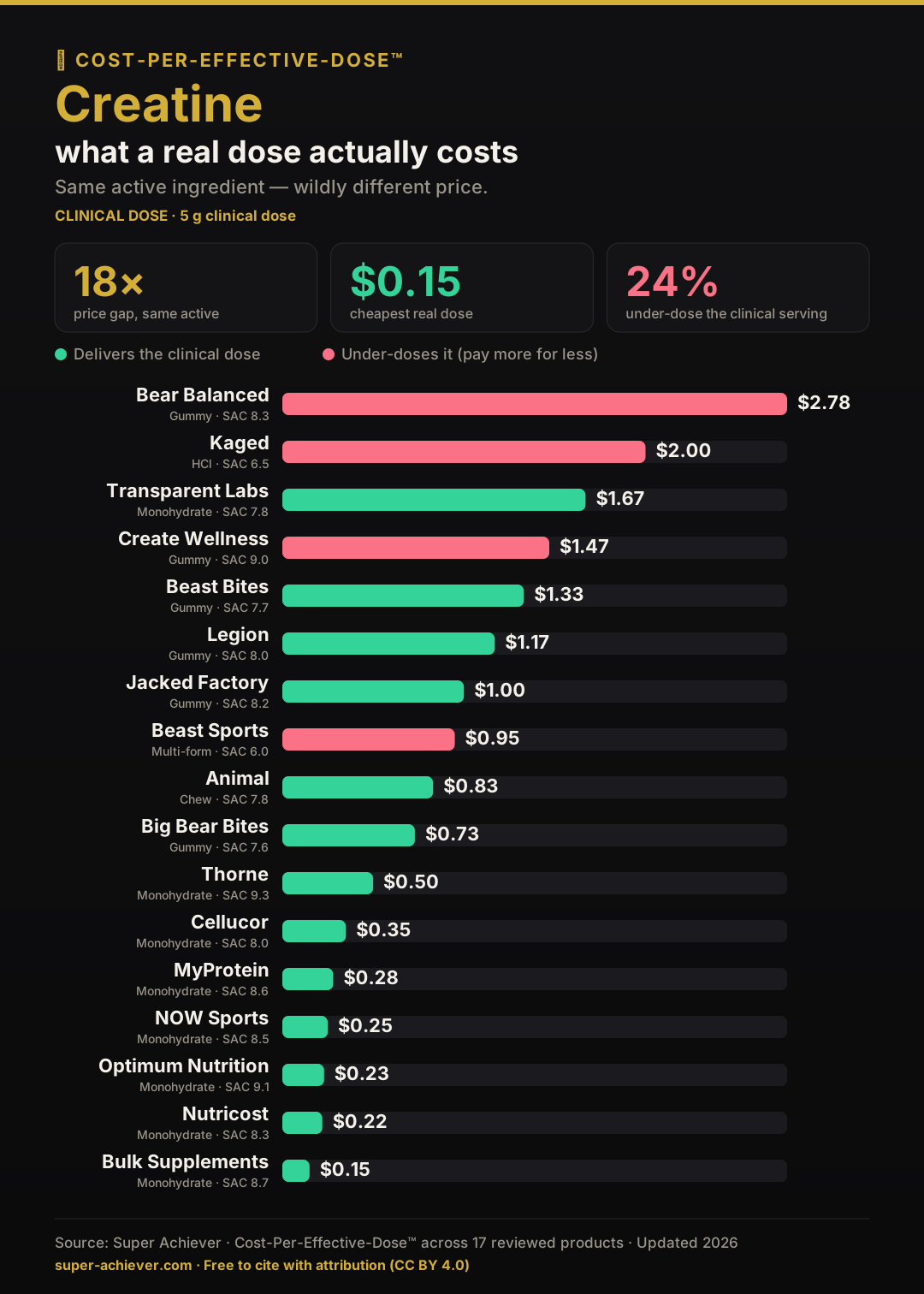
Methodology. SAC Product Score™ blends our editorial rating (RCT quality, dose, safety, value) 50/50 with community ratings. Transparency Index™ (0-100) = third-party certification (0-50) + public batch COA (0-30) + dose honesty (0-20). Cost-Per-Effective-Dose™ is the real price of one clinical dose, not one marketed "serving". Free to cite with attribution to Super Achiever.
The data — free to share & cite
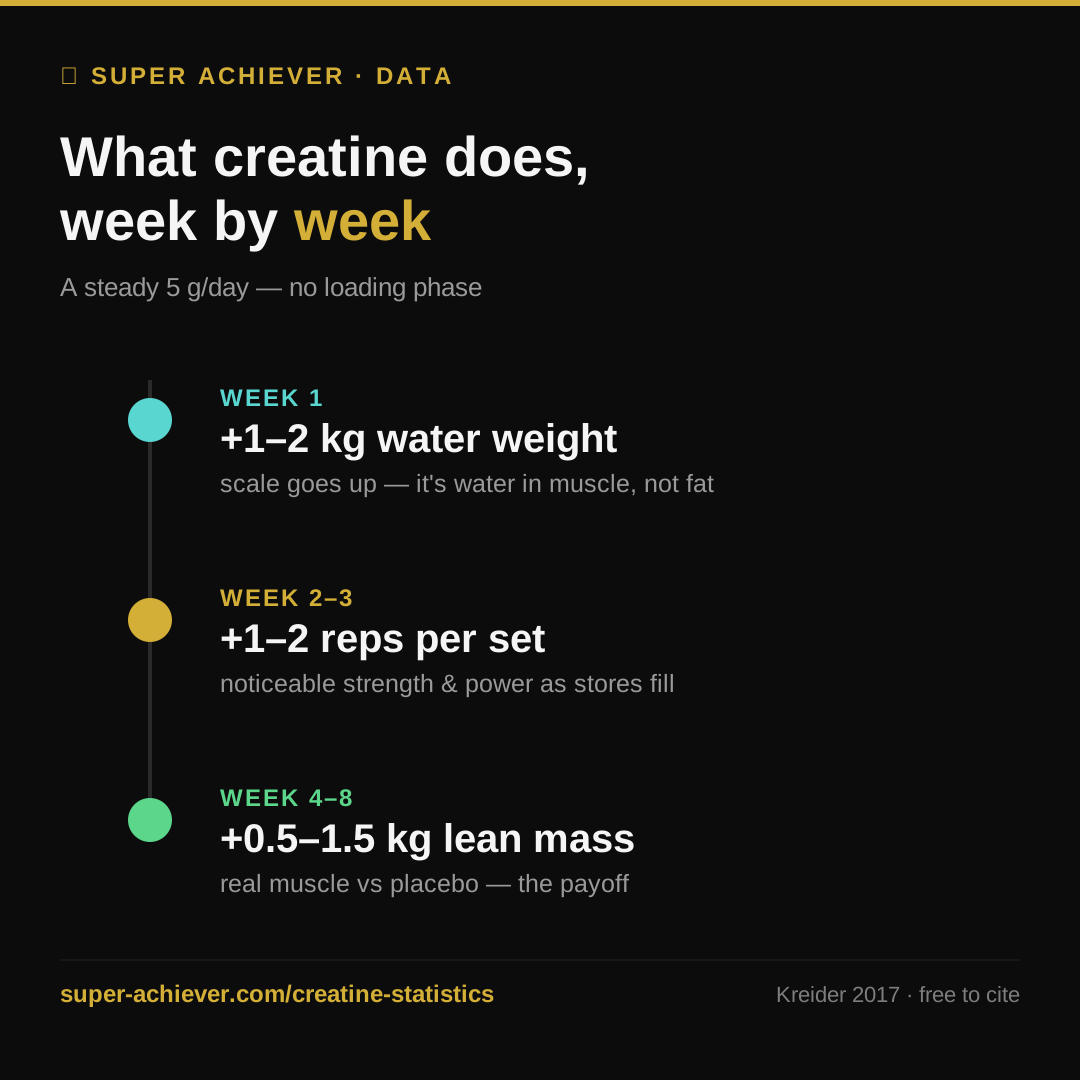
Efficacy by outcome (standardized effect size), and how muscle saturates over time. For the full breakdown see creatine benefits and side effects.
How much creatine actually helps
Standardized effect size (Cohen's d) by outcome — 0.2 is a small effect, 0.5 a medium one. Bigger bars mean a bigger real-world effect.
Forms compared
| Form | Beats monohydrate? | What the evidence says | Source |
|---|---|---|---|
| Monohydrate | Reference | Gold standard — most-studied, most clinically effective | [1] |
| Buffered (Kre-Alkalyn) | No | No greater gains than monohydrate (RCT, 36 trained) | [16] |
| Ethyl ester | No | No advantage; raised serum/muscle creatine less (RCT, 7 wks) | [17] |
| HCl / "high-solubility" | No | No evidence it outperforms — solubility ≠ efficacy | [1] |
Myths vs. facts
| The myth | What the evidence shows | Source |
|---|---|---|
| Creatine makes you bloated | Early water gain is intracellular (inside the muscle), not subcutaneous bloat, and normalises over time. | [2] |
| Creatine damages your kidneys | No kidney-function harm in pooled RCTs in healthy people; the small rise in blood creatinine is a marker artefact, not injury. | [14,15,2] |
| Creatine causes hair loss | The one DHT study never measured hair; a 2025 randomized trial that measured hair directly found no DHT change and no hair loss. | [9,10,2] |
| You must load creatine | Loading is optional — 3–5 g/day fully saturates muscle in about 3–4 weeks. | [2,1] |
| Creatine isn't for women | Equally effective and safe for women at the same 3–5 g/day (≈0.1 g/kg/day). | [2,1] |
| You get enough from food | Diet supplies only ~1–2 g/day (≈1 kg of red meat ≈ one dose) and cooking degrades it — supplementing is the practical route to saturation. | [1] |
| Creatine is a steroid | It is not a hormone or anabolic steroid and does not raise testosterone. | [2,15] |
| A fancier form works better | No buffered, ethyl-ester or HCl form has out-performed plain monohydrate. | [16,17,1] |
Go deeper
Frequently asked questions
Does creatine damage your kidneys?
No. Pooled randomized controlled trials show no harm to kidney function in healthy people, even at high doses. A small rise in blood creatinine after starting creatine is a measurement artefact of creatine metabolism, not a sign of kidney injury. People with pre-existing kidney disease or who are pregnant should check with a clinician first.
Does creatine cause hair loss?
There is no evidence that it does. The fear comes from a single 2009 study in rugby players that found a shift in the DHT-to-testosterone ratio — but that study never measured hair, has never been replicated, and no study has ever reported actual hair loss or baldness from creatine.
Do I need to do a loading phase?
No. Loading (≈20 g/day split over 5–7 days) saturates muscle faster, but simply taking 3–5 g/day reaches the exact same saturation in about 3–4 weeks.
Is creatine monohydrate better than HCl, gummies or buffered forms?
Monohydrate is the gold standard — the most-studied and most clinically effective form. Head-to-head trials show buffered (Kre-Alkalyn) and ethyl-ester forms offer no advantage, and there is no evidence that HCl or 'high-solubility' versions outperform monohydrate. They mostly cost more for the same molecule.
How much creatine should I take?
3–5 g per day, or about 0.1 g/kg of body weight per day, of creatine monohydrate. Consistency matters more than timing.
Is creatine safe and effective for women?
Yes. Creatine is effective and safe for women at the same 3–5 g/day dose, and may also support cognition and bone/muscle health.
How long does creatine take to work?
Muscle stores fully saturate in about 3–4 weeks on 3–5 g/day (or under a week with a loading phase). Performance benefits track the rise in muscle phosphocreatine.
Does creatine help the brain, not just muscles?
Possibly. Trials show memory and reasoning benefits, concentrated in people with lower baseline creatine — vegetarians and older adults. Broader brain-health claims are promising but still emerging.
Sources
Every research figure links to one of these. All PMIDs were verified to resolve on PubMed.
- Kreider RB, et al. International Society of Sports Nutrition position stand: safety and efficacy of creatine supplementation in exercise, sport, and medicine. J Int Soc Sports Nutr. 2017;14:18. PMID 28615996
- Antonio J, et al. Common questions and misconceptions about creatine supplementation: what does the scientific evidence really show? J Int Soc Sports Nutr. 2021;18(1):13. PMID 33557850
- Branch JD. Effect of creatine supplementation on body composition and performance: a meta-analysis. Int J Sport Nutr Exerc Metab. 2003;13(2):198–226. PMID 12945830
- Lanhers C, et al. Creatine supplementation and lower limb strength performance: a systematic review and meta-analyses. Sports Med. 2015;45(9):1285–1294. PMID 25946994
- Lanhers C, et al. Creatine supplementation and upper limb strength performance: a systematic review and meta-analysis. Sports Med. 2017;47(1):163–173. PMID 27328852
- Chilibeck PD, et al. Effect of creatine supplementation during resistance training on lean tissue mass and muscular strength in older adults: a meta-analysis. Open Access J Sports Med. 2017;8:213–226. PMID 29138605
- Cooper R, et al. Creatine supplementation with specific view to exercise/sports performance: an update. J Int Soc Sports Nutr. 2012;9(1):33. PMID 22817979
- Harris RC, Söderlund K, Hultman E. Elevation of creatine in resting and exercised muscle of normal subjects by creatine supplementation. Clin Sci (Lond). 1992;83(3):367–374. PMID 1327657
- van der Merwe J, Brooks NE, Myburgh KH. Three weeks of creatine monohydrate supplementation affects dihydrotestosterone to testosterone ratio in college-aged rugby players. Clin J Sport Med. 2009;19(5):399–404. PMID 19741313
- Lak M, Forbes SC, Ashtary-Larky D, et al. Does creatine cause hair loss? A 12-week randomized controlled trial. J Int Soc Sports Nutr. 2025;22(1):2495229. PMID 40265319
- Rae C, et al. Oral creatine monohydrate supplementation improves brain performance: a double-blind, placebo-controlled, cross-over trial. Proc Biol Sci. 2003;270(1529):2147–2150. PMID 14561278
- Avgerinos KI, et al. Effects of creatine supplementation on cognitive function of healthy individuals: a systematic review of randomized controlled trials. Exp Gerontol. 2018;108:166–173. PMID 29704637
- Roschel H, et al. Creatine supplementation and brain health. Nutrients. 2021;13(2):586. PMID 33578876
- de Souza e Silva A, et al. Effects of creatine supplementation on renal function: a systematic review and meta-analysis. J Renal Nutr. 2019;29(6):480–489. PMID 31375416
- Longobardi I, et al. Is it time for a requiem for creatine supplementation-induced kidney failure? A narrative review. Nutrients. 2023;15(6):1466. PMID 36986197
- Jagim AR, et al. A buffered form of creatine does not promote greater changes in muscle creatine content, body composition, or training adaptations than creatine monohydrate. J Int Soc Sports Nutr. 2012;9(1):43. PMID 22971354
- Spillane M, et al. The effects of creatine ethyl ester supplementation combined with heavy resistance training on body composition, muscle performance, and serum and muscle creatine levels. J Int Soc Sports Nutr. 2009;6:6. PMID 19228401
- Syrotuik DG, Bell GJ. Acute creatine monohydrate supplementation: a descriptive physiological profile of responders vs. nonresponders. J Strength Cond Res. 2004;18(3):610–617. PMID 15320650
- Gordji-Nejad A, et al. Single dose creatine improves cognitive performance and induces changes in cerebral high-energy phosphates during sleep deprivation. Sci Rep. 2024;14:4937. DOI 10.1038/s41598-024-54249-9
- Pashayee-Khamene F, et al. Effects of creatine supplementation protocols on body composition: a systematic review and meta-analysis (143 studies). J Int Soc Sports Nutr. 2024;21(1):2380058. PMID 39042054
- Forbes SC, et al. Meta-analysis examining the importance of creatine ingestion strategies on lean tissue mass and strength in older adults. Nutrients. 2021;13(6):1912. PMID 34199420
- Devries MC, Phillips SM. Creatine supplementation during resistance training in older adults: a meta-analysis. Med Sci Sports Exerc. 2014;46(6):1194–1203. PMID 24576864
- Northeast B, Clifford T. The effect of creatine supplementation on markers of exercise-induced muscle damage: a systematic review and meta-analysis. Int J Sport Nutr Exerc Metab. 2021;31(3):276–291. PMID 33631721
- Chilibeck PD, et al. Effects of creatine and resistance training on bone health in postmenopausal women. Med Sci Sports Exerc. 2015;47(8):1587–1595. PMID 25386713
- Chilibeck PD, et al. A 2-year randomized controlled trial on creatine supplementation during exercise and bone health in postmenopausal women. Med Sci Sports Exerc. 2023. PMID 37144634
- Gualano B, et al. Creatine in type 2 diabetes: a randomized, double-blind, placebo-controlled trial. Med Sci Sports Exerc. 2011;43(5):770–778. PMID 20881878
- Hespel P, et al. Oral creatine supplementation facilitates the rehabilitation of disuse atrophy. J Physiol. 2001;536(Pt 2):625–633. PMID 11600695
- Johnston APW, Burke DG, MacNeil LG, Candow DG. Effect of creatine supplementation during cast-induced immobilization on muscle mass, strength, and endurance. J Strength Cond Res. 2009;23(1):116–120. PMID 19130643
Cite & embed this
Free to share, cite and republish with attribution under CC BY 4.0. Journalists & researchers welcome — please link back to this page.
Super Achiever Club. (2026). Creatine Statistics & Facts 2026: The Complete Data Report. Retrieved from https://super-achiever.com/creatine-statistics<a href="https://super-achiever.com/creatine-statistics"><img src="https://super-achiever.com/charts/creatine/cost-per-dose.svg" alt="Creatine cost per clinical 5 g dose across 17 products — Super Achiever Club" width="540" loading="lazy"></a>
<p><a href="https://super-achiever.com/creatine-statistics">Data: Creatine Statistics & Facts 2026: The Complete Data Report — Super Achiever Club</a></p>