
Transparent Labs Creatine HMB Review
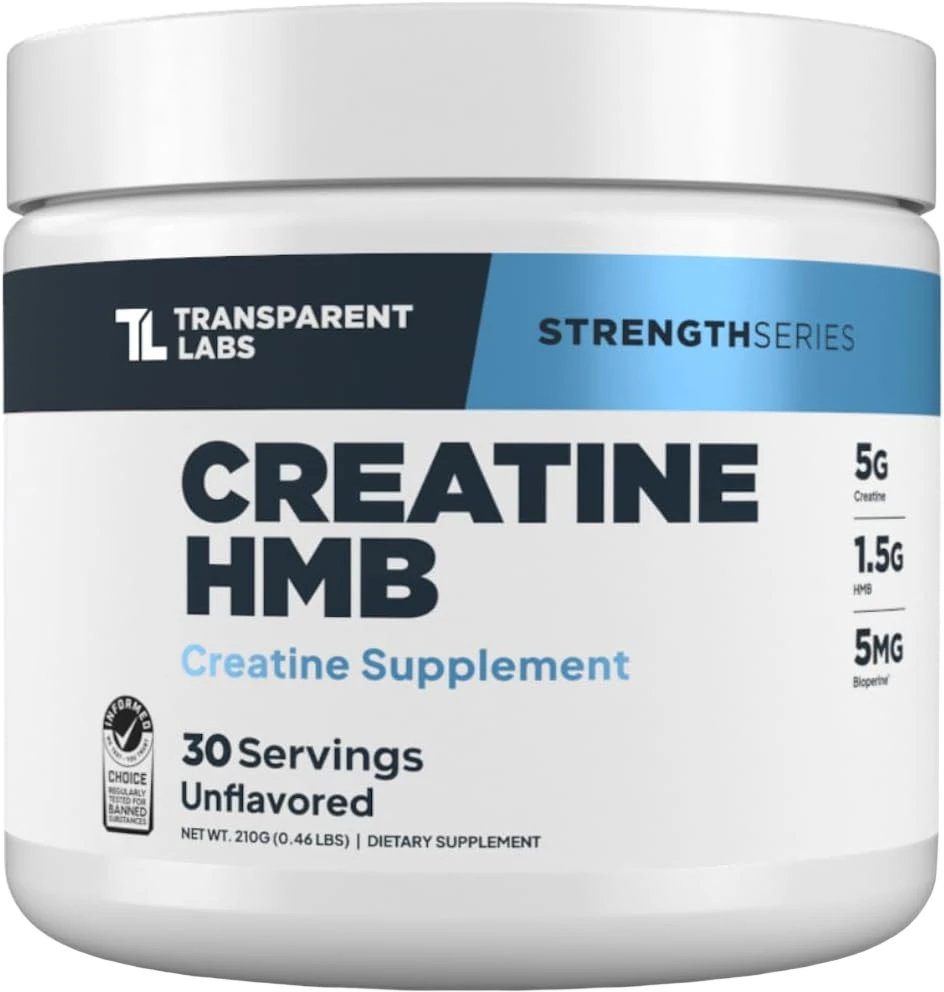 #6 of 9 · Best premium / stack✓ Label verified · Supplement Facts read Sep 7, 2026
Real retailer photo, cut out. Label unedited.
Consider it. Clean creatine with a marketing-driven HMB upcharge — selective use only. Best per-batch QC transparency on the entire listicle (TL publishes COAs publicly).
$50 / 30 servings~$1.67 / real 5 g dose (1 scoop)
Why It Scores 7.9 — And The Label Line Behind Each Number
Form purity
25% of scoreCreatine monohydrate as the creatine base (5,000 mg per scoop); Creapure is not stated on the label, the listing or the brand page (checked Oct 6, 2026), so the source is not stated. The HMB is the patented myHMB calcium HMB monohydrate named on the label (the calcium form used in clinical trials), not the cheaper free-acid variant. Form purity on both ingredients is clean; the question is whether the HMB pairing earns its inclusion at all.
- Active forms
- Creatine monohydrate (5 g) + myHMB calcium HMB (1.5 g) per scoop
- Inactives
- None — no fillers, no artificial sweeteners, no FD&C colors
- Certifications
- NSF Certified for Sport (listed lots only) · Informed Choice seal on the label · Per-batch COA published · Non-GMO · Gluten-free
- Manufacturer
- Transparent Labs (US — direct-to-consumer model, 8+ years)
- Lab transparency
- Per-batch COA lookup-able by lot code on TL website — best on listicle
Third-party testing
25% of scoreBest QC transparency on the listicle, and on the NSF list: nsfsport.com lists Transparent Labs Creatine HMB (every flavor, including Unflavored) with certified lots, and certification is per lot. The label carries an Informed Choice seal and the brand page says Informed Choice certified. TL also publishes per-batch Certificates of Analysis on their website, lookup-able by lot code, showing per-serving creatine + HMB content, heavy-metal assays, and microbial testing. Most brands gate COAs behind 'available on request' — TL surfaces them publicly. Only Thorne scores higher on testing.
Per-serving creatine
20% of score5 g of creatine monohydrate + 1.5 g myHMB (calcium HMB) per scoop — clean serving size, no fillers, no proprietary blend obfuscation. The creatine dose matches the Kreider 2017 ISSN trial floor; the 1.5 g HMB dose lands at half the standard 3 g/day Wilson 2013 trial dose, so even the beginners who get an HMB response would be under-dosed at one scoop. Honest serving math — what's on the label is what's in the scoop — but the HMB amount is sub-trial.
Cost per active gram
20% of score$50/30 servings = $1.67 per scoop = $0.33 per gram of creatine + ~$0.42 per gram of HMB. The single worst $/serving on the entire creatine listicle — 7× the plain-monohydrate pick (Optimum Nutrition at $0.23/scoop) and 11× the cheapest generic monohydrate (Bulk Supplements at $0.15/scoop). The price premium funds the HMB add-on + TL's per-batch COA program + direct-to-consumer marketing model. For most users, the math doesn't survive equivalent-dose comparison.
- Per serving
- 5 g creatine monohydrate + 1.5 g HMB + 5 mg BioPerine (black pepper extract); the label also lists vitamin D 12.5 mcg
- Trial-dose alignment
- Creatine: 5 g/day matches Kreider 2017. HMB: 1.5 g is half the Wilson 2013 3 g/day trial dose.
- Price
- $50 for 30 servings (~$1.67 per scoop, ~$50/month)
Brand QC track record
10% of scoreTransparent Labs has built a real reputation for transparent labeling — per-batch COAs published, no proprietary blends across their portfolio, clean inactive lists. The brand-name 'Transparent' is one of the few cases where the marketing claim is operationally backed. Solid 8+ year track record in the direct-to-consumer supplement category; sub-NOW (30-year founder-owned) but above most mass-market combo-product brands.
- More Specs
- Tub size
- 30 servings (~1-month supply at 5 g/day)
Label verified. Every figure read from the Supplement Facts photo, Sep 7, 2026.
Marketing Claims Vs. Reality
Creatine + HMB stack reduces muscle protein breakdown and supports lean mass.
True in untrained beginners during the first 8-12 weeks of resistance training (Wilson 2013 ISSN position). Minimal to absent in trained athletes — the audience for a $50 combo. The 'stack' marketing premise assumes independent additivity in trained subjects; the evidence base doesn't support that assumption.
Creatine monohydrate plus myHMB at clinical doses.
The label lists 5,000 mg creatine monohydrate and 1,500 mg myHMB (patented calcium HMB monohydrate) per scoop. Creapure is not stated on the label, the listing or the brand page (checked Oct 6, 2026). The creatine is at the trial dose, but at 1.5 g per scoop the HMB is half the 3 g/day dose the HMB trials (Wilson 2013) actually used — so 'clinical doses' holds for the creatine and not for the HMB.
Per-batch Certificate of Analysis published for every lot.
Verified by direct check of TL's website — every lot has a lookup-able COA with creatine + HMB assay data, heavy-metal results, and microbial testing. This is genuinely best-in-class transparency on the listicle.
No artificial sweeteners, fillers, or coloring.
True for the unflavored SKU — the inactive list is empty. TL's flavored variants do add stevia and natural flavoring, but the unflavored tub honors the claim.
Most effective creatine + HMB stack on the market.
'Most effective' is a marketing claim that doesn't survive head-to-head comparison with pure creatine + adequate protein intake. Wilson 2013 shows the HMB effect in trained athletes is minimal — the 'stack' positioning overstates HMB's contribution in this population.
What Our Test Actually Found
Correction, Oct 6, 2026: Creapure claim removed, NSF listing added, score 8.0 to 7.9
An earlier version of this review called the creatine Creapure-licensed and 99.95% pure, and described the HMB by comparison to another brand. Neither the label, the Amazon listing nor the brand page says Creapure, and the HMB is the patented myHMB calcium HMB named on the label. We also found Transparent Labs Creatine HMB on the NSF Certified for Sport list (every flavor, certified lots listed), and the label carries an Informed Choice seal. Form purity moved from 9.5 to 8.5, testing from 9.0 to 9.5, and the score from 8.0 to 7.9 (now #8).
The HMB add-on is marketing-driven, not pharmacology-driven, for trained lifters
Wilson 2013 (the ISSN HMB position statement) reviewed 30+ trials and concluded: HMB shows small but measurable strength and lean-mass effects in untrained beginners (first 8-12 weeks of resistance training), and minimal to absent effects in trained athletes — the exact audience paying $50/month for a creatine combo. The 'creatine + HMB stack' positioning assumes independent additivity in trained subjects; the literature doesn't support that. The supplement industry's most reliable revenue mechanic is converting a single-ingredient buyer into a multi-ingredient buyer, and the HMB add-on serves that mechanic — it doesn't serve your training outcomes if you're past month 3 of consistent lifting.
Transparent Labs' COA program is genuinely best-in-class — but it doesn't fix the math
TL publishes per-batch Certificates of Analysis on their website, lookup-able by lot code, showing exact creatine + HMB content, heavy-metal assays, and microbial testing. Most supplement brands gate COAs behind 'available on request' (NOW Sports, Optimum Nutrition, Bulk Supplements all do this) — TL surfaces them publicly. This is real QC transparency, and it's the strongest reason this product earns 'consider' rather than 'skip.' But best-in-class COA layering on top of a marketing-driven combo doesn't make the combo earn its price — you're paying $1.67/serving for $0.23/serving worth of creatine plus an HMB ingredient that doesn't reliably deliver for your training status.
The honest unbundled trade: separate creatine + 30 g whey beats this combo
If HMB's mechanism (anti-catabolic, reducing muscle protein breakdown) is what you actually want, the cleaner intervention is adequate dietary protein — 25-40 g whey post-workout has a larger and more reliable effect on muscle protein synthesis and breakdown than 1.5 g HMB in trained athletes. The unbundled stack: Optimum Nutrition creatine ($0.23/serving) + Optimum Gold Standard Whey ($1.00/serving for 24 g protein) = $1.23/serving total, vs TL's $1.67/serving for less protein and a weak HMB add-on. Same outcomes for less money, with more flexibility to scale protein independently of creatine.
The single-scoop convenience case — when this product actually wins
There's a narrow buyer for whom TL Creatine HMB makes sense: the lifter who values one-scoop compliance over $/serving optimization, has a high enough disposable income that the $1.67/scoop premium doesn't register, and wants the per-batch COA program on the QC side. That's a real buyer profile — usually a high-income recreational athlete who treats supplement spend as 'cost of optimization' rather than 'price-sensitive decision.' For them, TL Creatine HMB delivers convenience and transparency in one tub. The bulk of readers don't fit this profile.
The creatine base is plain monohydrate — strip the HMB and you'd have a fine product
The 5 g of creatine in each scoop is monohydrate; the label does not say Creapure, and neither do the labels of ON, NOW or Thorne (checked Oct 6, 2026); only Sports Research (#1) states it. If TL sold a standalone creatine tub at $0.25-0.35/serving with the same per-batch COA program, it would slot into the listicle around rank #6-7 alongside NOW Sports. The combo SKU exists because the unbundled creatine doesn't move the brand's price ceiling — adding HMB unlocks a $50+ price tier that pure monohydrate can't sustain. Solid base product, questionable bundle.
Full analysis: all pros & cons (10), buy if / skip if
- Best per-batch COA transparency on the listicle — TL publishes lot-coded lab results publicly
- Plain 5 g creatine monohydrate base, and on the NSF Certified for Sport list for specific lots
- No fillers, no artificial sweeteners, no proprietary blend nonsense
- Reasonable single-scoop compliance for buyers who want one tub to cover two ingredients
- TL's 8+ year direct-to-consumer track record with consistent QC discipline
- $1.67/serving — 7× plain monohydrate (ON) and 11× cheapest generic monohydrate (Bulk Supplements)
- HMB has minimal evidence in trained athletes (Wilson 2013) — the audience for a $50 combo
- 1.5 g HMB per scoop is only half the Wilson 2013 trial-standard 3 g/day
- Small 30-serving tub means monthly re-ordering at full $50 commitment
- Combo positioning overstates HMB's contribution for the typical recreational lifter
- Untrained beginner in your first 12 weeks of resistance training (HMB has modest evidence here)
- Deep calorie-deficit cutting phase where every anti-catabolic mechanism matters
- You value per-batch published COAs above all other QC signals
- Cost is genuinely not a constraint — convenience-of-one-scoop matters more
- Trained athlete with 6+ months consistent lifting — HMB evidence collapses in this group
- You're optimizing $/serving — plain monohydrate (ON, NOW) costs 1/5th to 1/7th as much
- You want the cleanest cost-efficiency stack — buy creatine and protein separately
- You're drug-tested and don't want to match lot numbers — go Thorne (NSF Certified for Sport, #2)
Best per-batch QC transparency on the entire listicle (TL publishes COAs publicly). Plain 5 g creatine monohydrate, and on the NSF Certified for Sport list for specific lots. But the HMB add-on has minimal evidence in trained athletes (Wilson 2013 ISSN position) — you're paying 5-10× the pure-monohydrate price for an ingredient that doesn't earn it for most lifters. Buy it if you're an untrained beginner, in a deep cutting phase, or genuinely don't care about cost; skip it if you're a trained recreational lifter.
Transparent Labs Creatine HMB is a clean product with a marketing-driven premise. The creatine side is plain monohydrate, 5 g per scoop (Creapure is not stated on the label, the listing or the brand page, checked Oct 6, 2026), and the QC layering is genuinely best-in-class on this listicle: per-batch published COAs, lookup-able by lot code, plus a listing on the NSF Certified for Sport list for specific lots (certified lots are listed at nsfsport.com; match the lot number on your tub). What earns the 'consider' verdict rather than 'buy' is the HMB add-on. HMB's evidence is robust in untrained beginners (small but measurable strength and lean-mass effect for the first 8-12 weeks per Wilson 2013) and minimal to absent in trained athletes — the exact audience paying $50 for a creatine combo. The pairing is positioning, not pharmacology. Six weeks running the tub, here's where it earns its niche and where the math doesn't work.
Clean product, marketing-driven premise — pay for what you actually need.

Transparent Labs Creatine HMB sits in an unusual position on this listicle: the QC layering is genuinely best-in-class (per-batch COAs published publicly is rare and worth respecting), the creatine base is plain 5 g monohydrate, and the brand's 'transparent' marketing is operationally honest. It is also on the NSF Certified for Sport list for specific lots, so a drug-tested athlete can use it if the lot number matches. What it can't escape is the underlying pharmacology of HMB in trained populations. The Wilson 2013 ISSN position statement is clear — HMB shows small but measurable effects in untrained beginners during the first 8-12 weeks, and minimal to absent effects in trained athletes. The buyer paying $50/month for a creatine combo is overwhelmingly a trained athlete; the literature says HMB doesn't earn that premium for them. The 'consider' verdict is the right one — this is a clean product for a narrow audience. Buy it if you're an untrained beginner in your first 12 weeks of resistance training, if you're in a deep cutting phase where every marginal anti-catabolic mechanism matters, or if cost genuinely doesn't register against the convenience of one-scoop compliance plus best-in-class QC. Skip it if you're a trained recreational lifter optimizing $/serving — plain monohydrate plus adequate protein intake delivers the same outcomes at a quarter of the cost, with the flexibility to scale each ingredient independently. The HMB add-on is positioning; the creatine and the transparency are real. Pay for what you actually need.
If This Doesn’t Fit — Try These
 03
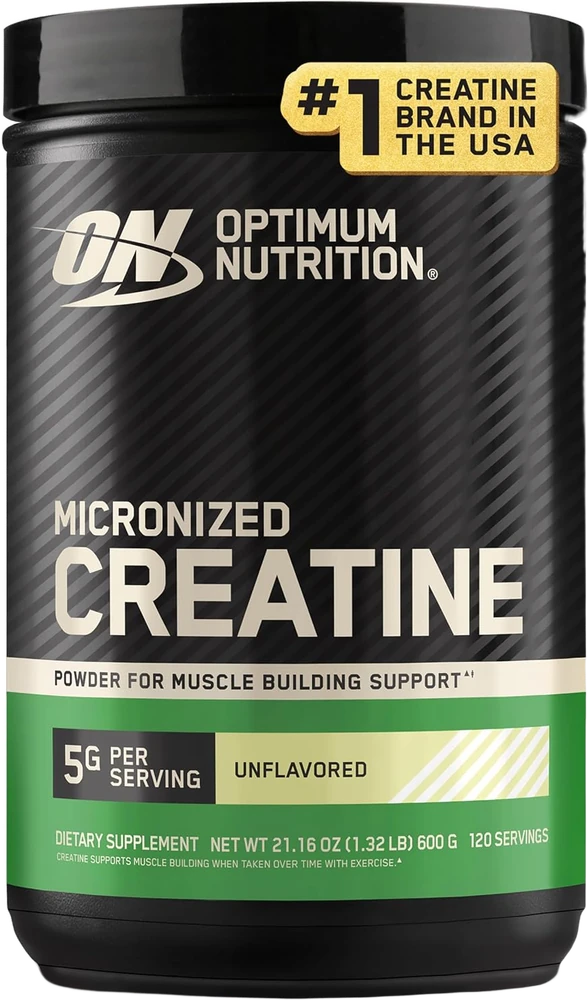
Optimum Nutrition Micronized Creatine
This is the creatine to buy if you've never bought creatine before, and the one most experienced lifters quietly come back to.
 02
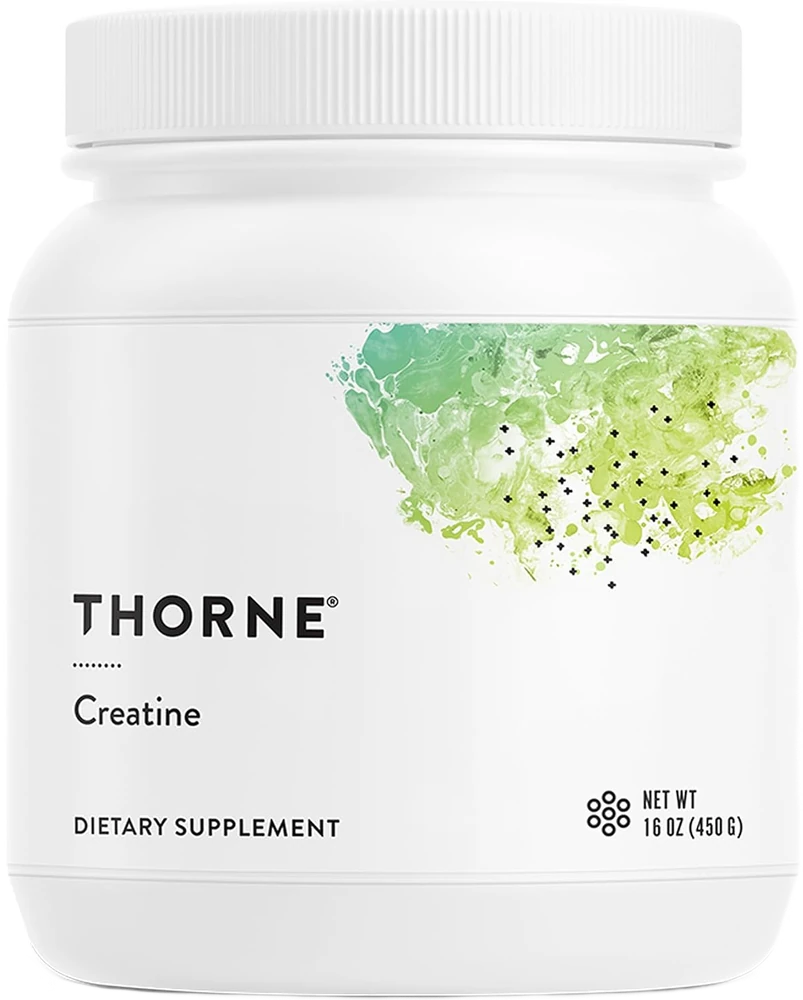
Thorne Creatine
The right buy for exactly one kind of person: the drug-tested athlete.
 04
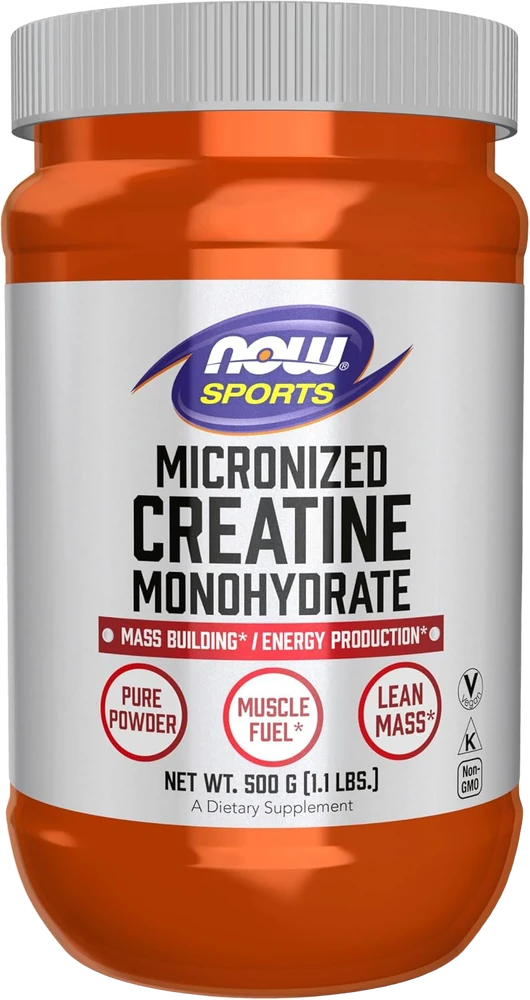
NOW Sports Creatine Monohydrate
The household-brand pick for the buyer who values supply continuity.
Quick Answers
What does HMB actually do, and does it stack with creatine?
HMB (beta-hydroxy beta-methylbutyrate) is a leucine metabolite marketed as anti-catabolic — reducing muscle protein breakdown during high-volume training. The evidence is heavily split by training status. In untrained beginners, HMB shows small but measurable strength and lean-mass gains at 3 g/day. In TRAINED athletes (the audience for a $50 combo creatine), the Wilson 2013 ISSN position covering 30+ trials concluded the effect is minimal to absent — trained subjects don't get a reliable HMB response above what they'd get from adequate protein intake alone. The 'creatine + HMB stack' marketing premise assumes they're independently additive in trained populations; the literature doesn't support that assumption.
Is Transparent Labs' QC actually as transparent as the marketing claims?
Yes — uniquely so on this listicle. TL publishes per-batch Certificates of Analysis on their website, lookup-able by lot code, showing per-serving creatine and HMB content, heavy-metal assays, and microbial testing. Most supplement brands gate COAs behind 'available on request'; TL surfaces them publicly. The 'transparent' brand naming is one of the few cases where the marketing aligns with the operations. TL is also on the NSF Certified for Sport list (Creatine HMB, every flavor, certified lots listed), the label carries an Informed Choice seal, and the brand page says Informed Choice certified. For published per-batch documentation, TL beats Optimum Nutrition, NOW Sports, and Bulk Supplements; only Thorne scores higher on testing.
If HMB doesn't work well for trained athletes, why is it in this product?
Stack-marketing positioning. The supplement industry's most reliable revenue mechanic is converting a single-ingredient buyer into a multi-ingredient buyer — the same lifter who paid $30 for monohydrate gets sold a $50 combo that includes monohydrate. The HMB add-on is the differentiator that justifies the price premium and gives the marketing copy a hook ('reduces muscle protein breakdown!'). For trained athletes, the honest call is: buy plain creatine monohydrate ($15-25/month) and put the savings into protein (25-40 g whey post-workout has a bigger effect on muscle protein breakdown than HMB).
When IS the Transparent Labs Creatine HMB stack a reasonable buy?
Three narrow cases. (1) You're an untrained beginner just starting resistance training — Wilson 2013 shows beginners get a small HMB effect for the first 8-12 weeks. (2) You're in a deep calorie deficit doing high-volume training (cutting phase or competition prep) and want every marginal anti-catabolic mechanism — HMB has modest evidence here. (3) You specifically want one scoop to deliver both ingredients for compliance reasons, and the $1.67/serving cost doesn't matter to you. Outside these cases, the math doesn't work — pure monohydrate + adequate protein beats this combo at a quarter of the cost.
Why does it cost 5-10× more than pure creatine monohydrate?
Three layered premiums. First, the HMB ingredient itself — calcium HMB (the standard form) costs roughly $30-50/kg at supplier prices, vs $8-12/kg for creatine monohydrate. Second, the per-batch COA program — TL's transparent QC isn't free, the lab costs roll into the tub price. Third, Transparent Labs' direct-to-consumer marketing model and influencer partnerships — the brand spends heavily on placement, which funds at the price level. The premium is real; the question is whether the HMB add-on earns it for your specific training status. For most trained athletes, the answer is no.
Is the creatine side of the formulation as good as a standalone creatine tub?
The label lists 5,000 mg creatine monohydrate per scoop. Creapure is not stated on the label, the listing or the brand page (checked Oct 6, 2026), so the source is not stated. The creatine half of this product is not where the value gets compromised — the questionable add-on is the HMB, not the base. If you stripped the HMB and just bought TL's standalone creatine tub, you'd have a fine product at a price comparable to NOW Sports or Cellucor. The combo SKU exists because the unbundled creatine doesn't move the brand's price ceiling.
Sources & Further Reading
6 peer-reviewed sources, each linked to PubMed
- [1] Kreider 2017 PMID 28615996 — International Society of Sports Nutrition position stand: safety and efficacy of creatine supplementation in exercise, sport, and medicine. ISSN position statement covering 500+ studies — monohydrate is the most effective form, with no evidence that alternative forms outperform it at equivalent doses. 3-5 g/day chronic dosing is safe and effective for healthy adults.
- [2] Buford 2007 PMID 17908288 — International Society of Sports Nutrition position stand: creatine supplementation and exercise. Earlier ISSN position statement establishing the 3-5 g/day maintenance protocol as effective and safe.
- [3] Cooper 2012 PMID 22817979 — Creatine supplementation with specific view to exercise/sports performance: an update. Safety + efficacy review covering 30+ controlled trials. Chronic creatine at 3-5 g/day has no adverse effects on kidney function, liver enzymes, or muscle integrity in healthy adults.
- [4] Volek 1997 PMID 9216554 — Creatine supplementation enhances muscular performance during high-intensity resistance exercise. Foundational RCT showing creatine monohydrate at 5 g/day improves bench press 1RM and total work during high-intensity resistance exercise.
- [5] Rae 2003 PMID 14561278 — Oral creatine monohydrate supplementation improves brain performance. Creatine monohydrate at 5 g/day improved working memory and intelligence test performance — establishing the secondary cognition effect beyond strength.
- [6] Antonio 2021 PMID 33557850 — Common questions and misconceptions about creatine supplementation: what does the scientific evidence really show?. Comprehensive review of creatine myths. Concludes monohydrate remains the most effective form, alternative forms (HCl, multi-form blends, combo products) show no head-to-head superiority over monohydrate at equivalent total creatine doses. The reference document for cutting through marketing-driven combo positioning.
Affiliate disclosure: every Amazon link uses our Associates tag (superachieverclub-20). We earn a small commission at no cost to you; it funds independent reviews. We never accept payment to change a ranking.