
Top 10 Best Creatine for Women (2026)
 01 · Best overall✓ Label verified · Supplement Facts read Oct 6, 2026
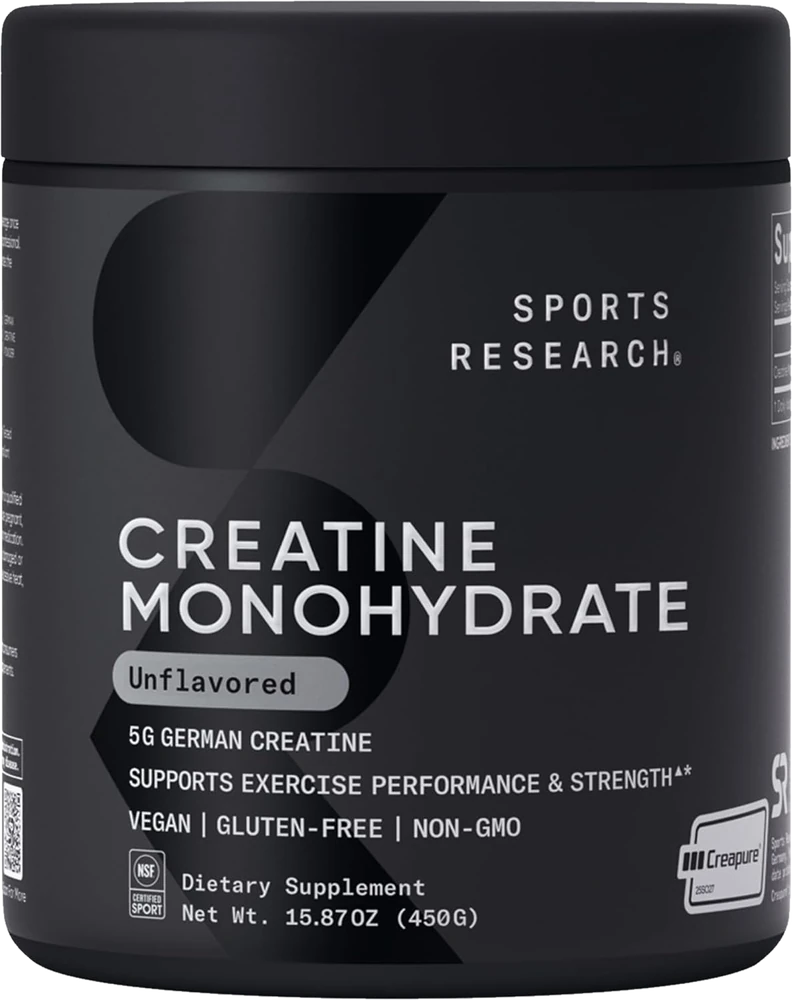
Best overall: Sports Research Creatine Monohydrate (Creapure)
Nothing in the scoop but creatine, and the label proves it: Creapure on the Supplement Facts panel, the NSF Certified for Sport mark on the tub, unflavored, certified vegan, 5 g per scoop at about $0.41 a serving.
$37 / 450 g (90 servings)$0.41 / 5 g scoop
Why it wins: all five scores, pros & cons, full label
- Creapure named on the Supplement Facts panel, the only powder on this list that states its source
- NSF Certified for Sport mark on the tub, confirmed on the nsfsport.com list
- Single ingredient, 5 g per scoop, unflavored
- About $0.41 a serving at the $36.95 list price, less than Thorne
- One certified lot on the NSF list so far; Thorne has 66
- Costs more per serving than Optimum Nutrition
- Sports Research sells a plain creatine in the same tub; look for the Creapure logo
- Per serving
- 5 g creatine monohydrate (Creapure)
- Tub size
- 450 g (90 servings, 3-month supply)
- Testing
- NSF Certified for Sport mark on the tub; nsfsport.com lists one certified lot (26174B, checked Oct 6, 2026); match the lot number on your tub
- Form
- Creatine monohydrate, Creapure named on the Supplement Facts panel
Our take — The research dose for women is the same 3 to 5 g a day as for men, and every plain monohydrate here supplies it. This is the tub that documents the most: Creapure named on the facts panel, the NSF Certified for Sport mark confirmed on NSF's list on Oct 6, 2026, one ingredient, no flavoring or sweetener. It costs about $0.41 a serving. NSF lists one certified lot so far, so tested athletes should match the lot number or choose Thorne (#2).
 02
 03
 04
 05
 06
 07
 08
 09
 10
Who Wins Which Aspect
Sorted by overall SAC Product Score™ — the official ranking.
| # | Pick | Score | Form purity25% | Third-party testing25% | Per-serving creatine20% | Cost per active gram20% | Brand QC track record10% | Cost Per Dose | Buy |
|---|---|---|---|---|---|---|---|---|---|
| 01 | | 9.1 | 9.51 | 9.52 | 9.51 | 8.0 | 8.5 | $0.41 / 5 g scoop | Check price |
| Creapure named on the Supplement Facts panel, the only powder on this list that states its sourceOne certified lot on the NSF list so far; Thorne has 66 | |||||||||
| 02 | | 9.0 | 8.52 | 10.01 | 9.51 | 7.5 | 10.01 | $0.50 / 5 g scoop | Check price |
| NSF Certified for Sport — the federation-grade testing standard$0.50/serving is the highest cost per serving of any plain monohydrate on the list | |||||||||
| 03 | | 8.9 | 8.52 | 8.53 | 9.51 | 9.02 | 9.52 | $0.23 / 5 g scoop | Check price |
| Single ingredient: creatine monohydrate, nothing else in the tubNot NSF Certified for Sport — if you're a drug-tested masters athlete, jump to Thorne (#2) | |||||||||
| 04 | | 8.9 | 8.52 | 8.53 | 9.51 | 10.01 | 7.5 | $0.15 / 5 g scoop | Check price |
| Cheapest legitimate pick — $0.15/serving = under $10/month at 5 g/dayCreapure not stated on the label or listing; plain micronized monohydrate | |||||||||
| 05 | | 8.4 | 8.52 | 7.5 | 9.02 | 8.53 | 9.03 | ~$0.21 / real 5 g dose | Check price |
| 30+ years of consistent in-house QC — one of the most trusted family brands in supplementsLabel serving is about 4.2 g, not 5 g, so compare it at about $0.21 per 5 g | |||||||||
| 06 | | 8.3 | 8.52 | 7.5 | 9.51 | 8.53 | 7.5 | $0.22 / 5 g scoop | Check price |
| Cheapest tub-format pick with GMP-tested supply chainNo per-batch public COA — only internal GMP QC | |||||||||
| 07 | | 8.1 | 8.52 | 7.5 | 9.51 | 7.5 | 7.0 | $0.50 / 5 g scoop | Check price |
| Only creatine on the panel, 5 g per scoopTesting claim names no lab | |||||||||
| 08 | | 7.8 | 8.52 | 7.5 | 9.51 | 6.0 | 7.0 | $0.83 / 5 g scoop | Check price |
| Only creatine, 5 g per scoop$0.83 per serving | |||||||||
| 09 | | 7.3 | 9.51 | 7.0 | 4.53 | 8.53 | 5.5 | $1.85 / real 5 g dose · ~8x the same 5 g as powder | Check price |
| Highest dose density in the gummy aisle — 1.5 g/gummy means just 3-4 for a real 5 g dose$1.85 per real 5 g dose against ~$0.23 for the same 5 g as powder — roughly 8x, and dearer than most gummies too ($0.67 to $2.78 across the five we rank) | |||||||||
| 10 | | 6.2 | 4.03 | 7.5 | 9.51 | 4.5 | 5.0 | $1.10 / 5 g of creatine | Check price |
| Full 5 g of creatine per scoop10 mg of biotin per scoop can distort blood tests (Li 2017) | |||||||||
The Other 9, Ranked
- 02
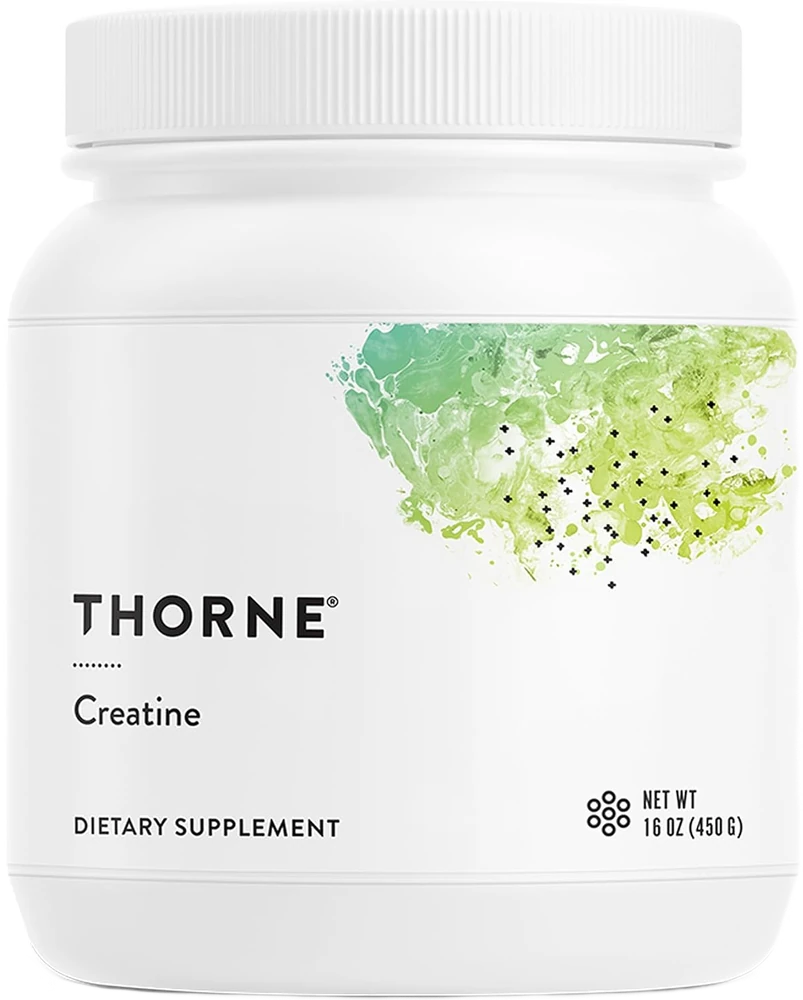
Best for drug-tested athletes: Thorne Creatine
9.0SAC Score™NSF Certified for Sport (certified lots are listed at nsfsport.com; match the lot number on your tub) — the federation-safe pick for drug-tested masters athletes. Clinical-grade Thorne QC layered on top of single-ingredient creatine monohydrate.
StrongestThird-party testing10.01WeakestCost per active gram7.5- Per serving
- 5 g creatine monohydrate
- Tub size
- 450 g (90 servings, 3-month supply)
- Testing
- NSF Certified for Sport — on the NSF list with 66 lots listed (checked Oct 6, 2026); certified lots are listed at nsfsport.com
All five scores, pros & cons, full label
What We Like- NSF Certified for Sport — the federation-grade testing standard
- Thorne's clinical-grade QC is the industry benchmark
- Single-ingredient creatine monohydrate with banned-substance certification layered on
- Clean label — no fillers, no proprietary blend
What You Live With- $0.50/serving is the highest cost per serving of any plain monohydrate on the list
- Smaller 450 g tub vs ON's 600 g — re-orders sooner
- Trusted by
- US Olympic teams, professional sports federations, masters competitors
Our take — If you're a drug-tested masters athlete (USATF, Powerlifting America, USAW masters) or you simply want the absolute cleanest tested tub on the market, Thorne is the answer. NSF Certified for Sport is granted per lot, and the certified lots are listed at nsfsport.com, so match the lot number on your tub. It is a level of QC most recreational lifters don't need, but every federation-tested athlete does. The 2× premium over generic micronized monohydrate buys certification, not better creatine. Worth it if your federation requires it; overkill for casual use.
- 03
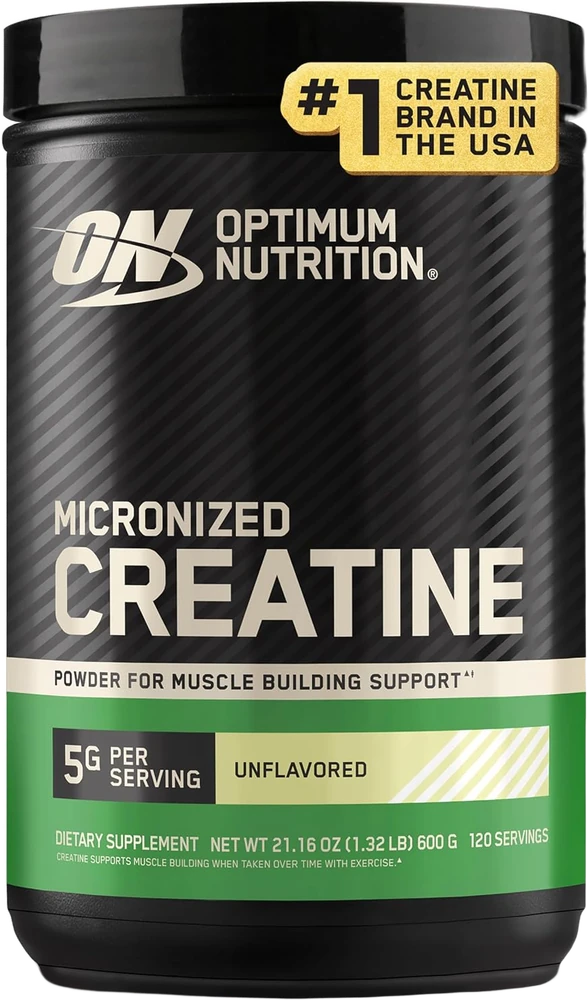
Best household brand: Optimum Nutrition Micronized Creatine Powder
8.9SAC Score™Plain micronized monohydrate in a 600 g (4-month) tub from the most-trusted brand in sports nutrition. The female default — mixes cleanly into coffee, no loading needed, $0.23/serving.
StrongestPer-serving creatine9.51WeakestForm purity8.5- Per serving
- 5 g micronized creatine monohydrate
- Tub size
- 600 g (120 servings, 4-month supply at 5 g/day)
- Testing
- Label prints 'Banned Substance Tested'; the listing names the Informed Choice program (brand statement, not confirmed by us). Not on the NSF Certified for Sport list (checked Oct 6, 2026)
All five scores, pros & cons, full label
What We Like- Single ingredient: creatine monohydrate, nothing else in the tub
- 120-serving tub at $0.23/scoop is a long supply for under $30
- Mixes silently into morning coffee — the easiest daily-anchor protocol
- Trusted household brand with 40+ years of QC track record
What You Live With- Not NSF Certified for Sport — if you're a drug-tested masters athlete, jump to Thorne (#2)
- Modest premium over pure generic micronized monohydrate (Bulk Supplements #4)
- Mixability
- Micronized — mixes into coffee, smoothies, water without grit
Our take — The budget default first-tub pick for women. You get plain micronized monohydrate, ON's 40-year QC pedigree, and a 4-month supply for under $30 — without paying the NSF Certified for Sport premium that most non-competitive lifters don't actually need. Drops into morning coffee, no loading required, no taste, no grit. The cognition + bone-density evidence layer applies equally to this monohydrate as it does to any other. The only honest reasons to pick something else: tightest budget (Bulk Supplements #4) or federation drug testing (Thorne #2).
- 04
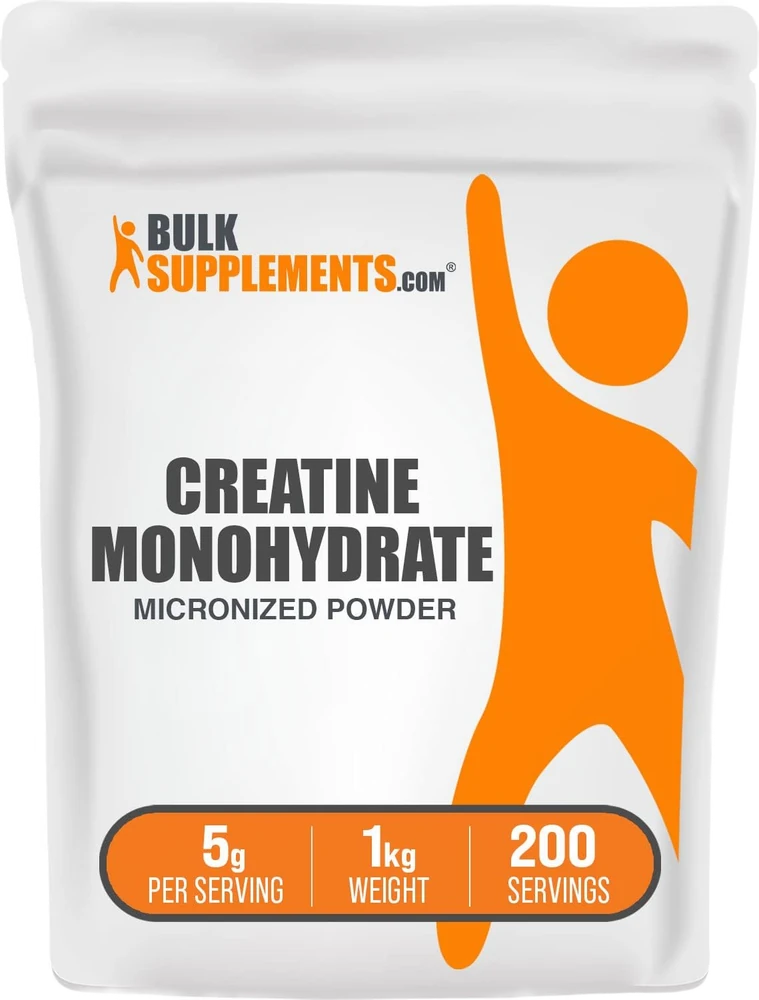
Best budget (no-load default): Bulk Supplements Creatine Monohydrate Micronized
8.9SAC Score™The cheapest legitimate option — $0.15 per 5 g serving. Highest-leverage pick for vegan and vegetarian women (lower baseline = bigger response). Transfer to a kitchen tub on day one.
StrongestCost per active gram10.01WeakestBrand QC track record7.5- Per serving
- 5 g micronized creatine monohydrate
- Bag size
- 1 kg (200 servings, ~7-month supply)
- Testing
- Per-batch COA on request, third-party lab. nsfsport.com lists certified lots of the unflavored powder; the Amazon listing and label do not carry the mark
All five scores, pros & cons, full label
What We Like- Cheapest legitimate pick — $0.15/serving = under $10/month at 5 g/day
- Pure monohydrate, no fillers, no flavoring
- Per-batch COA available on request
- The highest-leverage supplement for plant-based women on any budget
What You Live With- Creapure not stated on the label or listing; plain micronized monohydrate
- Bag format (transfer 300 g to a tub for daily kitchen use)
- Only pouches whose lot number is on the nsfsport.com list are NSF Certified for Sport; the Amazon listing and label carry no mark
- Form
- Micronized monohydrate (source not stated)
Our take — Same molecule as the premium tubs at a lower price. Promoted for the female audience because the no-loading-default protocol works perfectly here — 5 g/day for 4 weeks reaches the same saturation, and the cost difference vs the premium tubs isn't justified for first-time buyers evaluating their response. Vegetarian and vegan women should default to Bulk Supplements: you have lower baseline creatine stores, you'll see the largest absolute response, and cost should not be the thing that gates the highest-leverage supplement available to you.
- 05
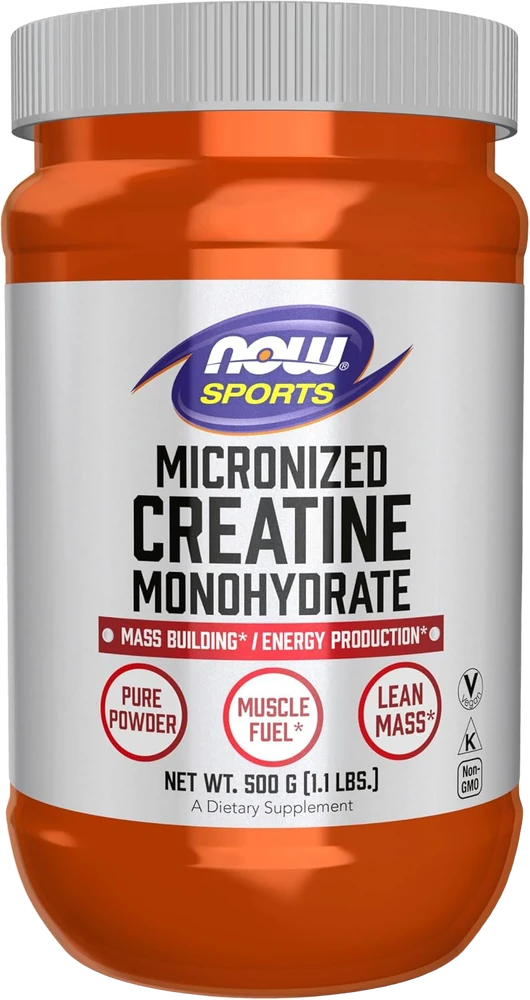
Best household-brand (Sprouts / Whole Foods): NOW Sports Micronized Creatine Monohydrate
8.4SAC Score™NOW's 30-year QC track record applied to plain micronized monohydrate. The pick if you want to walk into Sprouts or Whole Foods and grab a tub without ordering online.
StrongestPer-serving creatine9.02WeakestThird-party testing7.5- Per serving
- About 4.2 g creatine monohydrate (1.5 level teaspoons, per label)
- Tub size
- 500 g (about 119 servings of 4.2 g)
- Testing
- NOW in-house QC. The label carries no Informed Sport seal and the listing does not mention it (checked Oct 6, 2026)
All five scores, pros & cons, full label
What We Like- 30+ years of consistent in-house QC — one of the most trusted family brands in supplements
- Fair price for a household brand
- Easy to source offline at Sprouts, Vitamin Shoppe, Whole Foods
- Vegan, kosher and non-GMO label marks matter for some buyers
What You Live With- Label serving is about 4.2 g, not 5 g, so compare it at about $0.21 per 5 g
- Not NSF Certified for Sport — use Thorne (#2) if you need that certification
- Label marks
- Vegan, Kosher, Non-GMO, GMP Quality Assured
Our take — If your purchase pattern is walking into Sprouts on a Saturday and grabbing a tub off the shelf, NOW Sports is the pick. At about $0.21 per 5 g it costs a little less than Optimum Nutrition (#3) and about the same as Nutricost (#6), with a 30+ year QC pedigree. Slot it in as a backup when your primary brand is out of stock — it's the cleanest 'walk into a health-food store and grab one' pick on the list.
- 06
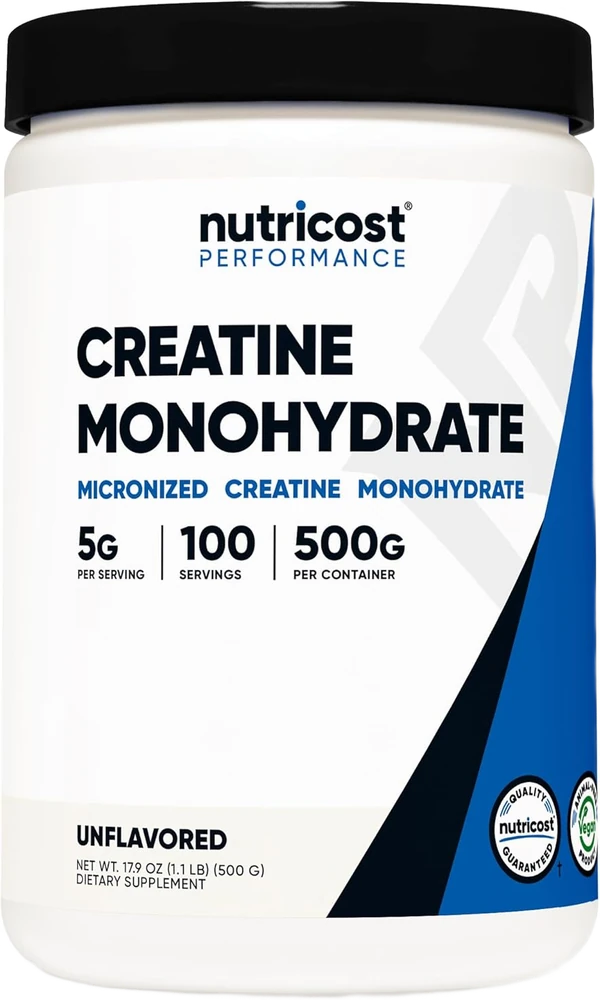
Best alt-budget (tub format): Nutricost Creatine Monohydrate Micronized
8.3SAC Score™Same purity as Bulk Supplements but delivered in a 500 g tub instead of a 1 kg bag. The cleanest 'just give me a tub' budget pick.
StrongestPer-serving creatine9.51WeakestThird-party testing7.5- Per serving
- 5 g micronized creatine monohydrate
- Tub size
- 500 g (100 servings, ~3-month supply)
- Testing
- GMP-certified facility, batch QC
All five scores, pros & cons, full label
What We Like- Cheapest tub-format pick with GMP-tested supply chain
- Same micronized monohydrate purity as Bulk Supplements (#4) at slightly higher $/serving
- Kitchen-friendly 500 g tub — no bag-to-tub transfer required
What You Live With- No per-batch public COA — only internal GMP QC
- Creapure not stated
- Smaller tub than ON #3 at similar cost-per-serving
- Form
- Micronized monohydrate (generic)
Our take — The pick when you want a tub and not a bag, and when Bulk Supplements is sold out. Nutricost has built a reputation as the reliable mid-tier supplements brand — nothing flashy, GMP-tested, consistent batch QC. At $0.22/serving you're paying a small premium over Bulk Supplements (#4) for the convenience of a tub. Fair trade for kitchen-counter usability.
- 07
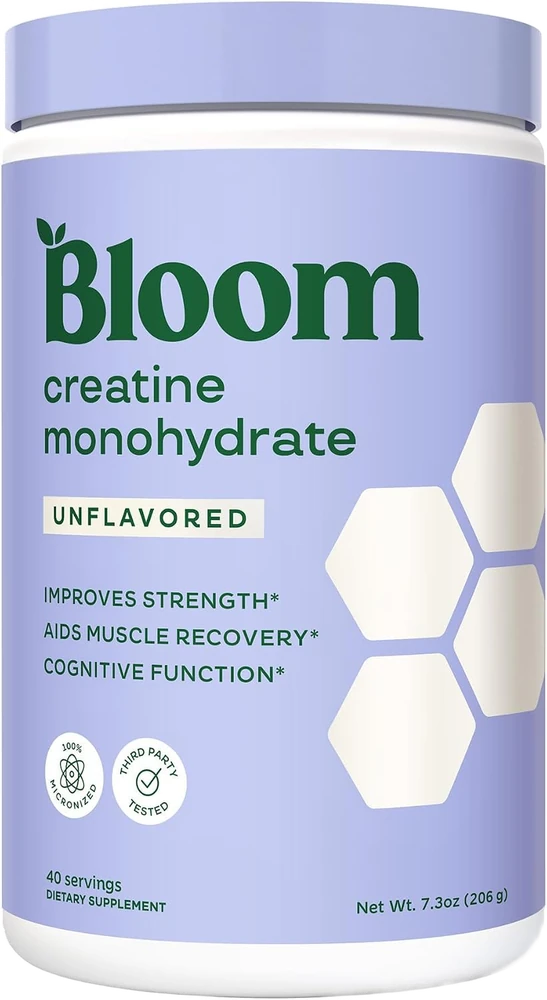
Best women-brand pick: Bloom Nutrition Creatine Monohydrate Unflavored
8.1SAC Score™The creatine most often sold to women on social media, and it turns out to be plain creatine: 5 g of micronized monohydrate per scoop, nothing else on the panel.
StrongestPer-serving creatine9.51WeakestBrand QC track record7.0- Per serving
- 5 g creatine (1 scoop, 5.15 g)
- Servings
- 40 per tub
- Testing
- Third party tested printed on the tub, lab not named; no NSF listing (checked Oct 14, 2026)
All five scores, pros & cons, full label
What We Like- Only creatine on the panel, 5 g per scoop
- No sweeteners or add-ons
- $0.50 per serving
What You Live With- Testing claim names no lab
- Not listed with NSF
- Costs more per gram than the plain tubs above
- Form
- Micronized creatine monohydrate, unflavored
Our take — If you already use Bloom, this is a sound choice: the same creatine and the same dose as the tubs above it. It ranks below them because their testing can be checked at NSF and Bloom's cannot.
- 08
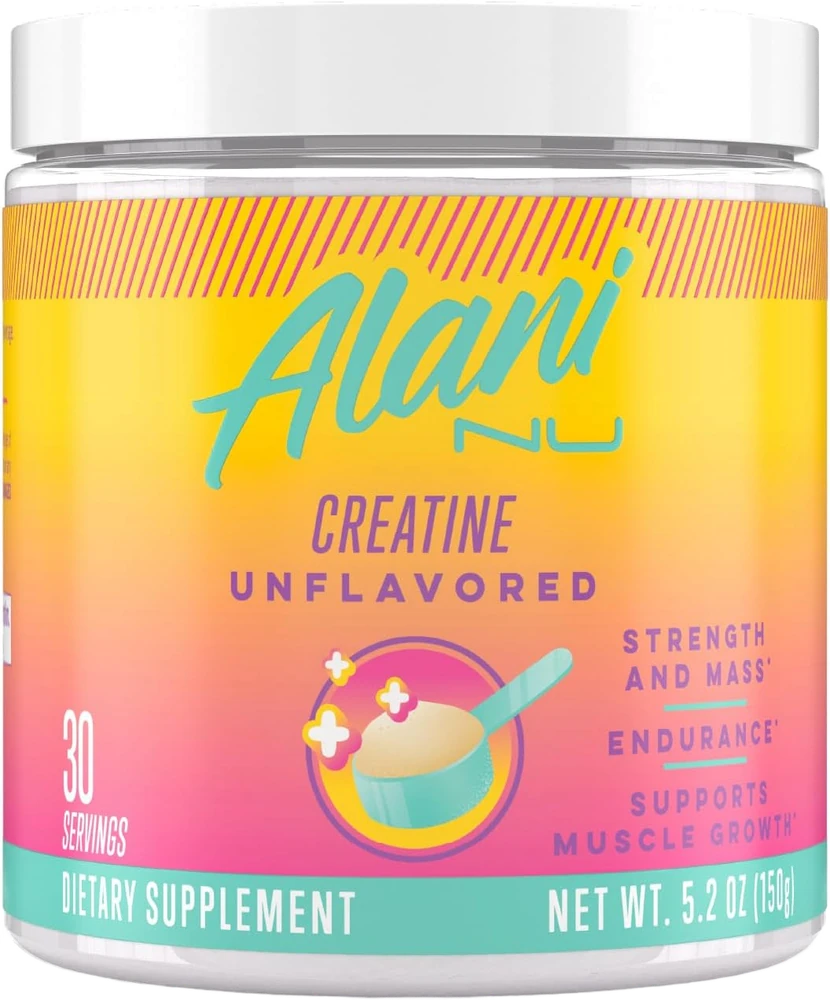
Plain, but pricey: Alani Nu Creatine Unflavored
7.8SAC Score™Plain creatine from a brand women know from its energy drinks: 5 g of monohydrate per scoop and no other ingredients, at about four times the price of the cheapest tubs.
StrongestPer-serving creatine9.51WeakestCost per active gram6.0- Per serving
- 5 g creatine (1 scoop)
- Servings
- 30 per tub
- Testing
- No testing statement; no NSF listing (checked Oct 14, 2026)
All five scores, pros & cons, full label
What We Like- Only creatine, 5 g per scoop
- Unflavored and vegan
What You Live With- $0.83 per serving
- No testing statement
- Supplement Facts panel not shown in the Amazon photos
- Form
- Micronized creatine monohydrate, unflavored
Our take — Nothing wrong with what is in the tub. You pay a brand premium: the plain tubs higher on this list give you the same 5 g for a fraction of the price.
- 09
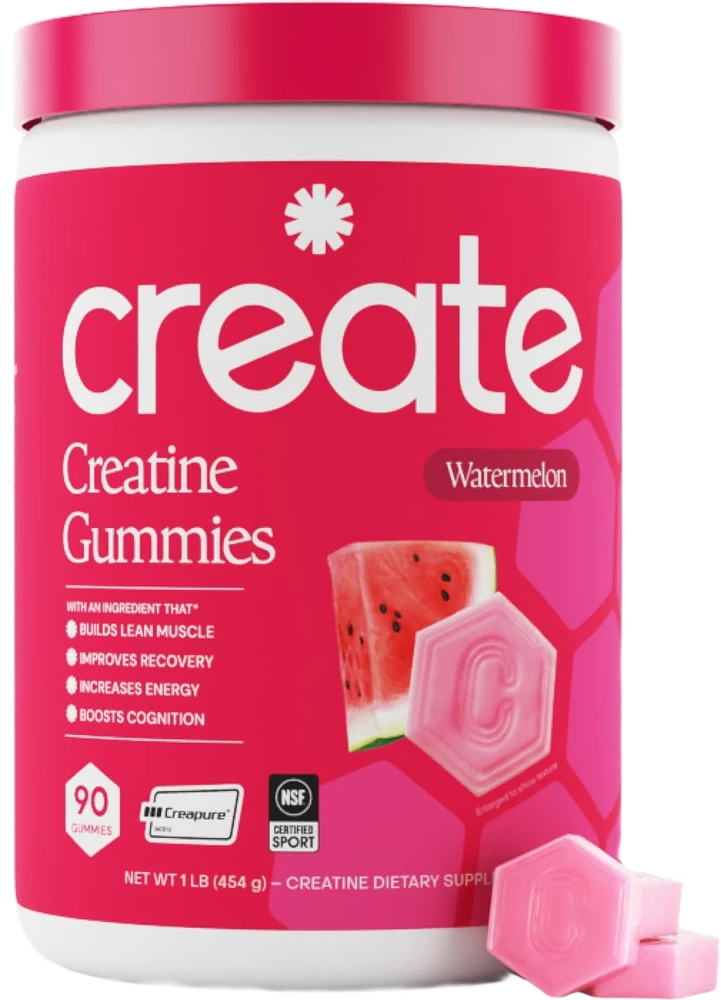
Best gummy: Create Wellness Creatine Gummies
7.3SAC Score™For women who never stick with a powder: 1.5 g of creatine per gummy, so 3 to 4 gummies make a real dose, with NSF Certified for Sport. It costs several times as much as powder.
StrongestForm purity9.51WeakestPer-serving creatine4.5- Real 5 g dose
- 3-4 gummies (brand markets 3 = 4.5 g; take 4 for a clean 5 g)
- Supply
- 90 gummies · ~22-30 days at a real dose
- Cost per real 5 g dose
- $1.85 ($49.98 ÷ 135 g of creatine ÷ 5 g). Powder is ~$0.23; the cheapest gummy we rank is $0.67
All five scores, pros & cons, full label
What We Like- Highest dose density in the gummy aisle — 1.5 g/gummy means just 3-4 for a real 5 g dose
- NSF Certified for Sport, confirmed at the certifier — the only gummy with a confirmed sport certification at this price
- Anti-melt formula survives a hot gym bag; no scoop, no water, no shaker
- Highest dose density of any gummy we checked — 3-4 pieces for a real 5 g dose
What You Live With- $1.85 per real 5 g dose against ~$0.23 for the same 5 g as powder — roughly 8x, and dearer than most gummies too ($0.67 to $2.78 across the five we rank)
- A 90-count tub is only ~22-30 days at a real dose — expect roughly monthly re-orders
- Rescored 9.0 → 7.3 on 2026-07-27: Creapure is not printed on the Supplement Facts panel, so it no longer counts toward the score
- Form
- Creatine monohydrate · 1.5 g per gummy (highest density in the aisle; Creapure not stated on the label or listing)
- Testing
- NSF Certified for Sport — batch-tested, 270+ banned substances
Our take — If a scoop-and-water ritual is the friction that breaks your creatine streak, the right answer isn't to white-knuckle the powder — it's to buy the best gummy, and that's Create. It fixes the category's defining flaw with the highest dose density in the aisle (1.5 g per gummy, so a real dose is 3-4 gummies instead of five), and its NSF Certified for Sport listing is confirmed in the certifier's own database — Creapure, by contrast, is not stated on the label or listing (checked Oct 6, 2026). Go in clear-eyed on cost: $49.98 for 90 gummies on the US buy box on 27 July 2026 works out to $1.85 per real 5 g dose, roughly eight times the ~$0.23 the same 5 g costs as powder — and dearer than most of the gummy aisle too, where a real dose runs $0.67 to $2.78 across the five we rank. A tub lasts about three weeks at a real dose. But a 5 g dose you actually take daily beats a perfect scoop sitting in the cupboard — and the smartest setup is the hybrid, cheap powder at home and Create for the road. For the full gummy field, see Best Creatine Gummies.
- 10
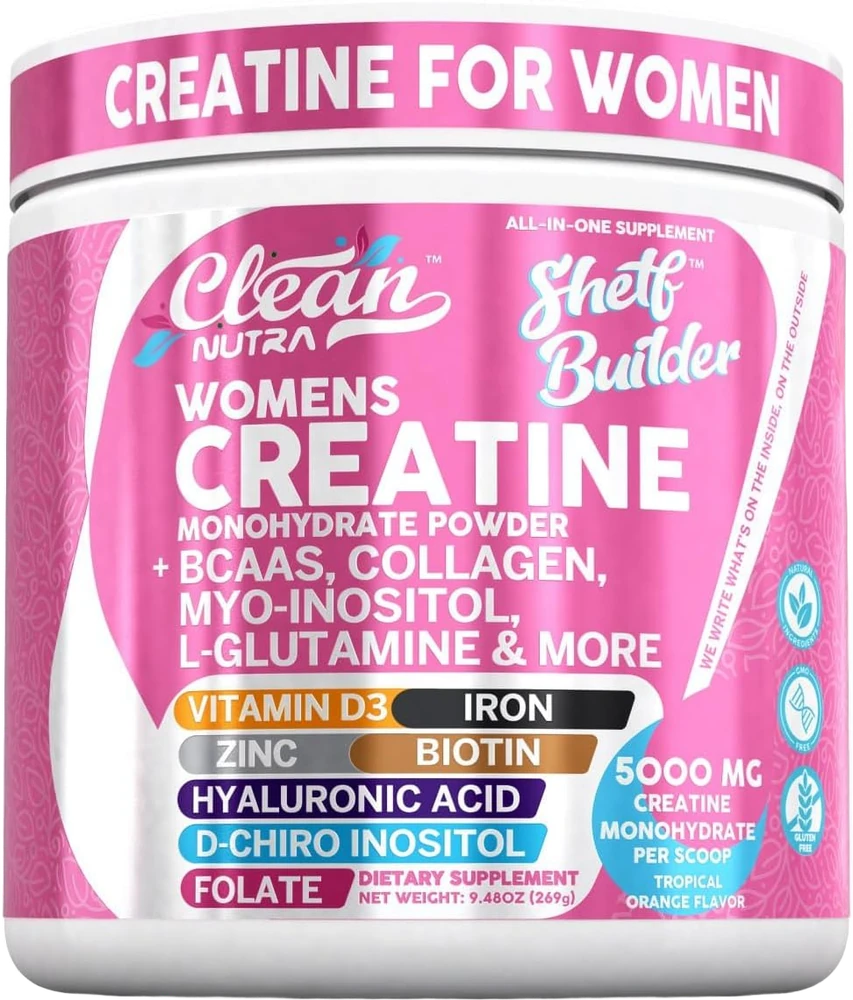
Skip: 10 mg biotin: Clean Nutra Creatine for Women
6.2SAC Score™The pink all-in-one tub that fills the shopping results for this search. It has the full 5 g of creatine, but each scoop also carries 10,000 mcg of biotin, enough to distort thyroid and other blood tests.
StrongestPer-serving creatine9.51WeakestForm purity4.0- Per serving
- 5,000 mg creatine (1 scoop, 9 g)
- Biotin
- 10,000 mcg per scoop (33,333% DV)
- Testing
- Lab not named; no NSF listing (checked Oct 14, 2026)
All five scores, pros & cons, full label
What We Like- Full 5 g of creatine per scoop
- Flavored, one drink
What You Live With- 10 mg of biotin per scoop can distort blood tests (Li 2017)
- Collagen, myo-inositol and other extras far below their study doses
- Contains egg and fish
- $1.10 per 5 g of creatine
- Form
- Creatine monohydrate in a flavored blend
Our take — Women respond to plain creatine; they do not need a blend. This one adds a biotin dose that made thyroid and other hormone tests unreliable in a JAMA study, plus token amounts of collagen and myo-inositol. If you take it, stop it a few days before any blood test and tell your doctor. Better: buy plain creatine.
Creatine In Four Short Lessons
What the female-specific creatine literature actually shows
- +1.3 kg
- Lean mass gain in resistance-trained women over 12 weeks vs placebo (pooled female trials)
- +1.5%
- Femoral-neck bone mineral content preservation in postmenopausal women on creatine + RT (Chilibeck 2015)
- 20-30%
- Larger working-memory uplift in women vs men in controlled comparison trials (Forbes 2022 review)
- 0
- RCTs showing creatine causes bloating or facial puffiness — the myth is from loading-phase water weight that resolves in week 2-3
Sources: Smith-Ryan 2021 (PMID 33800439); Chilibeck 2015 postmenopausal RCT (PMID 25386713); Candow 2019 bone health review (PMID 31448281); Rae 2003 cognition trial (PMID 14561278); Forbes 2022 creatine-in-females review (PMID 35267907).
Buy unflavored monohydrate.
It is the same molecule men take, in plain single-ingredient form.
Skip the loading phase and choose a smaller tub.
The bloating myth traces to loading-phase water weight that resolves in weeks 2-3. A 200-500 g tub fits a daily maintenance dose better than a 1 kg bag.
Know what the female data shows.
Reviews in women document the same 5-15% strength gain men see and a larger relative cognitive effect (Smith-Ryan 2021), plus a bone signal in postmenopausal women (Chilibeck 2015).
Smith-Ryan 2021 (PMID 33800439) and Forbes 2022 (PMID 35267907) creatine-in-females reviews; Chilibeck 2015 postmenopausal bone-density RCT (PMID 25386713); Rae 2003 cognition trial (PMID 14561278); Kreider 2017 ISSN position stand (PMID 28615996).
Same products as the general ranking, re-weighted for what women actually buy on. Form purity (monohydrate is the only form with the evidence) and third-party testing carry the most weight because they decide whether your 5 g scoop is 5 g of actual creatine. Tub size, taste, and no-loading usability replace 'cost per gram at bulk' as the practical-purchase axes — the typical female buyer wants a 200-500 g tub on her kitchen counter, not a 1 kg bag. Bone-density and cognition evidence layer on top of strength data, especially for the 40+ tier.
Form purity · 25%
Monohydrate vs alternative forms (HCl, ethyl ester, magnesium chelate, multi-form blends). Plain, single-ingredient creatine monohydrate with a clean label scores highest.
Third-party testing · 20%
Public COA, NSF Certified for Sport, Informed Sport, or only GMP-facility manufacturing. NSF / Informed Sport win for masters-athlete drug testing; public COAs win for everyone else.
Per-serving creatine + tub format · 20%
Does one scoop deliver 5 g of pure monohydrate? Is the tub in the 200-500 g range that fits on a kitchen counter? 1 kg bags lose points for the typical female buyer.
No-loading + taste usability · 15%
Does the brand surface the no-loading-default protocol? Is the powder micronized enough to mix into coffee or a shake without grit? Are flavored options available for users who want them?
Female-audience evidence fit · 10%
How well does the product map onto the female-relevant evidence layer — Chilibeck 2015 bone-density signal, Smith-Ryan 2021 / Forbes 2022 cognition + lean-mass preservation. Form purity matters more here than fancy specs.
Brand QC track record · 10%
Years on market, recall history, lot-to-lot consistency. The safety floor for top-5 picks; less of a factor for budget DIY tubs.

How creatine works in women
- 1
Intramuscular storage + bone signalling
Supplementation increases muscle creatine and phosphocreatine stores by 15-40%. In postmenopausal women, the combination with resistance training also preserves femoral-neck bone mineral content vs training alone (Chilibeck 2015) — likely via mechanical-loading signal amplification.
- 2
ATP regeneration in muscle + brain
Phosphocreatine donates a phosphate to ADP, regenerating ATP rapidly. Women show a larger relative cognitive effect (working memory, processing speed) than men in pooled trials — hypothesized to be driven by lower baseline brain creatine in female populations.
- 3
Cell volumization + lean mass preservation
Creatine pulls water into muscle cells, acts as an anabolic signal, and enables more training volume per session. Across the lifespan, that compounds into lean-mass preservation — particularly important post-40 when sarcopenia accelerates.
What to expect on a creatine protocol (female timeline)
Cell volumization (water, not fat)
0.5-1.5 kg scale weight gain from intramuscular water retention. Muscles look fuller — most women describe it as 'more toned.' This is the drug working.
Saturation + strength
Full intramuscular saturation. Extra 1-2 reps on top working sets. Cognitive effects may start showing up — especially in vegetarians and postmenopausal women.
Lean mass + bone density signal
+0.5-1.3 kg lean mass relative to placebo. In postmenopausal women, bone-density-supportive effect compounds with continued resistance training. Cognition and mood benefits stabilize.
The bottom line for women buying creatine
Optimum Nutrition (#3) is the default first tub for women; Sports Research (#1) is the pick if you want Creapure.
Sports Research (Pick #1) is the only powder here that names Creapure on its label, with the NSF Certified for Sport mark on the tub, at about $0.41/serving. Optimum Nutrition (Pick #3) for first-time female buyers with a normal budget: plain micronized monohydrate, trusted brand, $0.23/serving, and a 4-month tub. Mixes cleanly into coffee, no loading, no NSF premium most non-competitive lifters don't need.
Alternatives: Bulk Supplements (#4) on a budget, Thorne (#2) if drug-tested.
Bulk Supplements (#4) if money is tight or you're vegan / vegetarian — same molecule at $0.15/serving, biggest absolute response in plant-based women. Thorne (#2) if you're a drug-tested masters athlete or want NSF Certified for Sport. Bloom (#7) and Alani Nu (#8) are plain creatine in women-brand tubs; Create Wellness (#9) is the gummy; skip the Clean Nutra blend (#10) for its biotin dose.
Whatever you buy: skip the load, run 5 g/day of monohydrate.
Skip the loading phase. Run 5 g/day from day one, every day, including rest days and across your menstrual cycle — there is no female cycling protocol. Expect 0.5-1.5 kg of intramuscular water in weeks 1-2 (that's the drug working, not fat), strength by week 3-4, lean mass by week 8-12.
Quick Answers
Will creatine make me bulky or look puffy?
No. The 'bulky' fear conflates two things — testosterone (which women have ~10× less of) and the week-1 water-weight bump from loading protocols. At 5 g/day with no loading, the intramuscular water shift is 0.5-1.5 kg, distributed inside muscle cells. The visual effect is fuller, more defined muscle — what most women describe as 'looking more toned.' Creatine cannot give you bro-physique muscle mass. It just lets the training you're already doing produce more lean mass per week.
Is creatine safe during perimenopause and after menopause?
Yes — and arguably more useful than at any other life stage. Chilibeck 2015 showed postmenopausal women on creatine + resistance training preserved femoral-neck bone mineral content significantly better than training-only controls. Sarcopenia (age-related muscle loss) accelerates after estrogen drops. Creatine is one of the few non-pharmacological supplements with RCT evidence for maintaining muscle and bone in this group. Standard 5 g/day dose. No cycling.
Do I need to load creatine? What about the 20 g/day for a week thing?
Skip the load. Loading is a 1990s protocol developed for male strength athletes who needed fast saturation before competitions. At 5 g/day continuously, women reach the same intramuscular phosphocreatine saturation in 3-4 weeks. Loading causes more GI upset, more acute water retention, and is the single biggest reason women quit creatine in week 1. The endpoint is identical — there is no scientific reason to load.
Can creatine help with cognition, mood, or perimenopausal brain fog?
The evidence is the strongest of any supplement in this category. Rae 2003 showed working-memory improvements at 5 g/day. Smith-Ryan 2021 and Forbes 2022 (both creatine-in-women reviews) document a larger relative cognitive effect in women than in men, hypothesized to be driven by lower baseline brain creatine. Emerging data also suggests creatine may modulate symptoms of depression alongside SSRIs in some women. Don't replace medication with creatine — but the cross-over cognitive upside is real, especially in vegetarian or postmenopausal women.
Is creatine safe for my kidneys long-term?
Yes, in healthy adults. Cooper 2012 reviewed 30+ controlled trials and found no adverse effects on kidney function, liver enzymes, or muscle health at chronic doses up to 3-5 g/day. Serum creatinine (a marker that rises on creatine) is a downstream metabolite of the supplement — not a sign of kidney damage. If you have pre-existing kidney disease, talk to a physician first. Otherwise, creatine has the cleanest safety profile of any supplement on the shelf.
Vegan or vegetarian — will I get a bigger response?
Yes, and substantially. Dietary creatine comes from meat and fish. Vegetarians and vegans have 20-30% lower baseline muscle and brain creatine stores than omnivores. The absolute response to supplementation is the largest in this group — bigger strength uplift, bigger lean-mass gain, bigger cognitive effect. If you're a plant-based woman lifting weights, creatine is the single highest-leverage supplement you can take.
Flavored or unflavored?
Default to unflavored. It dissolves into coffee, juice, smoothies, post-workout shakes, or plain water without affecting taste. Flavored versions add sucralose, acesulfame K, or citric acid — and they often mask lower-grade monohydrate (the flavoring covers chalky taste). If you genuinely can't drink unflavored creatine, mix it into something that already has flavor. Solves the texture issue without paying the flavoring premium.
Every Claim Ranked Above Traces Back To One Of These
7 peer-reviewed sources, each linked to PubMed
- [1] Kreider 2017 PMID 28615996 — International Society of Sports Nutrition position stand: safety and efficacy of creatine supplementation in exercise, sport, and medicine. ISSN position statement after reviewing 500+ studies: creatine monohydrate is the most effective form, with no evidence that alternative forms (HCl, ethyl ester, magnesium chelate) outperform it at equivalent doses. 3-5 g/day chronic dosing is safe and effective for healthy adults of both sexes.
- [2] Chilibeck 2015 PMID 25386713 — Effects of creatine and resistance training on bone health in postmenopausal women. 12-month RCT in postmenopausal women: creatine + resistance training significantly preserved femoral-neck bone mineral content vs RT-only controls. The strongest non-pharmacological signal we have for bone-density support in postmenopausal women, and the foundational citation for the bone-health angle in this list.
- [3] Chilibeck 2017 PMID 29138605 — Effect of creatine supplementation during resistance training on lean tissue mass and muscular strength in older adults: a meta-analysis. Meta-analysis of creatine + resistance training in older adults (including women 50+): significant gains in lean tissue mass (+1.4 kg) and chest press strength vs placebo. Effect holds across sexes — the sarcopenia-prevention case for older women specifically.
- [4] Candow 2019 PMID 31448281 — Variables influencing the effectiveness of creatine supplementation as a therapeutic intervention for sarcopenia. Review of creatine in older-adult / sarcopenia context. Identifies dose (≥5 g/day), training stimulus (resistance training), and consistency (daily, no cycling) as the variables that maximize the muscle-mass-preservation effect. Directly informs the dosage and protocol recommendations for the 40+ female reader.
- [5] Smith-Ryan 2021 PMID 33800439 — Creatine supplementation in women's health: a lifespan perspective. Comprehensive review of creatine in women across the lifespan. Documents larger relative cognitive effects in women than men, bone-density benefits in postmenopausal populations, and addresses common female-audience misconceptions (bulk, bloat, menstrual-cycle timing). The canonical citation underwriting this entire list.
- [6] Forbes 2022 PMID 35267907 — Effects of creatine supplementation on brain function and health. Reviews the brain-function evidence base. Documents stronger cognitive effects in populations with lower baseline brain creatine — including women and vegetarians. The mechanism underwriting the cognition + mood angle in this list.
- [7] Rae 2003 PMID 14561278 — Oral creatine monohydrate supplementation improves brain performance: a double-blind, placebo-controlled, cross-over trial. Foundational cognition-endpoint RCT. Vegetarians supplementing 5 g/day creatine for 6 weeks showed measurable improvements in working memory and intelligence-test performance vs placebo. Cited heavily by the Smith-Ryan and Forbes reviews as the cornerstone trial establishing creatine's relevance to cognition beyond muscle.
More Creatine Guides
- Best Creatine SupplementsThe definitive creatine buying guide — the single best pick for each kind of buyer across powder, gummies, and HCl. Monohydrate powder wins on raw value; every other form is a situational upgrade for adherence, testing, or tolerance.
- Best Form of Creatine: Why Monohydrate WinsEvery creatine form compared — monohydrate, micronized, Creapure, HCl, buffered, ethyl ester, multi-form. The ISSN-anchored verdict: monohydrate wins, the rest are markups on the same molecule.
- Best Creatine for BrainCreatine raises brain phosphocreatine — biggest cognitive lift for vegetarians + the sleep-deprived (Rae 2003). Monohydrate at 5 g/day; ranked by label purity, dose, and cognitive-trial alignment.
- Best Creatine for MenSame 10-product roster as the general creatine list, reframed for the male-lifter cohort — NSF Certified for Sport leads, then plain monohydrate form, tub size for bulking macros and per-scoop creatine.
- Best Creatine for Muscle GrowthTen creatine picks ranked for hypertrophy — cell volumization, satellite-cell proliferation, saturation over loading. Monohydrate is the only form with RCT weight.
- Best Creatine GummiesCreatine gummies ranked by grams-per-gummy and cost per real 5 g dose — $0.67 to $2.78 across our six picks, read off the Amazon US offer. Most gummies under-deliver and a '3-gummy serving' usually isn't 5 g. Honest picks, including when powder still wins.
- Best Creatine MonohydrateThe most-studied supplement in sports nutrition — and 95% of buyers get it wrong by paying for fancier forms or flavored blends. Ranked by label purity, price per gram, and lab transparency.
- Best Supplements for Muscle GrowthThe supplement categories for muscle growth, ranked by how much each one adds — creatine first, protein powder second, the rest honest margins — with the #1 product of each category. Training, calories and protein beat all of them.
Affiliate disclosure: every Amazon link uses our Associates tag (superachieverclub-20). We earn a small commission at no cost to you; it funds independent reviews. We never accept payment to change a ranking.