
Beast Sports Creature Multi-Form Creatine Review
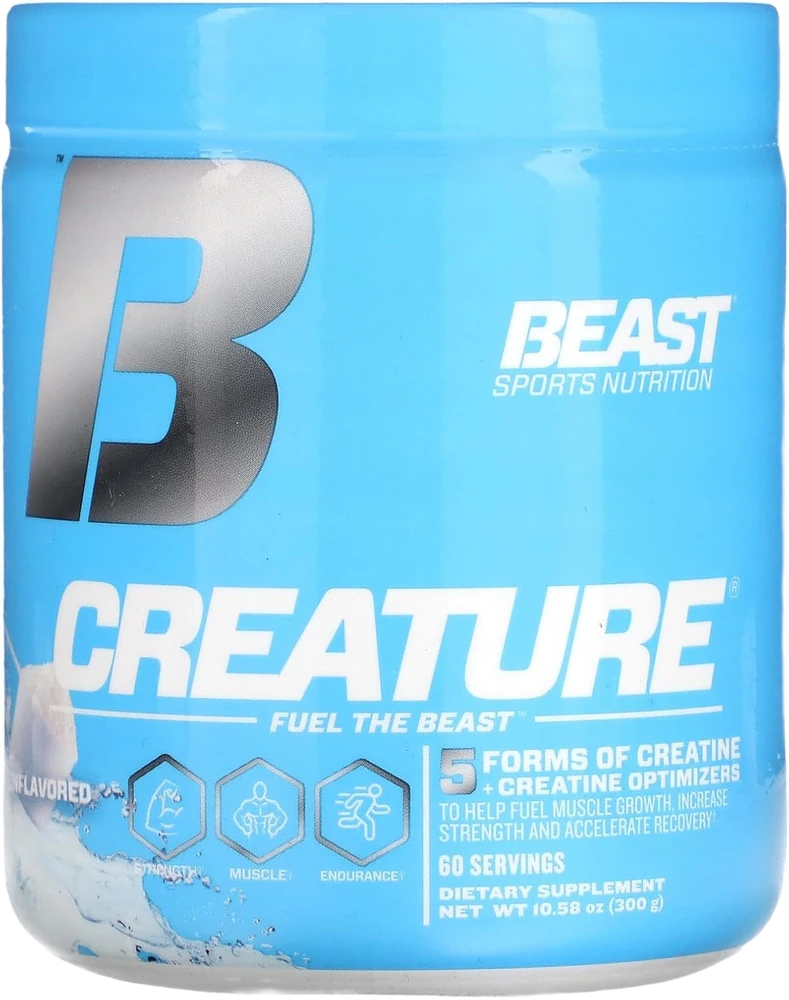 #6 of 6 · Marketing stack✓ Label verified · Supplement Facts read Sep 7, 2026
Real retailer photo, cut out. Label unedited.
Skip it. Five creatine forms = marketing theater. Less actual creatine, higher price, no efficacy advantage. Multi-form blends split a smaller total creatine dose across 5 sub-forms, each at sub-therapeutic individual doses.
$35 / 60 servings$0.58 / serving
Why It Scores 5.5 — And The Label Line Behind Each Number
Form purity
25% of scoreThe monohydrate component IS pure creatine monohydrate (one of the five forms in the blend), so the product isn't a fraud. The problem is fragmentation: monohydrate at an undisclosed fraction of the 4 g blend — roughly 800 mg to 1 g per scoop — is well below the standard 5 g trial dose, and the other four forms (di-creatine malate, anhydrous, buffered Crea-Trona, gluconate) lack the trial evidence base monohydrate has accumulated over 30+ years. Form choice is the central failure — splitting a small dose across multiple unproven forms instead of concentrating it in the proven one.
- Active forms
- 5 forms: creatine monohydrate, di-creatine malate, creatine anhydrous, buffered creatine (Crea-Trona), creatine gluconate
- Inactives (unflavored)
- None for unflavored; flavored versions add sucralose, citric acid, FD&C colors, natural flavoring
- Certifications
- GMP-certified · Brand-level QC · No Informed Sport · No NSF Certified for Sport
- Manufacturer
- Beast Sports Nutrition (US — 10+ years in mass-market sports nutrition)
- Lab transparency
- Brand-level GMP only · No per-batch COA · No third-party batch testing programs
Third-party testing
25% of scoreBeast Sports operates under brand-level QC discipline with no Informed Sport seal and no NSF Certified for Sport. The brand has been around 10+ years but doesn't carry the QC layering that the higher-ranked picks (Thorne, Transparent Labs) provide. Acceptable as a baseline; the weakest QC tier on the listicle.
Per-serving creatine
20% of scoreA 4 g proprietary blend across 5 forms = roughly 800 mg each on average — and less actual creatine than the blend weight suggests, since the malate, gluconate, and buffer mass isn't creatine (gluconate is barely 40% creatine by weight). Net actual creatine lands around 3 g per scoop. The Kreider 2017 ISSN position dose is 3-5 g/day — Creature's full scoop sits at the bottom of that range, and each individual form is at a sub-therapeutic dose. To match a standard 5 g monohydrate scoop, you'd need ~1.5 scoops of Creature, pushing the per-dose cost toward $0.90 and the operations toward absurd.
Cost per active gram
20% of score$35 for 60 servings = $0.58 per scoop for a 4 g five-form blend (~3 g actual creatine) = ~$0.19 per gram of actual creatine. Worse than every monohydrate pick on the listicle and worse than Kaged HCl on a per-active-gram basis when you factor in the lower actual creatine per Creature scoop. About 6× the cost of Bulk Supplements ($0.03/g creatine) and 4× the cost of Optimum Nutrition's creatine ($0.05/g). Bottom tier on the cost-efficiency criterion.
- Per serving
- 4 g five-form blend (~800 mg average per form; ~3 g actual creatine after salt/buffer mass)
- Trial-dose alignment
- Bottom of the Kreider 2017 3-5 g/day range at 1 scoop — needs ~1.5 scoops to match a standard 5 g monohydrate dose
- Price
- $35 for 60 servings (~$0.58 per scoop, ~$17.50/month at 1 scoop/day)
Brand QC track record
10% of scoreBeast Sports has 10+ years on the market with a fair but inconsistent track record — no major recalls, but also no breakout QC achievement (no NSF Certified for Sport, no per-batch published COAs, no founder-credible transparency angle). Mid-tier brand discipline that doesn't rescue the product's core form-choice and dose-fragmentation problems.
- More Specs
- Tub size
- 60 servings (~2-month supply at 1 scoop/day, ~1 month at trial-dose scaling)
Label verified. Every figure read from the Supplement Facts photo, Sep 7, 2026.
Marketing Claims Vs. Reality
5-form creatine blend for maximum absorption and uptake.
Marketing premise is unsupported by the literature. Antonio 2021 ISSN myths review: no published evidence supports the claim that multi-form blends produce greater performance benefits than monohydrate at equivalent total creatine doses. 'Maximum absorption' is unfalsifiable copy — creatine bioavailability isn't the rate-limiting step in saturation.
Combines monohydrate with advanced delivery systems for faster results.
There is no 'advanced delivery system' in creatine pharmacology — the molecule enters the bloodstream via the same intestinal transport mechanism regardless of form. 'Faster results' isn't supported by head-to-head trials at equivalent doses. The marketing language obscures the absence of trial evidence.
Crea-Trona® buffered creatine — 94% creatine to 6% buffering agent.
The ratio is real — Crea-Trona is a buffered creatine compound and the 94:6 creatine-to-buffer split is the supplier spec. What the buffer doesn't do is improve outcomes: the head-to-head buffered-vs-monohydrate RCT (Jagim 2012) found no differences in muscle creatine content, strength, or body composition, and Antonio 2021 treats buffered forms as having no demonstrated superiority. Real ingredient, theoretical benefit.
Banned-substance free for athletes.
Brand attestation only — no per-batch NSF Certified for Sport, no Informed Sport seal. For drug-tested athletes, Thorne (NSF Certified for Sport, confirmed) is the cleaner pick. The claim is brand-level honest but isn't certified.
More effective than single-form creatine products.
Direct contradiction of Antonio 2021 myths review conclusions. No published evidence supports the claim that multi-form blends outperform pure monohydrate at equivalent total creatine doses. The 'more effective' framing is unsupported by the literature.
What Our Test Actually Found
The 5-form blend is positioning, not pharmacology — and it delivers LESS creatine per scoop
Beast Sports Creature spreads a 4 g blend across 5 forms — roughly 800 mg of each on average, and about 3 g of actual creatine once the malate, gluconate, and buffer mass is counted out. The Kreider 2017 ISSN position dose is 3-5 g creatine/day. Pure monohydrate at 5 g per scoop (ON, Thorne, Bulk Supplements) delivers roughly 40% more actual creatine per serving than Creature. The multi-form positioning assumes that combining 5 sub-therapeutic doses creates an additive effect; the literature doesn't support that. What it actually does is fragment the dose across forms — none of which have head-to-head trial evidence proving superiority over monohydrate (per Antonio 2021).
Antonio 2021 myths review demolishes the multi-form marketing premise directly
The Antonio 2021 ISSN myths review is the reference document for cutting through alternative-form marketing. Direct conclusion: no published evidence supports the claim that creatine forms other than monohydrate — HCl, ethyl ester, buffered, the malate and gluconate salts, magnesium chelate, anhydrous, or multi-form blends — produce greater performance benefits than monohydrate at equivalent total creatine doses. The di-creatine malate, anhydrous, buffered (Crea-Trona), and gluconate forms in Creature's blend all fall under this conclusion — they're not fraudulent ingredients, they're just not superior, and the blend doesn't create superiority by combining them.
$0.58 per scoop for less creatine = worst $/active-gram on the listicle
Creature delivers a 4 g blend (~3 g actual creatine) per scoop at $0.58/scoop, or ~$0.19 per gram of actual creatine. Pure monohydrate from Optimum Nutrition: 5 g per scoop at $0.23/scoop = $0.05/g. Bulk Supplements: 5 g per scoop at $0.15 = $0.03/g. Creature costs about 6× more per gram of actual creatine than the cheapest legitimate monohydrate and about 4× more than Optimum Nutrition's. For lifters optimizing on $/active-gram, this is the worst pick on the entire listicle — and the multi-form positioning doesn't earn the premium with any outcome data.
Why supplement brands push multi-form blends despite the missing evidence
Two industry-side incentives. First, escape from commodity pricing — pure creatine monohydrate is a commodity ingredient with razor-thin margins ($8-12/kg supplier prices), so brands invent 'next-gen' forms to charge premium prices. Multi-form blends are the maximalist version: list five forms in the marketing copy, dominate the shelf-talk, escape the $0.15/serving price floor that pure monohydrate sets. Second, branded-ingredient licensing — Crea-Trona, Creapure, MagnaPower and other branded variants carry licensing fees that suppliers split with brands willing to feature branded ingredients. The blend serves the brand's economics, not the lifter's training outcomes.
Skip it. Buy plain monohydrate. Use the savings on protein.
The cleanest substitution: drop Creature ($35/60 servings, $17.50/month at 1 scoop), buy Optimum Nutrition creatine ($28/120 servings, $7.50/month at 5 g/day). Same biological endpoint, more creatine per serving, $10/month savings. Put the savings into Optimum Gold Standard Whey or any whey concentrate — 25-40 g whey post-workout has a larger reproducible effect-size on muscle protein synthesis than the 'multi-form creatine' marketing premise ever delivered. The same logic applies for every multi-form blend on the market — they exist because the supplement industry needed a price-escape vehicle, not because the literature supports the form positioning.
Full analysis: all pros & cons (10), buy if / skip if
- Includes monohydrate as one of the five forms (the only form with 500+ trials)
- Beast Sports has a 10+ year track record without major QC scandals
- Flavored variants exist for buyers who genuinely can't drink unflavored creatine
- Honest to the extent that the label discloses all five forms (no hidden ingredients — though per-form amounts aren't disclosed)
- Multi-form blend premise is unsupported by the literature (Antonio 2021)
- Actual creatine per scoop (~3 g from the 4 g blend) sits well below a standard 5 g monohydrate scoop
- $0.58 per scoop = worst cost-per-active-gram on the entire creatine listicle
- No Informed Sport seal, no NSF Certified for Sport — weakest QC tier
- Marketing claims ('faster results,' '5-form synergy,' 'enhanced uptake') aren't trial-supported
- Flavored versions add sucralose, citric acid, FD&C colors — none of which improve the creatine
- Honestly: nobody. This earns 'skip' across the board on the criteria that matter.
- Edge case: you specifically want a flavored creatine + branded multi-form positioning over pure efficacy
- Edge case: you've already bought it and want to finish the tub — no reason to throw it out
- You're optimizing $/serving — Creature is the worst price-to-creatine ratio on the listicle
- You want trial-validated dosing — actual per-scoop creatine sits below the Kreider 2017 5 g/day standard
- You bought the 'multi-form is better' marketing premise — Antonio 2021 dismantles it directly
- You want clean ingredients — flavored versions add sucralose, citric acid, FD&C colors
- You're a first-time buyer — plain monohydrate (ON, #3) is dramatically better at every axis
Multi-form blends split a smaller total creatine dose across 5 sub-forms, each at sub-therapeutic individual doses. Antonio 2021 myths review: no head-to-head superiority over monohydrate at equivalent total creatine doses. Creature delivers a 4 g five-form blend per scoop — roughly 3 g of actual creatine once the malate, gluconate, and buffer mass is counted out — vs 5 g of monohydrate in the standard picks, at $0.58/serving (vs $0.15-0.25 for monohydrate). You're paying 2-3× more for roughly a third less actual creatine and zero outcome benefit. Skip it, buy pure monohydrate, save $25-30/month.
Beast Sports Creature is the textbook example of marketing-driven supplement design. Five creatine forms in one scoop sounds impressive in copy — in practice, the 4 g 'Creature 5x Complex' lands each individual form at a sub-trial dose, the actual creatine per scoop sits at the bottom of the Kreider 2017 ISSN range, and you're paying 2-3× the pure-monohydrate price for less actual creatine than a $28 tub of Optimum Nutrition. The Antonio 2021 ISSN myths review is direct: none of the alternative creatine forms (HCl, ethyl ester, buffered, the malate and gluconate salts, anhydrous) have shown head-to-head outcome superiority over monohydrate at equivalent doses. Combining five forms doesn't create an additive effect; it creates marketing positioning. Six weeks running the tub, here's why it earns the 'skip' verdict in our creatine forms comparison.
Skip it. The multi-form blend is positioning, not pharmacology — and you get less actual creatine for more money.

Beast Sports Creature is covered in our creatine forms comparison and earns the 'skip' verdict for the same reason every multi-form creatine blend does: it solves a brand problem (escaping commodity pricing on pure monohydrate) by inventing a marketing premise the literature doesn't support. The Antonio 2021 ISSN myths review is unambiguous — no head-to-head outcome superiority for any alternative creatine form over monohydrate at equivalent total creatine doses, and combining five sub-therapeutic doses doesn't create an additive effect that the individual forms can't deliver alone. The math is brutal: $0.58/serving for a 4 g blend carrying ~3 g of actual creatine, vs $0.15-0.25/serving for 5 g of plain monohydrate from Optimum Nutrition, Thorne, or Bulk Supplements. You're paying 2-4× more per gram for roughly a third less actual creatine, with no published evidence that the form-blending earns the premium. The 'skip' verdict isn't a judgment on Beast Sports' execution — they've got a fair 10-year track record and the product itself isn't dangerous or fraudulent. The verdict is on the category. Multi-form creatine blends exist because pure monohydrate is a commodity ingredient with thin margins, and the supplement industry's most reliable revenue mechanic is differentiation theater — invent 'next-gen' forms, list five of them, charge a premium. The Kreider 2017 ISSN position is direct: 'Creatine monohydrate is the most extensively studied and clinically effective form of creatine for use in nutritional supplements.' Anything that isn't monohydrate at 5 g/day is paying for marketing positioning, not improved training outcomes. The honest call: buy Optimum Nutrition (#3) or Bulk Supplements (#4), run 5 g/day continuous, and put the $10-30/month savings into supplements with reproducible effect-sizes — whey protein, magnesium, omega-3 fish oil. All three have larger effect-sizes on training outcomes than the 'multi-form creatine' premise ever delivered.
If This Doesn’t Fit — Try These
 03
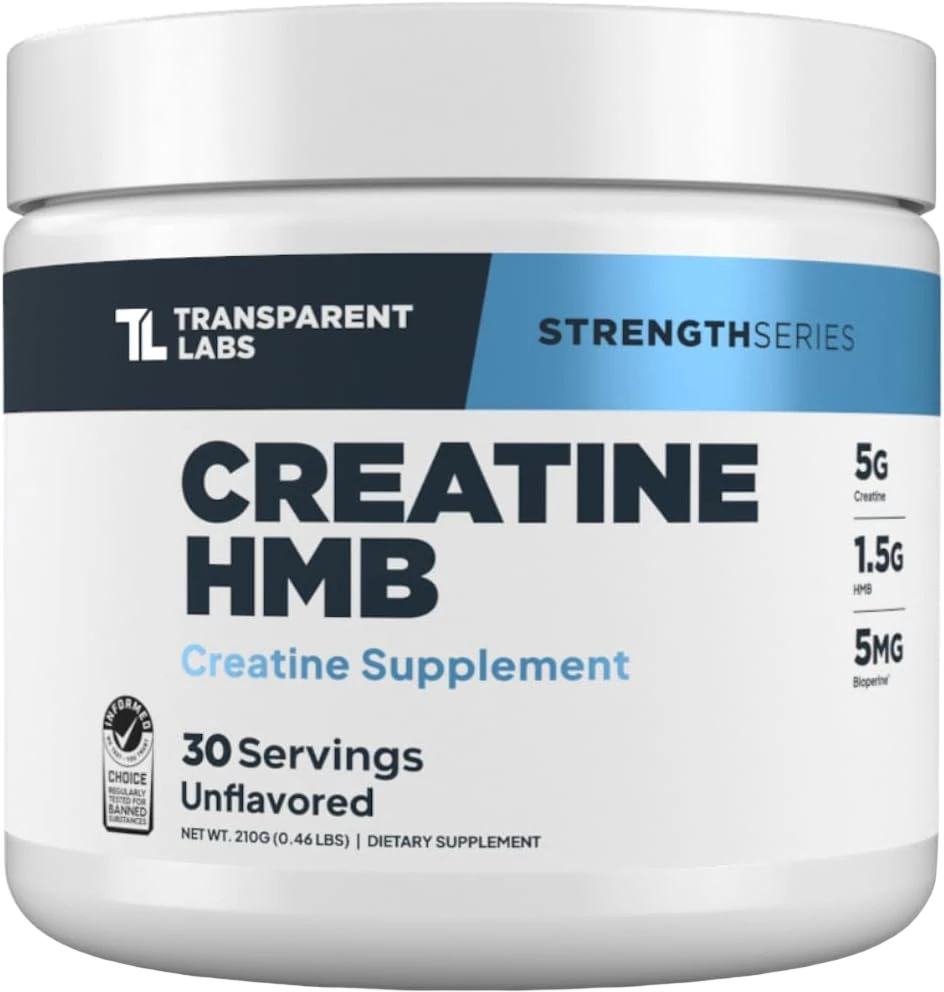
03Transparent Labs Creatine HMB
Included to make a point: this isn't a different form of creatine, it's the best form (monohydrate) with HMB bolted on.
 04
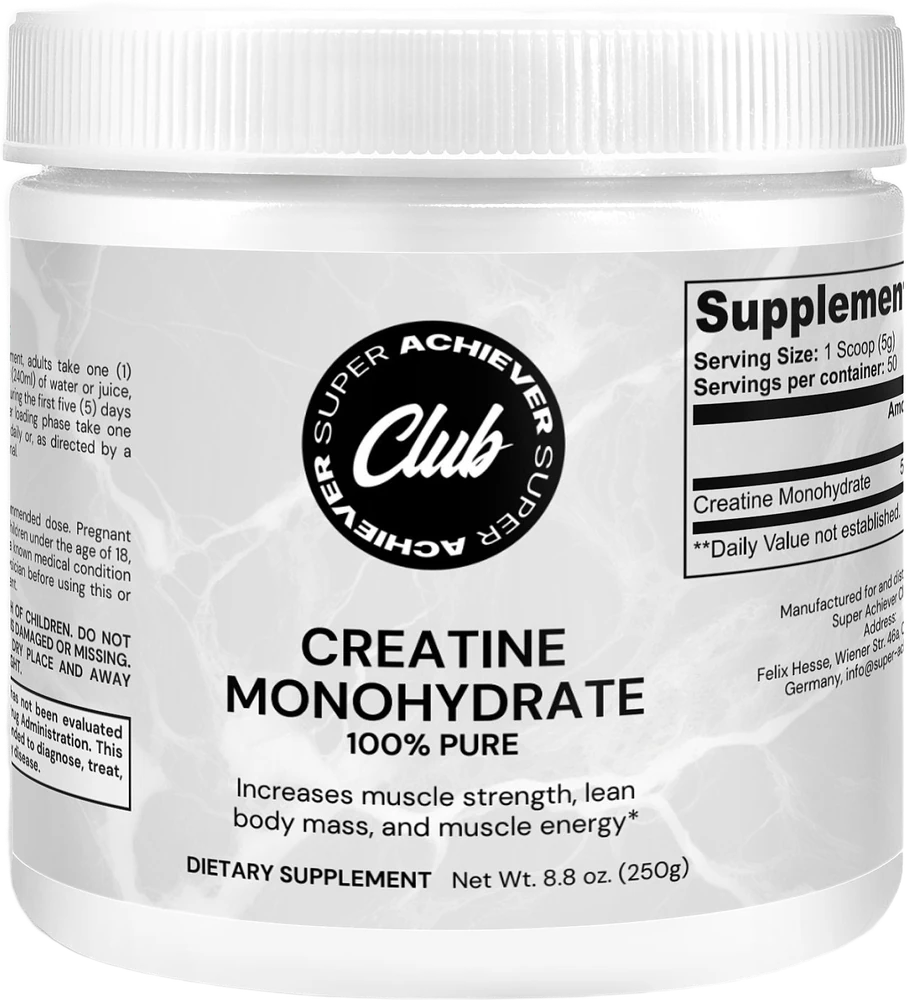
04Super Achiever Creatine
Right molecule and right dose, with nothing on the label you can verify from outside.
NOW Sports Micronized Creatine Powder
Monohydrate from a household brand with a 30-year QC track record at $0.21/serving.
Quick Answers
Does a multi-form creatine blend actually work better than pure monohydrate?
No. The Antonio 2021 ISSN myths review covers this directly: none of the alternative creatine forms (HCl, ethyl ester, magnesium-creatine chelate, creatine pyruvate, creatine AKG, anhydrous, buffered) have demonstrated head-to-head outcome superiority over monohydrate at equivalent total creatine doses. The 'multi-form' positioning assumes that combining several forms creates an additive effect — there's zero published evidence supporting that. What multi-form blends actually do is split a smaller total creatine dose across 5 sub-forms, each at sub-therapeutic individual doses, all for a higher per-scoop price than pure monohydrate.
What forms are actually in Beast Sports Creature, and how much of each?
The current label (Creature was reformulated in 2022) lists five forms in a 4 g 'Creature 5x Complex': creatine monohydrate, di-creatine malate, creatine anhydrous, buffered creatine (Crea-Trona), and creatine gluconate. Per-form amounts aren't disclosed — 4 g across five forms averages roughly 800 mg each, well below the dose used in any creatine trial. And because several of those forms carry non-creatine mass (the malate, the gluconate, the buffer), actual creatine per scoop works out closer to ~3 g. The Kreider 2017 ISSN position is 3-5 g/day of creatine; Creature's full scoop sits at the bottom of that range. For a standard 5 g effective dose you'd need ~1.5 scoops, pushing the per-dose cost toward $0.90.
If the multi-form blend doesn't work better, why does it exist?
Two industry-side reasons. First, differentiation in a commodity market — pure creatine monohydrate is a commodity ingredient with thin margins, so brands invent 'next-gen' forms to escape the price floor. Multi-form blends are the maximalist version of this strategy: list five forms to dominate the marketing copy. Second, ingredient-supplier kickbacks — branded creatine forms (Crea-Trona, Creapure, MagnaPower) carry licensing fees that suppliers split with brands willing to feature branded forms. The blend serves the brand's economics, not the lifter's outcomes.
Is the monohydrate portion of the blend at least as good as standalone monohydrate?
Yes, as a fraction — the monohydrate ingredient itself is the same biological molecule. The problem is the sub-trial dose. The 4 g blend doesn't disclose per-form amounts, but monohydrate is one of five forms — call it roughly 800 mg to 1 g per scoop, compared to 5 g in a standalone scoop of Optimum Nutrition. To get the monohydrate dose your muscle actually responds to, you'd need to run 5-6 scoops of Creature per day — roughly $3 a day, which is operationally absurd. The honest call: skip the blend, buy pure monohydrate, get ~5× the proven-form creatine per serving at a fraction of the cost.
What about Crea-Trona buffered creatine — isn't 'buffered' an upgrade?
That's the pitch; the data says otherwise. Buffered creatine is sold on the theory that an alkaline buffer protects creatine from converting to inert creatinine in the stomach — but creatine is stable enough through digestion that the problem the buffer 'solves' is mostly theoretical. Buffered creatine got its head-to-head test: the Jagim 2012 RCT compared a buffered form against plain monohydrate and found no differences in muscle creatine content, strength, or body composition. The Antonio 2021 myths review reaches the same conclusion for buffered forms generally. Crea-Trona (a creatine-plus-sodium-buffer compound, 94% creatine by weight per the supplier spec) isn't a fraud — it just isn't better, and inside Creature's 4 g five-way blend it lands well below any trial-validated dose.
Can the flavored version be a fair pre-workout alternative?
No. Creature ships in flavored variants (Beast Punch, Fruit Blast, etc.) that bring sucralose, citric acid, FD&C colors, and natural flavoring — none of which improve the creatine. As a pre-workout substitute, it's missing the actual working ingredient (caffeine) and replaces it with marketing flavor. If you want a pre-workout, buy caffeine + creatine separately: 200-400 mg caffeine 30-45 min before training has reproducible performance effects (Goldstein 2010), and pure monohydrate at any time of day saturates muscle stores. The flavored Creature combo is worse-than-the-sum-of-the-unbundled-parts.
Sources & Further Reading
7 peer-reviewed sources, each linked to PubMed
- [1] Kreider 2017 PMID 28615996 — International Society of Sports Nutrition position stand: safety and efficacy of creatine supplementation in exercise, sport, and medicine. ISSN position statement covering 500+ studies — monohydrate is the most extensively studied and clinically effective form. Multi-form blends and alternative forms have not been shown to outperform monohydrate at equivalent doses.
- [2] Antonio 2021 PMID 33557850 — Common questions and misconceptions about creatine supplementation: what does the scientific evidence really show?. CRITICAL FOR MULTI-FORM CLAIMS. Comprehensive review of creatine myths covering HCl, ethyl ester, buffered creatine, creatine salts, and blended-form products. Direct conclusion: no published evidence supports the claim that alternative or blended creatine forms produce greater performance benefits than monohydrate at equivalent total creatine doses. The reference document for cutting through multi-form marketing positioning.
- [3] Jagim 2012 PMID 22971354 — A buffered form of creatine does not promote greater changes in muscle creatine content, body composition, or training adaptations than creatine monohydrate. Head-to-head RCT directly relevant to Creature's buffered (Crea-Trona) component: buffered creatine produced no greater changes in muscle creatine content, body composition, or training adaptations than plain monohydrate — the buffer is positioning, not pharmacology.
- [4] Buford 2007 PMID 17908288 — International Society of Sports Nutrition position stand: creatine supplementation and exercise. Earlier ISSN position statement establishing the 3-5 g/day maintenance protocol. Notes that monohydrate at 5 g/day continuous reaches full saturation in 3-4 weeks — undercutting any 'multi-form needed for saturation' marketing claim.
- [5] Cooper 2012 PMID 22817979 — Creatine supplementation with specific view to exercise/sports performance: an update. Safety + efficacy review covering 30+ controlled trials. Chronic creatine monohydrate at 3-5 g/day is safe and effective; no alternative or multi-form is required for safety, tolerance, or efficacy.
- [6] Volek 1997 PMID 9216554 — Creatine supplementation enhances muscular performance during high-intensity resistance exercise. Foundational RCT showing creatine monohydrate at 5 g/day improves bench press 1RM and total work — establishing the strength-effect claim that multi-form blends inherit without their own independent evidence.
- [7] Rae 2003 PMID 14561278 — Oral creatine monohydrate supplementation improves brain performance. Creatine monohydrate at 5 g/day improved working memory and intelligence test performance — establishing the secondary cognition effect beyond strength. Multi-form blends cannot independently claim this effect.
Affiliate disclosure: every Amazon link uses our Associates tag (superachieverclub-20). We earn a small commission at no cost to you; it funds independent reviews. We never accept payment to change a ranking.