
Legion Creatine Monohydrate Gummies Review
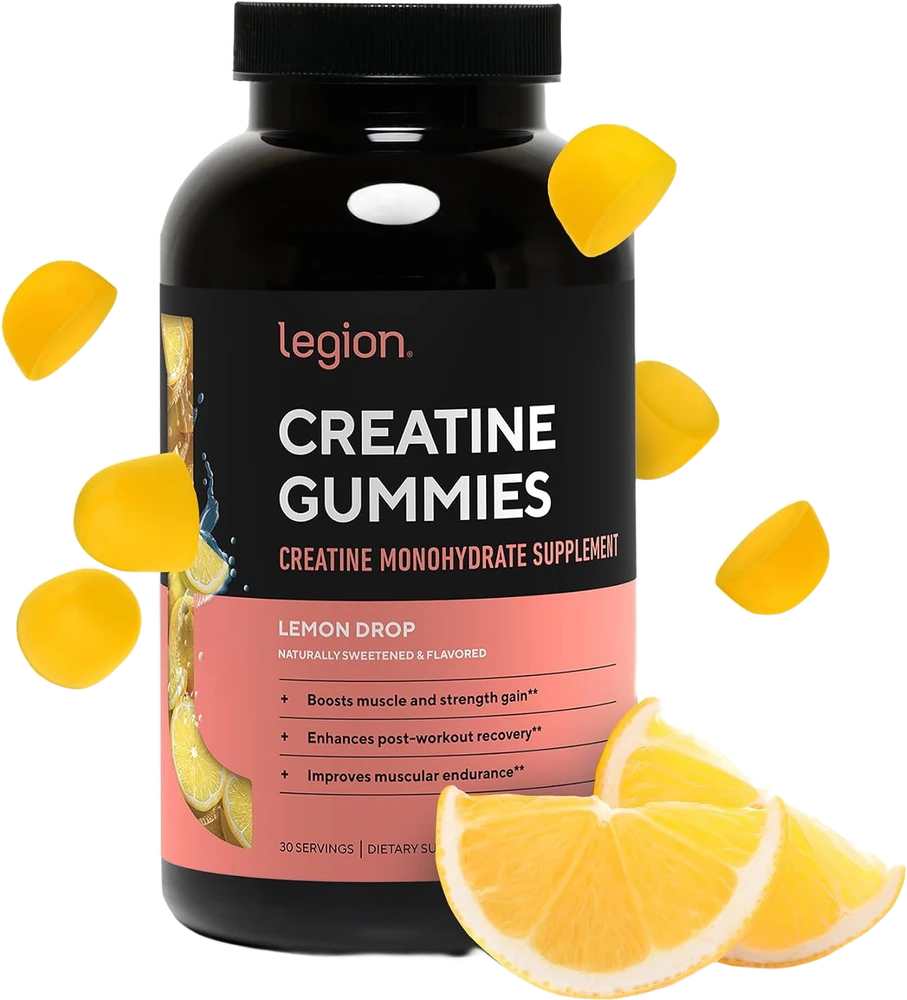 #5 of 7 · Most published lab data✓ Label verified · Supplement Facts read Sep 7, 2026
Real retailer photo, cut out. Label unedited.
Buy it. The best-documented gummy on this page — an honest 5-gummy serving and a published COA, with 10 g of sugar alcohols attached. ~1 g monohydrate per gummy, and the panel prints the serving as 5 gummies = 5,000 mg, so a 150-count bottle is a true 30 doses.
$34.95 · 150 count (US buy box, 2026-07-27)$1.17 per real 5 g dose · 30 real doses per 150-count bottle
Why It Scores 6.8 — And The Label Line Behind Each Number
Dose per gummy vs the 5 g standard
30% of scoreThe core mechanical compromise, and the heaviest-weighted criterion on the page. At ~1 g per gummy, a true 5 g dose — the maintenance amount the Kreider 2017 ISSN position stand is built on — means chewing 5 gummies, the highest count of any pick here. Legion deserves genuine credit for labelling it that way rather than hiding behind a two-gummy 'serving,' but honest labelling doesn't raise the density: Jacked Factory (#2) reaches 5 g in four gummies, and Create Wellness (#1) packs 1.5 g per gummy. Correct dose, most chewing to get there — and, at 5 gummies, the largest sugar-alcohol load per dose.
- Per gummy
- ~1 g creatine monohydrate (panel-confirmed)
- True 5 g dose
- 5 gummies = 5 g (the research-standard maintenance dose)
- Trial-dose alignment
- 5 g/day (5 gummies) matches the Kreider 2017 ISSN maintenance protocol
Testing & documentation
25% of scoreThe strongest thing about this product, and we had understated it. Legion publishes an actual certificate of analysis for the creatine gummy — lot FG260720, a UPLC assay returning 1.2 g against a not-less-than-1 g specification, plus heavy metals run to USP Chapter 233 — which is a method and a spec, not a badge, and more than most of this category publishes at all. Two Labdoor assays sit alongside it. Two caveats keep this at 7.0 rather than higher: Labdoor is a brand-participating badge program that brands opt into and pay for, not neutral surveillance testing of retail stock; and neither the COA nor the Labdoor assays is lot-matched to the Lemon Drop SKU we link, so they document Legion's process rather than your specific jar. No NSF Certified for Sport, no Cologne List entry.
- Label serving
- 5 gummies = 5,000 mg (stated on the Supplement Facts panel — no dose spin)
- Published COA
- Lot FG260720 · UPLC assay 1.2 g vs a not-less-than-1 g spec · heavy metals to USP Chapter 233
- Other lab data
- Two Labdoor assays — a brand-participating badge program, not neutral surveillance testing
- COA caveat
- Neither the COA nor the Labdoor assays is lot-matched to the Lemon Drop SKU we link
- Certifications
- Not NSF Certified for Sport · not Cologne List-listed · panel does not name Creapure
- Manufacturer
- Legion Athletics
Cost per real 5 g dose
20% of scoreThe line that moved most when we finally sourced the price properly. The US Amazon buy box on 27 July 2026 was $34.95 for the 150-count bottle, read from the genuine featured offer in a live browser session with a New York delivery address and confirmed against the listing's canonical ASIN — worth naming, because an earlier pass twice lifted a price out of a sponsored carousel and pinned it on the wrong product. 150 gummies at a 5-gummy serving is 30 real doses, so a dose costs $1.17. That is a third below the $1.67 this review previously assumed from Legion's own DTC page, and it undercuts Create Wellness (#1) at $1.85 and Bear Balanced (#6) at $2.78. Only Jacked Factory ($0.67) and Animal ($1.06) come in cheaper. It does not score higher because plain monohydrate powder still delivers the same 5 g for roughly $0.23, and because a dose here is five gummies from a 150-count bottle, the fastest piece-count burn on the page. Prices move; check the listing or legionathletics.com before you buy.
- Bottle size
- 150 gummies · 30 real 5 g servings · ~30-day supply at a proper dose
- Price
- $34.95 for the 150-count bottle — US Amazon buy box, 2026-07-27, New York delivery address, ASIN-matched to the listing
- Cost per real 5 g dose
- $1.17 ($34.95 ÷ 30 real doses) — below the #1 pick's $1.85. Powder is about $0.23; Jacked Factory is $0.67
Taste & format
15% of scoreThe format advantage the whole category exists for, and Lemon Drop is a well-liked flavour. No scoop, no water, no shaker to clean, no chalky grit — they travel without spilling, and for a buyer who has abandoned powder, a 5 g dose taken consistently beats a perfect scoop skipped. Docked from the top of the field because a real dose is five gummies rather than three or four, and because the sugar alcohols that give a gummy its texture come in at 10 g per serving here — comfortable for most people, genuinely not for everyone.
- Active form
- Creatine monohydrate (standard — the panel does not name Creapure)
- Flavor
- Lemon Drop
Label honesty
10% of scoreMostly good, with one thing the front of the bottle doesn't lead with. The good part is real and uncommon: the panel states a serving as 5 gummies and 5,000 mg, so a 150-count bottle is 30 genuine doses and the arithmetic works out exactly as printed — no grams-per-gummy guesswork, no sub-5 g serving dressed up as a full dose. Marked down because the Supplement Facts panel also prints Sugar Alcohols 10 g per serving, which is a meaningful daily intake and is not something the marketing volunteers; you have to turn the bottle over to find it. Disclosed on the panel, so not dishonest — just not advertised.
- More Specs
- Sugar alcohols
- 10 g per 5-gummy serving (printed on the Supplement Facts panel)
Label verified. Every figure read from the Supplement Facts photo, Sep 7, 2026.
Marketing Claims Vs. Reality
Third-party tested, with lab results published for the product.
The documents are real and better than most of this category can show: a certificate of analysis for the creatine gummy, lot FG260720, with a UPLC assay returning 1.2 g against a not-less-than-1 g specification and heavy metals run to USP Chapter 233, plus two Labdoor assays. Two limits keep this at partial rather than verified. Labdoor is a brand-participating badge program — brands opt in and pay for the assay — so it is a supplier-commissioned result, not neutral surveillance testing of retail stock. And neither the COA nor the Labdoor assays is lot-matched to the Lemon Drop SKU we link, so they evidence Legion's process rather than the bottle you receive. Ongoing batch certification, which is what NSF Certified for Sport provides, is a different tier and this product does not carry it.
An honestly labeled 5 g serving — no dose-spin marketing.
Confirmed against the Supplement Facts panel and genuinely uncommon in this category. Where several gummy brands print a flattering two- or three-gummy 'serving' that lands short of 5 g, Legion's panel states a serving as 5 gummies delivering 5,000 mg. The arithmetic closes: 150 gummies is 30 servings, so the bottle is a true 30-day supply at a proper dose, with no grams-per-gummy guesswork required.
Delivers an effective 5 g creatine dose for strength and muscle.
At the labeled 5-gummy serving you get a real 5 g of creatine monohydrate — the dose the Kreider 2017 ISSN position stand and hundreds of RCTs validate for muscle saturation, strength, and lean-mass gains. The effect is well-supported and contingent only on actually taking the full 5-gummy dose, which Legion's honest labeling makes easy to do correctly.
Same trusted creatine monohydrate as the premium gummies.
True that it's creatine monohydrate — the most-studied, most-effective form, functionally equivalent at a real 5 g dose. But it is standard monohydrate: the panel does not name Creapure, and the product carries neither an NSF Certified for Sport mark nor a Cologne List entry. A note on how we check the competing claims, because the marketing is loose across this whole category: AlzChem publishes no public Creapure licensee registry, so a Creapure claim is only checkable when it is printed on the Supplement Facts panel — among our picks, only Bear Balanced (#6) prints it there. For most buyers this distinction is immaterial; for a drug-tested athlete, the certification gap is the reason to buy Create Wellness (#1) instead.
"Clean label" — a minimal panel with nothing extra (our own earlier framing of this pick).
This was our claim, not Legion's, and it does not survive a look at the panel. The Supplement Facts panel prints Sugar Alcohols 10 g per 5-gummy serving — the daily intake at a proper dose. That is how the gummy is sweetened and bulked, it is common across the category, and it is not a safety issue, but it is a meaningful daily load and a well-known cause of bloating and GI upset for people who are sensitive. Anyone buying a gummy specifically for a minimal ingredient panel should know the number before they order; creatine monohydrate powder is the single-ingredient option.
What Our Test Actually Found
The paperwork is the real reason to buy this — and we had understated it
Strip away the marketing and one concrete thing separates Legion from most of this page: it publishes an actual certificate of analysis for the creatine gummy. Lot FG260720, a UPLC assay returning 1.2 g of creatine against a not-less-than-1 g specification, heavy metals run to USP Chapter 233. That is a named method against a stated spec — the kind of document you can actually read and argue with — and it sits alongside two Labdoor assays. Several brands in this category publish nothing at all, and a few point at pages that simply don't exist. Two caveats have to ride along, though, or the credit becomes a credential it hasn't earned. Labdoor is a brand-participating badge program: brands opt in and pay for the assay, which makes it a supplier-commissioned result rather than neutral surveillance testing of what's actually on shelves. And neither the COA nor the Labdoor assays is lot-matched to the Lemon Drop SKU we link — they evidence Legion's process, not the specific jar that arrives at your door. Real documentation, honestly worth a higher testing score than we gave it before, and still not a certification.
The panel prints 10 g of sugar alcohols per serving — and we previously implied otherwise
This review used to sell Legion as the clean-label answer to a sucralose-and-dye category. That framing does not survive the Supplement Facts panel, which prints Sugar Alcohols 10 g in a 5-gummy serving — the amount you take every day if you dose properly. Sugar alcohols are how nearly every gummy in this category gets its sweetness and texture, so this isn't a Legion-specific failing, and it is not a safety issue. But at roughly 10 g a day it is the sort of intake that reliably produces bloating, gas or loose stools in people who are sensitive to polyols, and it is the opposite of a minimal panel. If your stomach handles sugar alcohols, this changes nothing about the product. If it doesn't, start with two or three gummies and build up rather than opening with the full serving — or buy plain monohydrate powder, which is a single ingredient. Either way it belongs on the page rather than buried on the back of the bottle, which is why the score moved.
The 1-gram-per-gummy math: honest, but lower density than the best
Like every gummy, the dose story starts with grams per gummy — here, about 1 g. The creatine literature is clear the effective maintenance dose is 5 g/day (Kreider 2017), so a real dose is 5 gummies. Legion's standout move is labelling it exactly that way: the panel states a serving as 5 gummies and 5,000 mg, not the flattering two or three some brands print. That honesty means the 150-count, 30-serving bottle is a true ~30-day supply with no spin. But honest labelling doesn't change the mechanics, and dose density is the heaviest-weighted criterion on this page: at ~1 g/gummy you chew five a day, where Jacked Factory (#2) lands exactly on 5 g in four gummies and Create Wellness (#1) carries 1.5 g per gummy. Same correct dose, more gummies to get there — and with them, the largest sugar-alcohol load per dose on the page.
No NSF, no Cologne List, no Creapure on the panel — what the COA does and doesn't replace
The honest gap in the spec sheet: Legion's panel doesn't name Creapure, and the product carries neither an NSF Certified for Sport mark nor a Cologne List entry. That matters mostly to one group — drug-tested athletes — for whom a certifier's ongoing batch testing is the point, and on our list Create Wellness (#1) and Beast Bites (#5) hold NSF Certified for Sport, which we confirmed at the certifier's own listings rather than trusting a retail bullet. On Creapure, treat every brand's marketing here with suspicion, including the ones ranked above and below this: AlzChem publishes no public licensee registry, so the claim is only checkable when it is printed on the Supplement Facts panel, and among our picks only Bear Balanced (#6) prints it there. What Legion offers instead is its own published COA with a stated method and specification — meaningful, and more than most, but a one-off document rather than a standing certification. For most buyers the distinction is immaterial: monohydrate at a real 5 g dose does the same job. If you compete under testing, buy the certified pick.
$1.17 a dose — the correction that raised this score from 6.3 to 6.8
This review used to carry a per-dose figure of $1.67, taken from Legion's own DTC page. That was the wrong number for a reader who is going to buy on Amazon. The US buy box on 27 July 2026 was $34.95 for the 150-count bottle, and a real 5 g dose is five gummies, so 30 real doses at $1.17 each — a third below what we had been telling people, and less than the $1.85 our #1 pick costs. Correcting it lifted the cost sub-score from 5.5 to 8.0 and the overall score from 6.3 to 6.8. Nothing about the product changed; our information about it did. Worth naming how the number was obtained, because this is where price claims in this category go wrong: a plain read of an Amazon listing returns the correct product and no readable price, since the buy box renders client-side and varies by region, and it is easy to pick up a figure from a sponsored carousel sitting next to the product and attribute it to the product itself — which happened twice on an earlier pass and was caught twice. This one came from a live browser session with a US delivery address in New York and a USD locale, reading the genuine featured offer, with the listing's canonical ASIN matched to the ASIN inside the buy-box form. Two structural facts still stand on their own: a dose is five gummies from a 150-count bottle, the fastest piece-count burn here, and every gummy in this category is a large multiple of plain monohydrate powder, which delivers the same 5 g for roughly $0.23. You are paying for format and documentation, not for better creatine. Prices move — check the listing, or legionathletics.com, at the moment you buy.
Lemon Drop is an easy daily habit — the format is doing real work
Taste and format carry 15% of the score, and this is where a gummy justifies existing at all. Lemon Drop is a restrained, lemon-candy flavour rather than a soda-sweet one, and five small gummies is a genuinely easy thing to do every morning: no scoop, no water, no shaker to rinse, no chalky grit at the bottom of a glass, and nothing to spill in a gym bag. That matters more than it sounds. Creatine only works if you take it consistently, and a 5 g dose you actually swallow beats a perfect scoop you skip for three weeks. The two things holding this below the top of the field are the same two things that run through the rest of this review: five gummies is the highest count per dose on the page, and the sugar alcohols that give any gummy its chew arrive at 10 g per serving here — fine for most people, a real problem for a minority who will know within a day.
Where it actually belongs: the documentation pick inside the gummy decision
The rational way to place this product: it doesn't change the powder-vs-gummy calculus, it wins a narrow sub-decision inside it. If you're fine with powder-in-water, buy the powder — identical monohydrate, far cheaper per gram, an exact 5 g scoop, and one ingredient instead of a panel with 10 g of sugar alcohols on it. The gummy only earns its premium if the no-prep format is genuinely what keeps you consistent. Once you've decided you want a gummy, Legion is the answer to one further question — 'which of these brands actually publishes lab results I can read?' — and not the answer to 'which is cheapest,' 'which needs the fewest gummies,' or 'which is certified for drug-tested sport.' Those go to other picks: Jacked Factory (#2) for a labelled 4-gummy serving that lands on 5 g, Create Wellness (#1) for a certifier-verified NSF Certified for Sport mark. Buy Legion for the paperwork and the honest serving size; if your priority is anything else on that list, buy accordingly.
Full analysis: all pros & cons (11), buy if / skip if
- Publishes a real COA for the creatine gummy — lot FG260720, UPLC assay 1.2 g vs a not-less-than-1 g spec, heavy metals to USP Chapter 233
- Two further Labdoor assays on top — more published lab data than anything else on this page
- Panel states the serving honestly: 5 gummies = 5,000 mg, so 150 count really is 30 doses
- Hits the research-standard 5 g/day maintenance dose exactly as labelled
- Zero prep: no scoop, no water, no shaker — travels and survives a gym bag
- $1.17 per real 5 g dose ($34.95 for 150 gummies, US buy box 2026-07-27) — cheaper per dose than our #1 pick
- 10 g of sugar alcohols per 5-gummy serving, printed on the panel — a real GI problem for anyone sensitive to polyols
- Only ~1 g/gummy — a real dose is 5 gummies, the highest count on this page
- No NSF Certified for Sport mark and no Cologne List entry; the panel doesn't name Creapure
- Labdoor is a brand-participating badge program, not neutral surveillance testing — and neither lab document is lot-matched to the Lemon Drop SKU we link
- Still about five times the cost of powder — $1.17 per real 5 g dose against roughly $0.23 for the same 5 g as plain monohydrate
- You want the pick with the most published lab documentation — a COA with a stated method and specification, not just a badge
- You want a gummy that states its serving honestly: 5 gummies = 5,000 mg, so the 150-count bottle really is 30 doses
- You'll actually chew all five gummies daily rather than stopping at two and calling it a dose
- Sugar alcohols don't bother your stomach at around 10 g a day
- You're drug-tested and need NSF Certified for Sport — on our list Create Wellness (#1) and Beast Bites (#5) hold it
- Sugar alcohols give you bloating or GI upset — 10 g per serving is the daily load here
- You want the fewest gummies per dose — 5 is the highest count on this page
- Cost per gram is your priority — plain creatine monohydrate powder beats every gummy, this one included
~1 g monohydrate per gummy, and the panel prints the serving as 5 gummies = 5,000 mg, so a 150-count bottle is a true 30 doses. Legion publishes a real certificate of analysis (lot FG260720, UPLC assay 1.2 g vs a not-less-than-1 g spec, USP Chapter 233 heavy metals) plus two Labdoor assays — more paperwork than anything else here. The catches, all on the record: the same panel prints 10 g of sugar alcohols per serving; there's no NSF Certified for Sport mark and no Cologne List entry; Labdoor is a brand-participating badge program rather than neutral surveillance testing; and neither lab document is lot-matched to the Lemon Drop bottle we link. On price it is better than it looks: $34.95 on the US buy box (2026-07-27) over 30 real doses is $1.17 each, below the $1.85 our #1 pick charges.
Legion Creatine Monohydrate Gummies are the best-documented pick in a category that mostly documents nothing. Two things here survive a primary-source check and both are worth real credit. First, the serving size is stated straight: roughly 1 g of creatine monohydrate per gummy, and the panel prints a serving as 5 gummies = 5,000 mg, so the 150-count bottle genuinely is 30 doses — no flattering two-gummy 'serving' hiding a sub-5 g dose. Second, Legion publishes an actual certificate of analysis for the creatine gummy: lot FG260720, a UPLC assay returning 1.2 g against a not-less-than-1 g specification, and heavy-metal testing to USP Chapter 233, alongside two Labdoor assays. Third, and this is what moved the score, the price finally has a source: $34.95 for the 150-count bottle on the US Amazon buy box on 27 July 2026, read from the genuine featured offer in a live browser session at a New York delivery address with the listing's canonical ASIN matched to the buy-box ASIN. Over 30 real doses that is $1.17 each — a third below the $1.67 an earlier version of this review had assumed from Legion's own site, and less than the $1.85 our #1 pick charges. That correction alone lifted this score from 6.3 to 6.8; nothing about the product changed. Now the honest limits, because they are what put this at #4 rather than higher. The same panel prints 10 g of sugar alcohols per 5-gummy serving. Legion holds no NSF Certified for Sport mark and is not Cologne List-listed, and its panel doesn't name Creapure. Labdoor is a brand-participating badge program that brands opt into, not neutral surveillance testing of what's on shelves — and neither the COA nor the Labdoor assays is lot-matched to the Lemon Drop bottle we link. Buy it for the paperwork and the honest serving size. Here's the breakdown.
The best-documented gummy here — buy it for the published lab work and the honest serving size.

Legion Creatine Monohydrate Gummies win a narrow question, and it's a question worth winning: 'which of these brands actually publishes lab results you can read?' The answer is a certificate of analysis for the creatine gummy — lot FG260720, a UPLC assay returning 1.2 g against a not-less-than-1 g specification, heavy metals run to USP Chapter 233 — plus two Labdoor assays. On a page where several brands publish nothing verifiable at all, that's the strongest documentation in the field, and we had been under-crediting it. The second thing Legion gets right is the serving: the panel says 5 gummies and 5,000 mg, so a 150-count bottle is 30 genuine doses at the research-standard 5 g/day, with none of the two-gummy arithmetic other labels lean on. The third thing is the price, and it is the reason this score moved. We had been quoting $1.67 a dose from Legion's own site. The US Amazon buy box on 27 July 2026 was $34.95 for 150 gummies, which is $1.17 per real 5 g dose — a third less, and below what our #1 pick charges. That single correction took the score from 6.3 to 6.8 without anything about the product changing. It also puts this in a dead heat with Animal Creatine Chews (#3), which scores 6.800 against Legion's 6.750; both publish as 6.8, and Animal sits above it purely because the unrounded number is higher. We have not invented a difference to separate them. The limits are equally concrete, and they are why this scores 6.8 rather than higher. The same panel prints Sugar Alcohols 10 g per serving — a daily load that will bother a minority of buyers and that we previously papered over by calling this a 'clean label' product. At ~1 g per gummy you chew five a day, the highest count on the page. There's no NSF Certified for Sport mark and no Cologne List entry, and the panel doesn't name Creapure. The lab documents deserve their credit but not more than they've earned: Labdoor is a badge program brands opt into and pay for rather than neutral surveillance testing, and neither the COA nor the Labdoor assays is lot-matched to the Lemon Drop bottle we link. So place it precisely. If you're fine with powder-in-water, buy plain creatine monohydrate powder — same molecule, far cheaper per gram, one ingredient, no polyols. If the gummy format is what actually keeps you consistent, this is the pick for a buyer who wants published paperwork behind what they're chewing and an honest number on the panel. If you're drug-tested, buy Create Wellness (#1) for the NSF mark. If you want to reach 5 g in fewer gummies, Jacked Factory (#2) does it in four. And if sugar alcohols disagree with you, no gummy on this page is going to be your format.
If This Doesn’t Fit — Try These
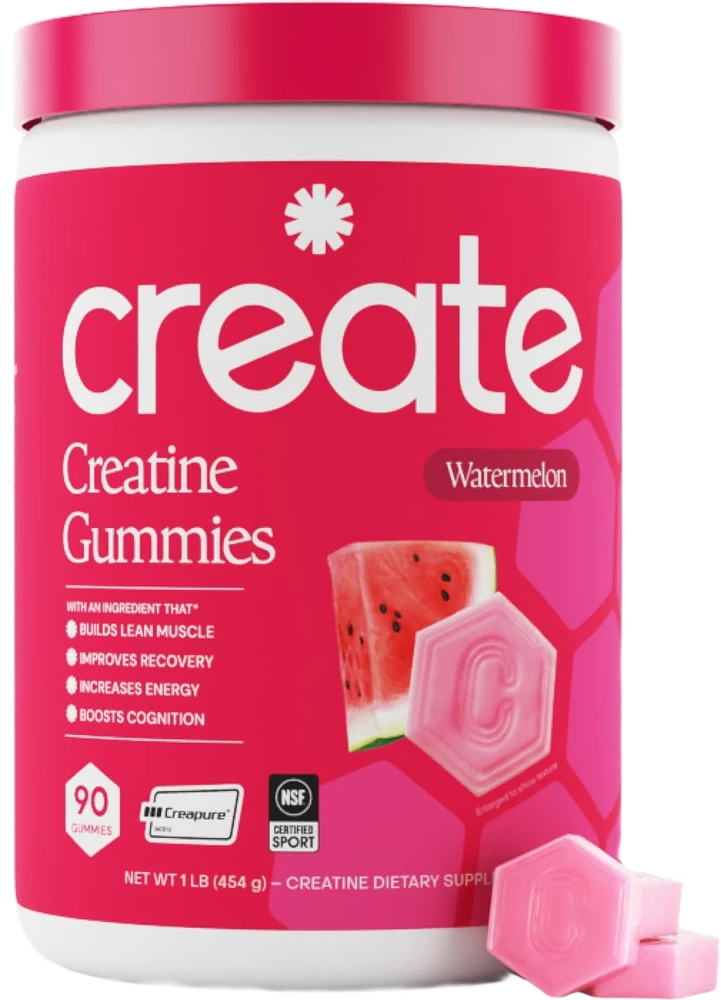 01
Create Creatine Gummies
The pick we'd point most buyers at, on two things we could actually check.
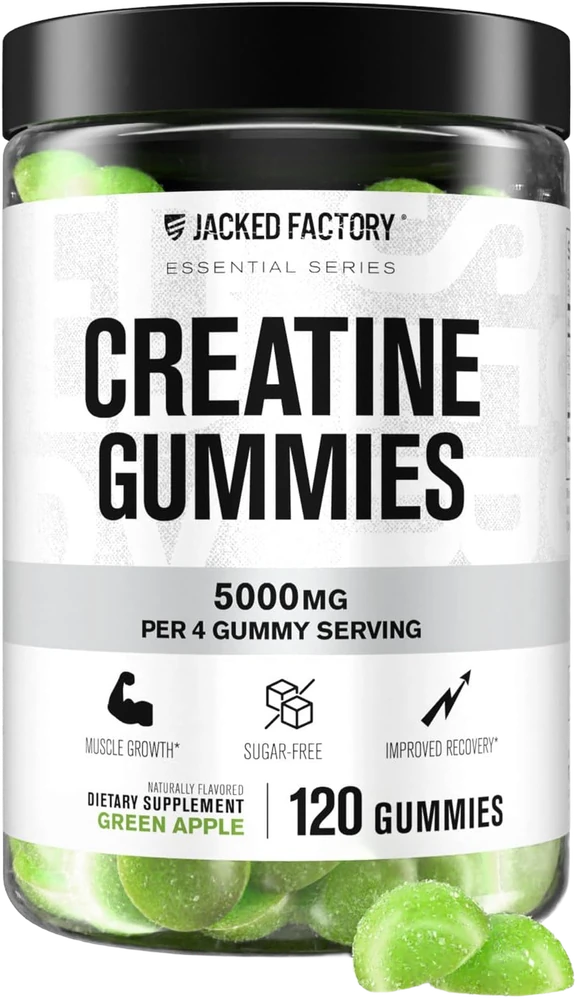 03
Jacked Factory Creatine Gummies
The pick for someone who wants the label to tell the truth about the dose, and the pick for anyone counting money.
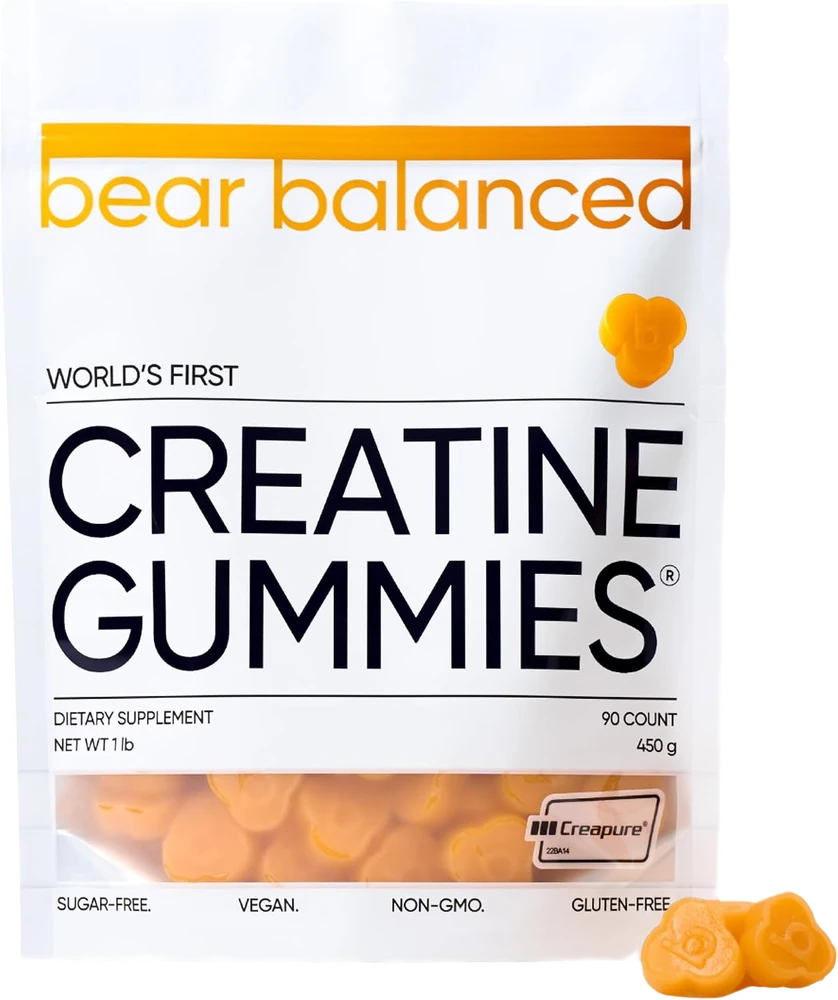 07
Bear Balanced Creatine Gummies
This pick fell further than anything else on the page, from 8.3 to 5.7, and the reasons matter more than the number.
Quick Answers
How much creatine is actually in each Legion gummy?
Roughly 1 gram of creatine monohydrate per gummy — and the panel is honest about what that means. Where several gummy brands print a flattering two- or three-gummy 'serving' that quietly lands short of 5 g, Legion's Supplement Facts panel states a serving as 5 gummies delivering 5,000 mg, because that is what a real 5 g dose takes — the maintenance amount the Kreider 2017 ISSN position stand and the bulk of the trial literature are built on. So a 150-count bottle is genuinely 30 servings, and the arithmetic closes exactly as printed. Just be clear what you are committing to: a dose here is five gummies, not one or two, which is the highest gummy count on this page and also means 10 g of sugar alcohols a day (see below).
What testing does Legion actually publish — and how much is it worth?
More than almost anyone else in this category, with two caveats you should hold onto. The real document is a certificate of analysis for the creatine gummy, lot FG260720: a UPLC assay returning 1.2 g of creatine against a not-less-than-1 g specification, plus heavy-metal testing run to USP Chapter 233. That is an actual assay with a method and a specification attached, not a badge — and most gummy brands on this page publish nothing comparable. Legion also has two Labdoor assays. Caveat one: Labdoor is a brand-participating badge program, meaning brands opt in and pay for the assay; it is not neutral surveillance testing of what is on shelves, so read it as a supplier-commissioned result, not an independent audit. Caveat two, and the bigger one: neither the COA nor the Labdoor assays is lot-matched to the Lemon Drop bottle we link, so they document Legion's process rather than the specific jar arriving at your door. Net: real paperwork, honestly worth crediting, and still a step below a certifier that tests batches on an ongoing basis.
Is it Creapure or NSF Certified for Sport?
No to both — and it isn't Cologne List-listed either. Legion uses standard creatine monohydrate, the molecule the ISSN position stand is built on, but its panel doesn't name Creapure and the product carries no NSF Certified for Sport mark. That matters most if you are drug-tested: NSF Certified for Sport is the credential anti-doping programs actually recognise, and on our list Create Wellness (#1) and Beast Bites (#5) hold it — we checked that one at the certifier's own listings rather than taking the Amazon bullet, and it is real. On Creapure specifically, be careful with everyone's marketing: AlzChem publishes no public licensee registry, so the only way to check a Creapure claim is to see it printed on the Supplement Facts panel. Among our picks, Bear Balanced (#6) is the one whose panel actually names it. Legion's answer to all of this is its own published COA rather than a certification, which is worth something but is not the same thing. If a certifier's mark is non-negotiable for you, buy Create Wellness instead.
How does the cost compare to the other gummies and to powder?
Better than you would guess from the bottle price, and this is the number that changed most in our re-check. The US Amazon buy box on 27 July 2026 was $34.95 for 150 gummies. A real 5 g dose is 5 gummies, so that is 30 real doses and $1.17 a dose. Against the rest of our gummy list: Jacked Factory $0.67, Animal Chews $1.06, Create Wellness $1.85, Bear Balanced $2.78. So Legion is mid-table on price and cheaper than the pick we rank first. An earlier version of this review assumed $1.67 a dose from Legion's own site; the Amazon buy box is a third below that, and correcting it is the entire reason this product's score rose from 6.3 to 6.8. On how we got the number, because it matters: a plain read of an Amazon listing returns no readable price, and twice during an earlier pass a sponsored-carousel price was nearly attributed to the product being reviewed — so this one came from a live browser session with a US delivery address, reading the genuine featured offer, with the listing's canonical ASIN matched to the buy-box ASIN. And the standing gummy caveat holds regardless: plain creatine monohydrate powder is the same molecule at about $0.23 for the same 5 g, so any gummy is a convenience purchase. Prices move — check the listing or legionathletics.com before you buy.
What are the 10 g of sugar alcohols on the panel, and do they matter?
They are how the gummy is sweetened and bulked, and yes, they matter enough that we put them on the page. Read the Supplement Facts panel and you will find Sugar Alcohols 10 g in a 5-gummy serving — that is the daily intake if you dose properly, every day. Sugar alcohols are the reason a lot of people find gummy supplements sit badly: bloating, gas, and loose stools are common complaints at intakes in that range, and tolerance varies a lot from person to person. None of this is a safety problem, and it isn't unique to Legion — most of the gummies here get their texture and sweetness from polyols. But it does mean two things. One: if you are sensitive, start with a partial dose and work up rather than opening with all five gummies. Two: if you came looking for a gummy specifically because you wanted a minimal, nothing-extra panel, 10 g a day of sugar alcohols is the honest thing to weigh, and creatine powder — which is one ingredient — is the format that actually delivers that.
Will I really need to chew 5 gummies a day?
Yes, for a proper 5 g dose — that's the dose-density trade, and it's the main reason this pick sits at #4. At ~1 g per gummy, five gummies a day is what gets you to the research-standard 5 g. Jacked Factory (#2) is 1.25 g per gummy and labels a 4-gummy serving that lands exactly on 5 g; Create Wellness (#1) is 1.5 g per gummy, though its labeled 3-gummy serving is 4.5 g, so you'd take a fourth to clear 5 g. Five small gummies isn't a hardship, but it is more chewing, it is 10 g of sugar alcohols rather than a smaller load, and the bottle empties faster in gummy-count terms. The one thing Legion genuinely deserves credit for is not hiding it: the label already counts a serving as 5 gummies and 5,000 mg, so there's no nasty surprise when you dose correctly. If minimising gummy count is what you care about, a higher-density pick is the better mechanical fit.
Should I just buy creatine powder instead?
If you're fine with powder-in-water, yes — and we say that on every creatine-gummy review, because it's true. The identical creatine monohydrate as powder is far cheaper per gram than any gummy, lets you scoop an exact 5 g, and is a single ingredient with no sugar alcohols attached. The gummy only earns its premium through adherence: if the no-scoop, no-water, no-shaker format is genuinely the difference between you taking creatine daily and letting a tub sit unused, then a 5 g dose you actually swallow beats a perfect scoop you skip. Legion's specific edge within that gummy decision is documentation and an honest serving size — a published COA with a real assay method, and a label that says 5 gummies rather than pretending two will do. So the honest hierarchy: powder for value and a minimal panel; a gummy if the format keeps you consistent; and this gummy specifically if, having chosen the format, you want the pick with the most published paperwork behind it.
Sources & Further Reading
6 peer-reviewed sources, each linked to PubMed
- [1] Kreider 2017 PMID 28615996 — International Society of Sports Nutrition position stand: safety and efficacy of creatine supplementation in exercise, sport, and medicine. ISSN position statement after reviewing 500+ studies: creatine monohydrate is the most effective form, with 3-5 g/day chronic dosing established as the safe, effective maintenance protocol. The 5 g/day standard is exactly why Legion's honest 5-gummy serving — rather than a flattering 2-3 gummy panel — is the correct way to label a ~1 g/gummy product.
- [2] Buford 2007 PMID 17908288 — International Society of Sports Nutrition position stand: creatine supplementation and exercise. Predecessor ISSN position statement establishing creatine monohydrate as the most extensively studied and clinically effective form, with muscle phosphocreatine saturation as the mechanism. Confirms the molecule — not the brand or the licensing stamp — drives the effect, so Legion's standard monohydrate at a real 5 g dose is functionally equivalent to a Creapure gummy dosed equally.
- [3] Cooper 2012 PMID 22817979 — Creatine supplementation with specific view to exercise/sports performance: an update. Comprehensive safety and efficacy review across 30+ controlled trials: chronic creatine at 3-5 g/day shows no adverse effects on kidney or liver function in healthy adults. The safety floor that lets a daily gummy habit run indefinitely — the limiting factors for this product are dose density, documentation tier and the 10 g of sugar alcohols per serving, not the creatine itself.
- [4] Antonio 2021 PMID 33557850 — Common questions and misconceptions about creatine supplementation: what does the scientific evidence really show?. Myths-review confirming no alternative creatine form or delivery system has been shown to outperform monohydrate at equivalent doses — and that consistent daily intake, not timing or format, drives saturation. Directly supports the review's core point: the gummy format buys adherence and nothing else, so Legion's legitimate edges are its published lab documentation and its honest serving size, not the creatine.
- [5] Volek 1997 PMID 9216554 — Creatine supplementation enhances muscular performance during high-intensity resistance exercise. Seminal RCT showing creatine supplementation significantly increased peak power and total work during high-intensity resistance exercise — at the standard supraphysiological dose. The strength/power benefit is real, but contingent on reaching the trial dose, which for Legion means actually chewing the full 5-gummy serving rather than stopping at two or three.
- [6] Rae 2003 PMID 14561278 — Oral creatine monohydrate supplementation improves brain performance: a double-blind, placebo-controlled, cross-over trial. Demonstrated creatine monohydrate improved working memory and processing speed vs placebo in vegetarians. The legitimate cognitive co-benefit of creatine itself — earned from the monohydrate molecule at a full dose, which this gummy delivers as plainly as any premium-branded competitor once you take all five gummies.
Affiliate disclosure: every Amazon link uses our Associates tag (superachieverclub-20). We earn a small commission at no cost to you; it funds independent reviews. We never accept payment to change a ranking.