

Peppermint Oil: Benefits, Dosage & Side Effects (2026)
Peppermint oil is a menthol-rich smooth-muscle antispasmodic and one of the best-evidenced IBS remedies, but only in enteric-coated or sustained-release capsules that bypass the stomach and release in the intestine.
The Peppermint Oil market in numbers
Our independent analysis of 10 peppermint oil products, scored on three proprietary indices — the SAC Product Score™, Transparency Index™, and real Cost-Per-Effective-Dose™. Updated October 2026.
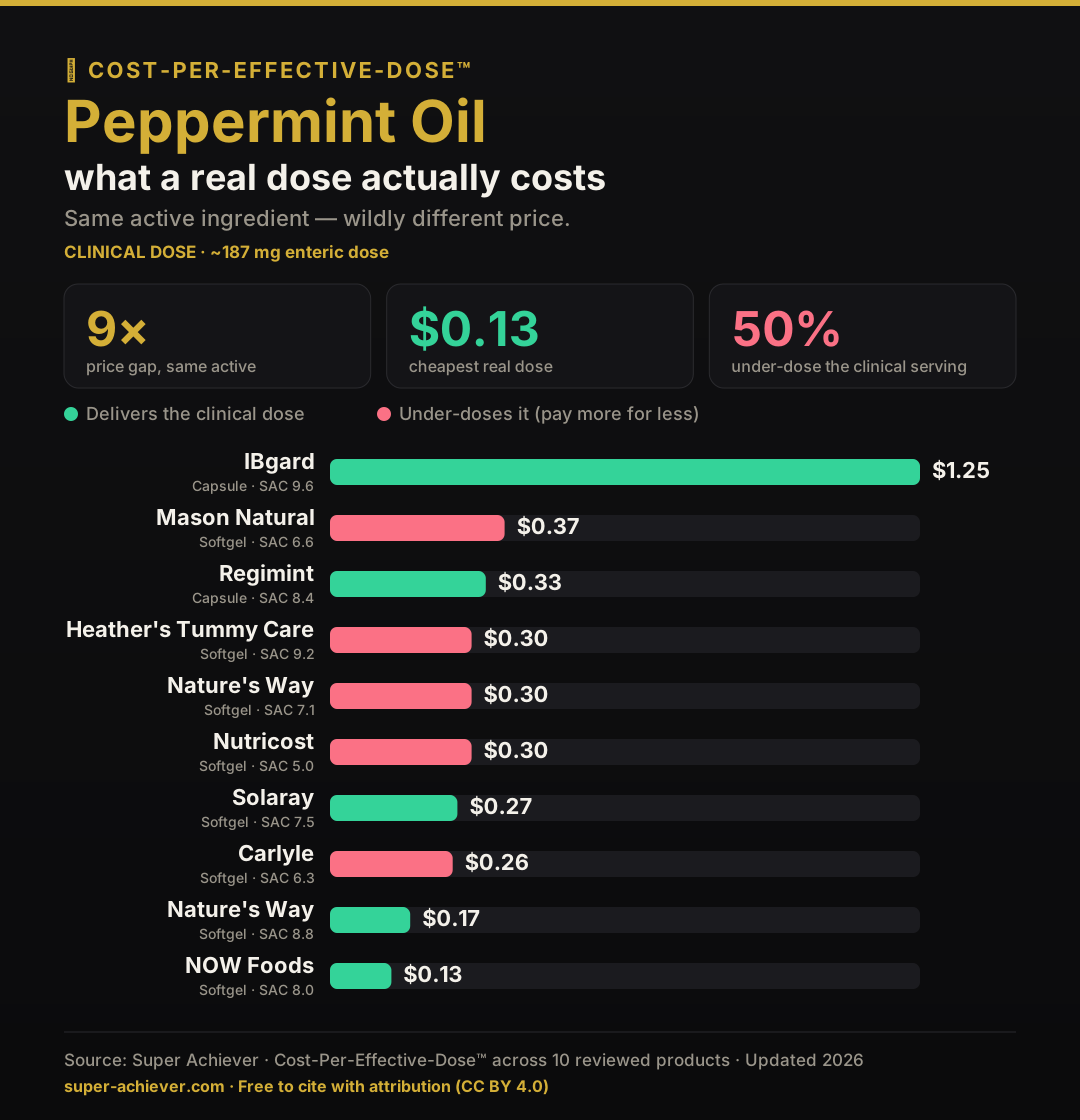
| # | Product | SAC Product Score™ | TXI™ | CPED™ | |
|---|---|---|---|---|---|
| 1 | IBgard Peppermint Oil Capsules, 48ctCapsule | 9.6 | 40 | $1.25 | Most transparent |
| 2 | Heather's Tummy Tamers Peppermint Oil, 90ctSoftgel | 9.2 | 0 | $0.30 | Under-dosed |
| 3 | Nature's Way Pepogest Enteric Peppermint Oil, 60ctSoftgel | 8.8 | 20 | $0.17 | |
| 4 | Regimint Peppermint Oil Plus Caraway, 60ctCapsule | 8.4 | 20 | $0.33 | |
| 5 | NOW Peppermint Gels with Ginger & Fennel, Enteric, 90ctSoftgel | 8.0 | 40 | $0.13 | Best value |
| 6 | Solaray Peppermint Oil, Enteric, 60ctSoftgel | 7.5 | 40 | $0.27 | |
| 7 | Nature's Way Peppermint Soothe, 60ctSoftgel | 7.1 | 0 | $0.30 | Under-dosed |
| 8 | Mason Natural Peppermint Oil 50mg Enteric, 90ctSoftgel | 6.6 | 0 | $0.37 | Under-dosed |
| 9 | Carlyle Peppermint Oil, 150ctSoftgel | 6.3 | 0 | $0.26 | Under-dosed |
| 10 | Nutricost Peppermint Oil 50mg, 120ctSoftgel | 5.0 | 0 | $0.30 | Under-dosed |
Methodology. SAC Product Score™ blends our editorial rating (RCT quality, dose, safety, value) 50/50 with community ratings. Transparency Index™ (0-100) = third-party certification (0-50) + public batch COA (0-30) + dose honesty (0-20). Cost-Per-Effective-Dose™ is the real price of one clinical dose, not one marketed "serving". Free to cite with attribution to Super Achiever.
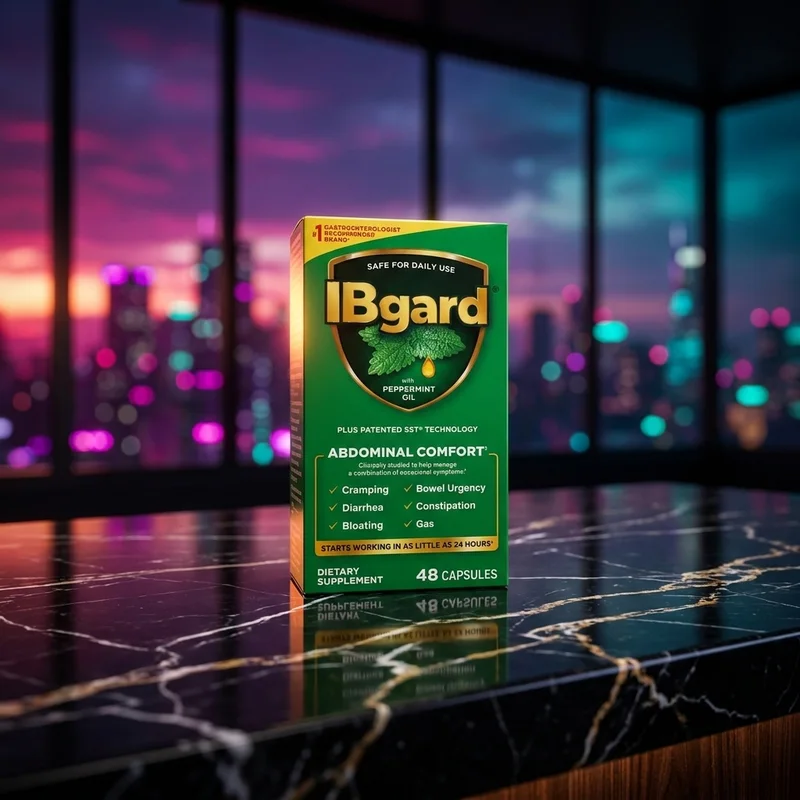
IBgard Peppermint Oil Capsules, 48ct
What is Peppermint Oil?
Peppermint oil is the essential oil distilled from the leaves of the peppermint plant (Mentha piperita), and its principal active constituent is menthol. In a gut-health context it is not the loose oil you find in a dropper bottle for aromatherapy — it is a standardised dose of peppermint oil packaged inside a specially engineered capsule, taken as a course for irritable bowel syndrome (IBS) and other functional gut complaints. It is one of the few herbal remedies for the gut that sits on a genuinely strong clinical evidence base, repeatedly outperforming placebo in randomised trials and meta-analyses.
The single most important thing to understand about peppermint oil is the delivery form, because it is the difference between a product that helps and a product that backfires. Plain or instant-release peppermint oil dissolves in the stomach. There it relaxes the lower oesophageal sphincter — the valve that keeps stomach acid down — which causes heartburn and acid reflux, the classic complaint that puts people off peppermint oil entirely. The therapeutic target, by contrast, is the smooth muscle of the small and large intestine. So the useful product is an enteric-coated capsule (a pH-sensitive coating that stays intact through the acidic stomach and only opens further down the tract) or a modern sustained-release / triple-coated microsphere system such as IBgard that delivers the oil into the small intestine.
So the practical definition of a useful peppermint oil supplement is: a standardised peppermint oil dose in an enteric-coated or sustained-release delivery system, taken before meals as a multi-week course. A plain peppermint oil softgel with no enteric coating — or worse, drops of raw oil — is the form that causes heartburn and was not what the IBS trials tested.
How it works
Peppermint oil works as a smooth-muscle antispasmodic, and the mechanism is well characterised. Menthol, its main active, blocks calcium channels in the smooth-muscle cells that line the gut wall. Muscle contraction depends on calcium flowing into those cells; by limiting that influx, menthol relaxes the intestinal smooth muscle and damps down the exaggerated, painful spasms and cramping that drive IBS symptoms. This is the same broad category of action as prescription antispasmodic drugs, which is why peppermint oil is grouped with them in the major treatment guidelines — it is a natural antispasmodic rather than a vague 'soothing' herb. Menthol's activation of TRPM8 (a cold/menthol receptor) and a mild local anaesthetic effect on visceral nerves are thought to add to the pain relief.
This is also exactly why the enteric coating is essential rather than a nicety. The antispasmodic effect is wanted in the intestine, where the painful spasms happen. If the oil is released in the stomach, the same smooth-muscle relaxation hits the lower oesophageal sphincter instead and produces heartburn. So the coating is not just about tolerability — it routes the active to the organ where it does its job and away from the organ where it causes the side effect. Modern small-intestine-targeted formulations were engineered specifically to solve this, and a 3-year safety analysis of the IBgard delivery system reported no pattern of heartburn, in contrast to older instant-release peppermint.
The clinical payoff is consistent across the literature. Khanna 2014 (PMID 24100754) meta-analysed nine RCTs and found enteric-coated peppermint oil significantly superior to placebo for both global IBS symptom improvement and abdominal pain. Ford 2008 (PMID 19008265), the landmark BMJ review that pooled fibre, antispasmodics and peppermint oil for IBS, found peppermint oil the most effective of the three, with a number-needed-to-treat of about 2.5. Cash 2016 (PMID 26319955) — the IBSREST trial of the IBgard sustained-release system — showed a ~40% drop in total IBS symptom score in four weeks versus ~24% on placebo. Alammar 2019 (PMID 30654773) pooled the data again and confirmed a clear benefit for both global symptoms and abdominal pain, with NNTs of three and four respectively and no excess of adverse events.
At-a-glance facts
- Active compound
- Menthol (main constituent of Mentha piperita essential oil)
- Mechanism
- Smooth-muscle antispasmodic — menthol blocks calcium channels in the gut wall, relaxing painful spasms
- Delivery is everything
- MUST be enteric-coated or sustained-release (e.g. IBgard) so it opens in the intestine, not the stomach
- Trial dose
- ~180-225 mg peppermint oil, ~2-3x/day, taken before meals (enteric-coated)
- Time to felt effect
- Often within days to ~2 weeks; the IBSREST trial measured benefit at 4 weeks
- Best for
- IBS — global symptom relief + abdominal pain/cramping + bloating
- Main side effect
- Heartburn / reflux — largely avoided by enteric-coated and small-intestine-targeted forms
- Cost range (US)
- $15-30 / month for an enteric-coated or sustained-release course
Evidence: Strong, consistent RCT and meta-analysis evidence for IBS — one of the best-evidenced over-the-counter gut remedies. Khanna 2014 (PMID 24100754) and Alammar 2019 (PMID 30654773) both found enteric-coated peppermint oil superior to placebo for global symptoms and abdominal pain; Ford 2008 (PMID 19008265, BMJ) ranked it ahead of fibre and antispasmodics (NNT ~2.5); Cash 2016 (PMID 26319955) showed a sustained-release form cut IBS symptom scores ~40% in 4 weeks. Not a 5 only because trials are mostly small/short and the benefit is specific to IBS rather than gut health broadly.
Who it's for — and who it isn't
- Anyone with diagnosed IBS, especially the cramping/abdominal-pain and bloating-dominant pattern — this is peppermint oil's strongest evidence base
- People who want an over-the-counter, drug-free first step before prescription antispasmodics or neuromodulators — guidelines list it alongside those drugs
- Anyone with functional abdominal cramping, spasms, or post-meal gut pain — the menthol antispasmodic effect targets exactly that mechanism
- People who tried fibre and diet tweaks without enough relief — Ford 2008 ranked peppermint oil ahead of fibre for IBS symptoms
- Buyers willing to choose an enteric-coated or sustained-release capsule — this is the form the trials used and the form that avoids heartburn
- Anyone with significant GERD, acid reflux, or a hiatal hernia — peppermint relaxes the lower oesophageal sphincter and can worsen reflux, especially in non-enteric-coated forms
- People who would take plain peppermint oil drops or a non-enteric softgel — that's the form that causes heartburn and isn't what the evidence supports
- Anyone expecting an instant fix for an acute attack — it's taken as a course before meals and judged over a couple of weeks, not a single dose
- People with severe GORD-related oesophagitis, or known menthol sensitivity / allergy — clear it with a clinician first
Week-by-week, what happens
- Day 1-3Some people notice less cramping and spasm quickly, since the antispasmodic action is relatively direct. Take it before meals with the enteric coating intact (don't chew or open the capsule).
- Week 1-2Abdominal pain, bloating and urgency typically ease as the course builds. This is the early window where most responders start to feel a clear difference.
- Week 4Full effect on global IBS symptoms — the point at which the IBSREST trial (Cash 2016) measured a ~40% reduction in total symptom score versus ~24% on placebo. This is the window to judge whether it's working for you.
- Week 4+Used as needed or as ongoing maintenance during symptomatic periods. The effect is symptomatic relief of spasm, not a cure — symptoms can return when you stop, so many people cycle it around flares.
Safety & contraindications
- Heartburn and acid reflux are the main side effect, because peppermint relaxes the lower oesophageal sphincter. Choosing an enteric-coated or sustained-release capsule largely avoids this; a 3-year analysis of the IBgard delivery system reported no pattern of heartburn.
- Do not chew, crush, or open the capsules. Breaking the enteric coating releases the oil in the stomach — exactly where it causes reflux and a burning sensation.
- If you have GERD, a hiatal hernia, or significant reflux disease, be cautious and ideally clear it with a clinician; peppermint can aggravate reflux symptoms.
- Generally well tolerated otherwise. Less common effects include a peppermint taste/belching, and occasionally a transient cooling or perianal burning sensation. Meta-analyses found no significant excess of adverse events versus placebo.
- Don't self-treat undiagnosed abdominal pain with peppermint oil indefinitely. IBS is a diagnosis of exclusion — red-flag symptoms (bleeding, weight loss, anaemia, new symptoms over age 50) need a proper work-up first.
- Discuss with a clinician or pharmacist if you're pregnant, breastfeeding, have gallstones/bile-duct or liver disease, or take other medications, as data in these groups is limited.
All articles on Peppermint Oil
Best Peppermint Oil Capsules for IBS
Enteric-coated peppermint oil ranked by coating quality first (it has to survive the stomach to work), dose, and value — one of the best-evidenced OTC options for IBS cramping and bloating.
Read →Carlyle Peppermint Oil, 150ct Review
Cheap and high-count — but a low dose and a less-documented coat hold it back.
Read →Heather's Tummy Tamers Peppermint Oil, 90ct Review
The reflux-tolerant peppermint for people other softgels burned.
Read →IBgard Peppermint Oil Capsules, 48ct Review
The most-studied IBS peppermint, with the lowest heartburn risk.
Read →Mason Natural Peppermint Oil 50mg Enteric, 90ct Review
Genuinely enteric at a bargain price — but 50 mg per softgel is the catch.
Read →Nature's Way Pepogest Enteric Peppermint Oil, 60ct Review
The clinically validated dose at the best price — the default for most buyers.
Read →Nature's Way Peppermint Soothe, 60ct Review
A trustworthy heritage enteric peppermint — outcompeted by its own sibling.
Read →NOW Peppermint Gels with Ginger & Fennel, Enteric, 90ct Review
A budget brand getting the fundamentals right — the best bulk value.
Read →Nutricost Peppermint Oil 50mg, 120ct Review
Well-made and clean — but NON-enteric, the one disqualifying flaw for the gut.
Read →Regimint Peppermint Oil Plus Caraway, 60ct Review
The European peppermint-caraway combo for IBS-plus-dyspepsia overlap.
Read →Solaray Peppermint Oil, Enteric, 60ct Review
A clinical 250 mg enteric peppermint dose, plus botanicals you're partly paying for.
Read →FAQ
Does peppermint oil actually work for IBS?
Yes — it's one of the best-evidenced over-the-counter remedies for IBS. Khanna 2014 (PMID 24100754) pooled nine randomised trials and found enteric-coated peppermint oil significantly better than placebo for both overall symptoms and abdominal pain. The landmark BMJ review by Ford 2008 (PMID 19008265) compared fibre, antispasmodics and peppermint oil and found peppermint oil the most effective of the three (number-needed-to-treat about 2.5). Alammar 2019 (PMID 30654773) confirmed the benefit again. It's not a cure for IBS, but as a symptomatic treatment it has unusually solid backing for a herbal product.
Why does the capsule have to be enteric-coated?
Because of where the active needs to go. Peppermint oil's menthol is a smooth-muscle relaxant; you want that relaxing effect in the intestine, where IBS spasms happen. If the oil is released in the stomach (plain oil or a non-coated softgel), it relaxes the valve at the top of the stomach instead and causes heartburn and reflux — the classic reason people give up on peppermint. An enteric coating is a pH-sensitive shell that survives the acidic stomach and only opens further down, routing the oil to the gut and away from the side effect. Modern sustained-release forms like IBgard go a step further and target the small intestine. The coating is the whole point — never buy plain peppermint oil drops for IBS.
How does peppermint oil relieve gut pain — what's the mechanism?
Menthol, peppermint oil's main constituent, blocks calcium channels in the smooth-muscle cells of the gut wall. Muscle contraction needs calcium to flow into the cell, so by limiting that influx menthol relaxes the intestinal muscle and quietens the exaggerated spasms and cramping behind IBS pain. That makes it a genuine antispasmodic — the same broad mechanism as prescription antispasmodic drugs, which is why treatment guidelines group it with them. Menthol also acts on the TRPM8 'cold' receptor and has a mild local anaesthetic effect on gut nerves, which likely adds to the pain relief.
How and when should I take it?
Take an enteric-coated or sustained-release capsule before meals — typically two to three times a day, following the product's directions (trials clustered around 180-225 mg of peppermint oil per dose). Swallow it whole with water; never chew, crush, or open it, because breaking the coating dumps the oil in your stomach and causes heartburn. Give it a fair trial: some people feel less cramping within days, but the studies measured full benefit at around four weeks, so judge it over a couple of weeks rather than a single dose.
Will peppermint oil give me heartburn?
It can — but mainly in the wrong form. Peppermint relaxes the lower oesophageal sphincter, so plain peppermint oil or a non-enteric capsule that dissolves in the stomach can trigger reflux and a burning sensation. Enteric-coated and small-intestine-targeted formulations are designed specifically to avoid this; a 3-year safety analysis of the IBgard delivery system reported no pattern of heartburn, in contrast to older instant-release peppermint. If you already have significant GERD or a hiatal hernia, be cautious and check with a clinician, since peppermint can aggravate reflux even in coated forms for some people.
Is peppermint oil better than fibre or antispasmodic drugs for IBS?
In the most-cited head-to-head review, it came out on top. Ford 2008 (PMID 19008265) in the BMJ pooled randomised trials of soluble fibre, antispasmodic drugs, and peppermint oil for IBS and found peppermint oil the most effective of the three, with the lowest number-needed-to-treat (about 2.5). That doesn't make it the right choice for everyone — fibre helps constipation-predominant patterns and antispasmodics or gut-brain neuromodulators suit other cases — but it's a strong, well-evidenced first step, especially for cramping and pain, and it's available without a prescription.
Sources & further reading
- Khanna 2014 (IBS meta-analysis)Peppermint oil for the treatment of irritable bowel syndrome: a systematic review and meta-analysis
Systematic review + meta-analysis of nine RCTs (726 patients): enteric-coated peppermint oil was significantly superior to placebo for global improvement of IBS symptoms (RR 2.23) and for improvement in abdominal pain (RR 2.14). A cornerstone trial pool establishing peppermint oil as an effective IBS therapy, with mild, transient adverse events (chiefly heartburn).
- Ford 2008 (BMJ — fibre/antispasmodics/peppermint)Effect of fibre, antispasmodics, and peppermint oil in the treatment of irritable bowel syndrome: systematic review and meta-analysis
Landmark BMJ systematic review and meta-analysis pooling RCTs of soluble fibre, antispasmodic drugs, and peppermint oil for IBS. Peppermint oil was the most effective of the three interventions, with a number-needed-to-treat of about 2.5 — the most-cited evidence ranking peppermint oil ahead of fibre for IBS symptom relief.
- Cash 2016 (IBSREST / IBgard RCT)A Novel Delivery System of Peppermint Oil Is an Effective Therapy for Irritable Bowel Syndrome Symptoms
4-week, randomised, double-blind, placebo-controlled trial (IBSREST, n=72, IBS-M/IBS-D) of a triple-coated, small-intestine-targeted sustained-release peppermint oil (IBgard). Peppermint oil produced a ~40% reduction in total IBS symptom score vs ~24% on placebo, with a significant cut in severe/unbearable symptoms and good tolerability — the trial behind the modern sustained-release delivery form.
- Alammar 2019 (pooled meta-analysis)The impact of peppermint oil on the irritable bowel syndrome: a meta-analysis of the pooled clinical data
Meta-analysis of 12 RCTs (835 patients): peppermint oil was significantly better than placebo for global IBS symptoms (RR 2.39) and abdominal pain (RR 1.78), with numbers-needed-to-treat of three and four respectively and no significant excess of adverse events. Confirms peppermint oil as a safe, effective IBS therapy and reinforces the earlier meta-analytic base.