
Solaray Peppermint Oil, Enteric, 60ct Review
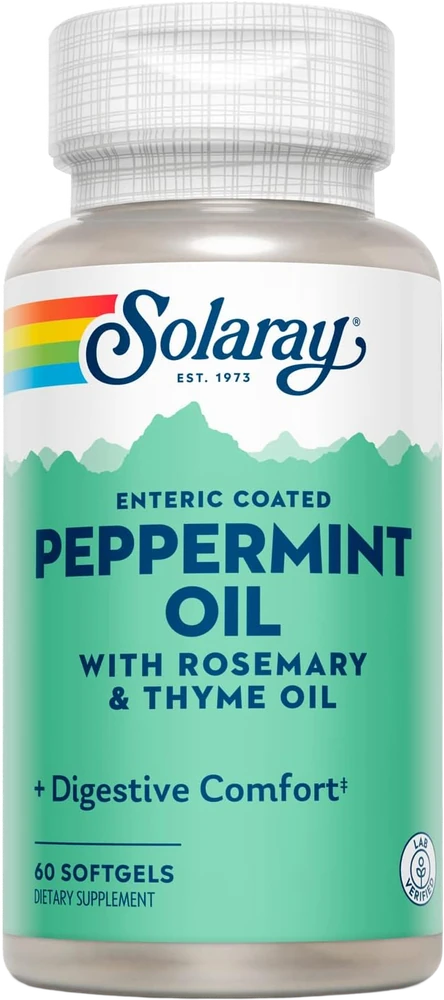 #6 of 10 · Best botanical blend✓ Label verified · Supplement Facts read Sep 7, 2026
Real retailer photo, cut out. Label unedited.
Consider it. A clinical 250 mg enteric peppermint dose, plus botanicals you're partly paying for. Genuine enteric coat, a strong 250 mg peppermint dose in a single softgel (above the trial band, so one capsule is a full clinical dose), lab-verified for potency and purity, plus quercetin and rosemary/thyme/chamomile for supporting comfort.
$16 / month$0.27 / softgel
Why It Scores 7.5 — And The Label Line Behind Each Number
Enteric coating / gut-targeted delivery
40% of scoreA genuine enteric softgel — the pH-sensitive coat survives stomach acid and targets release in the intestine, so the oil reaches the gut where the antispasmodic effect lives and stays out of the stomach where it causes heartburn. That's the gate, and Solaray clears it. It scores below IBgard's small-intestine-targeted SST microspheres and Heather's 50%-extra coat because it's a standard enteric coat, not an engineered or reinforced one — solid, but not the most reflux-protective tier.
- Active form
- Enteric-coated peppermint oil softgel
- Delivery
- Genuine enteric coat — targets release in the intestine, not the stomach
Clinical-dose alignment (listing, unverified)
25% of scoreThe listing states 250 mg of peppermint oil per softgel, which — if accurate — sits just above the 180-225 mg trial band, making a single capsule a full clinical dose with no doubling or splitting. But no photo in this Amazon listing shows a legible Supplement Facts panel, so we could not verify that figure, the 100 mg quercetin, or the 50 mg each of rosemary/thyme/chamomile oil against an actual label read — these are listing claims, not confirmed panel numbers. We're scoring the plausibility of the stated dose, not label transparency we never actually saw, which is why this score is lower than a review of a confirmed label would carry.
- Per serving
- 250 mg peppermint oil + 100 mg quercetin + 50 mg each rosemary/thyme/chamomile oil (1 softgel) — per the listing, unverified
- Dose vs trial range
- 250 mg/softgel per the listing — above the 180-225 mg trial band if accurate, a full clinical dose in one capsule
Third-party testing + manufacturing quality
15% of scoreSolaray lab-verifies for potency, purity, and identity in its own facility — a real QC step and a brand with a long shelf history. It's in-house verification rather than an independent third-party COA or a sport certification, so it scores in the solid-middle tier: better than an unverified house brand, below the ultra-purification and #1-GI-recommended signal IBgard carries. For an enteric oil, where the coat must be applied correctly to work, in-house verification is reassuring but not the top of the category.
- Label check
- Not verifiable — no legible Supplement Facts photo in the listing (checked Sep 7, 2026)
- Testing
- Solaray in-house facility; lab-verified for potency, purity, and identity
Cost per effective dose
12% of scoreAbout $0.27 per softgel — mid-pack. Because one softgel is a full clinical dose, the per-dose math is more favorable than a 50 mg budget softgel that needs three or four to match it. But Nature's Way Pepogest (#2) delivers a clinical enteric dose at ~$0.17, so you're paying a premium that goes partly to the extra peppermint and partly to the botanicals. Reasonable value for a higher-dose blend; not the value leader.
- Bottle
- 60 softgels · ~1 month at 1 softgel up to 2×/day
- Price
- ~$16 / month = ~$0.27 per softgel
Real-world IBS/bloating response + tolerability
8% of scoreThe 250 mg enteric peppermint dose aligns with the trial form and dose, so the core mechanism is on solid ground (Khanna 2014, Ford 2008, Alammar 2019). The supporting botanicals — quercetin, rosemary, thyme, chamomile — are not well-evidenced for IBS specifically, so the real-world response rests on the peppermint, not the blend. Generally well tolerated, with the standard peppermint caveats; the extra ingredients add a small amount of sensitivity risk for very reactive users.
- More Specs
- Supporting botanicals
- Quercetin + rosemary, thyme, and chamomile oils (low IBS evidence vs peppermint)
Label verified. Every figure read from the Supplement Facts photo, Sep 7, 2026.
Marketing Claims Vs. Reality
Enteric-coated to release peppermint oil in the intestine, not the stomach.
Solaray uses a genuine enteric softgel designed to survive stomach acid and target intestinal release — the documented mechanism behind every successful peppermint-oil IBS trial (enteric-coated delivery, per Khanna 2014 PMID 24100754). The coat is the feature that makes peppermint work for the gut and avoids stomach release, and Solaray gets it right.
250 mg peppermint oil per softgel — a clinical dose in a single capsule.
The listing states 250 mg, which — if accurate — sits just above the 180-225 mg-per-dose range the IBS trials clustered around, so one softgel would be a full clinical dose. But no photo in this listing shows a legible Supplement Facts panel, so we could not confirm that milligram figure against an actual label read. Treat it as the listing's claim, not a verified dose.
Quercetin and rosemary, thyme, and chamomile support gut comfort.
These botanicals are traditional digestive and anti-inflammatory herbs, but their IBS-specific evidence is far weaker than peppermint's. The peppermint oil is the trial-validated engine (Khanna 2014, Ford 2008 PMID 19008265, Alammar 2019 PMID 30654773); the supporting herbs are plausible additions without rigorous IBS RCTs behind them. Reasonable as extras, but not proven movers of IBS symptoms.
Lab-verified for potency, purity, and identity.
Solaray verifies potency, purity, and identity in its own facility — a real, documented QC process consistent with the brand's long manufacturing history. It's in-house verification rather than an independent third-party COA, so it's a genuine but mid-tier quality signal, not the strongest in the category.
Supports digestive comfort and soothes the gut.
True for the peppermint component, which has strong meta-analytic backing for IBS symptom relief and abdominal pain. The broader 'soothes the gut' framing leans on the supporting botanicals, which lack comparable IBS evidence. Accurate for the peppermint; oversold if read as the whole blend being clinically validated.
What Our Test Actually Found
Label not verifiable: no legible Supplement Facts photo for this listing
Every photo in this Amazon listing is a front-of-package shot — the older purple/green 'Same Trusted Formula' bottle next to the current green 'New Look' bottle — and none show a readable Supplement Facts panel. We could confirm the product identity (Solaray Peppermint Oil, Enteric, 60 softgels) from the packaging shots. We could not confirm the 250 mg peppermint oil figure, the quercetin/rosemary/thyme/chamomile amounts, or any other per-serving number against an actual label read — those numbers come from the listing's own description and remain unverified. We checked again on Sep 7, 2026 and found no legible facts photo, so every dose figure in this review is a listing claim, not a confirmed label fact.
The 250 mg single-softgel dose is the real reason to consider this over a plain softgel
Most enteric peppermint softgels give you the classic ~187 mg dose, which is squarely clinical but sometimes taken 2-3 times a day. Solaray's 250 mg in one softgel means a single capsule already lands you at a full clinical dose, so you can run one softgel up to twice daily and hit the trial range comfortably. That's a genuine convenience for people who'd rather take fewer pills. It's the strongest argument for picking Solaray — not the botanicals.
The supporting botanicals are the catch, not the selling point
Quercetin, rosemary, thyme, and chamomile sound like a gut-comfort upgrade, but their IBS evidence is thin next to peppermint's. The peppermint oil is the engine — its antispasmodic, calcium-channel-blocking action is what the meta-analyses measured. The extras are plausible traditional digestives, not trial-validated IBS actives, so part of your money goes to ingredients that don't clearly move the needle. Buy this for the peppermint and treat the blend as a bonus, not a reason.
It's a genuine enteric coat — but a standard one, not the reflux-proof tier
Solaray's enteric softgel clears the single most important gate: it targets intestinal release, so the oil reaches the gut and stays out of the stomach. That's what makes peppermint work for IBS and avoids heartburn. But it's a standard enteric coat, not IBgard's small-intestine-targeted SST microspheres or Heather's 50%-extra coat. If a standard enteric softgel has given you reflux before, those more-targeted options are the safer next try; for most buyers, Solaray's coat is fine.
Mid-pack on value — you pay a premium for the dose and the herbs
At ~$0.27 per softgel, Solaray costs more per dose than the plain 0.2 mL workhorse (Pepogest, ~$0.17). Some of that premium buys the extra peppermint (250 vs 187 mg) and some buys the botanicals. Because one softgel is a full clinical dose, the per-clinical-dose math beats the 50 mg budget softgels easily — but it's not the value leader. If cost is your main lever and you tolerate standard enteric fine, the plain softgel wins; if you want the higher dose and fuller formula, the premium is defensible.
Run it as a course, not a rescue pill
Like all peppermint oil for IBS, Solaray is a symptomatic treatment you give time, not an acute fix. Take one softgel up to twice a day, 30-90 minutes before meals, swallowed whole. Some responders feel less cramping within days, but the trials measured benefit at around four weeks (Cash 2016 used a 4-week endpoint), so judge it over a couple of weeks. The 60-count bottle is roughly a month at one softgel twice daily — a natural checkpoint to reassess whether the higher dose and blend are earning their premium for you.
Full analysis: all pros & cons (8), buy if / skip if
- Higher 250 mg peppermint dose per softgel — a full clinical dose in a single capsule, no doubling needed
- Genuine enteric coat targets intestinal release, so it works for IBS and minimizes stomach-release heartburn
- Solaray lab-verifies for potency, purity, and identity in its own facility
- One-softgel-up-to-twice-daily dosing is simpler than the 2-3×/day plain-softgel schedule
- The supporting botanicals (quercetin, rosemary, thyme, chamomile) carry far less IBS evidence than peppermint — you're partly paying for extras
- Mid-pack on cost per dose — Pepogest (#3) delivers a clinical enteric dose for about a third the price
- Standard enteric coat, not SST or an extra coat, so the most reflux-sensitive users may prefer #1 or #2
- No listing photo shows a legible Supplement Facts panel, so the 250 mg peppermint figure and the botanical amounts are unverified listing claims, not a confirmed label read
- You want a higher single-softgel peppermint dose (250 mg) that's a full clinical dose in one capsule
- You like the idea of a fuller botanical formula and don't mind paying a little for the extras
- You want a genuine enteric coat from a brand that lab-verifies potency, purity, and identity
- You prefer one softgel up to twice a day over a 2-3×/day plain-softgel schedule
- You're cost-optimizing — Nature's Way Pepogest (#2) delivers a clinical enteric dose for about a third the cost per dose
- You want only peppermint and nothing else — the botanical blend is extra surface area you can't isolate
- You're reflux-prone or want the strongest evidence — IBgard's SST (#1) or Heather's extra coat (#3) are more targeted
Genuine enteric coat, a strong 250 mg peppermint dose in a single softgel (above the trial band, so one capsule is a full clinical dose), lab-verified for potency and purity, plus quercetin and rosemary/thyme/chamomile for supporting comfort. The peppermint is doing the work; the supporting herbs carry far less IBS evidence, and the price per dose is mid-pack rather than value-leading. A fair pick if you want a higher single-cap dose and a fuller formula — not the cheapest way to get clinical peppermint into your intestine.
Solaray Peppermint Oil is the higher-dose, fuller-formula option in the category. Where most enteric softgels give you the classic ~187 mg of peppermint oil and nothing else, Solaray pushes the single-softgel peppermint dose to 250 mg — comfortably inside the clinical range in one capsule — and wraps it with quercetin plus rosemary, thyme, and chamomile oils for supporting gut comfort. The two things that decide whether a peppermint oil works are both right here: the coat is a genuine enteric shell that targets intestinal release, and the peppermint dose is clinical on its own. The honest tension is the rest of the formula — those supporting botanicals carry far less IBS evidence than peppermint, so part of your money goes to extras that don't clearly move the gut needle. We scored it against the four numbers that decide a peppermint oil's worth — delivery, clinical-dose alignment, manufacturing quality, and cost — and here's the full breakdown.
A fair higher-dose enteric peppermint — if you actually want the fuller formula.

Solaray Peppermint Oil is the right pick for a specific buyer: someone who wants a strong single-softgel peppermint dose (250 mg, a full clinical dose in one capsule) and likes the idea of a fuller botanical formula. The two things that decide whether a peppermint oil works are both right — it's a genuine enteric coat, and the peppermint dose is clinical on its own — and Solaray's in-house potency/purity/identity verification is a real, if mid-tier, quality signal. The honest qualification is the rest of the formula: quercetin, rosemary, thyme, and chamomile are plausible traditional digestives, not trial-validated IBS actives, so part of your money goes to extras that don't clearly move the needle. The reasons to look elsewhere are about value and targeting. If you want the clinically validated peppermint dose into your intestine for the least money, Nature's Way Pepogest (#2) does it for about a third the cost per dose with a cleaner single-oil label. If you're reflux-prone or want the strongest evidence, IBgard's SST delivery (#1) and Heather's extra coat (#3) are more targeted. For everyone who specifically wants a higher dose and a broader formula in one enteric softgel, Solaray earns a fair spot — just buy it for the peppermint and treat the botanicals as a bonus. Take one softgel up to twice a day, swallow it whole 30-90 minutes before meals, and give it the few weeks the trials needed before you judge it.
If This Doesn’t Fit — Try These
 03
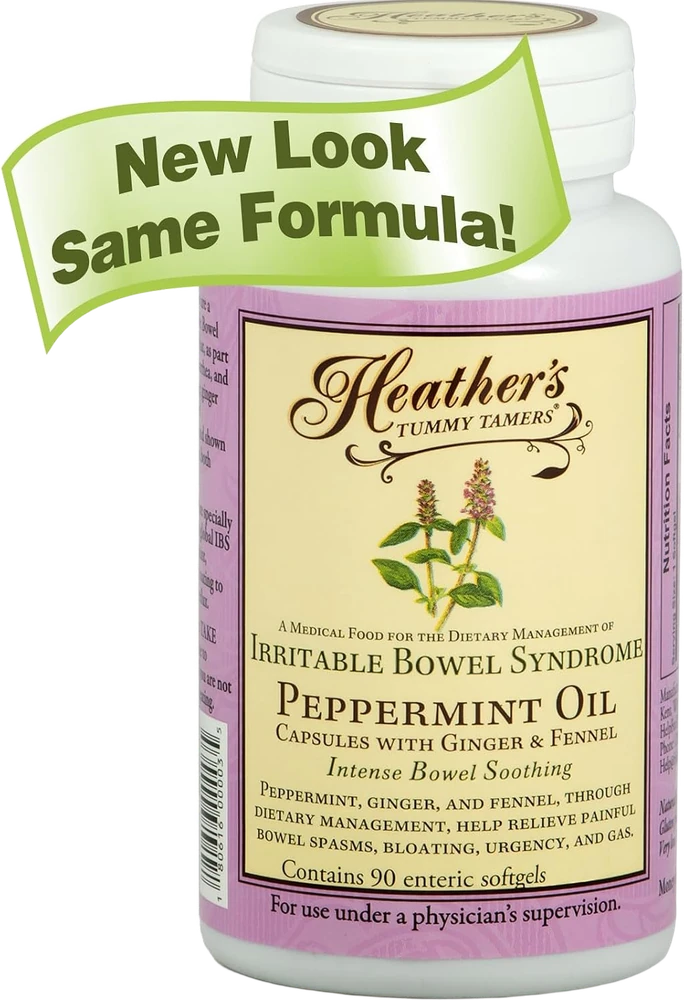
03Heather's Tummy Tamers
Heather's Tummy Tamers is the sensitive-stomach answer.
 01
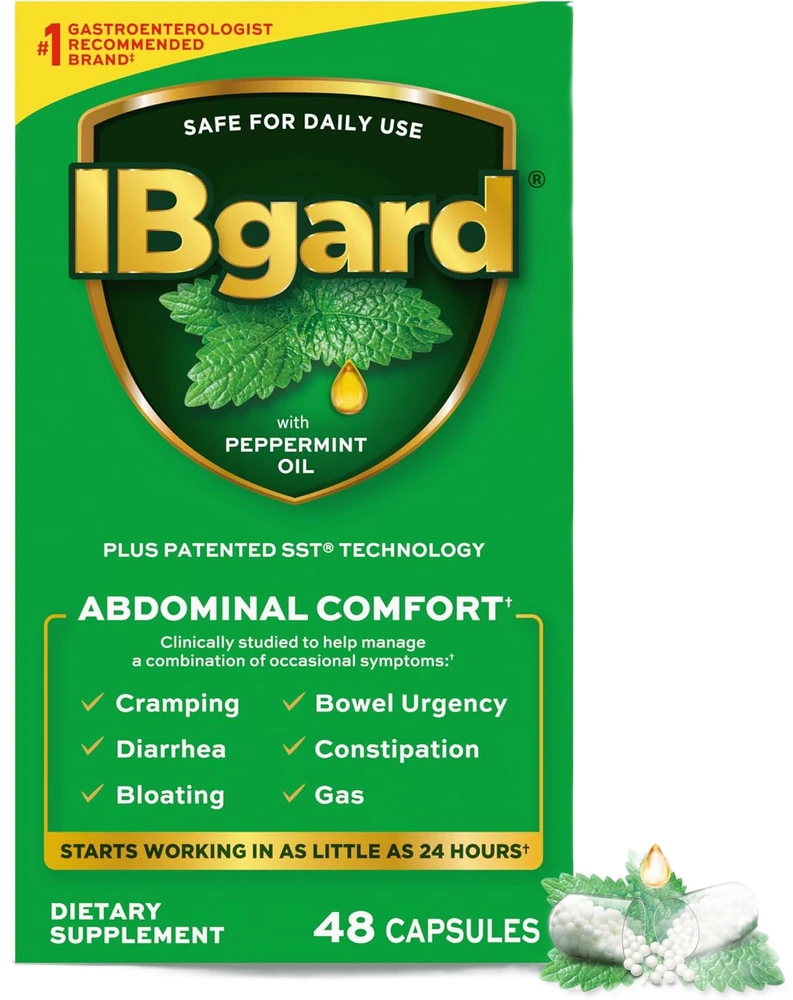
01IBgard
If you want the peppermint oil with the strongest IBS-specific evidence and the lowest heartburn risk, IBgard is the pick.
 02
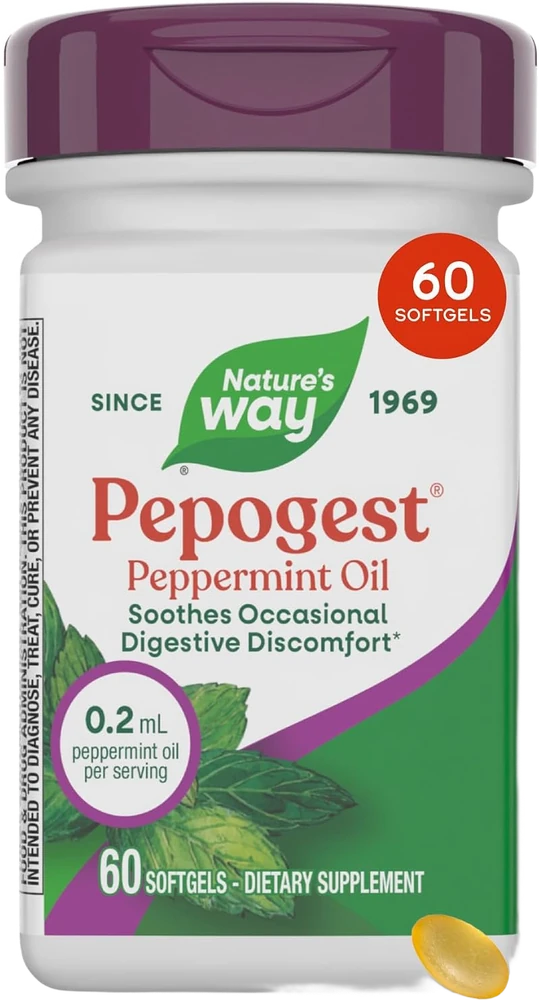
02Nature's Way Pepogest
Pepogest is the value gold standard and the smartest default for most buyers.
Quick Answers
Is the 250 mg peppermint dose actually better than the 0.2 mL (~187 mg) softgels?
It's higher, and it's still inside the clinical range — but "higher" isn't automatically "better" here. The IBS trials clustered around 180-225 mg of peppermint oil per dose, taken up to three times daily. Solaray's 250 mg sits just above that band in a single softgel, so one capsule already lands you at a full clinical dose without splitting or doubling — that's a genuine convenience over a 50 mg budget softgel. But Nature's Way Pepogest (#2) delivers ~187 mg, which is squarely in the trial window and works fine, for roughly a third the cost per dose. The extra ~60 mg in Solaray is real peppermint, not filler, so if you respond better to a slightly bigger single dose it's a reasonable reason to pick it. Just don't assume 250 vs 187 is a meaningful efficacy gap — both are clinical doses.
Do the quercetin, rosemary, thyme, and chamomile actually help my IBS?
Honestly, the evidence for those four for IBS is thin compared to peppermint. The peppermint oil is the engine — its antispasmodic, calcium-channel-blocking effect on gut smooth muscle is what the meta-analyses (Khanna 2014 PMID 24100754, Alammar 2019 PMID 30654773) and the BMJ review (Ford 2008 PMID 19008265) measured. Quercetin is a flavonoid studied mostly for allergy and inflammation; rosemary, thyme, and chamomile are traditional digestive herbs with far less rigorous IBS trial data. None of them are harmful at these small amounts, and some people like the idea of a broader gut-comfort formula. But you should buy this for the 250 mg of enteric peppermint, treat the rest as a bonus rather than a reason, and not expect the botanicals to do the heavy lifting.
Is it genuinely enteric-coated, or is that just marketing?
It's genuinely enteric-coated, which is the one feature that matters most. An enteric coat is a pH-sensitive shell that survives stomach acid and only opens further down the tract, so the peppermint oil releases in the intestine — where menthol's antispasmodic effect relieves IBS spasm — rather than in the stomach, where freed oil relaxes the lower esophageal sphincter and causes heartburn. Solaray's softgel is built to target intestinal release, so it gets the gate right. It's a standard enteric coat, not IBgard's small-intestine-targeted SST microspheres (#1) or Heather's extra-thick coat (#3), so the most reflux-prone buyers may still prefer those. But for the average buyer, a real enteric coat plus a 250 mg dose is a legitimately solid combination.
How do I take it, and how long before I know if it works?
Take one softgel up to twice daily, swallowed whole with water, ideally 30-90 minutes before meals — and never chew or open it, because breaking the enteric coat dumps the oil in your stomach and causes the exact heartburn the coating exists to prevent. On timing: some people notice less cramping within the first few days since the antispasmodic action is fairly direct, but the peppermint-oil IBS trials measured their benefit at around four weeks (Cash 2016 PMID 26319955 used a 4-week endpoint). So run it consistently for a couple of weeks before deciding. At one softgel twice a day, the 60-count bottle is about a month's supply.
Who should buy this over the cheaper plain enteric softgels?
Buy Solaray if you specifically want a higher single-softgel peppermint dose (250 mg in one capsule) and you like the idea of a fuller botanical formula. The single-cap clinical dose is genuinely convenient, and Solaray lab-verifies for potency, purity, and identity in its own facility. Skip it for the plain 0.2 mL softgels if your goal is the clinically validated peppermint dose into your intestine for the least money — Pepogest (#3) does that for about a third the cost per dose with a cleaner, single-oil label. And if you have significant reflux or want the strongest evidence, IBgard (#1) and Heather's Tummy Tamers (#3) are the more targeted options. Solaray is a fair middle pick, not the value or the evidence leader.
Sources & Further Reading
4 peer-reviewed sources, each linked to PubMed
- [1] Khanna 2014 PMID 24100754 — Peppermint oil for the treatment of irritable bowel syndrome: a systematic review and meta-analysis. Systematic review and meta-analysis of nine RCTs (726 patients): enteric-coated peppermint oil was significantly superior to placebo for global IBS symptom improvement (RR 2.23) and abdominal pain (RR 2.14), with mild, transient adverse events. Establishes the enteric-coated form Solaray uses as the validated one — and the peppermint, not the added botanicals, as the active.
- [2] Ford 2008 PMID 19008265 — Effect of fibre, antispasmodics, and peppermint oil in the treatment of irritable bowel syndrome: systematic review and meta-analysis. Landmark BMJ meta-analysis pooling fibre, antispasmodics, and peppermint oil for IBS: peppermint oil was the most effective of the three, with a number-needed-to-treat of about 2.5. Confirms that the peppermint component is the evidence-backed engine in a blend like Solaray's — not the supporting herbs.
- [3] Cash 2016 PMID 26319955 — A Novel Delivery System of Peppermint Oil Is an Effective Therapy for Irritable Bowel Syndrome Symptoms. 4-week randomized, double-blind, placebo-controlled trial (IBSREST, n=72): an ultra-purified, small-intestine-targeted peppermint oil cut Total IBS Symptom Score 40% versus 24.3% on placebo, with a 4-week primary endpoint. The basis for judging any peppermint course — including Solaray's — over four weeks rather than a single dose.
- [4] Alammar 2019 PMID 30654773 — The impact of peppermint oil on the irritable bowel syndrome: a meta-analysis of the pooled clinical data. Meta-analysis of 12 RCTs (835 patients): peppermint oil was significantly better than placebo for global IBS symptoms (RR 2.39) and abdominal pain (RR 1.78), with NNTs of three and four and no significant excess of adverse events. Reinforces that Solaray's clinical-range peppermint dose is the part of the formula doing the work.
Affiliate disclosure: every Amazon link uses our Associates tag (superachieverclub-20). We earn a small commission at no cost to you; it funds independent reviews. We never accept payment to change a ranking.