
Nature's Way Peppermint Soothe, 60ct Review
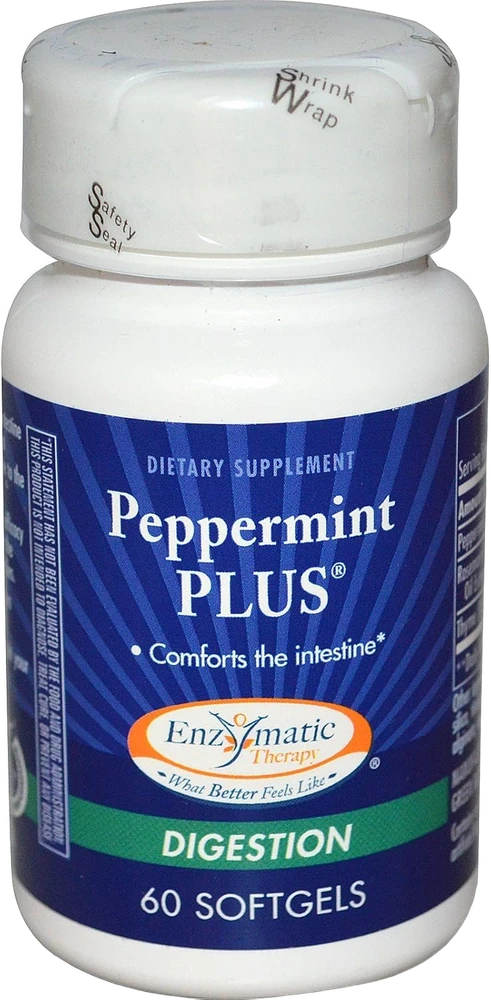 #7 of 10 · Commission E heritage✓ Label verified · Supplement Facts read Sep 7, 2026
Real retailer photo, cut out. Label unedited.
Consider it. A trustworthy heritage enteric peppermint — outcompeted by its own sibling. The legacy Enzymatic Therapy Peppermint Plus formula under the Nature's Way label, built to German Commission E standards with rosemary and thyme, in a genuine enteric softgel with established QC.
$18 / month$0.30 / softgel
Why It Scores 7.5 — And The Label Line Behind Each Number
Enteric coating / gut-targeted delivery
40% of scoreA genuine enteric softgel — the pH-sensitive coat survives stomach acid and targets release in the intestine, so the oil reaches the gut where the antispasmodic effect works and stays out of the stomach where it causes heartburn. That's the gate, and Peppermint Soothe clears it with the backing of an established manufacturer. It scores below IBgard's small-intestine-targeted SST microspheres and Heather's 50%-extra coat because it's a standard enteric coat, not an engineered or reinforced one — solid and trustworthy, but not the most reflux-protective tier.
- Active form
- Enteric-coated peppermint oil softgel with rosemary and thyme oils
- Delivery
- Genuine enteric coat — targets release in the intestine, not the stomach
Clinical-dose alignment + label honesty
25% of scoreHere's the weak axis. It's a real enteric peppermint oil, but the per-capsule peppermint milligrams aren't stated as cleanly as the simple 0.2 mL Pepogest softgel from the same parent brand — partly because it's a multi-oil blend (peppermint plus rosemary and thyme). For an IBS buyer trying to hit the 180-225 mg trial range, that dose opacity is a real drawback. It's a transparency gap, not a quality one, but it costs the formula points against the clearly dosed picks.
- Per serving
- Peppermint oil + rosemary oil + thyme oil (1 softgel, up to 3×/day)
- Dose transparency
- Per-capsule peppermint milligrams less clearly stated than the 0.2 mL Pepogest sibling
Third-party testing + manufacturing quality
15% of scoreBacked by Nature's Way's established manufacturing and QC, and it carries the heritage of the respected Enzymatic Therapy Peppermint Plus formula built to German Commission E botanical-medicine standards. That's a genuine pedigree — Commission E is the German regulatory monograph system for herbal medicines. It's gluten-free and made by a household brand. A strong quality tier, sitting just below the ultra-purification and #1-GI-recommended signal IBgard carries.
- Testing
- Nature's Way QC; legacy Enzymatic Therapy formula; gluten-free
Cost per effective dose
12% of scoreAbout $0.30 per softgel — and the awkward fact is that Nature's Way's own Pepogest (#3) delivers a precise clinical enteric dose for ~$0.17. So you're paying a premium over a cheaper, more transparent sibling from the same company. The premium buys the heritage formula and the rosemary/thyme blend, not better peppermint delivery. Reasonable if you want the legacy blend specifically; poor value if you just want the clinical peppermint dose.
- Bottle
- 60 softgels · ~20 days at 3/day, longer at maintenance
- Price
- ~$18 / month = ~$0.30 per softgel
Real-world IBS/bloating response + tolerability
8% of scoreThe enteric peppermint aligns with the trial form, so the core mechanism is on solid ground (Khanna 2014, Ford 2008, Alammar 2019), and the heritage formula has a long real-world track record. The rosemary and thyme oils are traditional digestive herbs without comparable IBS evidence, so the response rests on the peppermint. Generally well tolerated with the standard peppermint caveats; the dose opacity makes it slightly harder to be sure you're at a fully therapeutic peppermint level.
- More Specs
- Heritage
- Formerly Enzymatic Therapy Peppermint Plus, built to German Commission E standards
Label verified. Every figure read from the Supplement Facts photo, Sep 7, 2026.
Marketing Claims Vs. Reality
Enteric-coated to protect the oil through the stomach and release it in the intestine.
Peppermint Soothe uses a genuine enteric softgel designed to survive stomach acid and target intestinal release — the documented mechanism behind every successful peppermint-oil IBS trial (enteric-coated delivery, per Khanna 2014 PMID 24100754). The coat is the feature that makes peppermint work for the gut and avoids stomach-release heartburn, and the formula gets it right.
Built to German Commission E botanical-medicine standards.
The formula descends from the Enzymatic Therapy Peppermint Plus product, a respected botanical-medicine line built to German Commission E standards — the German regulatory monograph system that evaluates herbal medicines for evidence and safety. A real and documented heritage claim, and a genuine quality signal for the formula's lineage.
Rosemary and thyme oils support digestive comfort.
Rosemary and thyme are traditional aromatic/carminative digestive herbs, but their IBS-specific evidence is far weaker than peppermint's. The peppermint oil is the trial-validated engine (Khanna 2014, Ford 2008 PMID 19008265, Alammar 2019 PMID 30654773); the supporting oils are part of the legacy blend without rigorous IBS RCTs behind them. Reasonable as heritage-formula extras, not proven IBS movers.
Delivers a clinically relevant peppermint oil dose.
It's a genuine enteric peppermint oil, but the per-capsule peppermint milligrams aren't clearly stated, so a buyer can't easily confirm the dose lands in the 180-225 mg trial range the way they can with Pepogest's labeled 0.2 mL. Likely a real dose in a trustworthy product, but the transparency gap means the precise clinical-dose claim can't be verified from the label alone.
Backed by an established, trusted manufacturer.
Nature's Way is a long-established household supplement brand with documented manufacturing and QC, and the formula carries the Enzymatic Therapy heritage. A genuine and verifiable trust signal — the quality and provenance of this product are not in question.
What Our Test Actually Found
Its own sibling, Pepogest, is the cleaner, cheaper version of the same idea
The most important thing to know about Peppermint Soothe is that Nature's Way also sells Pepogest (#3), which states a precise 0.2 mL (~187 mg) peppermint dose per softgel and costs less per dose. Both are genuine enteric softgels from the same parent company with the same QC backing, so the choice comes down to what you value: Soothe gives you the heritage Commission E blend with rosemary and thyme; Pepogest gives you a clearly dosed, single-oil peppermint at lower cost. For most buyers who just want clinical peppermint into the intestine, the sibling is the smarter pick.
The dose opacity is the real drawback, not the quality
This is a trustworthy product from an established brand — the issue isn't whether it works, it's that you can't easily confirm the peppermint dose from the label. The IBS trials used a specific range (180-225 mg per dose), and a buyer trying to hit that wants a number, not a multi-oil blend with the peppermint milligrams left vague. The enteric coat and the heritage are genuine strengths; the missing dose clarity is what holds it back against the clearly labeled picks.
The Commission E heritage is a real, if narrow, selling point
Peppermint Soothe descends from Enzymatic Therapy Peppermint Plus, built to German Commission E standards — the German monograph system that vets herbal medicines for evidence and safety. That's a legitimate pedigree and a reason some buyers specifically seek this formula out. The rosemary and thyme are part of that legacy blend. If the heritage matters to you, it's a genuine differentiator; if it doesn't, it's not a reason to pay the premium over a plain enteric softgel.
The rebrand confuses buyers looking for the original
If you're searching for 'Enzymatic Therapy Peppermint Plus' and can't find it, this is why — it's now Nature's Way Peppermint Soothe. The formula and heritage carry over, but the name change can make returning buyers think the product was discontinued. Worth knowing so you don't end up buying a different, unrelated peppermint product by mistake while hunting for the old name.
Run it as a course, not a rescue pill
Like all peppermint oil for IBS, Peppermint Soothe is a symptomatic treatment you give time, not an acute fix. Take one softgel up to three times a day, 30-90 minutes before meals, swallowed whole. Some responders feel less cramping within days, but the trials measured benefit at around four weeks (Cash 2016 used a 4-week endpoint), so judge it over a couple of weeks. At full flare dosing the 60-count bottle is about three weeks — a natural checkpoint to decide whether the heritage blend is earning its premium over the cheaper, clearer sibling.
Full analysis: all pros & cons (8), buy if / skip if
- Genuine enteric coat targets intestinal release, so it works for IBS and minimizes stomach-release heartburn
- The legacy Enzymatic Therapy Peppermint Plus formula, built to German Commission E botanical-medicine standards
- Backed by Nature's Way's established manufacturing and QC, plus a long product track record
- Adds rosemary and thyme oils for supporting digestive comfort in the heritage blend
- Gluten-free, from a household brand many buyers already trust
- Per-capsule peppermint milligrams aren't clearly stated — hard to confirm you're hitting the 180-225 mg trial range
- Nature's Way's own Pepogest (#3) delivers a precise 0.2 mL dose at a lower price from the same parent company
- Rosemary and thyme carry far less IBS evidence than peppermint — you're partly paying for legacy-blend extras
- You specifically want the legacy Enzymatic Therapy Peppermint Plus formula and its Commission E heritage
- You want the rosemary-and-thyme blend, not a single-oil peppermint softgel
- You value an established manufacturer's QC and a long product track record
- You're already a Nature's Way buyer and want a genuine enteric peppermint from a brand you trust
- You want a precise, clearly labeled peppermint dose — Pepogest (#3) states a clean 0.2 mL (~187 mg) per softgel
- You're cost-optimizing — Pepogest from the same parent company costs less per dose
- You only want peppermint and don't need the rosemary and thyme extras
The legacy Enzymatic Therapy Peppermint Plus formula under the Nature's Way label, built to German Commission E standards with rosemary and thyme, in a genuine enteric softgel with established QC. The catches: the per-capsule peppermint milligrams aren't clearly stated, and Nature's Way's own Pepogest (#3) gives you a precise 0.2 mL dose at a lower price. A dependable choice if you specifically want the heritage blend — but for clean dosing and value, the sibling wins.
Nature's Way Peppermint Soothe is the heritage option in the category — the long-running Enzymatic Therapy Peppermint Plus formula, now under the Nature's Way label, built to German Commission E botanical-medicine standards with rosemary and thyme oils alongside the peppermint. The fundamentals are right: it's a genuine enteric softgel that targets intestinal release, and it carries the QC pedigree of an established manufacturer plus the legacy of a respected botanical brand. The two honest catches are transparency and value. The per-capsule peppermint milligrams aren't stated as cleanly as a simple 0.2 mL softgel, which matters when the trial dose is a specific number you want to hit. And its own sibling, Pepogest, delivers a precise, clearly labeled enteric dose at a lower price from the same parent company. We scored it against the four numbers that decide a peppermint oil's worth — delivery, clinical-dose alignment, manufacturing quality, and cost — and here's the full breakdown.
A dependable heritage enteric peppermint — but the sibling is the better value.

Nature's Way Peppermint Soothe is a trustworthy, well-built enteric peppermint with a genuine pedigree: it's the long-running Enzymatic Therapy Peppermint Plus formula, made to German Commission E standards, with rosemary and thyme alongside the peppermint and an established manufacturer's QC behind it. The fundamentals are right — it's a real enteric softgel that targets intestinal release, so it gets the single most important feature in the category correct. If you specifically want the legacy Commission E blend, it's a solid, dependable choice you can buy with confidence. The reasons to look elsewhere are transparency and value, and they point to the same place: Nature's Way's own Pepogest (#3). Pepogest states a precise 0.2 mL (~187 mg) peppermint dose per softgel, costs less per dose, and is a simple single-oil formula that makes dialing your dose to your symptoms straightforward — whereas Soothe leaves the per-capsule peppermint milligrams vague in a multi-oil blend. Both are genuine enteric softgels from the same company, so it's not a quality call; it's whether you value the heritage blend or precise, cheaper dosing. For the heritage, buy Soothe. For everyone else, the sibling wins. Take one softgel up to three times a day, swallow it whole 30-90 minutes before meals, and give it the few weeks the trials needed before you judge it.
If This Doesn’t Fit — Try These
 03
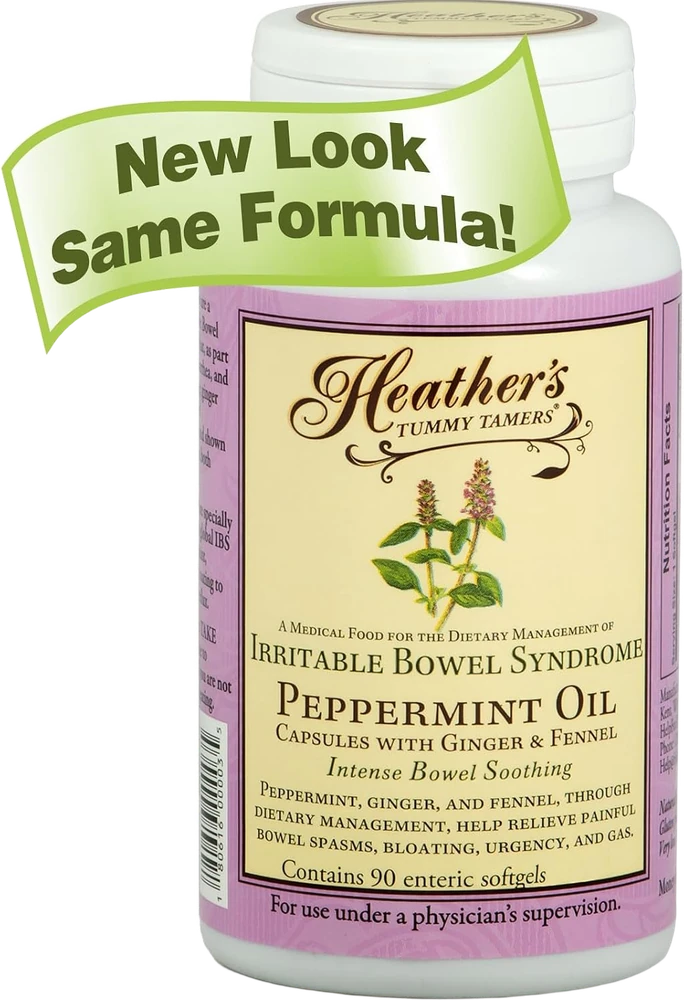
Heather's Tummy Tamers
Heather's Tummy Tamers is the sensitive-stomach answer.
 01
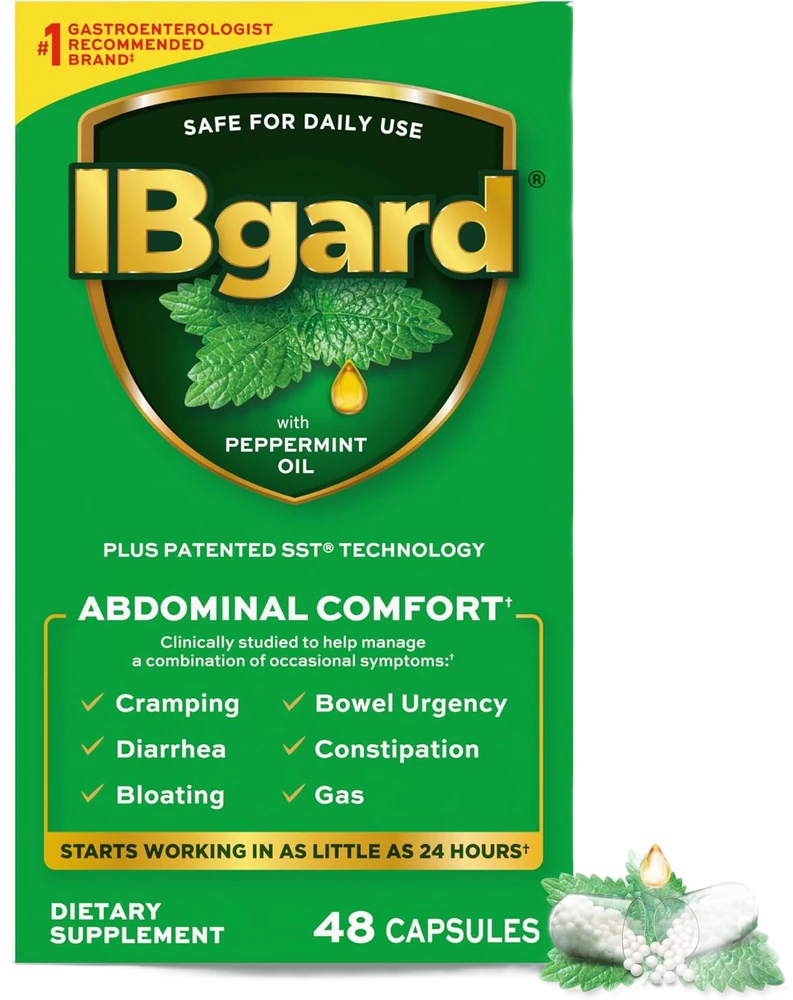
IBgard
If you want the peppermint oil with the strongest IBS-specific evidence and the lowest heartburn risk, IBgard is the pick.
 02
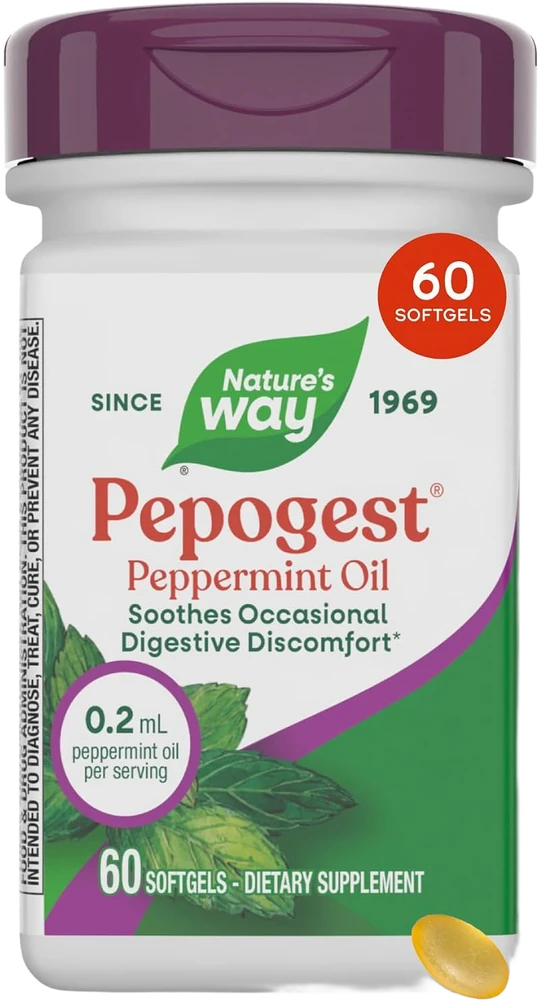
Nature's Way Pepogest
Pepogest is the value gold standard and the smartest default for most buyers.
Quick Answers
Is this the same thing as the old Enzymatic Therapy Peppermint Plus?
Yes — Peppermint Soothe is the rebranded continuation of the well-regarded Enzymatic Therapy Peppermint Plus formula, now sold under the Nature's Way label. Enzymatic Therapy was a respected botanical-medicine brand, and the formula was built to German Commission E standards (the German regulatory monograph system that evaluates herbal medicines for evidence and safety). The rebrand can confuse buyers searching for the original name, but the formula and its heritage carry over. If you used and liked the old Peppermint Plus, this is its current incarnation. If you're new to it, what you're getting is a long-running enteric peppermint blend with rosemary and thyme, backed by Nature's Way's manufacturing.
Why isn't the peppermint dose in milligrams clearly stated?
It's the formula's main weakness on paper. Where Nature's Way's own Pepogest (#3) prints a clean 0.2 mL (~187 mg) peppermint dose per softgel, Peppermint Soothe's label is less explicit about the precise per-capsule peppermint milligrams, partly because it's a multi-oil blend (peppermint plus rosemary and thyme). For an IBS buyer, dose transparency matters: the trials clustered around 180-225 mg of peppermint oil per dose, and you want to know you're hitting that range. The blend is genuinely enteric and the brand is trustworthy, so this isn't a quality concern — it's a transparency one. If precise dose control is your priority, the sibling Pepogest tells you exactly what you're taking.
Do the rosemary and thyme oils help with IBS?
The peppermint is the part with the evidence; rosemary and thyme are supporting digestive herbs with far less IBS-specific data. Peppermint oil's antispasmodic, calcium-channel-blocking effect on gut smooth muscle is what the meta-analyses (Khanna 2014 PMID 24100754, Alammar 2019 PMID 30654773) and the BMJ review (Ford 2008 PMID 19008265) measured. Rosemary and thyme are traditional carminative/aromatic herbs included in the Commission E-style blend, but they don't carry comparable IBS trial backing. They're not harmful at these small amounts, and the heritage formula has a long track record — but buy this for the peppermint and treat the rosemary and thyme as part of the legacy blend, not as proven IBS actives.
How do I take it, and how long before I know if it's working?
Take one softgel up to three times daily, swallowed whole with water, ideally 30-90 minutes before meals — and never chew or open it, because breaking the enteric coat releases the oil in your stomach and causes the exact heartburn the coating prevents. On timing: some people feel less cramping within the first few days since peppermint's antispasmodic action is fairly direct, but the IBS trials measured their benefit at around four weeks (Cash 2016 PMID 26319955 used a 4-week endpoint). So run it consistently for a couple of weeks before deciding. At up to three softgels a day during a flare, the 60-count bottle lasts about three weeks; at a maintenance dose it stretches longer.
Should I buy this or Nature's Way Pepogest?
For most buyers, Pepogest is the more transparent value — and they're from the same parent company. Pepogest (#3) states a clean 0.2 mL (~187 mg) peppermint dose per softgel, costs less per dose (~$0.17 vs ~$0.30), and is a simple single-oil formula, which makes dialing your dose to your symptoms straightforward. Peppermint Soothe's advantages are specific: you want the legacy Enzymatic Therapy formula, you like the Commission E heritage, or you specifically want the rosemary-and-thyme blend. Both are genuine enteric softgels with Nature's Way QC behind them, so it's not a quality decision — it's whether you value the heritage blend (Soothe) or precise, cheaper dosing (Pepogest). For pure value and clarity, Pepogest wins.
Sources & Further Reading
4 peer-reviewed sources, each linked to PubMed
- [1] Khanna 2014 PMID 24100754 — Peppermint oil for the treatment of irritable bowel syndrome: a systematic review and meta-analysis. Systematic review and meta-analysis of nine RCTs (726 patients): enteric-coated peppermint oil was significantly superior to placebo for global IBS symptom improvement (RR 2.23) and abdominal pain (RR 2.14), with mild, transient adverse events. Establishes the enteric-coated form Peppermint Soothe uses as the validated one — and the peppermint, not the rosemary/thyme, as the active.
- [2] Ford 2008 PMID 19008265 — Effect of fibre, antispasmodics, and peppermint oil in the treatment of irritable bowel syndrome: systematic review and meta-analysis. Landmark BMJ meta-analysis pooling fibre, antispasmodics, and peppermint oil for IBS: peppermint oil was the most effective of the three, with a number-needed-to-treat of about 2.5. Confirms that the peppermint component is the evidence-backed engine in a heritage blend like Peppermint Soothe — not the supporting herbs.
- [3] Cash 2016 PMID 26319955 — A Novel Delivery System of Peppermint Oil Is an Effective Therapy for Irritable Bowel Syndrome Symptoms. 4-week randomized, double-blind, placebo-controlled trial (IBSREST, n=72): an ultra-purified, small-intestine-targeted peppermint oil cut Total IBS Symptom Score 40% versus 24.3% on placebo, with a 4-week primary endpoint. The basis for judging any peppermint course — including Peppermint Soothe — over four weeks rather than a single dose.
- [4] Alammar 2019 PMID 30654773 — The impact of peppermint oil on the irritable bowel syndrome: a meta-analysis of the pooled clinical data. Meta-analysis of 12 RCTs (835 patients): peppermint oil was significantly better than placebo for global IBS symptoms (RR 2.39) and abdominal pain (RR 1.78), with NNTs of three and four and no significant excess of adverse events. Reinforces that the peppermint in Peppermint Soothe is the part doing the work, provided the dose lands in the trial range.
Affiliate disclosure: every Amazon link uses our Associates tag (superachieverclub-20). We earn a small commission at no cost to you; it funds independent reviews. We never accept payment to change a ranking.