
Nature's Way Pepogest Enteric Peppermint Oil, 60ct Review
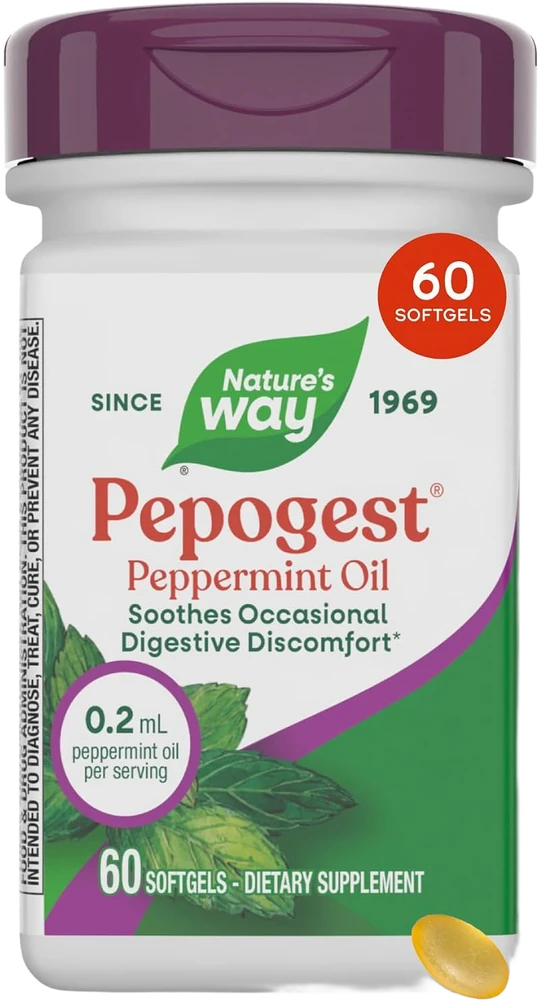 #2 of 10 · Best value / gold-standard enteric✓ Label verified · Supplement Facts read Sep 7, 2026
Real retailer photo, cut out. Label unedited.
Buy it. The clinically validated dose at the best price — the default for most buyers. A genuine enteric softgel delivering the exact 0.2 mL (~187 mg) peppermint oil dose used across the classic IBS trials, honestly labeled, at roughly $0.17 per softgel — one of the lowest costs per effective dose for any real enteric peppermint.
$10 / month$0.17 / 0.2 mL enteric softgel
Why It Scores 9.1 — And The Label Line Behind Each Number
Enteric coating / gut-targeted delivery
40% of scoreA genuine enteric coat that survives stomach acid and releases in the intestine — exactly the gut-targeting the category requires, and the form the IBS trials used. It's a standard single coat rather than IBgard's SST microsphere distribution or Heather's 50%-extra coat, so it sits just below those two on delivery sophistication, but it does the essential job reliably: oil to the intestine, not the stomach.
- Active form
- Enteric-coated softgel — releases in the intestine, not the stomach
Clinical-dose alignment + label honesty
25% of scoreBest on the list. Each softgel is 0.2 mL peppermint oil (~187 mg) — the textbook clinical dose from the classic IBS trials — taken up to 3×/day, and the label states it cleanly with no ambiguity. No proprietary blend, no vague 'peppermint complex,' no under-dosing. When a bottle hits the trial dose in the trial form and tells you exactly what's in it, this is what full marks looks like.
- Per serving
- 0.2 mL peppermint oil (~187 mg) per softgel, up to 3×/day before meals
Third-party testing + manufacturing quality
15% of scoreManufactured to Nature's Way's established QC under cGMP and gluten-free — a solid, trustworthy mainstream brand with decades in market. It doesn't carry a marketed third-party seal, public COA, or ultra-purification claim the way some picks do, which keeps it from the top tier here, but the manufacturing pedigree is dependable.
- Testing
- Nature's Way QC, cGMP-manufactured, gluten-free
Cost per effective dose
12% of scoreTop of the category. At roughly $0.17 per 0.2 mL softgel, it's one of the lowest costs per gut-delivered clinical dose of any genuine enteric peppermint on the market — about a seventh of IBgard's per-serving cost while delivering the same trial-range dose. There's simply no cheaper way to get the clinically validated peppermint dose into your intestine intact.
- Bottle
- 60 softgels · ~20 days at 3/day, much longer at maintenance
- Price
- ~$10 / month = ~$0.17 per 0.2 mL enteric softgel
Real-world IBS/bloating response + tolerability
8% of scoreExcellent fit with the evidence: it is the trial form and dose, so it inherits the meta-analytic support directly (Khanna 2014, Ford 2008, Alammar 2019). The single-oil simplicity makes it easy to titrate to symptoms. It lacks the added carminatives (ginger/fennel) some picks include for bloating, but for core IBS cramping and pain it's the textbook tool.
- More Specs
- Trial alignment
- The exact 0.2 mL (~187 mg) dose used across the classic peppermint-oil IBS trials
- Formula
- Single-oil — no added botanicals, no proprietary blend
- Best for
- Value buyers who want the validated dose without paying for SST or an extra coat
Label verified. Every figure read from the Supplement Facts photo, Sep 7, 2026.
Marketing Claims Vs. Reality
Delivers 0.2 mL (~187 mg) of peppermint oil per enteric softgel.
This is the cleanly stated, label-verifiable dose and it matches the classic enteric peppermint softgel used across the IBS trials. The transparency and trial alignment are the product's core strength — exactly the validated dose, clearly declared.
Enteric-coated to release in the intestine and avoid stomach upset.
A genuine enteric coat that survives stomach acid and opens in the intestine — the gut-targeting the whole category depends on. It routes the oil to where the antispasmodic effect works and away from the stomach where freed peppermint causes heartburn. Real and correctly applied.
Clinically supported for relief of occasional IBS symptoms.
Because it is the trial form and dose, it inherits the meta-analytic evidence directly: Khanna 2014 (PMID 24100754) and Ford 2008 (PMID 19008265, BMJ) found enteric peppermint oil superior to placebo / most effective among common IBS therapies, confirmed by Alammar 2019 (PMID 30654773). Among the best-supported efficacy claims here.
Gluten-free and made to high quality standards.
Consistent with Nature's Way's labeling and cGMP manufacturing — gluten-free and produced to the brand's established QC. Standard for a mainstream brand of this pedigree and verifiable on the label.
Gentle on the stomach.
True for the intended whole-softgel use because the enteric coat keeps the oil out of the stomach — but peppermint can still aggravate reflux in people with significant GERD or hiatal hernia, and a standard single coat is less reflux-tolerant than Heather's extra coat (#3). Accurate for most users; not a guarantee for reflux-disease patients.
What Our Test Actually Found
It is literally the trial dose in the trial form — that's the whole value proposition
Peppermint oil's IBS evidence was built on a specific product: a 0.2 mL (~187 mg) enteric-coated softgel taken up to three times daily. Pepogest is that product, sold cheaply and labeled honestly. There's no interpretation needed and no proprietary delivery story to evaluate — when you take Pepogest, you're taking the thing the meta-analyses validated. That tight alignment between what you buy and what the studies tested is rarer than it should be in supplements, and it's exactly why Pepogest is the value default rather than just the cheap option.
Nothing on the list delivers the clinical dose cheaper
At roughly $0.17 per softgel, Pepogest is the lowest cost per gut-delivered clinical dose of any genuine enteric peppermint here. The contrast with the under-dosed budget bottles is the key insight: Mason (#9) and Carlyle (#8) are cheaper per softgel but only 50 mg each, so you need three or four to reach one clinical dose — which erases their price advantage. Pepogest hits the full ~187 mg dose in a single softgel at a rock-bottom per-dose cost. Cheap and clinical at once, which the low-dose bottles can't claim.
The single coat is the one place it gives ground — and only for reflux-prone users
Pepogest uses a standard single enteric coat. For most people that's exactly enough, because a standard coat reliably survives the stomach to release in the intestine — it's the form the trials used. The only buyer it doesn't fully serve is the one who's gotten heartburn from standard softgels; for them, Heather's Tummy Tamers' 50%-extra coat (#3) gives a wider safety margin. That's the honest boundary of Pepogest: the value default for normal stomachs, one step below the extra-coat pick for sensitive ones.
Single-oil simplicity makes dosing easy to control
Because Pepogest is just peppermint oil — no ginger, fennel, rosemary, or thyme blended in — you can titrate cleanly to your symptoms: start at one softgel before a meal, add a second or third dose on bad days, and you always know exactly how much peppermint you're taking. The blends (NOW #4, Solaray #6) add carminatives for bloating but cloud the peppermint dose; Pepogest trades that breadth for precision and transparency. For a buyer who wants to dial in the validated active without confounders, that simplicity is a feature.
Plan around the 60-count bottle at flare dosing
At full 3×/day flare dosing, a 60-softgel bottle is about three weeks of cover, so heavy users will reorder roughly monthly. At maintenance (once or twice daily) it stretches considerably longer. It's not a knock on value — the per-dose cost is still the lowest here — but it's worth knowing the bottle empties faster during a bad stretch, the same dynamic as the other 60-count enteric picks. Buyers who want a longer single-bottle runway might prefer the 90-count blends, accepting the added oils.
Full analysis: all pros & cons (8), buy if / skip if
- Delivers the exact 0.2 mL (~187 mg) enteric dose used across the classic peppermint-oil IBS trials — the textbook clinical dose, no guesswork
- Genuinely enteric-coated to survive stomach acid and release in the intestine, so it works for IBS and minimizes heartburn
- One of the lowest costs per effective dose of any real enteric peppermint on the market (~$0.17/softgel)
- Simple single-oil formula with a clear, honest dose — easy to dial 1-3×/day to your symptoms
- Backed by Nature's Way's established QC and cGMP manufacturing, gluten-free
- Plain softgel with no extra coat — the most reflux-sensitive users may still prefer Heather's extra-enteric version (#3)
- 60-count bottle empties in about three weeks at full 3×/day flare dosing
- No added carminatives (ginger/fennel) for bloating — it's a pure antispasmodic, not a gas-and-bloating blend
- You want the exact 0.2 mL (~187 mg) enteric dose the IBS trials used — no guesswork
- You're weighing cost against efficacy and want the best value in the category
- You want a clean single-oil formula with a clearly stated dose you can titrate
- You tolerate standard enteric coatings fine and don't need SST or an extra coat
- You're reflux-prone and have gotten heartburn from standard enteric softgels — step up to Heather's extra coat (#3)
- You want the strongest single-product evidence — IBgard (#1) has its own RCT and SST delivery
- You want a high softgel count for a long flare runway — the 60-count empties in ~3 weeks at 3×/day
A genuine enteric softgel delivering the exact 0.2 mL (~187 mg) peppermint oil dose used across the classic IBS trials, honestly labeled, at roughly $0.17 per softgel — one of the lowest costs per effective dose for any real enteric peppermint. Simple single-oil formula you can dial 1-3×/day to your symptoms. The only reasons to spend more: IBgard's stronger single-product evidence and SST delivery (#1), or Heather's extra coat for severe reflux sensitivity (#2).
Nature's Way Pepogest is the smartest default in the peppermint oil category for one reason: it delivers the exact dose the trials used, in the exact form the trials used, at one of the lowest prices on the shelf. The classic enteric-coated peppermint softgel behind the IBS evidence base is 0.2 mL of peppermint oil — about 187 mg — taken up to three times daily, and that's precisely what Pepogest is. The enteric coat survives stomach acid and releases the oil in the intestine, where menthol's antispasmodic effect relieves IBS cramping, and away from the stomach where freed oil causes heartburn. There's no proprietary delivery story and no premium markup — just the clinically validated dose, honestly labeled. Here's how it scores on the four numbers that decide a peppermint oil's worth.
The value gold standard and the smartest default for most buyers.

Pepogest is what we recommend to most readers weighing cost against efficacy. It hits the precise 0.2 mL (~187 mg) enteric dose the IBS trials used, in the exact enteric form they used, it's honestly labeled, and it costs a fraction of the engineered options — there's simply no cheaper way to get the clinically validated peppermint dose into your intestine intact. The single-oil simplicity lets you titrate cleanly to your symptoms, and Nature's Way's QC makes it a dependable buy. The only reasons to spend more are specific and honest: IBgard (#1) has the stronger single-product evidence and SST delivery (its own RCT, the lowest heartburn risk) and is worth the premium for a first serious attempt or for reflux-prone users; and Heather's Tummy Tamers (#3) has the 50%-extra coat for people who've gotten heartburn from standard softgels. For everyone else — the majority of buyers — start with Pepogest. Swallow one softgel whole, 30-90 minutes before meals, up to three times daily, titrate to your symptoms, and give it a couple of weeks before you judge it.
If This Doesn’t Fit — Try These
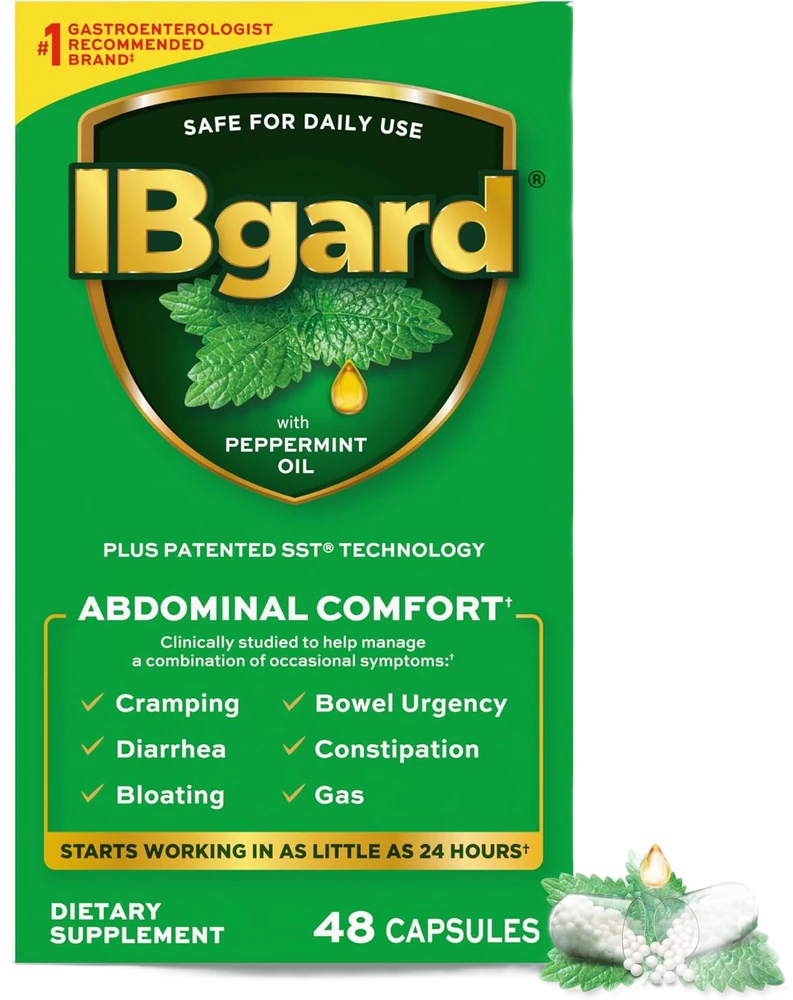 01
IBgard
If you want the peppermint oil with the strongest IBS-specific evidence and the lowest heartburn risk, IBgard is the pick.
02Nature's Way Pepogest
Pepogest is the value gold standard and the smartest default for most buyers.
 05
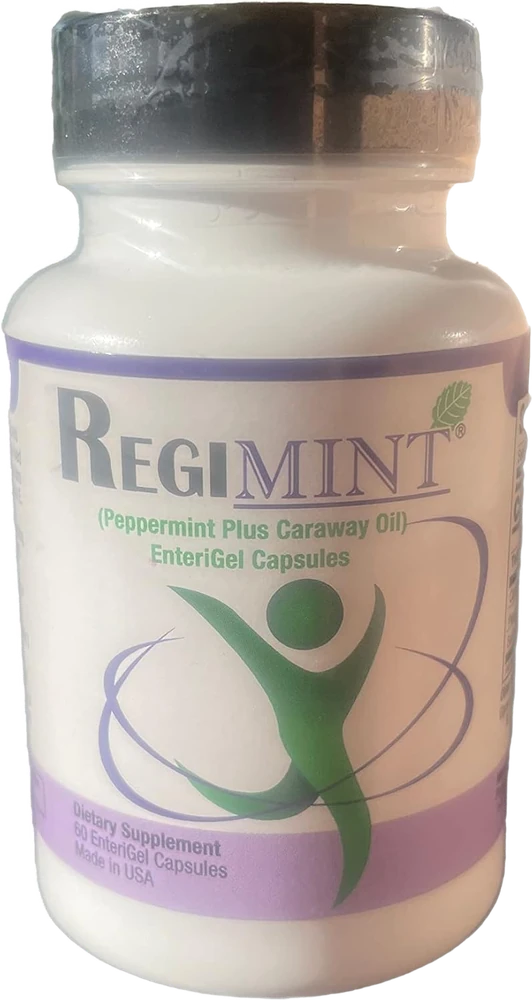
Regimint
Regimint is the pick if your symptoms straddle IBS and functional dyspepsia (upper-gut fullness, early satiety, bloating after meals).
Quick Answers
Why is the 0.2 mL dose such a big deal?
Because it's the textbook clinical dose, not a number Nature's Way invented. The classic enteric-coated peppermint oil softgel used across the IBS trials is 0.2 mL of peppermint oil — about 187 mg — taken up to three times daily. That's the form and dose behind the meta-analytic evidence (Khanna 2014 PMID 24100754, Ford 2008 PMID 19008265, Alammar 2019 PMID 30654773) that put peppermint oil ahead of placebo and ahead of fibre for IBS. Pepogest delivers exactly that — no guesswork, no math, no under-dosing. When a bottle hits the trial dose in the trial form, you're getting the thing the studies actually validated, which is why Pepogest is the value default.
Is Pepogest really as good as IBgard for a third of the price?
For most buyers, the gap is smaller than the price difference suggests. Both deliver an enteric/gut-targeted peppermint dose in the clinical range, and the class evidence covers them both. What IBgard (#1) adds is its specific SST microsphere delivery — splitting ultra-purified oil into many triple-coated beads that release across the small intestine — plus its own positive RCT (Cash 2016) and the lowest heartburn risk in the category. Pepogest is a single enteric softgel: it works, it's honestly dosed, and it costs a fraction as much. If you're reflux-prone or want the strongest single-product evidence, IBgard earns its premium. If you tolerate standard enteric and care about value, Pepogest does the core job for far less.
How do I take it, and how many per day?
Swallow one enteric softgel whole, 30-90 minutes before meals, up to three times daily — that's the trial cadence. Never chew, crush, or open it: breaking the enteric coat releases the 0.2 mL of oil in your stomach, where it relaxes the esophageal valve and causes the exact heartburn the coating exists to prevent. Start at once or twice daily and titrate up to three times with your symptoms. Give it a fair trial — some people feel less cramping within days, but the studies measured full benefit around four weeks, so judge it over a couple of weeks. At full 3×/day flare dosing the 60-count bottle lasts about three weeks; at maintenance it stretches much longer.
Is a plain single enteric coat enough, or do I need the extra coat?
For most people a standard enteric coat is plenty — it's the form the trials used and it reliably survives the stomach to release in the intestine. The case for an extra coat (Heather's Tummy Tamers, #3) is specific: if you've gotten reflux or a peppermint burp-back from standard softgels, the thicker coat gives a wider margin against early stomach release. Pepogest uses a genuine standard enteric coat, which is why it's the value default rather than the sensitive-stomach pick. If standard enteric peppermint has caused you heartburn before, step up to the extra-coat option; otherwise Pepogest's single coat does the job.
How is Pepogest different from Nature's Way Peppermint Soothe (#7)?
Same parent brand, two different products. Pepogest is a clean single-oil enteric softgel stating the exact 0.2 mL (~187 mg) peppermint dose. Peppermint Soothe (#7) is the legacy Enzymatic Therapy Peppermint Plus formula — an enteric peppermint blended with rosemary and thyme oils, built to German Commission E standards — but with a less cleanly stated per-capsule peppermint figure and a higher price. Unless you specifically want the rosemary/thyme blend or the heritage formula, Pepogest is the more transparent value from the same company: you know your exact peppermint dose and you pay less for it.
Will Pepogest give me heartburn, and who should avoid it?
The enteric coat is specifically there to prevent it — it routes the oil past the stomach to release in the intestine, so a correctly swallowed softgel minimizes the reflux that plain peppermint oil causes. But peppermint inherently relaxes the lower esophageal sphincter, so it's not heartburn-proof for everyone: if you have significant GERD, a hiatal hernia, or active reflux disease, be cautious and clear it with a clinician, and consider the extra-coat option (#2). The absolute rule is to swallow it whole — chewing or opening the softgel dumps the oil in your stomach and produces exactly the heartburn the coat prevents.
Sources & Further Reading
4 peer-reviewed sources, each linked to PubMed
- [1] Khanna 2014 PMID 24100754 — Peppermint oil for the treatment of irritable bowel syndrome: a systematic review and meta-analysis. Systematic review and meta-analysis of nine RCTs (726 patients): enteric-coated peppermint oil — the exact form and dose Pepogest delivers — was significantly superior to placebo for global IBS symptom improvement (RR 2.23) and abdominal pain (RR 2.14). The cornerstone evidence Pepogest inherits directly.
- [2] Ford 2008 PMID 19008265 — Effect of fibre, antispasmodics, and peppermint oil in the treatment of irritable bowel syndrome: systematic review and meta-analysis. Landmark BMJ meta-analysis: peppermint oil was the most effective of fibre, antispasmodics, and peppermint oil for IBS, with a number-needed-to-treat of about 2.5. Establishes the validated dose Pepogest delivers as a front-line IBS therapy.
- [3] Cash 2016 PMID 26319955 — A Novel Delivery System of Peppermint Oil Is an Effective Therapy for Irritable Bowel Syndrome Symptoms. 4-week randomized, placebo-controlled trial of a small-intestine-targeted sustained-release peppermint oil: 40% reduction in Total IBS Symptom Score at 4 weeks versus 24.3% on placebo. The newer-delivery benchmark against which a classic enteric softgel like Pepogest is the value alternative.
- [4] Alammar 2019 PMID 30654773 — The impact of peppermint oil on the irritable bowel syndrome: a meta-analysis of the pooled clinical data. Meta-analysis of 12 RCTs (835 patients): peppermint oil significantly better than placebo for global IBS symptoms (RR 2.39) and abdominal pain (RR 1.78), with no significant excess of adverse events. Confirms the safety and efficacy of the enteric peppermint dose Pepogest provides.
Affiliate disclosure: every Amazon link uses our Associates tag (superachieverclub-20). We earn a small commission at no cost to you; it funds independent reviews. We never accept payment to change a ranking.