
Heather's Tummy Tamers Peppermint Oil, 90ct Review
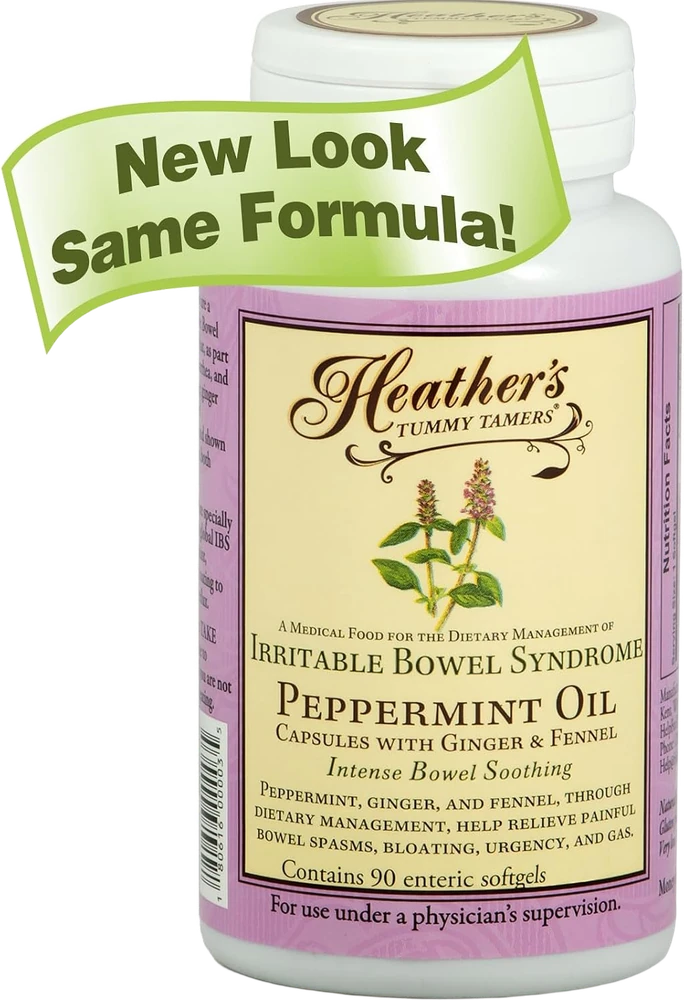 #3 of 10 · Best for sensitive stomachs✓ Label verified · Supplement Facts read Sep 7, 2026
Real retailer photo, cut out. Label unedited.
Buy it. The reflux-tolerant peppermint for people other softgels burned. An enteric softgel with 50% more enteric coating than standard — the most reflux-tolerant option on the list — plus fennel and ginger for gas and bloating, from a dedicated IBS brand.
$22 / month$0.30 / softgel
Why It Scores 9.0 — And The Label Line Behind Each Number
Enteric coating / gut-targeted delivery
40% of scoreNear the top of the category. A genuine enteric softgel built with 50% more enteric coating than the industry standard — a thicker pH-sensitive shell more likely to survive stomach transit intact, which makes it the most reflux-tolerant enteric option on the list. It edges out standard single-coat softgels on heartburn protection; only IBgard's SST microsphere distribution scores higher on delivery sophistication.
- Active form
- Enteric-coated softgel (50% more enteric coating than industry standard)
Clinical-dose alignment + label honesty
25% of scoreDosed at 1 softgel up to 3×/day before meals as a peppermint-plus-fennel-plus-ginger blend, and the label states all three clearly: 181 mg peppermint oil (0.2 mL), 19.3 mg fennel oil, and 17.6 mg ginger oil per softgel. The peppermint lands right at the edge of the 180-225 mg trial window — not as generous as NOW's 362 mg blend, but a real, fully disclosed dose. The remaining knock is that it's a blend, so you can't isolate the peppermint from the carminatives. The dosing schedule itself matches the trial cadence (before meals, up to 3×/day).
- Per serving
- 181 mg peppermint oil + 19.3 mg fennel oil + 17.6 mg ginger oil (1 softgel, 1-3×/day before meals)
Third-party testing + manufacturing quality
15% of scoreMade by Heather's Tummy Care, a dedicated IBS-focused brand with a strong dietitian and patient following, and formulated specifically for IBS and reflux-sensitive users. The extra-coat engineering is itself evidence of manufacturing intent aimed at the right failure mode. Not marketed with a specific third-party seal or public COA the way some picks are, which holds it just short of the top tier here.
Cost per effective dose
12% of scoreAround $0.30 per softgel — mid-priced, well below IBgard's ~$1.25 per serving but above the ~$0.17 Pepogest softgel. The 90-softgel bottle gives a long runway (roughly 1-3 months depending on dosing), which softens the per-unit price. Reasonable value for the extra coat plus carminatives, though not the cheapest way to get a clinical peppermint dose.
- Bottle
- 90 softgels · ~1-3 months depending on dosing
- Price
- ~$22 / month = ~$0.30 per softgel
Real-world IBS/bloating response + tolerability
8% of scoreStrong real-world fit: it delivers the evidence-backed enteric peppermint active (Khanna 2014, Ford 2008) in the form most tolerable for reflux-prone users, and adds fennel and ginger for the gas/bloating symptoms peppermint alone doesn't target. For the sensitive-stomach, bloating-dominant buyer it's arguably the best-matched formula on the list short of IBgard's trialed delivery.
- More Specs
- Reflux tolerance
- Extra enteric coat — the most reflux-tolerant enteric option on the list
- Carminatives
- Added fennel and ginger oils target gas and bloating
- Brand focus
- Heather's Tummy Care — dedicated IBS-focused brand, dietitian following
- Best for
- People who get heartburn from standard peppermint softgels
Label verified. Every figure read from the Supplement Facts photo, Sep 7, 2026.
Marketing Claims Vs. Reality
Enteric-coated with 50% more coating than the industry standard.
The signature feature of the product and the basis for its sensitive-stomach positioning — a genuinely thicker enteric coat designed to survive the stomach more reliably than a standard single coat, reducing the early stomach release that causes peppermint heartburn. Real and the reason it's the most reflux-tolerant pick here.
Relieves the cramping and pain of IBS.
Enteric-coated peppermint oil is well-evidenced for IBS cramping and pain: Khanna 2014 (PMID 24100754) and Ford 2008 (PMID 19008265, BMJ) both found it superior to placebo / most effective among common IBS therapies, and Alammar 2019 (PMID 30654773) confirmed it. The peppermint active here is the validated one; the claim is sound.
Fennel and ginger help with gas and bloating.
Fennel and ginger are traditional carminatives reasonably aimed at gas and bloating, and well tolerated — but their IBS-specific clinical evidence is far weaker than peppermint's. The addition is sensible and likely helpful for bloating, but it rests on traditional use more than RCT data, so the claim is plausible rather than trial-proven.
Formulated specifically for IBS and sensitive stomachs.
Consistent with the product's design and the brand's dedicated IBS focus — the extra enteric coat plus carminatives is a coherent, IBS-and-reflux-targeted formulation, not a generic peppermint softgel. The positioning matches the actual build.
Won't cause the heartburn associated with peppermint.
Strongly supported for sensitive users because the extra coat reduces stomach release — it's the most reflux-tolerant option here. But it's not absolute: peppermint relaxes the lower esophageal sphincter, so people with significant GERD or hiatal hernia can still get reflux, and chewing/opening the softgel defeats the coat. Accurate for intended whole-capsule use; not a universal guarantee.
What Our Test Actually Found
Correction: the label does state the peppermint dose
An earlier version of this review said the per-capsule peppermint milligrams weren't stated as cleanly as a simple 0.2 mL softgel, implying Heather's doesn't disclose its dose. The Supplement Facts panel reads 181 mg Peppermint Oil (0.2 mL), 19.3 mg Fennel Oil, and 17.6 mg Ginger Oil, all per softgel. We re-read the label on Sep 7, 2026 and corrected the dose-transparency criterion score, the related prose, and the pros/cons list to reflect that all three oils are fully quantified — the real trade-off is that it's a blend, not that it's undisclosed.
The extra coat is the entire point — and it solves a real, common failure
Heartburn is the number-one reason people abandon peppermint oil, and it comes from the oil releasing in the stomach and relaxing the lower esophageal sphincter. Tummy Tamers' 50%-thicker enteric coat is engineered against exactly that: a heavier pH-sensitive shell is more likely to survive the full acidic stomach transit and open in the intestine, where the antispasmodic effect belongs. For a buyer who tolerates standard enteric fine, this is overkill. For one who's been burned by standard softgels, it's the specific feature that turns peppermint from 'didn't work / gave me reflux' into a usable therapy.
It treats two symptom clusters, not one
Most peppermint bottles are pure antispasmodics — they target cramping and pain via menthol's calcium-channel blockade. Tummy Tamers folds in fennel and ginger, two carminatives aimed at the separate problem of gas and bloating. So the formula covers both the cramp/pain axis (peppermint, well-evidenced) and the gas/bloating axis (fennel/ginger, traditional). That breadth is genuinely useful for the bloating-dominant IBS buyer — with the honest caveat that the peppermint carries the real trial weight and the carminatives are the lighter-evidence add-ons.
You can't isolate the peppermint — but the label is honest about all three oils
Tummy Tamers states its formula clearly: 181 mg peppermint oil (0.2 mL), 19.3 mg fennel oil, and 17.6 mg ginger oil per softgel, all quantified on the Supplement Facts panel — the same standard of disclosure as Pepogest's clean 0.2 mL (~187 mg) peppermint figure. The real trade-off isn't transparency, it's that this is a blend: you get fennel and ginger alongside the peppermint whether you want them or not, and you can't take the peppermint on its own. The 181 mg dose lands right at the edge of the 180-225 mg trial window. For a sensitive-stomach buyer choosing it for the coat, the blend is a feature; for a dose purist who wants isolated peppermint, the simple 0.2 mL softgel (Pepogest) is the better fit.
One softgel per dose is simpler than IBgard's 2-capsule serving
A small but real ergonomic edge: Tummy Tamers is dosed as a single softgel, 1-3 times daily, versus IBgard's 2-capsule (180 mg) serving. Combined with the 90-count bottle, that means a long, low-friction runway — roughly 1-3 months depending on how aggressively you dose — and an easy titration (start at one softgel, add doses with symptoms). It's an easier daily habit than the larger IBgard serving for the same before-meals cadence.
Still not for active reflux disease — clear it with a clinician
The extra coat makes this the most reflux-tolerant option, but it's a relative advantage, not immunity. Peppermint inherently relaxes the lower esophageal sphincter, so anyone with significant GERD, a hiatal hernia, or active reflux disease should be cautious and check with a clinician first — peppermint can aggravate reflux even in well-coated forms for some people. And the coat only works if the softgel is swallowed whole; chewing or opening it dumps the oil in the stomach and undoes the whole design.
Full analysis: all pros & cons (8), buy if / skip if
- Extra enteric coating (50% more than standard) makes it the most reflux-tolerant enteric option on the list — the pick for people who get heartburn from other peppermint
- Adds fennel and ginger, both carminatives targeting gas and bloating, on top of peppermint's antispasmodic effect
- Created within a dedicated IBS-focused brand (Heather's Tummy Care) with a strong dietitian and patient following
- Single softgel per dose with a 90-count bottle gives a long, low-friction runway at the typical 1-3/day
- Delivers the evidence-backed enteric peppermint active (Khanna 2014, Ford 2008) in the gentlest form for sensitive guts
- No specific third-party testing seal or public COA advertised, the way some other picks are
- Combination formula means you can't isolate the peppermint dose if you only want peppermint
- Fennel and ginger carry far less IBS trial evidence than peppermint — the peppermint is doing the heavy lifting
- Standard enteric peppermint has given you reflux or heartburn before — this is the most coated option
- You want gas-and-bloating support (fennel + ginger) alongside peppermint's antispasmodic effect
- You want a single softgel per dose rather than IBgard's 2-capsule serving
- You like buying from a dedicated IBS-focused brand with dietitian credibility
- You want a specific third-party testing seal or public COA advertised — this brand doesn't publicize one
- You want isolated peppermint with no other oils in the formula
- You want the strongest formulation evidence — IBgard's SST (#1) has its own RCT
An enteric softgel with 50% more enteric coating than standard — the most reflux-tolerant option on the list — plus fennel and ginger for gas and bloating, from a dedicated IBS brand. The extra coat is purpose-built for people who get heartburn from standard peppermint, and the 90-softgel bottle gives a long runway at 1-3 softgels a day. The label clearly states 181 mg peppermint oil, 19.3 mg fennel oil, and 17.6 mg ginger oil per softgel. The trade-off: it's a blend, so you can't isolate the peppermint dose, and there's no specific third-party seal advertised.
Heather's Tummy Tamers is built for the exact buyer peppermint oil usually fails: the person who gets reflux or heartburn from a standard softgel and concludes peppermint just isn't for them. The fix is mechanical — 50% more enteric coating than the industry standard, a thicker pH-sensitive shell that's more likely to survive the acidic stomach intact and open in the intestine, where peppermint's menthol relaxes the cramping that drives IBS pain instead of relaxing the esophageal valve that causes heartburn. On top of that, Heather's adds fennel and ginger, two carminatives aimed at gas and bloating, broadening the formula beyond a pure antispasmodic. It comes from a dedicated IBS brand with real dietitian and patient credibility. Here's how it scores on the four numbers that decide a peppermint oil's worth.
The sensitive-stomach answer when standard peppermint has burned you.

Heather's Tummy Tamers is the pick for one specific, common situation: peppermint oil should help your IBS, but standard softgels give you reflux or heartburn and you've nearly given up on it. The 50%-extra enteric coat is purpose-built for exactly that failure mode — a heavier shell that's more likely to survive the stomach and release in the intestine — which makes it the most reflux-tolerant enteric option on this list. The added fennel and ginger broaden it from a pure cramp/pain antispasmodic into a formula that also targets gas and bloating, and it comes from a dedicated IBS brand with genuine dietitian credibility. The two reasons to choose something else: if you want isolated peppermint with no other oils, Nature's Way Pepogest (#2) gives you a clean 0.2 mL (~187 mg) single-ingredient softgel at a lower price; and if you want the strongest formulation evidence, IBgard (#1) has its own positive RCT on its SST delivery. But for the reflux-prone, bloating-dominant buyer, Tummy Tamers is the best-matched formula short of IBgard. Take one softgel 30-90 minutes before meals, swallow it whole, titrate up to three times daily with your symptoms, and give it a couple of weeks before judging it.
If This Doesn’t Fit — Try These
 01
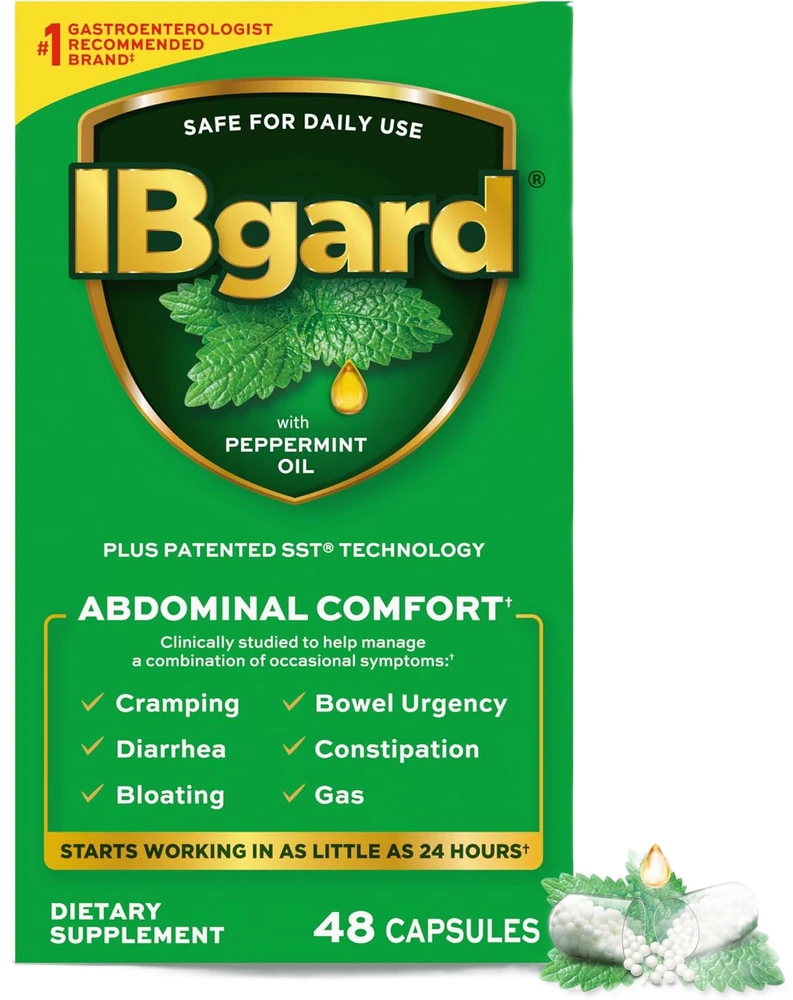
01IBgard
If you want the peppermint oil with the strongest IBS-specific evidence and the lowest heartburn risk, IBgard is the pick.
 02
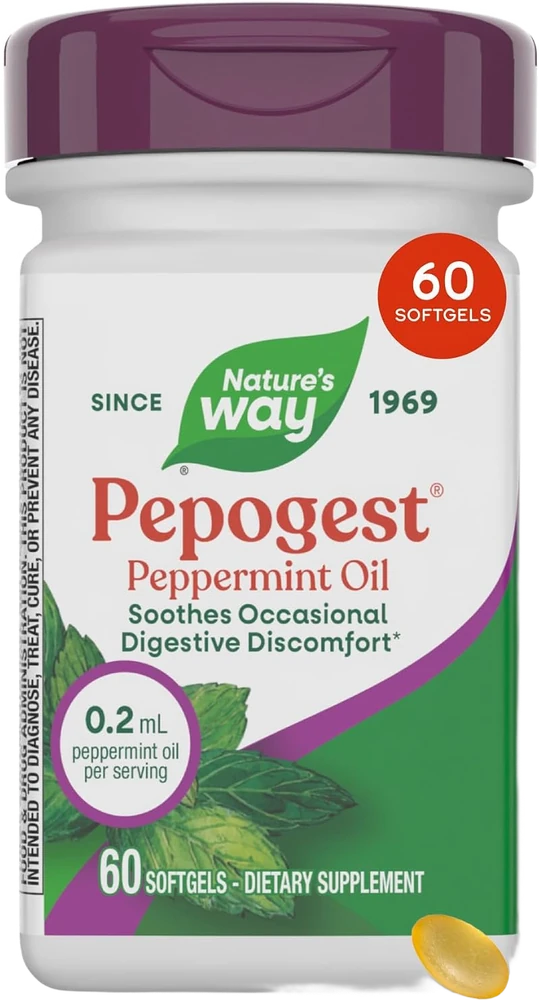
02Nature's Way Pepogest
Pepogest is the value gold standard and the smartest default for most buyers.
 04
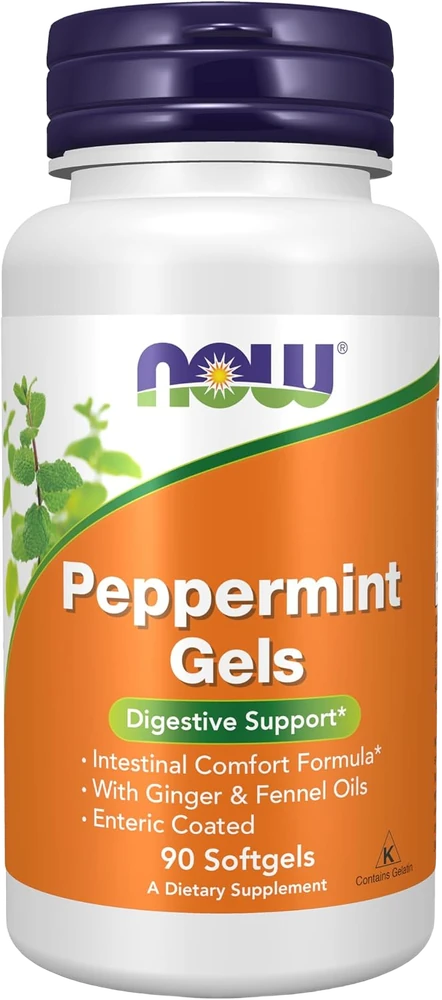
04NOW Peppermint Gels
NOW Peppermint Gels are the bulk-value pick — proof that a budget brand can still get the fundamentals right.
Quick Answers
What does '50% more enteric coating' actually do for me?
It buys a wider safety margin against stomach release — the thing that causes peppermint heartburn. An enteric coat is a pH-sensitive shell that's supposed to stay sealed through the acidic stomach and only open in the intestine; a thicker coat is more likely to survive the full stomach transit intact even in people with faster-emptying or more acidic stomachs, so less oil escapes early to relax the lower esophageal sphincter. For most users a standard enteric coat (like Pepogest, #3) is enough. But if you've gotten reflux or a peppermint 'burp-back' from standard softgels, the extra coat is the specific feature that addresses your problem, and it's why Tummy Tamers is the sensitive-stomach pick rather than just another enteric softgel.
Why add fennel and ginger — do they actually help, or is it filler?
They're carminatives, which target a different symptom than peppermint does. Peppermint oil is an antispasmodic — menthol blocks calcium channels in gut smooth muscle to relax the cramping and spasm behind IBS pain (the mechanism behind Khanna 2014 and Ford 2008). Fennel and ginger are traditional carminatives aimed at gas and bloating. So the blend broadens the formula from a pure cramp/pain antispasmodic into something that also addresses gas and post-meal bloating. The honest caveat: peppermint has by far the strongest IBS trial evidence of the three; fennel and ginger are reasonable, well-tolerated additions but carry much less RCT backing. The peppermint is doing the heavy lifting.
How is this different from IBgard (#1)?
Different solutions to peppermint's two problems. IBgard uses SST microspheres — it splits ultra-purified oil into many triple-coated beads that release across the small intestine, and it has its own positive RCT (Cash 2016). Tummy Tamers uses a single enteric softgel with a thicker-than-standard coat, plus added fennel and ginger for bloating. IBgard has the stronger formulation evidence and the lowest heartburn risk; Tummy Tamers is a single softgel (simpler dosing than IBgard's 2-capsule serving), adds carminatives, runs cheaper per dose, and comes from a dedicated IBS brand. If you want the most-studied delivery, IBgard. If you specifically want extra reflux protection plus gas/bloating support in one softgel, Tummy Tamers.
What's the peppermint dose, and how many do I take?
Heather's states the formula clearly on the Supplement Facts panel: 181 mg peppermint oil (0.2 mL), 19.3 mg fennel oil, and 17.6 mg ginger oil per softgel, dosed at 1 softgel up to three times daily before meals. That puts the peppermint right at the edge of the 180-225 mg trial window — the real caveat is that it's a blend, so you get fennel and ginger alongside the peppermint rather than an isolated dose. Practically: take 1 softgel 30-90 minutes before meals, up to three times a day, swallowing it whole (never chew or open it, or you break the enteric coat and free the oil in your stomach). Start at once or twice daily and titrate up with your symptoms. The 90-softgel bottle gives a long runway at this dosing.
Is Heather's Tummy Care a legit brand or just marketing?
It's a dedicated IBS-focused brand with a genuine following among dietitians and IBS patients, built around products formulated specifically for IBS management rather than a generic supplement line. That focus is the reason for the design choices here — the extra enteric coat and the carminative additions are aimed squarely at the IBS/sensitive-stomach buyer. It's not a substitute for the peppermint-oil class evidence (Khanna 2014 PMID 24100754, Ford 2008 PMID 19008265, Alammar 2019 PMID 30654773), which is what actually validates peppermint for IBS — but as a delivery of that evidence-backed active in a reflux-tolerant, bloating-friendly form, the brand is credible.
Will this give me heartburn, and who should still avoid it?
It's the most reflux-tolerant enteric option on the list specifically because of the extra coat, so it's the peppermint most likely to avoid heartburn in sensitive users. But no oral peppermint is heartburn-proof: peppermint relaxes the lower esophageal sphincter, so anyone with significant GERD, a hiatal hernia, or active reflux disease should be cautious and clear it with a clinician first, since peppermint can aggravate reflux even in coated forms for some people. And the rule is absolute — swallow whole. Chewing or opening the softgel defeats the entire extra-coat advantage and dumps the oil exactly where you don't want it.
Sources & Further Reading
4 peer-reviewed sources, each linked to PubMed
- [1] Khanna 2014 PMID 24100754 — Peppermint oil for the treatment of irritable bowel syndrome: a systematic review and meta-analysis. Systematic review and meta-analysis of nine RCTs (726 patients): enteric-coated peppermint oil was significantly superior to placebo for global IBS symptom improvement (RR 2.23) and abdominal pain (RR 2.14). Validates the enteric peppermint active that Tummy Tamers delivers in its extra-coated form.
- [2] Ford 2008 PMID 19008265 — Effect of fibre, antispasmodics, and peppermint oil in the treatment of irritable bowel syndrome: systematic review and meta-analysis. Landmark BMJ meta-analysis: among fibre, antispasmodics, and peppermint oil for IBS, peppermint oil was the most effective, with a number-needed-to-treat of about 2.5. Establishes peppermint oil as a front-line IBS therapy ahead of fibre.
- [3] Cash 2016 PMID 26319955 — A Novel Delivery System of Peppermint Oil Is an Effective Therapy for Irritable Bowel Syndrome Symptoms. 4-week randomized, double-blind, placebo-controlled trial (IBSREST) of a small-intestine-targeted sustained-release peppermint oil: 40% reduction in Total IBS Symptom Score at 4 weeks versus 24.3% on placebo. Demonstrates how much delivery form matters — the rationale behind Tummy Tamers' extra-coat approach to keeping oil out of the stomach.
- [4] Alammar 2019 PMID 30654773 — The impact of peppermint oil on the irritable bowel syndrome: a meta-analysis of the pooled clinical data. Meta-analysis of 12 RCTs (835 patients): peppermint oil significantly better than placebo for global IBS symptoms (RR 2.39) and abdominal pain (RR 1.78), with no significant excess of adverse events. Confirms the safety and efficacy of the peppermint active at the core of this formula.
Affiliate disclosure: every Amazon link uses our Associates tag (superachieverclub-20). We earn a small commission at no cost to you; it funds independent reviews. We never accept payment to change a ranking.