
Berberine: Benefits, Dosage & Side Effects (2026)
Berberine is a yellow isoquinoline alkaloid from Berberis aristata and goldenseal that activates AMPK — the same cellular energy-sensor pathway as metformin — lowering blood glucose, HbA1c, and lipids in 30+ human RCTs at 500 mg taken 2-3× daily with meals.
The Berberine market in numbers
Our independent analysis of 10 berberine products, scored on three proprietary indices — the SAC Product Score™, Transparency Index™, and real Cost-Per-Effective-Dose™. Updated October 2026.
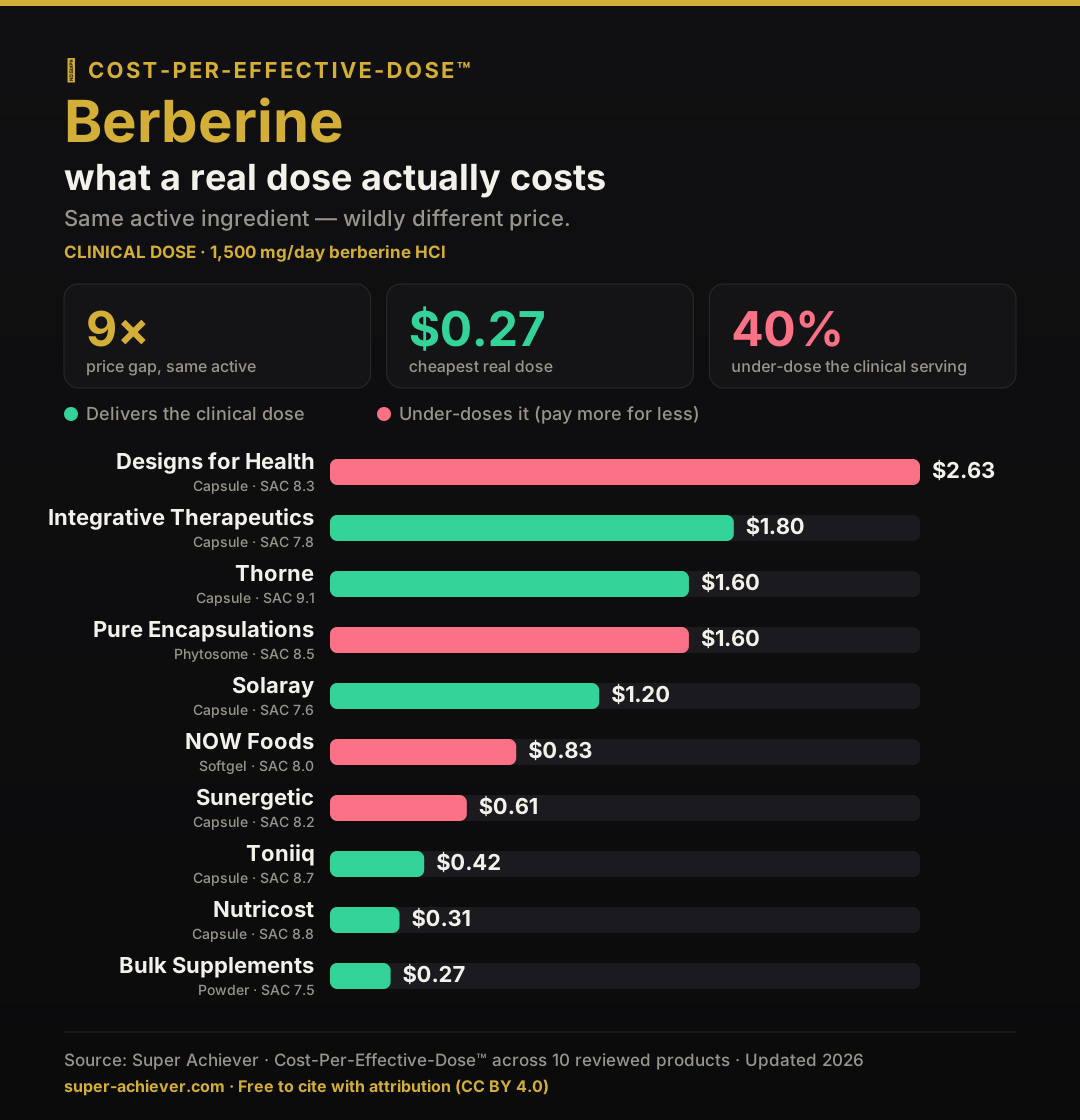
| # | Product | SAC Product Score™ | TXI™ | CPED™ | |
|---|---|---|---|---|---|
| 1 | Nutricost Berberine HCl 600mgCapsule | 8.8 | 20 | $0.31 | |
| 2 | Toniiq Ultra Berberine HCl 1500mgCapsule | 8.7 | 70 | $0.42 | Most transparent |
| 3 | Thorne Berberine 500mgCapsule | 8.4 | 50 | $1.07 | Under-dosed |
| 4 | Pure Encapsulations Berberine UltraSorbPhytosome | 8.4 | 20 | $1.60 | Under-dosed |
| 5 | Designs for Health Berberine SynergyCapsule | 8.3 | 0 | $2.63 | Under-dosed |
| 6 | Sunergetic Premium Berberine 1200mgCapsule | 8.2 | 0 | $0.61 | Under-dosed |
| 7 | NOW Foods Berberine Glucose SupportSoftgel | 8.0 | 20 | $0.83 | Under-dosed |
| 8 | Integrative Therapeutics Berberine 500mgCapsule | 7.8 | 20 | $1.80 | |
| 9 | Solaray Berberine 500mgCapsule | 7.6 | 20 | $1.20 | |
| 10 | Bulk Supplements Berberine HCl PowderPowder | 7.5 | 50 | $0.27 | Best value |
Methodology. SAC Product Score™ blends our editorial rating (RCT quality, dose, safety, value) 50/50 with community ratings. Transparency Index™ (0-100) = third-party certification (0-50) + public batch COA (0-30) + dose honesty (0-20). Cost-Per-Effective-Dose™ is the real price of one clinical dose, not one marketed "serving". Free to cite with attribution to Super Achiever.
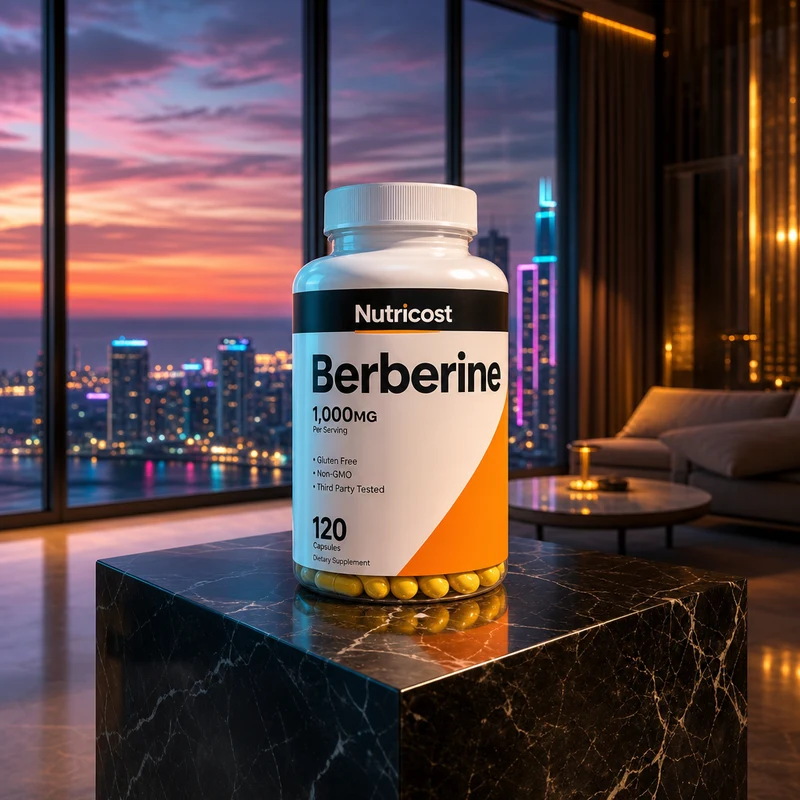
Nutricost Berberine HCl 1,200 mg
What is Berberine?
Berberine is an isoquinoline alkaloid — a bitter, vivid-yellow plant compound — extracted from the bark, roots, and rhizomes of several plants in the Berberis genus (notably Berberis aristata, the Indian barberry) plus goldenseal (Hydrastis canadensis) and Coptis chinensis. Traditional Chinese Medicine and Ayurveda have used berberine-rich preparations for over 2,500 years, originally for diarrhea, dysentery, and infections — the antimicrobial reputation came first, the metabolic one came in the last 25 years of pharmacological work.
What moved berberine from herbal antibiotic to evidence-backed metabolic supplement was the discovery (Lee et al., 2006) that it activates AMP-activated protein kinase (AMPK) — the same intracellular fuel-sensor that metformin acts on. AMPK is the cell's "low-fuel light": when ATP runs low, AMPK switches on glucose uptake, fatty-acid oxidation, mitochondrial biogenesis, and autophagy, while suppressing fat + cholesterol synthesis. Activating it pharmacologically mimics the metabolic state of caloric restriction and exercise. That mechanism overlap with metformin earned berberine the "natural metformin" nickname — and a large clinical literature comparing the two head-to-head.
The complication is form + bioavailability. Berberine HCl (the hydrochloride salt) has an oral bioavailability of roughly 1% — most of an oral dose never reaches systemic circulation because intestinal P-glycoprotein efflux pumps it back into the gut lumen. That's why clinical doses look large (1,000-1,500 mg/day split across meals): you're dosing for the ~1% that survives first-pass. Dihydroberberine (DHB) is the partially reduced metabolite — naturally produced by gut bacteria from oral berberine, and the form that actually crosses the intestinal wall. DHB supplements claim 3-5× higher bioavailability at lower doses, but the trial weight still sits with plain HCl. Phytosome formulations (berberine + phosphatidylcholine, e.g. Berberine Phytosome / Indena's Berberol) sit in the middle: better-absorbed than HCl, cheaper than DHB, with several published trials.
How it works
Berberine's primary mechanism is AMPK activation in hepatocytes, skeletal muscle, and adipose tissue. AMPK is the master metabolic switch — when it's on, cells behave as if energy is scarce: glucose transporters (GLUT4) translocate to the cell surface to pull glucose out of the blood, fatty-acid oxidation ramps up, mitochondrial biogenesis accelerates, and de novo lipogenesis + cholesterol synthesis shut down. Metformin works through the same pathway by inhibiting mitochondrial Complex I (raising AMP:ATP ratio → AMPK activation). Berberine appears to inhibit the same Complex I plus engage AMPK through additional upstream kinases (LKB1, CaMKKβ). Net result: in human trials, berberine produces fasting-glucose reductions of 20-30 mg/dL and HbA1c drops of 0.7-1.0% — effect sizes comparable to metformin 1500 mg/day in the Yin 2008 head-to-head trial.
The second mechanism is gut-microbiome modulation. The ~99% of an oral dose that doesn't enter systemic circulation stays in the intestinal lumen, where it shifts the microbiome toward short-chain-fatty-acid-producing genera (Akkermansia, Faecalibacterium) and away from inflammation-associated ones. The microbiome shift drives a parallel metabolic effect via SCFA → GLP-1 + PYY → improved insulin sensitivity, independent of the systemic AMPK action. This is part of why some berberine effects persist at doses too low to produce meaningful plasma levels.
Downstream of these two mechanisms come the lipid effects (LDL down 20-25%, triglycerides down 30-35% in the Kong 2004 + Lan 2015 meta), a small and inconsistent weight effect (pooled meta-analyses find body weight barely changes — the reliable signal is a modest waist-circumference reduction in metabolic-syndrome populations, not fat-mass loss; the "Nature's Ozempic" framing is not supported), and the early longevity signal — AMPK is one of the four conserved aging pathways (alongside mTOR, sirtuins, and IGF-1), and activating it pharmacologically extends lifespan in C. elegans and mouse models. Human longevity data is still inferred from the metabolic biomarker improvements, not direct lifespan trials.
The Berberine deep dives
Berberine Benefits
Blood sugar, lipids, PCOS and the honest weight-loss truth — every claim scored against the trials.
Read →SafetyBerberine Side Effects
GI upset, drug interactions, pregnancy — the honest safety picture. The nuisance vs the risks that actually matter.
Read →DataBerberine by the Numbers
The full data report — glucose + lipid effect sizes, the weight-loss myth, forms, cost per dose. The citable stats page behind the guide.
Read →At-a-glance facts
- Active compound
- Berberine (isoquinoline alkaloid)
- Best form
- Berberine HCl (best trial weight, cheapest) > Phytosome > Dihydroberberine (DHB) for bioavailability
- Typical dose
- 500 mg 2-3× daily with meals (1,000-1,500 mg/day total)
- Bioavailability
- ~1% for HCl — the reason clinical doses look big
- Half-life
- ~5 hours — short half-life is why dosing is split across meals
- Time to felt effect
- Glucose: 4-8 weeks · Lipids: 12 weeks · Weight: 8-16 weeks
- Cost range (US)
- $12-25 / month for HCl · $35-60 / month for DHB
- Stack synergy
- Magnesium glycinate (insulin sensitivity), Omega-3 (lipid + inflammation), Inositol (PCOS protocols)
Evidence: 30+ placebo-controlled human RCTs across glucose, lipid, weight, and PCOS endpoints. The Yin 2008 meta-analysis (PMID 18442638) showed berberine 500 mg 3×/day matched metformin 1,500 mg/day on HbA1c, fasting glucose, and postprandial glucose over 3 months in type-2 diabetics. The Lan 2015 meta (PMID 25498346) confirmed LDL −25%, triglycerides −35% across 27 studies. Effect sizes are reproducible across HCl, phytosome, and DHB formulations — making berberine the most-evidenced non-prescription metabolic substance after omega-3 and magnesium.
Who it's for — and who it isn't
- Pre-diabetics + insulin-resistant adults with HbA1c 5.7-6.4% — the population where Yin 2008 showed effect sizes matching metformin without a prescription.
- Metabolic-syndrome carriers: elevated waist circumference + triglycerides + fasting glucose. Berberine moves all three simultaneously through one mechanism.
- Women with PCOS using berberine for insulin-sensitization (Wei 2012 showed comparable ovulation + cycle-regularity outcomes to metformin at 500 mg 3×/day).
- Adults 35+ wanting an AMPK lever in the longevity stack — alongside or instead of metformin for those without prescription access.
- People with elevated LDL or triglycerides who don't yet need a statin and want a first-line nutraceutical with hard cardiometabolic endpoint data.
- Pregnant or breastfeeding women — berberine crosses the placenta and induces uterine contractions in animal models. Hard contraindication.
- Anyone already on metformin without clinician oversight — additive hypoglycemia risk plus overlapping mechanism makes dose titration mandatory.
- People on cyclosporine, tacrolimus, or other narrow-therapeutic-index CYP3A4 substrates — berberine is a potent CYP3A4 inhibitor and can spike substrate drug levels into toxic range.
- Anyone with severe GI sensitivity or active IBS flare — loose stools + abdominal cramping are the most common side effects at doses above 1,000 mg/day.
- Children — efficacy and safety data are entirely in adult populations.
Week-by-week, what happens
- Days 1-7GI adaptation phase — loose stools + mild cramping common, especially if starting at full 1,500 mg/day. Ramp 500 mg → 1,000 → 1,500 over 2 weeks to minimise. Most metabolic effects not yet detectable.
- Week 2-4Postprandial glucose spikes blunt first — CGM users typically see 15-25 mg/dL lower peaks after meals containing berberine. Fasting glucose hasn't moved much yet.
- Week 4-8Fasting glucose drops 10-25 mg/dL on labs. HbA1c starts trending — won't be reflected fully until week 12 due to 3-month RBC turnover. Weight begins to ease in metabolic-syndrome subjects.
- Week 8-12Lipid panel shifts: LDL −20-25%, triglycerides −30-35%, modest HDL bump. HbA1c reduction of 0.7-1.0% confirmed on bloodwork. Body composition shifts visible.
- Week 12+Steady state. Continue 500 mg 2-3× daily indefinitely for metabolic + longevity benefits. No tolerance documented; some users cycle 12 weeks on / 4 weeks off, but no human data require it.
Safety & contraindications
- Most common adverse effects are GI: loose stools, abdominal cramping, constipation, flatulence — affecting 20-30% of users at doses above 1,000 mg/day. Splitting across 2-3 meals + ramping from 500 mg dramatically reduces incidence.
- Pregnancy and breastfeeding: contraindicated. Berberine crosses the placenta, displaces bilirubin from albumin (jaundice risk in newborns), and induces uterine contractions in animal models.
- Drug interactions via CYP3A4 inhibition: berberine increases plasma levels of cyclosporine, tacrolimus, statins (simvastatin especially), some calcium-channel blockers, and certain antibiotics. Coordinate with a clinician if you take any narrow-therapeutic-index drug.
- Additive hypoglycemia risk when combined with metformin, sulfonylureas, insulin, or other glucose-lowering medications — do NOT self-stack on top of diabetes prescriptions without dose-titration oversight.
- P-glycoprotein inhibition: berberine raises levels of P-gp substrates (digoxin, dabigatran, certain immunosuppressants). Relevant for older + polypharmacy populations.
- Long-term human safety data extends to 24 months at 1,500 mg/day without significant adverse markers (multiple PCOS + diabetes extension studies). Liver enzymes typically improve, not worsen, in metabolic-syndrome subjects on berberine.
All articles on Berberine
Best Berberine for Blood Sugar
Berberine cut HbA1c 0.7-1.0%, matching metformin (Yin 2008). Ranked by form (HCl owns the glucose trials), the 1,500 mg/day dose, third-party testing, and drug-interaction transparency.
Read →Best Berberine for PCOS
Berberine improves insulin resistance, androgens, and ovulation in PCOS (comparable to metformin, Wei 2012). Ranked by form, the 1,500 mg dose, and testing — with the pregnancy contraindication front-and-center.
Read →Best Berberine for Weight Loss
Ten berberine products ranked for fat-loss outcomes — trial-dose HCl leads on score, with phytosome as the absorption upgrade for the systemic exposure adipose-tissue AMPK needs.
Read →Best Berberine Supplements
Berberine ranked by HCl vs phytosome bioavailability, split-dose accuracy, third-party testing — the bottles that actually move HbA1c and lipid markers.
Read →Best Form of Berberine: HCl vs Phytosome vs DHB
HCl, phytosome, dihydroberberine and blends weighed by evidence vs absorption. HCl wins for most — it carries nearly all 30+ RCTs and its ~1% bioavailability is offset by the standard 1,000-1,500 mg/day split dose.
Read →Bulk Supplements Berberine HCl Powder Review
Berberine bottle audit — purity, dose accuracy, GI side-effect ramp, and the metformin drug-interaction warning.
Read →Designs for Health Berberine Synergy Review
Berberine bottle audit — purity, dose accuracy, GI side-effect ramp, and the metformin drug-interaction warning.
Read →Herbpy Myo-Inositol + D-Chiro Inositol with Berberine Review
A PCOS blend that is mostly inositol: 2,000 mg myo- and 50 mg D-chiro-inositol per serving, plus 200 mg berberine. Fully disclosed, but half the trial dose of inositol and a fraction of the berberine dose.
Read →Integrative Therapeutics Berberine 500mg Review
Berberine bottle audit — purity, dose accuracy, GI side-effect ramp, and the metformin drug-interaction warning.
Read →NOW Foods Berberine Glucose Support Review
Berberine bottle audit — purity, dose accuracy, GI side-effect ramp, and the metformin drug-interaction warning.
Read →Nutricost Berberine HCl 600mg Review
Berberine bottle audit — purity, dose accuracy, GI side-effect ramp, and the metformin drug-interaction warning.
Read →Pure Encapsulations Berberine UltraSorb Review
Berberine bottle audit — purity, dose accuracy, GI side-effect ramp, and the metformin drug-interaction warning.
Read →Solaray Berberine 500mg Review
Berberine bottle audit — purity, dose accuracy, GI side-effect ramp, and the metformin drug-interaction warning.
Read →Sunergetic Premium Berberine 1200mg Review
Berberine bottle audit — purity, dose accuracy, GI side-effect ramp, and the metformin drug-interaction warning.
Read →Thorne Berberine 500mg Review
Berberine bottle audit — purity, dose accuracy, GI side-effect ramp, and the metformin drug-interaction warning.
Read →Toniiq Ultra Berberine HCl 1500mg Review
Berberine bottle audit — purity, dose accuracy, GI side-effect ramp, and the metformin drug-interaction warning.
Read →FAQ
Berberine vs metformin — which one should I take?
If you have prescription access and a clinical indication (type-2 diabetes, pre-diabetes with risk factors), metformin is first-line — it's cheaper ($4/month generic), longer track record, FDA-approved, and the longevity evidence base is larger. Berberine is the right answer when you DON'T have prescription access, are at the metabolic-syndrome / pre-diabetes stage where a doctor won't prescribe yet, or are stacking for longevity rather than treating disease. The Yin 2008 head-to-head trial showed berberine 500 mg 3×/day equivalent to metformin 1,500 mg/day on HbA1c, fasting glucose, and postprandial glucose in T2D — but "equivalent in one trial" is not "interchangeable." Many longevity-focused users actually take both at reduced doses for additive AMPK activation, under clinician oversight.
Berberine HCl vs Dihydroberberine (DHB) — is DHB worth the price?
Dihydroberberine is the partially reduced metabolite — what gut bacteria convert berberine HCl into before absorption. DHB supplements claim 3-5× higher bioavailability, which means 100 mg DHB roughly equals 500 mg HCl in plasma exposure. The catch is that the 30+ human RCTs were almost entirely run on HCl, not DHB — so the evidence base sits with the cheap form. Practical answer: start with HCl (500 mg 2-3× daily, ~$15/month). If GI side effects are intolerable or you don't respond, switch to DHB (~$45/month) for the better-absorbed + better-tolerated profile. DHB is the right form if cost isn't the constraint; HCl is the right form if it is.
Why do I have to take berberine with meals?
Two reasons. First, the postprandial glucose blunting — berberine's GLUT4-translocation effect happens when it's circulating during a meal, so timing the dose with food maximises the per-meal glucose-spike reduction. Second, food slows gastric emptying, which gives berberine longer contact time with the intestinal wall (where the gut-microbiome mechanism plays out) and partially mitigates the loose-stool side effect. The clinical protocol is 500 mg within 30 minutes before or after breakfast, lunch, and dinner. Skipping a meal? Skip that dose — there's no meaningful benefit to taking berberine without food.
I'm getting bad GI side effects — should I quit or push through?
Ramp first, then split, then switch form before quitting. Ramp protocol: 500 mg once daily for 1 week → 500 mg twice daily for 1 week → 500 mg three times daily ongoing. If you're already at 1,500 mg/day and struggling, drop back to 1,000 mg (twice daily) for 2 weeks before re-trying the full dose. Split protocol: never take more than 500 mg in a single dose — the loose-stool effect scales with peak luminal concentration, not total daily intake. Form switch: phytosome or DHB formulations cut the GI burden ~50% because more of the dose enters circulation rather than sitting in the gut. About 5-10% of users are simply non-tolerators and should look at inositol (for PCOS / insulin sensitivity) or alpha-lipoic acid as alternatives.
Can I take berberine if I'm already on metformin?
Only with clinician oversight, and not as a casual stack. The two share the AMPK + Complex I mechanism, so the effects are additive on glucose-lowering — which means additive hypoglycemia risk. The Pérez-Rubio 2013 trial combined metformin + berberine in metabolic-syndrome subjects with monitoring and saw improved outcomes vs metformin alone, but doses were titrated. Practical answer: don't add berberine on top of a stable metformin dose without your endocrinologist adjusting metformin downward. The right framing is "replace some metformin with some berberine," not "layer berberine on top."
What's the berberine protocol for PCOS?
The Wei 2012 PCOS trial (PMID 22019891) ran 500 mg 3×/day for 12 weeks and matched metformin's effects on insulin sensitivity, BMI, waist-to-hip ratio, and ovulation frequency — with a more favorable lipid profile. Standard PCOS protocol: 500 mg with each main meal (3×/day, 1,500 mg total) for 12 weeks minimum, then reassess. Common stacks: berberine + myo-inositol/d-chiro-inositol 40:1 ratio (the Genazzani protocol) hits both AMPK and IP3 signaling, with stronger pregnancy outcomes in trials than either alone. Coordinate with your reproductive endocrinologist if you're trying to conceive — berberine is contraindicated once pregnancy is confirmed.
Is berberine actually a longevity supplement?
Yes by mechanism, mostly inferred by outcome. AMPK is one of the four conserved aging pathways (Kennedy 2014, López-Otín hallmarks-of-aging framework) — pharmacologically activating it extends lifespan in worms, flies, and mice. In humans we don't have direct lifespan trials (we won't for decades), so the evidence is one rung down: berberine reproducibly improves the biomarkers that predict longevity (HbA1c, fasting insulin, triglycerides, LDL, visceral adiposity, hsCRP). The longevity community treats berberine as a metformin-class lever — same mechanism, same biomarker profile, no prescription required. Standard longevity dose is 500 mg 2×/day with the two largest meals, often cycled 12 weeks on / 4 weeks off out of caution rather than data.
Will berberine help me lose weight?
Modestly and indirectly. The Lan 2015 meta showed 2-4 kg average loss over 12 weeks in metabolic-syndrome populations — mostly visceral fat, not subcutaneous, and concentrated in subjects who started with insulin resistance. If your baseline insulin sensitivity is already good, the weight effect is small. Berberine is not an appetite suppressant and not a GLP-1 agonist substitute (it does indirectly raise GLP-1 via the microbiome, but not at the magnitudes semaglutide produces). Think of it as a metabolic-environment improver: when insulin sensitivity normalises, body composition tends to follow over months. Pair with resistance training and protein intake for the meaningful body-recomposition effect.
Sources & further reading
- Yin 2008 (HbA1c meta + head-to-head)Efficacy of berberine in patients with type 2 diabetes mellitus
Berberine 500 mg 3×/day for 3 months matched metformin 1,500 mg/day on HbA1c, fasting glucose, and postprandial glucose in type-2 diabetics. The pivotal head-to-head trial that anchored berberine's "natural metformin" positioning.
- Lan 2015 (lipid meta-analysis)Meta-analysis of the effect and safety of berberine in the treatment of type 2 diabetes mellitus, hyperlipemia and hypertension
Pooled analysis of 27 RCTs (n=2,569) confirmed berberine reduces LDL ~25%, triglycerides ~35%, total cholesterol ~20%, and improves fasting + postprandial glucose vs placebo. The reference meta for berberine's cardiometabolic effect sizes.
- Liu 2016 (bioavailability review)Research progress on berberine with a special focus on its oral bioavailability
Comprehensive review of berberine's pharmacokinetics, bioavailability limitations (~1% for HCl), and cardiometabolic indications across diabetes, dyslipidemia, and obesity. The foundational reference for why dosing is split + why DHB / phytosome formulations exist.
- Wei 2012 (PCOS)A clinical study on the short-term effect of berberine in comparison to metformin on the metabolic characteristics of women with polycystic ovary syndrome
Berberine 500 mg 3×/day for 3 months matched metformin on insulin sensitivity, BMI, and waist-to-hip ratio in PCOS women, with a more favorable lipid profile (HDL up, LDL down, triglycerides down). The cornerstone PCOS trial for berberine.
- Zhao 2017 (AMPK mechanism)Berberine improves glucogenesis and lipid metabolism in nonalcoholic fatty liver disease
Mechanistic + clinical evidence that berberine's metabolic effects in NAFLD operate through AMPK activation in hepatocytes — reducing hepatic gluconeogenesis and de novo lipogenesis, improving liver enzymes and intrahepatic lipid content.
- Kong 2004 (lipid mechanism)Berberine is a novel cholesterol-lowering drug working through a unique mechanism distinct from statins
Identified berberine's LDL-lowering mechanism as upregulation of hepatic LDL-receptor mRNA via ERK signaling — distinct from statins' HMG-CoA reductase inhibition. The landmark mechanism paper for berberine's lipid effect.
- Pérez-Rubio 2013 (metformin combination)Effect of berberine administration on metabolic syndrome, insulin sensitivity, and insulin secretion
Berberine 500 mg 3×/day for 3 months in metabolic-syndrome subjects improved insulin sensitivity (Matsuda index), reduced waist circumference, triglycerides, and systolic blood pressure vs placebo. Supports the standard 1,500 mg/day metabolic-syndrome protocol.