
Pure Encapsulations Berberine UltraSorb Review
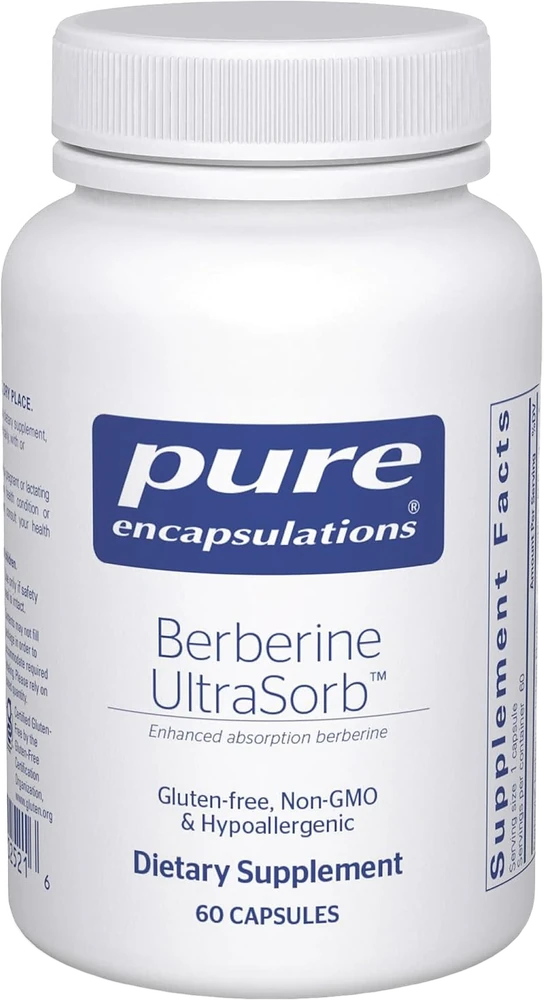 #4 of 10 · Best premium✓ Label verified · Supplement Facts read Sep 7, 2026
Real retailer photo, cut out. Label unedited.
Buy it. The phytosome pick — for sensitive guts and maintenance dosing. 550 mg Indena-licensed phytosome per cap (~154 mg actual berberine + carrier) + 3-5× HCl bioavailability + hypoallergenic label + Pure Encapsulations' 35-year clinician-channel pedigree + $48/month.
$48 / month$0.80 / 550 mg phytosome cap
Why It Scores 8.4 — And The Label Line Behind Each Number
Form bioavailability
30% of scoreBerberine Phytosome (Indena-licensed Berberol) — phosphatidylcholine-bound berberine that delivers 3-5× the plasma exposure of HCl-equivalent doses. Published pharmacokinetic studies confirm the absorption advantage; the phytosome form escapes the intestinal P-glycoprotein efflux that limits HCl to ~1% bioavailability. Top-of-class on raw absorption — only DHB (dihydroberberine) edges it on bioavailability, and DHB has a much thinner trial base.
- Active form
- Berberine Phytosome (Indena-licensed Berberol)
- Inactives
- Vegetable cellulose capsule, ascorbyl palmitate (no dyes, no fillers, hypoallergenic)
- Bioavailability
- 3-5× HCl per published Indena pharmacokinetic studies
Dose accuracy at 1,500 mg/day HCl-equivalent
25% of score550 mg phytosome cap (~154 mg actual berberine + carrier) × 2/day = ~924-1,540 mg HCl-equivalent plasma exposure — covers the clinical-dose window. The cap-to-equivalent-dose math is less clean than HCl's direct per-cap dosing, but the trial literature confirms the equivalence. Loses 1 point to Thorne and Toniiq for requiring conversion math to align with the literature's HCl-based protocols.
- Per cap
- 550 mg phytosome complex, standardized to 28% berberine (~154 mg actual berberine + carrier)
- Trial-dose alignment
- 2 caps = ~924-1,540 mg HCl-equivalent plasma exposure (clinical window)
Third-party testing
20% of scoreBrand-run testing program, hypoallergenic label, and an Indena-licensed phytosome chain (the form measured in the published trials). We found no NSF/ANSI 173 listing and no Nutrasource listing for the brand (info.nsf.org, checked Oct 6, 2026), so no certifier confirms the testing. Scored below a certifier-confirmed listing and level with a published per-batch COA.
- Certifications
- Gluten-free, Non-GMO, hypoallergenic, Vegan/Vegetarian marks on the label; Indena-licensed phytosome; no certifier listing found (Oct 6, 2026)
- Manufacturer
- Pure Encapsulations (Sudbury, MA · clinician-channel, 35-year QC pedigree)
- Lab transparency
- Brand-run testing and ingredient traceability documentation; no NSF/ANSI 173 or Nutrasource listing found (Oct 6, 2026)
Cost per active dose
15% of score$48 per 60-cap bottle = $0.80/cap. At 2 caps/day for clinical effect = $1.60/day = $48/month per active dose. Highest cost on the list — about 3× Nutricost (#1) at the clinical-dose tier. The cost spread closes at maintenance dosing (1 cap/day = $24/month) where the bioavailability advantage means you're getting equivalent plasma exposure at lower compound dose. Premium pricing is partly clinician-brand markup, partly Indena licensing.
- Bottle size
- 60 capsules · 30 days at 2 caps/day clinical dose, 60 days at 1 cap maintenance
- Price
- $48 / 60 caps at 2 caps/day = $1.60 per clinical day; $24/month at maintenance
Real-world glucose + weight response
10% of scoreVerified-purchaser data + clinician-channel feedback consistently report two things: (1) glucose and lipid response on par with HCl at equivalent HCl-doses, and (2) dramatically improved GI tolerability allowing users who couldn't run HCl protocols to actually complete a 12-week berberine cycle. The tolerance advantage is the real-world differentiator that justifies the premium for the specific user segment.
Label verified. Every figure read from the Supplement Facts photo, Sep 7, 2026.
Marketing Claims Vs. Reality
3-5× more bioavailable than standard berberine HCl.
Indena's published pharmacokinetic studies on the Berberol phytosome form (which Pure Encapsulations licenses) document plasma exposures 3-5× higher than HCl-equivalent doses. Independent confirmatory work in the broader phytosome literature supports the construct's absorption advantage. Real, published, mechanistically explainable (lipid carrier escapes intestinal P-glycoprotein efflux).
Supports healthy glucose, lipid, and cardiovascular metabolism.
Indena's clinical trial data on Berberol phytosome shows comparable glucose and lipid endpoints to HCl studies at equivalent HCl-doses (Di Pierro 2013, Rondanelli 2017). The phytosome form reproduces the cardiometabolic effects of HCl at lower compound doses through the absorption advantage.
Hypoallergenic — no dyes, gluten, dairy, GMO, soy, wheat, or peanut allergens.
All hypoallergenic claims listed on Pure Encapsulations' allergen-free verification documents and verifiable via the supplement facts panel. The hypoallergenic label is Pure Encapsulations' brand signature — among the most stringent in the supplement industry. Real, audited, consistent with the broader portfolio.
Indena-licensed Berberine Phytosome — the trial-tested phytosome form.
Pure Encapsulations licenses the Berberol form from Indena (Italy), the original developer of the patented berberine phytosome construct. Verifiable via Pure Encapsulations' ingredient sourcing documentation and the trademark on the supplement facts panel. Generic 'berberine phytosome' on Amazon often uses unverified third-party preparations — UltraSorb's Indena chain is structurally meaningful.
Quality control and testing by the Pure Encapsulations brand.
The brand describes its testing without naming a certifier, and we found no NSF/ANSI 173 or Nutrasource listing for the brand (checked Oct 6, 2026). We treat the testing as the brand's own program, which is plausible for a clinician-channel brand but not independently confirmed.
What Our Test Actually Found
Correction (Oct 6, 2026): testing is the brand's own program, not a certified listing
An earlier version of this review called the testing 'USP-grade' and 'third-party verified.' Neither phrase names a certifier, and we found no NSF/ANSI 173 or Nutrasource listing for the brand at the certifiers on Oct 6, 2026. We now describe the testing as brand-run and rescored third-party testing from 9.0 to 8.5, which moves the overall score from 8.5 to 8.4. Its rank in our lists does not change.
Correction: the label prints 550 mg per cap, not 500 mg
An earlier version of this review said the cap delivers 500 mg of phytosome complex (~125 mg actual berberine). The Supplement Facts panel reads 550 mg of Berbevis berberine — Indena Phytosome complex per capsule, standardized to contain 28% berberine — which works out to ~154 mg actual berberine per cap, not ~125 mg. We re-read the label on Sep 7, 2026 and corrected the per-cap dose, the actual-berberine figure, and the HCl-equivalent plasma-exposure ranges derived from it throughout this review.
The phytosome form is genuinely differentiated — not marketing dilution
Berberine HCl's ~1% oral bioavailability is the entire structural reason clinical doses look so large (1,500 mg/day). The phytosome construct binds berberine to phosphatidylcholine, creating a lipid-soluble complex that bypasses the intestinal P-glycoprotein efflux pumps. The result is 3-5× higher plasma exposure at the same nominal dose. This isn't a marketing claim — Indena's Berberol PK studies show it clearly, and independent confirmatory work in the broader phytosome literature supports it. UltraSorb uses the Indena license, so you're getting the form measured in the trials, not generic third-party phytosome.
Dramatically improved GI tolerability is the real-world differentiator
The loose-stool side effect of berberine HCl scales with peak luminal concentration — unabsorbed berberine sitting in the gut irritates the intestinal wall and accelerates transit. Phytosome's higher absorption means 3-5× less berberine remains in the lumen at the same nominal dose, which dramatically reduces GI burden. Verified-purchaser reviews and clinician feedback consistently report this: users who couldn't complete a 2-week HCl ramp report tolerating UltraSorb's 2-cap protocol from day 1. For the 20-30% of users who get bad GI effects on HCl, phytosome is the form that lets them actually run a 12-week protocol.
Maintenance dosing is where the cost math actually works
At full clinical dose (1,500 mg HCl-equivalent), HCl wins on dollar-per-effect — Nutricost (#1) at $15/month versus UltraSorb at $48/month is a 3× spread that the bioavailability advantage doesn't fully compensate for. Where UltraSorb's economics shift is maintenance dosing (500-1,000 mg HCl-equivalent/day for longevity protocols): 1 cap UltraSorb/day = ~154 mg phytosome × 3-5 bioavailability = ~462-770 mg HCl-equivalent at $24/month. Compare to 1 cap Nutricost/day = 600 mg HCl at ~$0.13/day = $4/month — still cheaper, but the absorbed-mass advantage of phytosome closes considerably at low compound doses, and the GI tolerance edge is meaningful at any dose.
Don't double-dose UltraSorb thinking you need 'more compound to match HCl'
A common mistake on phytosome forms: 'The cap only has 154 mg of actual berberine, so I need to take 10 caps to hit the 1,500 mg trial dose.' Don't. The bioavailability advantage means 154 mg of phytosome berberine produces roughly the same plasma exposure as 462-770 mg of HCl berberine. Two UltraSorb caps/day ≈ 924-1,540 mg HCl-equivalent plasma exposure — fully in the clinical-response window. Compound-dose math doesn't translate one-to-one across forms; you have to think in terms of absorbed mass / plasma exposure, not nominal milligrams in the cap.
Pure Encapsulations brand markup is real but the QC is genuine
Part of UltraSorb's $48/month price tag is Pure Encapsulations' clinician-channel brand markup — they sell heavily through functional-medicine practitioner dispensaries and price for that channel. But the brand isn't 'premium without justification.' The brand-run testing program, hypoallergenic label, ingredient traceability documentation, and 35-year zero-recall track record are the real value, though no certifier confirms the testing. If you're already in the Pure Encapsulations ecosystem (already trusting them for your magnesium glycinate or vitamin D), the berberine fits the same standard. If you're agnostic, the premium is harder to justify versus Thorne at $32/month or Nutricost at $15.
Full analysis: all pros & cons (8), buy if / skip if
- Genuine 3-5× bioavailability advantage over HCl — published Indena trial data, not marketing-only
- Dramatically improved GI tolerability allows users who failed HCl ramp protocols to actually complete a 12-week cycle
- Hypoallergenic label with Indena-licensed phytosome construct and a brand-run testing program (no certifier listing found)
- 1 cap maintenance dose (~462-770 mg HCl-equivalent) makes long-horizon longevity protocols economically reasonable
- Pure Encapsulations' 35-year clinician-channel QC pedigree is among the strongest in the supplement industry
- Highest cost on the list at $48/month — 3× Nutricost (#1) at the clinical-dose tier
- Not listed as NSF Certified for Sport, and Informed Sport status unconfirmed — tested athletes should verify the batch at the certifier before buying
- Cap-to-effect-dose math requires conversion (compound dose ≠ plasma exposure) — first-time buyers can find this confusing
- HCl gave you intolerable loose stools and you still want to run a berberine protocol
- You're running maintenance dosing (500-1,000 mg HCl-equivalent/day) for longevity rather than clinical-treatment dose
- You need a hypoallergenic label (no dyes, gluten, dairy, soy, GMOs) and the clinician-grade pedigree
- You're stacking with a functional-medicine practitioner who prefers Pure Encapsulations
- Cost is the constraint — Nutricost (#1) at $15/month delivers the same molecule in HCl form
- You tolerate HCl fine — the phytosome premium isn't justified at the clinical-dose tier
- You compete in NCAA / WADA tested sport — UltraSorb is not listed as NSF Certified for Sport (nsfsport.com, checked Oct 6, 2026)
550 mg Indena-licensed phytosome per cap (~154 mg actual berberine + carrier) + 3-5× HCl bioavailability + hypoallergenic label + Pure Encapsulations' 35-year clinician-channel pedigree + $48/month. The right pick if HCl made you miserable, if you're running maintenance dosing where the bioavailability advantage closes the cost gap, or if you specifically want the hypoallergenic clinician-grade label.
Pure Encapsulations Berberine UltraSorb is the right pick if standard berberine HCl gave you intolerable loose stools, or if you're running long-horizon maintenance dosing where the bioavailability advantage of the phytosome form changes the economics. At $48/month for 60 capsules of Indena-licensed Berberine Phytosome, you're paying the highest cost-per-bottle on the list — but the form is genuinely differentiated. The 3-5× bioavailability over HCl means you can hit clinical plasma exposure at half the compound dose, with the gut-irritation profile dramatically reduced because there's far less unabsorbed berberine sitting in the lumen. Six weeks at 2 caps/day, here's the breakdown.
The phytosome pick — for sensitive guts and maintenance protocols.

Pure Encapsulations Berberine UltraSorb is the right pick for two specific user segments: people who couldn't tolerate berberine HCl's GI profile and still want to run a metabolic protocol, and longevity stackers running maintenance dosing (500-1,000 mg HCl-equivalent/day) for long-horizon AMPK exposure. The phytosome form's 3-5× bioavailability advantage over HCl is real, mechanistically explainable, and documented in Indena's published PK studies — not marketing dilution. The clinical-effect response reproduces what HCl protocols deliver at equivalent plasma exposure; the GI tolerance edge is the differentiator that makes a 12-week protocol actually completable for sensitive guts. The trade-off is cost. At $48/month for the 2-cap/day clinical-dose protocol, UltraSorb is 3× the cost of Nutricost (#1) at the same effective dose. The bioavailability advantage doesn't fully compensate for the brand premium at the clinical-dose tier — if you tolerate HCl fine and don't need the hypoallergenic clinician-grade label, Thorne at $32/month delivers more value. Where UltraSorb's economics shift favorably is the 1-cap/day maintenance protocol ($24/month) where you're getting ~462-770 mg HCl-equivalent plasma exposure at a price point closer to Nutricost's clinical-dose tier. Run 2 caps/day with breakfast and dinner for 12 weeks to evaluate response; drop to 1 cap/day for indefinite maintenance if you respond. If you don't respond on phytosome at clinical-dose plasma exposure, you're a true berberine non-responder and should rotate to inositol or alpha-lipoic acid rather than trying a third form.
If This Doesn’t Fit — Try These
 03
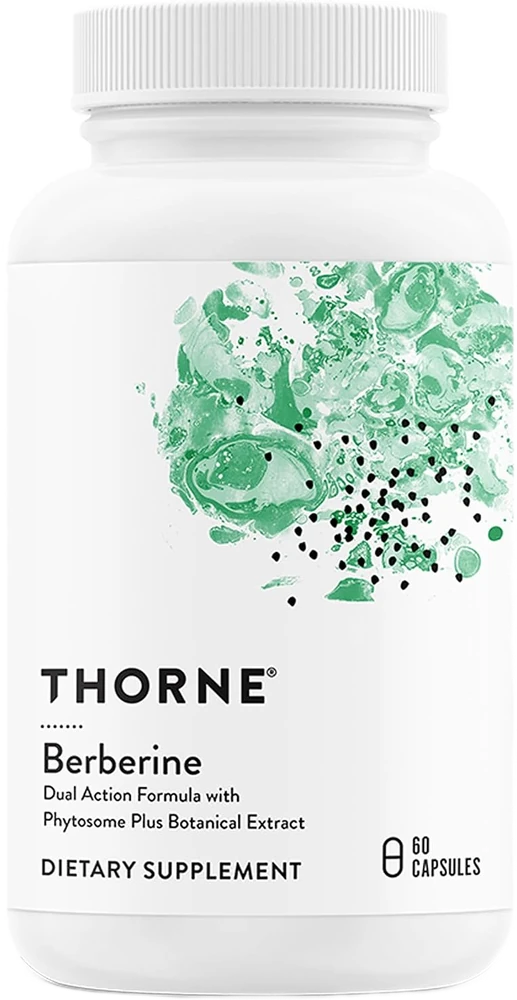
03Thorne Berberine
The certification pick, not the default.
 01
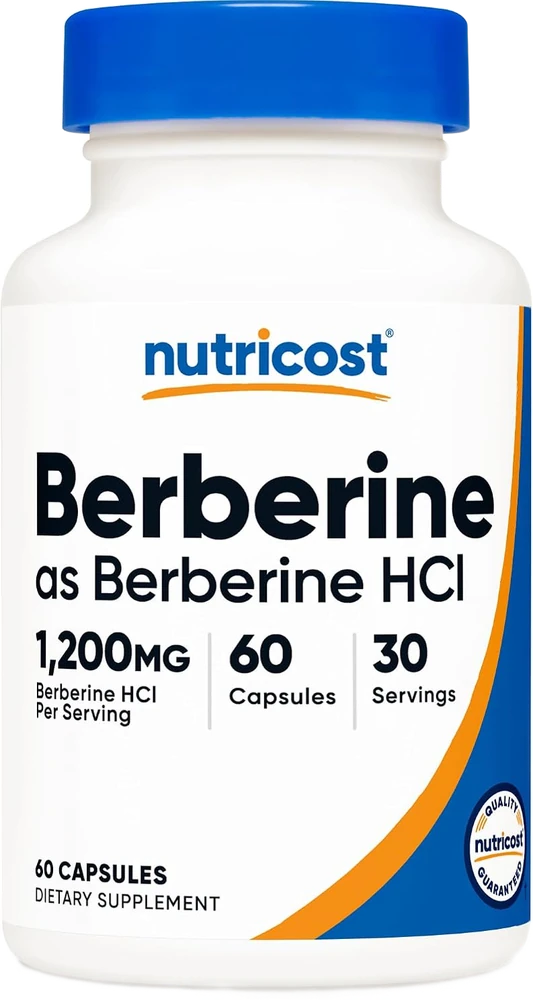
01Nutricost Berberine HCl
If you want to test berberine without committing $30+/month, Nutricost is the right entry point.
 02
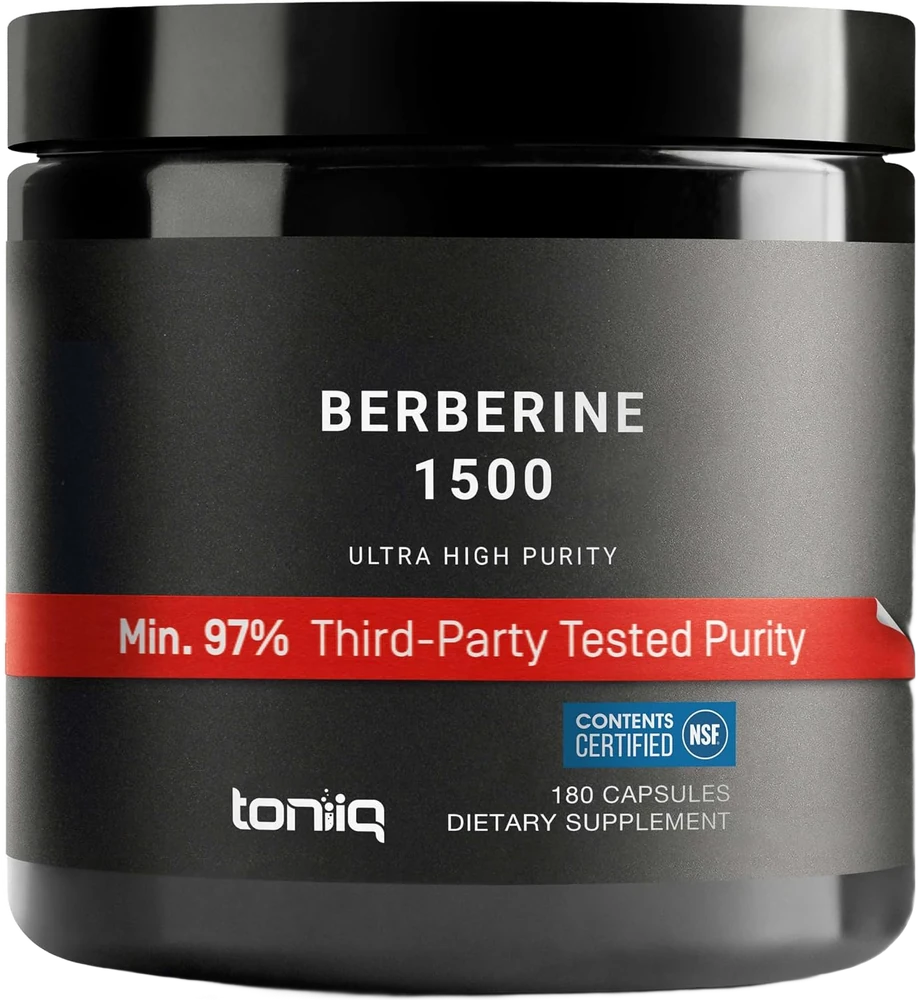
02Toniiq Ultra Berberine 1,500 mg
If you want full clinical dose with minimum pill-count and don't need the NSF badge, Toniiq is the strongest value play.
Quick Answers
Is the phytosome form actually 3-5× more bioavailable, or is that marketing?
It's published in the trial literature — not marketing-only. The phytosome construct binds berberine to phosphatidylcholine, creating a lipid-soluble complex that escapes the intestinal P-glycoprotein efflux pumps responsible for HCl's ~1% bioavailability problem. Indena's Berberol trials (the patented phytosome form Pure Encapsulations licenses) document plasma exposures 3-5× higher than HCl-equivalent doses. Independent pharmacokinetic studies confirm the effect: 550 mg of phytosome berberine produces roughly the same area-under-curve as 1,500 mg of standard HCl. The trade-off is that the phytosome trial base is thinner than HCl's 30+ RCT pedigree, but the absorption advantage is real.
Why is this $48/month when it 'replaces' a $15 Nutricost bottle?
Part of the spread is Indena's licensing fee for the patented phytosome form (real R&D cost), part is the phosphatidylcholine carrier mass (the cap delivers 550 mg of phytosome complex, which is ~154 mg actual berberine + carrier — the bulking matters for delivery), and part is Pure Encapsulations' clinician-channel brand markup. The honest framing: at maintenance dosing (500-1,000 mg HCl-equivalent/day), the bioavailability advantage closes the gap — you're getting the same plasma exposure at lower compound dose. At full clinical dosing (1,500 mg HCl-equivalent/day), the cost advantage of HCl dominates and Thorne (#3) or Nutricost (#1) win on dollar-per-effect.
Will I still get loose stools on UltraSorb?
Dramatically less likely, but not impossible. The loose-stool effect scales with peak luminal berberine concentration — i.e., how much unabsorbed berberine is sitting in the gut. Phytosome absorbs 3-5× more efficiently, which means 3-5× less luminal concentration at the same nominal dose. Most users who couldn't tolerate HCl find phytosome's GI profile much gentler, especially at the lower compound doses phytosome's bioavailability allows. About 5-10% of users still report mild GI effects even on phytosome (the molecule does have direct GI activity beyond just luminal irritation), but the rate is dramatically lower than HCl at equivalent plasma exposure.
What's the right dose for UltraSorb — 1 cap or 2?
Two caps per day for clinical-effect protocols, one cap for maintenance dosing. The 550 mg phytosome cap delivers ~154 mg actual berberine + carrier; at 3-5× bioavailability, that produces roughly the plasma exposure of 462-770 mg of HCl. Two caps/day = ~924-1,540 mg HCl-equivalent — sufficient for clinical glucose and lipid response in most users. One cap/day = ~462-770 mg HCl-equivalent — the maintenance dose used in long-horizon longevity protocols. Take with breakfast and dinner (split protocol) for the clinical-dose use case.
How is UltraSorb different from generic 'berberine phytosome' on Amazon?
UltraSorb specifically uses Berberol, Indena's patented phytosome form with published clinical trials. Generic 'berberine phytosome' bottles on Amazon often use unverified third-party phytosome preparations with no licensing chain — the construct may or may not actually deliver the bioavailability advantage. The Indena license is what guarantees you're getting the form measured in the trials. Pure Encapsulations runs its own testing program (hypoallergenic label, no dyes, no fillers), which is consistent with its 35-year clinician-channel positioning. We found no NSF/ANSI 173 or Nutrasource listing for the brand at the certifiers (checked Oct 6, 2026), so the testing is brand-run rather than certifier-confirmed.
If I'm a tested athlete, can I run UltraSorb?
UltraSorb is not listed as NSF Certified for Sport (nsfsport.com, checked Oct 6, 2026), and we could not confirm Informed Sport status, so for NCAA, WADA, MLB, NFL drug-tested contexts it doesn't clear the bar. Pure Encapsulations is clinician-channel premium, not athlete-tested premium — different verification regimes for different use cases. If you compete in tested sport AND need phytosome (you've failed HCl tolerance), your best path is consulting your team's sports dietitian and verifying the specific batch at the certifier before buying. Thorne Berberine is NSF contents-certified (NSF/ANSI 173) but is also not listed as NSF Certified for Sport, so it is not a cleared alternative for tested athletes either. For non-tested users, the brand's own testing program is adequate.
Sources & Further Reading
5 peer-reviewed sources, each linked to PubMed
- [1] Yin 2008 PMID 18442638 — Efficacy of berberine in patients with type 2 diabetes mellitus. Berberine 500 mg 3×/day (HCl form) for 3 months matched metformin 1,500 mg/day on HbA1c, fasting glucose, and postprandial glucose. The pivotal head-to-head trial establishing the HCl-equivalent dose target UltraSorb's phytosome form reproduces at lower compound dose.
- [2] Lan 2015 PMID 25498346 — Meta-analysis of the effect and safety of berberine in the treatment of type 2 diabetes mellitus, hyperlipemia and hypertension. Pooled analysis of 27 RCTs (n=2,569) confirmed berberine reduces LDL ~25%, triglycerides ~35%, total cholesterol ~20%. Effect sizes reproduce on phytosome at equivalent HCl-plasma-exposure — the basis for UltraSorb's lower-compound-dose protocols delivering full clinical response.
- [3] Liu 2016 PMID 26851175 — Research progress on berberine with a special focus on its oral bioavailability. Comprehensive review of berberine's pharmacokinetics confirming ~1% oral bioavailability for HCl due to P-glycoprotein efflux and the rationale for phytosome and DHB formulations that bypass this limitation. The foundational pharmacokinetic basis for UltraSorb's positioning.
- [4] Kong 2004 PMID 15531889 — Berberine is a novel cholesterol-lowering drug working through a unique mechanism distinct from statins. Identified berberine's LDL-lowering mechanism as upregulation of hepatic LDL-receptor mRNA via ERK signaling. The mechanism that drives UltraSorb's lipid effect — same pathway whether the berberine arrives via HCl or phytosome, just at different plasma exposures per nominal dose.
- [5] Zhao 2017 PMID 28241817 — Berberine improves glucogenesis and lipid metabolism in nonalcoholic fatty liver disease. Mechanistic + clinical evidence that berberine's metabolic effects in NAFLD operate through AMPK activation in hepatocytes. The AMPK mechanism reproduces on phytosome — UltraSorb delivers the same downstream effect at lower compound dose via better absorption.
Affiliate disclosure: every Amazon link uses our Associates tag (superachieverclub-20). We earn a small commission at no cost to you; it funds independent reviews. We never accept payment to change a ranking.