
Top 4 Best Form of Berberine: HCl vs Phytosome vs DHB (2026)
 01 · Best overall✓ Label verified · Supplement Facts read Oct 1, 2026
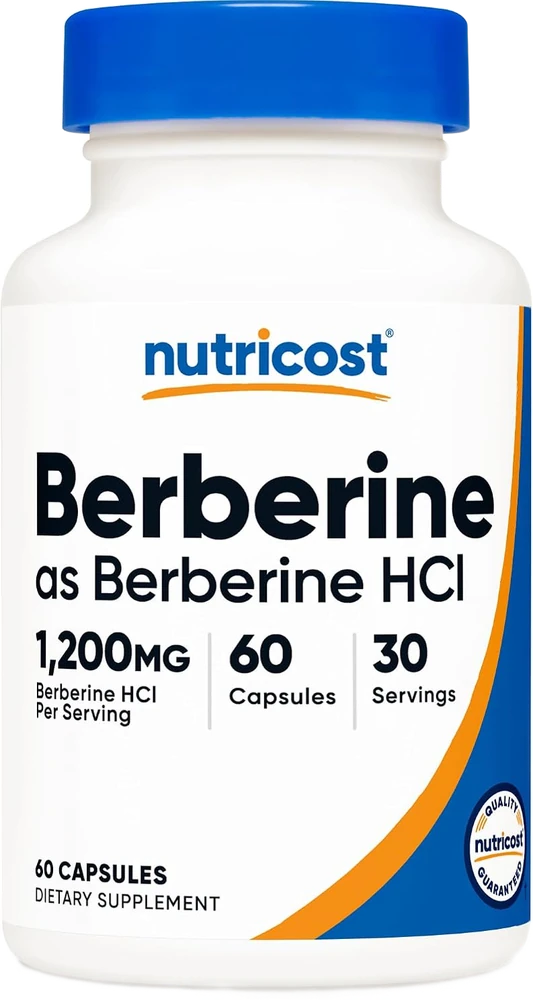
Best overall: Berberine HCl (high-dose) — represented by Nutricost Berberine HCl
Pure berberine HCl — the exact form the trials used, with no phytosome blended in — at the lowest cost per dose on Amazon. The smart way to run a real HCl protocol without overpaying.
Rep product: $15 / month600 mg berberine HCl per capsule — 1,200 mg per 2-capsule serving (60 capsules, 30 servings)
Why it wins: all five scores, pros & cons, full label
- Pure berberine HCl — the same molecule and evidence base used in the pivotal human trials — at the lowest price
- 600 mg per capsule (1,200 mg per 2-capsule serving) makes a real HCl dose cheap to sustain for months
- No phytosome premium baked into the price — you're paying for HCl only
- Less brand prestige and no NSF listing, unlike Thorne (GMP + third-party tested, not NSF-certified)
- Same GI burden as any full-dose HCl — ramp and split to manage it
- Bioavailability
- ~1%
- Best for
- Running a real 1,200-1,800 mg/day HCl dose affordably
- Rep product
- Nutricost Berberine HCl, 60 capsules/30 servings, B079GH6V2Z
- Form
- Berberine HCl (pure — not blended with phytosome)

Our take — Nutricost is pure berberine HCl — the straightforward, trial-matched molecule, without Thorne's phytosome component — at the lowest price per dose in this lineup. At 600 mg per capsule (1,200 mg per labeled 2-capsule serving), it's the ideal way to confirm you respond to berberine before deciding whether an NSF-certified blend or a better-absorbed phytosome form is worth the extra cost. Run it with each main meal for 4-8 weeks and watch your fasting glucose. See our berberine-for-weight-loss guide for how the value pick fits the metabolic protocol.
Who Wins Which Aspect
Sorted by overall SAC Product Score™ — the official ranking.
| # | Pick | Score | Form bioavailability30% | Dose accuracy at 1,500 mg/day25% | Third-party testing20% | Cost per active dose15% | Real-world glucose + weight response10% | Buy |
|---|---|---|---|---|---|---|---|---|
| 01 | | 8.9 | 8.53 | 9.51 | 8.03 | 10.01 | 8.53 | Check price |
| Pure berberine HCl — the same molecule and evidence base used in the pivotal human trials — at the lowest priceLess brand prestige and no NSF listing, unlike Thorne (GMP + third-party tested, not NSF-certified) | ||||||||
| 02 | 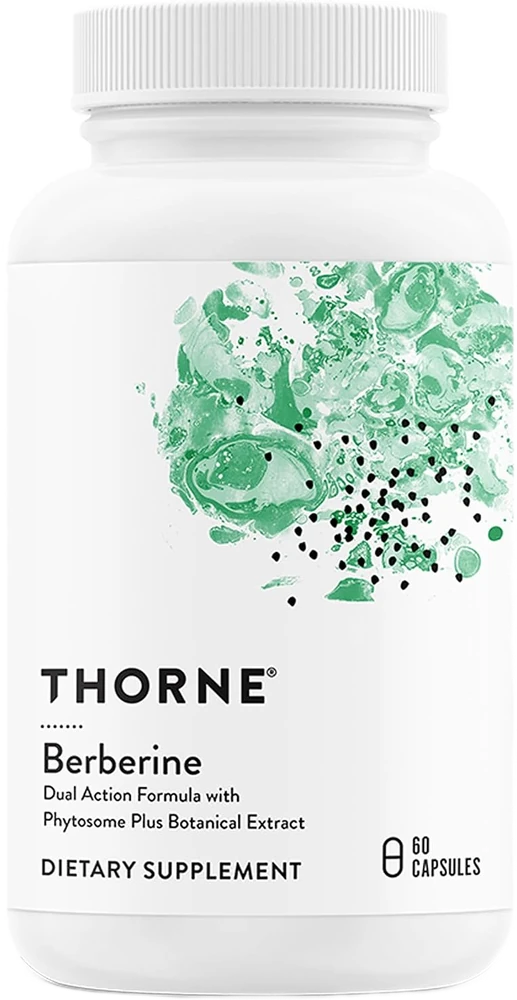 | 8.4 | 9.22 | 7.03 | 9.01 | 7.53 | 9.51 | Check price |
| Delivers a real 450 mg berberine HCl dose per serving (2 caps), not a token amount, plus 550 mg berberine phytosomeNot pure HCl — the 450 mg HCl per serving sits below the 1,500 mg/day Yin 2008 protocol dose | ||||||||
| 03 | 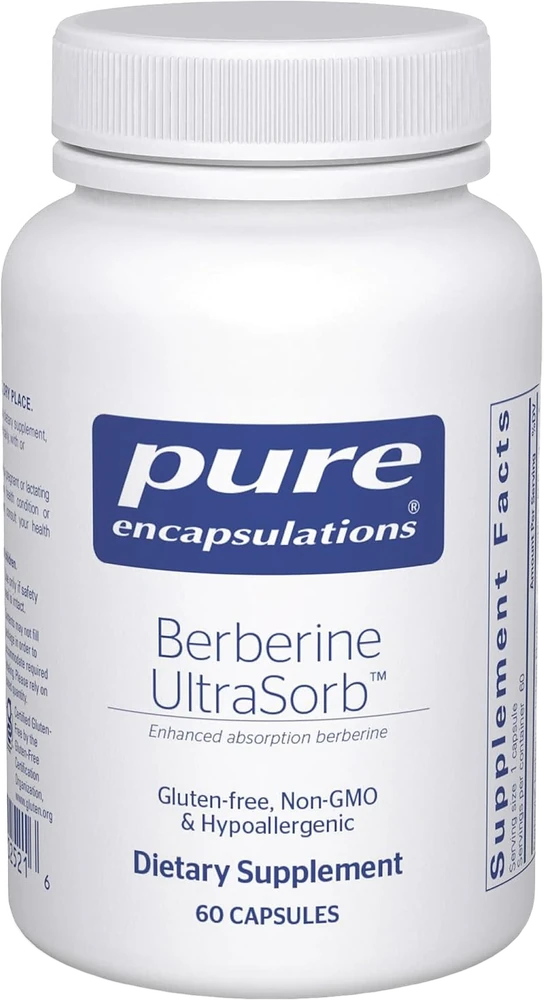 | 8.4 | 9.51 | 8.52 | 8.52 | 5.5 | 9.02 | Check price |
| Best-absorbed form that ALSO has its own published trials (Indena/Berberol-style complex)2x the price of premium HCl, and far more than budget HCl | ||||||||
| 04 | 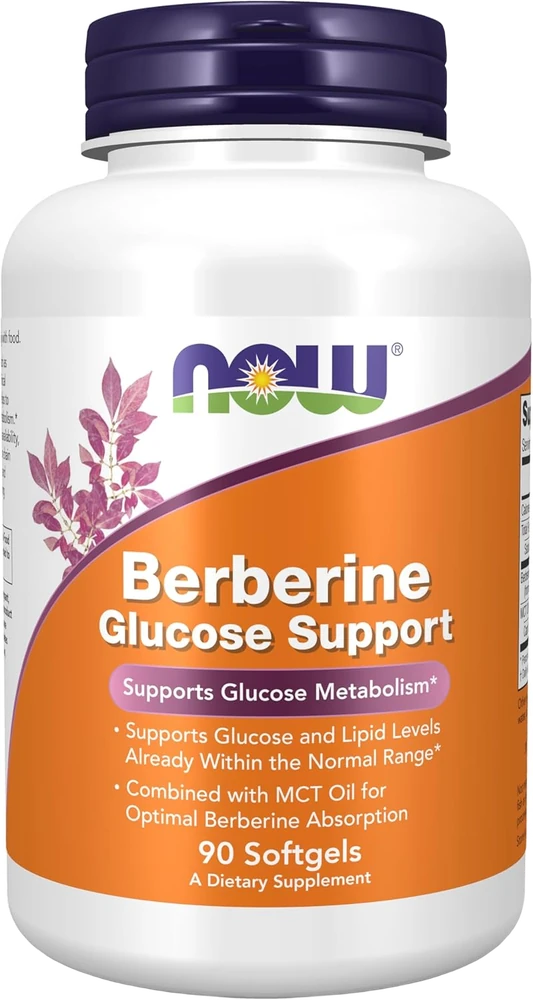 | 7.8 | 8.0 | 7.03 | 8.52 | 8.02 | 7.5 | Check price |
| A real, disclosed dose per softgel — 400 mg berberine HCl + 700 mg MCT oil, not a token amountOnly 400 mg berberine HCl per softgel — the suggested 2-softgel/day serving is just 800 mg, below the clinical window | ||||||||
The Other 3, Ranked
- 02
Best NSF-certified: Berberine HCl + Phytosome — represented by Thorne Berberine (Dual Action)
8.4SAC Score™If you want the HCl evidence plus an absorption assist in one NSF contents-certified capsule, this is the pick. Thorne's Dual Action Formula pairs 450 mg berberine HCl with 550 mg berberine phytosome per 2-capsule serving.
StrongestReal-world glucose + weight response9.51WeakestDose accuracy at 1,500 mg/day7.0- Bioavailability
- HCl half ~1%; phytosome half ~3-5× higher — a blended profile, not pure HCl
- Best for
- Real HCl dosing plus a phytosome absorption assist in one capsule
- Rep product
- Thorne Berberine (Dual Action), NSF contents-certified, B009LI7VRC
All five scores, pros & cons, full label
What We Like- Delivers a real 450 mg berberine HCl dose per serving (2 caps), not a token amount, plus 550 mg berberine phytosome
- NSF contents-certified (NSF/ANSI 173), listed at info.nsf.org — not NSF Certified for Sport
- Combines the evidence-backed HCl molecule with a bioavailability assist instead of forcing a choice
- The HCl portion still engages the gut-microbiome mechanism that un-absorbed berberine relies on
What You Live With- Not pure HCl — the 450 mg HCl per serving sits below the 1,500 mg/day Yin 2008 protocol dose
- Costs more than straight HCl (Nutricost) for a smaller pure-HCl amount per serving
- Form
- Dual Action Formula — berberine HCl + berberine phytosome blend
Our take — Thorne's Berberine is a Dual Action Formula, not plain HCl — each 2-capsule serving delivers 450 mg berberine HCl plus 550 mg berberine phytosome, blending the evidence-backed molecule with a phytosome absorption assist. It doesn't exactly replicate the Yin 2008 protocol (500 mg pure HCl three times daily, 1,500 mg/day) — Thorne's labeled serving carries less pure HCl and adds phytosome instead. NSF contents-certified (NSF/ANSI 173), it's the pick for buyers who want real HCl content plus a bioavailability boost in one certified capsule, rather than those chasing the exact trial dose — for that, see Nutricost (#1) for pure high-dose HCl. For the full product ranking and protocol, see our berberine-supplements and berberine-for-weight-loss guides.
- 03
Best absorbed form (with evidence): Phytosome — represented by Pure Encapsulations Berberine UltraSorb
8.4SAC Score™The upgrade that doesn't cost you the science. Phytosome wraps berberine in phosphatidylcholine for ~3-5× the absorption of plain HCl — and unlike dihydroberberine, it has published human trials of its own.
StrongestForm bioavailability9.51WeakestCost per active dose5.5- Bioavailability
- ~3-5× berberine HCl
- Best for
- Lower GI burden + lower effective dose, still evidence-backed
- Rep product
- Pure Encapsulations Berberine UltraSorb, 60 capsules (1 per serving), B0CD8PV49D
All five scores, pros & cons, full label
What We Like- Best-absorbed form that ALSO has its own published trials (Indena/Berberol-style complex)
- Gentler on the gut than high-dose HCl because more enters circulation, less sits in the lumen
- Lower effective dose / smaller pill burden than the 1,500 mg/day HCl protocol
What You Live With- 2x the price of premium HCl, and far more than budget HCl
- Fewer total trials than plain HCl — strong for an absorption-enhanced form, but not HCl's mountain of data
- Easy to over-dose if you wrongly apply the HCl 1,500 mg/day number — follow the label
- Form
- Berberine phytosome (phosphatidylcholine complex)
Our take — Phytosome is the pragmatic upgrade, not a different drug. It's the form to buy when plain HCl's loose-stool effect is your dealbreaker but you don't want to gamble on the barely-studied dihydroberberine — you get most of the absorption benefit while keeping real human-trial backing. The representative product is Pure Encapsulations Berberine UltraSorb. Just remember the dose isn't the HCl dose: more is absorbed, so follow the label rather than chasing 1,500 mg. For where phytosome fits among all the products, see our full berberine-supplements guide and the complete hub at /substance/berberine.
- 04
Best stack form: Berberine + MCT oil — represented by NOW Foods Berberine Glucose Support
7.8SAC Score™A two-ingredient softgel, not a cinnamon/ALA blend. NOW pairs 400 mg berberine HCl with 700 mg MCT oil per softgel, marketed for absorption — useful if you prefer an oil-carried softgel over a dry capsule.
StrongestThird-party testing8.52WeakestDose accuracy at 1,500 mg/day7.0- Bioavailability
- HCl-level; MCT oil is marketed for absorption, not independently verified for berberine
- Best for
- Buyers who prefer an oil-carried softgel to a dry capsule
- Rep product
- NOW Foods Berberine Glucose Support, 90 softgels, B07PSMZ3J1
All five scores, pros & cons, full label
What We Like- A real, disclosed dose per softgel — 400 mg berberine HCl + 700 mg MCT oil, not a token amount
- Softgel + oil carrier may suit people who dislike dry capsules
- NOW Foods is a reputable, NSF-registered-facility, third-party-tested brand at a fair price
What You Live With- Only 400 mg berberine HCl per softgel — the suggested 2-softgel/day serving is just 800 mg, below the clinical window
- Despite the 'Glucose Support' name, it's not a cinnamon or alpha-lipoic-acid blend — just HCl + MCT oil
- MCT oil's absorption-boosting claim for berberine specifically isn't independently verified
- Form
- Berberine HCl + MCT oil (medium-chain triglycerides) — no cinnamon, no ALA
Our take — Despite the name, NOW's Berberine Glucose Support isn't a cinnamon or alpha-lipoic-acid blend — the label lists two ingredients: 400 mg berberine HCl and 700 mg MCT oil per softgel, the MCT marketed to aid absorption in an oil-carried softgel rather than a dry capsule. The catch is dose: the suggested 2-softgel/day serving is only 800 mg, below the 1,000-1,500 mg/day clinical window, so reaching the full protocol means 3-4 softgels/day. Fine if you want an oil-based softgel and don't mind the extra pills; for a straightforward high dose in fewer capsules, the HCl picks above are more efficient. See our full berberine-supplements guide for the complete lineup.
Berberine In Four Short Lessons
Why the form question is really an absorption question
- ~1%
- Oral bioavailability of berberine HCl — the entire reason doses look big
- 5×
- Bioavailability of dihydroberberine (DHB) vs plain HCl
- 30+
- Human RCTs behind berberine — almost all run on HCl, not DHB
- 1,500mg
- Typical clinical HCl dose/day, split across 3 meals to clear the 1% wall
Sources: Liu 2016 pharmacokinetics review (PMID 26851175); Yin 2008 metformin head-to-head (PMID 18442638); Lan 2015 27-RCT lipid meta (PMID 25498346).
Start with HCl, the form with the trials.
Nearly all of berberine's 30+ human trials used HCl, including the metformin head-to-head (Yin 2008). Its roughly 1% absorption is a number the dose already accounts for.
Dose HCl at 1,000-1,500 mg a day, split across meals.
The clinical dose is that large precisely because so little survives first-pass. The unabsorbed remainder still works through the gut microbiome.
Upgrade only if your stomach forces you to.
Phytosome is about 3-5x better absorbed and has its own published trials. Dihydroberberine absorbs best of all, but its outcome data is not there yet.
Yin 2008 metformin head-to-head (PMID 18442638), Lan 2015 27-RCT lipid meta (PMID 25498346), and Liu 2016 pharmacokinetics review (PMID 26851175).
This is a form ranking, not a product ranking — each form was scored on how useful it is for the average buyer, then represented by the single best product to obtain it. Trial evidence carries the most weight here (more than in our other form guides) for one reason: berberine is an unusual case where the most-absorbed form is NOT the most-studied. Berberine HCl owns nearly all of the 30+ human RCTs, so a more-bioavailable form has to be weighed against a thinner evidence base. Bioavailability is the second axis — it's why DHB and phytosome exist — but it's discounted by the fact that HCl's clinical dose already compensates for low absorption. Use-case fit, tolerability, and cost round it out. Dihydroberberine appears in the comparison table without a recommended product because its absorption is real but its outcome data isn't there yet.
Trial evidence behind the form · 30%
How much human outcome data backs THIS specific form. Berberine HCl scores near-maximum (~all 30+ RCTs, including the metformin head-to-head). Phytosome has several trials of its own. Dihydroberberine and the blends score low — promising or convenient, but thin on form-specific RCTs.
Bioavailability of the form · 25%
Dihydroberberine tops this (~5× HCl), phytosome next (~3-5×), HCl and sulfate at the ~1% floor. But it's discounted: HCl's large clinical dose is designed to clear the 1% wall, so low absorption isn't the disqualifier it looks like.
Use-case fit · 20%
Does the form deliver on the real goals — glucose, HbA1c, lipids, weight, PCOS? HCl has documented effect sizes on all of them. Phytosome inherits most. Blends depend entirely on whether the berberine dose inside is real.
Tolerability · 15%
GI burden scales with un-absorbed luminal berberine, so the better-absorbed forms (phytosome, DHB) are gentler. HCl loses points for the loose-stool effect at full dose — though ramping and splitting fixes most of it.
Cost per usable dose · 10%
Monthly cost at the form's typical protocol. HCl (especially Nutricost) wins decisively; phytosome and DHB are 2-3× the price. Tiebreaker only — it's why the budget pick is HCl, not a 'premium absorption' form.
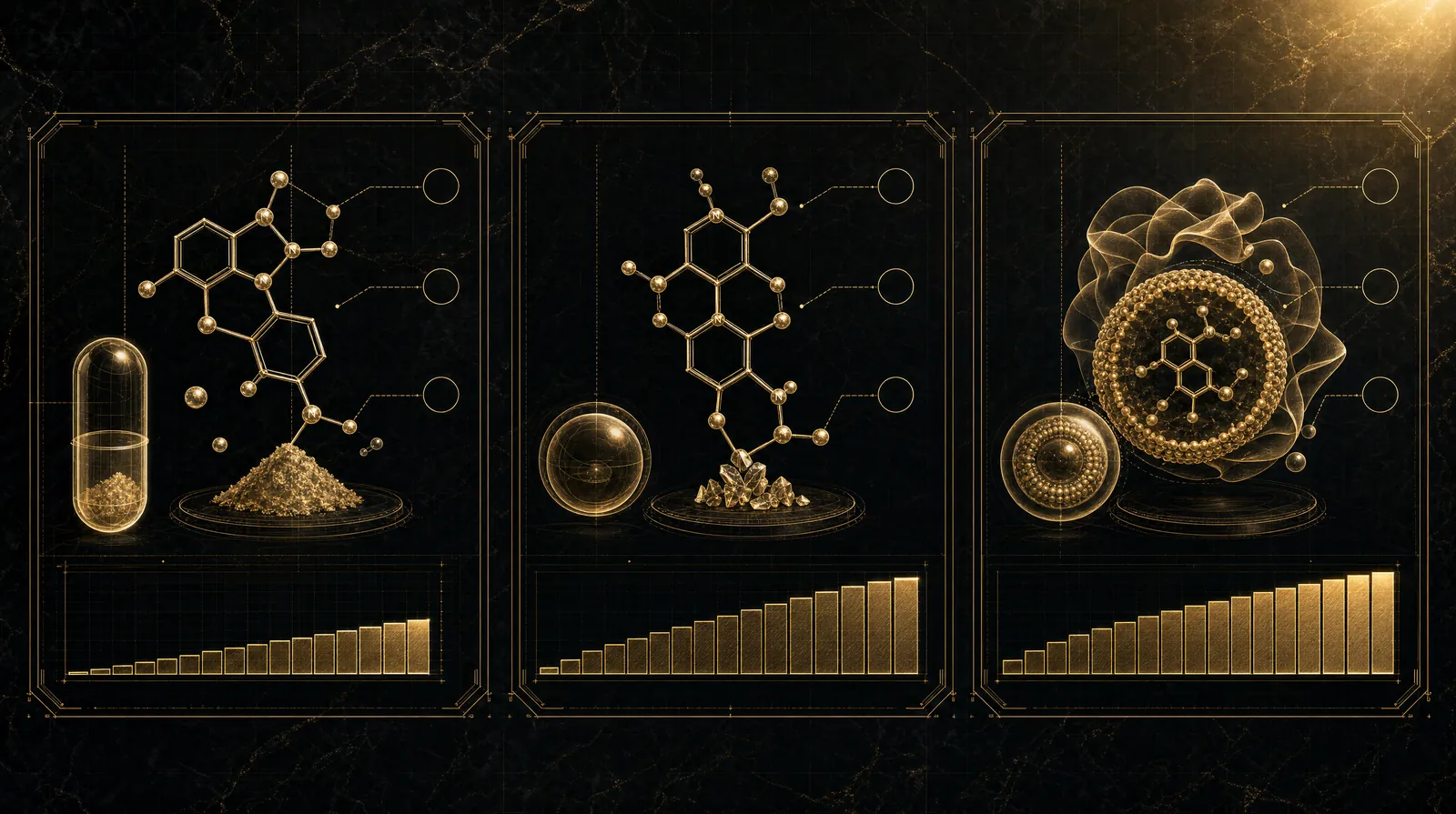
Why bioavailability splits the berberine forms apart
- 1
Plain HCl mostly gets pumped back out
Berberine HCl dissolves fine, but intestinal P-glycoprotein ejects most of it back into the gut lumen before it can enter circulation — capping bioavailability near ~1%. The clinical dose is large (1,000-1,500 mg/day) precisely to push enough through that wall.
- 2
Phytosome and DHB get around the wall
Phytosome wraps berberine in phosphatidylcholine so more crosses intact (~3-5× HCl). Dihydroberberine is the pre-reduced metabolite your gut would otherwise have to make, so it absorbs ~5× better at a smaller dose. Both raise plasma berberine without raising the pill count.
- 3
But the un-absorbed berberine still works
The ~99% of HCl that stays in the gut isn't wasted — it reshapes the microbiome toward SCFA-producers, improving insulin sensitivity through a second pathway. That's why low-bioavailability HCl still carries all the outcome trials, and why 'more absorbed' doesn't automatically mean 'more effective.'
What to expect once you pick the right form
GI adaptation
Loose stools and mild cramping are common, especially if you skip the ramp. Build 500 mg → 1,000 → 1,500 over two weeks. If HCl is intolerable here, this is the moment to switch to phytosome or DHB rather than quit.
Post-meal glucose blunts first
CGM users typically see 15-25 mg/dL lower spikes after meals taken with berberine. Fasting glucose hasn't moved much yet — that's normal.
Fasting glucose drops
Fasting glucose falls 10-25 mg/dL on labs; HbA1c starts trending (full effect waits for ~12-week RBC turnover). Weight begins to ease in metabolic-syndrome subjects.
Lipids + steady state
LDL −20-25%, triglycerides −30-35%, HbA1c −0.7-1.0% confirmed on bloodwork. Continue indefinitely for metabolic + longevity benefit; no tolerance documented.
The bottom line: evidence first, absorption second
Berberine HCl (#4) wins the comparison on the axis that matters most: evidence.
For roughly 80% of people the best form is berberine HCl, the form behind nearly every human trial, including the one where it matched metformin on glucose and HbA1c. Its ~1% bioavailability isn't a problem to engineer around; the clinical dose already compensates, and the un-absorbed remainder still works through the gut microbiome. Nutricost is the representative pure-HCl product at the trial-matching dose; Thorne's NSF-certified pick blends in berberine phytosome rather than staying pure HCl, trading a little exact-dose fidelity for an absorption assist — but the form argument for HCl itself still stands.
Honest alternatives: Nutricost HCl (#2) if money's tight, phytosome (#3) if HCl wrecks your gut.
If you want that same proven form cheaply, Nutricost high-dose HCl (#2) is the identical molecule in a big bottle for ~$15/month. If HCl's GI side effects are the dealbreaker, phytosome (#3) delivers ~3-5x the absorption and, crucially, its own published trials, unlike the barely-studied dihydroberberine.
Buy for your priority, read the panel, and don't let a 'high-absorption' label fool you.
The single biggest mistake is overpaying for a 'high-absorption' label while assuming it must beat cheap, thoroughly-studied HCl. For blends (#4) confirm the berberine is a real 1,000-1,500 mg/day, not a token 200 mg behind filler. Read the supplement facts panel, confirm the form and the dose, and buy for evidence, absorption, or price.
Quick Answers
What is the single best form of berberine?
For most people, berberine HCl (hydrochloride). It's the form behind nearly all of the 30+ human RCTs — including the Yin 2008 head-to-head where berberine 500 mg 3×/day matched metformin 1,500 mg/day on HbA1c and glucose, and the Lan 2015 meta showing LDL −25% / triglycerides −35%. Yes, it's only ~1% absorbed, but the clinical dose (1,000-1,500 mg/day split across meals) already compensates for that, and the un-absorbed remainder still works through the gut microbiome. 'Best form' only changes if HCl's GI burden is intolerable — then step to phytosome or DHB.
Why is berberine HCl only ~1% bioavailable — and why does that not ruin it?
Because intestinal P-glycoprotein efflux pumps most of an oral dose straight back into the gut lumen before it can enter circulation. So only ~1% reaches the bloodstream. That sounds disqualifying, but two things rescue it: first, the clinical dose is deliberately large (1,000-1,500 mg/day) precisely to deliver enough of that 1% to matter — the trials dosed for the wall. Second, the ~99% that stays in the gut isn't wasted: it shifts the microbiome toward SCFA-producing genera, which improves insulin sensitivity through a second, parallel mechanism. The ~1% number is why the dose looks big, not a reason to skip the form.
Berberine HCl vs dihydroberberine (DHB) — is DHB worth the extra money?
DHB is the partially-reduced metabolite your gut bacteria convert berberine HCl into before absorption — so taking DHB skips a step. It's roughly 5× better absorbed, meaning ~100-200 mg DHB delivers plasma exposure similar to 500 mg HCl, with a smaller pill and usually less GI distress. The catch: the 30+ RCTs were run on HCl, so the evidence base sits with the cheap form. Practical answer: start with HCl (~$15/month). If GI side effects are intolerable or you simply don't respond, switch to DHB (~$45/month) for the better-absorbed, gentler profile. DHB is the right form when cost isn't the constraint and tolerability is.
What about phytosome berberine (Berberol / berberine + phosphatidylcholine)?
Phytosome is the middle path: berberine bound into a phosphatidylcholine complex that carries more of it across the gut wall — roughly 3-5× the absorption of plain HCl. Unlike DHB, it has several published human trials of its own (the Indena/Berberol formulations), so you're not trading away all the evidence to get the absorption. It's cheaper than DHB and gentler on the gut than high-dose HCl. If plain HCl's loose-stool effect is your problem but you still want a form with data behind it, phytosome (e.g. Pure Encapsulations Berberine UltraSorb) is the pragmatic upgrade.
Is berberine sulfate different from berberine HCl?
Functionally, no. Berberine sulfate and berberine HCl are just two different salts of the exact same berberine molecule — the counter-ion (sulfate vs chloride) changes nothing meaningful about how the berberine behaves once it dissolves. Bioavailability is essentially the same (~1%), the dose is the same (1,000-1,500 mg/day), and the use cases are identical. HCl is far more common on shelves and in the trials, so there's no reason to seek out sulfate; if you find it, treat it as interchangeable with HCl.
Are the berberine + cinnamon or + ALA 'glucose support' blends better?
They're about the stack, not the molecule. Adding alpha-lipoic acid (a legitimate glucose + antioxidant tool) or Ceylon cinnamon (weak glucose evidence, but harmless) doesn't improve berberine's absorption at all — a blend is HCl-level bioavailable. Blends earn their place on convenience and co-stacking, with two caveats: confirm the berberine dose is still a real 1,000-1,500 mg/day (many blends hide a token 200-300 mg behind filler ingredients), and don't pay a premium for cinnamon doses too small to do anything. The NOW Foods glucose-support blend is a sensible example when the berberine dose is honest.
Why do I have to take every berberine form with meals?
Two reasons that apply to HCl, phytosome, and DHB alike. First, berberine's headline effect is blunting the post-meal glucose spike — it has to be circulating during the meal to do that, so the dose is timed to food. Second, food slows gastric emptying, which both extends berberine's contact time with the gut wall (where the microbiome mechanism plays out) and reduces the loose-stool side effect. The protocol is 500 mg HCl within ~30 minutes of breakfast, lunch, and dinner. Skip a meal, skip that dose.
I get GI side effects on berberine HCl — switch form or quit?
Ramp, split, then switch form before quitting. Ramp: 500 mg once daily for a week, then twice, then three times. Never exceed 500 mg in a single dose — the loose-stool effect scales with peak luminal concentration, not total daily intake, so splitting helps more than reducing. If that's not enough, switch form: phytosome or DHB cut the GI burden meaningfully because more of the dose enters circulation instead of sitting in the gut. About 5-10% of people are simply non-tolerators and are better served by inositol (especially for PCOS) or alpha-lipoic acid.
Every Claim Ranked Above Traces Back To One Of These
4 peer-reviewed sources, each linked to PubMed
- [1] Yin 2008 PMID 18442638 — Efficacy of berberine in patients with type 2 diabetes mellitus. Berberine 500 mg three times daily for 3 months matched metformin 1,500 mg/day on HbA1c, fasting glucose, and postprandial glucose in type-2 diabetics. The pivotal head-to-head trial — run on berberine HCl — that anchors the HCl form's claim to the strongest evidence base on this page.
- [2] Lan 2015 PMID 25498346 — Meta-analysis of the effect and safety of berberine in the treatment of type 2 diabetes mellitus, hyperlipemia and hypertension. Pooled analysis of 27 RCTs (n=2,569) confirmed berberine reduces LDL ~25%, triglycerides ~35%, and total cholesterol ~20% while improving glucose vs placebo. The reference meta for berberine's cardiometabolic effect sizes — overwhelmingly from HCl-form studies, which is why HCl carries the evidence axis.
- [3] Liu 2016 PMID 26851175 — Research progress on berberine with a special focus on its oral bioavailability. Comprehensive review of berberine pharmacokinetics: oral bioavailability of HCl is ~1% due to P-glycoprotein efflux, which is why clinical doses are 1,000-1,500 mg/day split across meals — and the explicit rationale for why dihydroberberine and phytosome formulations were developed.
- [4] Kong 2004 PMID 15531889 — Berberine is a novel cholesterol-lowering drug working through a unique mechanism distinct from statins. Identified berberine's LDL-lowering mechanism as upregulation of hepatic LDL-receptor mRNA via ERK signaling — distinct from statins' HMG-CoA reductase inhibition. The landmark mechanism paper explaining why berberine (as HCl) moves lipids, supporting the lipid use case in the form comparison.
More Berberine Guides
- Best Berberine SupplementsBerberine ranked by HCl vs phytosome bioavailability, split-dose accuracy, third-party testing — the bottles that actually move HbA1c and lipid markers.
- Best Berberine for Blood SugarBerberine cut HbA1c 0.7-1.0%, matching metformin (Yin 2008). Ranked by form (HCl owns the glucose trials), the 1,500 mg/day dose, third-party testing, and drug-interaction transparency.
- Best Berberine for PCOSBerberine improves insulin resistance, androgens, and ovulation in PCOS (comparable to metformin, Wei 2012). Ranked by form, the 1,500 mg dose, and testing — with the pregnancy contraindication front-and-center.
- Best Berberine for Weight LossTen berberine products ranked for fat-loss outcomes — trial-dose HCl leads on score, with phytosome as the absorption upgrade for the systemic exposure adipose-tissue AMPK needs.
Affiliate disclosure: every Amazon link uses our Associates tag (superachieverclub-20). We earn a small commission at no cost to you; it funds independent reviews. We never accept payment to change a ranking.