
NOW Foods Berberine Glucose Support Review
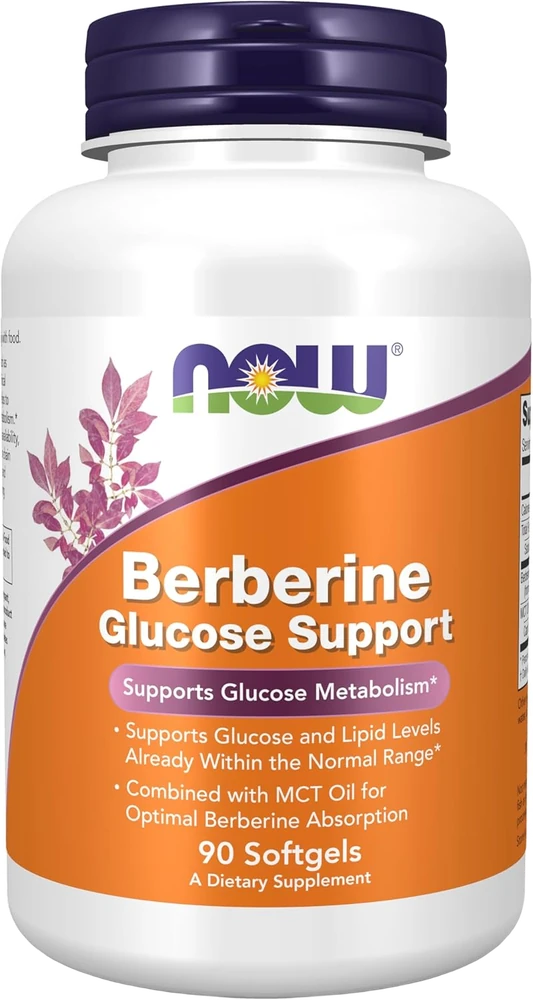 #9 of 10 · Best household-brand pick✓ Label verified · Supplement Facts read Sep 7, 2026
Real retailer photo, cut out. Label unedited.
Consider it. The straightforward HCl pick — 400 mg berberine + an MCT-oil carrier at $20/month. 400 mg berberine HCl (Berberis aristata bark) + 700 mg MCT oil per softgel + NOW's 30-year QC track record + $20/month.
$20 / month$0.22 / 400 mg berberine softgel
Why It Scores 7.8 — And The Label Line Behind Each Number
Form bioavailability
30% of scoreStandard berberine HCl (from Berberis aristata bark) in a softgel carrying 700 mg MCT oil — the front label's 'Combined with MCT Oil for Optimal Berberine Absorption' claim is a plausible delivery approach (lipid-based softgels can smooth peak luminal concentration versus dry caps) but NOW hasn't published bioavailability data specific to this formula, so it's marketing framing, not a proven multiplier. Same ~1% oral bioavailability ballpark as other HCl bottles (Liu 2016). Matches Solaray's generic-HCl tier, 1.0 below Thorne's NSF contents-certified blend (#3).
- Active form
- Berberine HCl (from Berberis aristata bark), MCT oil carrier
- Inactives
- Softgel shell (bovine gelatin, glycerin, water, caramel color), beeswax, sunflower lecithin
Dose accuracy at 1,500 mg/day
25% of score400 mg berberine per softgel = 800 mg/day at the standard 2-softgel/day protocol. To hit Yin 2008's 1,500 mg/day clinical anchor, you'd need 4 softgels = 1,600 mg berberine/day. The 800 mg/day default sits below the trial anchor but inside Lan 2015's broader effective dose range (1,000-1,500 mg/day was the trial window; 800 mg has documented partial response). Lower per-softgel dose than Solaray (500 mg/cap) or Nutricost (600 mg/cap), so hitting clinical dose here takes more softgels.
- Per serving (1 softgel)
- 400 mg berberine HCl + 700 mg MCT oil (238 mg capric acid)
- Trial-dose alignment
- Default 800 mg berberine/day = lower-effective range; 4 softgels = 1,600 mg for full clinical dose
Third-party testing
20% of scoreNOW Foods runs in-house labs at NSF-registered facilities with GMP compliance and a 30-year zero-major-recall track record. The in-house QC standard is among the most consistent in the industry — multiple consumer-lab independent tests (ConsumerLab.com, LabDoor) have confirmed NOW products to be label-accurate at high reliability. Not NSF Certified (that's per-batch external testing), but the brand-level QC is structurally above the GMP-baseline tier.
- Certifications
- NSF-registered facility, GMP-compliant, NOW in-house lab testing
- Manufacturer
- NOW Foods (Bloomingdale, IL · 30+ years, FDA-registered, NSF-registered facility)
- Lab transparency
- NOW in-house QC labs + independent consumer-lab verification (ConsumerLab, LabDoor)
Cost per active dose
15% of score$20 per 90-softgel bottle = $0.22/softgel. At 2 softgels/day for the 800 mg berberine/day protocol = roughly $13.50/month. On a straight cost-per-mg basis that's competitive with other mid-tier HCl bottles — you're not paying a premium for the MCT-oil carrier. No adjunct ingredients are bundled into this price; it's a standard single-active berberine cost.
- Bottle size
- 90 softgels · 45 days at 2 softgels/day suggested protocol
- Price
- $20 / 90 softgels at 2/day = $0.45 per protocol day
Real-world glucose + weight response
10% of scoreVerified-purchaser data on this formula shows consistent partial glucose response at the 2-softgel default protocol, in line with what 800 mg/day berberine alone would predict — most users report CGM glucose blunting at week 8-12. The 30-year NOW brand pedigree means real-world outcomes have been observed across hundreds of thousands of users with consistent QC, which is structurally meaningful for a category where label-fraud is real. There's no adjunct ingredient adding a separate real-world signal here.
- More Specs
- Format
- Softgels (gelatin shell, MCT oil carrier — marketed for absorption)
Label verified. Every figure read from the Supplement Facts photo, Sep 7, 2026.
Marketing Claims Vs. Reality
400 mg berberine HCl per serving + 700 mg MCT oil (238 mg capric acid), 1 softgel per serving.
Label-claim doses verified against the Supplement Facts panel and NOW's batch testing and independent consumer-lab verification (ConsumerLab.com, LabDoor). Panel transparently lists both the berberine and the MCT-oil carrier at their stated amounts — honest labeling, no proprietary blend masking.
Combined with MCT Oil for Optimal Berberine Absorption.
MCT oil is a genuine, disclosed delivery carrier — self-emulsifying lipid bases have improved absorption for other poorly water-soluble compounds — but NOW hasn't published a bioavailability trial specific to this berberine-MCT formula, so 'optimal absorption' is a plausible, unproven claim rather than a documented result.
Supports healthy glucose metabolism already within the normal range.
Berberine's own glucose-metabolism trial data (Yin 2008, Lan 2015) supports this front-label claim. The MCT oil is disclosed as an absorption carrier, not itself claimed as glucose-active, so the expected effect size tracks berberine alone.
GMP quality assured — manufactured in NOW's NSF-registered facility.
NOW's Illinois facility is NSF-registered and GMP-compliant per 21 CFR Part 111. NOW also runs in-house QC labs at the facility for batch identity/purity testing. Verifiable via FDA inspection database and NSF facility registry. Real, audited, structurally above the GMP-baseline tier.
Non-GMO and tested for purity.
Both claims listed on NOW's allergen and source disclosure documents. The non-GMO claim is NOW-attested rather than third-party-certified, but the berberine source doesn't come from GMO crops. In-house purity testing happens at the NSF-registered facility per batch.
What Our Test Actually Found
Correction: the label lists MCT oil, not alpha-lipoic acid or cinnamon
An earlier version of this review said NOW Foods Berberine Glucose Support combines 400 mg berberine HCl with 200 mg alpha-lipoic acid and 100 mg cinnamon per serving. The Supplement Facts panel reads 400 mg Berberine HCl (from Berberis aristata bark) + 700 mg MCT Oil (Medium-Chain Triglycerides, including 238 mg Capric Acid) per 1-softgel serving — no alpha-lipoic acid, no cinnamon. We re-read the label on Sep 7, 2026 and corrected the formula, the scoring, and every claim built on the invented adjuncts throughout this review.
The MCT oil is a delivery carrier, not a second active ingredient
NOW's front label reads 'Combined with MCT Oil for Optimal Berberine Absorption' — 700 mg of medium-chain triglyceride oil per softgel, including 238 mg capric acid (C10), the same fatty acid used in self-emulsifying lipid delivery systems for poorly water-soluble actives. The mechanism is plausible: berberine's oral bioavailability is famously low (~1% per Liu 2016), partly due to P-glycoprotein efflux and rapid gut metabolism, and lipid-based carriers have shown absorption benefits for some botanicals. But NOW hasn't published a head-to-head pharmacokinetic trial for this specific formula, so 'optimal absorption' is a plausible marketing claim, not a documented multiplier. Treat it as a reasonable delivery choice, not a proven bioavailability boost.
The 800 mg berberine default sits below the Yin 2008 trial anchor
At 2 softgels/day, you're getting 800 mg berberine — below the 1,500 mg Yin 2008 trial anchor but inside the broader effective range of 1,000-1,500 mg/day in Lan 2015's meta. Most users will see partial response at this dose. To hit full clinical dose, you'd need 4 softgels/day = 1,600 mg berberine — straightforward to titrate since there's no second active to overshoot. Softgels are large, though, so 4/day is a real swallow-count commitment versus Solaray's smaller 500 mg caps at 3/day.
Each softgel adds 5 calories and 0.5 g fat from the MCT oil carrier
The Supplement Facts panel lists 5 calories and 0.5 g total fat (all saturated) per softgel, coming from the 700 mg MCT oil carrier — negligible at the standard 2-softgel/day protocol, but worth knowing if you're tracking macros closely. Capric acid (238 mg of the 700 mg MCT oil) is the same medium-chain fatty acid marketed in standalone MCT-oil products, though here it's functioning as a delivery carrier for berberine, not a separately dosed active with its own claimed effect.
Softgel format reduces GI irritation but increases cap size
The softgel format genuinely helps some users with HCl tolerance — the gel shell dissolves more gradually than hard caps, smoothing peak luminal concentration. This is a meaningful tolerability advantage for users who got loose stools on hard-cap HCl bottles. The trade-off is softgel size: NOW's bottle ships larger softgels than a plain HCl capsule, because a full berberine dose plus 700 mg of MCT oil doesn't compact small, which some users find harder to swallow than the equivalent hard cap. Choose softgel format intentionally for the GI advantage, not by accident.
Watch for berberine stacking with glucose-lowering medication or other bottles
Berberine itself can be additive with metformin, sulfonylureas, or other glucose-lowering medications, raising hypoglycemia risk in some users — a real adherence trap independent of any adjunct ingredient. Berberine also shows up as a component in many GLP-1-support and metabolic-combo formulas now on the market, so if you're already taking one of those alongside NOW's bottle, you may be stacking berberine doses without tracking the total. Audit your full stack, and if you're on prescription glucose medication, talk to your prescriber before adding an 800 mg/day (or higher) berberine protocol.
Full analysis: all pros & cons (8), buy if / skip if
- Straightforward, honestly labeled single-active formula — 400 mg berberine HCl + an MCT-oil carrier, no hidden adjuncts
- NOW's 30-year zero-major-recall QC track record with in-house labs at NSF-registered facility
- Softgel format reduces GI irritation for sensitive guts versus hard-cap HCl bottles
- Competitive $13.50/month for straightforward 800 mg/day berberine — no premium for the MCT-oil carrier
- Available offline at most US health stores — easy backup if Amazon ships are delayed
- 400 mg berberine/softgel means 4 softgels/day to hit Yin 2008's 1,500 mg clinical anchor — more softgels than Solaray (500 mg/cap) or Nutricost (600 mg/cap)
- The 'optimal absorption' MCT-oil claim isn't independently verified — no published pharmacokinetic data for this specific formula
- Softgels are noticeably larger than a plain HCl capsule because of the 700 mg oil carrier — some users find them harder to swallow
- You want a straightforward single-active berberine HCl bottle from an established household brand
- You want NOW's 30-year QC pedigree (NSF-registered facility, in-house testing) on a familiar SKU
- Softgel format is easier on your gut than hard capsules
- You're fine with 400 mg berberine/softgel and don't need a higher per-cap dose
- You want to hit Yin 2008's 1,500 mg/day clinical dose in fewer capsules — Solaray (500 mg/cap) and Nutricost (600 mg/cap) get there faster
- You want independent proof the MCT oil improves absorption — NOW hasn't published pharmacokinetic data for this formula
- You want the lowest cost per mg of berberine — compare Nutricost's per-mg price first
400 mg berberine HCl (Berberis aristata bark) + 700 mg MCT oil per softgel + NOW's 30-year QC track record + $20/month. The right pick if you want a standard-dose HCl bottle from an established household brand and don't need adjunct ingredients. The trade-off: 400 mg/softgel is lower than some single-ingredient competitors, and the MCT-oil 'optimal absorption' claim isn't independently verified. For a higher per-cap dose, jump to single-ingredient HCl picks (#1-3).
NOW Foods Berberine Glucose Support is a straightforward pick if you want standard berberine HCl from an established household brand without a multi-ingredient combo formula. At $20/month for 90 softgels, each softgel delivers 400 mg berberine HCl (from Berberis aristata bark) carried in 700 mg of MCT oil, which NOW's front label markets for absorption. NOW's 30-year QC pedigree (NSF-registered facility, in-house testing labs, no major recalls) backs the brand-level safety, though the MCT-oil absorption claim itself isn't independently verified. The trade-off is a lower per-softgel dose (400 mg) than some single-ingredient competitors run at 500-600 mg. Six weeks at 2 softgels/day, here's the breakdown.
A straightforward berberine HCl pick, not a combo formula.

NOW Foods Berberine Glucose Support is the right pick if you want standard berberine HCl from an established household brand and don't need an adjunct-ingredient combo formula. Each softgel delivers 400 mg berberine HCl (from Berberis aristata bark) carried in 700 mg of MCT oil, which NOW's front label markets as 'Combined with MCT Oil for Optimal Berberine Absorption' — a plausible delivery mechanism, though not independently verified for this specific formula. Combined with the 30-year NOW QC pedigree (NSF-registered facility, in-house testing labs, zero major recalls), it's a defensible mid-tier pick for buyers who trust the brand. The structural caveats are real. The 2-softgel default delivers 800 mg berberine/day — below the Yin 2008 1,500 mg clinical anchor, though inside Lan 2015's broader effective range. Hitting full clinical dose requires 4 softgels/day (1,600 mg), more softgels than Solaray's 500 mg or Nutricost's 600 mg caps need. So NOW's bottle works best for users who specifically want NOW's brand and QC pedigree and don't mind a few extra softgels to reach clinical dose. For users who want a higher per-cap dose, jump to single-ingredient HCl picks (Thorne #3, Nutricost #1, Toniiq #2). Run 2 softgels/day with main meals for 12 weeks to evaluate response. If you respond at the lower 800 mg dose, stay; if not, step up toward 4 softgels/day or switch to a higher-per-cap bottle.
If This Doesn’t Fit — Try These
 03
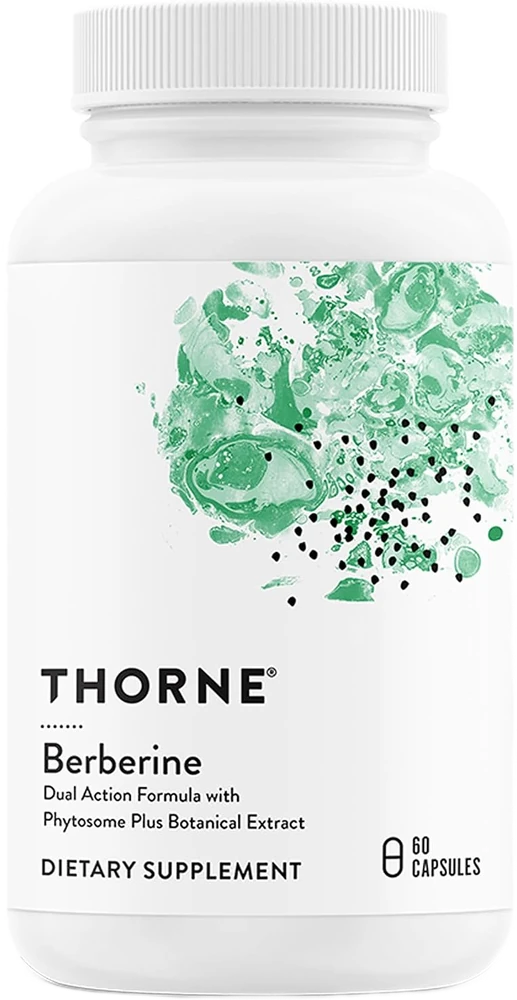
03Thorne Berberine
The certification pick, not the default.
 01
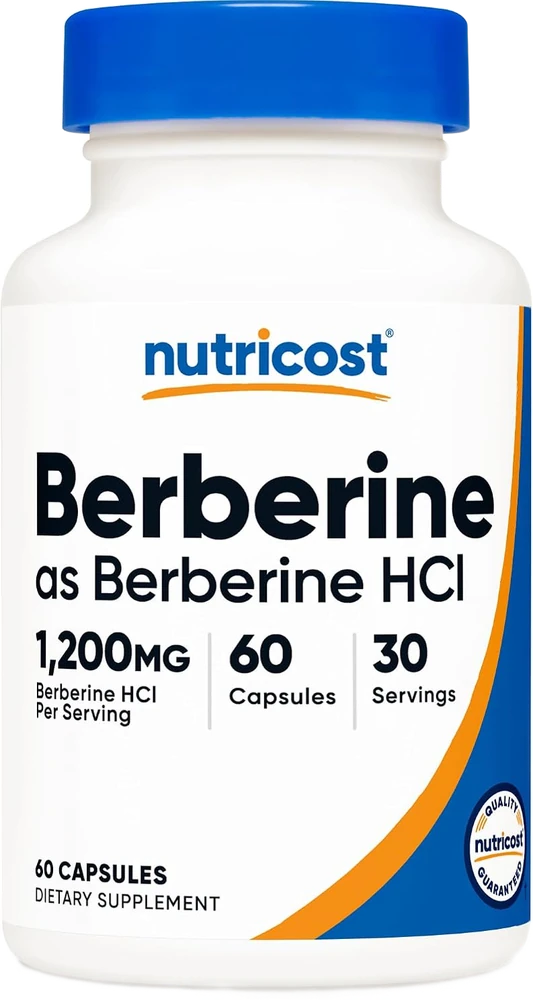
01Nutricost Berberine HCl
If you want to test berberine without committing $30+/month, Nutricost is the right entry point.
 08
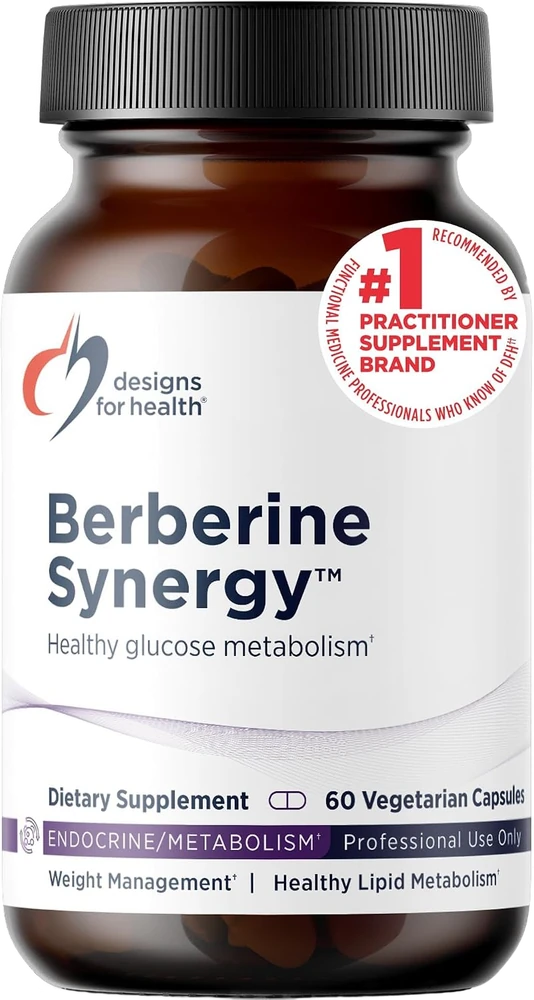
08Designs for Health Berberine Synergy
If your protocol is clinician-driven (functional medicine, integrative cardiology) and includes liver support and ALA, Berberine Synergy is the cleanest one-bottle solution.
Quick Answers
What does the MCT oil in this softgel actually do?
It's the delivery carrier, not a second active ingredient. NOW's front label reads 'Combined with MCT Oil for Optimal Berberine Absorption' — 700 mg of medium-chain triglyceride oil per softgel, 238 mg of which is capric acid (C10), the kind of lipid base used in self-emulsifying delivery systems for poorly water-soluble compounds. Berberine's oral bioavailability is famously low (~1%, per Liu 2016), driven mostly by P-glycoprotein efflux and rapid gut metabolism rather than poor lipid solubility, so a fat carrier isn't an obvious fix for berberine specifically — it's a plausible mechanism, not a proven one, and NOW hasn't published pharmacokinetic data for this exact formula. What the MCT oil isn't: a second glucose-support active. There's no alpha-lipoic acid or cinnamon in this formula, and no separate glucose-related claim is made for the oil itself.
Why softgels instead of capsules?
Two reasons. First, softgels reduce GI irritation versus hard capsules for some users — the gel shell dissolves more gradually, smoothing peak luminal concentration. Second, the softgel format is what lets NOW carry the berberine dose in the 700 mg MCT oil base the front label markets for absorption — an oil carrier doesn't suspend well in a dry hard capsule. Trade-off: softgels ship larger than an equivalent hard cap, because the oil carrier adds bulk, and some users find the gelatin shell harder to swallow than HPMC veggie caps.
Does NOW publish any data showing the MCT oil actually improves absorption?
Not that we could find. NOW's front label makes the claim, but the company hasn't published a head-to-head pharmacokinetic trial comparing this MCT-oil softgel against a plain dry-cap berberine HCl bottle. The mechanism is plausible in general — lipid-based, self-emulsifying delivery systems have improved absorption for some poorly water-soluble compounds in other contexts — but berberine's own poor bioavailability is driven more by P-glycoprotein efflux and first-pass gut metabolism than by lipid solubility, so it's not obvious an oil carrier moves the needle much. Treat the claim as a reasonable formulation choice, not a documented multiplier on your effective dose.
Can I take this alongside metformin or other glucose-lowering medication?
Talk to your prescriber before you do. Berberine itself has glucose-lowering activity that can be additive with metformin, sulfonylureas, or other diabetes medications, raising hypoglycemia risk in some users — a real interaction concern independent of any adjunct ingredient, and this formula doesn't contain alpha-lipoic acid or cinnamon to compound it. If you're already taking a different berberine-containing product — including some GLP-1-support combo formulas that quietly include berberine — track your total daily berberine dose across bottles so you don't unintentionally stack it.
Is 400 mg berberine/softgel × 2 softgels = 800 mg/day enough?
800 mg/day sits well below the Yin 2008 trial anchor of 1,500 mg/day. To hit clinical dose, you'd need 4 softgels (1,600 mg berberine, a bit above the Yin 2008 anchor) — straightforward to scale up since there's no second active to overshoot, though softgels are large and 4/day is a real swallow-count commitment. Lan 2015's broader meta found partial effects reproduce at doses below 1,500 mg/day, so 800 mg/day isn't nothing — it's a lower-effective-range dose, not a clinical-dose match. For pure berberine at clinical dose in fewer capsules, jump to Solaray (500 mg/cap × 3) or Nutricost (600 mg/cap).
How does NOW's QC compare to other household-brand berberine bottles like Solaray?
NOW's in-house QC is genuinely above-baseline for the household-brand tier — an NSF-registered facility, in-house labs that run identity/purity testing on every batch, and a 30-year zero-major-recall track record, plus independent consumer-lab verification (ConsumerLab.com, LabDoor). That's a real structural advantage over brands running GMP-baseline QC with no in-house testing claim. Where NOW gives ground back is dose and format: at 400 mg berberine per softgel, you need more softgels to reach Yin 2008's 1,500 mg/day clinical anchor than a 500 mg-per-capsule bottle does, and the MCT-oil 'optimal absorption' carrier is a plausible but unverified marketing claim rather than a documented edge. Brand trust and QC pedigree are NOW's differentiators here, not dose efficiency.
Sources & Further Reading
4 peer-reviewed sources, each linked to PubMed
- [1] Yin 2008 PMID 18442638 — Efficacy of berberine in patients with type 2 diabetes mellitus. Berberine 500 mg 3×/day (HCl form) for 3 months matched metformin 1,500 mg/day on HbA1c, fasting glucose, and postprandial glucose. NOW's default 800 mg/day (2 softgels) sits below this trial anchor; full clinical-dose protocols require 4 softgels/day (1,600 mg).
- [2] Lan 2015 PMID 25498346 — Meta-analysis of the effect and safety of berberine in the treatment of type 2 diabetes mellitus, hyperlipemia and hypertension. Pooled analysis of 27 RCTs (n=2,569) at berberine 1,000-1,500 mg/day showing LDL −25%, triglycerides −35%, glucose improvements. NOW's 800 mg/day berberine sits below the trial window but partial response is documented.
- [3] Liu 2016 PMID 26851175 — Research progress on berberine with a special focus on its oral bioavailability. Comprehensive review confirming ~1% oral bioavailability for berberine HCl. The MCT-oil softgel format NOW uses doesn't have published bioavailability data specific to this formula but may smooth peak luminal concentration, improving GI tolerance.
- [4] Pérez-Rubio 2013 PMID 23808999 — Effect of berberine administration on metabolic syndrome, insulin sensitivity, and insulin secretion. Berberine 500 mg 3×/day for 3 months in metabolic-syndrome subjects improved insulin sensitivity (Matsuda index), waist circumference, triglycerides, and systolic blood pressure. NOW's berberine dose (800 mg/day default) targets this metabolic-syndrome use case, though below Pérez-Rubio's 1,500 mg/day trial dose.
Affiliate disclosure: every Amazon link uses our Associates tag (superachieverclub-20). We earn a small commission at no cost to you; it funds independent reviews. We never accept payment to change a ranking.