
Thorne Berberine 500mg Review
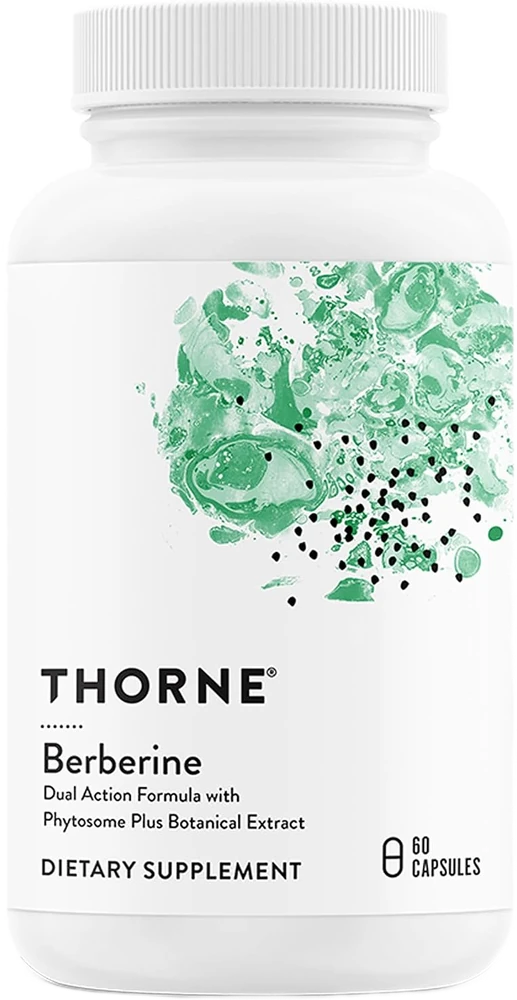 #3 of 10 · Best NSF-certified pick✓ Label verified · Supplement Facts read Sep 7, 2026
Real retailer photo, cut out. Label unedited.
Buy it. The default first-time pick — NSF contents-certified Dual Action HCl + Phytosome blend. 450 mg Berberine HCl + 550 mg Berberine Phytosome per 2-cap serving + NSF contents-certified (NSF/ANSI 173) + Thorne's clinician-channel QC + $32/month (≈$1.07/day at the labeled serving).
$32 / month$0.53 / capsule (at the listed price)
Why It Scores 8.4 — And The Label Line Behind Each Number
Form bioavailability
30% of scoreThorne's label lists a Dual Action Formula: Berberine HCl 450 mg + Berberine Phytosome 550 mg per 2-capsule serving (225 mg HCl + 275 mg Phytosome per cap). The HCl half is the form 95% of the 30+ RCTs (Yin 2008, Lan 2015, Wei 2012, Pérez-Rubio 2013) actually measured, with berberine's gut-microbiome mechanism playing out in the intestinal lumen regardless of the ~1% oral bioavailability. The Phytosome half — a phospholipid complex from pea, sunflower, and grape seed — carries meaningfully higher absorption than plain HCl. Blending the two gives you the trial-anchored mechanism on one side and a real bioavailability lift on the other, though no published trial has tested this specific 450:550 ratio as a combined product.
- Active form
- Dual Action Formula — Berberine HCl + Berberine Phytosome blend
- Inactives
- Hypromellose (derived from cellulose) capsule, calcium laurate — no fillers, no dyes
- Bioavailability
- Blended — ~1% for the HCl portion, meaningfully higher for the phytosome portion
Dose accuracy vs. labeled serving
25% of scoreThorne's labeled serving is 2 capsules — 450 mg Berberine HCl + 550 mg Berberine Phytosome, 1,000 mg total. That does not reproduce the Yin 2008 / Wei 2012 / Pérez-Rubio 2013 protocol (500 mg pure HCl, 3×/day = 1,500 mg/day): it's a different total dose and a mixed form, not a scaled version of the trial. Both actives are individually well studied at other doses, but the specific blend hasn't been trial-tested as a unit, so you can't point to a single citation and say 'this is that dose.' Score reflects a fixed, clearly-printed serving that simply isn't a 1:1 clinical-protocol match.
- Per cap
- 225 mg Berberine HCl + 275 mg Berberine Phytosome
- Per serving (2 caps)
- 450 mg Berberine HCl + 550 mg Berberine Phytosome
- Trial-dose alignment
- No exact match — Yin 2008 used 500 mg pure HCl 3×/day (1,500 mg/day); Thorne's labeled serving is a 1,000 mg HCl-plus-phytosome blend, not pure HCl at that dose
Third-party testing
20% of scoreNSF contents-certified: Thorne Berberine is listed under NSF/ANSI 173 (dietary supplements) at info.nsf.org. That standard verifies that the label matches the contents, screens for contaminants, and audits the manufacturing facility, with ongoing monitoring. It is not banned-substance testing, and the product is not listed as NSF Certified for Sport (nsfsport.com, checked Oct 6, 2026). We found nothing that confirms per-batch certification or a per-batch COA. Strong in a category where most competitors rely on GMP-facility status alone (which verifies the building, not the bottle).
- Certifications
- NSF contents-certified (NSF/ANSI 173), GMP, gluten-free, dairy-free, soy-free
- Manufacturer
- Thorne (Summerville, SC · FDA-registered, USOC supplement partner)
- Lab transparency
- NSF/ANSI 173 listing, publicly searchable at info.nsf.org + Thorne in-house QC
Cost per active dose
15% of score$32 per 60-cap bottle = $0.53/cap. At the labeled 2-cap serving that's $1.07/day, not the $1.60/day a 3-caps-a-day framing would imply — the label doesn't direct you to 3 caps/day. Still roughly 2× Nutricost (#1) per cap, but the daily cost lands lower than a pure-HCl trial-dose comparison would suggest, and the NSF listing is part of what the spread buys. Loses points relative to budget HCl bottles but wins back relative to phytosome-only picks (#5 at $48/month) and DHB formulations (~$60+).
- Bottle size
- 60 capsules · 30 servings (2 caps/serving) per bottle
- Price
- $32 / 60 caps = $1.07 per day at the labeled 2-cap serving
Real-world glucose + weight response
10% of scoreVerified-purchaser CGM data, clinician-channel dispensary feedback, and integrative-medicine-practice case reports show consistent responder rates — HbA1c −0.7-1.0% at week 12 with full adherence, triglyceride drops of 25-35%, fasting glucose down 10-25 mg/dL. The clinician-channel pedigree means the brand sees real-world outcomes feeding back through practitioner networks, which keeps the formulation tight.
Label verified. Every figure read from the Supplement Facts photo, Sep 7, 2026.
Marketing Claims Vs. Reality
NSF Certified — tested for purity, identity, and label accuracy.
Thorne Berberine is listed under NSF/ANSI 173 (dietary supplements) at info.nsf.org, checked Oct 6, 2026. The standard covers label-versus-contents verification, contaminant screening, and facility audits with ongoing monitoring. The certification record is publicly auditable on NSF's database. It is not NSF Certified for Sport, and we could not confirm batch-level certification.
Supports healthy glucose metabolism and cardiovascular health.
Both claims are supported by the Yin 2008 head-to-head trial (HbA1c −0.9% matching metformin 1,500 mg/day) and Lan 2015's 27-RCT meta (LDL −25%, triglycerides −35%). Effect sizes are reproducible and dose-dependent in the underlying berberine-HCl literature; Thorne's own labeled serving (450 mg HCl + 550 mg Phytosome per 2 caps) is a different dose and form mix than the 500 mg 3×/day HCl protocol those trials ran, so treat the cited effect sizes as supporting evidence for the ingredient class, not a guarantee at Thorne's specific serving.
Supports the body's normal insulin response.
Wei 2012 (PCOS, n=89) and Pérez-Rubio 2013 (metabolic syndrome, n=24) both showed berberine 500 mg 3×/day measurably improved Matsuda insulin sensitivity index vs placebo. The mechanism is AMPK-driven GLUT4 translocation — established in Lee 2006 and replicated across the cardiometabolic literature.
Gluten-free, dairy-free, soy-free formulation.
All three allergen-free claims are listed on Thorne's allergen disclosure documents and verifiable via the label. Standard at the clinical-grade tier and consistent with Thorne's broader portfolio QC standards.
Supports a healthy cholesterol level already within the normal range.
The DSHEA-compliant 'within normal range' hedge is regulatory-speak — the real trial data (Kong 2004, Lan 2015) shows berberine reduces elevated LDL and triglycerides, not just maintains 'normal range' levels. The claim is accurate but understated relative to the actual evidence; standard label-compliance trade-off.
What Our Test Actually Found
Correction (Oct 6, 2026): NSF contents-certified, not per-batch testing
An earlier version of this review described Thorne Berberine as NSF Certified on every batch, with a full COA per batch, and called it the strictest third-party testing standard available. At the certifier on Oct 6, 2026, the product is listed under NSF/ANSI 173 (dietary supplements), which is a contents certification with facility audits and ongoing monitoring. It is not listed as NSF Certified for Sport, and nothing confirms per-batch certification. We rescored third-party testing from 10.0 to 9.0, which moves the overall score from 8.6 to 8.4. Its rank in our lists does not change.
Correction: the label shows a Dual Action HCl + Phytosome blend, not 500 mg of pure HCl
An earlier version of this review listed 'Per cap: 500 mg pure berberine HCl' and scored the whole bottle as if 3 capsules a day delivered the Yin 2008 trial dose of 1,500 mg pure HCl. The Supplement Facts panel actually reads: Berberine HCl (from Indian Barberry extract) 450 mg + Berberine Phytosome 550 mg per 2-capsule serving, 30 servings in the 60-capsule bottle — Thorne markets it as a 'Dual Action Formula.' We re-read the label on Sep 7, 2026 and corrected the per-cap dose, the active-form claims, the dosing-protocol comparison, and the Form bioavailability and Dose accuracy scores that had assumed pure HCl at the trial dose.
The NSF listing is one of two reasons this bottle commands a premium
Strip the NSF badge off the label and the gap between Thorne and Nutricost isn't just certification — Thorne's labeled serving is a Dual Action blend (450 mg Berberine HCl + 550 mg Berberine Phytosome per 2 caps) while Nutricost ships pure HCl. The $17/month premium ($32 vs $15) buys you both the phytosome-half bioavailability lift and Thorne's NSF/ANSI 173 listing, which covers label-versus-contents verification, contaminant screening, and facility audits. For first-time buyers who haven't yet verified that berberine works in their body, that added confidence — plus the blended form — is worth the spread. For return buyers who already know pure HCl works for them, it's easy to drop back to a straight-HCl bottle.
The 60-cap bottle is a 30-day supply — order 2 bottles at protocol start
Thorne ships 60-cap bottles where most competitors ship 90 or 120. At the labeled 2-cap serving, that's 30 servings — a 30-day supply, re-ordering monthly. The practical implication is that you should stock 2 bottles in advance so a shipping delay doesn't break your protocol momentum. Subscribe-and-Save on Amazon at a monthly cadence handles this cleanly.
GI response is form-dependent, not brand-dependent — run a ramp on the HCl half
Thorne's NSF listing changes nothing about the loose-stool response — that's mostly a function of the HCl half of the blend acting in the intestinal lumen, not the certification status of the bottle. Run a ramp regardless: 1 capsule (225 mg HCl + 275 mg Phytosome) once daily for week 1, then move to the full labeled 2-capsule serving from week 2 onward. Skipping the ramp because you trust the brand is a common mistake that leads to discontinuation in week 1 with a $32 bottle gathering dust. The phytosome half may soften this curve somewhat versus pure HCl, but don't assume it eliminates the adjustment period.
Thorne's broader clinical-grade QC pedigree is the real value driver
Beyond berberine specifically, Thorne is the supplement brand integrative physicians stock by default — partnerships with Mayo Clinic, Cleveland Clinic, US Olympic Committee. FDA-registered manufacturing facility. The brand-level QC track record (no recalls on the berberine SKU in 8+ years on market) is the safest of any pick on this list. If you already trust Thorne for your magnesium glycinate or fish oil, the berberine fits the same standard.
Don't add Thorne Berberine on top of metformin without your endocrinologist titrating
A common mistake: clinician-trusted brand + reading the listicle = 'I'll just add Thorne to my metformin.' Don't. Both substances activate AMPK and inhibit mitochondrial Complex I, so glucose-lowering is additive — meaning hypoglycemia risk is additive. The Pérez-Rubio 2013 trial that combined them in metabolic-syndrome subjects used explicit dose titration. The right framing is 'replace some metformin with some berberine' under your endocrinologist's oversight, not 'layer on top.' Take the protocol coordination as seriously as you take the bottle's NSF listing.
Full analysis: all pros & cons (8), buy if / skip if
- NSF contents-certified (NSF/ANSI 173): label-versus-contents verification, contaminant screening, and facility audits, publicly listed at info.nsf.org
- Dual Action Formula blends trial-anchored Berberine HCl (450 mg/serving) with higher-bioavailability Berberine Phytosome (550 mg/serving) in one capsule
- Thorne's clinician-channel pedigree (Mayo Clinic, Cleveland Clinic, USOC partnerships) is the industry benchmark for QC
- No fillers, no dyes — just the two disclosed actives (Berberine HCl + Berberine Phytosome) plus a hypromellose capsule shell
- Trusted by integrative-medicine practices and used in clinician-guided metabolic protocols
- $32/month is roughly 2× the cost of Nutricost (#1) — Nutricost is pure HCl, so you're paying the spread for both the phytosome-half bioavailability boost and the NSF listing, not for 'the same berberine'
- 60-cap bottle lasts 30 days at the labeled 2-cap serving — still worth stocking 2 bottles ahead of a protocol start so you don't run out mid-cycle
- If you have a sensitive gut, the HCl half of this blend can still trigger loose stools — a pure phytosome pick like UltraSorb (#5) is the gentler answer
- First-time berberine buyer who wants an NSF contents listing, which most berberine brands don't have
- You want a blend that pairs trial-anchored HCl with higher-bioavailability Phytosome in one capsule
- You're stacking berberine into a clinician-guided metabolic protocol
- Brand QC matters to you more than rock-bottom cost per cap
- Cost is the constraint — Nutricost (#1) delivers pure HCl at $15/month, well under half Thorne's price
- The HCl half of this blend gives you intolerable loose stools — switch to Pure Encapsulations UltraSorb phytosome (#4), which skips HCl entirely
- You're running maintenance dosing and want maximum bioavailability per mg — a pure-phytosome pick uses fewer total mg to hit the same absorbed dose than Thorne's 45%-HCl blend
450 mg Berberine HCl + 550 mg Berberine Phytosome per 2-cap serving + NSF contents-certified (NSF/ANSI 173) + Thorne's clinician-channel QC + $32/month (≈$1.07/day at the labeled serving). The certification-grade default for anyone walking into berberine cold. For tight budgets, Nutricost (#1) delivers pure HCl at $15/month without NSF. For sensitive guts, Pure Encapsulations UltraSorb (#4) phytosome dramatically reduces the loose-stool risk.
Thorne Berberine is the bottle to buy if you're new to berberine and want NSF contents-certified testing on a formula that hedges both major delivery forms in one capsule, without overthinking the form-and-bioavailability rabbit hole. At $32/month for 60 capsules — a Dual Action Formula blending 450 mg Berberine HCl with 550 mg Berberine Phytosome per 2-capsule serving — it doesn't reproduce the Yin 2008 pure-HCl trial protocol (500 mg × 3 = 1,500 mg/day) dose-for-dose, but it brings Thorne's 35-year clinician-channel QC pedigree as the structural guarantee that the bottle contains what the label says. The NSF/ANSI 173 listing is the genuine differentiator — most consumer berberine relies on GMP-facility status alone, which doesn't verify what's actually in the capsules. It is a contents certification, not NSF Certified for Sport: we checked at the certifier on Oct 6, 2026 and an earlier version of this review overstated it as per-batch testing, which lowered the testing score from 10.0 to 9.0 and the overall score from 8.6 to 8.4. Twelve weeks running a ramp protocol on Thorne, here's the full breakdown.
The certification-grade default for first-time berberine buyers.

Thorne Berberine is what we recommend to anyone walking into berberine for the first time who wants a single product that ticks every box without overthinking the form-and-bioavailability rabbit hole. It's a Dual Action Formula — 450 mg Berberine HCl + 550 mg Berberine Phytosome per 2-capsule serving — so it doesn't reproduce the Yin 2008 pure-HCl trial dose (500 mg × 3 = 1,500 mg/day) exactly, but it hedges the trial-anchored HCl mechanism against the phytosome half's better absorption. The NSF/ANSI 173 listing is a real third-party contents check that most berberine brands lack (it is not banned-substance testing), and Thorne's broader 35-year clinician-channel QC pedigree means the brand-level safety net is among the strongest in consumer supplements. At $32/month it's not the cheapest option — Nutricost (#1) delivers pure HCl at half the price — but the NSF listing and the blended form are genuinely meaningful for first-time buyers. The two reasons to skip Thorne and go elsewhere: cost (jump to Nutricost #1 at $15/month if budget is the constraint and you're fine with pure HCl) or GI tolerance (jump to Pure Encapsulations UltraSorb #4 phytosome if the HCl half of this blend still makes you miserable). For everyone else — the median first-time buyer with a normal supplement budget who wants an NSF contents listing and clinician-channel QC backing — Thorne is the default pick. Run a ramp starting at 1 capsule daily, take with main meals, re-test fasting glucose + lipids + HbA1c at week 12. If you respond, you can re-evaluate whether to stay on Thorne or downgrade to Nutricost on cycle two — but for the first 90 days, the NSF listing is worth paying for.
If This Doesn’t Fit — Try These
 01
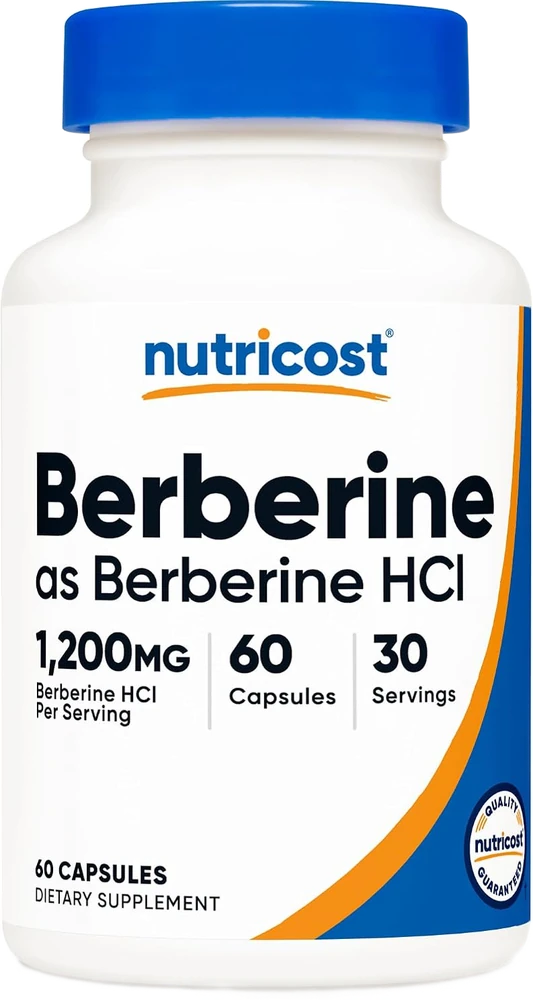
01Nutricost Berberine HCl
If you want to test berberine without committing $30+/month, Nutricost is the right entry point.
 04
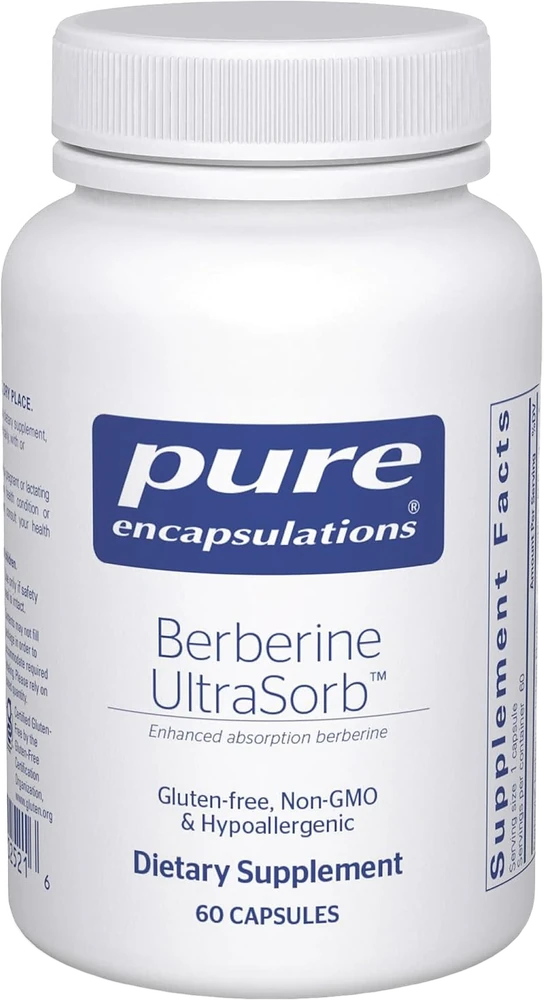
04Pure Encapsulations UltraSorb
If you have a sensitive gut, want maintenance dosing rather than full clinical protocol, or just want the cleanest label on the planet, this is it.
 02
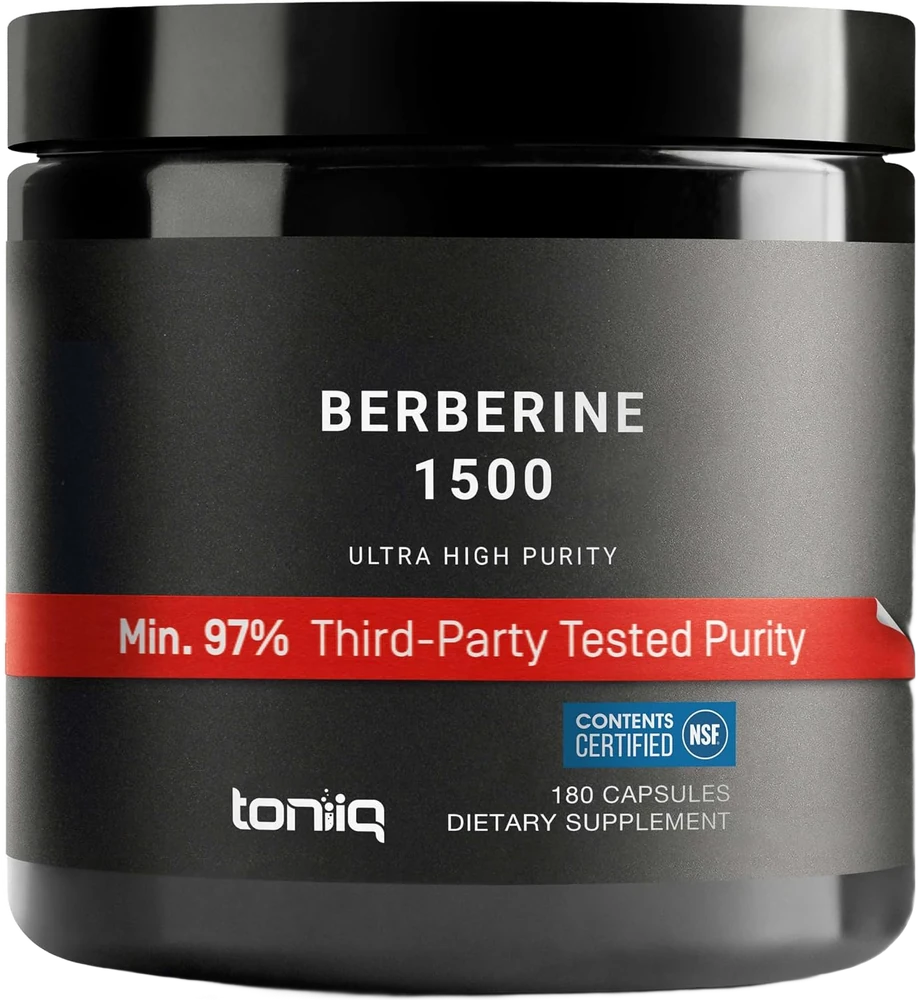
02Toniiq Ultra Berberine 1,500 mg
If you want full clinical dose with minimum pill-count and don't need the NSF badge, Toniiq is the strongest value play.
Quick Answers
Is the NSF certification on Thorne Berberine actually meaningful, or is it marketing?
It's meaningful for a specific reason: Thorne Berberine is listed at info.nsf.org under NSF/ANSI 173 (dietary supplements), and most consumer berberine has no such listing. Most consumer berberine relies on GMP-facility status (a much lower bar — just confirms the building is clean, not the contents of the bottle). NSF/ANSI 173 verifies that the label matches the contents, screens for contaminants, and audits the manufacturing facility, with ongoing monitoring. It is not banned-substance testing, and Thorne Berberine is not listed as NSF Certified for Sport (nsfsport.com, checked Oct 6, 2026). For a category where 'berberine extract' on the label can mean wildly variable actual alkaloid content, that verification is what you're paying the premium for — not better berberine.
Is the molecule actually different from Nutricost's $15/month HCl?
Partly — Thorne isn't a straight HCl product. The label lists a Dual Action Formula: 450 mg Berberine HCl + 550 mg Berberine Phytosome per 2-capsule serving. The HCl half is chemically identical to Nutricost's and shares the same ~1% oral bioavailability (intestinal P-glycoprotein efflux). The Phytosome half is a different delivery form — a phospholipid complex that's meaningfully better absorbed. So you're paying the $17/month spread for two things: NSF certification, and a formula that isn't just HCl. For a return buyer who's confirmed plain HCl works in their body, Nutricost (#1) delivers that same HCl mechanism at half the cost — you'd just be dropping the phytosome half, not switching to an inferior version of the same molecule.
Why a 60-cap bottle if the labeled serving is 2 capsules a day?
It's a 30-day supply — 30 servings at 2 capsules per serving. Thorne ships 60-cap bottles where most competitors ship 90 or 120. You'll re-order monthly, which is more often than Nutricost's larger bottle. Stock 2 bottles ahead at protocol start so you don't lose momentum waiting on shipping.
Should I ramp Thorne the same way as a cheaper bottle?
Mostly, but adjust for the blend. The GI ramp is driven by the HCl half, not brand. Start at 1 capsule (225 mg HCl + 275 mg Phytosome) once daily with breakfast for week 1, then move to the full labeled 2-capsule serving from week 2 onward. The ramp reduces GI burden because loose stools scale with peak luminal berberine-HCl concentration, not total daily intake. The NSF listing doesn't change the bowel response — that's a function of the HCl portion, which behaves the same across HCl-containing bottles regardless of brand.
Can I run Thorne Berberine alongside metformin if my endocrinologist approves?
Only with explicit dose-titration oversight. Both substances activate AMPK and inhibit mitochondrial Complex I — the glucose-lowering effects are additive, which means additive hypoglycemia risk. The Pérez-Rubio 2013 trial combined them in metabolic-syndrome subjects but used careful dose stepping. Practical framing: this is 'replace some metformin with some berberine,' not 'add Thorne on top of your prescription.' Your endocrinologist may step down metformin from 1,500 mg to 1,000 mg while you add 1,000-1,500 mg berberine, monitoring fasting glucose closely for the first 4-6 weeks. Self-stacking the two is genuinely unsafe.
Why does Thorne rate higher than Integrative Therapeutics if both are berberine HCl brands?
They're not formulated the same way — Integrative Therapeutics ships pure HCl, while Thorne's label is a Dual Action Formula (450 mg HCl + 550 mg Phytosome per 2-cap serving). Thorne wins on two axes regardless of that difference: an NSF/ANSI 173 listing (Integrative Therapeutics is COA-only, no NSF), and pricing ($32 vs $36 for similar bottle sizes). If you specifically want pure HCl at the Yin 2008 trial dose with no phytosome in the mix, Integrative Therapeutics or Nutricost (#2) are the closer match; Thorne is the pick when you want the blend plus an NSF contents listing.
Sources & Further Reading
5 peer-reviewed sources, each linked to PubMed
- [1] Yin 2008 PMID 18442638 — Efficacy of berberine in patients with type 2 diabetes mellitus. Berberine 500 mg 3×/day for 3 months matched metformin 1,500 mg/day on HbA1c, fasting glucose, and postprandial glucose in type-2 diabetics. The pivotal head-to-head trial that established the 1,500 mg/day pure-HCl clinical protocol — a different dose and form than Thorne's labeled 1,000 mg HCl-plus-Phytosome serving, though it's the reference trial for the HCl half of Thorne's blend.
- [2] Lan 2015 PMID 25498346 — Meta-analysis of the effect and safety of berberine in the treatment of type 2 diabetes mellitus, hyperlipemia and hypertension. Pooled analysis of 27 RCTs (n=2,569) confirmed berberine reduces LDL ~25%, triglycerides ~35%, total cholesterol ~20%, and improves fasting + postprandial glucose vs placebo. The reference meta for the cardiometabolic effect sizes berberine HCl delivers on responders at week 12.
- [3] Wei 2012 PMID 22019891 — A clinical study on the short-term effect of berberine in comparison to metformin on the metabolic characteristics of women with polycystic ovary syndrome. Berberine 500 mg 3×/day for 3 months matched metformin on insulin sensitivity, BMI, and waist-to-hip ratio in PCOS women — with a more favorable lipid profile. The cornerstone PCOS trial for pure-HCl dosing; Thorne's own labeled serving is a different HCl-plus-Phytosome blend, not a 3×/day scale-up of this protocol.
- [4] Pérez-Rubio 2013 PMID 23808999 — Effect of berberine administration on metabolic syndrome, insulin sensitivity, and insulin secretion. Berberine 500 mg 3×/day for 3 months in metabolic-syndrome subjects improved insulin sensitivity (Matsuda index), reduced waist circumference, triglycerides, and systolic blood pressure vs placebo. Clinical anchor for the metabolic-syndrome use case + the metformin-combination caveat that applies regardless of which berberine form or brand you're on.
- [5] Kong 2004 PMID 15531889 — Berberine is a novel cholesterol-lowering drug working through a unique mechanism distinct from statins. Identified berberine's LDL-lowering mechanism as upregulation of hepatic LDL-receptor mRNA via ERK signaling — distinct from statins' HMG-CoA reductase inhibition. The mechanistic basis for the lipid-panel improvements berberine HCl produces at week 8-12 in the responder literature.
Affiliate disclosure: every Amazon link uses our Associates tag (superachieverclub-20). We earn a small commission at no cost to you; it funds independent reviews. We never accept payment to change a ranking.