
Top 8 Best Blue Light Blocking Glasses for Sleep & Recovery (2026)
 01 · Best overall✓ Product photos checked Sep 7, 2026
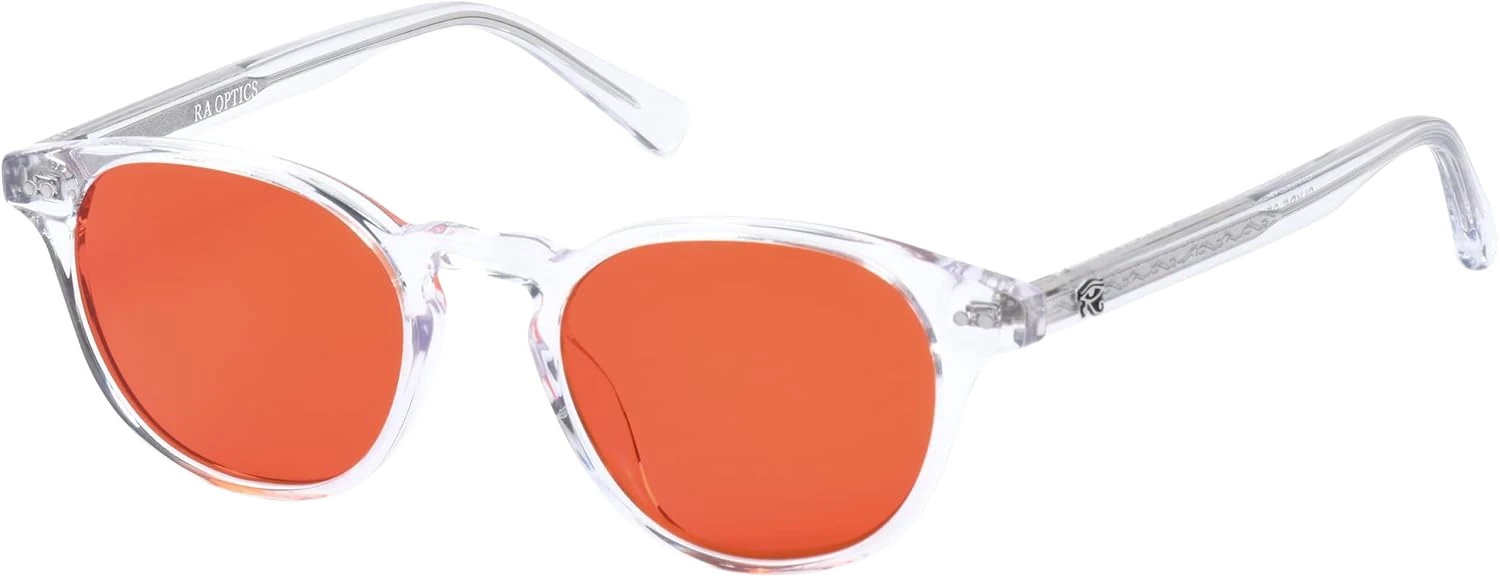
Best overall: Ra Optics Clyde Frame + Sunset Lenses
A true evening sleep lens done at the premium tier — blocks ~100% of blue and most green to protect melatonin, in a refined, comfortable frame. The pair we'd wear ourselves.
$120
Why it wins: all five scores, pros & cons, full label
- True evening sleep lens — blocks ~100% of blue and most green, the wavelengths that suppress melatonin
- Premium pigment-in-lens tint with low optical distortion, not a cheap film
- Refined, light frame that's comfortable for a long evening wind-down
- Science-forward brand that's explicit about evening use — the honest positioning we want at #1
- The most expensive pair on this list — you pay for the premium frame and lens
- Deep evening tint means heavy color shift; strictly an evening/bedtime tool, not for daytime or driving
- Lens
- Deep red/amber 'Sunset' evening lens
- Blocks
- ~100% blue + most green (melatonin band)
- Use
- Evening / 2-3 h before bed
- Frame
- Premium acetate, low-distortion lens

Our take — This is the pair we'd put on our own face at night. On an evening-light-blocking ranking it wins clearly: the Sunset lens blocks ~100% of blue and most green — the full melatonin-suppressing band — so it's a genuine sleep tool, not a daytime lens wearing a nighttime label. The optics are clean, the frame is comfortable for hours, and the brand is honest that these are for the hours before bed. The only real catch is price. If your budget can stretch and sleep is the goal, this is the cleanest, best-built evening protection here.
 02
 03
 04
 05
 06
 07
 08
Who Wins Which Aspect
Sorted by overall SAC Product Score™ — the official ranking.
| # | Pick | Score | Evening light-blocking35% | Lens & optical quality20% | Comfort & fit20% | Build & durability15% | Value10% | Buy |
|---|---|---|---|---|---|---|---|---|
| 01 | | 8.9 | 9.81 | 9.02 | 8.63 | 9.01 | 6.2 | Check price |
| True evening sleep lens — blocks ~100% of blue and most green, the wavelengths that suppress melatoninThe most expensive pair on this list — you pay for the premium frame and lens | ||||||||
| 02 | | 8.8 | 9.62 | 8.63 | 8.4 | 8.43 | 7.6 | Check price |
| Blocks 100% of blue AND green from 400-550 nm — the full melatonin-suppressing band, maximum protectionDeep red color shift is the strongest here — purely an evening tool | ||||||||
| 03 | | 8.7 | 9.81 | 8.4 | 8.2 | 8.43 | 6.8 | Check price |
| Blocks 99% of blue, green AND violet — covers the full melatonin band and then someStrong red color shift — strictly evening/bedtime, not daytime | ||||||||
| 04 | | 8.6 | 8.63 | 8.4 | 8.82 | 8.2 | 8.83 | Check price |
| Real amber evening lens blocking ~99% of blue — a genuine sleep tool, not a clear lensAmber blocks less green than the red picks, so slightly less melatonin protection than #1-#3 | ||||||||
| 05 | | 8.5 | 8.2 | 8.63 | 8.63 | 8.82 | 8.6 | Check price |
| Amber Max blocks 98% of blue — Gunnar's deepest tint, built for night use and photosensitivityAmber blocks less green than the red sleep specialists, so a step behind #1-#3 for pure sleep | ||||||||
| 06 | | 7.9 | 8.2 | 7.6 | 7.0 | 7.6 | 9.81 | Check price |
| Blocks ~98% of blue for a few dollars — by far the best melatonin protection per dollar hereLooks and feels industrial — these are safety glasses, not a style piece | ||||||||
| 07 | | 7.8 | 6.8 | 8.2 | 8.4 | 8.0 | 9.22 | Check price |
| Light, comfortable frame (27 g) built for long gaming and screen sessions86% blue (and a lighter tint) means less melatonin protection than the deeper amber/red sleep picks | ||||||||
| 08 | | 6.9 | 3.5 | 9.21 | 9.21 | 9.01 | 6.5 | Check price |
| The best-built, best-looking pair here — premium bio-acetate frames and a flawless anti-reflective finishIt's a CLEAR lens, so it barely blocks the melatonin-suppressing band — NOT a sleep aid | ||||||||
The Other 7, Ranked
- 02
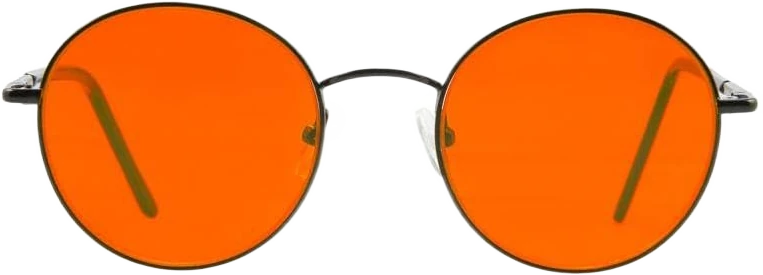
Best red sleep specialist: BLUblox Lennon Sleep+ (Red Lens)
8.8SAC Score™A red 'Sleep+' lens that blocks 100% of blue AND green from 400-550 nm — maximum melatonin protection for red-lens purists, at a friendlier price than the #1.
StrongestEvening light-blocking9.62WeakestValue7.6- Lens
- Red 'Sleep+' evening lens
- Blocks
- 100% blue + green (400-550 nm)
- Use
- Evening / 2-3 h before bed
All five scores, pros & cons, full label
What We Like- Blocks 100% of blue AND green from 400-550 nm — the full melatonin-suppressing band, maximum protection
- The red-lens choice for shift workers, insomnia, and the highly light-sensitive
- Real pigment tint with anti-reflective coating, not a surface film
- Strong value for a true red sleep lens — undercuts the premium #1
What You Live With- Deep red color shift is the strongest here — purely an evening tool
- Frame and finish are very good but a notch below the premium Ra Optics
- Frame
- Lightweight, quality tint + AR coating
Our take — If you want the maximum melatonin block and you're happy wearing deep red at night, this is the specialist's pick. The 'Sleep+' lens blocks 100% of blue and green across 400-550 nm — there's essentially nothing left in the melatonin band — which is exactly what shift workers and the highly light-sensitive are after. It's a real pigment lens with proper coatings, comfortable for a long evening, and it costs less than the #1. It lands second only because the Ra Optics edges it on frame refinement and optical polish; on pure sleep performance, this is right at the top.
- 03
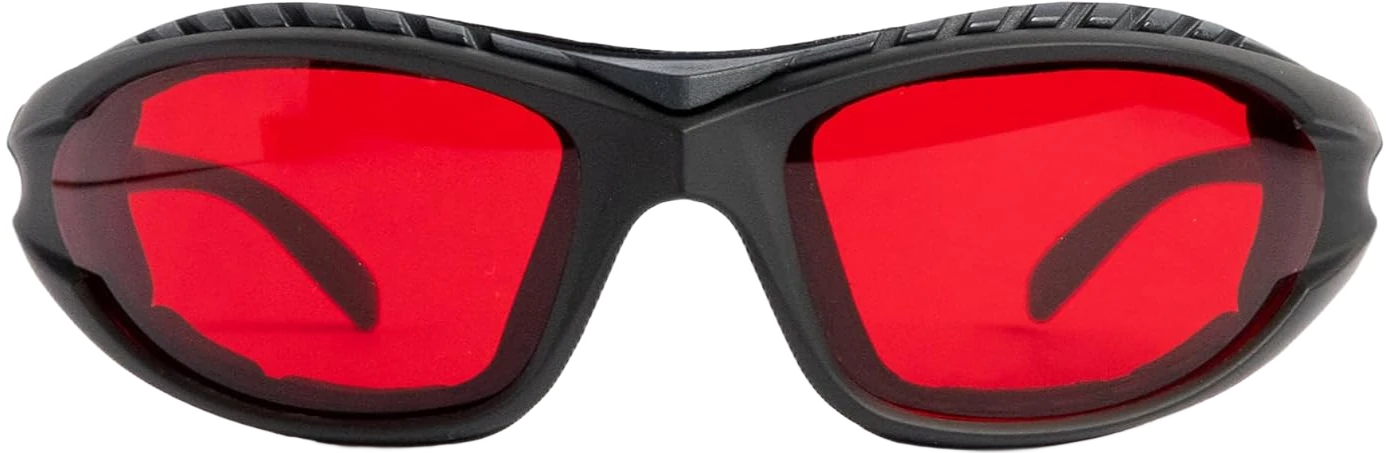
Best amber/red evening: TrueDark Twilights Classic (Red Lens)
8.7SAC Score™A red evening lens that blocks 99% of blue, green AND violet — a serious, popular sleep tool from a well-known sleep-optimization brand.
StrongestEvening light-blocking9.81WeakestValue6.8- Lens
- Red evening lens
- Blocks
- 99% blue / green / violet
- Use
- Evening / ~30+ min before bed
All five scores, pros & cons, full label
What We Like- Blocks 99% of blue, green AND violet — covers the full melatonin band and then some
- From a recognized sleep-optimization brand with a strong evening-use focus
- Flexible TR90 arms make it comfortable for all-evening wear
- Widely available and well-reviewed as a dedicated sleep lens
What You Live With- Strong red color shift — strictly evening/bedtime, not daytime
- Polycarbonate frame is functional rather than premium; optics are good, not class-leading
- Frame
- Polycarbonate + flexible TR90 arms
Our take — TrueDark helped popularize the red evening lens, and the Twilights Classic is a genuinely strong sleep tool: 99% blocking of blue, green, and violet means the melatonin-suppressing band is essentially gone. It's comfortable thanks to the flexible arms, easy to find, and well-trusted by the sleep-optimization crowd. It sits at #3 rather than higher only because the frame and optics are a step below the top two and the value is middling for what you get — but on the criterion that matters most for sleep, evening light-blocking, it's elite. A great choice if you want a proven red lens without the premium price.
- 04
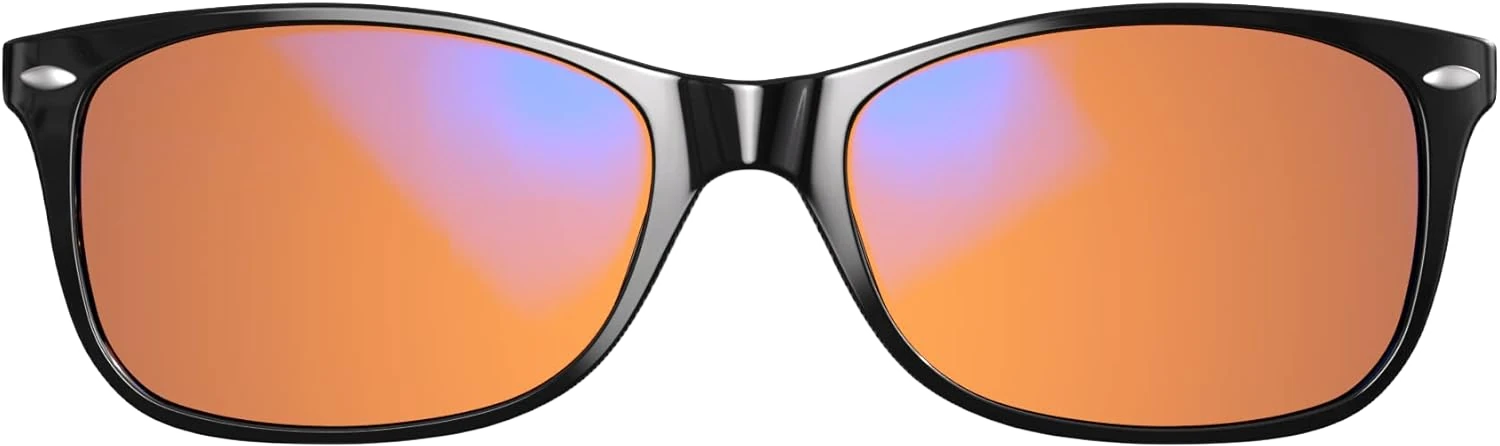
Best value amber: Swanwick Classic Night Swannies (Amber)
8.6SAC Score™The best balance of a real amber evening lens, everyday comfort, and price — a proper sleep lens that doesn't look or feel industrial.
StrongestComfort & fit8.82WeakestBuild & durability8.2- Lens
- Amber/orange evening lens
- Blocks
- ~99% blue (400-500 nm)
- Use
- Evening / 2+ h before bed
All five scores, pros & cons, full label
What We Like- Real amber evening lens blocking ~99% of blue — a genuine sleep tool, not a clear lens
- More wearable and better-looking than industrial orange safety glasses
- Comfortable frame designed for long evening wear
- Strong all-rounder value — popular, proven, and reasonably priced
What You Live With- Amber blocks less green than the red picks, so slightly less melatonin protection than #1-#3
- Not the cheapest amber option (the Uvex undercuts it heavily on price alone)
- Frame
- Comfortable acetate, everyday styling
Our take — Swanwick is the sweet spot for most people who want better sleep without going full red-lens or full industrial. The amber lens blocks ~99% of blue — a real evening sleep tool — and unlike a safety-glass orange lens, it's comfortable and presentable enough that you'll actually keep wearing it. It blocks a bit less green than the red picks above, so it's a notch behind them on raw melatonin protection, but the comfort, looks, and value make it the best balanced amber pick here. If the red lenses feel like too much, start here.
- 05
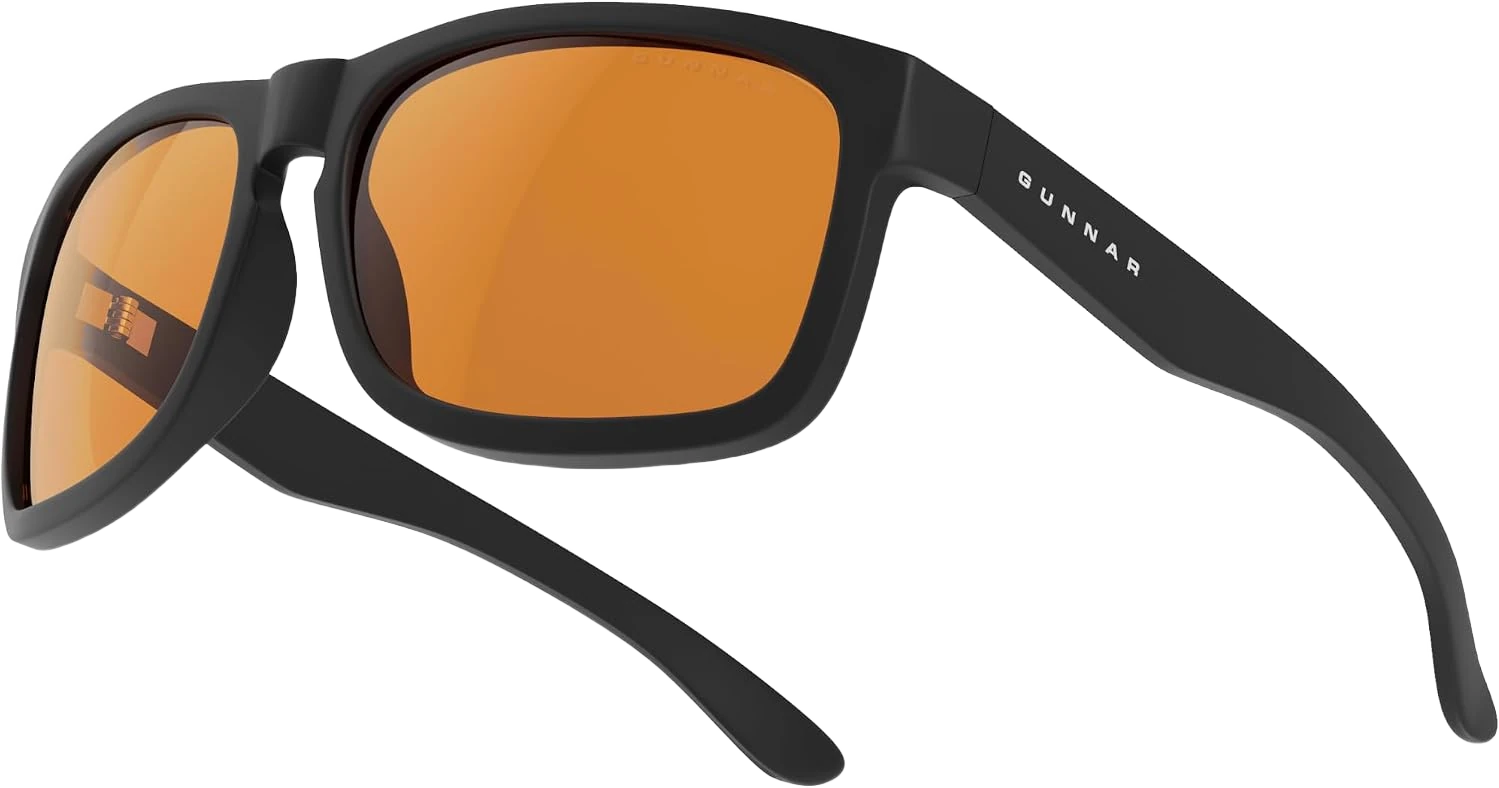
Best for screens + sleep: Gunnar Intercept Amber Max (98% blue)
8.5SAC Score™A deep amber lens that blocks 98% of blue with crisp gaming-grade optics — the one pair that genuinely doubles for late screen sessions AND evening sleep.
StrongestBuild & durability8.82WeakestEvening light-blocking8.2- Lens
- Amber Max — blocks 98% blue light
- Use
- Late screens + evening / pre-bed
- Frame
- Onyx, durable, anti-glare coating
All five scores, pros & cons, full label
What We Like- Amber Max blocks 98% of blue — Gunnar's deepest tint, built for night use and photosensitivity
- Excellent gaming-grade optics and anti-glare coating — crisp on screens
- Durable, well-built frame from the category's most established brand
- Genuinely dual-purpose: late-screen comfort AND a real evening sleep lens
What You Live With- Amber blocks less green than the red sleep specialists, so a step behind #1-#3 for pure sleep
- Be sure to pick the 'Amber Max' tint — Gunnar's lighter amber (65%) is much weaker for sleep
- Optics
- Gaming-grade clarity, low distortion
Our take — If you game or work on screens late and want ONE pair that also protects your sleep, this is the pick. Crucially, choose the 'Amber Max' tint, which blocks 98% of blue — Gunnar's standard amber only blocks 65% and is far weaker for melatonin. With Amber Max you get gaming-grade optics, a durable frame, and a deep enough tint to function as a real evening lens. It's a notch behind the red specialists on pure sleep (amber lets more green through), but as a dual-purpose screens-and-sleep pair it's the best here.
- 06
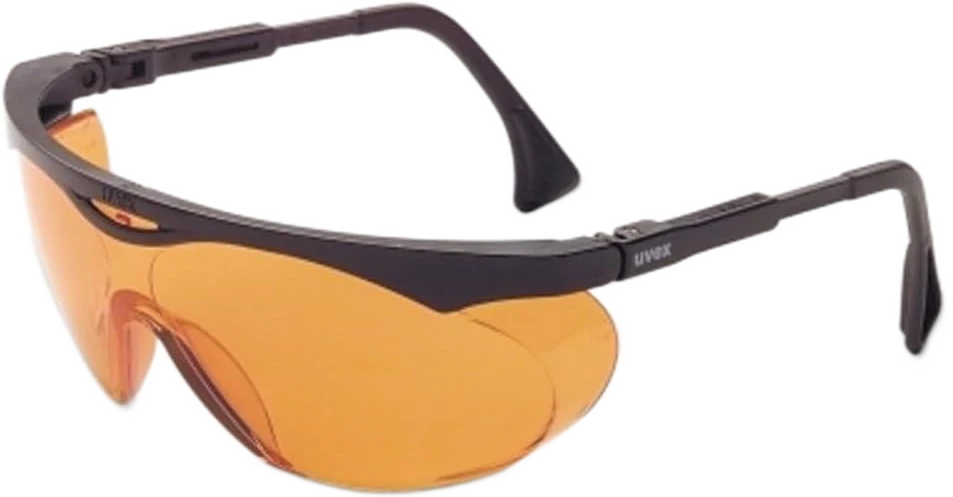
Best budget: Uvex Skyper SCT-Orange (Honeywell)
7.9SAC Score™An industrial orange safety lens that blocks ~98% of blue for the price of a coffee — bulky and basic, but it genuinely protects melatonin far better than any clear 'computer' lens.
StrongestValue9.81WeakestComfort & fit7.0- Lens
- SCT-Orange — absorbs ~98% blue light
- Use
- Evening / pre-bed (budget sleep)
- Frame
- Industrial safety, adjustable temples
All five scores, pros & cons, full label
What We Like- Blocks ~98% of blue for a few dollars — by far the best melatonin protection per dollar here
- Cuts real green/blue, so it actually works as an evening sleep lens (unlike clear glasses)
- Wrap-around design with side coverage seals out some stray light
- Adjustable temples and ratcheting lens angle — surprisingly adjustable for the price
What You Live With- Looks and feels industrial — these are safety glasses, not a style piece
- Basic optics and comfort; the wrap fit isn't for everyone, and there's no fit-over/prescription option
- Model
- S1933X (single pair, not 3-pack)
Our take — This is the honest budget answer, and it embarrasses a lot of pricier 'sleep' glasses. The Uvex Skyper is an industrial safety lens, but its SCT-Orange tint absorbs ~98% of blue light — so for protecting melatonin before bed it genuinely works, far better than any clear 'computer' lens at any price. You're trading looks and comfort for performance-per-dollar: it's bulky, the optics are basic, and there's no fit-over option. But if you want to test whether amber lenses help your sleep without spending much, buy this single pair (model S1933X — skip the 3-pack), wear it 2-3 hours before bed, and see. It earns the Best-budget badge, not the crown, because comfort and refinement are where it gives ground.
- 07
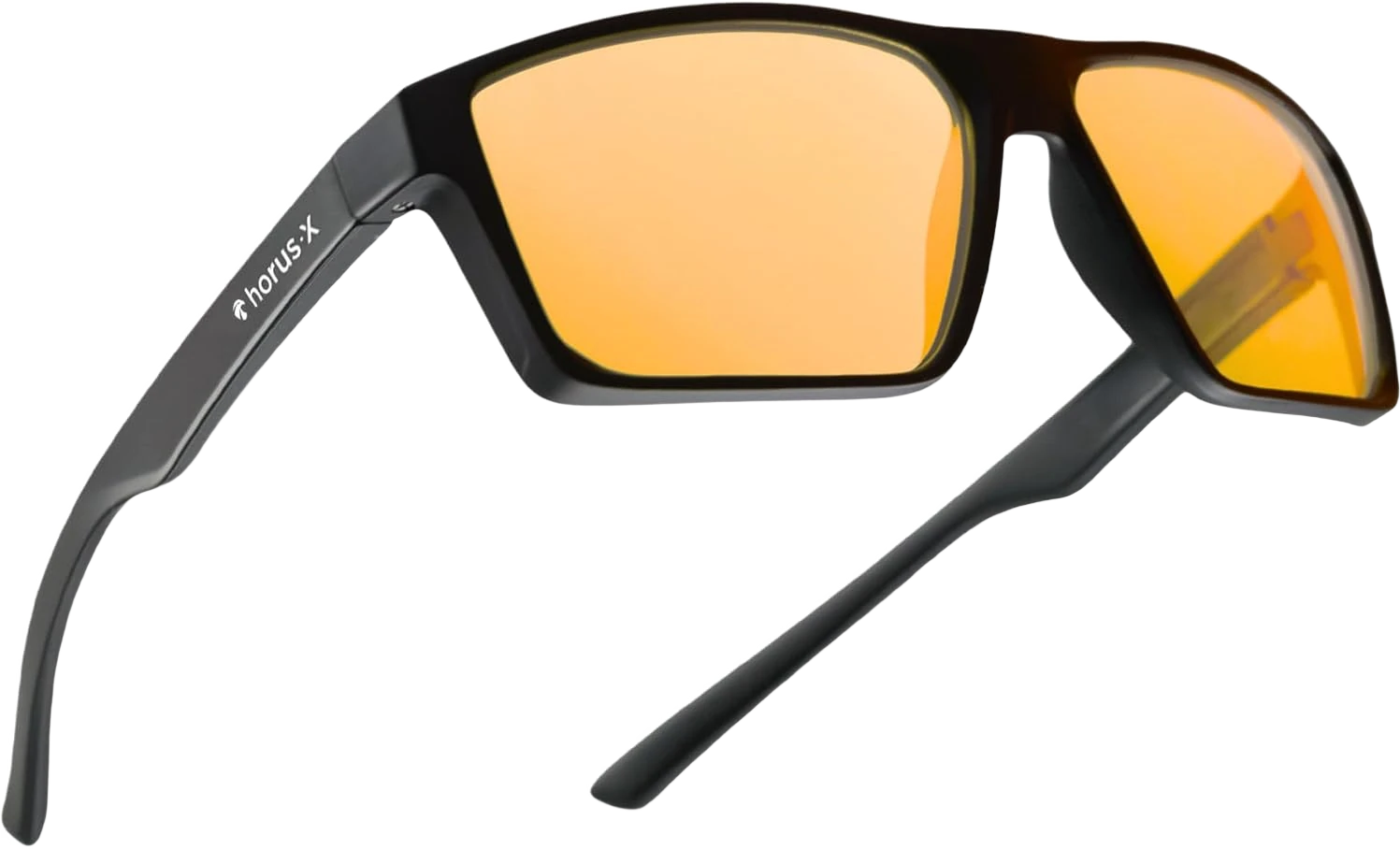
Best for gaming / screens: Horus X ONE Amber Gaming Glasses
7.8SAC Score™A light, comfortable amber gaming lens that blocks 86% of blue — great for long screen sessions and eye strain, with a lighter sleep benefit than the deeper amber/red picks.
StrongestValue9.22WeakestEvening light-blocking6.8- Lens
- Light amber — blocks 86% blue light
- Use
- Gaming / screens (light sleep angle)
- Frame
- Ultra-light 27 g polycarbonate
All five scores, pros & cons, full label
What We Like- Light, comfortable frame (27 g) built for long gaming and screen sessions
- Blocks 86% of blue with anti-reflective coatings — solid daytime eye-strain relief
- Good value and a popular gaming-focused brand with a lifetime warranty
- Amber tint gives a partial evening benefit if you game late
What You Live With- 86% blue (and a lighter tint) means less melatonin protection than the deeper amber/red sleep picks
- Marketed for gaming, not sleep — treat the sleep benefit as a bonus, not the main event
- Coatings
- Anti-reflective, UV400
Our take — Horus X is built for gamers, and that's the honest frame for it: a light, comfortable amber lens that blocks 86% of blue, takes the edge off long screen sessions, and costs little. It's a lighter amber than the dedicated sleep picks, so it lets more of the melatonin band through — meaning it gives a partial evening benefit if you game late, but it's not a true sleep specialist. Buy it if your primary need is screen comfort during long gaming or work sessions and you want a modest evening bonus; if sleep is the real goal, step up to the deeper amber (#4-#5) or red (#1-#3) lenses.
- 08
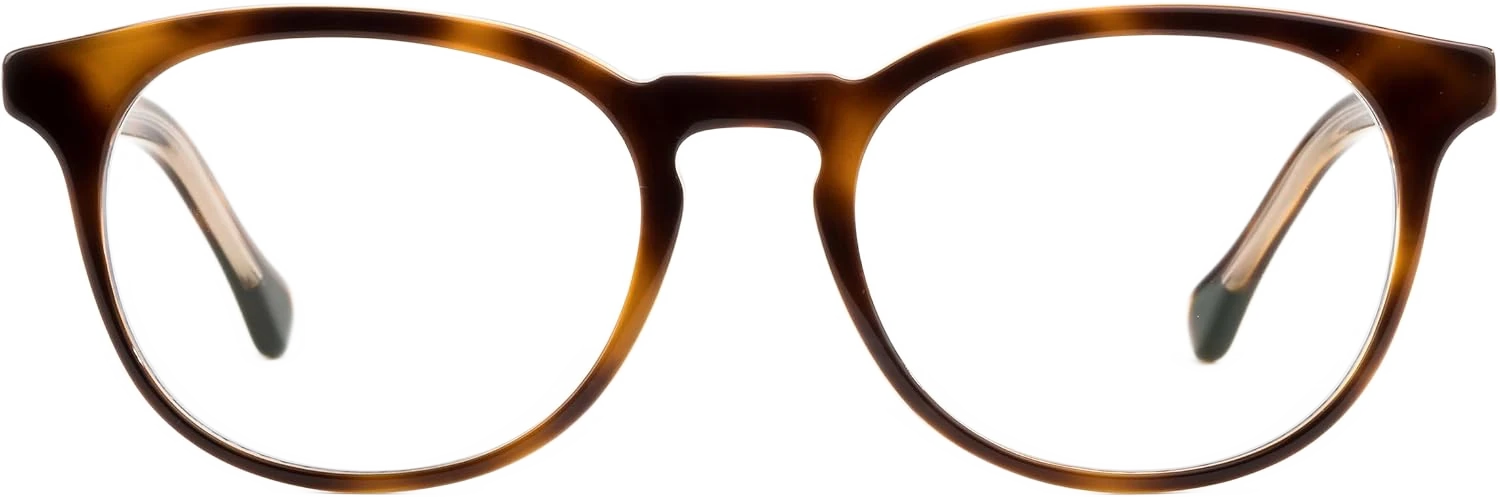
Best style (clear — daytime, not sleep): Felix Gray Roebling (Clear Lens)
6.9SAC Score™The best-made, best-looking pair here — premium clear lenses and gorgeous frames for DAYTIME screen comfort. But it's a clear lens, so it barely moves melatonin: great for your desk, not for your bedtime.
StrongestLens & optical quality9.21WeakestEvening light-blocking3.5- Lens
- CLEAR daytime lens (~15x blue filter)
- Use
- Daytime screen comfort — NOT sleep
- Frame
- Premium bio-acetate, anti-reflective
All five scores, pros & cons, full label
What We Like- The best-built, best-looking pair here — premium bio-acetate frames and a flawless anti-reflective finish
- Excellent clear-lens optics with no color distortion — genuinely all-day wearable
- Real daytime benefit: reduces screen glare and eye strain without tinting your view
- The pick if you want stylish blue-light glasses for the office
What You Live With- It's a CLEAR lens, so it barely blocks the melatonin-suppressing band — NOT a sleep aid
- Premium price for a daytime-comfort lens; for sleep, a $10 amber pair outperforms it
- Style
- Best-looking frames on this list
Our take — Let's be fair: Felix Gray makes the best-built, best-looking glasses on this list, the clear optics are flawless, and for DAYTIME screen comfort they're excellent — no tint, no distortion, all-day wearable, and genuinely stylish. They're demoted to last for one honest reason: they're a CLEAR lens, and clear lenses barely touch the melatonin-suppressing blue-and-green band. They are not a sleep aid, and they're routinely (mis)sold as one. So buy these for your desk if you want premium, attractive daytime glasses — but for protecting your sleep, even the $10 Uvex amber pair outperforms them. The right move for many people is two pairs: clear Felix Gray for the day, an amber/red pick above for the evening.
The Guide In Four Short Lessons
What the evidence actually shows
- ~450-530 nm
- The blue-to-green band that suppresses melatonin — a true sleep lens blocks all of it
- 2-3 h
- Wear amber/red lenses this long before bed — timing is the real 'dose'
- 2 RCTs
- Burkhart 2009 + Shechter 2018: amber lenses before bed beat clear lenses on sleep
- Clear ≠ sleep
- Clear 'computer' lenses help daytime eye comfort, not melatonin
Sources: Burkhart K, Phelps JR. Amber lenses to block blue light and improve sleep: a randomized trial. Chronobiol Int 2009 (PMID 20030543 — verify). Mechanism: Gooley J et al. J Clin Endocrinol Metab 2011 (PMID 21193540 — verify).
For sleep, skip clear lenses.
Clear 'computer' glasses filter a small slice of blue and leave the melatonin-suppressing wavelengths largely intact. They are fine for daytime eye comfort; they are not a sleep aid.
Buy amber or red.
Melatonin suppression runs through roughly 450-530 nm, so a sleep lens has to cut green as well as blue. Amber blocks a large share of blue; red lenses block close to 100% of blue and most green.
Wear them in the evening, and accept the tint.
Even ordinary room light in the hours before bed blunts and delays melatonin (Gooley 2011). The more a lens protects, the more orange everything looks, which is why these are evening tools.
Mechanism from Gooley 2011 (PMID 21193540); sleep effect from two RCTs — Burkhart 2009 (PMID 20030543) and Shechter 2018 (PMID 29101797). All PMIDs flagged for verification in the file.
Each pick was scored 0-10 across five criteria, then weighted to a final composite. Evening light-blocking carries the most weight — 35% — because that's the only thing that actually determines whether glasses help you SLEEP. We score it by how completely the lens blocks the melatonin-suppressing band (blue AND green, ~450-530 nm) in the hours before bed: red 'Sleep+' / 'Sunset' lenses that block ~100% of blue and most green score highest, amber lenses score well, and clear or light-yellow 'computer' lenses are penalized hard because they leave the melatonin band largely intact — they are fine for daytime eye comfort but are not a sleep aid, and we say so explicitly. After that we weigh lens and optical quality (a genuine pigment-in-lens tint, low distortion, good anti-reflective coatings — not a cheap surface film), then comfort and fit (you wear these for hours, so weight, frame fit, and fit-over options matter), then build and durability (frame, hinges, scratch resistance), and finally value as a tie-breaker. Quality and performance lead; price is subordinate — a cheap pair earns a Best-budget badge, never the #1 spot. We don't invent numbers; the clinical claims rest on Gooley 2011 (mechanism) and the Burkhart 2009 and Shechter 2018 randomized trials, all flagged for PMID verification.
Evening light-blocking · 35%
The most important factor — it's what decides whether the glasses help SLEEP. How completely does the lens block the melatonin-suppressing band (blue AND green, ~450-530 nm) before bed? True red lenses (~100% blue + most green) score highest, amber lenses score well, and clear/light-yellow 'computer' lenses are penalized: they help daytime eye comfort but barely move melatonin, so they are not a sleep aid.
Lens & optical quality · 20%
Clarity, distortion, and coating quality. A genuine pigment-in-lens tint with low distortion and good anti-reflective coating scores highest; a cheap surface film that scratches, hazes, or distorts is penalized. Clear lenses can score very well here even while scoring poorly on sleep — the two are independent.
Comfort & fit · 20%
You wear these for hours in the evening, so weight, frame fit, nose and temple comfort, and the availability of fit-over or prescription options all matter. Light, well-fitting frames that seal side light score highest; bulky or pinching frames score lower.
Build & durability · 15%
Frame and hinge quality, lens scratch resistance, and how well the pair survives nightly use and tossing on a nightstand. Premium frames and durable lenses score highest; flimsy hinges and soft lenses score lower.
Value (price) · 10%
Price for the protection and quality delivered. Tie-breaker — the first four criteria do most of the ranking. A cheap industrial amber lens can score very high on value while still ranking mid-pack overall, which is exactly how the budget pick earns a badge rather than the crown.

How amber/red lenses protect your sleep
- 1
Evening light hits the eye and suppresses melatonin
Blue and green light (~450-530 nm) from screens and lamps signals 'daytime' to the brain's clock, suppressing melatonin and pushing sleep later. Gooley 2011 showed ordinary evening room light is enough to do this.
- 2
A true amber/red lens removes that band
Amber lenses block a large share of blue; red 'Sleep+' / 'Sunset' lenses block ~100% of blue and most green. A clear 'computer' lens only nibbles at blue and lets the melatonin-band light through — which is exactly why clear lenses don't help sleep.
- 3
Melatonin rises on schedule, worn nightly
With the suppressing light cut in the hours before bed, melatonin can climb on time. In randomized trials (Burkhart 2009, Shechter 2018), amber lenses worn before bed improved sleep versus clear lenses. Worn consistently, it's a real, well-tolerated aid.
What to expect over the first few weeks
An easier wind-down
Most people notice the evening feels calmer and screens stop feeling 'activating.' The orange/red color shift looks odd at first, then becomes normal within a few nights.
Falling asleep a little faster
As the nightly habit sets in and melatonin is protected during the pre-bed window, sleep onset tends to get easier. The benefit is modest but real.
Decide if it's a keeper
By two weeks you'll know. If it's helping, you'll reach for them automatically each evening. If you saw nothing and you're using a CLEAR lens, that's expected — switch to amber/red. If amber isn't enough, go red.
The bottom line
For the best sleep result, buy the Ra Optics Clyde + Sunset (#1).
It's a deep red/amber evening lens that blocks ~100% of blue and most green, in a premium, comfortable frame. It's the cleanest melatonin protection here — the pair the reviewers would wear themselves.
Otherwise, pick by how deep a tint you'll wear and what you'll pay.
Want maximum block and don't mind deep red: BLUblox Lennon Sleep+ (#2) or TrueDark Twilights (#3). Best amber value without going industrial: Swanwick Classic Night (#4). Game or work late and want one pair that doubles for sleep: Gunnar Intercept Amber Max (#5). On a tight budget: the Uvex Skyper SCT-Orange (#6) blocks ~98% of blue for a few dollars.
Three rules matter more than the brand: amber or red, block green, wear it early.
If your goal is sleep, buy amber or red, not clear — clear lenses barely touch the melatonin band, however well-made. Make sure the lens blocks green as well as blue (up to ~530 nm), and treat timing as the dose: put them on 2-3 hours before bed, every night.
Quick Answers
Do blue light glasses actually help you sleep?
Some do, and some don't — and which kind you buy is the whole game. True AMBER or RED evening lenses, which block blue AND green light, can meaningfully reduce evening melatonin suppression and modestly improve sleep; that's supported by randomized trials like Burkhart 2009 and Shechter 2018, where amber lenses worn before bed beat clear lenses. Clear 'daytime/computer' blue-light glasses, on the other hand, do very little for sleep — they filter only a small part of the blue spectrum and leave the melatonin-suppressing wavelengths largely intact. They're fine for daytime screen comfort, but they are not a sleep aid. So if your goal is sleep, buy amber or red, wear them 2-3 hours before bed, and treat them as a well-tolerated aid, not a cure.
What's the difference between amber/red 'night' lenses and clear 'day' lenses?
Mostly how much of the melatonin-suppressing spectrum they block. Clear and light-yellow lenses cut a small slice of high-energy blue and are designed for daytime eye comfort and glare — they let most blue and essentially all green through, so they barely affect melatonin. Amber lenses block a large share of blue. Red lenses go furthest, blocking ~100% of blue and most green (the 400-550 nm band that drives melatonin suppression), which is why the deepest red 'Sleep+' / 'Sunset' / 'Twilight' lenses are the strongest sleep tools. The trade-off: the more it blocks, the more it shifts color and the less you'd want to wear it during the day.
Are clear blue light glasses a waste of money?
No — they're just mis-sold for sleep. A quality clear lens (like the Felix Gray on this list) genuinely helps daytime screen comfort, reduces glare, and is something you can wear all day without color distortion. That's a real, legitimate use. The mistake is buying a clear lens expecting it to fix your sleep; for sleep you need amber or red. Think of it as two different products: clear for daytime eye comfort, amber/red for protecting melatonin at night.
When should I put blue light glasses on for sleep?
About 2-3 hours before your target bedtime, and keep them on until you turn the lights out. Evening light suppresses melatonin and pushes your body clock later (Gooley 2011), so the point is to cut that light during the window when your brain should be ramping melatonin up. Timing is effectively the dose: an excellent lens worn for five minutes does nothing, while a good amber lens worn every evening is where the benefit comes from.
Do I need red lenses, or is amber enough?
Both can work; it's a spectrum. Amber lenses block a large share of blue and are an easy, comfortable evening choice. Red lenses block more — close to 100% of blue and most green — so they're the strongest option for melatonin protection, which is why people with insomnia, shift workers, or the highly light-sensitive often prefer them. The downside of red is heavier color distortion, so they're purely an evening/bedtime tool. If you want maximum effect and don't mind the look, go red; if you want a balance of effect and everyday comfort, amber is plenty.
Can I just use Night Shift / dark mode instead of glasses?
They help, but they're not a full substitute. Software warm-light modes reduce some blue output from that one screen, but they don't touch the rest of your environment (overhead lights, the TV, other devices), they often don't go far enough on the green band, and many people turn the intensity down because it looks unappealing. Amber/red glasses block the melatonin-suppressing light from everything in your field of view, consistently. Best practice is to use both: warm/night mode on devices plus amber/red glasses worn before bed.
Will amber or red glasses hurt my vision or color perception at night?
They shift colors strongly — reds and ambers in particular make whites look orange or pink — but that's cosmetic, not harmful, and it's actually part of how they work. You should still be able to read, watch TV, and move around safely. What you should NOT do is wear deep amber/red lenses while driving at night or doing anything where accurate color and full brightness matter, since they cut light and distort color. Use them for winding down at home in the evening, not for tasks that need true color or maximum visibility.
Can I wear these over my prescription glasses?
Only if they're designed as fit-overs, or if you buy them in your prescription. Several sleep-lens brands sell oversized 'fit-over' frames meant to go on top of regular glasses, and some (including premium brands) offer prescription versions of their amber/red lenses. A standard non-fit-over frame won't sit comfortably over your glasses. If you wear prescriptions, decide up front whether you want a fit-over pair or a prescription amber lens before buying.
Every Claim Ranked Above Traces Back To One Of These
3 peer-reviewed sources, each linked to PubMed
- [1] Gooley 2011 (verify PMID) PMID 21193540 — Exposure to room light before bedtime suppresses melatonin onset and shortens melatonin duration in humans. Evening exposure to ordinary room light, compared with dim light, suppressed melatonin in the majority of subjects and shortened the duration of melatonin production. The core 'why evening light matters' mechanism paper — the reason blocking that light before bed should help sleep. PMID 21193540 noted as solid; verify before publication.
- [2] Burkhart 2009 (verify PMID) PMID 20030543 — Amber lenses to block blue light and improve sleep: a randomized trial. Randomized trial: participants wore amber (blue-blocking) lenses or yellow-tinted control lenses for 3 hours before bed for 2 weeks. The amber-lens group reported significantly improved sleep quality and mood versus controls. An early, often-cited RCT that amber evening lenses can improve sleep. Likely PMID 20030543 — verify against PubMed.
- [3] Shechter 2018 (verify PMID) PMID 29101797 — Blocking nocturnal blue light for insomnia: a randomized controlled trial. Randomized crossover RCT in adults with insomnia symptoms: amber blue-blocking lenses vs clear placebo lenses worn 2 hours before bed for 7 nights. Amber lenses improved sleep outcomes (including total sleep time and sleep onset) versus placebo, suggesting amber lenses are a safe, affordable, easily implemented intervention. Likely PMID 29101797 — verify against PubMed.
Affiliate disclosure: every Amazon link uses our Associates tag (superachieverclub-20). We earn a small commission at no cost to you; it funds independent reviews. We never accept payment to change a ranking.