
Uvex Skyper SCT-Orange (Honeywell) Review
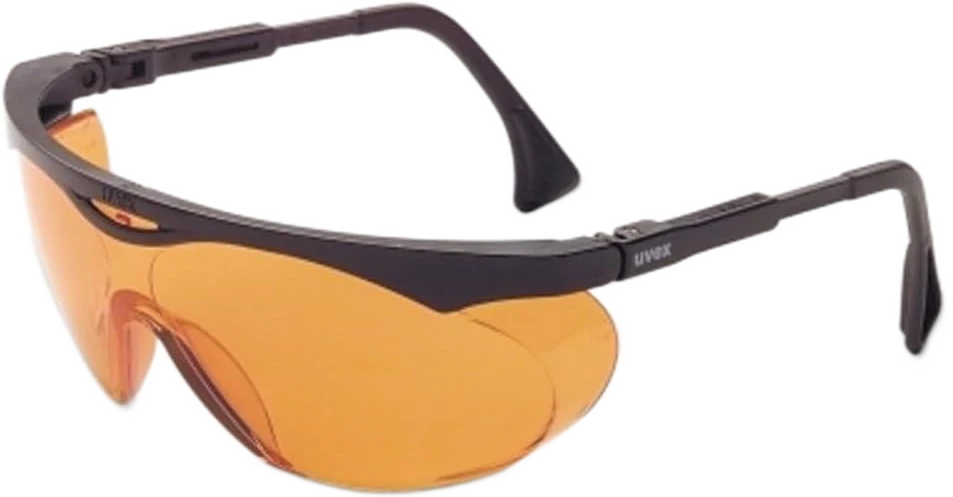 #6 of 8 · Best budget✓ Product photos checked Sep 7, 2026
Real retailer photo, cut out. Label unedited.
Buy it. The honest budget pick — ~98% of blue blocked for about $10, in a safety frame. The SCT-Orange lens absorbs ~98% of blue light with genuine wrap-around side coverage — real evening melatonin protection at a price that makes experimenting free.
$10
Why It Scores 7.9 — And The Label Line Behind Each Number
Evening light-blocking
35% of score~98% of blue absorbed puts it firmly in genuine evening-lens territory — vastly beyond any clear lens — and the wrap-around side coverage blocks stray light most sleep frames leak. Like all orange/amber tints, it passes part of the green tail, which is the gap to the red specialists.
Lens & optical quality
20% of scoreFunctional safety-grade polycarbonate: uniform tint, scratch-resistant hardcoat, and perfectly serviceable for evening TV and reading — but no premium pigment process, no anti-reflective coating, and visibly less optical refinement than the dedicated sleep lenses.
- Lens
- SCT-Orange — spectrum-control tint, absorbs ~98% of blue light
Comfort & fit
20% of scoreSurprisingly adjustable for the price — telescoping temple length and a ratcheting lens angle let you tune the fit — but the wrap geometry suits some faces poorly, the nose bridge is basic, and it never stops feeling like safety equipment. The lowest comfort score among our recommended picks, honestly earned.
Build & durability
15% of scoreIt's industrial safety gear from Honeywell — impact-rated, hardcoated, and effectively indestructible in nightstand life. The deduction is for feel, hinge refinement, and the utilitarian plastic construction, not for survivability, where it may outlast everything above it.
Value
10% of scoreThe best score we give on this axis in the lineup: ~98% blue absorption for roughly $10 is an order-of-magnitude better price-to-protection ratio than anything else here. This is the criterion the Skyper exists to win, and it wins it outright.
- Price
- ~$10 — best protection per dollar in our ranking
- More Specs
- Blocks
- ~98% blue; passes part of the green tail like all orange/amber tints
- Model
- S1933X — Skyper frame + SCT-Orange lens, single pair (skip multi-packs)
- Design
- Wrap-around safety frame with side light coverage
- Adjustability
- Telescoping temple length + ratcheting lens angle
- Heritage
- Honeywell Uvex industrial eye protection line
- ASIN
- B000USRG90 (verified live 2026-07-20)
Photos checked.This product has no Supplement Facts panel; the retailer's listing photos were reviewed Sep 7, 2026.
Marketing Claims Vs. Reality
SCT-Orange lens absorbs ~98% of blue light.
The SCT (Spectrum Control Technology) Orange tint is a documented Uvex lens specification for blue-light absorption, consistent with the lens's deep orange appearance and its long-standing use by the sleep-hacking community for exactly this purpose.
Blue light blocking computer glasses (as titled on the listing).
The blue-blocking is real and strong — but the 'computer glasses' framing undersells the correct use case. A ~98% orange tint is an evening/pre-bed lens; for daytime computer work its heavy color shift is impractical. Buy it for evenings, not the office.
Adjustable, comfortable safety eyewear (temple length, lens angle).
The S1933X's telescoping temples and ratcheting lens inclination are standard documented features of the Skyper platform — genuine adjustability that partially compensates for the industrial fit.
What Our Test Actually Found
The cheapest real test of the whole evening-lens hypothesis
The most valuable thing the Skyper sells isn't glasses — it's information. For about $10 you can run the actual experiment: wear a genuine ~98% blue-blocking lens for 2-3 hours before bed, nightly, for two weeks, and observe your sleep onset and evening wind-down. If it helps, you've validated the intervention and can decide whether a premium pair's comfort and looks are worth $70-120 to sustain the habit. If it does nothing for you, you've saved exactly that much. No other pick in our ranking prices the experiment this low.
Wrap-around coverage is a genuine spectral advantage
Melatonin suppression responds to total retinal light exposure — including light arriving from the periphery that never passes through a flat lens. The Skyper's safety heritage gives it real side coverage, sealing out stray lamp and screen light around the edges in a way the stylish rectangular frames above it structurally cannot. For a brightly lit living room, that means the $10 industrial pair can deliver more complete evening protection than fashion-frame lenses with nominally similar tints.
The drawer risk is the honest counterargument
Everything that makes the Skyper cheap works against nightly adherence: it looks like lab equipment, the wrap fit is love-it-or-tolerate-it, and nobody feels good answering the door in it. Since the entire benefit of evening lenses comes from consistent nightly wear, a pair you quietly stop wearing is worth $0 regardless of its spectrum. Know yourself: if aesthetics have killed your habits before, spend the $79 on the Swanwick and consider it adherence insurance.
Buy the exact model — the tint is the product
Uvex sells the Skyper platform with multiple lenses — clear, gray, and amber variants that are not the SCT-Orange and will not do the melatonin job. The model this recommendation covers is the S1933X: Skyper frame, SCT-Orange lens, single pair. The listing we verified (ASIN B000USRG90) is that model. Multi-pack and alternate-tint listings orbit it on Amazon; two seconds of checking the model number protects the whole purchase.
Full analysis: all pros & cons (8), buy if / skip if
- ~98% of blue absorbed for about $10 — the best melatonin protection per dollar in our ranking
- Genuine wrap-around side coverage that stylish sleep frames can't match
- Impact-rated Honeywell safety build — effectively indestructible in home use
- Adjustable temple length and lens angle — real fit tuning at a bargain price
- The cheapest way to test whether evening light-blocking improves your sleep
- Unapologetically industrial looks — the highest drawer-abandonment risk on the list
- Basic safety-grade optics: no AR coating, less refinement than dedicated sleep lenses
- Utilitarian comfort; wrap fit suits some faces poorly and there's no fit-over/prescription option
- You want to test the evening-lens habit before committing $70-120 to a premium pair
- Maximum protection per dollar matters more to you than looks or refinement
- You value wrap-around side coverage that stylish frames can't offer
- You wear it at home in the evening and genuinely don't care how it looks
- You know you won't wear industrial-looking glasses nightly — an abandoned lens does nothing; the Swanwick (#4) is the livable upgrade
- You wear prescription glasses — there's no fit-over path here
- You want maximum green-band blocking — the red specialists (#1-#3) close the gap orange leaves
The SCT-Orange lens absorbs ~98% of blue light with genuine wrap-around side coverage — real evening melatonin protection at a price that makes experimenting free. It looks and feels like the industrial equipment it is: basic optics, utilitarian comfort, zero style. Best melatonin protection per dollar in our ranking by a wide margin; buy the single-pair S1933X, wear it 2-3 hours before bed, and learn whether evening lenses work for you.
The Uvex Skyper is the pick that embarrasses this product category. It's not sleep-tech, it's not a wellness brand, and nobody designed its Instagram presence — it's a Honeywell industrial safety lens whose SCT-Orange tint absorbs ~98% of blue light, because occupational optics solved that problem decades before 'blue-light glasses' became a market. For around $10, it delivers genuinely better melatonin protection than any clear 'computer' lens at any price, and raw blocking within shouting distance of sleep lenses costing ten times more. Wrap-around side coverage — a safety-glass inheritance most stylish sleep brands can't match — even gives it a real edge on stray evening light. The rest of the scorecard is exactly what you'd expect from safety equipment. The optics are basic: functional polycarbonate without premium coatings or distortion refinement. The look is unapologetically industrial. Comfort is adjustable (temple length, ratcheting lens angle) but never plush, and there's no fit-over or prescription path. That's why it earns our Best-budget badge at #6 rather than a podium spot: it wins performance-per-dollar by a landslide while giving ground on every refinement axis. If you want to test whether evening light-blocking improves your sleep before spending real money — or you simply don't care what your living room attire looks like — buy the single-pair S1933X and find out for the price of a sandwich.
The best $10 in sleep gear — buy it to run the experiment, upgrade only if you need the refinement.

Our ranking crowns performance and comfort, which is why the Skyper sits at #6 with a badge instead of on the podium — but make no mistake about what this pick is: the highest-leverage purchase on the page. A ~98% blue-absorbing lens with real side coverage, from an industrial optics line that solved this problem before the category had marketing, for roughly the price of lunch. Every clear 'computer' lens sold as a sleep aid should be ashamed of it. Its limits are exactly as advertised. The optics are functional, the comfort is utilitarian, and the look guarantees you'll only wear it at home — which is fine, because home in the 2-3 hours before bed is precisely where an evening lens lives. Buy the single-pair S1933X, wear it nightly through two honest weeks, and let your own sleep data decide what happens next: keep using the $10 pair that works, or graduate to a Swanwick or a red specialist knowing the habit is worth funding. Either way, this is where a rational buyer starts.
If This Doesn’t Fit — Try These
 04
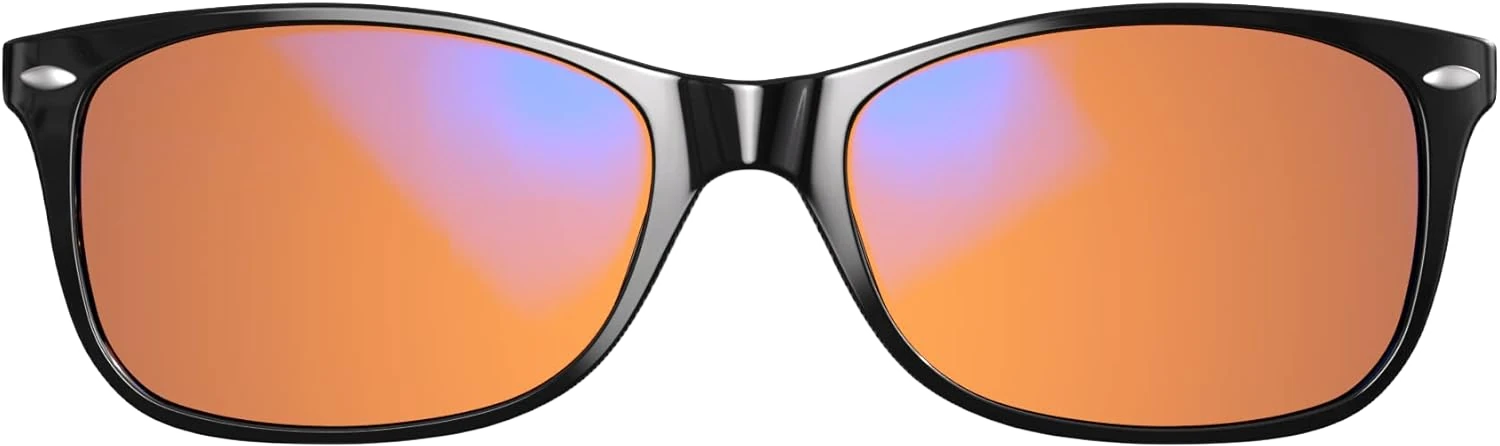
Swanwick Night Swannies
Swanwick is the sweet spot for most people who want better sleep without going full red-lens or full industrial.
 03
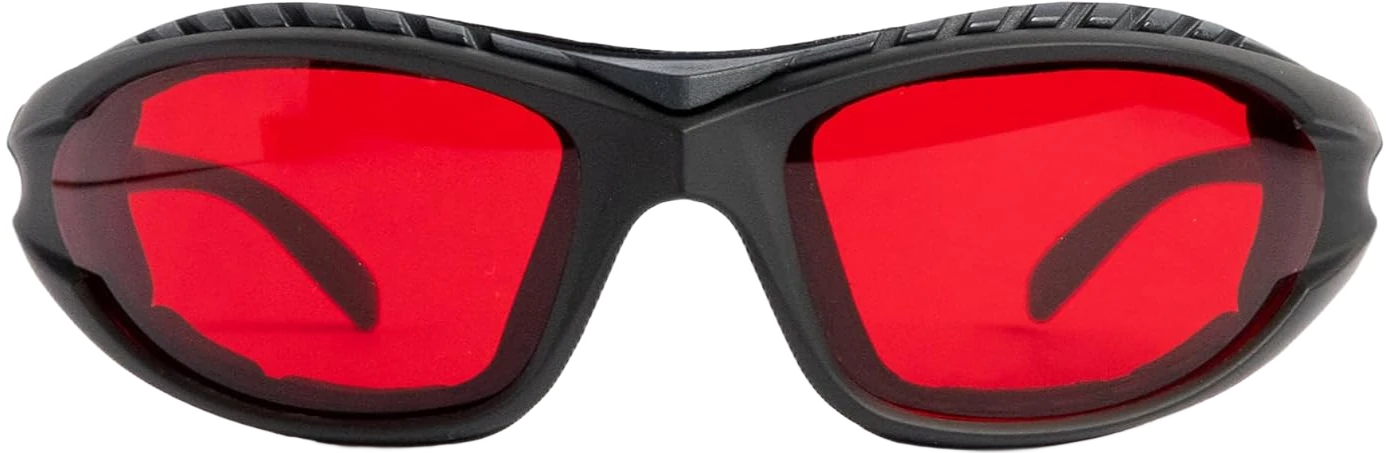
TrueDark Twilights Classic
TrueDark helped popularize the red evening lens, and the Twilights Classic is a genuinely strong sleep tool: 99% blocking of blue, green, and violet means the melatonin-suppressing band is essentially gone.
 05
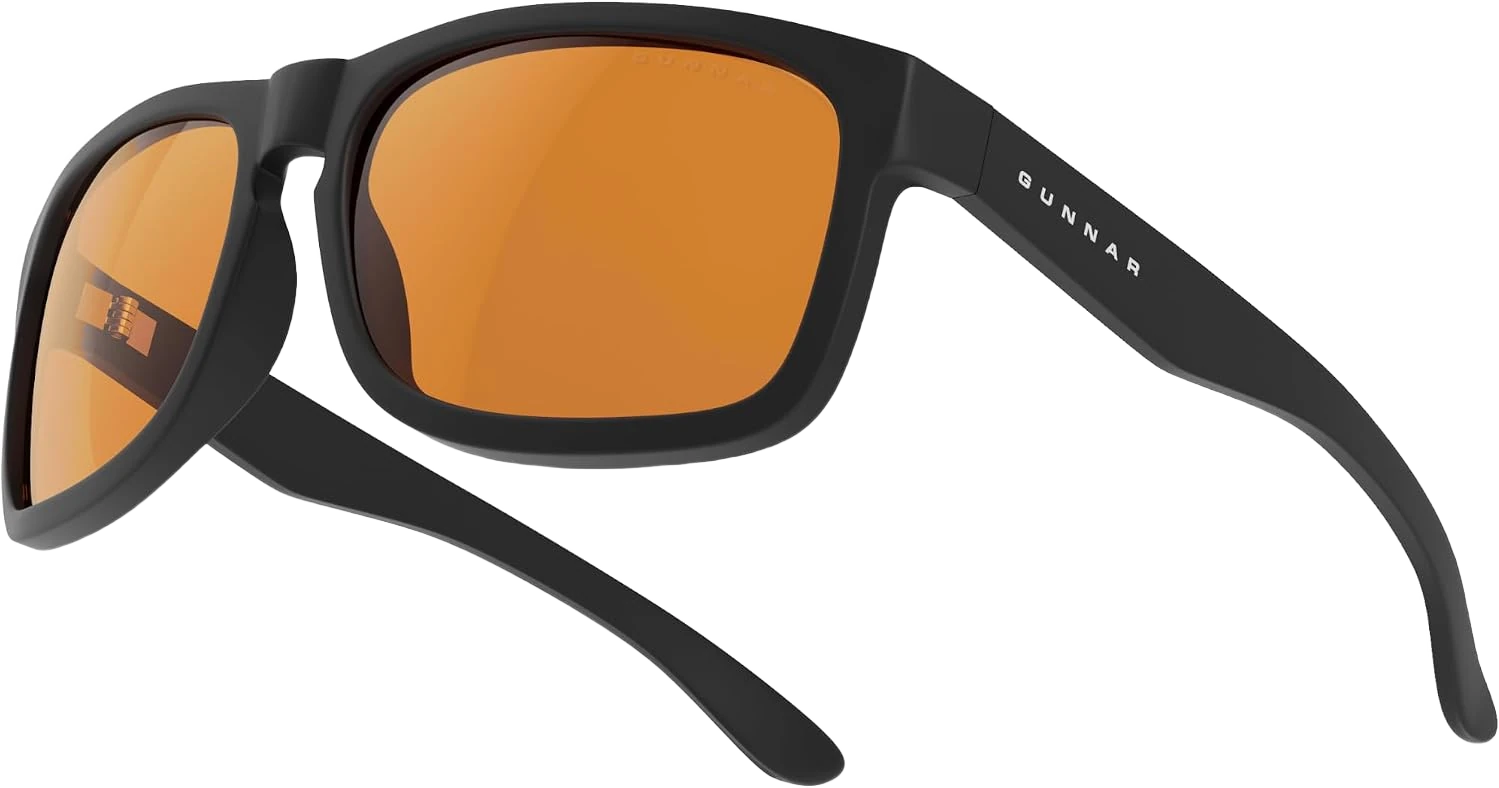
Gunnar Intercept Amber Max
If you game or work on screens late and want ONE pair that also protects your sleep, this is the pick.
Quick Answers
How can a $10 safety lens compete with $100 sleep glasses?
Because the physics is cheap — it's the packaging that costs money. Blocking blue light is a solved industrial problem: the SCT-Orange tint was developed for occupational eye protection, and it absorbs ~98% of blue light as a side effect of its spectral design. That's comparable raw blue-blocking to sleep lenses costing ten times more. What the premium brands add is real but non-spectral: refined frames, better optics, pigmented lenses with anti-reflective coatings, and looks you'll tolerate socially. If your question is 'will it protect melatonin?', the Uvex answers yes for pocket change. If your question is 'will I enjoy wearing it nightly for years?', that's where the premium pairs earn their price.
Which exact model should I buy?
The S1933X — the Skyper frame with the SCT-Orange lens, sold as a single pair. That's the ASIN we verified (B000USRG90). Two traps to avoid: Uvex sells the Skyper in other lens tints (clear, gray, amber variants) that are NOT the SCT-Orange and won't do the sleep job, and some listings bundle multi-packs at pricing that changes the value math. Confirm 'SCT-Orange' and 'S1933X' before checkout, and you'll have the exact lens this recommendation is about.
Is orange enough, or do I need a red lens?
The SCT-Orange absorbs ~98% of blue, which covers the most important part of the melatonin-suppressing band — that's why it genuinely works as an evening lens. Like every orange/amber tint, it passes more of the green tail (~500-530 nm) than the deep red specialist lenses, so it's not the theoretical maximum. Our honest framing: the gap between clear glasses and this lens is enormous; the gap between this lens and a $90 red lens is modest. Shift workers and severe insomniacs may want the red ceiling; for everyone testing whether evening light-blocking helps their sleep, this is more than enough lens to find out.
What's the wrap-around design worth for sleep?
More than it gets credit for. Melatonin suppression is driven by all the light reaching your eyes, not just what you look at directly — so stray light entering around the edges of a flat frame partially bypasses the lens entirely. The Skyper's safety heritage means genuine side coverage: light is blocked from the periphery, something most stylish sleep glasses can't claim. Combined with the adjustable temple length and ratcheting lens angle, you can seal it to your face better than almost anything else in our ranking. It's the one axis where the industrial design is an advantage rather than a compromise.
Sources & Further Reading
4 sources — studies link to PubMed, product specs to the manufacturer
- [1] Gooley 2011 PMID 21193540 — Exposure to room light before bedtime suppresses melatonin onset and shortens melatonin duration in humans. Ordinary evening room light suppressed melatonin versus dim light — total evening light exposure is what matters, which is also why the Skyper's wrap-around side coverage is a real advantage. Studies light exposure, not this product.
- [2] Burkhart 2009 PMID 20030543 — Amber lenses to block blue light and improve sleep: a randomized trial. Randomized trial: amber blue-blocking lenses worn ~3 h before bed improved sleep quality and mood versus controls. Notably, low-cost blocking lenses of exactly this class (including Uvex-style safety lenses) are what made this intervention accessible.
- [3] Shechter 2018 PMID 29101797 — Blocking nocturnal blue light for insomnia: A randomized controlled trial. Randomized crossover RCT in insomnia: amber lenses 2 h before bed improved sleep versus clear placebo — evidence for the orange/amber blocking class at the price-independent, spectrum-level of the intervention.
- [4] Manufacturer specs 2026 — Product specifications (SCT-Orange lens, S1933X model, wrap design, adjustable temples) from the Amazon listing. All product facts in this review — the SCT-Orange ~98% blue absorption, S1933X model designation, wrap-around design, and temple/lens adjustability — come from the manufacturer's Amazon listing (verified live 2026-07-20). Manufacturer specifications, not independent lab measurements.
Affiliate disclosure: every Amazon link uses our Associates tag (superachieverclub-20). We earn a small commission at no cost to you; it funds independent reviews. We never accept payment to change a ranking.