
BLUblox Lennon Sleep+ (Red Lens) Review
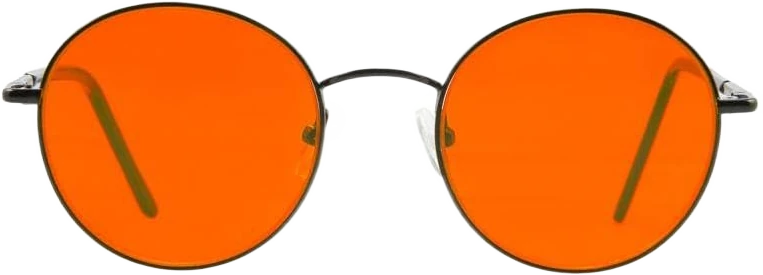 #2 of 8 · Best red sleep specialist✓ Product photos checked Sep 7, 2026
Real retailer photo, cut out. Label unedited.
Buy it. Maximum melatonin protection on our list — 100% of blue AND green blocked, at a fair price. The Sleep+ lens removes the entire melatonin-suppressing band (100% block, 400-550 nm) — the most absolute spectrum spec in our ranking — with a real pigment tint, AR coating, and a comfortable frame at ~$90.
$90
Why It Scores 8.8 — And The Label Line Behind Each Number
Evening light-blocking
35% of score100% of blue and green blocked across 400-550 nm — the entire melatonin-suppressing band removed, the most absolute spectrum spec in our lineup. Elite performance on the criterion that decides whether glasses help sleep at all.
Lens & optical quality
20% of scoreA real pigment tint with anti-reflective coating — not a surface film — with clean optics for reading and TV through the deep red shift. A small step below the Ra Optics' low-distortion polish, which is most of why this pair is #2 rather than #1.
- Lens
- Red 'Sleep+' evening lens (pigment tint + anti-reflective coating)
Comfort & fit
20% of scoreThe Lennon-style frame is light and comfortable for the full 2-3 hour evening window. Round lenses are slightly smaller than a wrap design, so a little stray side light can enter at the edges — a minor cost against dedicated wrap or fit-over designs.
Build & durability
15% of scoreQuality frame and hinges that hold up to nightly use — solidly made, from a brand that specializes in light-management eyewear. Very good rather than premium: the acetate refinement of the #1 is the visible difference.
Value
10% of scoreAt ~$90 it delivers the lineup's maximum melatonin block for about $30 less than the premium pick — strong value for a true red specialist lens. Budget shoppers can still get most of the raw protection from a $10 Uvex; what you're buying here is the full 400-550 spec in a frame you'll enjoy wearing.
- Price
- ~$90 — undercuts the premium #1 by ~$30
- More Specs
- Blocks
- 100% of blue AND green light, 400-550 nm — the full melatonin band
- Intended use
- Evening only — 2-3 h before bed; not for daytime or driving
- Frame
- Lennon-style round frame, lightweight
- Brand
- BLUblox — now trading as BON CHARGE
- ASIN
- B08192K2VV (verified live 2026-07-20)
Photos checked.This product has no Supplement Facts panel; the retailer's listing photos were reviewed Sep 7, 2026.
Marketing Claims Vs. Reality
Blocks 100% of blue and green light (400-550 nm).
The listing's central spec, consistent with the lens's deep red appearance — a red lens of this density transmits essentially nothing in the blue-green band. It's the defining feature of the product and the most absolute blocking spec in our lineup.
Improves sleep by protecting evening melatonin.
Category-level support is real: evening light suppresses melatonin (Gooley 2011), and randomized trials found amber blue-blocking lenses before bed improved sleep versus clear lenses (Burkhart 2009; Shechter 2018). A 100% blue+green block is the logical strong version of that intervention — but the trials tested the category, not this product, and effects are modest, not transformative.
Quality lens construction with anti-reflective coating (not a cheap film).
The Sleep+ lens is a pigment tint with AR coating per the listing — consistent with the brand's positioning as a specialist light-management eyewear maker rather than a commodity reseller.
What Our Test Actually Found
The most absolute spectrum spec in our ranking
Most sleep-lens brands hedge: '~100% of blue, most green.' BLUblox publishes a flat number — 100% of everything from 400 to 550 nm. Since the melatonin-suppressing band runs roughly 450-530 nm, that spec covers it entirely with margin on both sides. For the buyer whose priority is 'let the least suppressing light through,' this is the strongest answer on the list, and it's why the pair holds the red-specialist badge rather than competing on style.
Maximum block is a real advantage for a specific buyer — and overkill for others
The difference between 'blocks most green' (a good amber lens) and 'blocks all green' (this lens) matters most at the margins: shift workers sleeping against their circadian clock, diagnosed insomniacs, and people who notice they're exquisitely sensitive to evening light. For an average sleeper, a comfortable amber lens worn consistently probably captures most of the benefit — the trials that exist used amber, not red. Buy this pair because you're in the high-need group or because you want the ceiling; don't feel the amber picks are inadequate.
The deepest color shift on the list — plan your evenings around it
Blocking 100% of blue and green means the world goes sunset-red. Reading and TV are fine after a few nights of adjustment, but color-accurate work, night driving, and video calls are out. This is the honest cost of the spec, and it defines the product as a dedicated 2-3-hour wind-down tool. If you know you won't tolerate that, the milder Swanwick amber is the sustainable alternative — a lens you'll actually wear beats a stronger lens in a drawer.
Quality build at a fair price — the value sweet spot for a true red lens
At ~$90 the Lennon Sleep+ sits between the $120 premium pick and the budget field, and the money lands in the right places: a genuine pigment lens with AR coating and a light, durable frame from a brand that does light-management eyewear as its whole business. The frame material is functional quality plastic rather than the premium acetate of the #1 — honest at this price, and still comfortable against the face for the nightly multi-hour window. You give up frame romance, not sleep performance.
Full analysis: all pros & cons (8), buy if / skip if
- Blocks 100% of blue AND green across 400-550 nm — the maximum melatonin protection in our lineup
- The specialist's pick for shift workers, insomnia, and high light sensitivity
- Real pigment tint with anti-reflective coating, not a scratch-prone surface film
- Light, comfortable frame for the full nightly wear window
- ~$30 cheaper than the premium #1 with no melatonin-relevant downgrade
- The strongest color shift on the list — strictly an evening/bedtime tool
- Frame and finish are very good, not premium — a visible notch below the Ra Optics
- Round Lennon lenses admit some stray side light versus wrap designs
- You want the maximum melatonin block available — 100% of blue AND green, nothing left in the band
- You're a shift worker, insomnia sufferer, or highly light-sensitive sleeper who needs the full-strength tool
- You want near-#1 sleep performance for ~$30 less than the premium pick
- You're fine wearing an unmistakably red lens for 2-3 hours each evening at home
- You want a subtler tint you can wear around other people without comment — the Swanwick amber (#4) is the milder path
- You want one pair for daytime screens too — this is strictly an evening lens; see the Gunnar Amber Max (#5)
- Frame refinement matters as much as function to you — the Ra Optics (#1) is the nicer object
The Sleep+ lens removes the entire melatonin-suppressing band (100% block, 400-550 nm) — the most absolute spectrum spec in our ranking — with a real pigment tint, AR coating, and a comfortable frame at ~$90. The costs are honest: the strongest color shift here makes it purely an evening tool, and the frame is very good rather than premium. For shift workers, insomniacs, and red-lens purists, this is the pick.
If our ranking rewarded only one number — how much of the melatonin-suppressing band a lens removes — the BLUblox Lennon Sleep+ would be very hard to beat. Its red 'Sleep+' lens blocks 100% of blue AND green light across 400-550 nm. Since melatonin suppression runs through roughly 450-530 nm, that spec means the entire suppressing band is gone, with margin on both sides. No 'most', no 'up to' — the full band. That's the maximum protection in our lineup, and it's exactly what the highest-need users — shift workers, insomnia sufferers, the severely light-sensitive — should be shopping for. Around that lens, BLUblox (now trading as BON CHARGE) builds a genuinely good pair: a real pigment tint with anti-reflective coating rather than a cheap surface film, in a light, comfortable Lennon-style frame. At around $90 it undercuts our premium #1 by a meaningful margin while giving up nothing on the melatonin criterion. The honest trade-offs: this is the deepest color shift on the list — purely an evening tool — and the frame, while quality, is a notch below the Ra Optics' premium acetate refinement. It lands at #2 on polish, not on performance. Here's the full breakdown.
The maximum-block specialist — buy it if you need the full-strength tool or want the ceiling for less.

The Lennon Sleep+ is the purest expression of what this category is supposed to do: remove the light that suppresses melatonin. Its 100% block across 400-550 nm is the most absolute spec in our ranking — the entire suppressing band gone — delivered in a genuinely well-made lens with a comfortable frame at a price ~$30 under the premium pick. For shift workers, insomniacs, and the highly light-sensitive, this is the pair we'd point to first. It sits at #2 for reasons that have nothing to do with melatonin: the Ra Optics wraps near-identical protection in a more refined frame with slightly better optical polish, and for a product you'll wear every night, that finish is worth something. The Sleep+'s own honest costs are the deep red world it puts you in for 2-3 hours a night and a frame that's functional-quality rather than premium. Wear it consistently in the pre-bed window — the trial evidence (Burkhart 2009, Shechter 2018) is evidence for consistent evening wear — and you're getting the strongest version of a modest, real, drug-free sleep aid.
If This Doesn’t Fit — Try These
 01
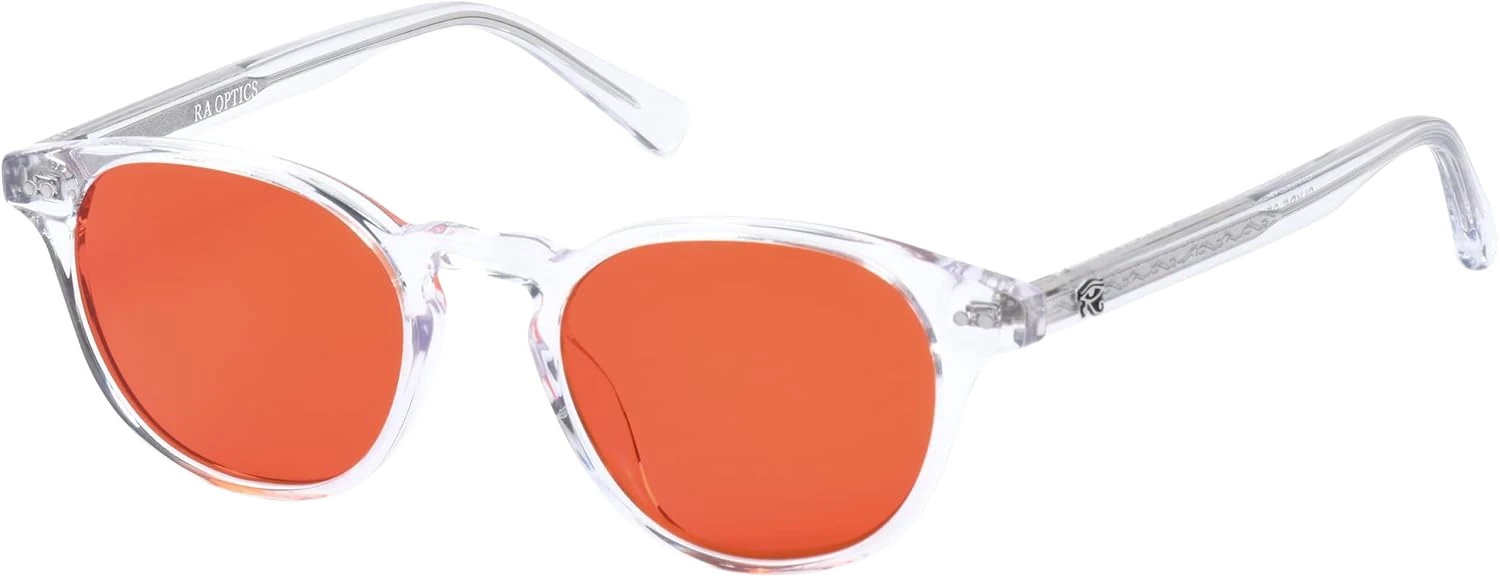
Ra Optics Clyde Sunset
This is the pair we'd put on our own face at night.
 03
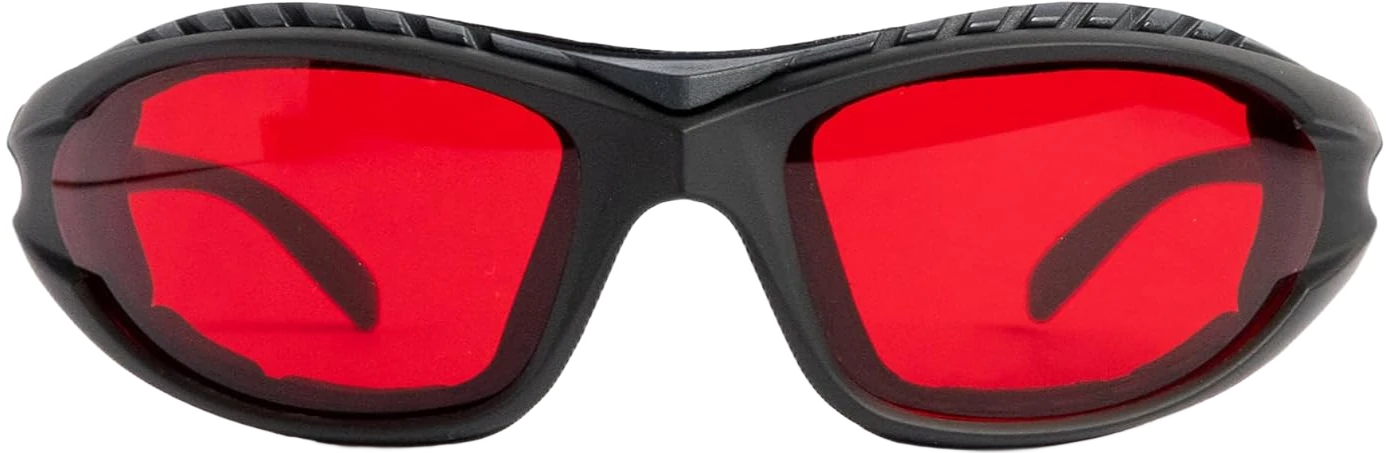
TrueDark Twilights Classic
TrueDark helped popularize the red evening lens, and the Twilights Classic is a genuinely strong sleep tool: 99% blocking of blue, green, and violet means the melatonin-suppressing band is essentially gone.
 04
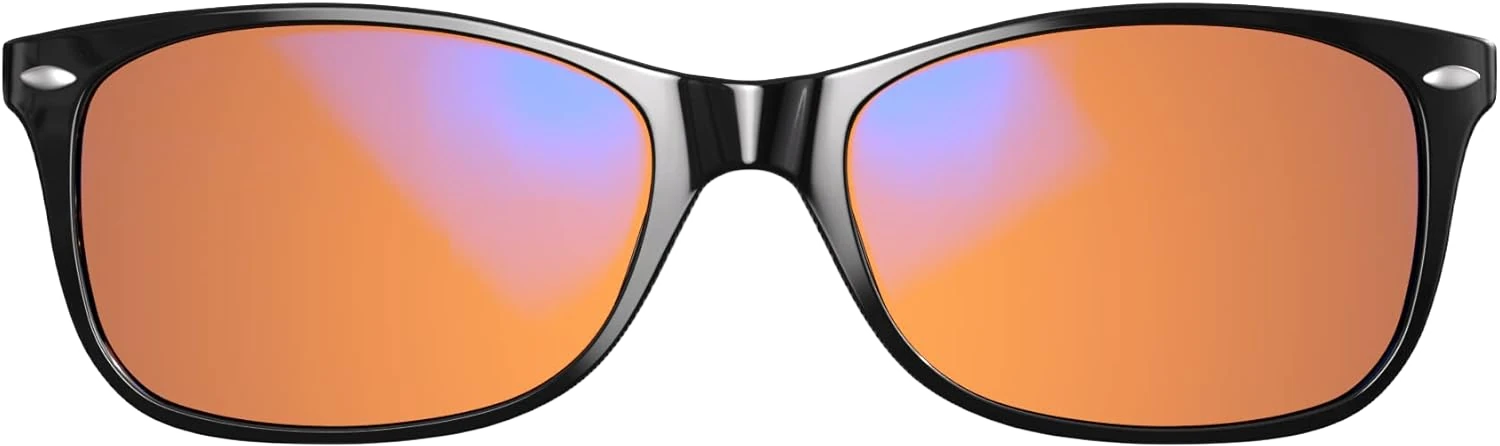
Swanwick Night Swannies
Swanwick is the sweet spot for most people who want better sleep without going full red-lens or full industrial.
Quick Answers
What does '100% blue and green from 400-550 nm' actually mean?
It means the lens removes the entire band of light that suppresses melatonin. Research puts the melatonin-suppressing wavelengths at roughly 450-530 nm — which crucially includes green light, not just blue. Most 'blue-light' glasses ignore green entirely. The Sleep+ lens blocks 100% of everything from 400 to 550 nm, covering that whole band with margin on both sides. In practical terms: of all the glasses in our ranking, this lens lets the least melatonin-suppressing light through. That's why it's the specialist's pick for people who need maximum protection — shift workers, insomniacs, the highly light-sensitive.
How is this different from the Ra Optics pair that ranked #1?
On raw spectrum blocking they're near-equals — both remove essentially the whole melatonin band, and the BLUblox spec (100% of 400-550 nm) is if anything the more absolute number. The Ra Optics wins our ranking on the surrounding package: a more refined acetate frame, slightly better optical polish, and premium build. The BLUblox costs about $30 less and gives up nothing that matters for melatonin. If you want the nicest object, buy the Ra Optics; if you want maximum block per dollar in a still-quality frame, this is the smarter buy.
Is the deep red tint hard to live with in the evening?
It's the strongest color shift on our list — whites go orange-red, screens look sunset-toned — and that's the honest cost of blocking 100% of blue and green. You can still read, watch TV, and move around the house fine; most people adjust within a few nights. But these are strictly an evening wind-down tool: don't drive in them, don't video-call in them expecting normal colors, and don't plan to wear them at the office. If that trade feels too steep, a lighter amber lens (Swanwick, #4 in our ranking) blocks most blue with a far milder shift — at the cost of letting more green through.
Who should specifically choose this pair?
Three groups. First, shift workers who need to sleep against their body clock — when you're forcing sleep at a biologically wrong time, you want the most complete light-blocking available, and this is it. Second, people with real insomnia: the Shechter 2018 randomized trial that found amber lenses improved sleep was run in insomnia patients specifically, and a fuller-spectrum block is the logical extension of that approach. Third, the highly light-sensitive — people who notice they sleep worse after any bright evening exposure. For everyone else, an amber lens may be a comfortable-enough compromise; for these groups, maximum block is the point.
Sources & Further Reading
4 sources — studies link to PubMed, product specs to the manufacturer
- [1] Gooley 2011 PMID 21193540 — Exposure to room light before bedtime suppresses melatonin onset and shortens melatonin duration in humans. Ordinary room light before bed (vs dim light) suppressed melatonin and shortened its duration — the mechanistic case for removing evening light in the pre-bed window. Studies light exposure, not this product.
- [2] Burkhart 2009 PMID 20030543 — Amber lenses to block blue light and improve sleep: a randomized trial. Randomized trial: amber blue-blocking lenses worn ~3 h before bed for 2 weeks improved sleep quality and mood versus control lenses. Category evidence for evening blue-blocking; the trial used amber, not red — the red Sleep+ blocks strictly more of the band.
- [3] Shechter 2018 PMID 29101797 — Blocking nocturnal blue light for insomnia: A randomized controlled trial. Randomized crossover RCT in adults with insomnia: amber lenses worn 2 h before bed for 7 nights improved sleep versus clear placebo — the population (insomnia) most relevant to this maximum-block specialist pick.
- [4] Manufacturer specs 2026 — Product specifications (Sleep+ lens, 100% blue/green block 400-550 nm, frame details) from the Amazon listing. All product facts in this review — the 100% blue+green 400-550 nm blocking spec, pigment tint with AR coating, and Lennon frame details — come from the manufacturer's Amazon listing (verified live 2026-07-20). Manufacturer specifications, not independent lab measurements.
Affiliate disclosure: every Amazon link uses our Associates tag (superachieverclub-20). We earn a small commission at no cost to you; it funds independent reviews. We never accept payment to change a ranking.