
Gunnar Intercept Amber Max (98% blue) Review
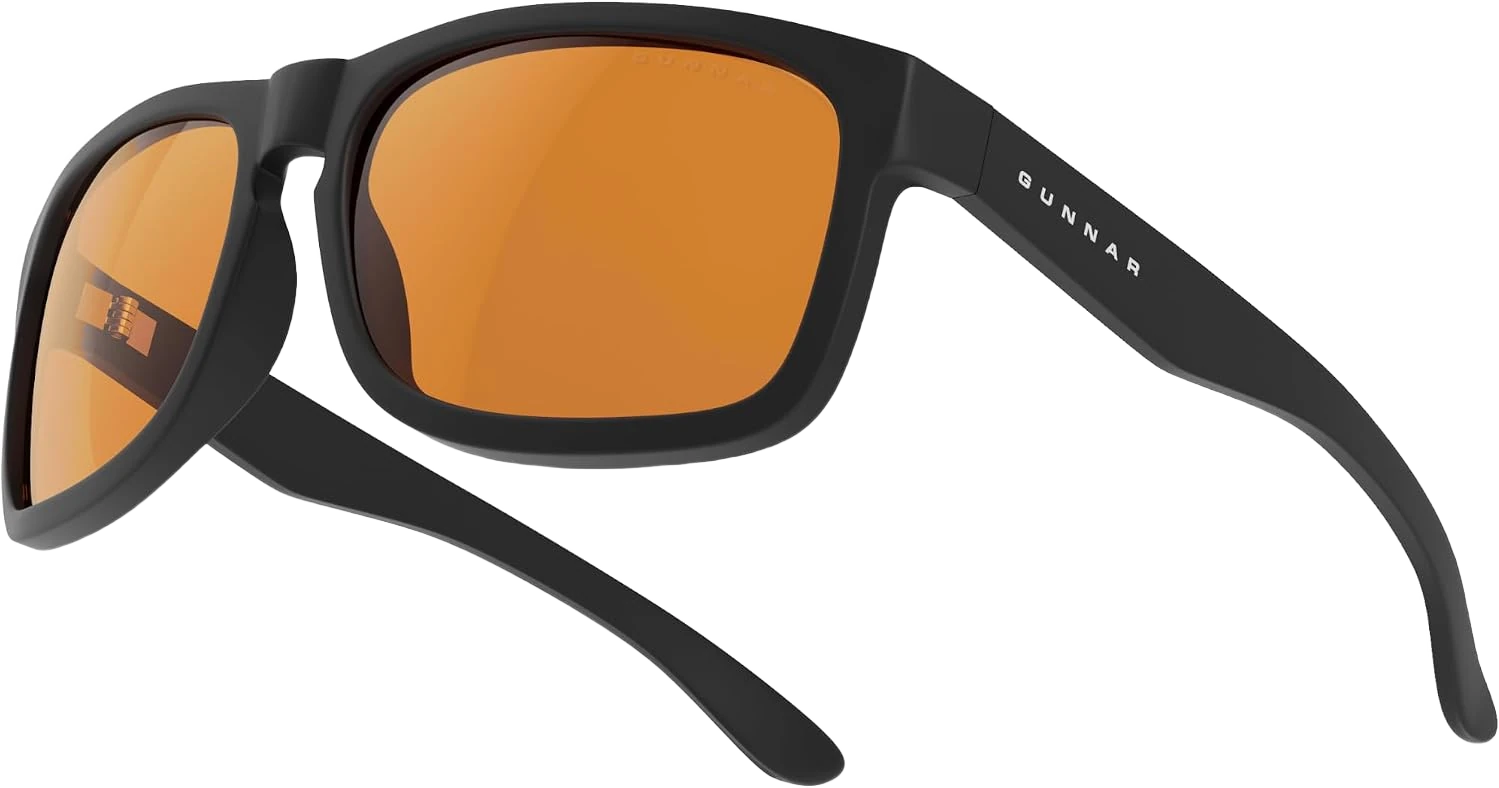 #5 of 8 · Best for screens + sleep✓ Product photos checked Sep 7, 2026
Real retailer photo, cut out. Label unedited.
Buy it. The honest dual-purpose pick — gaming-grade optics with a real 98% evening tint. Amber Max blocks 98% of blue — deep enough to function as a genuine evening sleep lens — with Gunnar's crisp screen-tuned optics, anti-glare, and a durable frame at ~$69.
$69
Why It Scores 8.5 — And The Label Line Behind Each Number
Evening light-blocking
35% of score98% of blue blocked is genuine evening-lens performance — a different species from Gunnar's 65% standard amber or any clear lens. The deduction against the specialists: amber passes more of the green tail (~500-530 nm), so raw melatonin protection sits a notch below the red picks and just under the Swanwick's similar amber.
Lens & optical quality
20% of scoreThe best optics of any deep-tinted lens here: Gunnar's screen-distance lens geometry, sharp clarity, and effective anti-glare coating. Color accuracy is intentionally sacrificed to the tint — everything else about the viewing experience is excellent.
- Lens
- Amber Max — Gunnar's deepest tint, blocks 98% of blue light
Comfort & fit
20% of scoreBuilt for multi-hour sessions: balanced weight, screen-appropriate fit, and temples that coexist with headsets — a real consideration for the gaming buyer. Comfortable through a full evening; no fit-over option for prescription wearers.
Build & durability
15% of scoreThe most durable pair in our top five: the Onyx frame is built to be worn daily and tossed in a bag, from a brand with a long warranty track record in exactly this product class. Solid, well-tolerated frame materials — equipment-grade in the good sense.
Value
10% of score~$69 for gaming-grade optics AND a genuine 98% evening tint is strong value — you're effectively getting two products in one frame, cheaper than every dedicated red specialist. Only the industrial Uvex beats it on raw protection per dollar.
- Price
- ~$69
- More Specs
- Blocks
- 98% blue; amber tint passes more green than red specialist lenses
- Intended use
- Late screen sessions + evening pre-bed; night use and photosensitivity
- Frame
- Intercept, Onyx — durable, headset-friendly temples
- Optics
- Gaming-grade clarity, anti-glare coating
- Buying trap
- Standard Gunnar amber = 65% — verify the listing says 'Amber Max' (this ASIN is Amber Max)
- ASIN
- B07Q8GYGVY (verified live 2026-07-20)
Photos checked.This product has no Supplement Facts panel; the retailer's listing photos were reviewed Sep 7, 2026.
Marketing Claims Vs. Reality
Amber Max lens blocks 98% of blue light.
The verified listing is the Intercept Onyx with the Amber Max lens, Gunnar's deepest tint at 98% blue blocking — consistent with the lens's visibly deep amber color and its night-use positioning. This is the spec that makes the pair a genuine evening lens.
Blue light blocking relieves dry eye and screen strain.
The comfort effect of a deep tint plus anti-glare coating on long screen sessions is real and widely reported, and Gunnar's optics are screen-tuned. But 'relieves dry eye' as a medical-sounding claim overreaches what a tint can do — blink behavior and screen habits drive dryness more than spectrum. Treat it as comfort, not treatment.
Suitable as an evening/sleep lens (night-use positioning).
At 98% blue blocking the Amber Max genuinely functions as an evening lens, and the category's RCT evidence (amber lenses before bed improving sleep) applies to this lens class. The honest limit: amber passes more green than red lenses, so it's a very good evening lens, not the maximum one.
What Our Test Actually Found
The 65% trap: 'Gunnar amber' is two very different products
The single most important thing to know before buying: Gunnar sells its lenses in multiple tints, and the standard amber blocks only 65% of blue — a daytime comfort lens that will not meaningfully protect melatonin. The Amber Max tint blocks 98% and is the entire basis of this recommendation. The ASIN we verified (B07Q8GYGVY) is the Intercept Onyx with Amber Max. If you buy this pair through any other listing, confirm the words 'Amber Max' before checkout — it's the difference between a real sleep tool and an expensive placebo.
Dual-purpose is a genuine adherence advantage
Every sleep lens works only if worn 2-3 hours nightly, and single-purpose red glasses demand a new habit. The Gunnar piggybacks on a habit you already have: if your evenings end in front of a screen, the glasses you wear for comfort during those sessions are simultaneously the melatonin intervention. No extra step, no drawer risk. For the late-night gamer or worker, this is the pair most likely to actually deliver its sleep benefit — not because the lens is strongest, but because it will actually be on your face.
The optics are what the specialists can't match
Dedicated sleep brands optimize spectrum first and optics second. Gunnar optimizes both, because its buyers stare at text and UI for hours: screen-distance lens geometry, sharp central clarity, and an anti-glare coating that noticeably tames bright scenes. Through a deep amber tint, that engineering matters — bargain deep tints get muddy and fatiguing, while the Amber Max stays crisp. If you'll spend hundreds of hours looking through this lens at pixels, that's the line item you're paying for.
Where it honestly sits for pure sleep
On melatonin protection alone, the hierarchy is clear: the red specialists block essentially the whole blue-green band; the Gunnar's 98%-blue amber leaves part of the green tail (~500-530 nm) open, like every amber lens. That's why it scores 8.2 on our heaviest criterion, below the 9.6-9.8 of the reds. If your evenings are screen-free and sleep is the only goal, buy red. The Gunnar's case is the combined one — very good sleep protection during hours you'd be on screens anyway, with viewing quality no red lens offers.
Full analysis: all pros & cons (8), buy if / skip if
- Genuine evening tint — Amber Max blocks 98% of blue, a different class from standard 'computer' glasses
- The best optics of any deep-tinted lens in our ranking: gaming-grade clarity + anti-glare
- True dual-purpose: late-screen comfort and melatonin protection in one pair
- Most durable build in our top five, from the category's most established brand
- Strong value at ~$69 — two use cases for less than any red specialist
- Amber passes more green than red lenses — a step below #1-#3 for pure sleep protection
- The Amber Max tint is essential — Gunnar's standard 65% amber is a far weaker sleep tool
- Deep warm color shift rules out color-critical work; not for daytime color accuracy or driving
- You game or work on screens late and want ONE pair for comfort and sleep protection
- You want the best optics of any deep-tinted lens in our ranking (gaming-grade, anti-glare)
- You want a durable, well-built pair from the category's most established brand
- You'll verify the tint says 'Amber Max' (98%) — the spec this whole recommendation rests on
- Sleep is the sole goal and you don't need screen optics — the red specialists (#1-#3) block the melatonin band more completely
- You need color accuracy for design work or competitive color callouts — a 98% blue block shifts everything warm
- You want the mildest possible tint — no true sleep lens offers that; a clear lens is a daytime product
Amber Max blocks 98% of blue — deep enough to function as a genuine evening sleep lens — with Gunnar's crisp screen-tuned optics, anti-glare, and a durable frame at ~$69. If your pre-bed hours are screen hours, one pair covers both jobs. It trails the red specialists on green-band blocking, and you must buy the 'Amber Max' tint specifically — the standard 65% amber is a different, weaker product.
Gunnar is the most established name in screen glasses, and most of its catalog is exactly what our ranking demotes: lightly tinted daytime lenses that help eye comfort and do little for melatonin. The Intercept with the Amber Max lens is the exception that earns a top-five slot. Amber Max is Gunnar's deepest tint — 98% of blue light blocked, built for night use and photosensitivity — which vaults it out of the 'computer glasses' category and into genuine evening-sleep-lens territory. Wrapped around it: the things Gunnar is actually famous for — gaming-grade lens geometry, anti-glare coating, and a durable Onyx frame that survives daily abuse. That combination creates the one honest dual-purpose pick in our lineup. If your last hours of the day are spent gaming or working on screens, this single pair covers both problems at once: crisp, low-glare viewing AND meaningful melatonin protection during exactly the hours that matter. Two honest limits keep it at #5. First, amber passes more of the green band than the red specialists, so pure sleep protection is a step below #1-#3. Second — and this is the buying trap — Gunnar's standard amber lens blocks only 65% and is a much weaker sleep tool; the Amber Max tint is non-negotiable. Here's the breakdown.
Buy it if your evenings are screen evenings — the one pair that covers both jobs.

The Intercept Amber Max resolves the most common real-world conflict in this category: the people who most need evening melatonin protection — late gamers, night workers, the chronically screen-lit — are exactly the people a single-purpose red lens serves worst. Gunnar's answer is a lens deep enough to matter (98% of blue gone) inside the best screen-viewing package in our ranking: sharp gaming-grade optics, effective anti-glare, and a frame built for daily abuse and headset coexistence, at a price below every dedicated specialist. Be clear-eyed about both caveats. This recommendation applies only to the Amber Max tint — the standard 65% amber is a daytime comfort lens wearing the same brand — and amber's green-tail passthrough means the red specialists remain the stronger pure-sleep tools. But the intervention that works is the one you actually run nightly, and for anyone whose last waking hours glow, this is the pair that turns existing screen time into protected time. Wear it from dinner to lights-out, switch your displays to warm mode, and you've built the evening-light protocol the trials reward without adding a single new habit.
If This Doesn’t Fit — Try These
 01
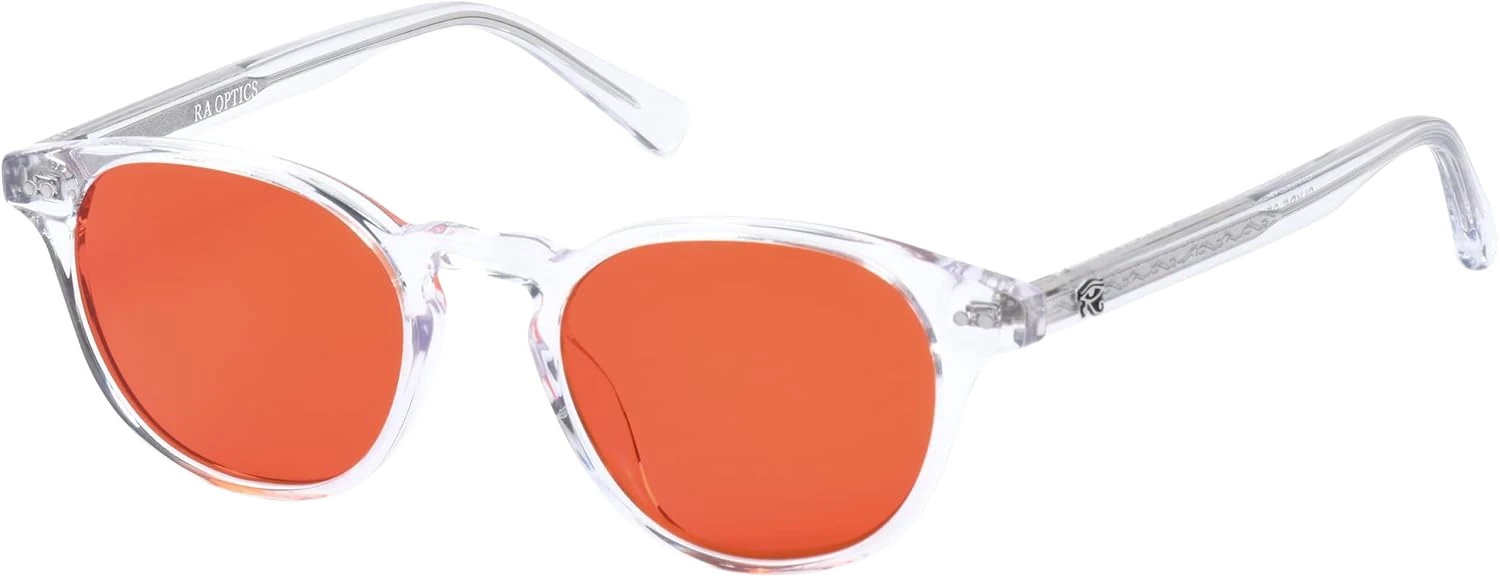
Ra Optics Clyde Sunset
This is the pair we'd put on our own face at night.
 04
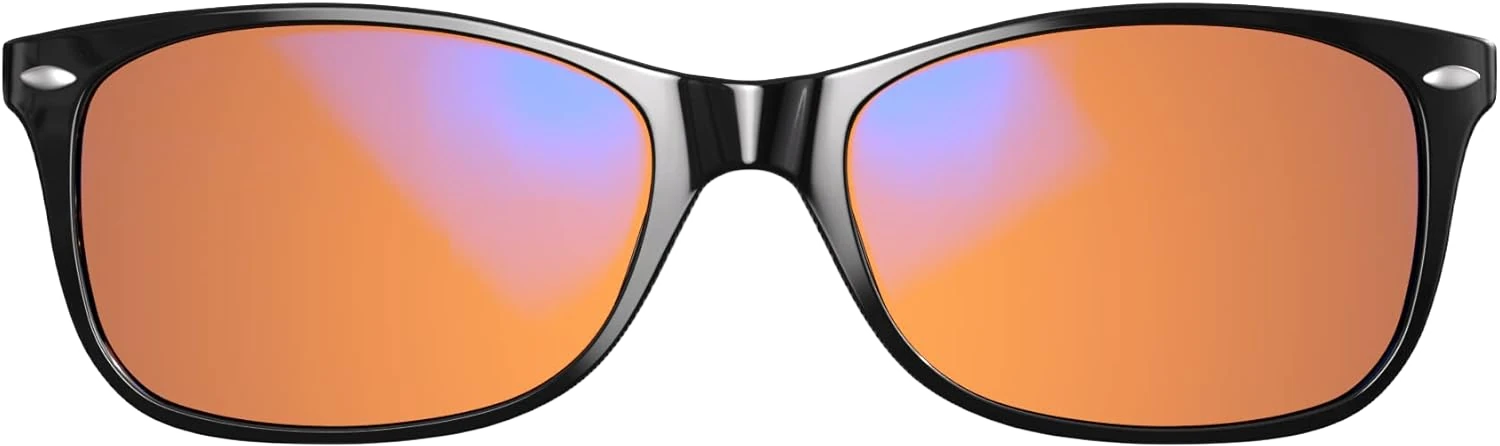
Swanwick Night Swannies
Swanwick is the sweet spot for most people who want better sleep without going full red-lens or full industrial.
 07
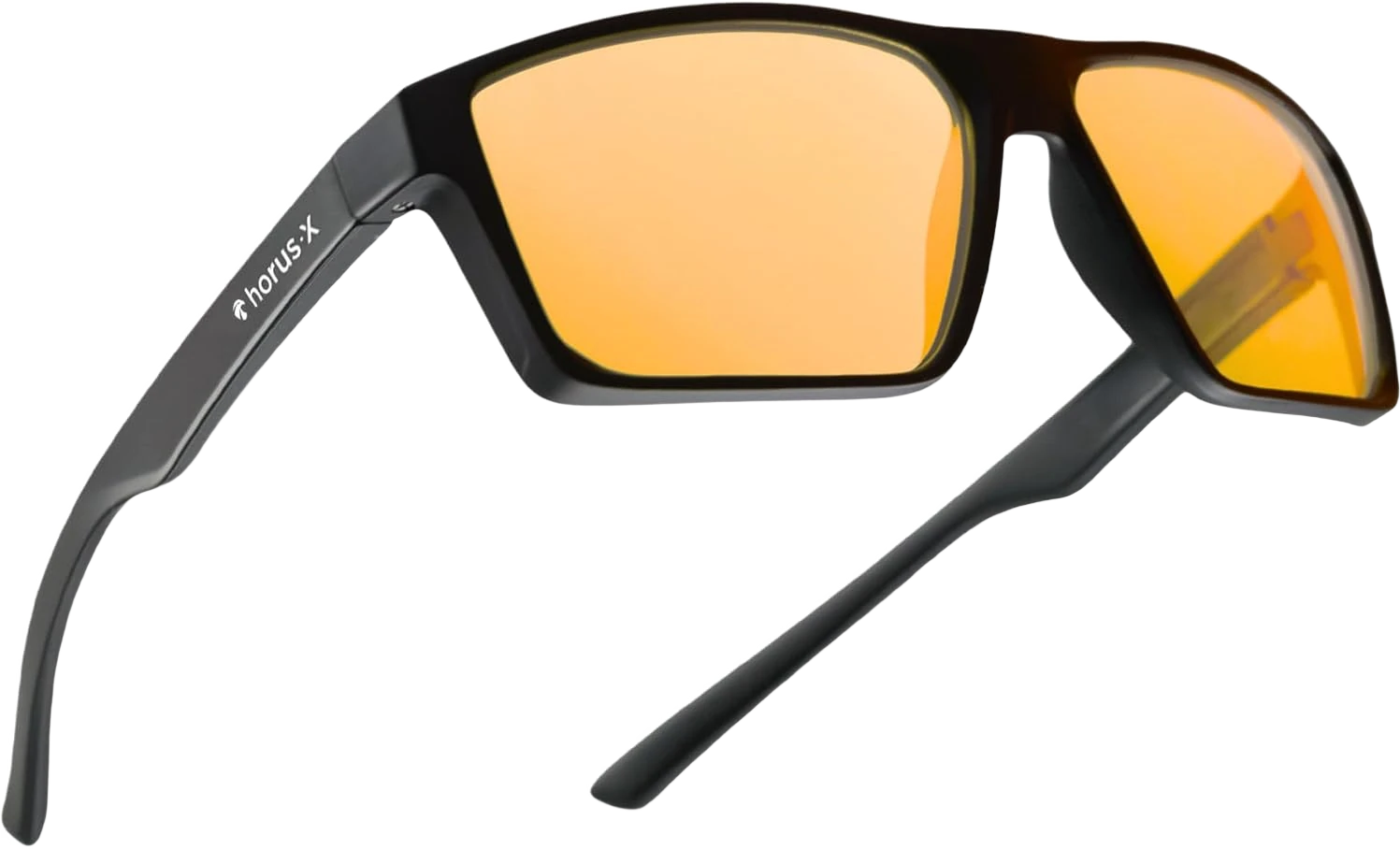
Horus X ONE Amber
Horus X is built for gamers, and that's the honest frame for it: a light, comfortable amber lens that blocks 86% of blue, takes the edge off long screen sessions, and costs little.
Quick Answers
Amber Max vs Gunnar's regular amber lens — how big is the difference?
Decisive. Gunnar's standard amber lens blocks about 65% of blue light — fine for daytime eye comfort, far too leaky to be a sleep tool. The Amber Max tint blocks 98%, which moves it into genuine evening-lens territory alongside dedicated sleep brands. Same frame, completely different sleep outcome. When you buy, verify the listing says 'Amber Max' — the ASIN we verified (B07Q8GYGVY) is the Intercept Onyx with Amber Max. If you accidentally buy the 65% version expecting sleep benefits, you'll get the classic clear-lens disappointment in amber form.
Can one pair really cover both gaming and sleep?
This is the rare one that plausibly can — with an honest asterisk. The Amber Max blocks 98% of blue with Gunnar's focus-tuned optics and anti-glare coating, so for late-night gaming or work sessions it does double duty: comfortable screen viewing AND meaningful melatonin protection during those same hours. The asterisk: amber passes more green (~500-530 nm) than the red specialist lenses, so if sleep is your only goal and you don't need daytime-usable optics, the red picks (#1-#3 in our ranking) protect melatonin more completely. Buy the Gunnar because you live in front of screens at night; buy a red lens because you only want to sleep.
Is the deep amber tint workable for actual gaming?
Yes — with a color caveat. A 98% blue block means everything shifts warm: blues go dark, whites go amber. For most gaming (and evening work, browsing, video) your eyes adapt within minutes and many long-session players prefer the reduced harshness. For color-critical work — photo editing, design, competitive titles where you rely on exact color callouts — the shift is disqualifying, and no true sleep lens will suit that. Gunnar's optics are the redeeming feature: the lens geometry and anti-glare are built for screen distances, so sharpness and comfort are excellent even though color accuracy is intentionally sacrificed.
How should I use them for the sleep benefit?
Same protocol as any evening lens: on 2-3 hours before your target bedtime, every night, until lights-out. The convenient part is that if your last 2-3 waking hours are spent gaming or working anyway, the glasses you're already wearing for screen comfort ARE the intervention — no extra habit needed. That's the real argument for this pair: the randomized evidence behind evening blue-blocking (Burkhart 2009, Shechter 2018) rewards consistent nightly wear, and consistency is easiest when the glasses serve a purpose you already care about.
Sources & Further Reading
4 sources — studies link to PubMed, product specs to the manufacturer
- [1] Gooley 2011 PMID 21193540 — Exposure to room light before bedtime suppresses melatonin onset and shortens melatonin duration in humans. Evening room light suppressed melatonin versus dim light — the reason screen-heavy pre-bed hours are precisely the hours worth protecting, and the mechanistic case for a deep evening tint on late-session glasses.
- [2] Burkhart 2009 PMID 20030543 — Amber lenses to block blue light and improve sleep: a randomized trial. Randomized trial: amber lenses worn ~3 h before bed improved sleep quality and mood versus controls — direct evidence for the deep-amber lens class the Amber Max belongs to.
- [3] Shechter 2018 PMID 29101797 — Blocking nocturnal blue light for insomnia: A randomized controlled trial. Randomized crossover RCT in insomnia: amber lenses 2 h before bed improved sleep versus clear placebo — supporting evening wear of deep amber lenses during pre-bed screen hours.
- [4] Manufacturer specs 2026 — Product specifications (Amber Max 98% blue blocking, Intercept Onyx frame, anti-glare optics) from the Amazon listing. All product facts in this review — the Amber Max lens's 98% blue blocking, Intercept Onyx frame, gaming-grade optics and anti-glare coating — come from the manufacturer's Amazon listing (verified live 2026-07-20). Manufacturer specifications, not independent lab measurements.
Affiliate disclosure: every Amazon link uses our Associates tag (superachieverclub-20). We earn a small commission at no cost to you; it funds independent reviews. We never accept payment to change a ranking.