
Ra Optics Clyde Frame + Sunset Lenses Review
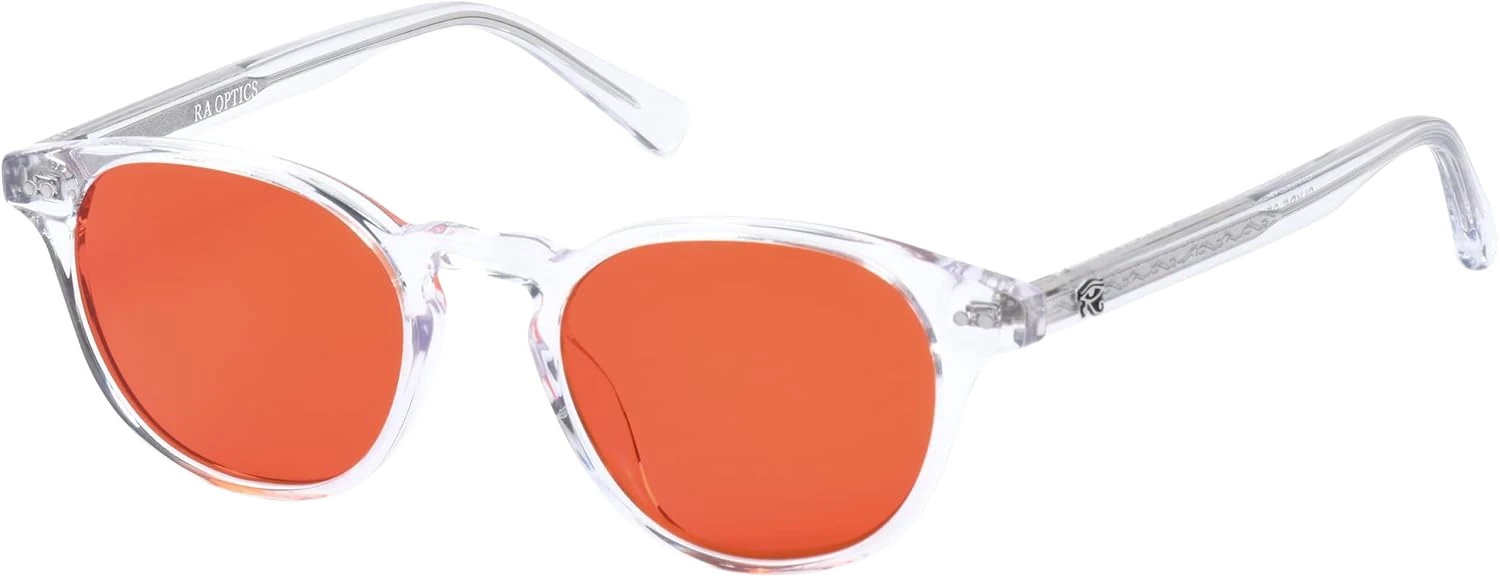 #1 of 8 · Best overall✓ Product photos checked Sep 7, 2026
Real retailer photo, cut out. Label unedited.
Buy it. The best evening sleep lens on our list — full melatonin-band blocking in the best frame. The Sunset lens blocks ~100% of blue and most green — the whole melatonin-suppressing band — with a genuine pigment-in-lens tint and low distortion, in a light premium acetate frame you'll actually wear nightly.
$120
Why It Scores 8.9 — And The Label Line Behind Each Number
Evening light-blocking
35% of scoreThe Sunset lens blocks ~100% of blue and most green — essentially the entire melatonin-suppressing 450-530 nm band. This is the top score on our most heavily weighted criterion, and the core reason the pair is #1: it's a genuine evening sleep lens, not a daytime lens with sleep marketing.
Lens & optical quality
20% of scoreA real pigment-in-lens tint with low distortion — you can read, watch TV, and move around comfortably despite the deep color shift. No cheap surface film to scratch or haze. Only the flawless clear optics of the Felix Gray score higher on this axis, and that lens fails the sleep criterion entirely.
- Lens
- Deep red/amber 'Sunset' evening lens (pigment-in-lens tint)
Comfort & fit
20% of scoreThe Clyde acetate frame is light and refined enough for the full 2-3 hour nightly wear window — the habit-sustaining kind of comfort. Deduction: it's a standard frame with no fit-over option for prescription wearers, and acetate frames fit some faces better than others.
Build & durability
15% of scorePremium acetate frame and quality hinges that survive nightly use and nightstand duty. Acetate is also the frame material we prefer against the skin for hours of nightly contact — a proper plant-derived frame plastic rather than the cheapest possible shell. Built like real eyewear, not a promotional freebie.
Value
10% of scoreThe weak axis, honestly scored: at ~$120 it's the most expensive pair on the list, and raw melatonin protection can be had for $10 (Uvex). You're paying for optics, frame, and wearability — real things, but the premium is real too. Value is our tie-breaker criterion, and this pair wins despite it, not because of it.
- Price
- ~$120 — the most expensive pair in our lineup
- More Specs
- Blocks
- ~100% blue + most green — the melatonin-suppressing ~450-530 nm band
- Intended use
- Evening only — 2-3 h before bed; not for daytime or driving
- Frame
- Clyde — premium acetate, light, low-distortion optics
- Fit-over option
- No — standard frame (no over-prescription wear)
- ASIN
- B0BNVNH7NK (verified live 2026-07-20)
Photos checked.This product has no Supplement Facts panel; the retailer's listing photos were reviewed Sep 7, 2026.
Marketing Claims Vs. Reality
Science-based blue light glasses that increase sleep quality.
The mechanism and lens type are genuinely science-aligned: amber/red lenses worn before bed improved sleep versus clear lenses in randomized trials (Burkhart 2009; Shechter 2018), and evening light demonstrably suppresses melatonin (Gooley 2011). But those trials tested the lens category at large, not this specific product, and effects are modest. Right lens type, correctly positioned — just not product-specific proof.
Blocks blue light from screens (Sunset evening lens).
The Sunset lens is a deep red/amber evening lens blocking ~100% of blue and most green per the listing — consistent with the visible tint depth and Ra Optics' evening-lens positioning. This is a genuine full-band evening lens, not a lightly tinted daytime lens.
Premium glasses for men and women (frame and build quality).
The Clyde is a genuine acetate frame with quality hinges and low-distortion lenses — premium by the standards of this category, where surface-film tints and flimsy frames are common. The price reflects it.
What Our Test Actually Found
It blocks the band that actually matters — blue AND green
Melatonin suppression runs through roughly 450-530 nm, which includes green light most 'blue-light' products ignore. The Sunset lens removes ~100% of blue and most green — essentially the whole suppressing band. That single fact separates a real sleep tool from the sea of clear and pale-yellow lenses that filter a sliver of blue and change nothing about your melatonin. On our 35%-weighted evening light-blocking criterion, this is elite performance, and it's the reason the pair wins the ranking.
The frame is the adherence play
The unglamorous truth about sleep glasses is that most pairs end up in a drawer. The benefit only exists if you wear them 2-3 hours every evening, which makes comfort and looks functional features, not vanity. The Clyde's light acetate frame is comfortable for the full window and looks like real eyewear rather than lab equipment — meaningfully increasing the odds you're still wearing them in month three. That's what the premium over a $10 safety lens actually buys.
A real pigment tint, not a film — and it shows in the optics
Cheap tinted glasses use a surface coating that scratches, hazes, and distorts. Ra Optics pigments the lens itself, so the deep tint comes with low distortion: text stays readable and edges stay clean during evening reading or TV. Combined with the acetate frame — a proper eyewear material for something resting on your face for hours nightly, not a brittle bargain shell — the build justifies its tier even before the lens spectrum does.
Strictly an evening tool — buy it as one
The deep red/amber tint shifts color heavily. That's not a defect — removing the blue-green band is the entire job — but it defines the use case: home, evenings, the 2-3 hours before bed. Don't drive at night in them, don't expect to wear them at the office, and if you want one pair that doubles for late screen sessions, the deep amber Gunnar (#5) is the better compromise. This pair is the specialist's choice, and it's the best specialist we ranked.
Full analysis: all pros & cons (8), buy if / skip if
- Blocks ~100% of blue and most green — the most complete melatonin-band protection in our lineup
- Genuine pigment-in-lens tint with low optical distortion, not a scratch-prone surface film
- Light, refined premium acetate frame — comfortable for the full nightly 2-3 hour window
- Honest brand positioning: sold explicitly as an evening lens, not an all-day cure-all
- Quality build and hinges that survive nightly use
- The most expensive pair on our list (~$120) — raw blue-blocking can be had for $10
- Deep tint = heavy color shift; strictly evening/bedtime, never for daytime or driving
- No fit-over or budget path for prescription-glasses wearers
- Sleep is the actual goal and you want the most complete evening melatonin protection ranked here
- You'll wear these 2-3 hours nightly and want a frame comfortable and refined enough to sustain the habit
- You want real pigment-in-lens optics with low distortion, not a cheap tinted film
- You've tried clear 'computer' glasses, saw no sleep change, and want the lens type that actually works
- Budget rules — the Uvex Skyper SCT-Orange (#6) blocks ~98% of blue for a tenth of the price
- You want one pair for daytime screens AND evening — a deep red/amber lens is evening-only; look at the Gunnar Amber Max (#5)
- You need a fit-over for prescription glasses — the Clyde is a standard frame
The Sunset lens blocks ~100% of blue and most green — the whole melatonin-suppressing band — with a genuine pigment-in-lens tint and low distortion, in a light premium acetate frame you'll actually wear nightly. It's the most expensive pair we ranked and strictly an evening tool, but on the criterion that decides whether glasses help you sleep, nothing here beats it. Wear it 2-3 hours before bed, every night.
Ra Optics' Clyde + Sunset is what happens when someone builds an evening sleep lens without cutting the corner every other brand cuts. The Sunset lens is a true deep red/amber evening lens — a pigment-in-the-lens tint, not a cheap surface film — that blocks ~100% of blue and most green light. That matters because melatonin suppression runs through roughly 450-530 nm, blue AND green: a lens that only nibbles at blue is a daytime product wearing a nighttime label. This one removes essentially the whole band, which is why it wins a ranking weighted 35% on evening light-blocking. The rest of the package earns the crown rather than riding on the lens. The Clyde is a light, refined acetate frame that's comfortable for the full 2-3 hour pre-bed window, the optics are low-distortion, and the brand is explicit that this is an evening tool — the honest positioning we want at #1. The catches are equally honest: at around $120 it's the most expensive pair on our list, and the deep tint means heavy color shift, so it's strictly for the wind-down hours, not the office and never night driving. If sleep is the goal and the budget stretches, this is the cleanest, best-built melatonin protection we've ranked.
The best sleep glasses we've ranked — buy if the budget stretches, and wear them nightly.

The Clyde + Sunset wins our ranking the honest way: on the criterion that decides whether glasses help you sleep at all. The Sunset lens removes essentially the entire melatonin-suppressing band — ~100% of blue and most green — which puts it in a different product category from the clear 'computer' glasses that dominate this market. Around that lens, Ra Optics built the pair you'll actually keep wearing: real pigmented optics with low distortion, a light premium acetate frame, proper hinges. The two caveats are priced in. At ~$120 it's the most expensive pair here, and a $10 Uvex safety lens gets you most of the raw spectrum protection if budget is the constraint — that's why value scores 6.2 and why the Uvex holds our Best-budget badge. And the deep tint makes this strictly an evening tool: 2-3 hours before bed, at home, every night. Do exactly that — the randomized trials behind amber/red lenses (Burkhart 2009, Shechter 2018) are trials of consistent evening wear — and this is the cleanest, best-built version of the habit money currently buys.
If This Doesn’t Fit — Try These
 02
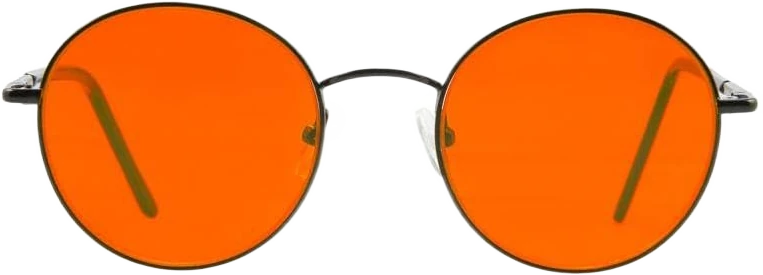
BLUblox Lennon Sleep+
If you want the maximum melatonin block and you're happy wearing deep red at night, this is the specialist's pick.
 04
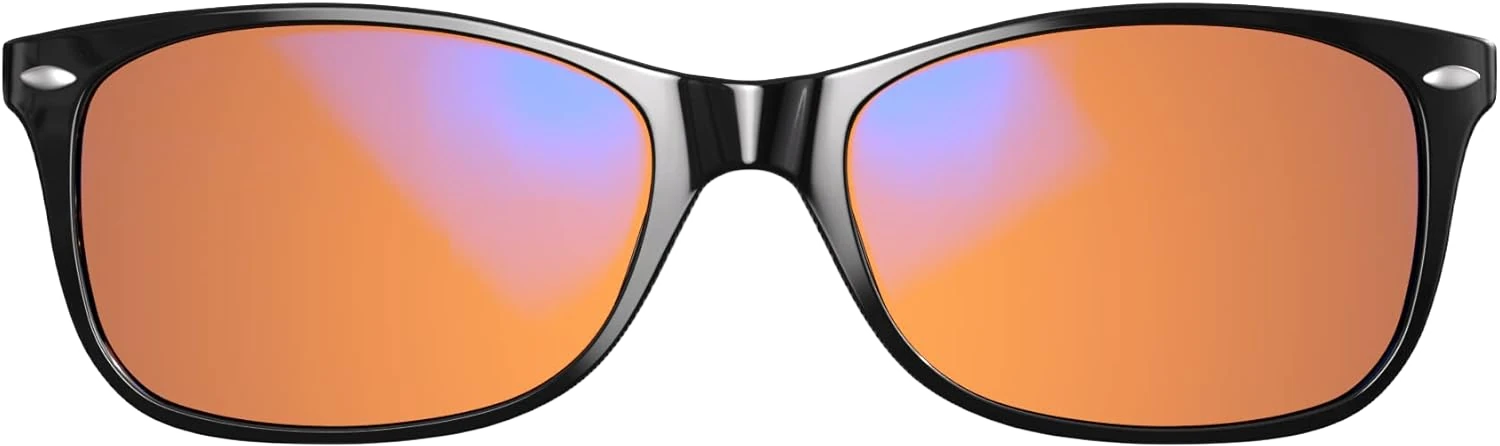
Swanwick Night Swannies
Swanwick is the sweet spot for most people who want better sleep without going full red-lens or full industrial.
 06
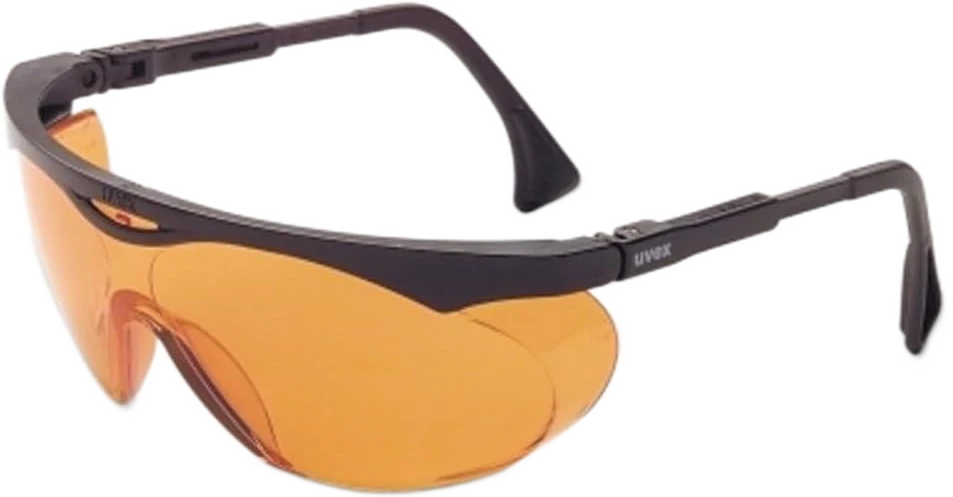
Uvex Skyper SCT-Orange
This is the honest budget answer, and it embarrasses a lot of pricier 'sleep' glasses.
Quick Answers
What makes the 'Sunset' lens different from ordinary blue-light glasses?
Spectrum coverage. Ordinary clear or light-yellow 'computer' lenses filter only a small slice of blue light and leave the melatonin-suppressing wavelengths (roughly 450-530 nm — blue AND green) largely intact, which is why they don't help sleep. The Sunset lens is a deep red/amber evening lens that blocks ~100% of blue and most green, removing essentially the entire band that suppresses melatonin. That's the difference between a daytime eye-comfort accessory and a genuine sleep tool — and it's why this pair tops our sleep-first ranking while beautifully made clear lenses land at the bottom.
When and how long should I wear them?
Put them on 2-3 hours before your target bedtime and keep them on until lights-out, every night. Timing is effectively the dose: evening light suppresses melatonin and pushes your body clock later (Gooley 2011), so the benefit comes from cutting that light during the wind-down window, consistently. A perfect lens worn for five minutes does nothing; this lens worn nightly for the pre-bed window is where the randomized-trial evidence (Burkhart 2009, Shechter 2018) says the payoff lives.
Can I wear them during the day or while driving?
No — and that's by design, not a flaw. The deep red/amber tint shifts colors heavily (whites look orange), which is exactly what removing the blue-green band looks like. That makes them unsuitable for daytime wear, night driving, or any task needing accurate color and full brightness. Treat them as a dedicated evening wind-down tool for home. If you want daytime screen comfort, that's a different product — a clear lens — and you shouldn't expect a clear lens to help sleep either.
Is the price justified over a $10 orange safety lens?
On raw melatonin protection, honestly, not by much — a Uvex SCT-Orange safety lens blocks ~98% of blue for a few dollars. What you're paying Ra Optics for is everything around the spectrum: a genuine pigment-in-lens tint with low optical distortion (not a surface film), a light, refined acetate frame you'll actually enjoy wearing for 2-3 hours every night, and proper hinge and build quality. Adherence is the hidden variable in sleep glasses — the pair that's comfortable and looks reasonable is the pair you'll keep wearing. If budget rules, buy the Uvex; if you want the version of this habit you'll sustain, this is the best pair we've tested.
Sources & Further Reading
4 sources — studies link to PubMed, product specs to the manufacturer
- [1] Gooley 2011 PMID 21193540 — Exposure to room light before bedtime suppresses melatonin onset and shortens melatonin duration in humans. Evening exposure to ordinary room light (vs dim light) suppressed melatonin in most subjects and shortened its duration — the mechanistic reason blocking evening light in the pre-bed window should help sleep. Studies light exposure, not this product.
- [2] Burkhart 2009 PMID 20030543 — Amber lenses to block blue light and improve sleep: a randomized trial. Randomized trial: amber blue-blocking lenses worn ~3 h before bed for 2 weeks improved sleep quality and mood versus yellow-tinted control lenses. Category-level evidence for the amber/red evening-lens approach this product uses — not a trial of this product.
- [3] Shechter 2018 PMID 29101797 — Blocking nocturnal blue light for insomnia: A randomized controlled trial. Randomized crossover RCT in adults with insomnia symptoms: amber lenses worn 2 h before bed for 7 nights improved sleep outcomes versus clear placebo lenses — supporting evening amber/red lenses as a safe, low-burden sleep aid.
- [4] Manufacturer specs 2026 — Product specifications (Sunset evening lens spectrum, acetate Clyde frame) from the Amazon listing. All product facts in this review — the deep red/amber Sunset lens, ~100% blue + most green blocking, premium acetate Clyde frame, and evening-use positioning — come from the manufacturer's Amazon listing (verified live 2026-07-20). Manufacturer specifications, not independent lab measurements.
Affiliate disclosure: every Amazon link uses our Associates tag (superachieverclub-20). We earn a small commission at no cost to you; it funds independent reviews. We never accept payment to change a ranking.