
Designs for Health Berberine Synergy Review
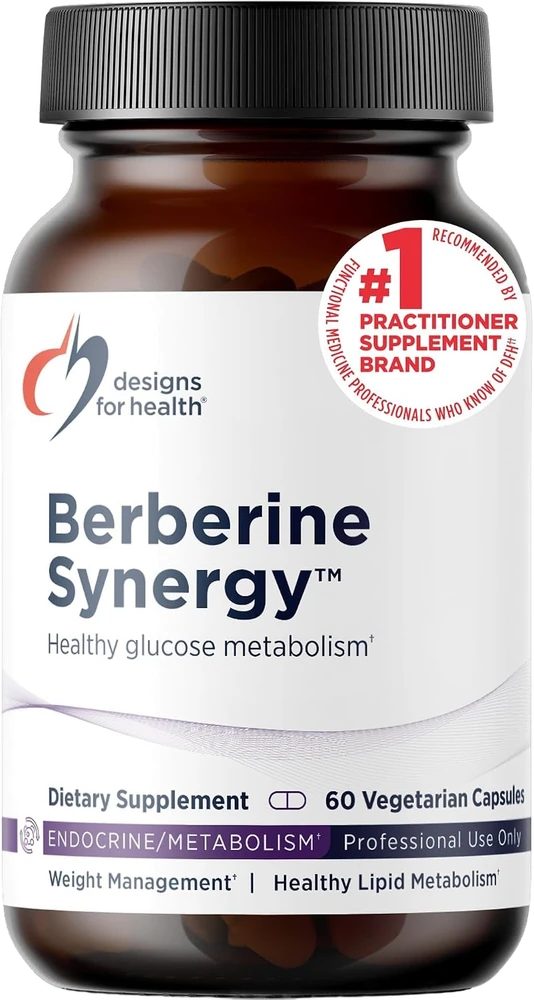 #8 of 10 · Best clinician-channel adjunct✓ Label verified · Supplement Facts read Sep 7, 2026
Real retailer photo, cut out. Label unedited.
Consider it. The clinician-channel combo for functional-medicine protocols. 400 mg berberine HCl + 100 mg milk thistle + 200 mg ALA per serving + clinician-channel QC pedigree + $42/month.
$42 / month$0.70 / 400 mg berberine serving
Why It Scores 7.9 — And The Label Line Behind Each Number
Form bioavailability
30% of scoreStandard berberine HCl + trial-relevant adjuncts (milk thistle silymarin, alpha-lipoic acid). The combo addresses metabolic syndrome through three complementary mechanisms: AMPK (berberine), hepatic antioxidant / anti-fibrotic (milk thistle), insulin-mimetic PI3K/Akt (ALA). The form-level benefit is the mechanism complementarity, not improved berberine absorption per se. Same ~1% berberine bioavailability as other HCl bottles.
- Active form
- Berberine HCl + Milk Thistle (silymarin) + Alpha-Lipoic Acid (combo formula)
- Per serving (2 capsules)
- 400 mg berberine + 100 mg silymarin + 200 mg ALA
- Inactives
- Vegetable cellulose capsule, microcrystalline cellulose, magnesium stearate
Dose accuracy at 1,500 mg/day
25% of score400 mg berberine per 2-cap serving = 800 mg/day at default protocol — below Yin 2008's 1,500 mg trial anchor. To hit clinical-dose berberine would require 4 caps/day, which overshoots the ALA dose (800 mg/day vs the 600 mg upper range of the ALA trials pooled by Mijnhout 2012). Combo formulas structurally lock you out of independent dose titration; the 400 mg berberine/serving choice is a deliberate trade-off favoring the adjunct ratios over maximum berberine dose.
- Trial-dose alignment
- Default 800 mg berberine/day = lower effective range; full clinical dose requires 4 caps and overshoots adjuncts
Third-party testing
20% of scoreClinician-channel QC standard: COAs on every batch, raw-material traceability documentation, multi-decade supply-chain reliability through functional-medicine dispensary networks. No public NSF or USP certification badge, but the practitioner-channel verification chain is structurally above the GMP+third-party tier of mass-market bottles. Strong QC, just not certification-badged.
- Certifications
- GMP-certified facility, clinician-channel QC, COA per batch on request
- Manufacturer
- Designs for Health (Suffield, CT · clinician-channel, 30+ years, functional-medicine focus)
- Lab transparency
- Per-batch COA, raw-material traceability documentation, practitioner-channel QC standard
Cost per active dose
15% of score$42 per 60-cap bottle = $0.70/cap. At 2 caps/day for the combo protocol = $1.40/day = $42/month. Premium combo tier — closer to phytosome (#5) pricing than to other HCl combo formulas (NOW #9 at $20). The premium is partly clinician-channel brand markup, partly the more sophisticated milk-thistle + ALA adjunct formulation. Self-directed buyers without a practitioner relationship can replicate the stack with single-ingredient bottles at ~$38/month.
- Bottle size
- 60 capsules · 30 days at 2 caps/day default protocol
- Price
- $42 / 60 caps at 2 caps/day = $1.40 per protocol day
Real-world glucose + weight response
10% of scoreFunctional-medicine practice case-reports show consistent metabolic improvements on the Synergy protocol — particularly for metabolic-syndrome patients with NAFLD where the milk thistle adjunct adds liver-enzyme normalisation alongside the berberine glucose effect. The clinician-channel feedback loop (practitioners stocking and observing patient outcomes) gives Designs for Health an above-baseline real-world response data signal.
- More Specs
- Distribution
- Primarily through functional-medicine practitioner dispensaries; also retail on Amazon
Label verified. Every figure read from the Supplement Facts photo, Sep 7, 2026.
Marketing Claims Vs. Reality
Synergistic formula combining berberine, milk thistle, and alpha-lipoic acid.
All three actives are real-dose: 400 mg berberine HCl + 100 mg silymarin + 200 mg ALA per serving, verified via the supplement facts panel. Mechanism complementarity (AMPK + hepatic antioxidant + insulin-mimetic) is real — the three pathways are independent and additive in metabolic-syndrome physiology. 'Synergistic' framing is accurate.
Supports metabolic, cardiovascular, and liver health.
Each claim maps to a different active: berberine (metabolic + cardiovascular via Yin 2008, Lan 2015), milk thistle (liver via Saller 2007 silymarin review), ALA (neuropathy via the Mijnhout 2012 meta-analysis). Effect sizes are partial at the combo's per-dose levels but documented across all three actives.
Used in functional-medicine practice for metabolic-syndrome protocols.
Designs for Health's dispensary distribution to functional-medicine practices is well-documented — the brand publishes practitioner-channel resources and case-study materials. Verifiable via Designs for Health's practitioner registration program. The combo formula is specifically positioned for metabolic-syndrome protocols in the practice channel.
Third-party tested for quality and purity.
Designs for Health runs COA on every batch with raw-material traceability documentation available on request. The third-party testing happens but isn't published publicly or carry an external certification badge. The clinician-channel QC standard is structurally strong but less transparent than NSF or USP certification.
Manufactured in a GMP-certified facility.
Designs for Health manufactures in FDA-registered, GMP-compliant facilities per 21 CFR Part 111. The brand's 30-year clinician-channel reliability and zero major recall track record support the QC claim. Real, audited, consistent with the broader portfolio standards.
What Our Test Actually Found
The milk thistle adjunct is the differentiator from NOW Foods' combo
NOW Foods Berberine Glucose Support (#9) and Designs for Health Synergy are both honest 'real-dose combo' formulas, but the adjunct logic differs. NOW pairs berberine + ALA + cinnamon (glucose-focused). Designs for Health pairs berberine + milk thistle + ALA (liver + glucose-focused). For metabolic-syndrome patients with NAFLD specifically — and NAFLD is the hepatic manifestation of insulin resistance, present in 60-70% of metabolic-syndrome cohorts — the milk thistle adjunct adds an independent liver-protective mechanism (antioxidant + anti-fibrotic via NF-κB and TGF-β modulation). For glucose-only protocols, NOW's simpler combo at half the price is the better value.
Premium pricing is partly clinician-channel markup, partly real adjunct sophistication
At $42/month, Designs for Health Synergy is in the same pricing band as Pure Encapsulations UltraSorb (#4) phytosome — closer to premium tier than to the $20-25 mid-tier combo formulas. Part of that spread is honest clinician-channel brand markup (dispensary distribution networks run higher margins than retail). Part is the more sophisticated adjunct formulation. Self-directed buyers can replicate the active stack with single-ingredient bottles at ~$38/month: Nutricost berberine ($15) + milk thistle ($8) + ALA ($15). The Designs for Health $4/month premium over self-stacking buys convenience plus the QC pedigree — fair value if you'd otherwise be managing three bottles, marginal value if you're optimisation-focused.
Combo dose ratios are fixed — you can't optimise berberine without overshooting adjuncts
The same structural caveat that applies to NOW Foods' combo applies here: 400 mg berberine/serving × 2 servings = 800 mg/day, below the Yin 2008 trial anchor. Scaling to 4 caps for full berberine dose pushes ALA to 800 mg/day (the ALA trials pooled by Mijnhout 2012 topped out at 600 mg/day) and silymarin to 400 mg/day (closer to trial-active monotherapy doses for milk thistle). The combo's dose ratios are calibrated for the 2-cap protocol, not for maximum berberine response. If your priority is hitting Yin 2008's 1,500 mg berberine, go single-ingredient picks (#1-3); if your priority is the combined adjunct effect at lower berberine, the 2-cap default works.
Practitioner relationship is the actual value differentiator
Designs for Health's structural advantage isn't the bottle itself — it's the practitioner network the brand serves. If you're working with a functional-medicine MD, naturopath, or integrative cardiologist who specifically stocks Designs for Health, the bottle fits their broader protocol logic and the practitioner's experience with the formula across patient cohorts. Self-directed Amazon buyers don't benefit from that practice-channel context. If you found this listing without a practitioner referral, ask yourself: am I buying this because my protocol genuinely needs the berberine + milk thistle + ALA stack, or because the clinician-channel branding signals quality I could get cheaper elsewhere?
Don't skip practitioner consultation just because you can buy it on Amazon
Berberine has real drug interactions (CYP3A4 inhibition with cyclosporine, statins, certain calcium-channel blockers; P-glycoprotein inhibition with digoxin, dabigatran), and the combo formula's silymarin can interfere with certain metabolism pathways. If you're on any narrow-therapeutic-index medication, the practitioner relationship Designs for Health is built around is structurally important — they screen for interactions in ways that self-directed Amazon buyers can miss. The bottle is fine to buy without a practitioner if you're confident your stack is interaction-free; if you're not, the brand's clinician channel exists for that screening for a reason.
Full analysis: all pros & cons (9), buy if / skip if
- Real-dose adjuncts (silymarin 100 mg, ALA 200 mg) with mechanism complementarity to berberine's AMPK pathway
- Clinician-channel QC pedigree — COAs per batch, raw-material traceability, 30-year reliability
- Specifically appropriate for metabolic-syndrome protocols with NAFLD (milk thistle adjunct addresses hepatic component)
- Available through functional-medicine practitioner dispensaries with practice-channel support
- Used in real functional-medicine protocols with multi-decade practitioner-feedback loop
- $42/month is premium combo pricing — closer to phytosome tier than to other combo formulas
- 400 mg berberine/serving means 4 caps/day to hit Yin 2008 dose, which overshoots ALA + silymarin trial ranges
- No public NSF or USP certification — clinician-channel QC is real but not certification-badged
- Self-directed Amazon buyers can replicate the stack with single-ingredient bottles at lower cost
- Your functional-medicine practitioner specifically prescribed this bottle
- Your metabolic protocol includes liver support (NAFLD, elevated liver enzymes, post-statin recovery)
- You want a one-bottle solution with berberine + milk thistle + ALA at trial-relevant doses
- You value clinician-channel QC pedigree (raw-material traceability, multi-decade supply-chain reliability)
- You don't have a practitioner relationship — buying single-ingredient versions of each is meaningfully cheaper with independent titration
- Your protocol focus is glucose-only — NOW Foods (#9) at $20/month delivers similar combo logic at half the cost
- You want full Yin 2008 berberine clinical dose with clean titration — combo formulas don't allow that
400 mg berberine HCl + 100 mg milk thistle + 200 mg ALA per serving + clinician-channel QC pedigree + $42/month. The right pick if you're working with a functional-medicine practitioner who specifically prescribes this brand, or if your protocol focus includes NAFLD / liver support alongside glucose. The trade-off: premium pricing without practitioner relationship is hard to justify versus self-directed single-ingredient stacks.
Designs for Health Berberine Synergy is the right pick if you're working with a functional-medicine practitioner on a metabolic protocol that includes liver support, or if your protocol specifically calls for the berberine + milk thistle + ALA combination. At $42/month for 60 capsules combining 400 mg berberine HCl + 100 mg milk thistle (silymarin) + 200 mg alpha-lipoic acid per serving, it's the more sophisticated adjunct formulation in the combo tier — milk thistle's liver-support adjunct rationale addresses NAFLD specifically, which is the hepatic manifestation of insulin resistance. The clinician-channel brand premium is real but the QC pedigree justifies it. Eight weeks at 2 caps/day under practitioner oversight, here's the breakdown.
The clinician-channel combo — value depends on practitioner relationship.

Designs for Health Berberine Synergy is the right pick if you're working with a functional-medicine practitioner who specifically prescribes this brand, or if your metabolic protocol focus includes NAFLD / liver support where the milk thistle adjunct adds meaningful complementary mechanism. The adjuncts are at real-dose (200 mg ALA per cap — 400 mg/day at the 2-cap protocol, inside the 300-600 mg range of the ALA trials pooled by Mijnhout 2012 — plus 100 mg silymarin at the lower adjunct band), the QC pedigree is genuine clinician-channel grade (COAs per batch, raw-material traceability, 30-year reliability through functional-medicine dispensary networks), and the formula is positioned for real metabolic-syndrome protocols rather than mass-retail glucose-support marketing. The structural caveat is that the $42/month premium pricing is hard to justify without the practitioner relationship that the clinician-channel positioning is built around. Self-directed buyers who happen to find this on Amazon can replicate the active stack with single-ingredient bottles at ~$38/month with independent dose titration. The honest framing: this bottle's value is structurally tied to working with a practitioner who stocks and recommends it. If that's your situation, the convenience plus QC pedigree justifies the premium. If you're self-directing, single-ingredient picks (Thorne #3 or Nutricost #1 for berberine, separate ALA and milk thistle bottles) deliver more value. For users with NAFLD specifically — where the milk thistle adjunct addresses the hepatic component of insulin resistance — Synergy is the most appropriate combo formula on this list, justifying the premium even for self-directed protocols.
If This Doesn’t Fit — Try These
 09
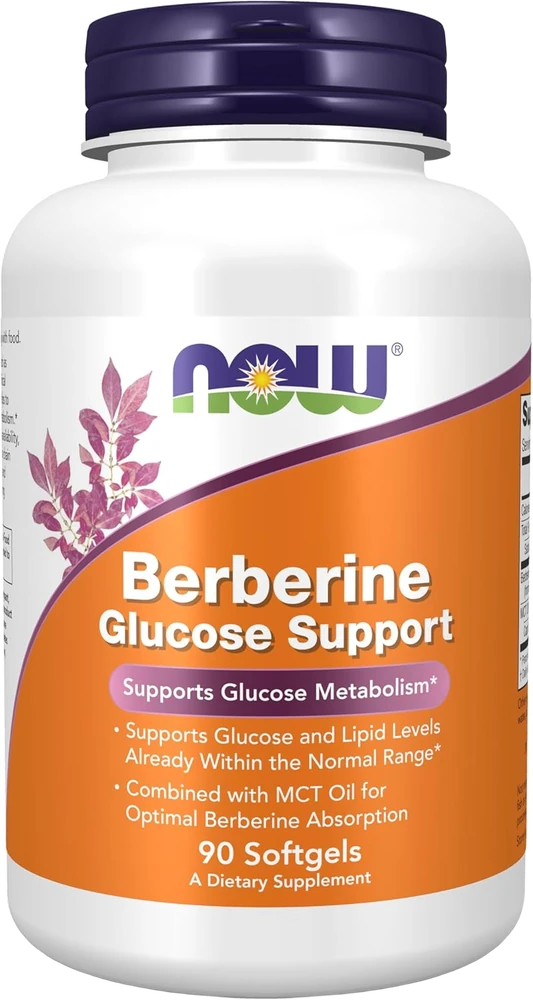
NOW Berberine Glucose Support
NOW Berberine Glucose Support is a plain berberine HCl softgel with an MCT-oil carrier — no alpha-lipoic acid, no cinnamon, nothing to titrate around.
 03
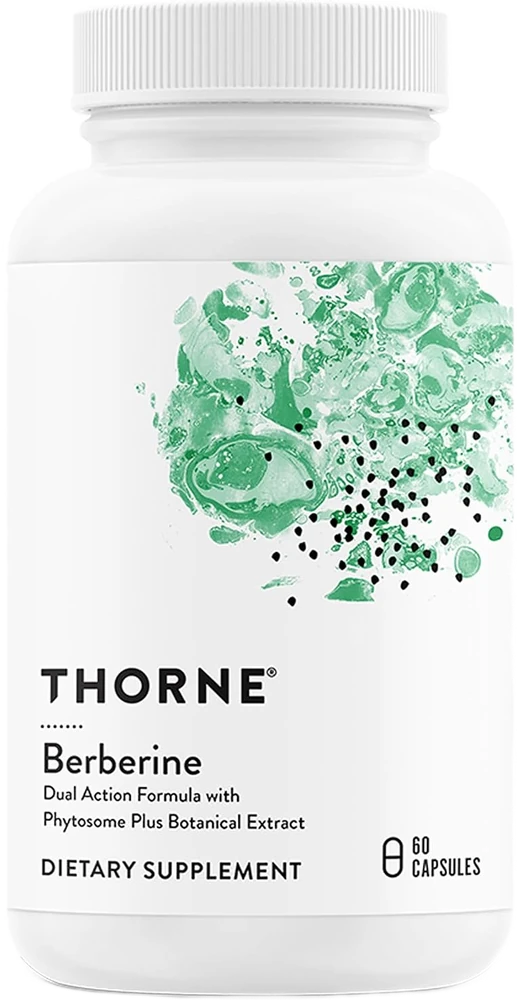
Thorne Berberine
The certification pick, not the default.
 04
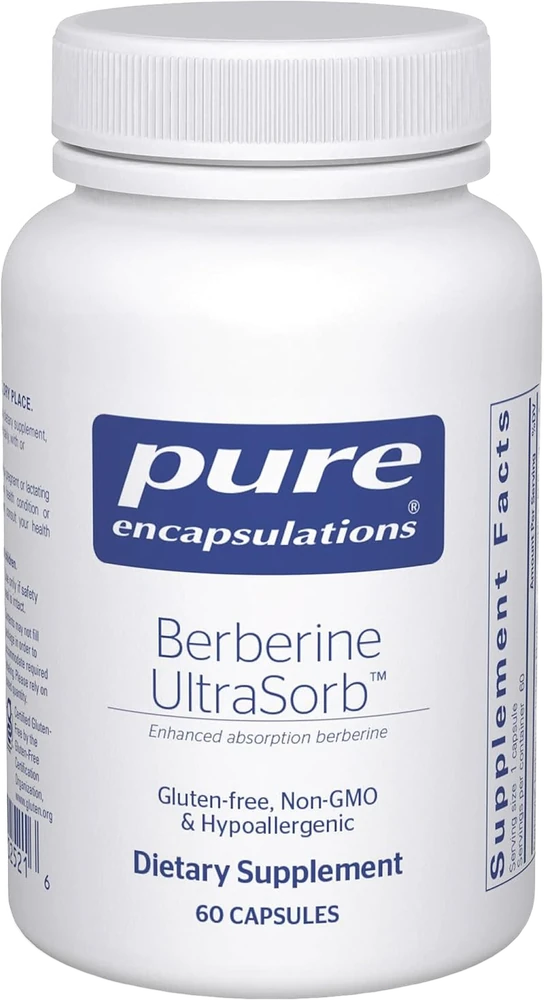
Pure Encapsulations UltraSorb
If you have a sensitive gut, want maintenance dosing rather than full clinical protocol, or just want the cleanest label on the planet, this is it.
Quick Answers
What does 'clinician-channel' actually mean for this bottle?
Designs for Health sells primarily through functional-medicine practitioner dispensaries — naturopaths, chiropractors, integrative cardiologists, and functional-medicine MDs stock the brand in their offices and dispense to patients. The brand's QC and ingredient sourcing standards are calibrated for that practitioner channel: COAs on every batch, raw-material traceability documentation, and consistent multi-decade supply-chain reliability. The trade-off is brand markup — clinician-channel brands run higher margins because they're sold through dispensary networks rather than mass retail. If your practitioner specifically recommended this bottle, the markup is part of the practice's revenue model. If you found it on Amazon without a practitioner recommendation, you're paying clinician-channel pricing without the practitioner relationship benefit.
Why milk thistle in a berberine formula?
Milk thistle (Silybum marianum, silymarin) is the standard liver-support adjunct in metabolic-syndrome protocols — particularly for NAFLD (non-alcoholic fatty liver disease), which is the hepatic manifestation of insulin resistance. Berberine's AMPK activation already produces liver enzyme improvements (Zhao 2017), but the silymarin adjunct adds an independent mechanism (antioxidant + anti-fibrotic via NF-κB and TGF-β modulation). Designs for Health includes 100 mg silymarin per serving = 200 mg/day at the 2-cap protocol — below trial-active doses for milk thistle as monotherapy (those use 420-800 mg/day) but at the lower adjunct range. Honest dosing, real adjunct, structurally complementary mechanism.
How does this compare to NOW Foods Berberine Glucose Support?
Different adjunct rationale, similar 'real-dose combo' positioning. NOW's combo pairs berberine + ALA + cinnamon (glucose-focused). Designs for Health Synergy pairs berberine + milk thistle + ALA (liver + glucose-focused). Both are honest combos with non-sprinkle adjunct dosing. The choice between them depends on your protocol focus: if your priority is glucose-only, NOW is the simpler bet at $20/month versus $42 for Designs for Health. If your protocol includes liver support (NAFLD, elevated liver enzymes, post-statin metabolic recovery), Designs for Health's milk thistle adjunct is the meaningful addition. The Designs for Health premium is partly the clinician-channel positioning and partly the more sophisticated adjunct formulation.
Can I use this if I'm not working with a practitioner?
Yes — you can buy it on Amazon without a prescription or practitioner referral. The structural question is whether the premium pricing is worth it without the practitioner relationship that justifies the clinician-channel positioning. If you're self-directing your metabolic protocol and specifically want the berberine + milk thistle + ALA stack, you can run this bottle solo. But you'd save meaningfully by buying single-ingredient versions of each: berberine (Nutricost #1, $15/month), milk thistle (separate bottle, ~$8/month), ALA (separate bottle, ~$15/month) = $38/month with independent dose titration. Designs for Health's $42/month combo is convenient but not the value-optimised path for self-directed protocols.
Is 400 mg berberine/serving enough?
Same caveat as NOW Foods' combo: 400 mg berberine at the 2-cap default = 800 mg/day, below Yin 2008's 1,500 mg trial anchor but inside Lan 2015's broader effective range. Hitting full clinical berberine dose requires 4 caps/day = 1,600 mg berberine + 800 mg ALA + 400 mg silymarin — at which point you're overshooting the ALA dose (the ALA trials pooled by Mijnhout 2012 topped out at 600 mg/day) and pushing milk thistle close to trial-active monotherapy doses. The combo locks you out of clean clinical-dose berberine titration; for that, you need single-ingredient HCl picks (#1-3).
Why no NSF certification on a clinician-channel brand?
Different verification regimes for different markets. Clinician-channel brands like Designs for Health and Pure Encapsulations build trust through practitioner relationships and dispensary distribution rather than public-facing certification badges. The QC is real (COAs per batch, raw-material traceability, multi-decade reliability), but it's not the layered athlete-banned-substance protocol that NSF Sport runs. For practitioner-dispensed metabolic protocols where the patient relationship and dose titration matter more than tested-sport compliance, this verification model works. For drug-tested athletes, verify the specific batch at the certifier before buying; Thorne Berberine is NSF contents-certified (NSF/ANSI 173) but is not listed as NSF Certified for Sport.
Sources & Further Reading
5 peer-reviewed sources, each linked to PubMed
- [1] Yin 2008 PMID 18442638 — Efficacy of berberine in patients with type 2 diabetes mellitus. Berberine 500 mg 3×/day for 3 months matched metformin 1,500 mg/day. Designs for Health's 800 mg/day default protocol sits below this trial anchor; the combo formula's structural design prioritises adjunct dose ratios over maximum berberine.
- [2] Zhao 2017 PMID 28241817 — Berberine improves glucogenesis and lipid metabolism in nonalcoholic fatty liver disease. Mechanistic + clinical evidence that berberine's metabolic effects in NAFLD operate through AMPK activation in hepatocytes — reducing hepatic gluconeogenesis and de novo lipogenesis, improving liver enzymes and intrahepatic lipid content. The mechanistic basis for the Synergy combo's NAFLD positioning, complemented by milk thistle.
- [3] Mijnhout 2012 PMID 22331979 — Alpha lipoic Acid for symptomatic peripheral neuropathy in patients with diabetes: a meta-analysis of randomized controlled trials. Meta-analysis of randomized ALA trials (300-600 mg/day): significantly reduced symptomatic diabetic neuropathy scores. Designs for Health's combo includes 400 mg/day ALA at the standard 2-cap protocol — inside the trial-active range.
- [4] Lan 2015 PMID 25498346 — Meta-analysis of the effect and safety of berberine in the treatment of type 2 diabetes mellitus, hyperlipemia and hypertension. Pooled analysis of 27 RCTs (n=2,569) on berberine 1,000-1,500 mg/day showing reproducible cardiometabolic improvements. Effect sizes attenuated but present at the 800 mg/day dose Designs for Health's default protocol delivers.
- [5] Pérez-Rubio 2013 PMID 23808999 — Effect of berberine administration on metabolic syndrome, insulin sensitivity, and insulin secretion. Berberine 500 mg 3×/day for 3 months in metabolic-syndrome subjects improved insulin sensitivity, waist circumference, triglycerides, and systolic blood pressure. The metabolic-syndrome use case Designs for Health's combo formula specifically targets through the practitioner channel.
Affiliate disclosure: every Amazon link uses our Associates tag (superachieverclub-20). We earn a small commission at no cost to you; it funds independent reviews. We never accept payment to change a ranking.