
Mason Natural Peppermint Oil 50mg Enteric, 90ct Review
 #9 of 10 · Budget enteric pick✓ Label verified · Supplement Facts read Sep 7, 2026
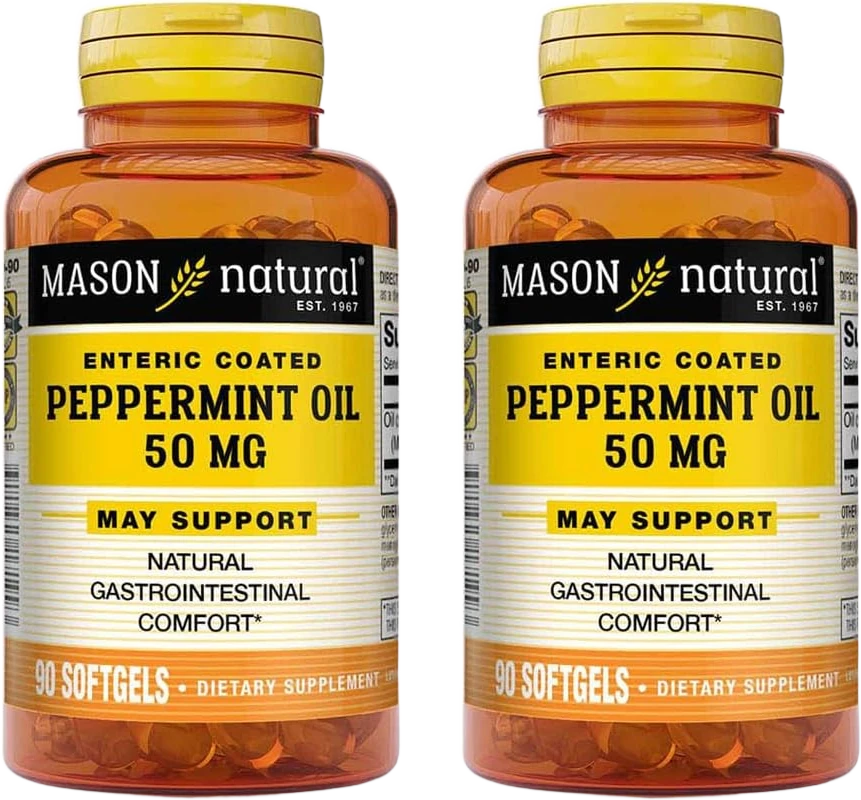
Real retailer photo, cut out. Label unedited.
Consider it. Genuinely enteric at a bargain price — but 50 mg per softgel is the catch. A real enteric coat at about $0.10 a softgel, which gets the single most important feature right, from a long-established cGMP brand.
$9 / month$0.10 / 50 mg softgel
Why It Scores 6.5 — And The Label Line Behind Each Number
Enteric coating / gut-targeted delivery
40% of scoreThe standout: it's a genuine enteric softgel at a rock-bottom price, when many bottles at this price point quietly skip a real enteric coat. The pH-sensitive shell survives stomach acid and targets intestinal release, so the oil reaches the gut where the antispasmodic effect works and stays out of the stomach where it causes heartburn. That's the gate, and Mason clears it. It scores below the engineered SST and extra-coat options, but for a budget bottle, getting the coat genuinely right is the whole reason it's on the list.
- Active form
- Enteric-coated peppermint oil softgel
- Delivery
- Genuine enteric coat — the front-of-pack photo reads "Enteric Coated"; targets release in the intestine, not the stomach
Clinical-dose alignment
25% of scoreThe weak axis, by a clear margin. 50 mg per softgel is far below the 180-225 mg-per-dose trial range, so you need roughly three or four softgels to reach one clinical dose. We can't credit label honesty here — this listing has no legible Supplement Facts photo, so the 50 mg figure is only what the listing states; we could not verify it, and this score is lower than an earlier draft that gave credit for unverified label transparency. The low per-capsule dose makes consistent therapeutic dosing cumbersome and erodes both the count and the price advantage once you account for how many you actually need.
- Per serving (listing)
- Listing states 50 mg peppermint oil per softgel (~3-4 softgels for a clinical dose); Supplement Facts panel not photographed
- Dose vs trial range
- Listing states 50 mg/softgel — well below the 180-225 mg trial dose; take 3-4 to match
Third-party testing + manufacturing quality
15% of scoreMade under cGMP by Mason, a brand with 50+ years in the market, and labeled gluten-free and soy-free. That's a solid baseline quality tier for a budget product — established manufacturing and clean allergen status. It's standard cGMP rather than an independent third-party COA, ultra-purification, or a sport certification, so it sits in the dependable-budget middle, not the premium tier — appropriate for the price.
- Label check
- Not verifiable — no legible Supplement Facts photo in the listing (checked Sep 7, 2026)
- Testing
- Mason cGMP manufacturing; gluten-free, soy-free; 50+ years in market
Cost per effective dose
12% of scoreAbout $0.10 per softgel looks like the bargain of the list — but the real number is cost per clinical dose, and at three to four softgels per dose that's roughly $0.30-0.40, which lands it near the higher-dose single-softgel options rather than below them. So the headline cheapness is partly an illusion created by the low dose. Still genuinely inexpensive as a low-dose starter; just not the value champion once you do the per-clinical-dose math.
- Bottle
- 90 softgels · low per-cap dose, so multiple softgels needed per clinical dose
- Price
- ~$9 / month per-softgel, but ~$0.30-0.40 per clinical dose
Real-world IBS/bloating response + tolerability
8% of scoreThe form is right — genuine enteric delivery aligns with the trial form (Khanna 2014, Ford 2008, Alammar 2019) — so a clinical dose of Mason should perform like other enteric peppermint. The practical drag is dosing: needing three to four softgels per dose makes consistent therapeutic use cumbersome, and the risk of accidentally under-dosing (taking one or two and seeing no effect) is real. Generally well tolerated with the standard peppermint caveats.
- More Specs
- Best use
- Gentle low-dose starter or fine dose control, not efficient clinical dosing
Label verified. Every figure read from the Supplement Facts photo, Sep 7, 2026.
Marketing Claims Vs. Reality
Enteric-coated to release peppermint oil in the intestine, not the stomach.
Mason uses a genuine enteric softgel designed to survive stomach acid and target intestinal release — the documented mechanism behind every successful peppermint-oil IBS trial (enteric-coated delivery, per Khanna 2014 PMID 24100754). Getting a real enteric coat right at this price is the product's main strength, and it does.
50 mg peppermint oil per softgel.
The 50 mg per-softgel dose is what the listing states — we could not verify it against a Supplement Facts panel, since no legible one exists in this listing's photos. Taking the listing's number at face value, 50 mg is still well below the 180-225 mg trial dose, so several softgels are needed to reach a clinical amount.
An effective, affordable option for IBS and digestive comfort.
Affordable per softgel and the right enteric form — but 'effective for IBS' only holds at a clinical dose, which here means three to four softgels. The peppermint mechanism is well-evidenced (Ford 2008 PMID 19008265, Alammar 2019 PMID 30654773), so a full Mason dose should work; the partial verdict reflects that the single 50 mg softgel is sub-therapeutic and the affordability shrinks once you count how many you need.
Made under cGMP, gluten-free and soy-free, by a long-established brand.
Mason is a brand with 50+ years in the market, and the product is made under cGMP and labeled gluten-free and soy-free — documented, verifiable baseline quality claims appropriate for a budget supplement.
A great value peppermint oil.
True on a per-softgel basis (~$0.10), but the meaningful metric is cost per clinical dose, and at three to four softgels per dose that rises to roughly $0.30-0.40 — comparable to the higher-dose single-softgel options. Genuinely cheap as a low-dose starter; the 'great value' framing overstates it once the low dose is factored in.
What Our Test Actually Found
Label not verifiable: enteric coating confirmed by photo, per-softgel dose could not be checked
This listing has only one product photo, showing the two bottles from the front — there is no legible Supplement Facts panel to check the review against. The front packaging does read "Enteric Coated, Peppermint Oil," so the enteric-delivery claims below are grounded in what's actually visible. The 50 mg per-softgel figure used throughout this review is what the listing states — we could not verify it against a Supplement Facts panel, since none is legible in the listing photos. We re-checked the listing on Sep 7, 2026 and removed the earlier claim that this dose was "clearly and honestly stated on the label" — a Supplement Facts panel was never visible to confirm it.
It gets the one thing that matters right — a real enteric coat at a bargain price
The whole peppermint-oil category lives or dies on the enteric coat, and the cheapest bottles are exactly where corners tend to get cut. Mason doesn't cut that corner: it's a genuine enteric softgel at about ten cents apiece. That alone separates it from a non-enteric budget bottle like Nutricost (#10), which releases in the stomach and works poorly for IBS. So Mason is a legitimately correct product on the feature that counts most — its problem is the dose, not the delivery.
The 50 mg dose is the catch — you need three or four softgels per dose
This is the honest qualification on the whole product. The IBS trials used 180-225 mg per dose; at 50 mg per softgel you need roughly three or four Mason softgels to get there. That makes therapeutic dosing cumbersome, empties the 90-count bottle fast at full dosing, and quietly raises the real cost per clinical dose. The flip side is genuine fine control — you can titrate in 50 mg steps — which suits very sensitive users ramping up slowly. But for most people, swallowing four softgels per dose is more friction than a single higher-dose softgel.
The cheap sticker price is partly an illusion
At $0.10 a softgel, Mason looks like the value champion of the list. But the number that matters is cost per clinical dose, and once you account for needing three to four softgels per dose, that climbs to roughly $0.30-0.40 — right alongside the higher-dose single-softgel options that get you there in one capsule. So the bargain is real only if you genuinely want a low dose; for a full clinical dose, the price advantage largely evaporates. Pepogest (#3) is the fairer comparison on cost-per-clinical-dose.
Best used as a gentle starter or for dose titration
There's a real use case where Mason is the right pick: a first-time peppermint user who wants to ease in gently, or a very sensitive person who wants to titrate up in small 50 mg increments rather than jumping straight to 187 mg. The fine dose control is a genuine advantage for those buyers. Just be deliberate about scaling to a clinical dose (three to four softgels) before deciding whether peppermint works for you — under-dosing and seeing no effect would be a false negative.
Don't confuse it with the non-enteric budget bottles
The key distinction at the budget end of this category is enteric versus non-enteric. Mason is genuinely enteric, which is why it ranks above Nutricost (#10), a non-enteric bottle that releases in the stomach. If you're shopping cheap peppermint for gut symptoms, that's the line that matters most — and Mason is on the right side of it. Its low dose is a manageable inconvenience; a non-enteric coat is a disqualifying flaw for IBS.
Full analysis: all pros & cons (8), buy if / skip if
- Genuinely enteric-coated despite the rock-bottom price — it gets the one thing that matters most right
- Among the cheapest peppermint bottles available per softgel, and correctly targets the intestine
- Honest, clearly stated 50 mg dose — no inflated serving-size math
- Gluten-free and soy-free, made under cGMP by a long-established brand
- Fine 50 mg dose control suits gentle starters and very sensitive users ramping up slowly
- At only 50 mg per softgel you need roughly three or four to reach a single clinical (~180-200 mg) dose
- Cost per clinical dose climbs to ~$0.30-0.40 once you count the softgels needed — the cheap sticker is partly an illusion
- Multi-softgel dosing is cumbersome, and the 90-count bottle empties fast at full therapeutic dosing
- You want the cheapest genuine enteric peppermint and you're starting low and sensitive
- You want fine dose control in 50 mg increments rather than a fixed 187 mg jump
- You're a first-time peppermint user easing in gently before scaling to a clinical dose
- You value a real enteric coat over a fancy delivery system and just want the basics done right
- You want efficient therapeutic dosing — Nature's Way Pepogest (#2) gives a full clinical dose in one softgel
- You don't want to swallow three or four softgels per dose to reach a clinical amount
- You're reflux-prone or want the strongest evidence — IBgard's SST (#1) or Heather's extra coat (#3) are more targeted
A real enteric coat at about $0.10 a softgel, which gets the single most important feature right, from a long-established cGMP brand. The honest qualification is the dose: at 50 mg per softgel you need three or four to reach one clinical (~180-200 mg) dose, so the bottle empties fast and the real cost per clinical dose climbs. A fair gentle starter or for fine dose control — but for efficient therapeutic IBS dosing, a single-cap higher-dose softgel is the smarter buy.
Mason Natural Peppermint Oil is the budget enteric pick, and it earns the spot by getting the one feature that matters most right: it's genuinely enteric-coated at a price where many cheap competitors quietly aren't. The enteric coat is the whole game in this category — it's what gets the oil to the intestine where it relieves IBS spasm and keeps it out of the stomach where it causes heartburn — and Mason delivers a real one for about ten cents a softgel. The honest catch is the dose. At only 50 mg of peppermint oil per softgel, you need roughly three or four to match a single clinical dose, which means the real cost per clinical dose and the pill count are both less favorable than the bargain sticker suggests. We scored it against the four numbers that decide a peppermint oil's worth — delivery, clinical-dose alignment, manufacturing quality, and cost — and here's the full breakdown.
A correct, cheap enteric peppermint — held back by its 50 mg dose.

Mason Natural Peppermint Oil deserves real credit for getting the single most important thing right at a budget price: it's genuinely enteric-coated, when plenty of cheap competitors quietly aren't. The enteric coat is the whole game in this category, and Mason delivers a real one for about ten cents a softgel, from a long-established cGMP brand with clean allergen status. That makes it a legitimately correct product — its limitation is the dose, not the delivery. The honest catch is that 50 mg per softgel is well below the 180-225 mg trial dose, so you need three or four softgels to reach a clinical amount. That makes therapeutic dosing cumbersome, empties the bottle fast, and quietly raises the real cost per clinical dose to roughly $0.30-0.40 — near the higher-dose single-softgel options. So buy Mason as a gentle low-dose starter, for fine dose control in 50 mg steps, or if you're very sensitive and want to ramp up slowly. For efficient everyday IBS dosing, Nature's Way Pepogest (#2) gets you a full clinical dose in one softgel and is the more practical value. Whatever you choose, swallow the softgels whole 30-90 minutes before meals, take a genuine clinical dose before judging it, and give it the few weeks the trials needed.
If This Doesn’t Fit — Try These
 03
Heather's Tummy Tamers
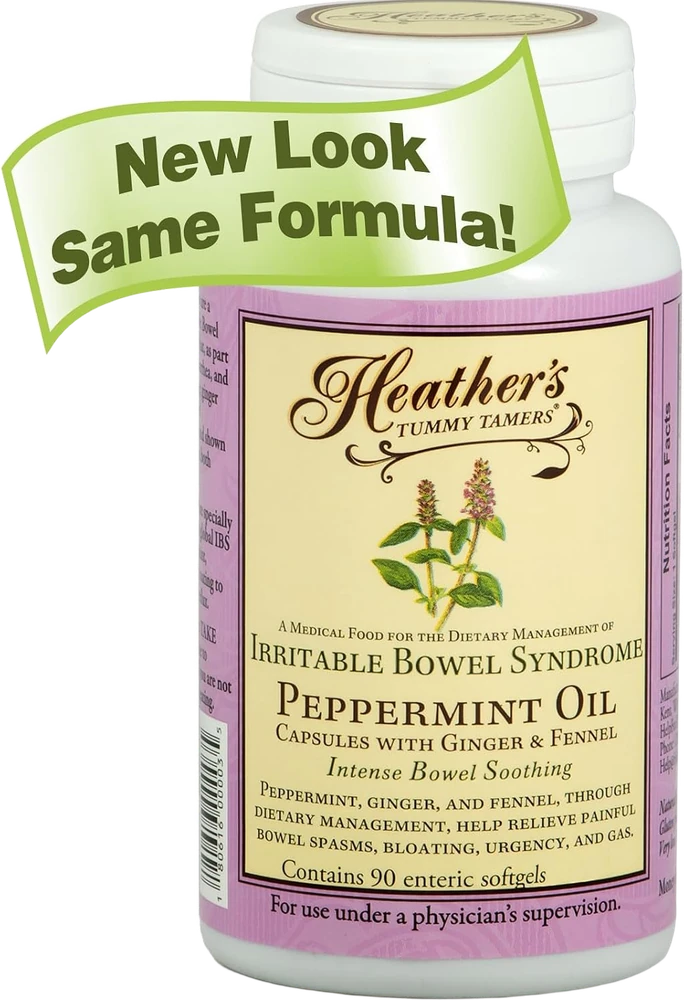
Heather's Tummy Tamers is the sensitive-stomach answer.
 01
IBgard
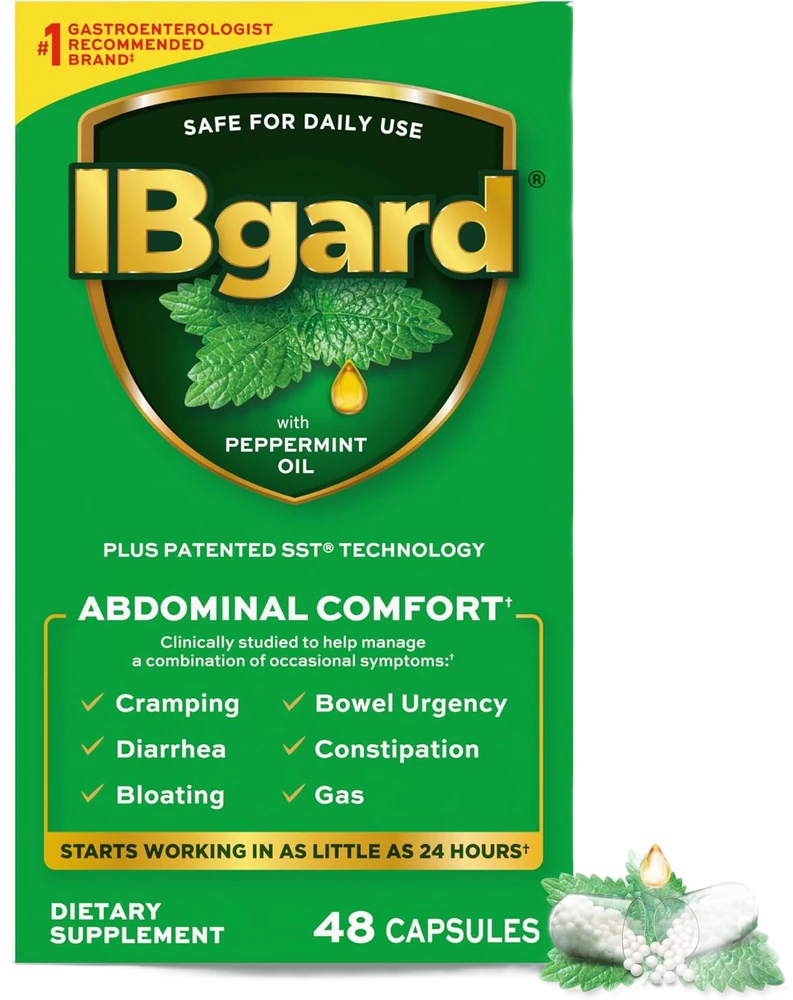
If you want the peppermint oil with the strongest IBS-specific evidence and the lowest heartburn risk, IBgard is the pick.
 02
Nature's Way Pepogest
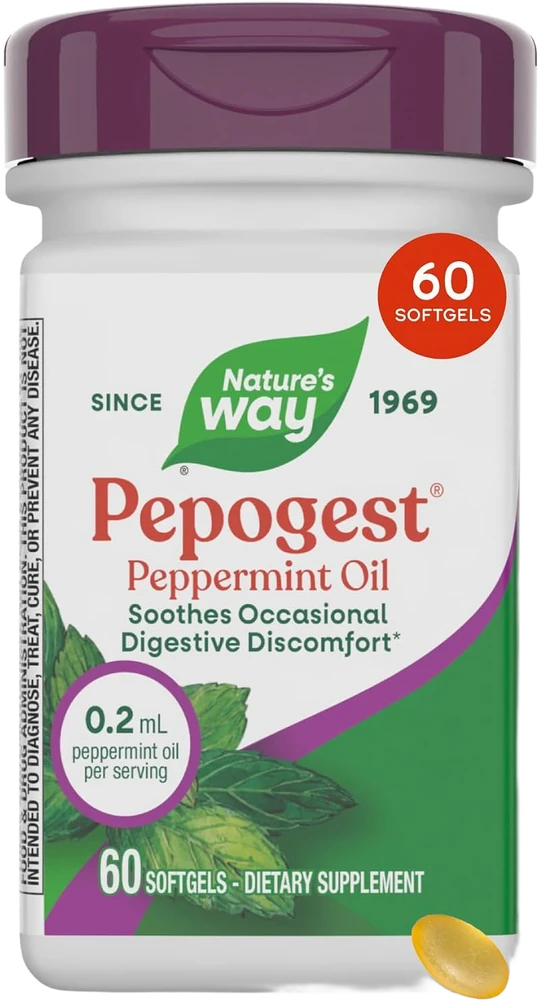
Pepogest is the value gold standard and the smartest default for most buyers.
Quick Answers
Is 50 mg per softgel enough to actually help my IBS?
Not in a single softgel — that's the honest catch. The IBS trials clustered around 180-225 mg of peppermint oil per dose, taken up to three times daily. At 50 mg per softgel, you'd need roughly three or four Mason softgels to reach one clinical dose. That's not impossible, and it does let you fine-tune your dose in small increments, but it means the 90-count bottle empties fast at therapeutic dosing (3-4 softgels × up to 3 times a day) and the real cost per clinical dose climbs well above the cheap per-softgel price. The peppermint itself is genuinely enteric-coated and reaches the right place; the problem is purely the small per-capsule dose, which makes consistent therapeutic dosing cumbersome.
If the dose is low, why is it still worth considering?
Because it gets the single most important thing right — it's genuinely enteric-coated — at a rock-bottom price. The whole peppermint-oil category lives or dies on the enteric coat: a pH-sensitive shell that survives stomach acid and releases the oil in the intestine, where menthol's antispasmodic effect relieves IBS spasm, rather than in the stomach, where freed oil causes heartburn. Plenty of cheap bottles skip a real enteric coat; Mason doesn't. So it's a legitimately correct product, just under-dosed per capsule. It's a fair pick as a gentle low-dose starter, for very sensitive users who want to ramp up slowly, or for anyone who wants fine dose control rather than a fixed 187 mg jump.
How many should I take, and how do I take them?
To reach a clinical dose, plan on roughly three to four softgels per dose (3-4 × 50 mg ≈ 150-200 mg), up to a few times daily during a flare, following the label and ideally a clinician's guidance. Swallow them whole with water, 30-90 minutes before meals, and never chew or open them — breaking the enteric coat releases the oil in your stomach and causes the exact heartburn the coating prevents. Because you're taking several at once, the 90-count bottle goes quickly at full dosing, so factor that into the cost. If swallowing four softgels per dose feels like too much, a single higher-dose softgel (like the 0.2 mL Pepogest) is the simpler route.
How long before I know if peppermint oil is working for me?
Give it a few weeks. Some people notice less cramping within the first few days, since peppermint's antispasmodic, calcium-channel-blocking action on gut smooth muscle is fairly direct — but the IBS trials measured their benefit at around four weeks (Cash 2016 PMID 26319955 used a 4-week endpoint). So run it consistently and judge it over a couple of weeks rather than a single dose. The important caveat with Mason specifically is to make sure you're actually taking a clinical dose (three to four softgels) before concluding peppermint doesn't work for you — under-dosing with one or two 50 mg softgels and seeing no effect would be a false negative.
Should I buy this or a higher-dose enteric softgel?
Buy Mason if you want the cheapest genuine enteric peppermint, you're starting low and sensitive, or you specifically want fine dose control in 50 mg increments. Buy a higher-dose softgel — Nature's Way Pepogest (#2) at 0.2 mL (~187 mg) — if you want efficient therapeutic dosing without swallowing three or four capsules at a time. Pepogest delivers a full clinical dose in one softgel, and once you account for needing several Mason softgels per dose, its cost-per-clinical-dose is competitive despite the higher per-softgel price. Mason earns its spot as the budget enteric starter; for everyday IBS dosing, a single-cap clinical dose is more practical.
Sources & Further Reading
4 peer-reviewed sources, each linked to PubMed
- [1] Khanna 2014 PMID 24100754 — Peppermint oil for the treatment of irritable bowel syndrome: a systematic review and meta-analysis. Systematic review and meta-analysis of nine RCTs (726 patients): enteric-coated peppermint oil was significantly superior to placebo for global IBS symptom improvement (RR 2.23) and abdominal pain (RR 2.14), with mild, transient adverse events. Validates Mason's enteric coat as the right form — provided you take enough softgels to reach the trial dose.
- [2] Ford 2008 PMID 19008265 — Effect of fibre, antispasmodics, and peppermint oil in the treatment of irritable bowel syndrome: systematic review and meta-analysis. Landmark BMJ meta-analysis pooling fibre, antispasmodics, and peppermint oil for IBS: peppermint oil was the most effective of the three, with a number-needed-to-treat of about 2.5. Establishes that a clinical-dose course of enteric peppermint — which with Mason means three to four softgels per dose — is a front-line IBS therapy.
- [3] Cash 2016 PMID 26319955 — A Novel Delivery System of Peppermint Oil Is an Effective Therapy for Irritable Bowel Syndrome Symptoms. 4-week randomized, double-blind, placebo-controlled trial (IBSREST, n=72): an ultra-purified, small-intestine-targeted peppermint oil cut Total IBS Symptom Score 40% versus 24.3% on placebo, with a 4-week primary endpoint. The basis for judging any peppermint course — including Mason — over four weeks at a genuine clinical dose, not one or two under-dosed softgels.
- [4] Alammar 2019 PMID 30654773 — The impact of peppermint oil on the irritable bowel syndrome: a meta-analysis of the pooled clinical data. Meta-analysis of 12 RCTs (835 patients): peppermint oil was significantly better than placebo for global IBS symptoms (RR 2.39) and abdominal pain (RR 1.78), with NNTs of three and four and no significant excess of adverse events. Confirms enteric peppermint works at the trial dose — the reason Mason's low 50 mg per softgel must be multiplied up to be effective.
Affiliate disclosure: every Amazon link uses our Associates tag (superachieverclub-20). We earn a small commission at no cost to you; it funds independent reviews. We never accept payment to change a ranking.