
Nutricost Peppermint Oil 50mg, 120ct Review
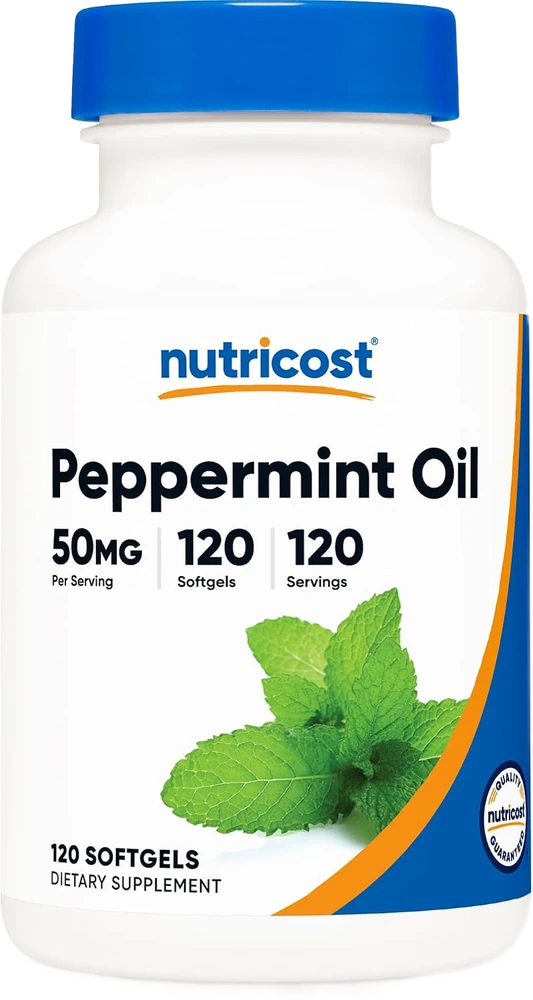 #10 of 10 · Budget NON-enteric✓ Label verified · Supplement Facts read Sep 7, 2026
Real retailer photo, cut out. Label unedited.
Skip it. Well-made and clean — but NON-enteric, the one disqualifying flaw for the gut. Genuinely third-party tested, gluten-free, GMO-free, and made in a GMP-compliant facility, with an honest 50 mg label — Nutricost's quality control is good.
$10 / month$0.08 / softgel
Why It Scores 4.2 — And The Label Line Behind Each Number
Enteric coating / gut-targeted delivery
40% of scoreThe disqualifying axis. Nutricost is NOT enteric-coated — the softgel dissolves in the stomach and releases the peppermint oil there, the single thing the whole category exists to avoid. Released in the stomach, the oil relaxes the lower esophageal sphincter (causing heartburn) and never reaches the small intestine where the antispasmodic effect relieves IBS spasm. Every successful peppermint IBS trial used a gut-targeted delivery; this form is the one to avoid for the gut. It scores near the bottom because delivery carries the most weight and this gets it wrong by design.
- Active form
- NON-enteric peppermint oil softgel (releases in the stomach)
- Delivery
- NON-enteric — dissolves in the stomach, the wrong place for IBS
Clinical-dose alignment + label honesty
25% of scoreThe label is honest — 50 mg per softgel is clearly stated, no inflated math, which is to Nutricost's credit. But 50 mg is well below the 180-225 mg-per-dose trial range, so it's low-dosed on top of being non-enteric. And the dose conversation is somewhat moot here: even a clinical milligram amount delivered to the stomach is the wrong delivery. Honest labeling props the score up; the low dose and the irrelevance of dose without proper delivery pull it down.
- Per serving
- 50 mg peppermint oil per softgel
- Dose vs trial range
- 50 mg/softgel — below the 180-225 mg trial dose, and delivered to the wrong place
Third-party testing + manufacturing quality
15% of scoreNutricost's genuine strength, and the reason it isn't scored lower overall. It's genuinely third-party tested with a clean, transparent label, gluten-free, GMO-free, and made in a GMP-compliant facility. Nutricost's quality control is good and well-documented across its catalog. This is a real, top-tier quality signal — it's just attached to the wrong delivery form, so good testing can't rescue a product that releases in the wrong place for its intended use.
- Testing
- Third-party tested, gluten-free, GMO-free, GMP-compliant facility (genuinely good)
Cost per effective dose
12% of scoreAbout $0.08 per softgel looks cheap, but cost per effective (gut-delivered) dose is the real metric — and a non-enteric softgel that releases in the stomach delivers little to the intestine, so the effective-dose cost for IBS is poor regardless of the low sticker. A cheap bottle that releases in the wrong place is not cheap per effective dose. Fine value for non-gut uses; weak value for the gut, which is what most buyers want it for.
- Bottle
- 120 softgels · high count, but non-enteric (wrong delivery for IBS)
- Price
- ~$10 / month = ~$0.08 per softgel (but poor per gut-delivered dose)
Real-world IBS/bloating response + tolerability
8% of scoreNon-enteric peppermint is weak for IBS — it's not the form the trials validated (Khanna 2014, Ford 2008, Alammar 2019 all rest on enteric delivery) — and it's the most heartburn-prone form, since stomach release relaxes the esophageal valve. So the real-world IBS response is the worst on the list: low expected benefit plus elevated reflux risk. Tolerability for non-gut use is fine; for the gut, this is the form most likely to disappoint and to cause the very symptom people take peppermint to avoid.
- More Specs
- Best use
- Non-gut aromatic/oral use only — not IBS, bloating, or cramps
Label verified. Every figure read from the Supplement Facts photo, Sep 7, 2026.
Marketing Claims Vs. Reality
Third-party tested, gluten-free, GMO-free, made in a GMP-compliant facility.
Genuinely true and well-documented — third-party testing and a clean, transparent label are Nutricost's real strength, consistent across its catalog. The quality control is good; this is the part of the product that earns full marks.
50 mg peppermint oil per softgel.
The 50 mg dose is clearly and honestly stated, with no inflated serving math. Accurate labeling — though 50 mg is below the 180-225 mg trial dose, and the milligrams matter little when the delivery is non-enteric.
Supports digestion and a healthy gut.
For IBS and gut symptoms this is not supported by the form. Every successful peppermint-oil IBS trial used an enteric or gut-targeted delivery (Khanna 2014 PMID 24100754, Ford 2008 PMID 19008265, Cash 2016 PMID 26319955, Alammar 2019 PMID 30654773). A non-enteric softgel releases in the stomach, works poorly for the intestine, and commonly causes heartburn — the opposite of the intended gut benefit. The digestion claim does not hold for this delivery form.
A cheap, high-count peppermint oil value.
Cheap and high-count on paper (~$0.08/softgel, 120-count), but the meaningful metric for a peppermint oil is cost per gut-delivered dose — and a non-enteric softgel delivers little to the intestine, so the value for the gut is poor despite the low sticker. Genuine value only for non-gut uses.
An effective peppermint oil for IBS and bloating.
Not effective in this form for IBS. The non-enteric delivery releases the oil in the stomach rather than the intestine, which is both ineffective for IBS spasm and a common cause of heartburn. The entire clinical evidence base for peppermint in IBS is built on enteric/SST delivery, not non-enteric softgels — so the efficacy claim is false for this product's intended gut use.
What Our Test Actually Found
Good testing can't rescue the wrong delivery form
Nutricost does the quality basics genuinely well — third-party tested, clean label, GMP facility — and in most categories that would earn a solid ranking. But peppermint oil for IBS is the one category where delivery, not testing, is the thing that decides whether the product works. A perfectly tested, perfectly clean softgel that releases in the stomach is still the wrong product for the gut. That's the whole lesson of this pick: the feature people check (testing) is not the feature that matters most (the enteric coat).
Non-enteric means it releases in the stomach — the wrong place, twice over
Released in the stomach, peppermint oil does two bad things at once. It relaxes the lower esophageal sphincter, which causes the reflux and heartburn peppermint is notorious for. And it never reaches the small intestine, where menthol's antispasmodic, calcium-channel-blocking effect on gut muscle actually relieves IBS pain, cramping, and urgency. So a non-enteric softgel both fails to help the gut and actively risks the symptom people most want to avoid. The enteric coat exists precisely to route the oil past the stomach and into the intestine.
It's last on purpose — and it earns the spot honestly
This bottle sits at the bottom of the ranking deliberately, as the illustration of the category's defining mistake. It's not last because it's poorly made — it isn't — but because it's the wrong form for what people buy peppermint oil to do. Ranking it tenth despite good testing makes the point sharper than any enteric pick could: in this category, the coat is the product. A clean non-enteric softgel is the textbook example of buying the wrong tool well-made.
There is a legitimate use — just not the one most buyers want
Because the testing and label are genuinely good, Nutricost is a fine plain peppermint oil for non-gut uses where stomach release doesn't matter — general aromatic or oral use. If that's your actual goal, the quality is real and the price is fair. The problem is only that the overwhelming reason people buy peppermint oil is IBS, bloating, and cramping, and for those goals this is the wrong form. Honest framing: clean plain peppermint for general use, an enteric form for the gut.
If reflux has burned you before, this is the worst possible choice
The single most common reason people give up on peppermint oil is the heartburn from stomach release — and a non-enteric softgel is the form most likely to cause exactly that. If peppermint has triggered reflux for you before, do not reach for a non-enteric bottle; go straight to an enteric or small-intestine-targeted form (IBgard's SST system reported no pattern of heartburn over a 3-year safety analysis). Nutricost is the opposite of what a reflux-prone buyer needs.
Full analysis: all pros & cons (7), buy if / skip if
- Genuinely third-party tested with a clean, transparent label — Nutricost's quality control is good
- Very cheap and high-count, with a clearly and honestly stated 50 mg peppermint dose
- GMO-free and gluten-free from a GMP-compliant facility
- Fine for non-gut uses where stomach release doesn't matter (general aromatic/oral use)
- NOT enteric-coated — it releases peppermint oil in the stomach, the single thing the whole category exists to avoid, so it works poorly for IBS
- Stomach release relaxes the esophageal valve and is a common cause of the heartburn/reflux peppermint is notorious for
- Low 50 mg dose on top of the wrong delivery makes it the weakest option here for gut symptoms
- You specifically want plain, well-tested peppermint oil for non-gut aromatic or oral use
- You value genuine third-party testing and a clean label and don't need intestinal delivery
- You understand it's non-enteric and you're not buying it for IBS or digestive symptoms
- Your goal is IBS, bloating, or cramping — non-enteric peppermint releases in the stomach and works poorly for the gut
- You're prone to heartburn or reflux — a non-enteric softgel is the most likely form to trigger it
- You want any gut benefit at all — every successful peppermint IBS trial used an enteric or SST delivery, not this form
Genuinely third-party tested, gluten-free, GMO-free, and made in a GMP-compliant facility, with an honest 50 mg label — Nutricost's quality control is good. But it is NOT enteric-coated, so the oil releases in the stomach, where it works poorly for IBS and commonly triggers heartburn. For gut symptoms, delivery is the entire game, and this delivers to the wrong place. Fine for non-gut aromatic/oral use; for IBS, bloating, or cramps, choose any enteric pick instead.
Nutricost Peppermint Oil is the cautionary tale of the category — a genuinely well-made product undone by the one decision that matters most. The quality basics are real: it's third-party tested, gluten-free, GMO-free, made in a GMP-compliant facility, and cleanly labeled with a clear 50 mg peppermint dose. In most supplement categories that would earn a respectable ranking. But this is the one category where testing and label aren't the thing that decides whether the product works — delivery is. And Nutricost is NOT enteric-coated, so the oil releases in your stomach, the wrong place for IBS, where it works poorly for the gut and commonly causes the heartburn peppermint is infamous for. We scored it against the four numbers that decide a peppermint oil's worth — delivery, clinical-dose alignment, manufacturing quality, and cost — and here's the full breakdown of why a clean bottle still finishes last.
Well-made, clean, and the wrong form — skip it for the gut.

Nutricost Peppermint Oil is a genuinely well-made product that finishes last for one reason: it's the wrong form for what people buy peppermint oil to do. The quality is real — third-party tested, gluten-free, GMO-free, GMP-compliant facility, honest 50 mg label — and in most categories that would earn a respectable ranking. But peppermint oil for IBS is the one category where delivery, not testing, decides whether the product works, and Nutricost is NOT enteric-coated. Released in the stomach, the oil works poorly for the intestine and commonly causes the heartburn peppermint is infamous for. Good testing can't rescue the wrong delivery. There's a narrow legitimate use — plain, well-tested peppermint oil for non-gut aromatic or oral use, where stomach release doesn't matter. If that's genuinely your goal, the quality is fine. But the overwhelming reason people buy peppermint oil is IBS, bloating, and cramping, and for those goals this is the form to avoid. Choose any enteric pick instead: IBgard (#1) for the strongest evidence and lowest heartburn risk, Nature's Way Pepogest (#2) for the exact 0.2 mL trial dose at the best value, or Heather's Tummy Tamers (#3) for an extra coat if reflux is your specific problem. The peppermint evidence is all built on enteric delivery — so for the gut, buy the coat, not the bottle.
If This Doesn’t Fit — Try These
 01
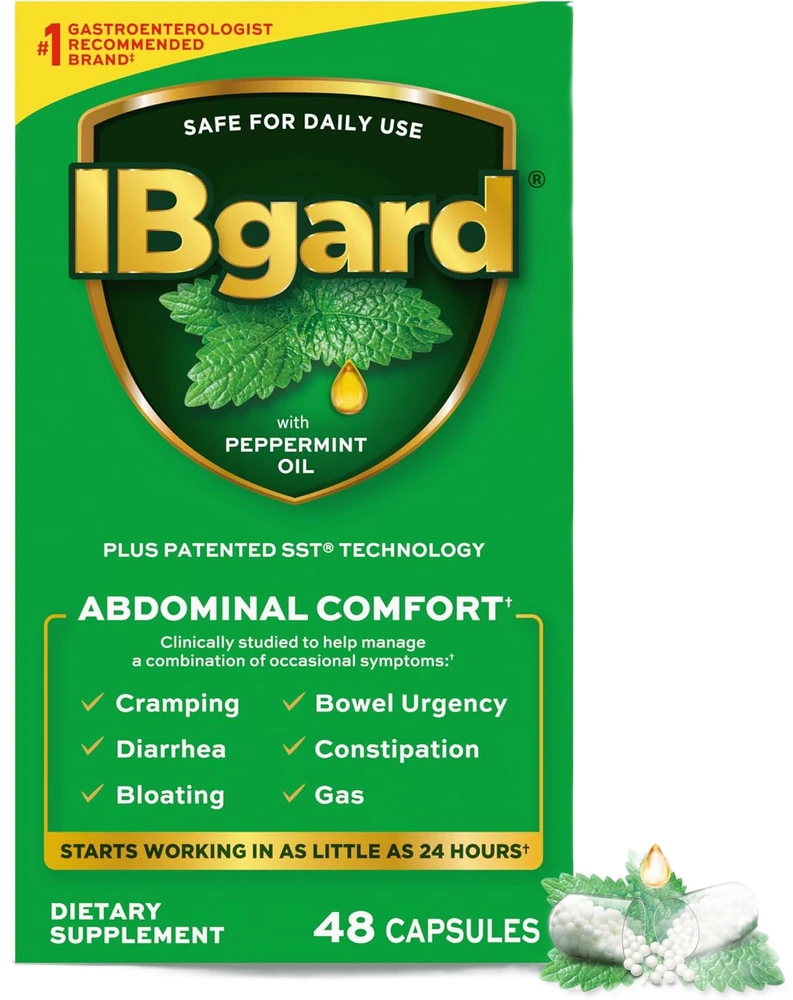
01IBgard
If you want the peppermint oil with the strongest IBS-specific evidence and the lowest heartburn risk, IBgard is the pick.
 03
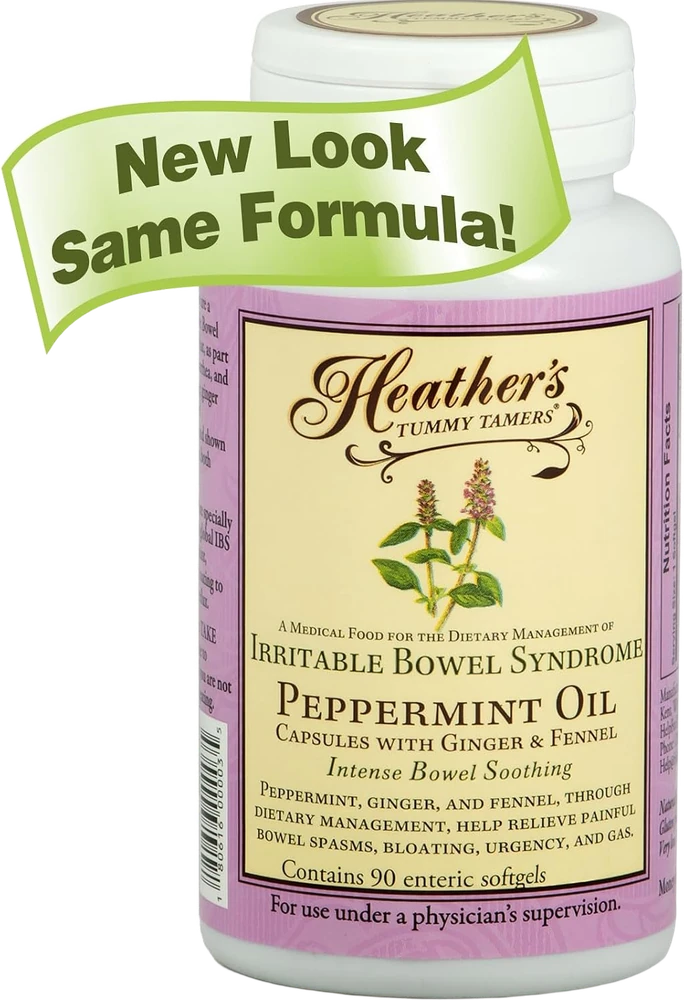
03Heather's Tummy Tamers
Heather's Tummy Tamers is the sensitive-stomach answer.
 02
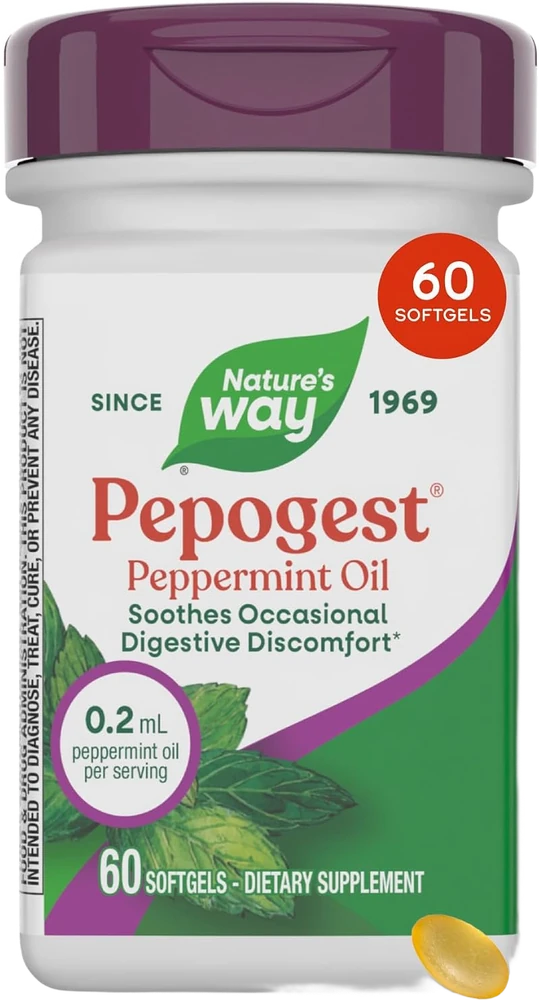
02Nature's Way Pepogest
Pepogest is the value gold standard and the smartest default for most buyers.
Quick Answers
Why is a well-tested, clean product ranked last?
Because in this one category, the testing and the label aren't the thing that matters most — the delivery is. Nutricost genuinely does the quality basics well: it's third-party tested, gluten-free, GMO-free, and made in a GMP-compliant facility, which is more than some pricier bottles can say. But it's NOT enteric-coated, and for peppermint oil that's the single disqualifying flaw. A non-enteric softgel releases the oil in your stomach, where two bad things happen: the oil relaxes the lower esophageal sphincter and causes reflux/heartburn, and it never reaches the small intestine where menthol's antispasmodic effect actually relieves IBS spasm. So a clean, well-made product delivered to the wrong place is still the wrong product for the gut — which is exactly why it's last.
What does "non-enteric" actually mean, and why does it matter so much?
An enteric coat is a pH-sensitive shell that survives stomach acid and only dissolves further down the tract, releasing the oil in the intestine. Non-enteric means there's no such coat — the softgel dissolves in the stomach and releases the peppermint oil right there. For most supplements that wouldn't matter, but peppermint oil for IBS is the textbook case where it's everything. Every clinical trial that found a benefit used a gut-targeted delivery (enteric softgels at the ~0.2 mL trial dose, or IBgard's SST microspheres). Released in the stomach, peppermint relaxes the esophageal valve and causes the classic heartburn, and burns off before reaching the gut. The coat isn't a marketing upgrade — it's the mechanism.
Is there any situation where this bottle makes sense?
Yes — just not for IBS or gut symptoms. Because it's genuinely third-party tested and cleanly labeled, Nutricost is a fine choice for non-gut uses where stomach release doesn't matter, such as general aromatic or oral use. If you specifically want plain, well-tested peppermint oil and you're not relying on intestinal delivery, the quality is real. The problem is only that people buy peppermint oil overwhelmingly for IBS, bloating, and cramping — and for those goals the non-enteric form is the wrong tool. Match the product to the job: clean plain peppermint oil for general use, an enteric form for the gut.
Will it give me heartburn?
It's more likely to than the enteric options, and that's the predictable downside of the non-enteric form. Peppermint relaxes the lower esophageal sphincter, so when the oil releases in your stomach — as it does in a non-enteric softgel — it can trigger reflux and a burning sensation. That's the single most common complaint with peppermint oil, and it's precisely the failure mode enteric and small-intestine-targeted formulations are engineered to avoid (a 3-year safety analysis of the IBgard SST system reported no pattern of heartburn). If peppermint has given you heartburn before, a non-enteric bottle is the last thing to try — go straight to an enteric or SST form instead.
What should I buy instead for IBS?
Any enteric pick on the list. For the strongest IBS evidence and the lowest heartburn risk, IBgard (#1) uses small-intestine-targeted SST microspheres — the formulation behind the Cash 2016 trial (PMID 26319955). For the best value, Nature's Way Pepogest (#2) delivers the exact 0.2 mL (~187 mg) enteric trial dose for about a third the cost of the engineered options. If reflux is your specific problem, Heather's Tummy Tamers (#3) adds a 50%-extra enteric coat plus ginger and fennel. The common thread is a genuine gut-targeted coat — the one feature Nutricost lacks. The peppermint evidence (Khanna 2014 PMID 24100754, Ford 2008 PMID 19008265, Alammar 2019 PMID 30654773) is all built on enteric delivery, so that's the form to buy.
Sources & Further Reading
4 peer-reviewed sources, each linked to PubMed
- [1] Khanna 2014 PMID 24100754 — Peppermint oil for the treatment of irritable bowel syndrome: a systematic review and meta-analysis. Systematic review and meta-analysis of nine RCTs (726 patients): enteric-coated peppermint oil was significantly superior to placebo for global IBS symptom improvement (RR 2.23) and abdominal pain (RR 2.14). Every trial in the pool used enteric-coated delivery — the exact feature Nutricost's non-enteric softgel lacks, which is why it fails for the gut.
- [2] Ford 2008 PMID 19008265 — Effect of fibre, antispasmodics, and peppermint oil in the treatment of irritable bowel syndrome: systematic review and meta-analysis. Landmark BMJ meta-analysis pooling fibre, antispasmodics, and peppermint oil for IBS: peppermint oil was the most effective of the three, with a number-needed-to-treat of about 2.5 — using gut-targeted (enteric) delivery. Establishes the form that works, which is not the non-enteric softgel Nutricost sells.
- [3] Cash 2016 PMID 26319955 — A Novel Delivery System of Peppermint Oil Is an Effective Therapy for Irritable Bowel Syndrome Symptoms. 4-week randomized, double-blind, placebo-controlled trial (IBSREST, n=72): an ultra-purified, small-intestine-targeted peppermint oil cut Total IBS Symptom Score 40% versus 24.3% on placebo, with good tolerability and no heartburn pattern. The modern proof that gut-targeted delivery — the opposite of Nutricost's non-enteric form — is what makes peppermint work for IBS.
- [4] Alammar 2019 PMID 30654773 — The impact of peppermint oil on the irritable bowel syndrome: a meta-analysis of the pooled clinical data. Meta-analysis of 12 RCTs (835 patients): peppermint oil was significantly better than placebo for global IBS symptoms (RR 2.39) and abdominal pain (RR 1.78), with NNTs of three and four — all on enteric/gut-targeted delivery. Confirms the evidence base that excludes the non-enteric form Nutricost uses.
Affiliate disclosure: every Amazon link uses our Associates tag (superachieverclub-20). We earn a small commission at no cost to you; it funds independent reviews. We never accept payment to change a ranking.