
Carlyle Peppermint Oil, 150ct Review
 #8 of 10 · Budget high-count✓ Label verified · Supplement Facts read Sep 7, 2026
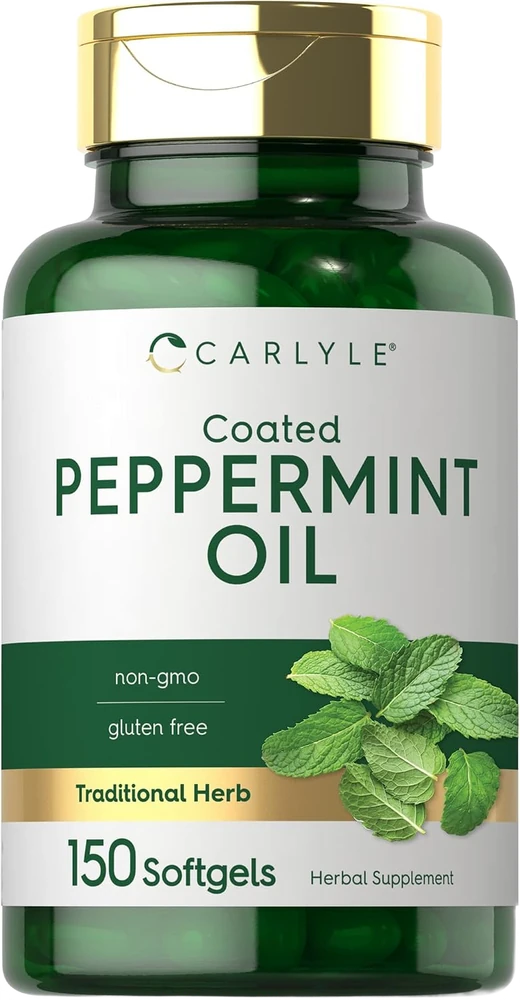
Real retailer photo, cut out. Label unedited.
Consider it. Cheap, high-count, and honestly dosed — but the coating is still less-documented than the verified picks. A coated 100 mg peppermint oil softgel at about $0.07 apiece in a generous 150-count bottle from a value house brand.
$11 / month$0.07 / softgel
Why It Scores 7.1 — And The Label Line Behind Each Number
Enteric coating / gut-targeted delivery
40% of scoreThe decisive axis, and where Carlyle loses ground. It's a coated softgel, but the coating detail is less rigorously documented than the dedicated enteric IBS brands like Pepogest, IBgard, and Mason. Because intestinal delivery is the entire mechanism — and the difference between relief and stomach-release heartburn — a coat you can't clearly verify is a real drawback. It scores in the middle: better than an openly non-enteric bottle like Nutricost (#10), but a clear notch below the verified-enteric picks for IBS reliability.
- Active form
- Coated peppermint oil softgel — single active ingredient
- Delivery
- Coated softgel — coating less rigorously documented than dedicated enteric IBS brands
Clinical-dose alignment + label honesty
25% of scoreA strong axis now that the label is read correctly. 100 mg of peppermint oil per softgel is the sole active ingredient, clearly and honestly printed — no undisclosed blend, no added rosemary or thyme despite what an earlier version of this review claimed. A single softgel falls just short of the 180-225 mg trial range, but two softgels (200 mg) land squarely inside it — a clean, easy-to-remember match, and notably better than Mason's 50 mg softgels, which need three or four to get there. The only reason this doesn't score higher is that it still takes two softgels, not one, to reach a full clinical dose.
- Per serving
- 100 mg peppermint oil (1 softgel; 2 softgels = 200 mg, inside the clinical dose range)
- Dose vs trial range
- 100 mg/softgel — below the 180-225 mg trial dose alone; two softgels (200 mg) land inside it
Third-party testing + manufacturing quality
15% of scoreCarlyle is a high-volume value house brand (NaturaLife/Vitamer), and the product is labeled non-GMO and gluten-free. That's a reasonable baseline for a budget bottle. But it's standard house-brand quality assurance rather than an independent third-party COA, ultra-purification, or a sport certification — and crucially, the coating documentation is thinner than the dedicated enteric brands, which is the quality detail that matters most for a peppermint oil. Dependable-budget tier, not premium.
- Testing
- Carlyle (NaturaLife/Vitamer house brand); non-GMO, gluten-free
Cost per effective dose
12% of scoreAbout $0.07 per softgel is one of the lowest per-unit prices on the list, and because the dose is a clean two-softgel match, the real cost per clinical dose is only about $0.14 — genuinely cheap even measured the honest way, not the padded three-to-four-softgel math an earlier version of this review used. The 150-count bottle stretches to roughly 75 clinical doses. The remaining catch is that you're paying that low price for a coat you can't fully verify, so some of the value is contingent on being comfortable with that uncertainty.
- Bottle
- 150 softgels · high count, ~75 two-softgel clinical doses per bottle
- Price
- ~$11 / month at 1/day, ~$0.14 per clinical (2-softgel) dose
Real-world IBS/bloating response + tolerability
8% of scoreOne thing that used to drag the real-world IBS confidence down — the dose — is no longer a problem: 100 mg per softgel, two softgels per dose, lands cleanly in the trial range. What remains is the less-documented coating, still a real source of uncertainty about whether the oil reaches the intestine intact. Peppermint's mechanism is well-evidenced (Khanna 2014, Ford 2008, Alammar 2019), so if the coat works and you take a genuine two-softgel dose it should help — but the coating is the one variable the verified-enteric picks remove that Carlyle doesn't. Generally well tolerated with the standard peppermint caveats.
- More Specs
- Best use
- Cheap peppermint with an honest, clinical-range dose — coating verification is the open question, not the amount
Label verified. Every figure read from the Supplement Facts photo, Sep 7, 2026.
Marketing Claims Vs. Reality
Coated softgel delivers peppermint oil for digestive comfort.
It is a coated softgel, but the coating detail is less rigorously documented than the dedicated enteric IBS brands — so whether the oil reliably reaches the intestine (the documented mechanism behind every successful peppermint-oil IBS trial, per Khanna 2014 PMID 24100754) is less certain here. It works as a coated peppermint product; the partial verdict reflects the unverified delivery, which is the feature that matters most for IBS.
100 mg peppermint oil per softgel, the sole active ingredient.
The Supplement Facts panel lists Peppermint Oil (Mentha piperita, aerial) at 100 mg per softgel as the only active ingredient — no rosemary or thyme oil, contrary to what an earlier version of this review stated. The dose is honestly and plainly printed; two softgels (200 mg) land inside the 180-225 mg trial range.
Labeled a "Traditional Herb" product.
The front label carries a "Traditional Herb" claim alongside "Coated," "Non-GMO," and "Gluten Free." Peppermint is a long-used traditional digestive herb, so the framing is accurate — it's a marketing descriptor, not a therapeutic claim, and doesn't imply enteric-coating rigor.
Non-GMO and gluten-free from a trusted value brand.
The product is labeled non-GMO and gluten-free, and Carlyle is an established high-volume house brand (NaturaLife/Vitamer). Documented, verifiable baseline quality claims appropriate for a budget supplement — though baseline house-brand QC, not premium third-party verification.
A great-value high-count peppermint oil.
True on count and per-softgel price (~$0.07, 150-count), and the honest cost-per-clinical-dose math holds up too — about $0.14 for two softgels (200 mg), since the dose lands in the trial range without padding. The remaining catch is that you're paying that low price for a coat you can't fully verify. Genuinely cheap volume and a fair per-dose cost; the coating uncertainty is the one thing keeping "great value" from being unqualified.
What Our Test Actually Found
Correction: the label lists 100 mg peppermint oil per softgel, not 50 mg — and no rosemary or thyme
An earlier version of this review said Carlyle's softgel delivered 50 mg of peppermint oil plus rosemary and thyme oils. The Supplement Facts panel reads Peppermint Oil (Mentha piperita, aerial) 100 mg per softgel as the only active ingredient — no rosemary, no thyme. We re-read the label on Sep 7, 2026 and corrected the dose, the botanical claims, the clinical-dose math, and every score that depended on them.
The less-documented coating is the real reason it sits below the verified picks
In most supplement categories, a coating detail would be a footnote. In peppermint oil it's the whole game — intestinal delivery is the mechanism, and the difference between relief and stomach-release heartburn. Carlyle's coating is less rigorously documented than the dedicated enteric IBS brands, so you can't be as confident the oil reaches the intestine intact. That uncertainty, more than the price or the count, is why it ranks below Pepogest, IBgard, and even Mason for IBS reliability. The verified-enteric picks remove exactly this doubt.
The dose is a clean match — 100 mg per softgel, two softgels lands in the trial range
At 100 mg of peppermint oil per softgel, a single softgel falls just short of the 180-225 mg trial range, but two softgels (200 mg) land squarely inside it — a simple, easy-to-remember dose that's a notably better match than Mason's 50 mg softgels, which need three or four to get there. The label states this plainly too: peppermint oil is the only active ingredient, with no added rosemary or thyme (an earlier version of this review said otherwise). The generous 150-count bottle stretches to about 75 two-softgel doses, so the honest dose doesn't come at the expense of runway.
The big count, low price, and honest dose are the genuine strengths
Where Carlyle earns its spot is volume, cost, and label honesty: a 150-count bottle at about seven cents a softgel is genuinely inexpensive, the big count gives a long runway even at a two-softgel dose, and the 100 mg peppermint-only formula is clearly and accurately labeled. For a buyer who wants a cheap, gentle daily-comfort peppermint — or even a budget-conscious two-softgel IBS dose — that's real value. The one caveat that keeps it from ranking with the verified-enteric picks is the coating documentation, not the dose or the price.
Best treated as gentle daily comfort, or a budget IBS option once you accept the coating uncertainty
The honest framing for Carlyle is a low-cost, high-count peppermint with a genuine clinical-range dose (two softgels) — the open question is the coating, not the amount. If your goal is occasional, gentle support and a long runway for little money, it fits easily. If your goal is reliably controlling IBS pain, cramping, and urgency and you want the coat's intestinal delivery clearly verified rather than inferred, stepping up to a dedicated enteric brand removes that last uncertainty. Matching the product to the right job is what keeps expectations honest.
It's still a step above an openly non-enteric bottle
For all its caveats, Carlyle is a coated softgel, which puts it above an openly non-enteric bottle like Nutricost (#10) that releases in the stomach by design. So at the budget end, it's not the worst choice for the gut — it's a middle one, held back by uncertainty rather than a disqualifying flaw. But 'better than non-enteric' is a low bar; the verified-enteric softgels clear it comfortably and remove the doubt.
Full analysis: all pros & cons (8), buy if / skip if
- Very high 150-count bottle at one of the lowest per-softgel prices on the list
- Honestly labeled 100 mg peppermint oil softgel — the only active ingredient, clearly disclosed
- Non-GMO and gluten-free from an established high-volume value house brand
- Big count gives a long runway — about 75 two-softgel clinical doses per bottle
- Still a step above an openly non-enteric budget bottle for gut use
- Coating is less rigorously documented than the dedicated enteric IBS brands — you can't be sure the oil reaches the intestine
- Still needs two softgels, not one, to reach a full clinical dose (a single softgel is 100 mg, just under the 180 mg trial floor)
- The front label says "Coated," not "Enteric-Coated" — a real coating claim you have to infer rather than read directly
- You want the cheapest high-count peppermint for gentle daily comfort, not a precise IBS treatment
- You like a long runway from a single big bottle — about 75 two-softgel doses
- You want a low-cost coated peppermint and don't need a clearly verified enteric coat
- You want an honestly single-ingredient peppermint oil — no proprietary blend to decode
- You want verified intestinal delivery for IBS — Pepogest (#3) and IBgard (#1) have clearly documented enteric coats
- You want a single-softgel clinical dose — Pepogest and IBgard get you there in one, Carlyle needs two
- You're reflux-prone — a less-documented coat is a real risk if stomach release has burned you before
A coated 100 mg peppermint oil softgel at about $0.07 apiece in a generous 150-count bottle from a value house brand. The label is honest and simple — one active ingredient, clearly dosed — and two softgels (200 mg) land inside the 180-225 mg trial range. The one caveat that keeps it below the verified-enteric picks is the coating, which is less rigorously documented than the dedicated enteric IBS brands. Fine as a cheap, gentle daily-comfort peppermint, and a reasonable budget option for IBS dosing once you account for the two-softgel amount — but for trial-grade IBS dosing with verified intestinal delivery, the dedicated enteric softgels are the surer bets.
Carlyle Peppermint Oil is the budget high-count pick — a coated 100 mg peppermint oil softgel at one of the lowest per-unit prices on the list, in a generous 150-count bottle from a high-volume value house brand. It's a reasonable cheap option, the big count gives a long runway, and the dose is honestly disclosed: 100 mg of peppermint oil is the only active ingredient, and two softgels (200 mg) land cleanly inside the 180-225 mg trial range. One caveat keeps it below the verified-enteric picks, and it goes to the heart of what makes peppermint oil work for the gut: its coating is less rigorously documented than the dedicated enteric IBS brands, so you can't be as confident the oil reaches the intestine intact, which is the entire mechanism. We scored it against the four numbers that decide a peppermint oil's worth — delivery, clinical-dose alignment, manufacturing quality, and cost — and here's the full breakdown.
A cheap, high-count peppermint with an honest dose — the coating is the one real question mark.

Carlyle Peppermint Oil is a reasonable inexpensive option with three real strengths — a generous 150-count bottle, one of the lowest per-softgel prices on the list, and an honestly and clearly labeled 100 mg peppermint-only dose. Two softgels (200 mg) land squarely inside the 180-225 mg trial range studied in the meta-analyses — a cleaner dose match than Mason's 50 mg softgels, and nowhere near the three-or-four-softgel routine an earlier version of this review described. The one real caveat that keeps it below the verified-enteric picks is the coating: the front label says "Coated," but doesn't carry the clearly documented enteric claim that Pepogest, IBgard, and Mason do, so you can't be as confident the oil reaches the intestine intact — which is the entire mechanism behind peppermint oil's IBS benefit. That makes it a fair pick for two jobs: a cheap, gentle daily-comfort peppermint with a long runway, and a genuine budget option for IBS dosing if you're comfortable with an unverified (rather than disproven) coat. For trial-grade IBS dosing with verified intestinal delivery, the dedicated enteric softgels are the surer bets — Nature's Way Pepogest (#2) gives you a clearly dosed, verified-enteric clinical dose in one softgel, and IBgard (#1) carries the strongest evidence and the lowest heartburn risk. Carlyle is still a step above an openly non-enteric bottle like Nutricost (#10), so it's a middle choice held back by coating uncertainty rather than dose or price. If you do use it, swallow two softgels whole 30-90 minutes before meals, and give it the few weeks the trials needed — but for serious IBS where you want delivery confirmed rather than inferred, spend a little more on verified delivery.
If This Doesn’t Fit — Try These
 03
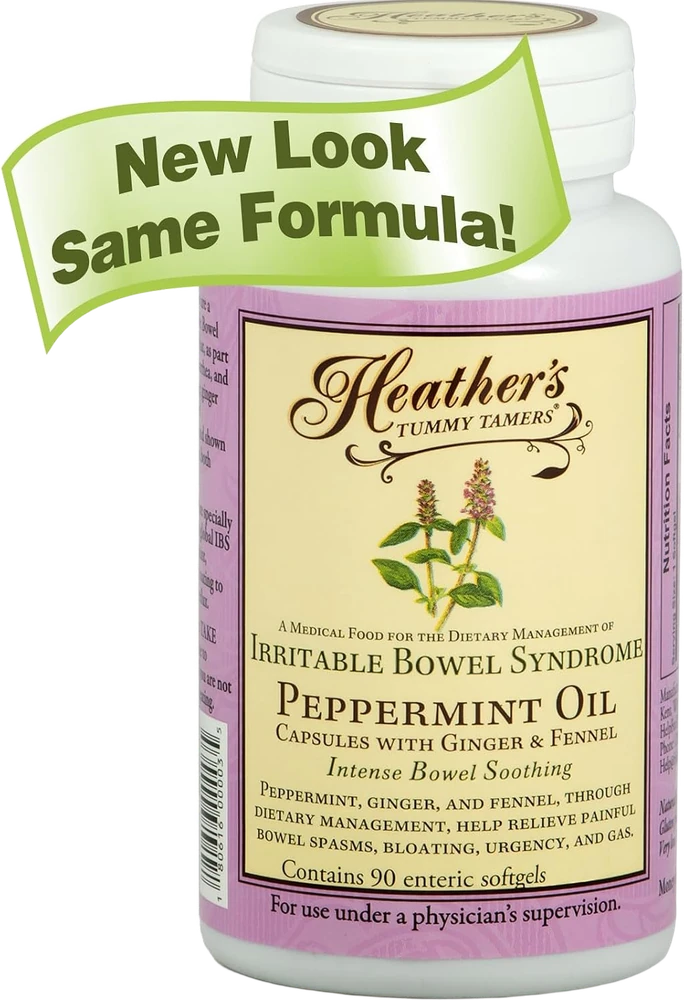
03Heather's Tummy Tamers
Heather's Tummy Tamers is the sensitive-stomach answer.
 01
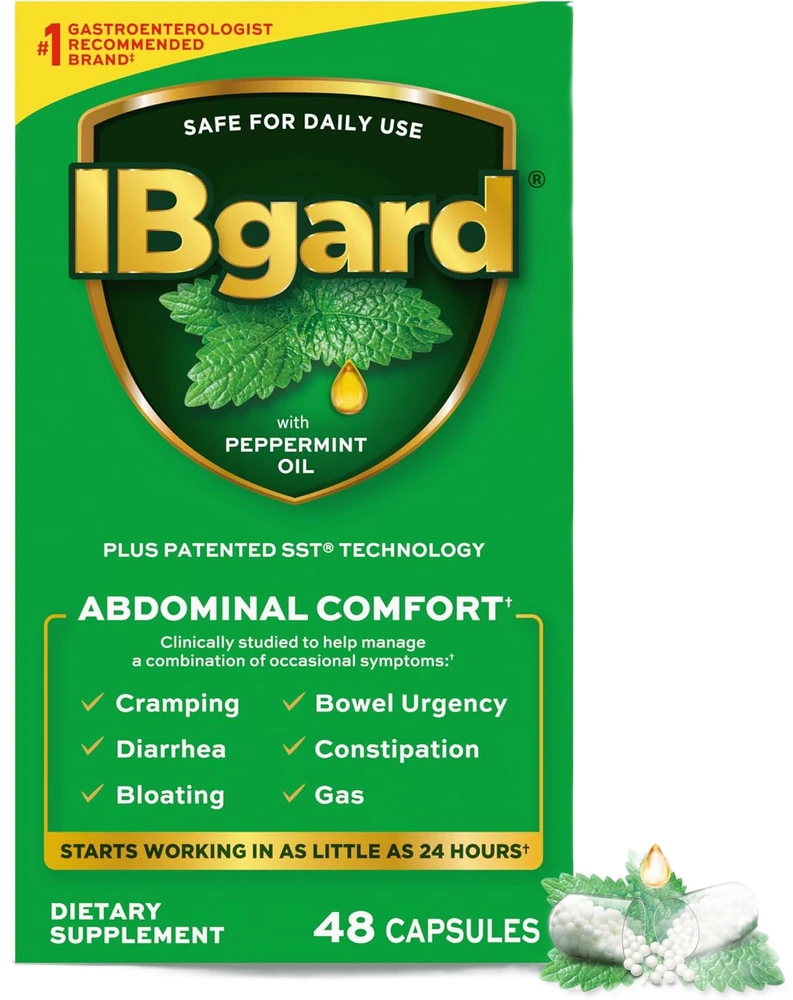
01IBgard
If you want the peppermint oil with the strongest IBS-specific evidence and the lowest heartburn risk, IBgard is the pick.
08Carlyle Peppermint Oil
Carlyle is the budget high-count pick — a coated peppermint-plus-rosemary-and-thyme softgel at a very low per-unit price, in a generous 150-count bottle.
Quick Answers
Is Carlyle's softgel enteric-coated or not?
It's a coated softgel, but the coating detail is less rigorously documented than the dedicated enteric IBS brands — and that distinction matters more in this category than almost any other. The whole point of peppermint oil for IBS is intestinal delivery: a true enteric coat survives stomach acid and releases the oil in the intestine, where menthol's antispasmodic effect relieves spasm, rather than in the stomach, where freed oil causes heartburn. Bottles like Nature's Way Pepogest, IBgard, and Mason have clearly verified enteric delivery; Carlyle's coating is less transparently specified. That doesn't mean it fails to work, but it does mean you can't be as confident the oil reaches the right place, which is why it sits a notch below the verified-enteric picks for IBS reliability.
Is 100 mg of peppermint per softgel enough to help my IBS?
Close, but you still want two. The IBS trials clustered around 180-225 mg of peppermint oil per dose, and Carlyle's softgels carry 100 mg each — a single softgel falls just short of the trial range, but two softgels (200 mg) land squarely inside it. That's a much cleaner match than budget peppermint products that need three or four capsules to get there. The label states the 100 mg dose plainly as the only active ingredient — no added rosemary or thyme oils, despite what an earlier version of this review said. The 150-count bottle stretches to about 75 two-softgel doses.
Does this softgel contain rosemary and thyme oil too?
No — that was an error in an earlier version of this review. The Supplement Facts panel lists a single active ingredient: Peppermint Oil (Mentha piperita, aerial) at 100 mg per softgel. There's no rosemary or thyme oil on the label; the other ingredients are standard softgel excipients (gelatin, vegetable glycerin, cellulose, sodium alginate, stearic acid, ethylcellulose, food glaze, polysorbate 80). Peppermint oil's antispasmodic, calcium-channel-blocking effect on gut smooth muscle is what the meta-analyses (Khanna 2014 PMID 24100754, Alammar 2019 PMID 30654773) and the BMJ review (Ford 2008 PMID 19008265) measured — and it's the entire active story in this bottle.
How do I take it, and how long before I know if it works?
To reach a clinical dose, plan on two softgels per dose (2 × 100 mg = 200 mg, squarely inside the 180-225 mg trial range), following the label and ideally a clinician's guidance. Swallow them whole with water, 30-90 minutes before meals, and don't chew or open them — breaking any coating releases the oil in your stomach and risks heartburn. On timing: some people notice less cramping within a few days, since peppermint's antispasmodic action is fairly direct, but the IBS trials measured their benefit at around four weeks (Cash 2016 PMID 26319955 used a 4-week endpoint), so judge it over a couple of weeks. The big 150-count bottle gives a long runway even at two-softgel dosing — about 75 doses per bottle.
Should I buy this or a dedicated enteric brand?
Buy Carlyle if you want an inexpensive, high-count peppermint for gentle daily comfort and you're not relying on it as a precise IBS treatment. Buy a dedicated enteric brand — Nature's Way Pepogest (#2) at 0.2 mL (~187 mg), or IBgard (#1) for the strongest evidence — if your goal is trial-grade IBS dosing with verified intestinal delivery. The one thing holding Carlyle back for IBS is the less-documented coating (you can't be as sure it reaches the intestine) — the dose itself is honestly disclosed and reaches the trial range cleanly at two softgels. For pure cheap volume it's fine; for reliable IBS results, the verified-enteric softgels are the surer bets.
Sources & Further Reading
4 peer-reviewed sources, each linked to PubMed
- [1] Khanna 2014 PMID 24100754 — Peppermint oil for the treatment of irritable bowel syndrome: a systematic review and meta-analysis. Systematic review and meta-analysis of nine RCTs (726 patients): enteric-coated peppermint oil was significantly superior to placebo for global IBS symptom improvement (RR 2.23) and abdominal pain (RR 2.14). The benefit hinges on enteric-coated delivery — exactly the feature Carlyle documents less rigorously than the dedicated IBS brands.
- [2] Ford 2008 PMID 19008265 — Effect of fibre, antispasmodics, and peppermint oil in the treatment of irritable bowel syndrome: systematic review and meta-analysis. Landmark BMJ meta-analysis pooling fibre, antispasmodics, and peppermint oil for IBS: peppermint oil was the most effective of the three, with a number-needed-to-treat of about 2.5. Confirms the peppermint is the active worth dosing properly — which with Carlyle means two softgels and, ideally, verified delivery.
- [3] Cash 2016 PMID 26319955 — A Novel Delivery System of Peppermint Oil Is an Effective Therapy for Irritable Bowel Syndrome Symptoms. 4-week randomized, double-blind, placebo-controlled trial (IBSREST, n=72): an ultra-purified, small-intestine-targeted peppermint oil cut Total IBS Symptom Score 40% versus 24.3% on placebo. Underscores how much delivery matters — the opposite end of the spectrum from Carlyle's less-documented coat.
- [4] Alammar 2019 PMID 30654773 — The impact of peppermint oil on the irritable bowel syndrome: a meta-analysis of the pooled clinical data. Meta-analysis of 12 RCTs (835 patients): peppermint oil was significantly better than placebo for global IBS symptoms (RR 2.39) and abdominal pain (RR 1.78), with NNTs of three and four and no significant excess of adverse events. Confirms enteric peppermint works at the trial dose — provided the delivery is real, which is Carlyle's open question.
Affiliate disclosure: every Amazon link uses our Associates tag (superachieverclub-20). We earn a small commission at no cost to you; it funds independent reviews. We never accept payment to change a ranking.