
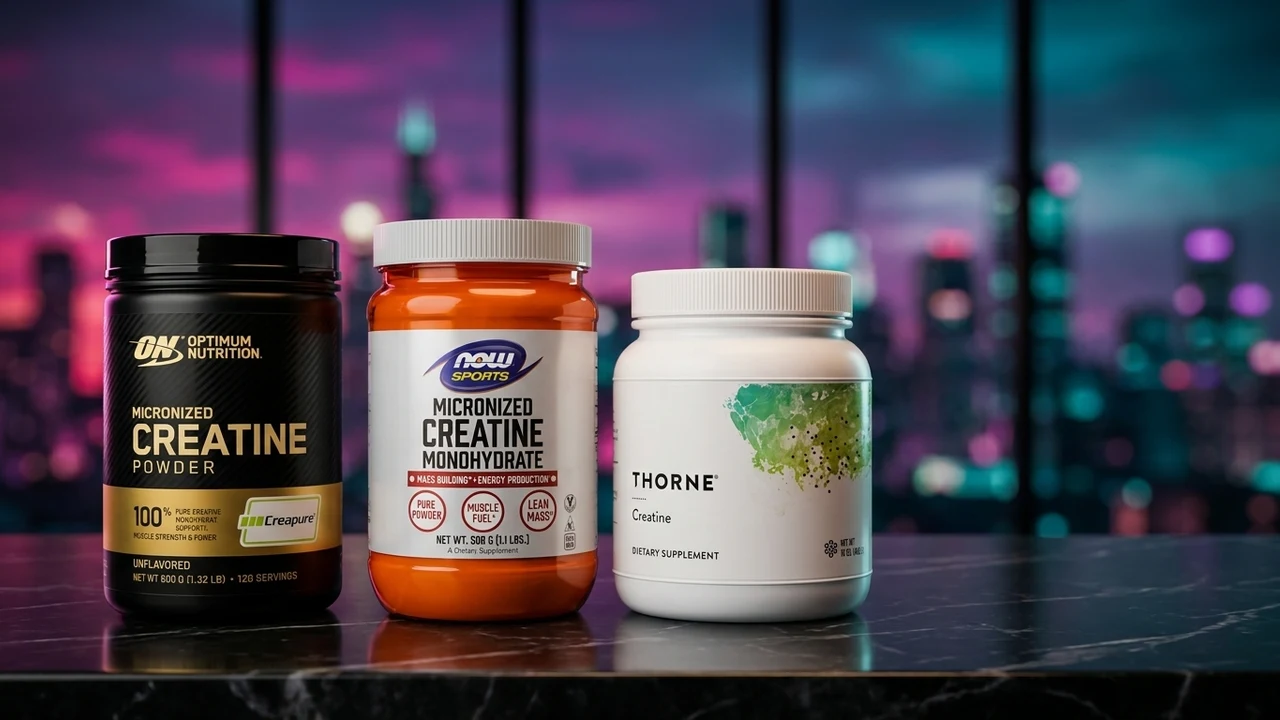
Top 7 Best Creatine for Brain (2026)
We make this one. Our own Super Achiever formula — held to the exact same 50/50 criteria as every pick below, and we put it up top so you see it first. Full transparency: it's ours.
- #0100% pure
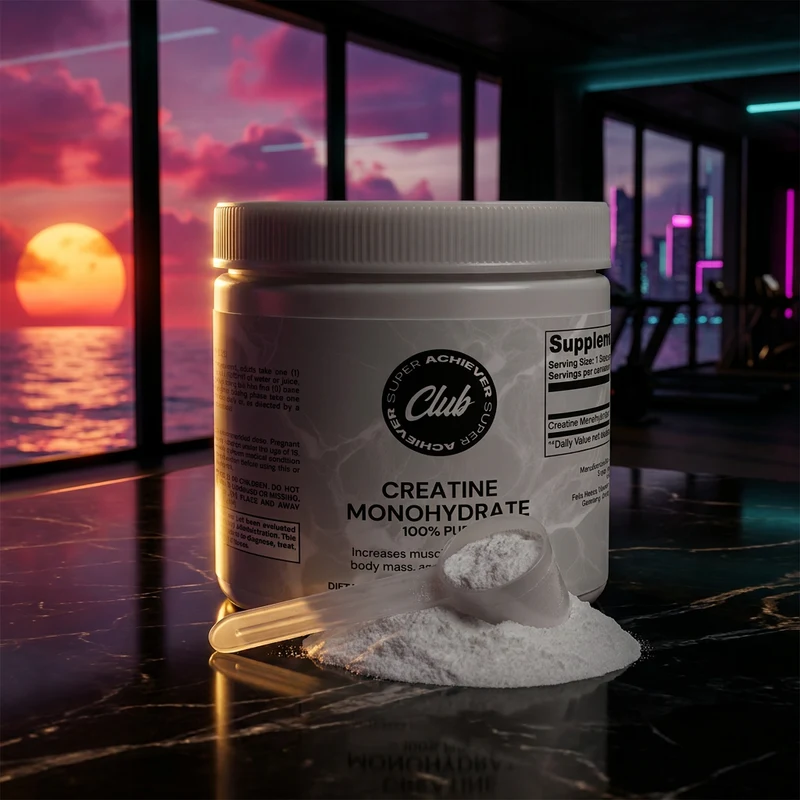
Super Achiever Creatine Monohydrate
Super Achiever Club · ships direct from our store9.3/10SAC Product Score™Our in-house formula: single-ingredient creatine monohydrate, unflavored — the exact form behind 500+ trials. Pinned here because it's ours, held to the same 50/50 criteria.
- Form
- Creatine monohydrate — single ingredient
- Size
- 250 g + scoop (~50 servings)
- Flavor
- Unflavored · zero fillers or sweeteners
- Made in
- USA
Pros- One ingredient — 100% creatine monohydrate, nothing hidden
- The exact form validated by 500+ clinical trials
- Unflavored — stacks into anything, no added sweeteners
- Ships direct from us — no marketplace middleman
Honest trade-offs- Not the cheapest per gram — bulk tubs undercut us on price
- 250 g tub, not a 1 kg bulk size
- Unflavored only — no flavored option yet
Our take — If you want to buy creatine straight from the source that wrote this guide, this is it — trial-grade monohydrate, nothing hidden. Not the cheapest gram on the page, but it's ours and we stand behind every tub.
7 picks — ranked by our 50/50 methodology
- #1Best overall for brain
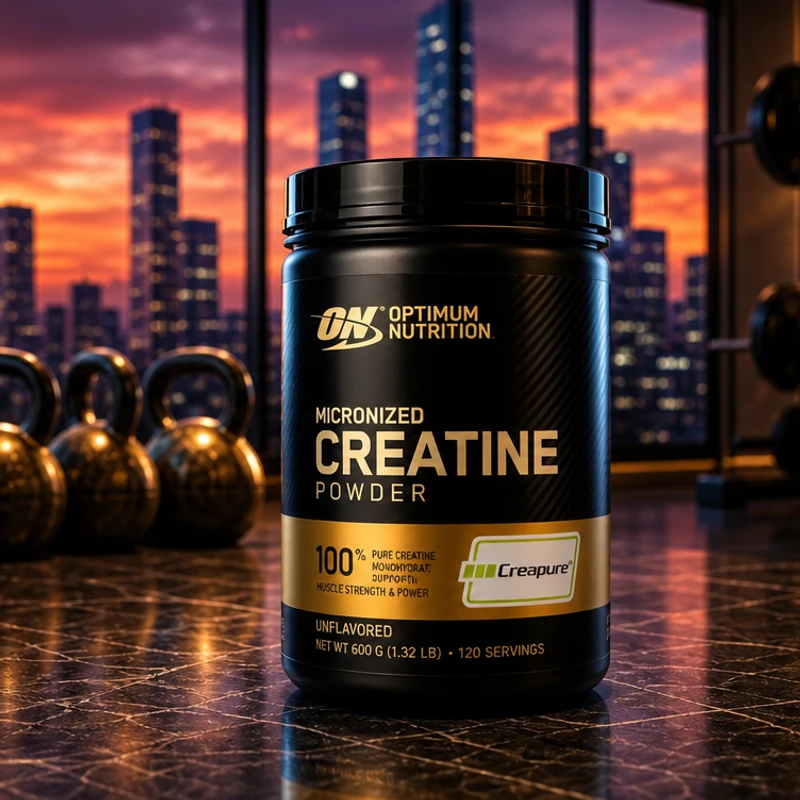
Optimum Nutrition Micronized Creatine Powder
Optimum Nutrition · Creapure micronized monohydrate · 600 g (120 servings)9.2/10SAC Product Score™SAC Product Score™ — how it breaks down- Form purity25%9.5
- Third-party testing25%8.5
- Per-serving creatine20%9.5
- Cost per active gram20%9.0
- Brand QC track record10%9.5
The default daily cognitive dose: Creapure-licensed monohydrate — the exact form behind Rae 2003's working-memory and processing-speed data — from the most-trusted brand in sports nutrition. An exact 5 g scoop, a 4-month tub, no disqualifying flaw.
- Form
- Creapure micronized creatine monohydrate (Alzchem, Germany · 99.95%)
- Real 5 g dose
- 1 level scoop = exact 5 g (the cognitive dose, honestly labeled)
- Cognitive-trial alignment
- Monohydrate — the form in Rae 2003
- Testing
- GMP-certified facility + third-party lab (not NSF — see Thorne #3)
Pros- Creapure-licensed monohydrate — the exact form with the cognitive trial behind it
- Exact 5 g scoop is the cognitive dose; 120-serving tub covers ~4 months of daily brain use
- $0.23/dose — the best value for Creapure from a household brand
- 30+ years of brand QC with no recalls — the safe 'just start' default for the brain
Cons- Not NSF Certified for Sport — if you're drug-tested, jump to Thorne (#3)
- Modest premium over pure generic micronized monohydrate (Nutricost #4 at ~$0.22)
Our take — The creatine to buy if your goal is the brain and you want to stop researching. It clears every meaningful bar for cognition — it's monohydrate (the only form with cognitive trials), it's Creapure, it delivers an exact 5 g dose, it's from a brand with three decades of QC, and it costs $0.23 a day. Run 5 g every day including rest days, give it 4-6 weeks for brain creatine to saturate, and judge it on working memory and how sharp you are on short-sleep days. Set expectations by your baseline: biggest if you're vegetarian, sleep-deprived, or older; subtler if you're a well-rested omnivore. The only reasons to pick something else are NSF certification (Thorne #3), the absolute lowest price (Nutricost #4), or a format you'll stick with (Create gummies #5).
- #2Best tested (NSF)
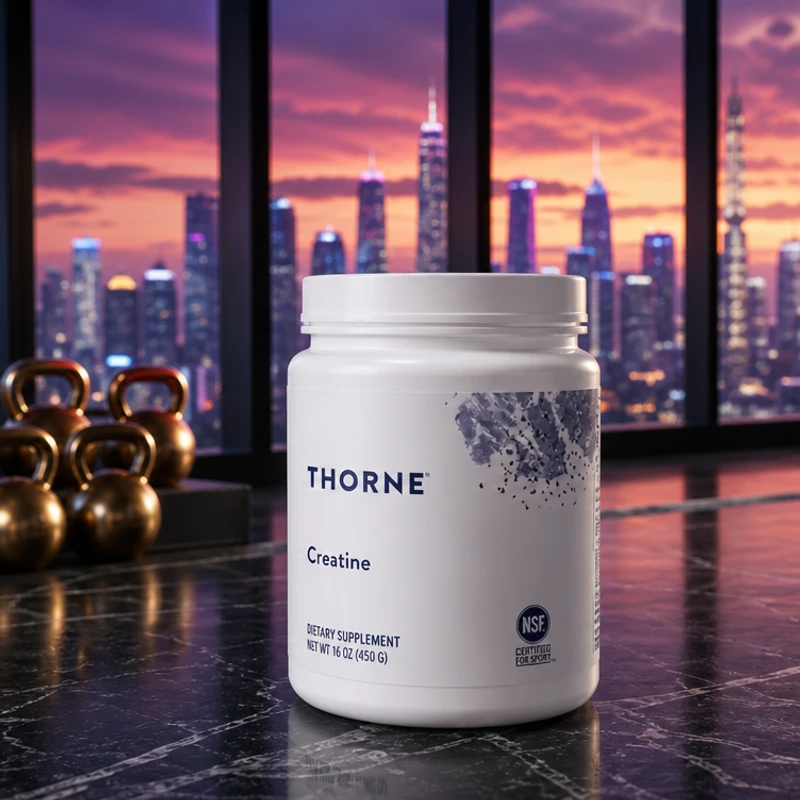
Thorne Creatine
Thorne · Creapure-licensed, NSF Certified for Sport · 450 g (90 servings)8.9/10SAC Product Score™SAC Product Score™ — how it breaks down- Form purity25%9.5
- Third-party testing25%10.0
- Per-serving creatine20%9.5
- Cost per active gram20%7.5
- Brand QC track record10%10.0
The cleanest tested tub for the brain: the same Creapure monohydrate that carries the cognitive evidence, with NSF Certified for Sport on every batch. The premium buys testing and purity for a daily brain habit, not a different molecule.
- Form
- Creapure micronized creatine monohydrate (Alzchem, Germany · 99.95%)
- Real 5 g dose
- 1 scoop = exact 5 g (no fillers, no flavoring)
- Cognitive-trial alignment
- Monohydrate — identical evidence base to Pick #1
- Testing
- NSF Certified for Sport — every batch, 270+ banned substances
Pros- Same Creapure monohydrate as #1-2 — the form with the cognitive trial
- NSF Certified for Sport on every batch — the only cert major US federations accept
- Thorne's clinical-grade QC is the industry benchmark for per-scoop purity
- Guaranteed exact 5 g of pure monohydrate per scoop — a clean daily brain dose
Cons- $0.50/dose is the highest cost-per-gram on the list — overkill if you're not drug-tested
- Smaller tub (450 g vs ON's 600 g) means more frequent re-orders for a daily habit
- The certification doesn't sharpen cognition — the molecule is identical to cheaper picks
Our take — The premium brain pick, and the right buy for one kind of person: the buyer who wants the cleanest tested tub or who is drug-tested while running creatine for cognition. The cognitive biology is identical to ON (#1) — same Creapure monohydrate, same Rae 2003 evidence — but Thorne layers NSF Certified for Sport batch testing on top. For the brain specifically, the certification doesn't add cognitive benefit; what you're buying is the most rigorously tested 5 g scoop on the shelf, which is a reasonable thing to want for something you ingest daily. If your federation requires NSF, buy it without hesitation. If you're a recreational user who isn't tested, ON (#1) or Nutricost (#4) deliver the same molecule for less. Want NSF in a gummy? See Create (#5).
- #3Best Creapure value
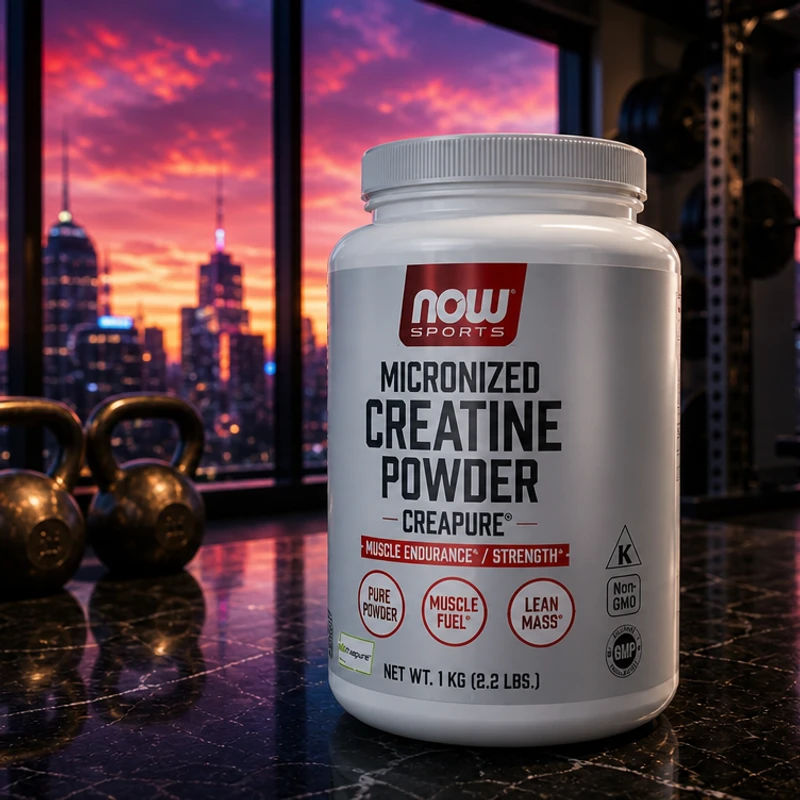
NOW Sports Creatine Monohydrate (Creapure)
NOW Sports · Creapure micronized monohydrate · kosher, non-GMO · 500 g (100 servings)8.7/10SAC Product Score™SAC Product Score™ — how it breaks down- Form purity25%9.5
- Third-party testing25%8.0
- Per-serving creatine20%9.5
- Cost per active gram20%7.5
- Brand QC track record10%9.0
The household-tier Creapure pick for the brain: the same patented German monohydrate that carries the cognitive evidence, wrapped in NOW's 30-year in-house QC, kosher certification, and the offline-shelf availability that means your daily cognitive dose never depends on a single Amazon listing.
- Form
- Creapure micronized creatine monohydrate (Alzchem, Germany · 99.95%)
- Real 5 g dose
- 1 scoop = exact 5 g (no fillers, no flavoring)
- Cognitive-trial alignment
- Monohydrate (Creapure) — the form with the cognition data
- Testing
- In-house lab + Informed Sport on select batches · kosher, non-GMO
Pros- Same Creapure 99.95% monohydrate as ON (#1) and Thorne (#3) — the cognitive form
- NOW's 30-year in-house QC with a real voluntary-recall track record
- Available offline at most US health stores — supply continuity for a daily brain habit
- Kosher + non-GMO as free QC signals; Informed Sport on select runs
Cons- $0.25/dose lands a hair above ON's $0.23 for the same Creapure form
- Informed Sport on SELECT batches only — drug-tested athletes still need Thorne's per-batch NSF
Our take — The Creapure pick for the brain-focused buyer who values supply continuity over squeezing out the last cent. At ~$0.25/dose it's a whisker above ON, and that small premium funds NOW's in-house lab testing, kosher certification, and a distribution footprint that means you can grab a tub at Whole Foods or Vitamin Shoppe when Amazon is out — useful when cognition is a daily, never-skip habit. The molecule is identical to our #1, so the cognitive evidence applies in full. If you're optimizing purely on Amazon price, ON (#1) edges it; if you're drug-tested, Thorne (#3) is the cleaner pick. A strong, no-drama Creapure tub for the brain.
- #4Best for adherence
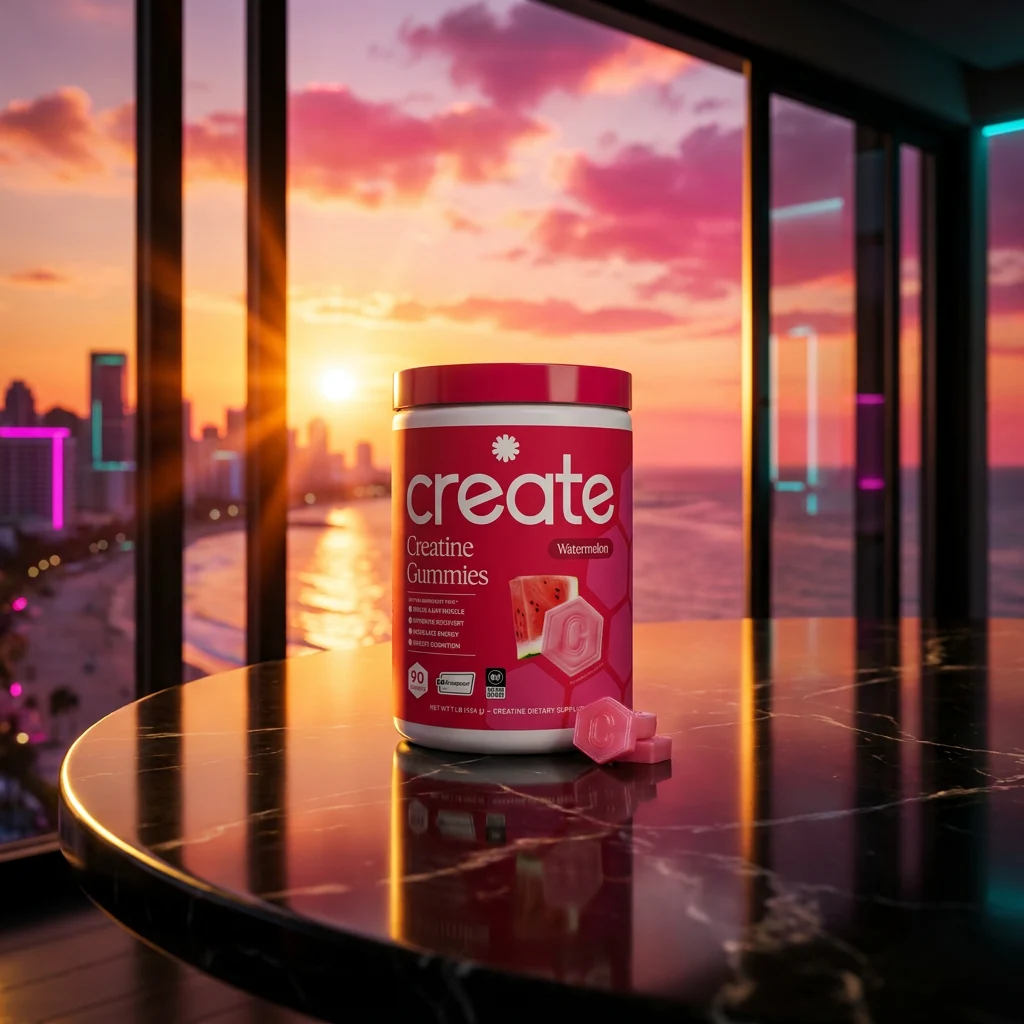
Create Wellness Creatine Gummies
Create Wellness · 1.5 g Creapure monohydrate per gummy · NSF Certified for Sport · 90 count8.4/10SAC Product Score™SAC Product Score™ — how it breaks down- Form purity (Creapure)25%9.5
- Dose density vs the 5 g standard25%8.7
- Cost per active 5 g dose20%8.5
- Convenience + adherence15%9.5
- Formula honesty + testing15%9.0
The adherence pick for the brain — because the cognitive effect only happens if you take it every day. Create is still Creapure MONOHYDRATE (the form with the cognition data), just in a gummy you won't skip: 1.5 g per gummy means a real 5 g dose is 3-4 gummies, plus NSF Certified for Sport and an anti-melt formula.
- Form
- Creapure creatine monohydrate · 1.5 g per gummy (highest density in the aisle)
- Real 5 g dose
- 3-4 gummies (brand markets 3 = 4.5 g; take 4 for a clean 5 g)
- Cognitive-trial alignment
- Monohydrate (Creapure) — the cognitive form, just in gummy format
- Testing
- NSF Certified for Sport — batch-tested, 270+ banned substances
Pros- Still Creapure MONOHYDRATE — the cognitive form, so the brain evidence applies
- Highest dose density in the gummy aisle — 1.5 g/gummy means just 3-4 for a real 5 g brain dose
- Genuine Creapure AND NSF Certified for Sport — the rare gummy with both
- No scoop, no water — the format that turns a skipped habit into a daily one
Cons- Still ~6x the cost-per-gram of powder — the gummy tax applies, just less than any rival
- A 90-count tub is only ~22-30 days at a real dose — expect roughly monthly re-orders
Our take — If a scoop-and-water ritual is the friction that makes you skip days, this is the brain pick — because creatine's cognitive effect depends entirely on daily saturation, and a 5 g dose you actually take beats a perfect scoop sitting in the cupboard. The crucial point for the brain: Create is still Creapure monohydrate, the exact form behind the cognitive evidence, so you're not trading away the science for convenience — only paying for the format. It's also the rare gummy that pairs genuine Creapure with NSF Certified for Sport. Go in clear-eyed: it's still ~6x powder's cost-per-gram and a tub lasts about three weeks at a real dose. The smartest setup is the hybrid — cheap monohydrate powder at home, Create for travel and busy stretches so the daily streak never breaks. For the full gummy field, see Best Creatine Gummies.
- #5Best value
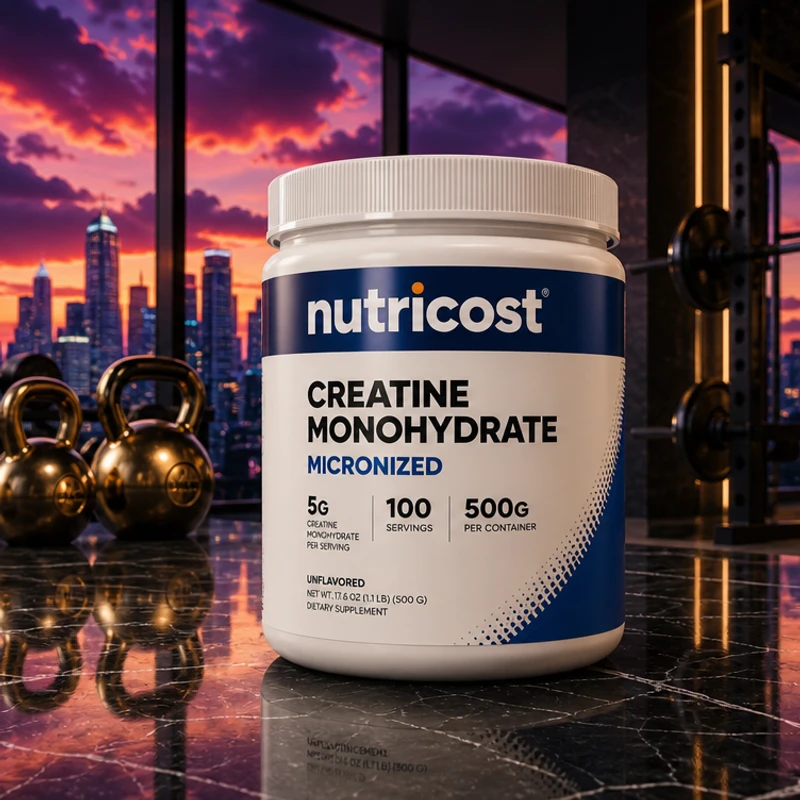
Nutricost Creatine Monohydrate Micronized
Nutricost · pure micronized monohydrate · GMP-certified · 500 g (100 servings)8.3/10SAC Product Score™SAC Product Score™ — how it breaks down- Form purity25%8.5
- Third-party testing25%7.5
- Per-serving creatine20%9.5
- Cost per active gram20%8.5
- Brand QC track record10%7.5
The lowest-cost daily cognitive dose: pure micronized monohydrate, a calibrated 5 g scoop, reliable stock at ~$0.22/dose. You trade the Creapure stamp for the cheapest legitimate creatine in tub form — and the brain reads the creatine, not the stamp.
- Form
- Micronized creatine monohydrate (generic, GMP-certified supply)
- Real 5 g dose
- 1 calibrated scoop = exact 5 g (no fillers, no flavoring)
- Cognitive-trial alignment
- Monohydrate — the form with the cognition data
- Testing
- GMP facility + internal batch QC (no public per-batch COA, no NSF)
Pros- Lowest cost-per-dose tub here (~$0.22) — pure micronized monohydrate, the cognitive form
- Calibrated 5 g scoop hits the cognitive dose; reliable Amazon stock
- Same elemental creatine delivered as the Creapure picks — same cognitive evidence applies
- GMP-certified facility with a 10+ year brand track record, no major recalls
Cons- Generic (non-Creapure) supply with no public per-batch COA — ON (#1) is nearly the same price with the Creapure stamp
- Not NSF Certified for Sport — drug-tested athletes need Thorne (#3)
Our take — The value play for the brain, and a genuinely good one — the cheapest legitimate creatine in tub form here at ~$0.22 per real dose. The molecule delivered to your brain is identical to the Creapure picks, so Rae 2003's cognitive evidence applies in full; what you give up is the Creapure manufacturing stamp and a consumer-facing per-batch COA. The honest wrinkle is that ON (#1) sits at near-parity on price (~$0.23) while adding the Creapure license, so for most first-time buyers ON is the marginally better default. Nutricost wins specifically when you want the absolute lowest cost on a years-long daily cognitive habit, or you already trust the brand. Cognition shouldn't be gated by a few cents a day.
- #6Premium combo (HMB adds nothing for brain)
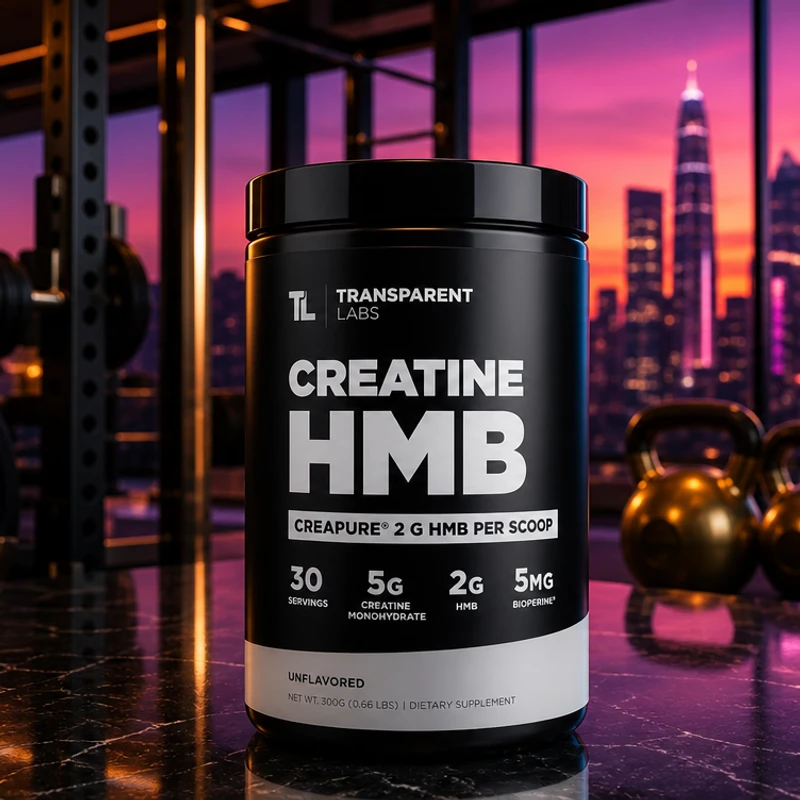
Transparent Labs Creatine HMB
Transparent Labs · Creapure monohydrate + 1.5 g HMB per scoop · per-batch COA published7.4/10SAC Product Score™SAC Product Score™ — how it breaks down- Form purity25%9.5
- Third-party testing25%9.0
- Per-serving creatine20%9.0
- Cost per active gram20%3.5
- Brand QC track record10%8.5
A genuinely clean Creapure base saddled with an add-on the brain doesn't use. The monohydrate is the cognitive form and the published COA is the best on the board — but the HMB is a muscle anti-catabolic with no cognitive role, and you're paying 5-10x plain monohydrate for it.
- Form
- Creapure monohydrate (5 g) + calcium HMB (1.5 g) per scoop
- Real 5 g dose
- 1 scoop = exact 5 g creatine (the cognitive dose) + 1.5 g HMB
- Cognitive-trial alignment
- Creatine = monohydrate (cognitive form); HMB = no cognitive role
- Testing
- Per-batch COA published, lookup-able by lot code — best on the board
Pros- Best per-batch COA transparency on the entire board — lookup-able by lot code
- Creapure base is impeccable — the same monohydrate (cognitive form) as the premium tier
- Clean panel: no fillers, no artificial sweeteners, no proprietary blend
- Exact 5 g of monohydrate per scoop — the cognitive dose is honestly delivered
Cons- ~$1.67/dose — 7x pure Creapure (#1) for an HMB add-on the brain has no use for
- HMB is a muscle anti-catabolic with zero cognitive evidence — pure positioning for the brain buyer
Our take — A clean product whose premium makes no sense for the brain specifically — which is why it sits near the bottom of a cognition ranking despite an excellent Creapure base. The creatine here is the same monohydrate behind the cognitive evidence, and the per-batch published COA is the best transparency on this list. The problem is what you're paying extra for: HMB is an anti-catabolic compound studied (modestly) for muscle preservation, with no cognitive role whatsoever. For the brain, you're buying a $50, 30-serving tub to get the same 5 g of monohydrate you'd get from a $28, 120-serving tub of ON (#1). If you've separately decided to run HMB for muscle reasons it's a tidy single scoop; for cognition, buy the standalone Creapure and put the savings into omega-3.
- #7Skip for brain (alt form, no cognitive trials)
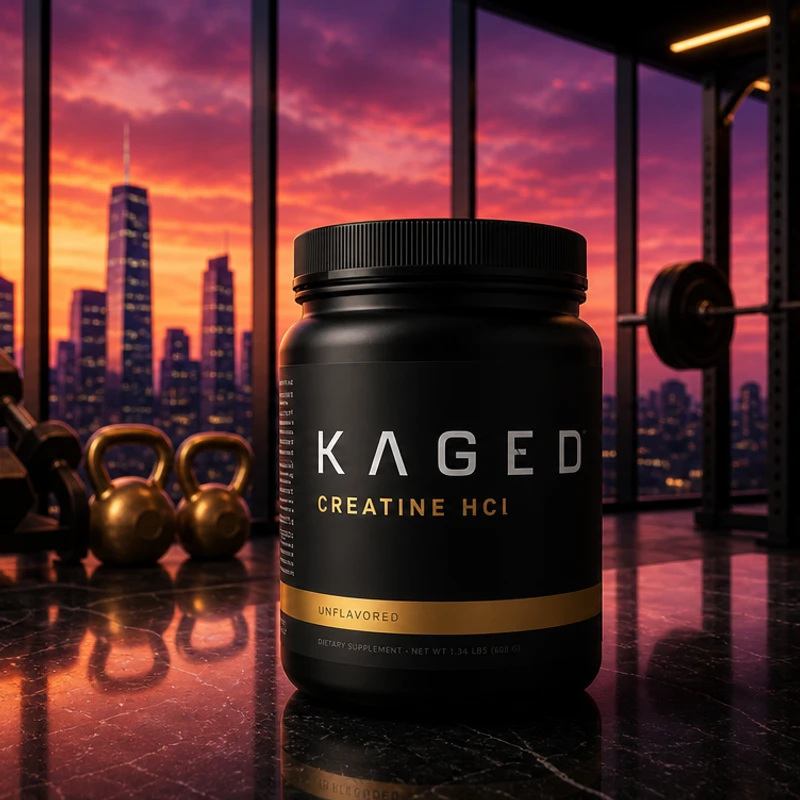
Kaged Creatine HCl
Kaged · creatine hydrochloride · 750 mg per capsule · NOT monohydrate6.3/10SAC Product Score™SAC Product Score™ — how it breaks down- Form purity25%7.0
- Third-party testing25%7.5
- Per-serving creatine20%5.0
- Cost per active gram20%4.0
- Brand QC track record10%8.0
Marketed on 'better absorption', but for the brain that's irrelevant: HCl has zero cognitive trials. None of the brain-creatine evidence was generated on it, and a capsule serving falls well under a real 5 g — so for cognition it's a different molecule with no data and the worst value here.
- Form
- Creatine hydrochloride (HCl) — a different molecule from monohydrate
- Per capsule
- 750 mg HCl ≈ 585 mg creatine — a real 5 g dose needs 6-7 capsules
- Cognitive-trial alignment
- NONE — no brain-creatine study used HCl
- Testing
- Informed Sport on select batches · non-GMO · vegan capsule
Pros- Highly water-soluble and mixes fast — but solubility is irrelevant to cognition once saturated
- Clean execution from Kaged's credible 10-year brand with Informed Sport on select runs
- Capsule format travels well for the rare buyer who genuinely can't tolerate monohydrate
Cons- Zero cognitive RCTs — none of creatine's brain evidence (Rae 2003) was generated on HCl
- A capsule serving is well under a real 5 g; dosed properly (6-7 caps) it's the worst value here for the brain
- 'Better absorption' doesn't sharpen cognition — once brain phosphocreatine is saturated, the endpoint is identical
Our take — A fine molecule sold on a claim that's irrelevant to the brain — and for cognition specifically, it fails the one criterion that matters most: it isn't the form the studies used. Every brain-creatine trial, Rae 2003 included, used monohydrate; HCl has no cognitive data at all, and its solubility advantage does nothing for a saturated brain. On top of that, a capsule serving delivers well under a real 5 g of creatine, so dosing it correctly for cognition (6-7 capsules) makes it the priciest creatine on this board. Skip it for the brain. The only genuine niche is someone who truly can't tolerate monohydrate even at 5 g/day and wants capsules — and even then they're paying more for a form with no cognitive evidence. For the brain, buy monohydrate (Pick #1).

▸ Affiliate disclosure: every Amazon link uses our Associates tag (superachieverclub-20). We earn a small commission at no cost to you; it funds independent reviews. We never accept payment to change a ranking.
Creatine is a brain supplement — but the evidence is narrower than the marketing
- 01
Creatine is a brain supplement, not just a muscle one.
About 5% of the body's creatine sits in the brain, where phosphocreatine buffers ATP for energy-hungry neurons. Supplementing raises brain phosphocreatine — one of the few legitimately evidence-backed compounds for cognition.
- 02
The cleanest trial found real gains — in vegetarians.
Rae 2003 (PMID 14561278) is the cornerstone cognitive evidence: a double-blind, placebo-controlled trial where creatine monohydrate improved working memory and processing speed versus placebo in vegetarian subjects.
- 03
The payoff is biggest for stressed, low-baseline brains — subtle otherwise.
The cognitive benefit is largest when the brain is energy-stressed (sleep deprivation) or starting from a low baseline (vegetarians, and likely older adults). It's smaller-to-subtle in well-rested omnivores — a bioenergetic base you feel over weeks, not a stimulant you feel within an hour.
- 04
Only monohydrate has cognitive trials — the fancy forms add nothing.
Monohydrate purity is the load-bearing criterion: it's the only form with cognitive trials, while HCl, buffered, and multi-form 'focus' blends have none. They ride monohydrate's coattails at a premium. What actually matters is a real 5 g dose and third-party testing, because you ingest this daily for the brain.
Rae 2003 (PMID 14561278), Kreider 2017 (PMID 28615996), Antonio 2021 (PMID 33557850), Cooper 2012 (PMID 22817979), Buford 2007 (PMID 17908288).
How we ranked these seven for the brain
Each pick was scored 0-10 across five criteria, then weighted to a final composite. Versus our umbrella creatine list, the weighting here leads with monohydrate purity — monohydrate is the only creatine form with published cognitive trials (Rae 2003), so any pick that isn't monohydrate loses the criterion that matters most for cognition. An exact 5 g dose carries weight because the cognitive effect, like the strength effect, tracks creatine saturation at a real 5 g/day. Third-party testing matters more here than on a pure muscle list because the brain use-case is a daily, indefinite habit — you want a clean tub. Cost per real dose treats monohydrate powder as the baseline, and cognitive-trial alignment is the tiebreaker that pushes the alternative forms (HCl, multi-form) down regardless of their marketing.
- Monohydrate purity / Creapure30%
Is it creatine monohydrate — the only form with cognitive evidence (Rae 2003) — and ideally Creapure (99.9%+, contaminant-screened)? Generic micronized monohydrate scores well; Creapure scores highest; HCl, buffered, and multi-form blends are marked down hard because no study shows them helping cognition. This is the biggest weighting because it directly predicts whether the brain literature even applies.
- Exact 5 g cognitive dose25%
Does a real serving deliver a true, label-honest 5 g of monohydrate — the cognitive dose? Powder with an exact scoop scores top. Gummies are judged on grams-per-gummy and whether a real dose is achievable (Create's 1.5 g/gummy clears it). HCl is marked down because a capsule serving falls below the 5 g floor.
- Third-party testing20%
The certification tier for a daily brain habit: NSF Certified for Sport (every batch) > Informed Sport / public per-batch COA > internal GMP only. Decisive for drug-tested athletes, and a meaningful purity signal for anyone ingesting creatine every day for cognition.
- Cost per real 5 g dose15%
Price divided by the number of real 5 g doses, with monohydrate powder (~$0.22-0.25) as the baseline. Gummies run ~6x; HCl dosed properly is the worst value here. Cognition is a months-and-years habit, so the honest target is ~$0.20-0.30 per dose for powder.
- Cognitive-trial alignment10%
Does the form actually match the brain literature? Monohydrate is what Rae 2003 and every cognition study used. This criterion is the tiebreaker that keeps the marketing forms — which may score on convenience — out of the top tier for the brain specifically.


The bottom line for the brain
- 01
Optimum Nutrition Creapure (#1) is the default brain buy.
It's the monohydrate form behind Rae 2003's working-memory and processing-speed data, an exact 5 g cognitive dose, a ~4-month tub at $0.23/serving. Buy it if you want to stop researching.
- 02
Honest alternatives: cheapest, cleanest-tested, or convenient.
Nutricost (#4) for the absolute lowest cost on a daily, years-long habit — same molecule, same evidence, ~$0.22/serving. Thorne (#3) if you want the cleanest tested tub or you're drug-tested. Create Wellness Gummies (#5) if a scoop is what makes you skip days. Skip #6-7 — HMB adds cost the brain can't use, HCl drops the evidence.
- 03
The protocol: monohydrate, a real 5 g/day, every day, judged over weeks.
Buy monohydrate (Creapure if budget allows), run 5 g/day every day including rest days, skip the loading phase (no cognitive head-start), and give it 4-6 weeks. Judge it on working memory, processing speed, and tired-day sharpness — not a stimulant kick.
Every claim ranked above traces back to one of these
Peer-reviewed studies, meta-analyses and clinical trials behind the picks. Click any citation to read the abstract on PubMed.
- [1]Rae 2003
Oral creatine monohydrate supplementation improves brain performance: a double-blind, placebo-controlled, cross-over trial
Double-blind, placebo-controlled cross-over trial: oral creatine monohydrate improved working memory and processing speed vs placebo in vegetarian subjects. The cornerstone cognitive evidence for creatine — and the reason monohydrate, taken by low-baseline brains, anchors the top of this brain ranking.
- [2]Kreider 2017
International Society of Sports Nutrition position stand: safety and efficacy of creatine supplementation in exercise, sport, and medicine
ISSN position statement synthesizing 500+ studies: creatine monohydrate is the most effective form, with no evidence that alternative forms (HCl, ethyl ester, buffered, multi-form) outperform it at equivalent doses. The basis for ranking monohydrate first for the brain and discounting the marketing forms that carry no cognitive data.
- [3]Cooper 2012
Creatine supplementation with specific view to exercise/sports performance: an update
Comprehensive safety and efficacy review across 30+ controlled trials: chronic creatine at 3-5 g/day shows no adverse effects on kidney function, liver enzymes, or muscle integrity in healthy adults. The safety floor that lets the brain protocol run daily and indefinitely with no cycling.
- [4]Antonio 2021
Common questions and misconceptions about creatine supplementation: what does the scientific evidence really show?
Myths review covering creatine forms (HCl, ethyl ester, multi-form blends), cycling, and dosing. Explicit conclusion: no alternative form outperforms monohydrate at equivalent creatine doses. The reference for cutting through 'nootropic creatine' and HCl marketing on the brain ranking.
- [5]Buford 2007
International Society of Sports Nutrition position stand: creatine supplementation and exercise
ISSN position stand establishing creatine monohydrate as the most extensively studied and clinically effective form, with phosphocreatine saturation as the mechanism. Confirms it's the molecule and the saturation — not the delivery form — that drive creatine's effects, including the brain phosphocreatine the cognitive benefit depends on.
More Creatine guides
Every form, format and use-case in the Creatine cluster — each ranked with the same methodology, so you can jump straight to the angle that fits you.
- Best Creatine SupplementsThe definitive creatine buying guide — the single best pick for each kind of buyer across powder, gummies, and HCl. Monohydrate powder wins on raw value; every other form is a situational upgrade for adherence, testing, or tolerance.
- Best Form of Creatine: Why Monohydrate WinsEvery creatine form compared — monohydrate, micronized, Creapure, HCl, buffered, ethyl ester, multi-form. The ISSN-anchored verdict: monohydrate wins, the rest are markups on the same molecule.
- Best Creatine for MenSame 10-product roster as the general creatine list, reframed for the male-lifter cohort — NSF Sport leads (federation-safe), Creapure form, tub size for bulking macros, per-scoop creatine.
- Best Creatine for Muscle GrowthTen creatine picks ranked for hypertrophy — cell volumization, satellite-cell proliferation, saturation over loading. Monohydrate is the only form with RCT weight.
- Best Creatine for WomenTen creatine picks re-scored for women: lean-mass preservation, postmenopausal bone-density support (Chilibeck 2015), cognition/mood uplift, no-loading-default, kitchen-friendly tub sizes.
- Best Creatine GummiesCreatine gummies ranked by grams-per-gummy and cost-per-real-5g-dose — most gummies under-deliver and a '3-gummy serving' usually isn't 5 g. Honest picks, including when powder still wins.
- Best Creatine MonohydrateThe most-studied supplement in sports nutrition — and 95% of buyers get it wrong by paying for fancier forms or flavored blends. Ranked by purity (Creapure), price-per-gram, and lab transparency.
- Best Supplements for Muscle GrowthThe supplement categories that actually matter for hypertrophy, each represented by our existing #1 pick — evidence-first hierarchy: training + calories + protein beat everything; creatine is the only large-effect legal supplement; the rest are honest margins.