
Protein Powder: Benefits, Dosage & Side Effects (2026)
Protein powder is a convenient, cost-efficient way to hit your total daily protein (~1.6 g/kg/day) for muscle protein synthesis — a tool to reach the target, not magic, since whole-food protein works just as well.
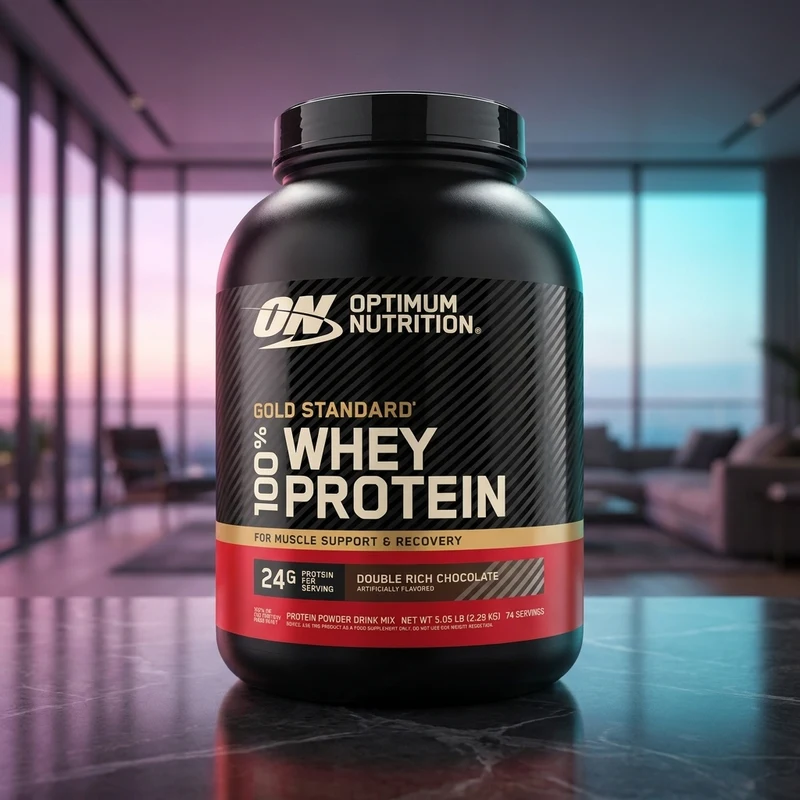
Optimum Nutrition Gold Standard 100% Whey
What is Protein Powder?
Protein powder is dried, concentrated protein — most often whey (from milk), casein (also from milk), or a plant blend (usually pea plus rice) — milled into a powder you mix into water or milk to add 20–30 g of protein to your day in seconds. Unlike most of the supplement aisle, its core job is not exotic: it is simply a fast, cheap, portable way to add protein when whole food doesn't get you to your target. That target is what actually matters — research on people training to build muscle converges on roughly 1.6 grams of protein per kilogram of bodyweight per day, and a powder exists to help you reach it, not to do something food can't.
The single most important thing to understand before buying one is what a protein powder is NOT: it is not magic, and it is not required. Chicken, eggs, Greek yogurt, dairy, fish, beans and lentils all count toward your daily protein every bit as much as a shake does. Whole-food protein works. The powder's entire advantage is logistics — it closes the gap on busy days, around training, or when hitting 1.6 g/kg from food alone is inconvenient or expensive. If you already comfortably hit your protein target from meals, the marginal benefit of a scoop is small. Buy it for convenience and cost-per-gram, not for a metabolic shortcut that doesn't exist.
What protein powder is NOT over-promised on is its effect: this is the rare category where the honest framing is generous. Adequate protein intake genuinely augments the muscle and strength you build from resistance training — that's one of the most replicated findings in sports nutrition, not a marketing claim. So the buyer decisions here are unusually practical: how much usable protein per dollar, how clean and honest the label is (protein is the category most prone to "amino-spiking," where cheap free-form aminos inflate the protein number), whether it's third-party tested (which matters most for plant proteins, where heavy-metal residues can appear), and whether you'll actually drink it. Those, not hype-management, are what separate a good tub from a bad one.
How it works
Protein powder works through one well-understood mechanism: it supplies the amino acids your body uses to build and repair muscle, raising MUSCLE PROTEIN SYNTHESIS (MPS) when intake is adequate. Resistance training breaks muscle down; protein intake drives the rebuild, and across the day a positive protein balance is what produces net muscle gain. Meta-analyses are unambiguous that adding protein on top of training increases lean mass and strength (Cermak 2012, PMID 23134885; Pasiakos 2015, PMID 25169440), and that the benefit scales with total daily intake up to a plateau around 1.6 g/kg/day (Morton 2018, PMID 28698222). The powder is just a delivery vehicle for that intake — which is why the honest frame is 'hit the daily target,' with the tub being the convenient way to do it.
The practical mechanism that matters per-meal is the LEUCINE THRESHOLD. Leucine is the amino acid that flips the MPS switch, and each protein-containing meal works best when it clears roughly 2.5–3 g of leucine — about what's in a typical 20–40 g dose of a high-quality protein. This is why protein is best spread across the day in several doses rather than crammed into one, and why a source's leucine and full essential-amino-acid (EAA) content matter, not just the gram count on the front of the tub. Whey is naturally leucine-rich, which is part of why it's the default; plant proteins are lower in leucine per gram, which is why good vegan blends combine sources (pea + rice) and dose a bit higher to clear the same threshold.
The forms differ mainly in SPEED and PURITY, not in whether they 'work.' WHEY is a fast-digesting milk protein that spikes blood amino acids quickly — ideal around training; within whey, CONCENTRATE is the standard (slightly more carbs, fat and lactose, cheapest per gram), ISOLATE is filtered to strip most lactose, fat and carbs (leaner, lower-lactose, pricier), and HYDROLYSATE is pre-broken-down for the fastest absorption (priciest, marginal real-world edge). CASEIN is a slow-digesting milk protein that releases amino acids gradually over hours — useful before a long gap or overnight. VEGAN BLENDS (typically pea + rice, sometimes plus other legumes/seeds) are complete when combined and the right choice for dairy-free or lactose-intolerant buyers. For total daily muscle-building, the difference between these is modest; total protein and consistency dominate. The honest bottom line on mechanism: protein powder reliably helps you build muscle and strength IF it helps you hit your daily protein target — that's the whole value, and it's a real one.
At-a-glance facts
- What it actually is
- A convenient, cheap way to hit your TOTAL daily protein — a tool, not magic; whole food counts too
- Typical dose
- 20–40 g protein per serving (1 scoop whey ≈ 24–25 g; vegan blends often 2 scoops)
- Daily target
- ~1.6 g/kg/day for people training to build muscle (Morton 2018, plateau)
- Leucine threshold
- ~2.5–3 g leucine per meal flips muscle protein synthesis on — covered by a normal 20–40 g dose
- Timing
- Matters far less than total — spread protein across the day; the 'anabolic window' is wide
- Whey vs casein
- Whey = fast-digesting (around training); casein = slow-release (before a long gap or overnight)
- Forms
- Concentrate (cheapest) · isolate (leaner, low-lactose) · hydrolysate (fastest) · casein (slow) · vegan pea+rice
- Biggest buyer decision
- Usable protein per dollar + label honesty (amino-spiking) + third-party testing
- Safety note
- Well tolerated; kidney-harm claim is a myth in healthy people; check plant proteins for heavy-metal testing
- Cost range (US)
- ~$0.95 to over $2.40 per serving
Evidence: The strongest evidence base on this site. Multiple meta-analyses of resistance-trained adults show protein supplementation significantly increases gains in lean mass and strength (Morton 2018 PMID 28698222, 49 studies; Cermak 2012 PMID 23134885, 22 RCTs; Pasiakos 2015 PMID 25169440), with benefit scaling to a daily-intake plateau around 1.6 g/kg/day; trained-athlete requirements were estimated near 1.76 g/kg/day decades earlier (Tarnopolsky 1992 PMID 1474076). The one honest caveat is narrow: the powder isn't magic — TOTAL daily protein drives the result and whole food counts equally (Cintineo 2018 PMID 30255023). A powder is the convenient, cost-efficient way to hit the target, not a substitute for hitting it.
Who it's for — and who it isn't
- Anyone training to build muscle or strength who struggles to hit ~1.6 g/kg/day of protein from whole food alone — the powder is the cheapest, fastest way to close the gap
- Busy people who want a portable, no-prep way to add 20–30 g of protein around training or on hectic days
- Lactose-sensitive or dairy-free buyers — whey isolate strips most lactose, and pea+rice vegan blends avoid dairy entirely
- Cost-conscious buyers who want the lowest price per gram of protein (commodity whey concentrate/blends usually win here)
- People who value label honesty and third-party testing and will pick a fully-disclosed, certified tub over an opaque proprietary blend
- Older adults and dieters trying to preserve muscle on lower calories, where hitting a protein target from food alone is harder
- People who already comfortably hit their daily protein target from whole food — the marginal benefit of a scoop is small and the cost is real
- Anyone expecting the powder itself to build muscle without training and adequate total intake — it's a convenience tool, not a metabolic shortcut
- Buyers with a diagnosed kidney condition, who should follow their clinician's protein guidance rather than self-supplementing
- People with a milk allergy (distinct from lactose intolerance) — they need a plant-based blend, not whey isolate
- Bargain-hunters who only consider opaque proprietary-blend tubs with no disclosed amino profile — protein is the category most prone to amino-spiking, so you can't verify what you're paying for
Week-by-week, what happens
- Per mealA 20–40 g dose clears the ~2.5–3 g leucine threshold and acutely raises muscle protein synthesis for a few hours. This is a biochemical effect, not something you 'feel' — don't expect a sensation.
- Day 1+No felt change. The value is simply that you hit your daily protein target more easily than from food alone. Any same-day 'energy' is unrelated to the protein itself.
- Week 2–4With consistent training and adequate total protein, recovery between sessions and the muscle-building stimulus are supported. Visible body-composition change is still early here — consistency is what compounds.
- Month 2–3+This is where the meta-analysis effect shows up: sustained adequate protein plus resistance training produces measurably greater lean mass and strength than training with too little protein. The tub earns its place only if it kept you on target.
Safety & contraindications
- Protein powder is well tolerated by healthy people. The widely repeated claim that high protein intake harms the kidneys is a myth in people with normal kidney function — it is not supported in healthy adults. People with diagnosed kidney disease are the real exception and should follow their clinician's protein guidance.
- Lactose is the most common tolerance issue: whey CONCENTRATE retains some lactose and can cause gas or bloating in sensitive people. Whey ISOLATE is filtered to strip most lactose and is usually fine; a milk allergy (distinct from lactose intolerance) means avoiding whey/casein entirely and using a plant-based blend.
- Third-party testing matters most for PLANT proteins. Some pea/rice and other plant powders have been found to carry higher heavy-metal residues (lead, cadmium) than whey, because plants take up metals from soil — so for vegan picks especially, prefer products with a credible third-party seal (NSF, NSF Certified for Sport, Informed Sport, or Labdoor) or a stated heavy-metal testing claim.
- Protein is the supplement category most prone to "amino-spiking," where cheap free-form amino acids are added to inflate the nitrogen-based protein number without delivering usable whole protein. Favor fully-disclosed labels with no proprietary protein blends; treat opaque blends and unverifiable claims with skepticism.
- Artificial sweeteners (sucralose, acesulfame potassium) are common and safe at normal intakes but bother some people's digestion or taste; stevia/monk-fruit options exist if you prefer to avoid them. Check the label if this matters to you.
- It is not a meal replacement and not a substitute for a balanced diet — a scoop supplies protein but not the full nutrition of whole food. Use it to top up protein, not to replace meals, and don't exceed sensible total intake on the assumption that more powder is better; past your daily target, extra protein offers diminishing returns.
All articles on Protein Powder
Best Creatine for Men
Same 10-product roster as the general creatine list, reframed for the male-lifter cohort — NSF Certified for Sport leads, then plain monohydrate form, tub size for bulking macros and per-scoop creatine.
Read →Best Creatine for Muscle Growth
Ten creatine picks ranked for hypertrophy — cell volumization, satellite-cell proliferation, saturation over loading. Monohydrate is the only form with RCT weight.
Read →Best Creatine Monohydrate
The most-studied supplement in sports nutrition — and 95% of buyers get it wrong by paying for fancier forms or flavored blends. Ranked by label purity, price per gram, and lab transparency.
Read →Best Creatine Supplements
The definitive creatine buying guide — the single best pick for each kind of buyer across powder, gummies, and HCl. Monohydrate powder wins on raw value; every other form is a situational upgrade for adherence, testing, or tolerance.
Read →Best Protein Powder
The 9 best protein powders ranked on protein quality and dose (whey isolate vs concentrate vs vegan), label honesty and amino-spiking purity, third-party testing, value per gram of protein and taste — with the evidence-backed frame that hitting ~1.6 g/kg/day of total protein, not the brand on the tub, is what drives muscle growth.
Read →Best Supplements for Muscle Growth
The supplement categories for muscle growth, ranked by how much each one adds — creatine first, protein powder second, the rest honest margins — with the #1 product of each category. Training, calories and protein beat all of them.
Read →Best Turkesterone
The 8 best turkesterone supplements ranked first on third-party verification (independent tests found many products contain under 1% of the claimed turkesterone), then standardization, dose and value — with the blunt frame that there are no good human turkesterone RCTs and verification, not hype, is everything.
Read →Ascent Native Fuel 100% Whey Review
The clean whey with a real Informed testing pedigree — best clean-plus-tested combo here.
Read →Dymatize ISO100 Hydrolyzed Whey Protein Isolate Review
The leanest, fastest post-workout isolate — best-in-class if sucralose doesn't bother you.
Read →Garden of Life Sport Grass-Fed Whey Review
The same protein-satiety benefit as any quality whey (Astrup 2013) in a grass-fed, NSF-Certified-for-Sport isolate — cleanest label here, at the highest cost per serving.
Read →Garden of Life SPORT Organic Plant-Based Protein (Vanilla) Review
The highest-protein, only NSF-Certified-for-Sport vegan pick — if you'll pay for it.
Read →Ghost Whey Protein (Cereal Milk) Review
The best-tasting whey here — buy it for compliance, not cost or certification.
Read →KOS Organic Plant-Based Protein (Chocolate Peanut Butter) Review
The best-tasting vegan protein — buy it for the habit, not the protein density.
Read →Legion Whey+ Grass-Fed Whey Isolate Review
The transparency pick — fully disclosed, grass-fed, and independently verified.
Read →Naked Whey 100% Grass-Fed Whey Protein (Unflavored) Review
The cleanest label in the lineup — if you'll flavor it yourself.
Read →Optimum Nutrition Gold Standard 100% Whey Review
The safe default that just works — best protein-per-dollar in the lineup.
Read →Transparent Labs Grass-Fed Whey Protein Isolate Review
The highest protein density here, with a genuinely clean grass-fed label.
Read →FAQ
Does protein powder actually work, or is it hype?
It genuinely works — and this is the rare supplement where that's the honest answer rather than a hedge. Protein is the most evidence-backed product in the entire sports-nutrition aisle: meta-analyses of people doing resistance training consistently show that adding protein increases the lean mass and strength you build, with benefit scaling up to roughly 1.6 g/kg/day. The one honest caveat is narrow but important: the powder itself isn't magic. What drives the result is your TOTAL daily protein, and you can hit that target with whole food just as well. A powder is simply the cheapest, fastest, most convenient way to close the gap when food doesn't get you there.
How much protein do I actually need per day?
For people training to build muscle, the research converges on roughly 1.6 grams of protein per kilogram of bodyweight per day — that's the plateau where added benefit largely levels off in Morton 2018's meta-analysis. An older classic study on strength athletes (Tarnopolsky 1992) estimated needs closer to 1.76 g/kg/day, so somewhere in the 1.6–2.0 g/kg range is a sensible target if you lift hard. For an 80 kg person that's about 130–160 g a day. The key point: that's a TOTAL across all food and shakes — the powder's only job is to help you reach it, and whole-food protein counts every bit as much.
Whey or plant protein — which should I choose?
For most people whey is the default: it's complete, naturally rich in leucine (the amino acid that triggers muscle synthesis), digests fast, mixes well and is usually the cheapest per gram. Choose a plant blend (typically pea + rice) if you're vegan, dairy-free, or don't tolerate dairy — modern blends combine sources to cover the full amino-acid profile and just need a slightly higher dose to match whey's leucine. The honest catch on plant proteins is testing: some have shown higher heavy-metal residues, so lean toward a third-party-certified vegan pick. For total daily muscle-building, a well-chosen plant protein and whey get you to the same place.
Concentrate, isolate, or hydrolysate — what's the difference?
They're all whey; they differ in filtering and speed, not in whether they work. CONCENTRATE is the standard and cheapest — slightly more carbs, fat and lactose. ISOLATE is filtered to strip most of the lactose, fat and carbs, so it's leaner and easier on lactose-sensitive stomachs, at a higher price. HYDROLYSATE is pre-broken-down for the fastest absorption and the highest price, with only a marginal real-world advantage for most people. For everyday muscle-building, concentrate or a concentrate/isolate blend is plenty; pay up for isolate mainly if you want leaner macros or have a mild lactose issue, and for hydrolysate only if you specifically want the fastest post-workout option.
Does protein timing (the 'anabolic window') matter?
Far less than the internet implies. Total daily protein is what drives muscle growth; the old idea that you must slam a shake within 30 minutes of training is largely overstated — the window is wide, spanning hours around your workout. What does help is spreading protein across the day in several 20–40 g doses so each meal clears the leucine threshold that switches muscle protein synthesis on, rather than eating it all at once. So timing the powder around training is fine and convenient, but it's a minor optimization. If you only get one thing right, get your daily total right.
Is protein powder bad for your kidneys?
No — not in healthy people. This is one of the most persistent myths in nutrition, and it isn't supported by the evidence for adults with normal kidney function: a higher-protein diet, including protein from powder, doesn't damage healthy kidneys. The real exception is people with pre-existing kidney disease, who genuinely do need to manage protein intake and should follow their doctor's guidance. For everyone else, the main practical cautions are mild and unrelated to kidneys — lactose in whey concentrate for sensitive stomachs, and choosing a third-party-tested product, especially for plant proteins.
Sources & further reading
- Morton 2018A systematic review, meta-analysis and meta-regression of the effect of protein supplementation on resistance training-induced gains in muscle mass and strength in healthy adults
A meta-analysis of 49 studies (1,863 participants) found that dietary protein supplementation significantly augmented resistance-training-induced gains in muscle mass and strength, with benefits plateauing at a total daily protein intake of roughly 1.6 g/kg/day. The single most-cited figure for how much protein a training adult actually needs — and the reason a powder is judged on whether it helps you reach that target.
- Cermak 2012Protein supplementation augments the adaptive response of skeletal muscle to resistance-type exercise training: a meta-analysis
Pooling 22 randomized controlled trials, protein supplementation during prolonged resistance training significantly increased gains in fat-free mass, muscle fiber cross-sectional area, and 1-RM strength versus training without supplemental protein. Independent confirmation that adding protein meaningfully enhances the training response — the core evidence that makes powder a legitimate, not cosmetic, tool.
- Tarnopolsky 1992Evaluation of protein requirements for trained strength athletes
Using nitrogen-balance and leucine-kinetics methods, this classic study estimated the protein intake for zero nitrogen balance in strength athletes at ~1.41 g/kg/day and a suggested recommended intake of ~1.76 g/kg/day — roughly double the sedentary RDA. Foundational evidence that trained individuals need substantially more protein, which is precisely the gap a convenient powder helps fill.
- Pasiakos 2015The effects of protein supplements on muscle mass, strength, and aerobic and anaerobic power in healthy adults: a systematic review
A systematic review concluding that protein supplementation enhances gains in muscle mass and strength during prolonged resistance training in healthy adults, while effects on aerobic and anaerobic power are less consistent. An honest, balanced read of where protein supplements clearly help (lean mass and strength) versus where the evidence is weaker.
- Cintineo 2018Effects of Protein Supplementation on Performance and Recovery in Resistance and Endurance Training
A review of protein supplementation across resistance and endurance training concluding that adequate protein intake — meeting a daily target, with peri-exercise protein a useful but secondary factor — supports performance, recovery and adaptation. Reinforces the central honest frame of this hub: total daily protein matters most, and the powder is a convenient delivery vehicle for hitting it.