
BCAA: Benefits, Dosage & Side Effects (2026)
BCAAs are three essential amino acids (leucine, isoleucine, valine) that activate muscle protein synthesis; they help most as an intra-workout aid, but for muscle growth a complete protein or full-spectrum EAA usually does more.
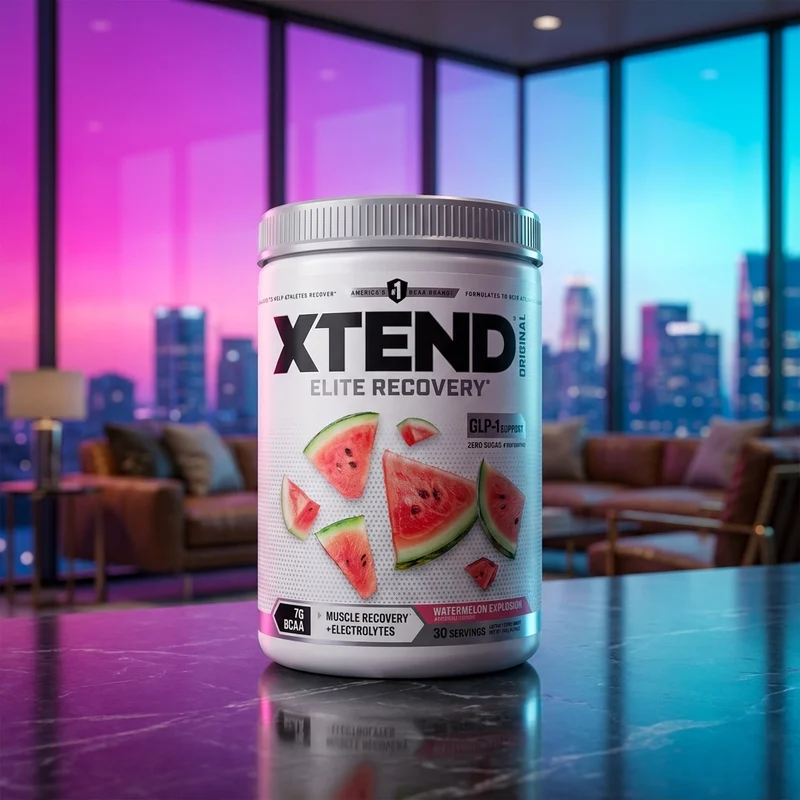
Xtend Original BCAA
What is BCAA?
BCAAs — branched-chain amino acids — are three of the nine essential amino acids your body can't make and must get from food: leucine, isoleucine, and valine. They're "branched-chain" because of their molecular shape, and they're sold as a supplement (almost always in a 2:1:1 leucine-to-isoleucine-to-valine ratio) on the premise that they drive muscle growth and recovery. Of the three, leucine is the star: it's the amino acid that acts as the trigger signal for muscle protein synthesis.
Here's the part the supplement industry skips. BCAAs are only THREE of the nine essential amino acids, and building new muscle protein requires all nine. You can think of leucine as the light switch that turns the muscle-building machinery ON — but the machinery still needs the full set of amino-acid "bricks" to actually build with. Supply only leucine, isoleucine, and valine, and the other six essential aminos become the bottleneck. That's why isolated BCAAs produce a real but submaximal effect: in a controlled trial, BCAAs alone raised muscle protein synthesis about 22% over a placebo (Jackman 2017, PMID 28638350) — meaningfully less than intact protein produces — and a major review concluded the claim that BCAAs alone meaningfully build muscle in humans is "unwarranted" (Wolfe 2017, PMID 28852372).
Which leads to the single most important, most honest thing to understand about BCAAs: if you already eat enough complete protein, they add very little. Roughly 1.6 g of protein per kilogram of bodyweight per day, with 25-40 g of protein at each meal, already delivers both the leucine trigger AND the complete amino pool. In that situation a BCAA scoop is largely redundant — a whey shake, a full-spectrum EAA, or simply a protein-rich meal does everything a BCAA tub does and supplies the missing six aminos too. BCAAs aren't useless; they're just a narrow tool that most well-fed lifters don't need for growth.
How it works
Leucine is the active trigger. It activates a cellular pathway called mTORC1, the master regulator that switches on muscle protein synthesis. Cross a leucine threshold of roughly 2-3 g in a serving and you flip that switch — which is why a real 2:1:1 BCAA dose (about 2.5-4 g leucine) does measurably raise muscle protein synthesis after training (Jackman 2017, PMID 28638350; Blomstrand 2006, PMID 16365096, showed BCAAs activate the relevant signaling enzymes including mTOR and p70 S6 kinase post-exercise).
But flipping the switch isn't the same as finishing the build, and this is where the evidence gets honest about isolated BCAAs. When researchers compared amino-acid formulations head-to-head after resistance exercise, mTORC1 activation ranked clearly: leucine alone < BCAAs < all nine essential amino acids (Moberg 2016, PMID 27053525). Adding the other six EAAs produced a stronger, more sustained anabolic signal — because the muscle could both START synthesis (leucine) and COMPLETE it (the full amino pool). This is the mechanistic reason a complete protein or a full-spectrum EAA outperforms a BCAA-only product for muscle growth, and why two EAA products (Cellucor Alpha Amino and Thorne Amino Complex) are on the BCAA listicle.
Where BCAAs do earn a defined role: recovery and endurance, not maximal growth. Around damaging exercise, BCAA supplementation has been shown to modestly reduce muscle soreness and improve some recovery markers (VanDusseldorp 2018, PMID 30275356), though a systematic review found the effect is inconsistent and largest when muscle damage is high and habitual protein intake is low (Fouré & Bendahan 2017, PMID 28934166). For endurance athletes, BCAAs may also blunt "central fatigue" — by competing with tryptophan for transport into the brain, they can reduce exercise-induced serotonin that contributes to the feeling of tiredness. So the accurate mechanism story is: a real leucine trigger and a modest, condition-dependent recovery aid — useful intra-workout, during fasted training, and for endurance sessions, but not a substitute for the complete protein that actually builds muscle.
At-a-glance facts
- What they are
- 3 of the 9 essential amino acids — leucine, isoleucine, valine
- Standard ratio
- 2:1:1 (leucine : isoleucine : valine) — the most-studied
- Effective leucine dose
- ~2.5-4 g leucine per serving to cross the mTORC1 trigger threshold
- Honest caveat
- If protein intake is adequate, isolated BCAAs add little vs whole protein / full EAAs
- Best real use
- Intra-workout sipper · fasted training · endurance recovery — not a protein replacement
- Recovery / soreness
- Modest, condition-dependent benefit — biggest when damage is high + protein is low
- Calories
- Near-zero — the main practical edge over a protein/EAA shake during training
- Cost range (US)
- $0.30-1.43 / serving depending on form, dose, and clean-label/cert status
- Better alternative for growth
- Full-spectrum EAA or complete protein (whey) — supplies all 9 aminos
Evidence: BCAAs reliably activate the muscle-building pathway (leucine → mTORC1) and modestly aid recovery/soreness in some conditions (Jackman 2017 PMID 28638350; VanDusseldorp 2018 PMID 30275356; Fouré & Bendahan 2017 PMID 28934166). But for muscle GROWTH the evidence is honestly mixed-to-negative for isolated BCAAs: full EAAs beat BCAAs head-to-head (Moberg 2016 PMID 27053525) and a major review called the BCAA-alone anabolic claim "unwarranted" (Wolfe 2017 PMID 28852372). Rated 3/5: real and useful in a narrow role, oversold for the main one.
Who it's for — and who it isn't
- Lifters who want a near-zero-calorie, great-tasting drink to sip DURING training — BCAAs' best real-world use case
- People who train FASTED and want free amino acids circulating without breaking the fast on meaningful calories
- Endurance athletes — BCAAs activate recovery enzymes post-exercise and may reduce central (CNS) fatigue on long sessions
- Anyone doing brutal, high-damage sessions while protein intake is temporarily low — the condition where the soreness benefit is largest
- Drug-tested athletes who specifically want a certified amino product — though a full-EAA pick (NSF Certified for Sport) is the smarter buy than BCAAs alone
- Anyone already eating adequate complete protein (~1.6 g/kg/day, 25-40 g per meal) — BCAAs add little on top; a meal or whey shake does more
- People whose goal is maximal muscle GROWTH — a complete protein or full-spectrum EAA beats isolated BCAAs (only 3 of 9 essential aminos)
- Anyone on a tight supplement budget — the dollars are better spent on protein powder or an EAA than on a BCAA-only tub
- People expecting BCAAs to replace a protein source — mechanistically they can't (the other six EAAs are rate-limiting)
Week-by-week, what happens
- Acute (during a session)Near-zero-calorie hydration and a leucine trigger while you train; possible reduction in perceived effort/central fatigue on long endurance work.
- 24-72 h post-sessionPossible modest reduction in muscle soreness and recovery-marker improvements after damaging exercise — largest when the session was brutal and protein intake was low.
- Weeks 2-8 of consistent useNo meaningful added muscle growth over adequate protein alone. If you want a measurable body-composition effect, that comes from total protein + training, not from adding BCAAs.
- OngoingValue is as a convenient intra-workout / fasted-training habit. If protein intake is dialed in, the honest expectation is 'pleasant drink, little extra muscle' — switch the budget to EAA/whey for growth.
Safety & contraindications
- BCAAs are food-derived amino acids and very well tolerated; typical supplemental doses (5-10 g) have a strong safety record in healthy adults.
- Taking BCAAs in isolation chronically can transiently lower blood levels of the other essential amino acids (notably tryptophan) by competing for the same transporters — another reason a full-EAA or complete protein is the more balanced choice for daily use.
- People with the rare genetic disorder maple syrup urine disease (MSUD) must avoid BCAA supplements entirely — they cannot metabolize branched-chain aminos.
- Higher habitual BCAA intake has been associated with insulin resistance in some observational research; this is a population-level signal, not a demonstrated harm from training-dose supplementation, but it's a reason not to mega-dose beyond what training needs.
- Not a complete protein — do not count a BCAA serving toward your daily protein target for muscle. It supplies only three of nine essential aminos.
- Check for a NAMED third-party certification (NSF Certified for Sport / Informed Sport) if you're drug-tested; per our product sourcing, of the common options only Thorne Amino Complex carries one.
All articles on BCAA
Best BCAA Supplements
The 10 best BCAA supplements ranked by leucine ratio + dose, added aminos, third-party testing and value — with the honest caveat that for anyone already eating enough protein, whole protein or full EAAs beat isolated BCAAs.
Read →Best EAA Supplements
8 essential amino acid products ranked on EAA dose and leucine per serving, label transparency, testing, formula and price per 10 g. Every Supplement Facts panel read by us.
Read →Best HMB Supplements
6 HMB products ranked on dose against the trials, form and label clarity, testing, formula and cost per day at 3 g. Every Supplement Facts panel read by us.
Read →BodyHealth PerfectAmino Coated Tablets 150 ct Review
The tablet option: a 5 g proprietary blend per five tablets, NSF Certified for Sport for a listed lot, at $44.95 for 150 tablets.
Read →BulkSupplements EAA Powder 500 g Review
The lowest price per gram: a 10 g serving of an unflavored EAA blend for $0.48, with no amount printed for leucine or any other single amino acid.
Read →Cellucor Alpha Amino EAA & BCAA Review
The flavored EAA-plus-electrolyte sipper for longer sessions.
Read →Kaged Fermented BCAA 2:1:1 Review
The clean, vegan, plant-fermented unflavored value pick.
Read →Kion Aminos Powder Review
A naturally sweetened EAA with a fully printed panel: 5 g of EAAs and 2 g of leucine per scoop, at $54.95 for 30 servings.
Read →Momentous Vital Aminos Review
An EAA powder that is NSF Certified for Sport for every lot: 5.6 g of EAAs with 2.5 g of leucine per scoop, sweetened with stevia, at $45.99 for 30 servings.
Read →Naked BCAAs Review
The cheapest, most minimal clean BCAA — stack-it-yourself purity.
Read →NAKED EAAs Unflavored Review
The most complete EAA serving we found: 9.25 g across all nine essential amino acids, 2.4 g of it leucine, unflavored, with sunflower lecithin as the only other ingredient.
Read →NOW Sports BCAA Powder Review
The cheap bulk free-form BCAA from a trusted brand — light dose, mixes poorly.
Read →Nutricost BCAA Capsules Review
The travel/convenience capsule — portable aminos, but a small dose.
Read →Nutricost BCAA Powder 2:1:1 Review
6 g BCAA at 2:1:1 per 9 g scoop at about $0.42, the cheapest flavored BCAA on the list; no certifier listing. 7.2/10.
Read →Nutricost EAA Powder Unflavored Review
The low-price EAA powder with a testing statement: 8 g per scoop, about 3 g of it leucine, unflavored, at $17.95 for 30 servings.
Read →Optimum Nutrition Instantized BCAA 5000 Review
The cheap, clean, unflavored powder to stack into your own mix.
Read →Primaforce BCAA Powder Review
7 g BCAA at 2:1:1 plus 2.5 g glutamine and citrulline per scoop, about $0.77 a serving; testing claim names no lab. 8.2/10.
Read →Super Achiever BCAA + Glutamine (Watermelon) Review
Our own BCAA powder, scored like every other tub: a true 2:1:1 ratio with every amount printed, held back by a 4 g dose and no sport certificate.
Read →Thorne Amino Complex Review
A certified, openly labelled amino powder with a small scoop: 3.8 g of EAAs and 1.25 g of leucine, NSF Certified for Sport by lot, at $52.00 for 30 servings.
Read →Transparent Labs BCAA Glutamine Review
The highest-dosed, cleanest-label BCAA tub — premium done right.
Read →Xtend EAA + BCAA Mango Review
The flavored option: 4.75 g of EAAs and 1.5 g of leucine per scoop, sodium and potassium added, artificial sweeteners, 40 scoops for $22.39.
Read →Xtend Original BCAA Review
The proven default intra-workout BCAA — complete, tasty, cheap.
Read →FAQ
Do BCAAs actually build muscle, or is it marketing?
Both, partly. BCAAs are real: leucine activates mTORC1, the switch that starts muscle protein synthesis, and BCAAs alone have been shown to raise MPS about 22% over placebo after training (Jackman 2017, PMID 28638350). But that's a much weaker claim than the industry sells. Building muscle protein needs all nine essential amino acids, and BCAAs supply only three — so the other six become the bottleneck. Head-to-head, all nine EAAs beat BCAAs beat leucine alone for the anabolic signal (Moberg 2016, PMID 27053525), and a major review called the 'BCAAs build muscle on their own' claim 'unwarranted' (Wolfe 2017, PMID 28852372). Bottom line: BCAAs flip the switch but can't finish the build.
If I already eat enough protein, are BCAAs worth it?
Honestly, no — not for muscle growth. If you're hitting roughly 1.6 g of protein per kg of bodyweight per day with 25-40 g of protein at each meal, your food already delivers both the leucine trigger and the complete amino pool to build with. In that situation a BCAA scoop is largely redundant; a whey shake, a full-spectrum EAA, or simply a protein-rich meal does everything a BCAA tub does and more, for similar money. BCAAs earn their place mainly when you can't or don't want to eat protein around training — fasted sessions, an intra-workout drink, or long endurance work — not as an add-on to an already-adequate protein intake.
BCAAs vs EAAs — which should I buy?
For muscle growth specifically, EAAs (essential amino acids) are the better buy. EAAs include all nine essential aminos — the three BCAAs PLUS the other six your muscle needs to actually complete protein synthesis. When compared directly, the full EAA blend produced a stronger, more sustained anabolic signal than BCAAs alone (Moberg 2016, PMID 27053525). BCAAs still win on two narrow points: they're usually cheaper and they often taste better as an intra-workout sipper. But if your goal is building muscle and you're choosing one, a full-spectrum EAA (or a complete protein like whey) is the smarter purchase — which is why an EAA product sits inside the top three of our BCAA ranking.
What's the right BCAA dose and ratio?
Look for the classic 2:1:1 ratio (twice as much leucine as isoleucine or valine) delivering at least ~2.5 g of leucine per serving — that's roughly the threshold to cross the mTORC1 trigger. A typical effective serving is 5-10 g total BCAAs (about 2.5-5 g leucine). Higher ratios marketed as '4:1:1' or '8:1:1' just add more leucine; they're not clearly better, because once you've crossed the leucine threshold, more leucine without the other aminos doesn't build more muscle. Timing matters less than people think — around your workout is convenient, but total daily protein is what actually drives growth.
Are BCAAs useful for fasted or endurance training?
These are BCAAs' two best honest use cases. For fasted training, BCAAs give you free amino acids circulating during your workout for near-zero calories, so you get the leucine trigger without 'breaking' the fast on a meal — a reasonable compromise if you train on an empty stomach. For endurance work, BCAAs activate recovery-related signaling enzymes after exercise (Blomstrand 2006, PMID 16365096) and may reduce 'central fatigue' by limiting exercise-induced serotonin in the brain, so some long-session athletes find they help perceived effort and recovery. In both cases the benefit is modest and the form factor (a near-calorie-free, easy-to-sip drink) is much of the appeal.
Are BCAA supplements safe?
For healthy adults, yes — BCAAs are food-derived amino acids with a strong safety record at typical 5-10 g training doses. Two honest caveats: taking BCAAs in isolation can transiently lower other essential amino acids (like tryptophan) by competing for the same transporters, and higher long-term BCAA intake has been loosely associated with insulin resistance in observational data — neither is a reason for alarm at training doses, but both are extra reasons a balanced full-EAA or complete protein is the better daily choice. People with the rare disorder maple syrup urine disease (MSUD) must avoid BCAAs entirely. And don't count a BCAA serving as protein toward your daily target — it's only three of nine essential aminos.
Sources & further reading
- Jackman 2017 (BCAA → MPS)Branched-Chain Amino Acid Ingestion Stimulates Muscle Myofibrillar Protein Synthesis following Resistance Exercise in Humans
5.6 g BCAAs alone after resistance exercise raised myofibrillar muscle protein synthesis ~22% above placebo in young men — real, but submaximal versus the response to intact protein, because BCAAs lack the other essential amino acids. The evidence BCAAs do something, with the built-in caveat that they don't do everything.
- Wolfe 2017 (myth or reality)Branched-chain amino acids and muscle protein synthesis in humans: myth or reality?
Critical review concluding the claim that BCAAs alone produce a meaningful anabolic response in humans is "unwarranted" — synthesizing muscle protein needs all nine essential amino acids, so supplying only three leaves the rest rate-limiting. The anchor for the honest 'BCAAs vs complete protein' position.
- Moberg 2016 (EAA > BCAA > leucine)Activation of mTORC1 by leucine is potentiated by branched-chain amino acids and even more so by essential amino acids following resistance exercise
Head-to-head in humans, mTORC1 (muscle-building pathway) activation ranked leucine < BCAAs < all nine EAAs. The full EAA complement gave the strongest anabolic signal — direct evidence that a full-spectrum EAA or complete protein outperforms isolated BCAAs for growth.
- VanDusseldorp 2018 (recovery/soreness)Effect of Branched-Chain Amino Acid Supplementation on Recovery Following Acute Eccentric Exercise
RCT in which BCAA supplementation around damaging eccentric exercise improved several recovery markers and reduced perceived soreness versus placebo. Supports BCAAs' real but modest recovery role — the basis for positioning them as an intra-workout aid, not a growth driver.
- Fouré & Bendahan 2017 (systematic review)Is Branched-Chain Amino Acids Supplementation an Efficient Nutritional Strategy to Alleviate Skeletal Muscle Damage? A Systematic Review
Systematic review: BCAAs can attenuate exercise-induced muscle damage and soreness in some conditions, but inconsistently — the benefit depends on dose, timing, and especially baseline protein intake, and is largest when muscle damage is high and habitual protein is low. The basis for measured, condition-dependent claims.
- Blomstrand 2006 (signaling / endurance)Branched-chain amino acids activate key enzymes in protein synthesis after physical exercise
BCAAs, led by leucine, activate the signaling enzymes (mTOR, p70 S6 kinase) that drive protein synthesis after exercise, including recovery from endurance exercise. Supports the endurance-performance positioning and the related central-fatigue rationale for BCAAs on long sessions.