
Nutricost BCAA Capsules Review
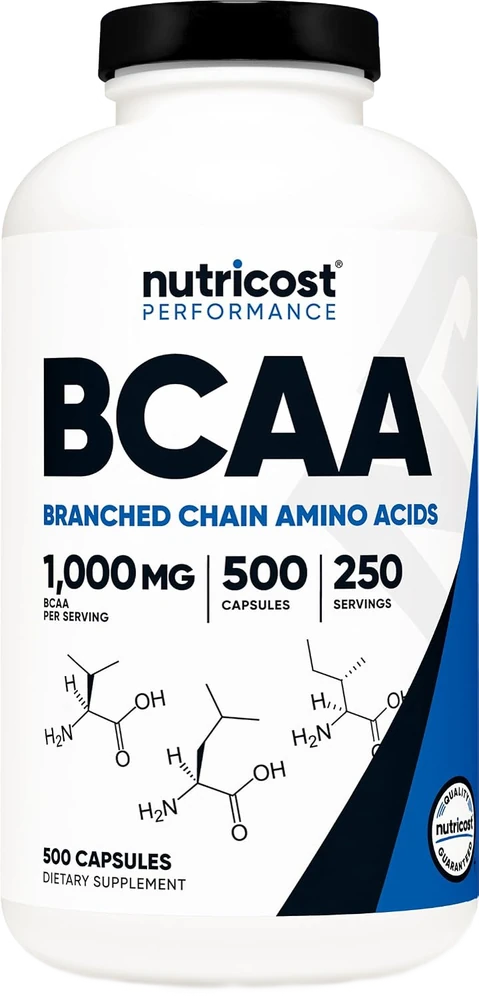 #11 of 12 · Best for travel✓ Label verified · Supplement Facts read Sep 7, 2026
Real retailer photo, cut out. Label unedited.
Consider it. The travel/convenience capsule — portable aminos, but a small dose. Pocketable, flavor-free 2:1:1 BCAA capsules with a fully-itemized label, in a cheap 500-count bottle — ideal for travel, the office, or a shaker-free gym bag.
$22 / 500 caps (250 servings)$0.09 / 2-cap serving
Why It Scores 6.4 — And The Label Line Behind Each Number
Leucine ratio & dose
30% of scoreA clean, correct, fully-itemized 2:1:1 — but the per-serving dose is low: just 500 mg leucine per 2-capsule serving. To clear the ~2.5 g leucine trigger threshold (Jackman 2017) you'd need ~10 capsules. The ratio is perfect and transparent, but the practical dose per serving is the weakest on the list, which caps this axis at 6.0 despite the clean label.
- Ratio
- 2:1:1 (500 mg leu / 250 mg iso / 250 mg val per 2 caps)
Added aminos / electrolytes
25% of scoreNothing added — pure BCAA capsules, no glutamine, electrolytes, or EAAs. Standard for a capsule product and consistent with the bare powders. On an axis rewarding extras it lands at the midpoint. For built-in extras you need a powder (#1, #2); capsules are inherently a minimal, single-purpose format.
- Added aminos
- None — pure BCAA
Third-party testing (Informed Sport / NSF)
20% of scoreThe listing states GMP manufacturing and third-party testing — reasonable assurance of quality and label accuracy. But there's no NAMED NSF Certified for Sport or Informed Sport certification, the standard for tested athletes. Credited for GMP/third-party testing, held below the certified pick (Thorne #4). Consistent with the other uncertified picks.
- Label
- Fully itemized per-amino — no proprietary blend
- Certification
- GMP / third-party tested per listing — NO named NSF/Informed cert
Value per serving
15% of score$0.09 per 2-cap serving and a cheap 500-count bottle look excellent — but because each serving is only 1 g BCAA, the dose-matched cost is higher than the headline (you use many caps for an effective dose). As a low-frequency travel top-up, the value is strong and the bottle lasts a long time; as a daily full-dose source, less economical than a powder. Scored 8.0 on the convenience-use value.
- Count
- 500 capsules (250 servings)
- Price
- $22 / 500 caps = $0.09 per 2-cap serving
Taste & mixability
10% of scoreCapsules sidestep taste and mixing entirely — no bitterness, no clumping, no stirring, no water needed. For anyone who dislikes the taste of unflavored powders or the hassle of mixing, that's a genuine advantage and the format's whole appeal. Scored 8.0 (not higher only because swallowing 8-14 capsules for a full dose is its own minor friction).
- More Specs
- Leucine / serving
- 500 mg per 2-capsule serving
- Format
- Capsule — no taste, no mixing
- Best for
- Travel · on-the-go top-ups — NOT a full intra-workout dose
Label verified. Every figure read from the Supplement Facts photo, Sep 7, 2026.
Marketing Claims Vs. Reality
2:1:1 BCAAs in convenient capsule form.
Accurate — a fully-itemized 2:1:1 ratio (500 mg L-leucine, 250 mg L-isoleucine, 250 mg L-valine per 2-cap serving) in capsule format, no proprietary blend. The ratio, per-amino content, and format are exactly as stated. The transparency is a genuine plus.
1,000 mg of BCAAs per serving.
True per the 2-capsule serving (1 g total BCAA). Accurate labeling — though worth noting in context that 1 g per serving is a low dose, so multiple servings are needed to reach the ~2.5 g leucine that triggers muscle protein synthesis. The number is honest; the implication that one serving is a 'full' BCAA dose would not be.
GMP manufactured and third-party tested.
The listing states GMP manufacturing and third-party testing, which is reasonable quality assurance and we credit it. It's rated partial only because it's not a NAMED certification (no NSF Certified for Sport / Informed Sport), which is the higher bar tested athletes need. Fair as a general quality signal; not equivalent to a named sport certification.
Supports muscle recovery and growth.
Recovery is supported but modest and condition-dependent, and only if you take enough capsules to reach an effective dose (VanDusseldorp 2018, PMID 30275356; Fouré & Bendahan 2017, PMID 28934166). 'Growth' overreaches: BCAAs trigger but can't complete protein synthesis — full EAAs beat BCAAs (Moberg 2016, PMID 27053525), and the BCAA-alone claim was called 'unwarranted' (Wolfe 2017, PMID 28852372). Honest as a top-up aid; overstated as a muscle-builder.
Convenient alternative to powders with no mixing.
True and the product's genuine strength — capsules need no water, stirring, or shaker, and have no taste, making them ideal for travel and on-the-go use. The 'convenience' claim is accurate; the honest counterpoint (which doesn't make the claim false) is that the convenience comes at the cost of needing many capsules for a full dose.
What Our Test Actually Found
Capsules solve a real problem powders can't
The honest case for Nutricost is portability. There are recurring situations — traveling, the office, a gym bag with no shaker — where mixing a powder simply isn't practical, and a flavor-free capsule you can swallow anywhere wins decisively. No water, no stirring, no taste, no mess. That convenience is a genuine advantage, and it's the one job at which these capsules clearly beat every powder on the list. Buy them for that job and they're excellent.
But the dose math is the dealbreaker for primary use
The flip side is unavoidable: at 500 mg leucine per 2-capsule serving, reaching an effective ~2.5 g leucine dose means swallowing about 10 capsules, and matching a 7 g powder scoop means roughly 14. That's a lot of pills per serving. For a small top-up it's fine; as your main, around-every-workout BCAA source it's impractical and uneconomical. This single fact is why capsules are a convenience supplement to a powder, not a replacement for one — and why the dose axis scores low.
The fully-itemized label is a quiet strength
One thing Nutricost does better than several pricier products: it fully itemizes the per-amino content with no proprietary blend, so you know exactly how much leucine, isoleucine, and valine each serving delivers. That's more transparent than Cellucor's (#3) partly proprietary EAA matrix, and it makes it trivial to calculate how many capsules you need for a target dose. For a transparency-minded buyer, the honest label is a real plus that partly offsets the low per-serving dose.
Cheap bottle, but judge value by how you'll use it
A 500-count bottle for ~$22 reads as great value, and for occasional travel top-ups it genuinely is — the bottle lasts a long time at low frequency. But because each serving is only 1 g of BCAA, the cost to reach a full powder-equivalent dose is higher than the headline, and at 10-14 caps per serving you'd burn through the bottle fast. The value is real for the convenience use case and weaker for daily full dosing; match the judgment to your actual usage.
Still a BCAA, in a low dose — protein is the better growth buy
Everything the category caveat says applies doubly here, because the dose is small: on adequate protein, a few grams of capsule BCAAs add essentially nothing for muscle growth over food, since a complete protein or full EAA supplies all nine aminos and BCAAs supply three (Moberg 2016; Wolfe 2017). Buy Nutricost capsules for the convenience of portable aminos on the road — not as a muscle-building strategy. For growth, protein remains the purchase that matters.
Full analysis: all pros & cons (8), buy if / skip if
- No-mix, flavor-free convenience — ideal for travel and on-the-go dosing
- Huge 500-count bottle at a low headline price
- Clear, fully-itemized per-amino-acid label (no proprietary blend)
- Listing states GMP manufacturing and third-party testing
- Capsules sidestep the bitterness and mixing hassle of unflavored powders
- Low BCAA per serving — need ~8-14 capsules to match a single powder scoop
- Impractical and uneconomical as a full intra-workout dose source
- No glutamine/electrolytes/EAAs, and no named NSF / Informed Sport certification (Thorne #4 has one)
- You want portable, no-mix, flavor-free aminos for travel or on-the-go dosing
- You want a fully-itemized 2:1:1 label with no proprietary blend
- You want a cheap, long-lasting bottle for occasional top-ups
- You hate the taste/mixing of powders and want a swallow-and-go option
- You want a full intra-workout dose — you'd need 8-14 capsules per serving; a powder (#1, #2) is far more practical
- You want glutamine, electrolytes, or EAAs — these are pure BCAA only
- You're drug-tested and need a named NSF / Informed Sport cert — choose Thorne (#4)
Pocketable, flavor-free 2:1:1 BCAA capsules with a fully-itemized label, in a cheap 500-count bottle — ideal for travel, the office, or a shaker-free gym bag. The drawback is dose: 1 g BCAA (500 mg leucine) per 2-cap serving means 8-14 caps to match a powder scoop, so it's a top-up, not a full intra-workout source. Buy it as a convenient supplement to a powder, not as your main BCAA.
Nutricost BCAA Capsules win one specific job decisively: portable, flavor-free dosing when a powder is impractical. The label is honestly itemized (a real 2:1:1 — 500 mg leucine, 250 mg isoleucine, 250 mg valine per 2-cap serving — with no proprietary blend), the 500-count bottle is cheap, and there's no mixing, no taste, and nothing to stir. For travel, the office, or a gym bag without a shaker, that convenience is genuine. The catch is dose. At 1 g BCAA per 2-capsule serving, you'd swallow 8-14 capsules to equal one powder scoop, which is fine for a small top-up but impractical as a full intra-workout dose. So buy it as a convenient supplement to your routine, not as your main BCAA source — for that, a powder (#1, #2) is far more practical. And the category caveat holds: on adequate protein, BCAAs are a training tool, not a growth driver. Here's the breakdown.
The travel-and-convenience capsule — buy it as a top-up, not your main BCAA.

Nutricost BCAA Capsules earn their spot by owning one job: portable, flavor-free amino dosing when a powder isn't practical. The label is honestly itemized (a real, transparent 2:1:1), the bottle is cheap and long-lasting, and there's no mixing, taste, or mess. For travel, the office, or a shaker-free gym bag, that convenience is a genuine advantage no powder matches. The limitation is dose, and it's decisive for how you should use these. At 500 mg leucine per 2-capsule serving, reaching an effective dose means swallowing 8-14 capsules, which is fine as an occasional top-up but impractical and uneconomical as your everyday around-training BCAA source. For that, a powder (#1, #2) is far more sensible. There's no glutamine or electrolytes, and no named certification (tested athletes → Thorne #4). And the category caveat applies with extra force at this low dose — on adequate protein, capsule BCAAs add essentially nothing for growth. Buy Nutricost capsules to keep convenient aminos in your travel bag, and pair them with a powder for serious training.
If This Doesn’t Fit — Try These
 01
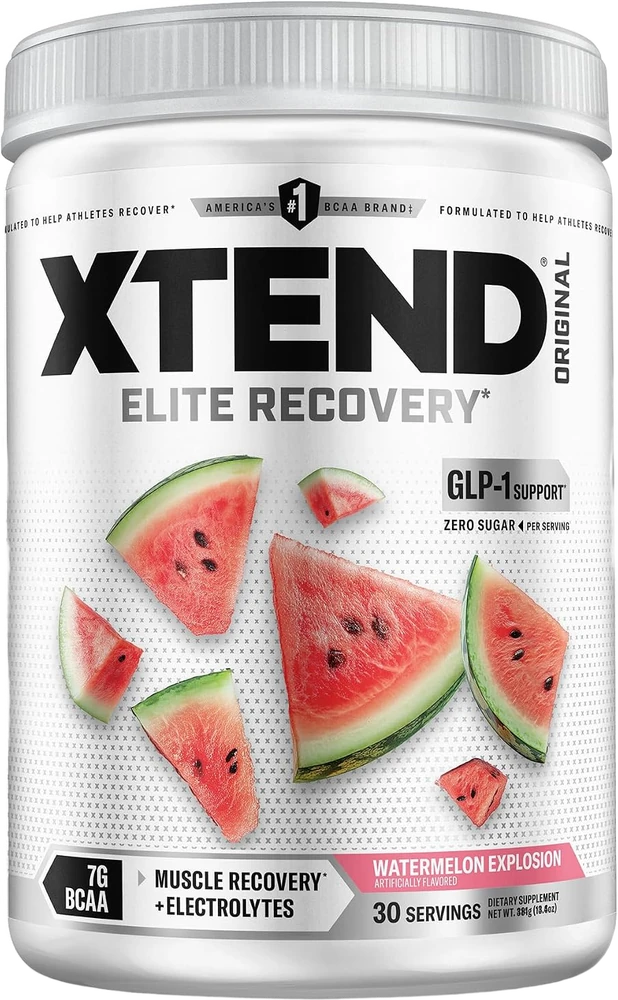
Xtend Original BCAA
Xtend earns #1 the same way it earned its reputation: it does the BCAA job completely and cheaply.
 07
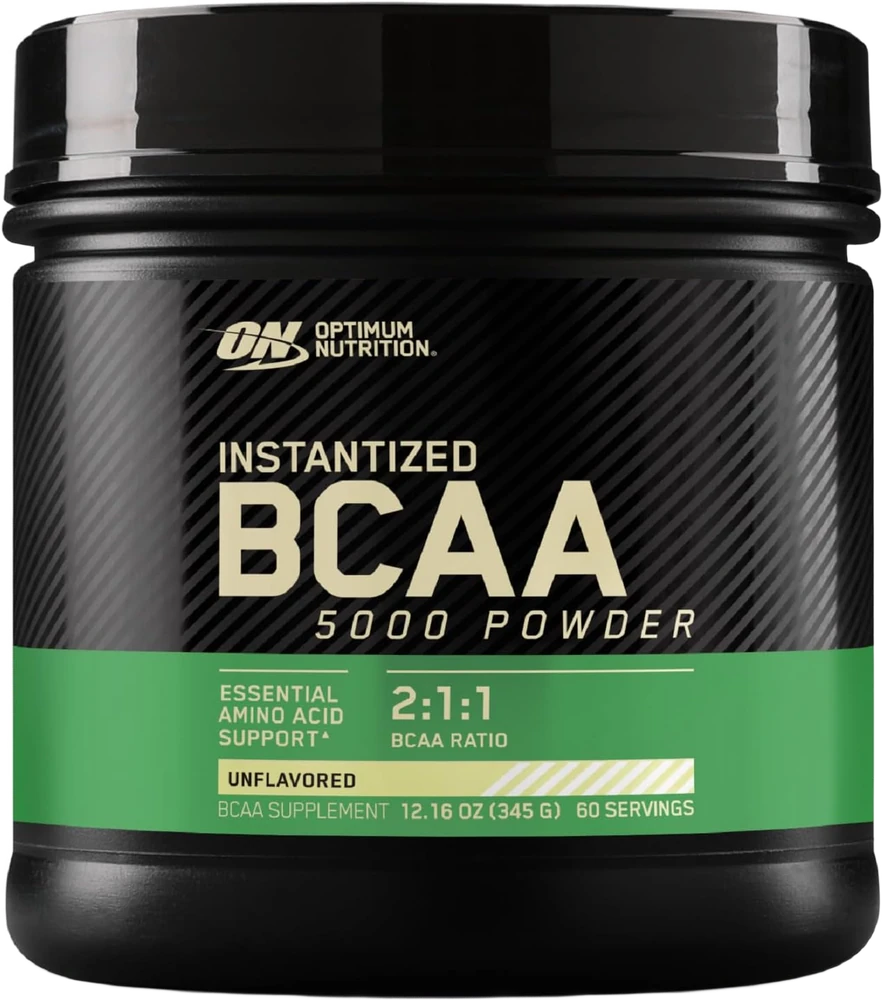
Optimum Nutrition BCAA 5000
Optimum Nutrition BCAA 5000 is the sensible unflavored workhorse: a clean 5 g 2:1:1 dose (2.5 g leucine — right at the effective floor) from a brand with a deep QC track record, at a genuinely cheap per-serving cost across 60 servings.
 05
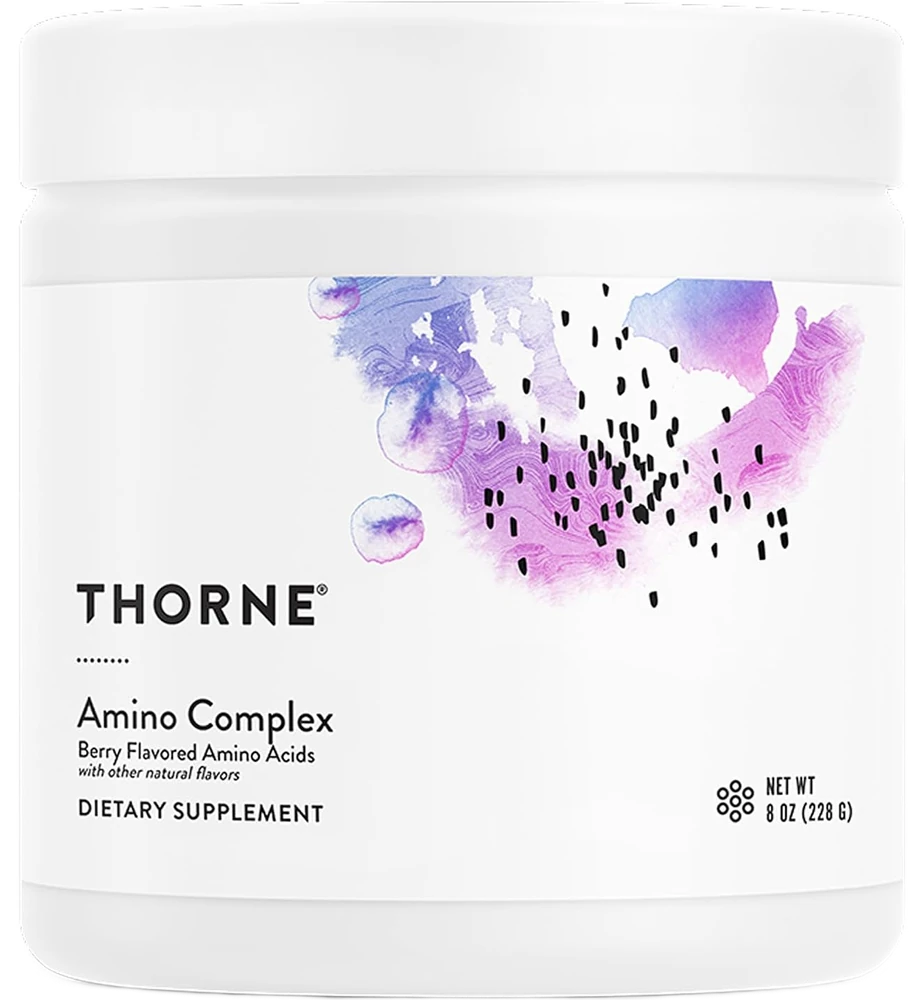
Thorne Amino Complex
Thorne Amino Complex is on this page for one reason: it is the only product here that NSF's database carries as Certified for Sport, which makes it the pick for anyone who is drug-tested.
Quick Answers
How many capsules do I actually need to take?
More than you'd think, and that's the main drawback. Each 2-capsule serving delivers just 1 g of BCAA (500 mg leucine). To reach an effective leucine dose of ~2.5 g — the threshold that triggers muscle protein synthesis (Jackman 2017, PMID 28638350) — you'd need roughly 10 capsules, and to match a full 7 g powder scoop you'd need around 14. That's a lot of pills to swallow per serving. For a small amino top-up that's manageable; as your main BCAA source it's impractical, and a powder (Xtend #1, ON #5) is far more sensible.
So when does the capsule form actually make sense?
When mixing a powder isn't practical — and that's a real, recurring situation. Traveling, at the office, in a gym bag with no shaker, or any time you want a flavor-free amino dose without water and stirring, capsules win decisively. You just swallow them. The convenience and portability are genuine advantages the powders can't match. The honest framing: buy Nutricost capsules as a convenient supplement to your routine for those on-the-go moments, not as the primary way you dose BCAAs around hard training.
Is the label honest about what's in each capsule?
Yes, and it's a real plus. Nutricost fully itemizes the per-amino content — 500 mg L-leucine, 250 mg L-isoleucine, 250 mg L-valine per 2-capsule serving — a clean 2:1:1 with no proprietary blend. That transparency is better than some powders (and notably better than Cellucor #3, whose EAA matrix is partly proprietary). So while the dose per serving is low, you know exactly what you're getting, which makes it easy to calculate how many caps you need for a target leucine dose.
Is it certified for drug-tested athletes?
No named certification. The listing states GMP manufacturing and third-party testing, which is reasonable assurance of quality, but that's not the same as a named NSF Certified for Sport or Informed Sport certification — the standard a drug-tested athlete should require. On our list, only Thorne Amino Complex (#4) carries a named cert. If you're tested, choose Thorne; if you just want convenient capsules for travel and aren't tested, Nutricost's GMP/third-party testing is adequate.
Is this good value?
On the bottle, yes; on a dose-matched basis, less so. A 500-count bottle for around $22 looks cheap, but because each serving is only 1 g of BCAA, the cost to reach a powder-equivalent dose is higher than the headline suggests — you go through capsules fast if you take 10-14 per serving. As a low-frequency travel top-up the bottle lasts a long time and the value is fine. As a daily full-dose source it's less economical than a powder. Match the value judgment to how you'll use it: occasional convenience, good; daily main source, a powder wins.
Sources & Further Reading
4 peer-reviewed sources, each linked to PubMed
- [1] Jackman 2017 PMID 28638350 — Branched-Chain Amino Acid Ingestion Stimulates Muscle Myofibrillar Protein Synthesis following Resistance Exercise in Humans. BCAAs alone raised muscle protein synthesis ~22% over placebo at a ~5.6 g dose (with ~2.5 g leucine) — context for why Nutricost's 500 mg-leucine serving requires ~10 capsules to reach an effective dose.
- [2] Moberg 2016 PMID 27053525 — Activation of mTORC1 by leucine is potentiated by branched-chain amino acids and even more so by essential amino acids following resistance exercise. mTORC1 activation ranked leucine < BCAAs < all nine EAAs — evidence that a complete protein or full EAA outperforms low-dose BCAA capsules for muscle growth.
- [3] Wolfe 2017 PMID 28852372 — Branched-chain amino acids and muscle protein synthesis in humans: myth or reality?. Concluded BCAAs alone are 'unwarranted' as an anabolic claim — the reason Nutricost's growth claim is rated partial, especially at its low per-serving dose.
- [4] VanDusseldorp 2018 PMID 30275356 — Effect of Branched-Chain Amino Acid Supplementation on Recovery Following Acute Eccentric Exercise. BCAA supplementation improved recovery markers and reduced soreness after damaging exercise — supports the recovery claim, contingent on taking enough capsules to reach an effective dose.
Affiliate disclosure: every Amazon link uses our Associates tag (superachieverclub-20). We earn a small commission at no cost to you; it funds independent reviews. We never accept payment to change a ranking.