
Top 8 Best Turkesterone for Muscle Gain (2026)
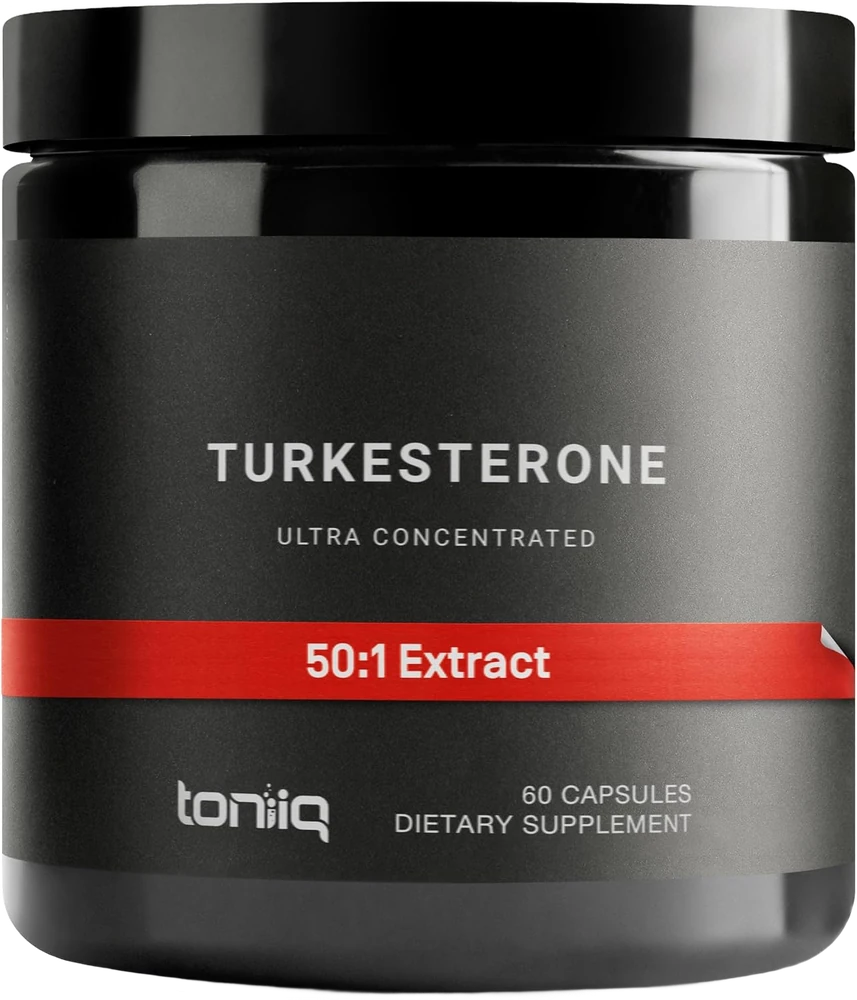 01 · Best overall✓ Label verified · Supplement Facts read Sep 7, 2026
Best overall (verified): Toniiq Ultra High Strength Turkesterone, 50:1 Extract (20%)
Claims the highest standardization in the lineup (20% from a 50:1 concentrate) and, more importantly, the listing explicitly states each batch is third-party lab tested to that level — the verification angle that matters most in a category plagued by fakes.
$25$0.42 / serving
Why it wins: all five scores, pros & cons, full label
- Listing states each batch is third-party lab tested to a minimum 20% turkesterone — directly addresses the category's #1 trust problem
- Highest claimed standardization here (20% from a 50:1 extract)
- Made in a GMP-certified US facility per the listing
- A high label % is meaningless if not independently verified — and a downloadable batch COA is still not posted on the listing itself
- No cyclodextrin complex called out, so absorption is left to the raw extract
- Underlying evidence problem is unchanged: no human turkesterone trials
- Standardization
- 20% turkesterone (label), from a 50:1 Ajuga turkestanica extract
- Dose per serving
- ~600 mg extract per serving
- Source
- Ajuga turkestanica extract (stated on label)
- Delivery
- No cyclodextrin complex stated — raw standardized extract
- COA / testing
- Listing states each batch third-party lab tested to min. 20%; no downloadable batch COA posted
Our take — Toniiq takes the top slot because it leans hardest on the only axis that actually separates real product from fake: its listing states every batch is third-party lab tested to a minimum 20% turkesterone, the highest standardization here. That is the right thing to compete on. Be clear about the limits, though — "third-party tested" is asserted, not a posted batch COA you can download, and like every product here it rests on an ingredient with no human efficacy data. As the least-unverified option in an unproven category, it's the most defensible pick — not a promise it builds muscle.
 02
 03
 04
 05
 06
 07
 08
Who Wins Which Aspect
Sorted by overall SAC Product Score™ — the official ranking.
| # | Pick | Score | Third-party verification & COA30% | Standardization & dose25% | Formulation & delivery20% | Value per serving15% | Label transparency10% | Cost Per Dose | Buy |
|---|---|---|---|---|---|---|---|---|---|
| 01 | | 8.6 | 8.01 | 9.81 | 7.0 | 9.52 | 9.51 | $0.42 / serving | Check price |
| Listing states each batch is third-party lab tested to a minimum 20% turkesterone — directly addresses the category's #1 trust problemA high label % is meaningless if not independently verified — and a downloadable batch COA is still not posted on the listing itself | |||||||||
| 02 | | 7.9 | 6.0 | 8.52 | 9.51 | 7.5 | 9.02 | $0.50 / serving | Check price |
| Uses a hydroxypropyl-β-cyclodextrin complex, the formulation approach most often cited for turkesterone absorptionNo published third-party HPLC Certificate of Analysis is shown on the listing — and adulteration/underdosing is THE documented problem in this category | |||||||||
| 03 | | 7.9 | 6.82 | 8.52 | 6.5 | 10.01 | 9.02 | $0.18 / serving | Check price |
| Listing/brand states third-party (ISO-accredited) testing and GMP-compliant, FDA-registered manufacturingAn actual batch HPLC COA for turkesterone is not published on the listing (testing is asserted, not shown) | |||||||||
| 04 | | 7.8 | 6.53 | 8.52 | 6.5 | 9.52 | 9.51 | $0.25 / serving | Check price |
| Clear, conservative labeling: 500 mg extract std. to 10% turkesterone, no inflated claimsNo third-party HPLC turkesterone COA published on the listing to confirm actual content | |||||||||
| 05 | | 7.1 | 6.0 | 6.5 | 9.02 | 8.53 | 6.0 | $0.29 / serving | Check price |
| Dual absorption approach (cyclodextrin + liposomal) is the most elaborate delivery system in the lineupListing emphasizes delivery tech but is not prominent about a turkesterone standardization %, and shows no batch COA — exactly where buyers get short-changed | |||||||||
| 06 | | 7.0 | 6.0 | 8.03 | 8.03 | 5.0 | 8.03 | $0.67 / serving | Check price |
| Softgel format is the brand's distinctive absorption approach in a category where bioavailability is a real concernHighest price per serving in the lineup (60 softgels) with no published turkesterone COA on the listing | |||||||||
| 07 | | 6.2 | 5.5 | 6.0 | 9.02 | 3.0 | 7.5 | $2.22 / serving | Check price |
| Largest total extract dose here (1200 mg) plus added beta-ecdysteroneDosed by total extract mg with no clear turkesterone % and no COA — a big number on the label tells you nothing about actual turkesterone content | |||||||||
| 08 | | 6.0 | 6.0 | 5.0 | 8.03 | 6.5 | 4.0 | — | Check price |
| Listing states the product is third-party tested and uses a hydroxypropyl-β-cyclodextrin complexNo specific turkesterone standardization % or per-serving mg in the listing header, and no COA document shown — 'highest purity' is unverified marketing language | |||||||||
The Other 7, Ranked
- 02
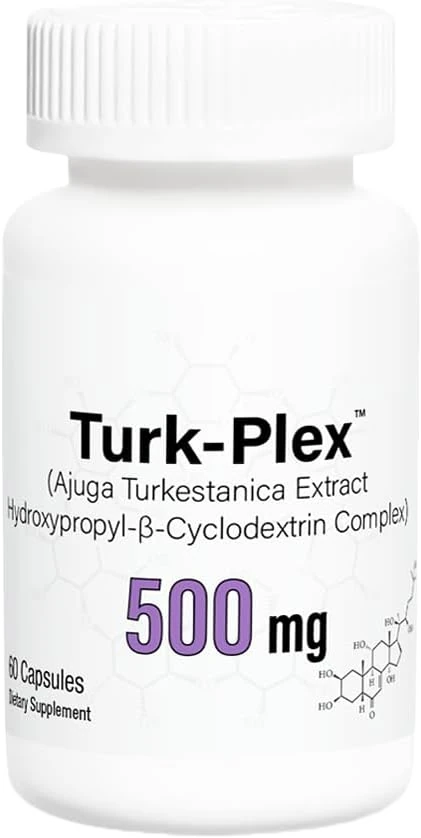
Best known (cyclodextrin): Gorilla Mind Turk-Plex (Turkesterone), 500 mg
7.9SAC Score™The best-known name in the category: a 10%-standardized Ajuga turkestanica extract pre-complexed with hydroxypropyl-β-cyclodextrin for absorption — but understand that's reputation and formulation, not proof the compound builds muscle in humans.
StrongestFormulation & delivery9.51WeakestThird-party verification & COA6.0- Standardization
- 10% turkesterone (label) = ~50 mg turkesterone per 500 mg capsule
- Dose per serving
- 500 mg extract (1 capsule); label suggests 1 capsule twice daily
- Source
- Ajuga turkestanica extract (stated on label)
All five scores, pros & cons, full label
What We Like- Uses a hydroxypropyl-β-cyclodextrin complex, the formulation approach most often cited for turkesterone absorption
- Label states the 10% turkesterone standardization and the Ajuga turkestanica source clearly
- From a widely recognized brand with broad availability
What You Live With- No published third-party HPLC Certificate of Analysis is shown on the listing — and adulteration/underdosing is THE documented problem in this category
- Like all turkesterone, the muscle-building claims rest on rodent/in-vitro data, not human trials
- Premium price for an unproven ingredient
- Delivery
- Hydroxypropyl-β-cyclodextrin inclusion complex (stated on label)
- COA / testing
- No posted batch HPLC COA on the listing
Our take — Turk-Plex is the category's reference product: a clearly labeled 10% Ajuga turkestanica extract pre-complexed with hydroxypropyl-β-cyclodextrin — the absorption approach most turkesterone marketing points to — from the best-known brand in the space. What you're paying for is reputation and a sensible formulation, both real. What you're not getting is verification: no batch COA is posted, so the actual turkesterone content is taken on trust, and the whole premise still rests on rodent and in-vitro data. A strong pick on name and formula; it sits behind Toniiq only because it makes no third-party-testing claim.
- 03
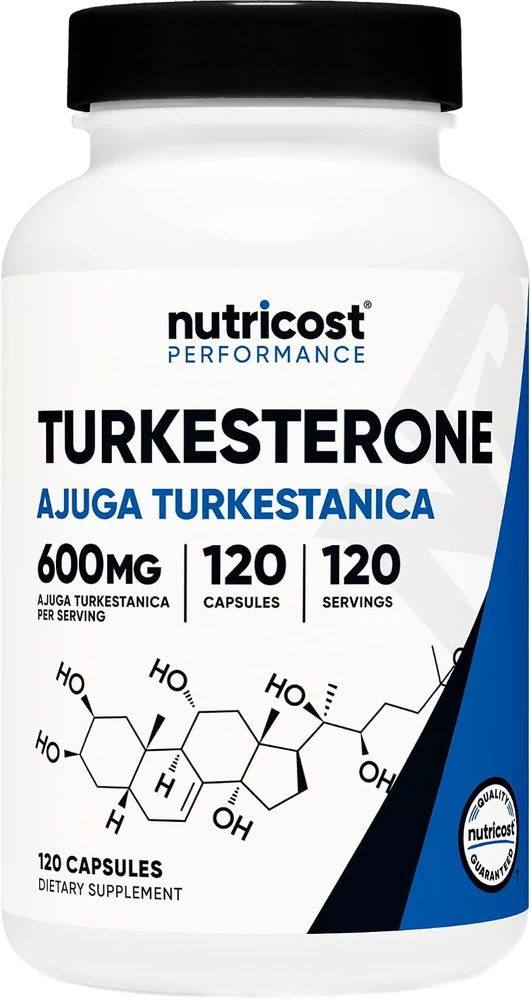
Best value: Nutricost Turkesterone 600 mg
7.9SAC Score™The high-volume value play: 600 mg per capsule at 10% standardization, 120 count, from a brand that states third-party testing and GMP/FDA-registered manufacturing — the lowest cost-per-serving here for a stated-tested extract.
StrongestValue per serving10.01WeakestFormulation & delivery6.5- Standardization
- 10% turkesterone (label) = ~60 mg turkesterone per 600 mg capsule
- Dose per serving
- 600 mg extract (1 capsule)
- Source
- Ajuga turkestanica extract (stated on label)
All five scores, pros & cons, full label
What We Like- Listing/brand states third-party (ISO-accredited) testing and GMP-compliant, FDA-registered manufacturing
- 600 mg/cap at 120 count = lowest cost per daily serving in this lineup
- Vegetarian, non-GMO, gluten-free; simple single-ingredient formula
What You Live With- An actual batch HPLC COA for turkesterone is not published on the listing (testing is asserted, not shown)
- No cyclodextrin complex; raw extract only
- No human evidence that turkesterone builds muscle, regardless of dose
- Delivery
- No cyclodextrin complex — raw extract only
- COA / testing
- Brand states third-party (ISO-accredited) testing; no posted batch HPLC COA on listing
Our take — Nutricost is the value pick: 600 mg of 10% Ajuga turkestanica extract per capsule at 120 count works out to the lowest cost per daily serving here, from a high-volume brand that states ISO-accredited third-party testing and GMP/FDA-registered manufacturing. For a budget buyer that's a genuinely sensible combination. As always, read the testing claim for exactly what it is — asserted on the listing, not backed by a downloadable batch COA — and remember the bigger 600 mg number doesn't change the fact that no human trial supports the ingredient. The cheapest stated-tested option, with the same evidence caveat as the rest.
- 04
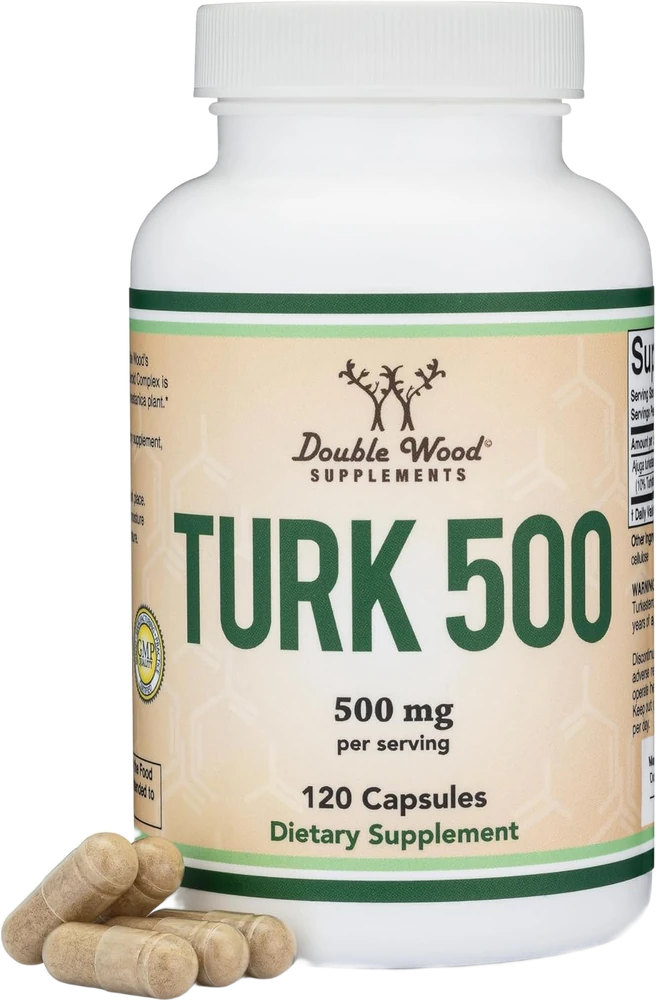
Best honest standard: Double Wood Turkesterone Supplement, 500 mg (Std. to 10%)
7.8SAC Score™The honest, no-frills pick: a plainly labeled 500 mg / 10% Ajuga turkestanica extract, manufactured and tested in the USA, at 120 capsules — the best cost-per-capsule among the standardized 10% options here.
StrongestValue per serving9.52WeakestThird-party verification & COA6.5- Standardization
- 10% turkesterone (label) = ~50 mg turkesterone per 500 mg capsule
- Dose per serving
- 500 mg extract (1 capsule)
- Source
- Ajuga turkestanica extract (stated on label)
All five scores, pros & cons, full label
What We Like- Clear, conservative labeling: 500 mg extract std. to 10% turkesterone, no inflated claims
- 120-count is the largest standard bottle in the lineup; strong value per capsule
- Listing states it is manufactured and tested in the USA
What You Live With- No third-party HPLC turkesterone COA published on the listing to confirm actual content
- No cyclodextrin complex; plain extract
- Shares the category-wide lack of human efficacy evidence
- Delivery
- No cyclodextrin complex — plain extract
- COA / testing
- Manufactured and tested in the USA per listing; no posted batch HPLC COA
Our take — Double Wood is the pick for buyers who want the standard turkesterone done plainly and cheaply: a conservatively labeled 500 mg / 10% Ajuga turkestanica extract, 120 capsules, manufactured and tested in the USA, at the best cost-per-capsule among the 10% options. It doesn't inflate its claims, which on a transparency-first read is a point in its favor. The catches are the category's universal ones — no posted batch COA to confirm the 10% is really there, no absorption complex, and no human evidence behind the ingredient. Honest and good value; just not independently verified.
- 05
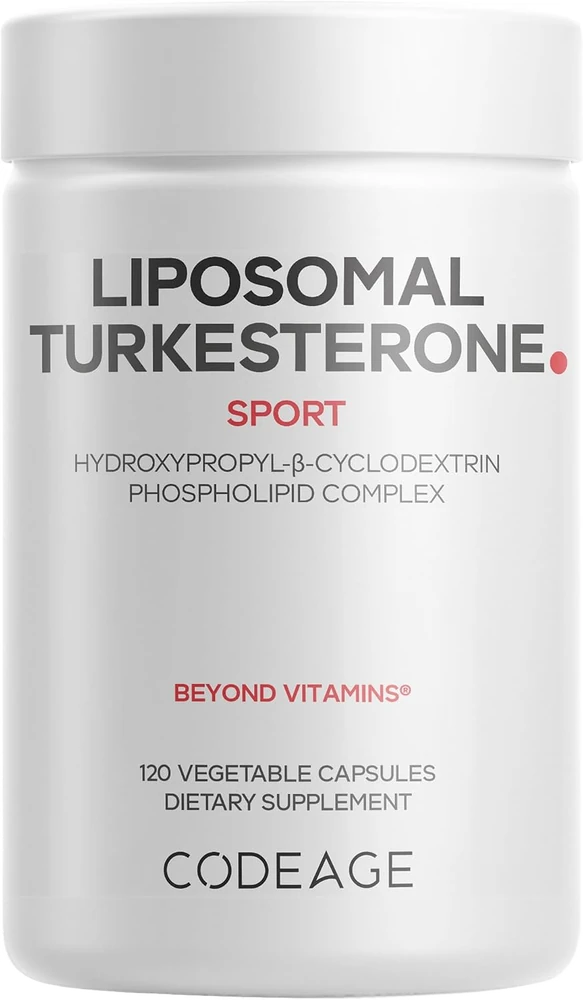
Best delivery tech: Codeage Liposomal Turkesterone, 500 mg
7.1SAC Score™The delivery-tech pick: combines hydroxypropyl-β-cyclodextrin with a liposomal phospholipid complex and ships a 120-count / 4-month supply — the longest supply here at one capsule per day, though the listing is quiet about its actual turkesterone percentage.
StrongestFormulation & delivery9.02WeakestThird-party verification & COA6.0- Standardization
- Ajuga turkestanica extract, 500 mg/serving; specific turkesterone % not prominently stated
- Dose per serving
- 500 mg extract (1 capsule); 120 capsules = 4-month supply
- Source
- Ajuga turkestanica extract (stated on label)
All five scores, pros & cons, full label
What We Like- Dual absorption approach (cyclodextrin + liposomal) is the most elaborate delivery system in the lineup
- 120 capsules at 1/day is a 4-month supply — strong cost-per-day
- Vegan, non-GMO, gluten-free; cGMP-certified facility per the listing
What You Live With- Listing emphasizes delivery tech but is not prominent about a turkesterone standardization %, and shows no batch COA — exactly where buyers get short-changed
- Elaborate delivery does not compensate for the absence of human efficacy data
- 'Liposomal' is a strong marketing term with limited independent verification for this ingredient
- Delivery
- Hydroxypropyl-β-cyclodextrin plus a liposomal (phospholipid) system (stated on label)
- COA / testing
- No posted batch COA on the listing
Our take — Codeage builds the most elaborate delivery system here — hydroxypropyl-β-cyclodextrin stacked with a liposomal phospholipid complex — and pairs it with a 120-count, four-month supply at a low cost per day. If you find the absorption argument persuasive, it's the fullest expression of it. But this is exactly where the category's pattern bites: the listing foregrounds delivery tech while staying vague on the actual turkesterone percentage and posts no COA, which is precisely how buyers end up paying for sophistication wrapped around an unverified extract. Impressive on paper; thin on the verification that would justify it.
- 06
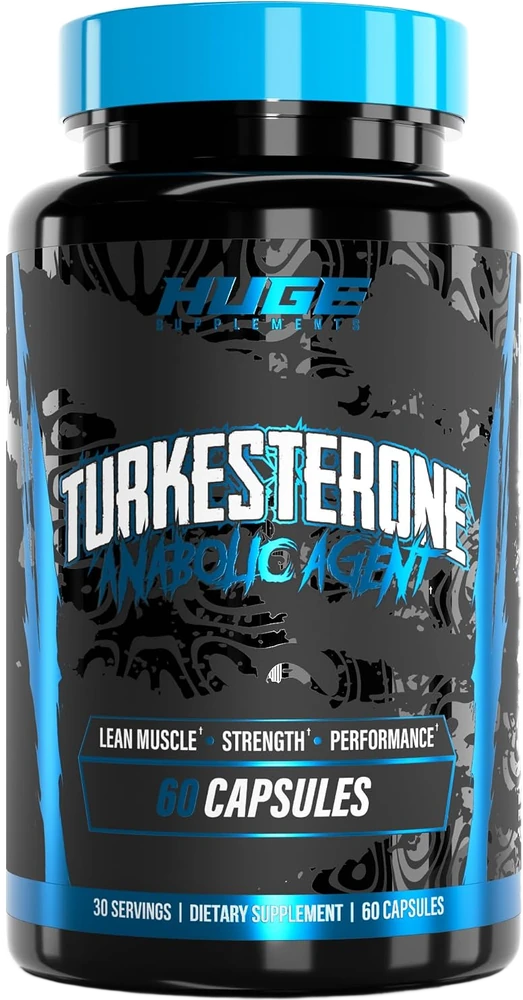
Best softgel format: Huge Turkesterone, 500 mg (Softgels)
7.0SAC Score™The format outlier: delivers the standard 500 mg / 10% extract as a softgel rather than a capsule, which Huge markets as more digestible and absorbable — a different bet on the bioavailability problem than the cyclodextrin route.
StrongestStandardization & dose8.03WeakestValue per serving5.0- Standardization
- 10% turkesterone (label) = ~50 mg turkesterone per 500 mg softgel
- Dose per serving
- 500 mg extract (1 softgel); 1 in the morning with a meal
- Source
- Ajuga turkestanica extract (stated on label)
All five scores, pros & cons, full label
What We Like- Softgel format is the brand's distinctive absorption approach in a category where bioavailability is a real concern
- Standard, clearly stated 500 mg extract at 10% turkesterone from Ajuga turkestanica
- Simple once-daily serving
What You Live With- Highest price per serving in the lineup (60 softgels) with no published turkesterone COA on the listing
- Softgel 'better absorption' claim is a marketing rationale, not a clinically demonstrated advantage for turkesterone
- Same fundamental issue: no human trials showing muscle benefit
- Delivery
- Softgel format marketed for absorption (no cyclodextrin stated)
- COA / testing
- No posted turkesterone COA on the listing
Our take — Huge takes a different swing at turkesterone's absorption problem: instead of a cyclodextrin complex it uses a softgel, which it markets as more digestible. That's a reasonable bet, but it's a bet — there's no clinical demonstration that the softgel actually improves turkesterone uptake, and at 60 softgels it's the priciest per serving here with no posted COA. The standardization is the usual clearly stated 500 mg / 10%. Worth a look if you specifically prefer softgels, but you're paying a premium for a format rationale, not for verified content or proven results.
- 07
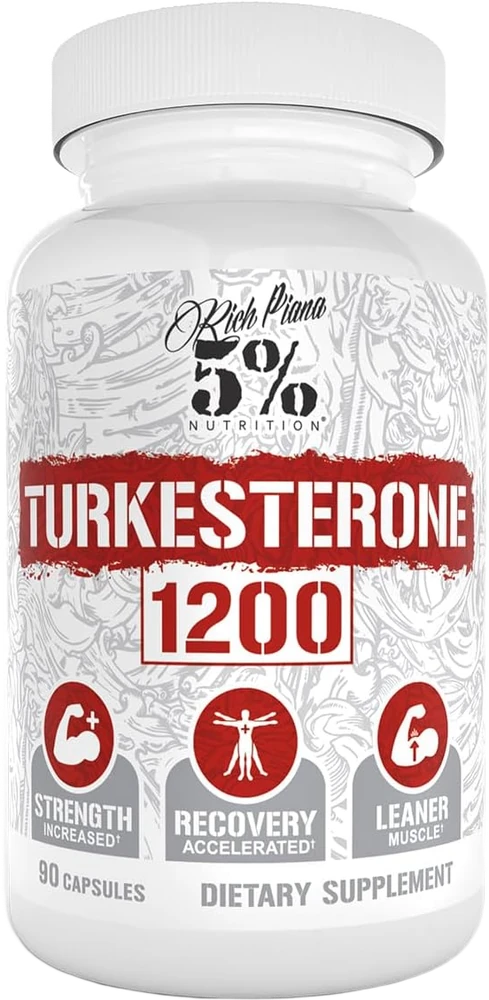
Highest claimed dose: 5% Nutrition Turkesterone 1200
6.2SAC Score™The kitchen-sink high-dose option: 1200 mg of Ajuga extract stacked with 200 mg beta-ecdysterone and three absorption aids (cyclodextrin, AstraGin, Naringin) — the most aggressive formulation, for buyers chasing maximum claimed input.
StrongestFormulation & delivery9.02WeakestValue per serving3.0- Standardization
- 1200 mg Ajuga extract + 200 mg beta-ecdysterone per serving; no headline turkesterone %
- Dose per serving
- 1200 mg extract + 200 mg beta-ecdysterone (4 capsules); 90 ct ≈ 22-day supply
- Source
- Ajuga turkestanica extract (stated on label)
All five scores, pros & cons, full label
What We Like- Largest total extract dose here (1200 mg) plus added beta-ecdysterone
- Three absorption enhancers (HP-β-cyclodextrin, AstraGin, Naringin)
- Transparent multi-ingredient label (no hidden proprietary blend on the actives)
What You Live With- Dosed by total extract mg with no clear turkesterone % and no COA — a big number on the label tells you nothing about actual turkesterone content
- Requires 4 capsules per serving, so a 90-count bottle lasts only ~3 weeks; most expensive per serving
- Stacking more unproven ecdysteroids does not create human evidence that didn't exist for either one
- Delivery
- HP-β-cyclodextrin plus AstraGin and Naringin absorption enhancers (stated on label)
- COA / testing
- No posted batch COA on the listing
Our take — Turkesterone 1200 is the maximalist play: 1200 mg of Ajuga extract, an extra 200 mg of beta-ecdysterone, and three absorption enhancers — the biggest claimed input here, on a refreshingly transparent multi-ingredient label. The problem is that the headline number is the wrong thing to chase. Dosing by total extract milligrams with no stated turkesterone percentage and no COA means that impressive "1200 mg" tells you nothing about how much actual turkesterone you're getting, and stacking a second unproven ecdysteroid doesn't manufacture human evidence. Add four-caps-per-serving economics (a 90-count lasts about three weeks) and it's the most expensive pick by a distance. Big numbers, weakest verification-per-dollar.
- 08
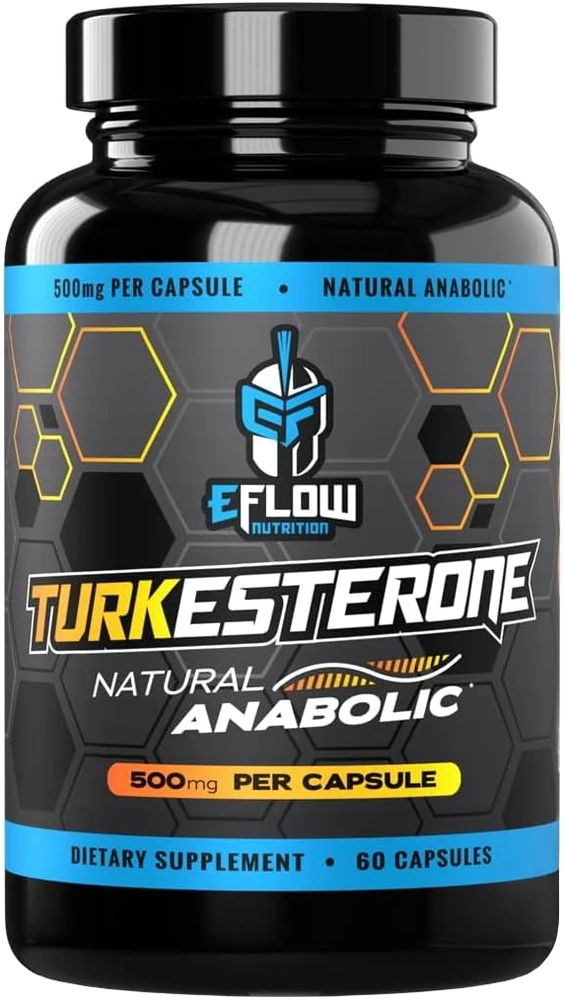
Budget cyclodextrin: eFlow Nutrition Turkesterone Supplement + Cyclodextrin
6.0SAC Score™A cyclodextrin-complexed extract whose listing leads with '3rd Party Tested' — a smaller brand leaning on the verification message, though without a posted COA the claim still has to be taken on trust.
StrongestFormulation & delivery8.03WeakestLabel transparency4.0- Standardization
- Ajuga turkestanica extract; 'highest purity' claimed but no specific turkesterone % stated
- Dose per serving
- 1 capsule (per-serving mg not stated in listing header)
- Source
- Ajuga turkestanica extract (stated on label)
All five scores, pros & cons, full label
What We Like- Listing states the product is third-party tested and uses a hydroxypropyl-β-cyclodextrin complex
- Single-capsule serving; straightforward men's-support positioning
- Addresses absorption via the cyclodextrin route
What You Live With- No specific turkesterone standardization % or per-serving mg in the listing header, and no COA document shown — 'highest purity' is unverified marketing language
- Smaller brand with less independent track record than the category leaders
- No human evidence behind the core ingredient
- Delivery
- Hydroxypropyl-β-cyclodextrin complex for absorption (stated on label)
- COA / testing
- Listing states 3rd-party tested; no actual COA document shown
Our take — eFlow leads its listing with a third-party-tested message and uses the cyclodextrin-complex approach, which is the right instinct in a category defined by adulteration. But the substance behind the message is thin: the listing header states no specific turkesterone percentage or per-serving milligrams, shows no actual COA, and frames 'highest purity' as adjective rather than data — from a smaller brand with less independent track record than the leaders. The verification angle it gestures at is exactly the one that, unposted, can't be relied on. It rounds out the list as the budget cyclodextrin option for buyers who'll take the testing claim on faith.
The Guide In Four Short Lessons
Know that there is no good human evidence.
No well-conducted randomized trial shows turkesterone builds muscle in people. The much-cited study tested ecdysterone, a different compound.
Demand a batch certificate of analysis.
Independent assays have repeatedly found a fraction of the claimed content, often under 1%. A label that says '20% standardized' means nothing by itself.
Pick the least-unverified option, if you buy at all.
None of the eight products here publishes a batch certificate. Read this list as a guide to that choice, not a promise of results.
Isenmann 2019 tested ecdysterone, not turkesterone (PMID 31123801); a 2025 phytosteroid labeling RCT measured <0.1% of label (PMID 40781783) — full scoring in the methodology below.
Most supplement rankings lead with dose. In turkesterone that would be backwards, because the category's defining failure is that the dose on the label is so often fictional — independent labs keep finding products with a tiny fraction of the turkesterone they claim. So we weighted third-party verification and a posted Certificate of Analysis the heaviest at 30%: a brand that publishes a batch COA, or can point to a credible independent assay of the actual extract, is solving the one problem that sinks this category. Standardization and dose comes next at 25% — the claimed turkesterone percentage, the milligrams per serving, and whether the source is genuinely Ajuga turkestanica — but it is explicitly scored as a claim, valuable only to the extent it's verified. Formulation and delivery is worth 20%, and we assess it honestly: a hydroxypropyl-β-cyclodextrin complex, a liposomal phospholipid system, or a softgel are reasonable attempts at a real bioavailability problem, but none of them is evidence that turkesterone works, and we never treat fancy delivery as a substitute for proof. Value per serving is 15%, judged on real cost per daily dose rather than sticker price. Label transparency rounds it out at 10% — does the listing actually state the standardization %, the source plant, and the per-serving milligrams, or does it hide behind "highest purity" marketing language. Every number below is from the real Amazon listing; the manifest records no published batch COA for any of these eight, and we say so for each rather than upgrading a "third-party tested" claim into a document that isn't posted.
Third-party verification & COA · 30%
The decisive axis. Independent testing has repeatedly found turkesterone products containing under 1% of their claimed turkesterone — a 2025 RCT measured <0.1% of label in a commercial phytosteroid product — so a posted batch HPLC Certificate of Analysis, or a credible independent assay of the actual extract, is the single strongest signal a product is real. A brand 'third-party tested' claim earns partial credit; a downloadable COA would earn full credit. None of these eight posts an actual batch COA, so this is where every pick loses points.
Standardization & dose · 25%
The claimed turkesterone percentage (typically 10%, up to 20% from a 50:1 concentrate), the milligrams of Ajuga turkestanica extract per serving, and confirmation the source is genuinely Ajuga turkestanica rather than an unnamed ecdysteroid. Scored strictly as a label claim: a higher % only matters if it's verified, and a big mg number on an unstandardized extract tells you nothing about actual turkesterone content.
Formulation & delivery · 20%
How the product tries to solve turkesterone's real bioavailability problem: a hydroxypropyl-β-cyclodextrin inclusion complex (the most-cited approach), a liposomal phospholipid system, a softgel, or added absorption enhancers like AstraGin. Assessed honestly — these are plausible absorption bets, not demonstrated advantages, and elaborate delivery never compensates for the absence of human efficacy data.
Value per serving · 15%
Real cost per daily dose, not sticker price. A 120-count bottle at one capsule a day can deliver far cheaper servings than a 60-count or a product needing four capsules per dose. The tiebreaker between picks of similar standardization — but it never overrides verification, because cheap unverified extract is still unverified.
Label transparency · 10%
Does the listing plainly state the standardization %, the Ajuga turkestanica source, and the per-serving milligrams — or does it lead with 'highest purity' and 'third-party tested' language while omitting the actual numbers? Clear, conservative labeling scores higher; marketing adjectives standing in for specifics score lower.

How turkesterone is claimed to work — and what the evidence really says
- 1
The ecdysteroid theory
Turkesterone is an ecdysteroid from the Ajuga turkestanica plant, proposed to support protein synthesis without hitting hormone receptors like steroids do. Intriguing in cell and rodent studies — that is the entire theoretical case.
- 2
The human-evidence gap
There are essentially no rigorous human trials showing it builds muscle. Anecdote and marketing carry this category, not data — so we frame it honestly as speculative, and score third-party verification highest precisely because trust is the scarce thing here.
- 3
The counterfeit problem
Independent testing has repeatedly found turkesterone products containing little or no actual turkesterone. A COA proving the bottle contains standardized Ajuga extract is worth more than any dosing claim — hence our heaviest axis.
- 4
Absorption doubts
Ecdysteroids absorb poorly; formulations add cyclodextrin or liposomes to compensate, though whether that meaningfully helps in humans is unproven. We rank formulation, but keep the honesty that the ceiling may be low regardless.
What to expect from turkesterone
Likely subtle to none
Any effect, if real, would be modest and slow. Dramatic early 'gains' are almost always the training and diet you started alongside it — attribute honestly.
The uncertain window
Users report better pumps or recovery; controlled evidence to confirm this is a real turkesterone effect (versus placebo) simply does not exist. We will not pretend otherwise.
Judge against the basics
Whatever you notice, compare it honestly to what creatine, protein and progressive overload deliver with mountains of proof. Turkesterone is, at best, a small speculative add-on to those.
Demand a COA
Given how many fakes exist, only consider a product with third-party testing proving turkesterone content. No COA, no purchase — that check matters more than the marketing.
The bottom line
Toniiq (#1) is the most defensible pick because it competes on the axis that actually matters.
Its listing states each batch is third-party lab tested to a minimum 20% turkesterone — the highest standardization here — made in a GMP facility. But 'third-party tested' is asserted, not a downloadable batch COA, and like every product it rests on an ingredient with no human efficacy data.
The alternatives are bets on reputation, value or delivery — not on verification.
Gorilla Mind (#2) wins on name and the cyclodextrin formulation everyone copies; Double Wood (#3) is the honest 10% standard at the best cost-per-capsule; Nutricost (#4) is the cheapest stated-tested extract per serving. Below those, Huge (#5), Codeage (#6), 5% Nutrition (#7) and eFlow (#8) sell delivery tech or big numbers rather than proof.
If you try turkesterone at all, buy on verification and keep expectations low.
Choose the product that makes the most credible verification claim, treat the standardization number on the front as a claim and not a fact, and remember not one posts a batch COA or is backed by human evidence. Buy this category, if you buy it at all, as an experiment — not a proven anabolic.
Quick Answers
Which pick is the best overall?
Ultra High Strength Turkesterone, 50:1 Extract (20%) by Toniiq is our #1 pick (SAC score 8.6/10). Toniiq takes the top slot because it leans hardest on the only axis that actually separates real product from fake: its listing states every batch is third-party lab tested to a minimum 20% turkesterone, the highest standardization here. That is the right thing to compete on. Be clear about the limits, though — "third-party tested" is asserted, not a posted batch COA you can download, and like every product here it rests on an ingredient with no human efficacy data. As the least-unverified option in an unproven category, it's the most defensible pick — not a promise it builds muscle.
What is the best budget option?
Nutricost Turkesterone 600 mg at $22. Nutricost is the value pick: 600 mg of 10% Ajuga turkestanica extract per capsule at 120 count works out to the lowest cost per daily serving here, from a high-volume brand that states ISO-accredited third-party testing and GMP/FDA-registered manufacturing. For a budget buyer that's a genuinely sensible combination. As always, read the testing claim for exactly what it is — asserted on the listing, not backed by a downloadable batch COA — and remember the bigger 600 mg number doesn't change the fact that no human trial supports the ingredient. The cheapest stated-tested option, with the same evidence caveat as the rest.
How much do these picks cost?
Across our ranked picks, prices run from about $22 to $50 — exact price and cost per serving are listed on every pick card above.
How were these picks ranked?
Most supplement rankings lead with dose. In turkesterone that would be backwards, because the category's defining failure is that the dose on the label is so often fictional — independent labs keep finding products with a tiny fraction of the turkesterone they claim. So we weighted third-party verification and a posted Certificate of Analysis the heaviest at 30%: a brand that publishes a batch COA, or can point to a credible independent assay of the actual extract, is solving the one problem that sinks this category. Standardization and dose comes next at 25% — the claimed turkesterone percentage, the milligrams per serving, and whether the source is genuinely Ajuga turkestanica — but it is explicitly scored as a claim, valuable only to the extent it's verified. Formulation and delivery is worth 20%, and we assess it honestly: a hydroxypropyl-β-cyclodextrin complex, a liposomal phospholipid system, or a softgel are reasonable attempts at a real bioavailability problem, but none of them is evidence that turkesterone works, and we never treat fancy delivery as a substitute for proof. Value per serving is 15%, judged on real cost per daily dose rather than sticker price. Label transparency rounds it out at 10% — does the listing actually state the standardization %, the source plant, and the per-serving milligrams, or does it hide behind "highest purity" marketing language. Every number below is from the real Amazon listing; the manifest records no published batch COA for any of these eight, and we say so for each rather than upgrading a "third-party tested" claim into a document that isn't posted.
Every Claim Ranked Above Traces Back To One Of These
7 sources — studies link to PubMed, product specs to the manufacturer
- [1] Isenmann 2019 PMID 31123801 — Ecdysteroids as non-conventional anabolic agent: performance enhancement by ecdysterone supplementation in humans. The single most-cited human study behind turkesterone hype — but it tested ECDYSTERONE, a different compound, not turkesterone. In 46 young men over 10 weeks of strength training, ecdysterone-dosed groups showed greater muscle-mass increases. Important caveat, often omitted by marketers: the authors noted the supplements used contained far less ecdysterone than labeled, the dosing was therefore uncertain, and the result has not been independently replicated. It is not evidence that turkesterone supplements build muscle.
- [2] Phytosteroid labeling RCT 2025 PMID 40781783 — How reliable is the labeling of a commercial phytosteroid product? A 12-week randomized double-blind training study. The most decision-relevant study in the category. Researchers bought a commercial phytosteroid (ecdysterone/diosgenin) supplement, assayed it, and found the actual ecdysterone content was <0.1% of the label claim and diosgenin only ~10% of claimed. The product produced no hypertrophy in a C2C12 model and no advantage over placebo in two human training groups. Hard evidence that label numbers in this category can be almost entirely fictional — which is exactly why third-party verification, not the stated dose, is the decisive buying criterion.
- [3] Parr 2014 PMID 24974955 — Estrogen receptor beta is involved in skeletal muscle hypertrophy induced by the phytoecdysteroid ecdysterone. A mechanistic rodent/in-vitro study: ecdysterone induced hypertrophy of rat soleus muscle fibers and increased C2C12 myotube diameter, apparently via estrogen-receptor-beta signaling. This is the type of animal and cell data the 'natural anabolic' claim is built on — biologically suggestive, but conducted on ecdysterone in rats and cells, not turkesterone in humans, and not a substitute for clinical efficacy data.
- [4] Parr 2015 PMID 26060342 — Ecdysteroids: a novel class of anabolic agents?. A review by leading ecdysteroid researchers weighing whether ecdysteroids (including turkesterone) act as anabolic agents. It compiles supportive animal and in-vitro data and notes their commercial marketing as natural anabolics — while making clear that rigorous human efficacy evidence was lacking at the time. A balanced read of why the category is plausible-but-unproven, from the scientists closest to it.
- [5] Guibout 2015 PMID 25953625 — The minor ecdysteroids from Ajuga turkestanica. A phytochemical characterization of Ajuga turkestanica — the plant turkesterone is extracted from — isolating fourteen ecdysteroids including turkesterone and 20-hydroxyecdysone via preparative HPLC and 2D-NMR. Establishes what is actually in the source plant and confirms turkesterone is a genuine constituent, but it is purely an isolation/identification study and says nothing about whether supplementing it benefits humans.
- [6] Syrov 1976 PMID 1030669 — Anabolic activity of phytoecdysone-ecdysterone isolated from Rhaponticum carthamoides. One of the foundational rodent studies behind ecdysteroid anabolic claims: in rats, ecdysterone accelerated body-weight gain and increased protein content in muscle and several organs, while showing no androgenic effect on castrated immature rats (unlike methandrostenolone). A 1976 animal study — the kind of early rodent data the modern hype leans on, with no human relevance demonstrated and decades before any controlled human work.
- [7] SAC News — Turkesterone Tested Under 1% of Its Label — and the Study Sellers Cite Isn't Even Turkesterone. In a 2025 randomized trial, a commercial phytosteroid product contained less than 1% of its claimed active and built no muscle over placebo. The one positive human study gym influencers point to is on ecdysterone — a different molecule.
Affiliate disclosure: every Amazon link uses our Associates tag (superachieverclub-20). We earn a small commission at no cost to you; it funds independent reviews. We never accept payment to change a ranking.