
eFlow Nutrition Turkesterone + Cyclodextrin Review
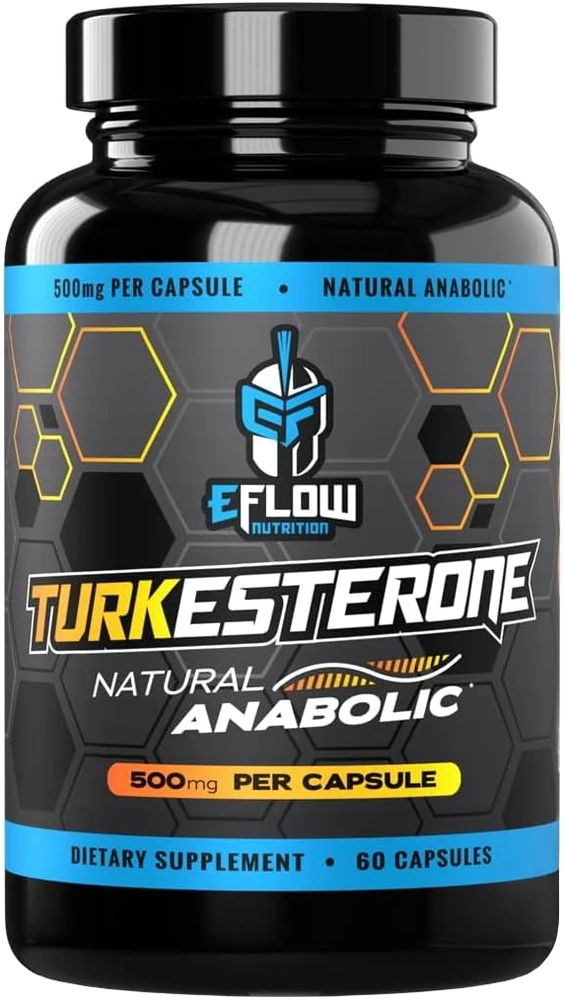 #8 of 8 · Budget cyclodextrin✓ Label verified · Supplement Facts read Sep 7, 2026
Real retailer photo, cut out. Label unedited.
Consider it. Right instincts, thin substance — a testing claim it doesn't document, on a vague label. eFlow leads with a '3rd-party tested' message and uses the cyclodextrin-complex approach — the correct instincts in a category defined by adulteration.
$30
Why It Scores 6.0 — And The Label Line Behind Each Number
Third-party verification & COA
30% of scoreThe decisive axis. eFlow does foreground a 'third-party tested' claim — the right thing to compete on in a category plagued by fakes — which earns it partial credit over picks that make no testing claim at all. But no actual batch HPLC Certificate of Analysis is posted, so the claim is asserted, not documented. A slogan you take on trust isn't a report you can verify; in a category where adulteration is the norm, that gap keeps the score modest.
- Source
- Ajuga turkestanica extract (stated on label)
- Third-party testing
- Listing states 3rd-party tested; no actual COA document shown
Standardization & dose
25% of scoreThe weakest standardization disclosure in the lineup. The listing header states no specific turkesterone percentage and no per-serving milligrams — it markets an Ajuga turkestanica extract with 'highest purity' language instead of numbers. The percentage is the figure most likely to be inflated in this category, so a listing that omits it entirely gives a buyer nothing to anchor on. The genuine Ajuga source is credited; the missing numbers are not.
- Standardization
- Ajuga turkestanica extract; 'highest purity' claimed but no specific turkesterone % stated
- Dose per serving
- 1 capsule (per-serving mg not stated in listing header)
Formulation & delivery
20% of scoreA relative strength. eFlow uses a hydroxypropyl-β-cyclodextrin inclusion complex — the most-cited turkesterone absorption approach and the same route the best-known pick (Gorilla Mind, #2) takes. Credited as a sensible bet on turkesterone's real bioavailability problem. Capped below the top because there's no trial showing the complex meaningfully improves turkesterone uptake, and here it's wrapped around an extract whose percentage isn't stated.
- Delivery
- Hydroxypropyl-β-cyclodextrin complex for absorption (stated on label)
Value per serving
15% of scoreMiddling and slightly uncertain. At roughly $30 for 60 capsules at one a day it's mid-pack on sticker price, cheaper per serving than Huge (#6) but dearer than the 120-count picks. The uncertainty is that per-serving milligrams aren't stated, so 'value' here can only be judged on capsule count and price, not on cost per verified milligram of turkesterone — which is the figure that would actually matter.
- Count
- 60 capsules (~60-day supply at 1/day)
- Price
- ~$30 — mid-pack sticker price; per-serving mg unstated, so cost-per-mg unclear
Label transparency
10% of scoreThe weakest axis and the clearest reason it ranks last. The listing header leads with 'highest purity' and a '3rd-party tested' slogan while omitting the specifics that matter: the standardization percentage and the per-serving milligrams. Marketing adjectives standing in for data is exactly the pattern this category's buyers should be most wary of, and eFlow leans on it more than any other pick here.
Label verified. Every figure read from the Supplement Facts photo, Sep 7, 2026.
Marketing Claims Vs. Reality
Third-party tested for purity and quality.
The listing foregrounds a 'third-party tested' message — the right angle in a category defined by adulteration — but no actual batch HPLC Certificate of Analysis is posted. A testing claim with no downloadable report is an assertion taken on trust, not documented verification. Credited as the correct instinct, but unverifiable as stated.
Highest purity Ajuga turkestanica extract.
'Highest purity' is marketing language, not data: the listing header states no turkesterone standardization percentage and no per-serving milligrams to support it, and no assay is posted. In a category where the percentage is the figure most likely to be inflated, an adjective without numbers can't be verified and shouldn't be relied on.
Cyclodextrin complex improves turkesterone absorption.
Hydroxypropyl-β-cyclodextrin is the most-cited turkesterone absorption approach and forms a real inclusion complex, so the rationale is sound. But there is no published trial showing the complex gets meaningfully more turkesterone into the bloodstream than a plain extract. A plausible bet on the bioavailability problem, not a demonstrated advantage.
What Our Test Actually Found
Right instinct, no documentation
eFlow leads with a third-party-tested message, which is the correct thing to emphasize in a category where independent labs keep finding products with a fraction of their claimed turkesterone. That instinct earns it partial credit over picks that make no testing claim at all. But there's no actual Certificate of Analysis posted — the claim is a slogan you take on trust, not a report you can read. In a category defined by adulteration, an undocumented testing claim is exactly the kind of reassurance that can't be relied on.
The vaguest label in the lineup
The single biggest reason eFlow ranks last is what its listing header leaves out. It markets 'highest purity' and a cyclodextrin complex but states no specific turkesterone standardization percentage and no per-serving milligrams — the two numbers a buyer needs most in this category. By contrast, Gorilla Mind (#2), Double Wood (#4) and Nutricost (#3) all plainly state a 10% standardization. Marketing adjectives standing in for the actual figures is the transparency pattern buyers should be most wary of.
A smaller brand asking for more trust
eFlow has less independent track record than the category leaders, which matters in a space where trust is the whole game. A smaller brand making a testing claim it doesn't document, on a label that omits the standardization and dose, is asking for more faith than an established name. The cyclodextrin route is sensible and the price is reasonable, so it earns a spot — but as the budget cyclodextrin option for buyers who'll take the verification on faith, not as a pick that proves what's in the bottle.
Full analysis: all pros & cons (7), buy if / skip if
- Foregrounds a third-party-tested message — the right verification angle for this category
- Uses the hydroxypropyl-β-cyclodextrin complex, the most-cited turkesterone absorption approach
- Simple single-capsule serving; straightforward men's-support positioning
- Genuine Ajuga turkestanica source stated on the label
- No specific turkesterone standardization % or per-serving mg in the listing header
- '3rd-party tested' claim has no posted COA behind it, and 'highest purity' is adjective, not data
- Smaller brand with less independent track record than the category leaders
- You want the cyclodextrin absorption approach at a lower price point
- You're willing to take a 'third-party tested' claim on trust without a posted COA
- You prefer a simple single-capsule serving
- You want a clearly stated turkesterone standardization % and per-serving mg — the header omits both
- You want documented verification — the testing claim has no COA behind it
- You prefer an established brand — eFlow has less independent track record than the leaders
eFlow leads with a '3rd-party tested' message and uses the cyclodextrin-complex approach — the correct instincts in a category defined by adulteration. But the listing header states no turkesterone percentage and no per-serving milligrams, shows no actual COA, and frames 'highest purity' as adjective rather than data, from a smaller brand with less track record. Consider it only as the budget cyclodextrin option if you'll take the testing claim on faith. Better-known picks give you the same delivery route with a clearly stated standardization.
eFlow Nutrition does two things right in principle: it leads its listing with a third-party-tested message and it uses the hydroxypropyl-β-cyclodextrin complex — the most-cited absorption approach for turkesterone. In a category whose defining failure is adulteration, leaning on verification and a sensible delivery route is the correct instinct, and it's why this pick earns a place on the list at all. But the substance behind the message is thin, and that's what drops it to #8. The listing header states no specific turkesterone standardization percentage and no per-serving milligrams, shows no actual Certificate of Analysis, and frames 'highest purity' as an adjective rather than data — all from a smaller brand with less independent track record than the category leaders. The verification angle it gestures at is precisely the one that, unposted, can't be relied on: a 'third-party tested' slogan without a downloadable batch report is a claim you take on trust, not a document you can check. It rounds out the list as the budget cyclodextrin option for buyers who'll accept the testing claim on faith — which, given how vague the label is on the numbers that matter, is a meaningful leap.
The right instincts, undocumented — the budget cyclodextrin pick for buyers who'll take it on faith.

eFlow Nutrition gestures at the two things that should matter most in this category: it leads with a third-party-tested message and it uses the hydroxypropyl-β-cyclodextrin complex, the most-cited absorption approach. Those are the correct instincts in a space defined by adulteration, and they're why it earns a place on the list. It lands at #8 because the substance behind the message is thin. The listing header states no turkesterone standardization percentage and no per-serving milligrams, shows no actual Certificate of Analysis, and leans on 'highest purity' as an adjective rather than data — all from a smaller brand with less independent track record than the leaders. The verification angle it raises is exactly the one that, unposted, can't be relied on: a testing slogan without a downloadable report is faith, not proof. As the budget cyclodextrin option it's defensible for a buyer who'll accept the claim on trust, but Gorilla Mind (#2) offers the same delivery route with a clearly stated standardization and a far longer track record. On the criterion that decides this category, eFlow gives you the message without the document.
If This Doesn’t Fit — Try These
 02
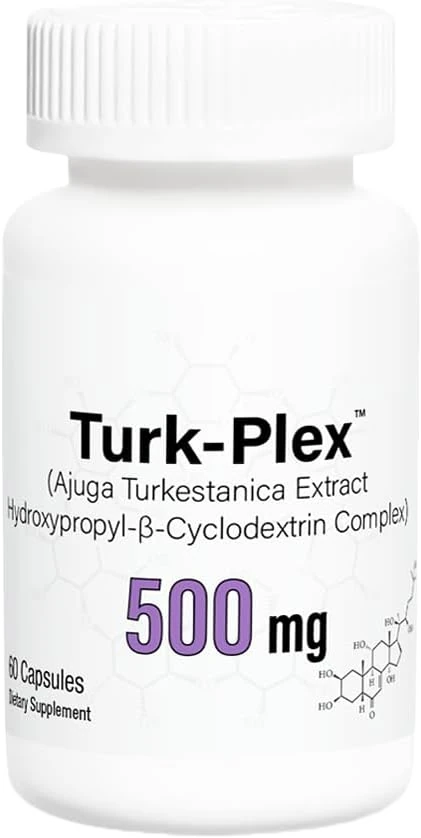
Gorilla Mind Turk-Plex
Turk-Plex is the category's reference product: a clearly labeled 10% Ajuga turkestanica extract pre-complexed with hydroxypropyl-β-cyclodextrin — the absorption approach most turkesterone marketing points to — from the best-known brand in the space.
 01
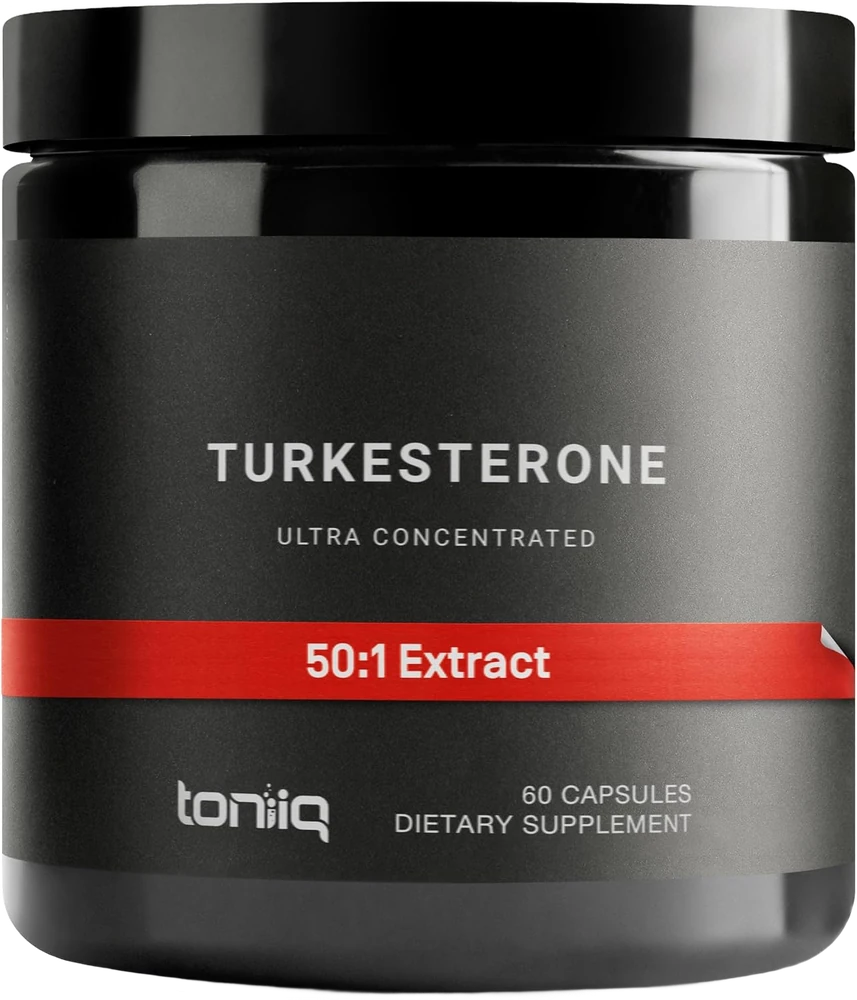
Toniiq Turkesterone 50:1
Toniiq takes the top slot because it leans hardest on the only axis that actually separates real product from fake: its listing states every batch is third-party lab tested to a minimum 20% turkesterone, the highest standardization here.
 04
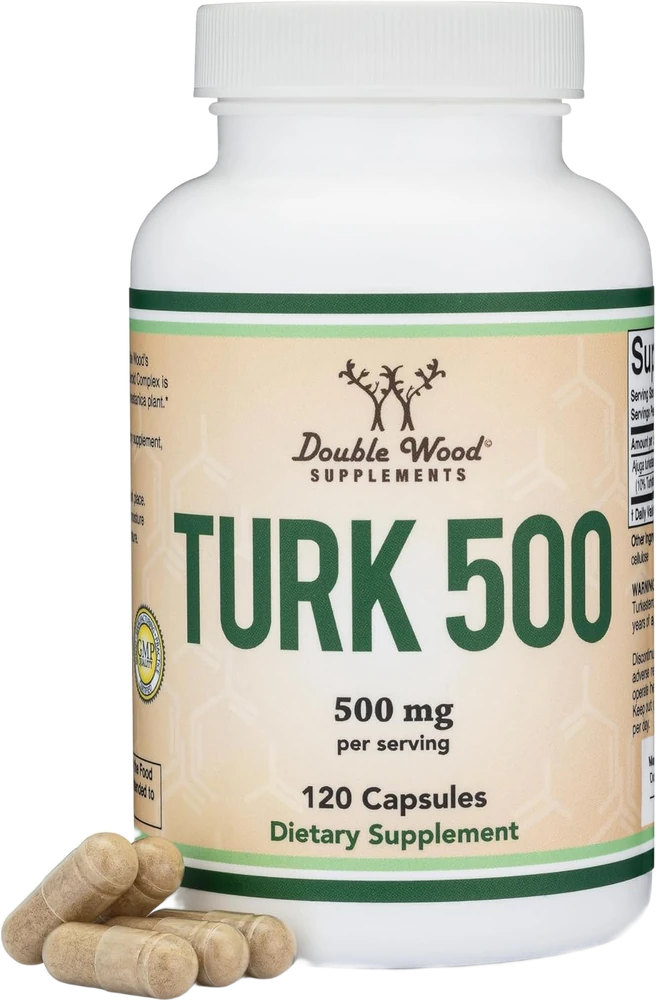
Double Wood Turkesterone
Double Wood is the pick for buyers who want the standard turkesterone done plainly and cheaply: a conservatively labeled 500 mg / 10% Ajuga turkestanica extract, 120 capsules, manufactured and tested in the USA, at the best cost-per-capsule among the 10% options.
Quick Answers
It says '3rd party tested' — isn't that the thing that matters?
It's the right instinct, but a claim isn't a document. eFlow leads its listing with a third-party-tested message, which is exactly the angle that matters in a category where independent labs keep finding products with under 1% of their claimed turkesterone. The problem is that no actual Certificate of Analysis is posted — there's no downloadable batch report you can read to confirm what's in the bottle. Across this whole category no product posts a real batch COA, so eFlow isn't unusual there; what holds it back is that it leans on the testing message while also omitting the standardization percentage and per-serving milligrams, so the claim has to be taken almost entirely on trust.
What's the turkesterone percentage and dose?
The listing header doesn't state them clearly, which is the core weakness. It markets an Ajuga turkestanica extract complexed with hydroxypropyl-β-cyclodextrin and uses 'highest purity' language, but a specific turkesterone standardization percentage and the per-serving milligrams aren't prominent figures. That's a real gap: the percentage is the number most likely to be inflated in this category, and 'highest purity' is an adjective, not data. By comparison, Gorilla Mind (#2), Double Wood (#4) and Nutricost (#3) all plainly state a 10% standardization.
Is the cyclodextrin complex worth it?
It's the most-cited absorption approach for turkesterone, so using it is sensible. Hydroxypropyl-β-cyclodextrin forms an inclusion complex intended to improve the uptake of a poorly-absorbed compound, and it's the same route the best-known pick, Gorilla Mind (#2), takes. The honest caveat is the category-wide one: there's no published trial showing the cyclodextrin complex gets meaningfully more turkesterone into your blood, and none showing the ingredient builds muscle. It's a plausible bet on the real bioavailability problem, not a proven advantage — and here it's wrapped around an extract whose percentage isn't even stated.
Is eFlow a trustworthy brand?
It's a smaller brand with less independent track record than the category leaders. That's not a verdict that it's bad — it's a statement that there's less third-party history to lean on. In a category where trust is the whole game and adulteration is the documented failure, a smaller brand making a testing claim it doesn't document is asking for more faith than an established name like Gorilla Mind or a high-volume brand like Nutricost. If brand track record matters to you, that's a reason to weight the better-known picks higher.
Should I buy this over the better-known cyclodextrin picks?
Probably only if price is the deciding factor and you'll take the testing claim on faith. eFlow rounds out the list as the budget cyclodextrin option: it uses the right absorption approach and gestures at the right verification angle, at roughly $30 for 60 capsules. But Gorilla Mind (#2) gives you the same cyclodextrin route with a clearly stated 10% standardization and a much longer track record, and Nutricost (#3) pairs a stated 10% with a testing claim at a lower cost per serving. eFlow's vague label and unposted COA put it last for a reason.
Sources & Further Reading
3 peer-reviewed sources, each linked to PubMed
- [1] Phytosteroid labeling RCT 2025 PMID 40781783 — How reliable is the labeling of a commercial phytosteroid product? A 12-week randomized double-blind training study. The most decision-relevant study in the category. A commercial phytosteroid supplement, when assayed, contained <0.1% of its labeled ecdysterone and produced no hypertrophy and no advantage over placebo. The clearest reason an undocumented 'third-party tested' claim, on a label that omits the standardization percentage, can't be relied on.
- [2] Isenmann 2019 PMID 31123801 — Ecdysteroids as non-conventional anabolic agent: performance enhancement by ecdysterone supplementation in humans. The single most-cited human study behind turkesterone hype — but it tested ecdysterone, a different compound, not turkesterone. Even there, the authors noted the supplements contained far less active than labeled and the result has not been independently replicated. Not evidence that an undocumented cyclodextrin extract builds muscle.
- [3] Guibout 2015 PMID 25953625 — The minor ecdysteroids from Ajuga turkestanica. A phytochemical characterization of Ajuga turkestanica — the source plant — isolating fourteen ecdysteroids including turkesterone via preparative HPLC and 2D-NMR. Confirms turkesterone is a genuine constituent of the plant, but it is purely an isolation/identification study and says nothing about whether a given commercial extract actually contains the claimed amount or benefits humans.
Affiliate disclosure: every Amazon link uses our Associates tag (superachieverclub-20). We earn a small commission at no cost to you; it funds independent reviews. We never accept payment to change a ranking.