
Codeage Liposomal Turkesterone 500 mg Review
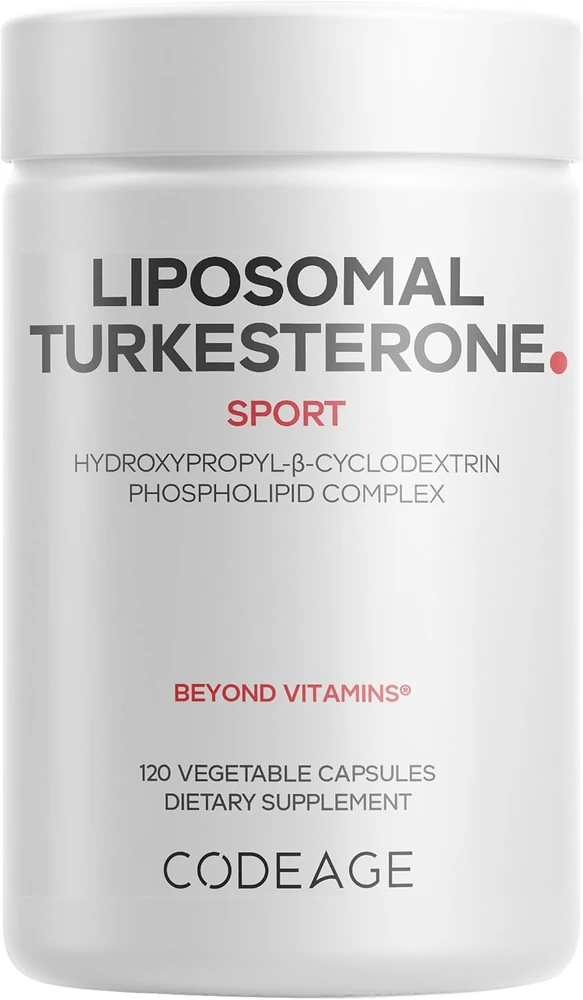 #5 of 8 · Best delivery tech✓ Label verified · Supplement Facts read Sep 7, 2026
Real retailer photo, cut out. Label unedited.
Consider it. The most elaborate delivery system — wrapped around the vaguest verification. Codeage stacks cyclodextrin with a liposomal phospholipid system, the most sophisticated delivery in the lineup, and ships a 120-count four-month supply at a low cost per day.
$35$0.29 / serving
Why It Scores 7.1 — And The Label Line Behind Each Number
Third-party verification & COA
30% of scoreThe decisive axis, and Codeage's weakest. No batch HPLC Certificate of Analysis is posted, and the listing leans on delivery technology and cGMP manufacturing rather than any independent assay of the actual turkesterone content. With no testing claim foregrounded and a vague standardization figure, there's almost nothing to verify against — the lowest verification signal among the delivery-forward picks here, and the core reason it sits at #5.
- Source
- Ajuga turkestanica extract (stated on label)
- Third-party testing
- No posted batch COA on the listing; cGMP-certified facility per listing
Standardization & dose
25% of scoreHere Codeage underperforms the standard 10% picks. It markets 500 mg of Ajuga turkestanica extract per serving but does not make a specific turkesterone percentage a prominent figure — exactly the number most likely to be inflated in this category. The source is the genuine Ajuga turkestanica, but without a stated and verified percentage you can't know how much turkesterone the 500 mg actually contains. Scored down for that vagueness.
- Standardization
- Ajuga turkestanica extract, 500 mg/serving; specific turkesterone % not prominently stated
- Dose per serving
- 500 mg Ajuga turkestanica extract (1 capsule); 120 capsules = ~4-month supply
Formulation & delivery
20% of scoreThe product's standout axis and the best score here. It combines hydroxypropyl-β-cyclodextrin — the most-cited turkesterone absorption approach — with a liposomal phospholipid complex, the most elaborate delivery system in the lineup. Credited generously as a sophisticated, dual-route absorption bet. The cap below a perfect score reflects that 'liposomal' has limited independent verification for this specific ingredient, so it remains a bet, not a proven edge.
- Delivery
- Hydroxypropyl-β-cyclodextrin plus a liposomal (phospholipid) system (stated on label)
Value per serving
15% of scoreA genuine strength. At 120 capsules taken one a day, a bottle is a four-month supply, working out to roughly $0.29 per serving — one of the better cost-per-day figures in the lineup despite the elaborate formulation. It trails only the cheapest picks (Nutricost ~$0.18, Double Wood ~$0.25). Strong value on paper, tempered by the reality that the servings are of an unverified, unstated-% extract.
- Count
- 120 capsules (~4-month supply at 1/day)
- Price
- ~$35 ≈ $0.29 per serving — strong cost per day
Label transparency
10% of scoreBelow average. The listing is generous with delivery-system detail — cyclodextrin, liposomal, vegan, non-GMO, cGMP facility — but conspicuously quiet on the actual turkesterone standardization percentage and per-serving turkesterone content. Leading with sophisticated delivery while omitting the headline potency figure is the transparency pattern this category's buyers should be most wary of.
Label verified. Every figure read from the Supplement Facts photo, Sep 7, 2026.
Marketing Claims Vs. Reality
Liposomal + cyclodextrin delivery improves turkesterone absorption.
Mechanistically plausible — both cyclodextrin complexation and liposomal encapsulation are real absorption-enhancement strategies, and turkesterone is poorly bioavailable — but there is no published trial showing Codeage's dual-delivery system gets more turkesterone into the bloodstream than a plain extract. 'Liposomal' is a strong marketing term with limited independent verification for this ingredient.
500 mg of Ajuga turkestanica extract per serving.
The 500 mg extract amount and Ajuga turkestanica source are stated, so the per-serving extract weight is disclosed. But the listing does not prominently state the turkesterone standardization percentage, so how much actual turkesterone is in that 500 mg is unstated — and unverified by any posted COA. The extract figure is real; the turkesterone content behind it is not established.
Turkesterone supports muscle building and recovery.
There is no well-conducted human trial showing turkesterone builds muscle. The anabolic case rests on rodent and in-vitro data plus one flawed human study of a different compound (ecdysterone). No delivery system, however elaborate, changes that category-wide evidence gap.
What Our Test Actually Found
The most elaborate delivery in the lineup — and the thinnest verification
Codeage's identity is its dual-delivery system: hydroxypropyl-β-cyclodextrin, the most-cited turkesterone absorption approach, stacked with a liposomal phospholipid complex. It's the most sophisticated formulation here. The trouble is that the sophistication sits on top of the weakest verification: no posted COA, no foregrounded testing claim, and a turkesterone percentage that isn't even stated prominently. Elaborate delivery is precisely how this category dresses up an unverified extract — impressive on paper, thin where it counts.
Vague on the one number that decides the category
In turkesterone, the standardization percentage is the figure most likely to be inflated or fictional — independent labs keep finding products with under 1% of their claimed turkesterone. Codeage markets 500 mg of extract and a liposomal delivery story but doesn't make the turkesterone percentage a headline figure. A listing that leads with delivery tech while staying quiet on potency is exactly the pattern buyers should treat as a red flag, and it's the main reason this pick sits behind the clearly-labeled 10% options.
Strong cost-per-day, if you can accept the unknowns
On value the four-month supply is a real plus: 120 capsules at one a day is roughly $0.29 per serving, competitive with the cheapest picks here despite the elaborate formulation. But cheap servings of an extract with an unstated percentage and no COA are still unverified servings. If the absorption argument genuinely persuades you and you want a long, low-cost-per-day supply, the value case holds; if you want to know what you're actually buying, the unknowns undercut it.
Full analysis: all pros & cons (7), buy if / skip if
- Dual absorption approach (cyclodextrin + liposomal) — the most elaborate delivery system in the lineup
- 120 capsules at 1/day is a four-month supply — strong cost-per-day (~$0.29)
- Vegan, non-GMO, gluten-free; cGMP-certified facility per the listing
- Genuine Ajuga turkestanica source stated on the label
- Listing is vague on the actual turkesterone standardization % — the number most likely to be inflated
- No posted batch COA, and delivery tech is the headline rather than verified potency
- 'Liposomal' is a strong marketing term with limited independent verification for this ingredient
- You find the absorption argument persuasive and want the most elaborate delivery system here
- You want a long 120-count, four-month supply at a low cost per day
- You value vegan, non-GMO, cGMP-facility manufacturing per the listing
- You want a clearly stated turkesterone standardization % — the listing keeps it vague
- You want verified content — no COA is posted and delivery tech is the headline, not potency
- You expect proven results — elaborate delivery doesn't change the absence of human efficacy data
Codeage stacks cyclodextrin with a liposomal phospholipid system, the most sophisticated delivery in the lineup, and ships a 120-count four-month supply at a low cost per day. But the listing is vague on the actual turkesterone percentage, posts no COA, and leans on 'liposomal' as a marketing term with little independent verification for this ingredient. Consider it if the absorption argument genuinely persuades you and you want a long, cheap-per-day supply. Skip it if you want a clear standardization and verified content.
Codeage builds the most elaborate delivery system in this lineup, and that's its whole identity: it combines hydroxypropyl-β-cyclodextrin — the most-cited turkesterone absorption approach — with a liposomal phospholipid complex, then ships a 120-count, four-month supply at one capsule a day. If you're persuaded that turkesterone's real obstacle is getting it absorbed, this is the fullest, most sophisticated bet on that problem money can buy here, and the cost-per-day is genuinely competitive. But this is also exactly where the category's pattern bites hardest. The listing foregrounds its delivery technology while staying vague on the one number that decides whether you're buying real product: the actual turkesterone standardization percentage isn't a headline figure, and no Certificate of Analysis is posted. In a category where independent labs keep finding products with a fraction of their claimed turkesterone, sophistication wrapped around an unverified, unstated extract is precisely how buyers get short-changed. 'Liposomal' is an impressive word with limited independent verification for this ingredient. Codeage lands at #5 because the delivery story is the most elaborate here, but the verification underneath it is the thinnest — and elaborate delivery never compensates for the absence of human efficacy data.
The most sophisticated delivery, wrapped around the vaguest verification.

Codeage is the delivery-tech pick, and on that axis it's the clear leader: hydroxypropyl-β-cyclodextrin stacked with a liposomal phospholipid system is the most elaborate absorption approach in the lineup, and the 120-count, four-month supply gives it a strong cost-per-day. If you genuinely believe turkesterone's main obstacle is getting it absorbed, this is the fullest bet on that idea available here. It lands at #6 because the category is decided by verification, and that's where Codeage is thinnest. The listing foregrounds its delivery system while keeping the actual turkesterone percentage vague and posts no Certificate of Analysis — the exact pattern by which buyers end up paying for sophistication wrapped around an unverified extract. 'Liposomal' is an impressive term with little independent backing for this ingredient, and no delivery system changes the fact that turkesterone has no human efficacy data. Consider it if the absorption argument persuades you and the long, cheap-per-day supply appeals; choose a clearly-standardized, testing-claiming pick if you want to know what you're actually buying.
If This Doesn’t Fit — Try These
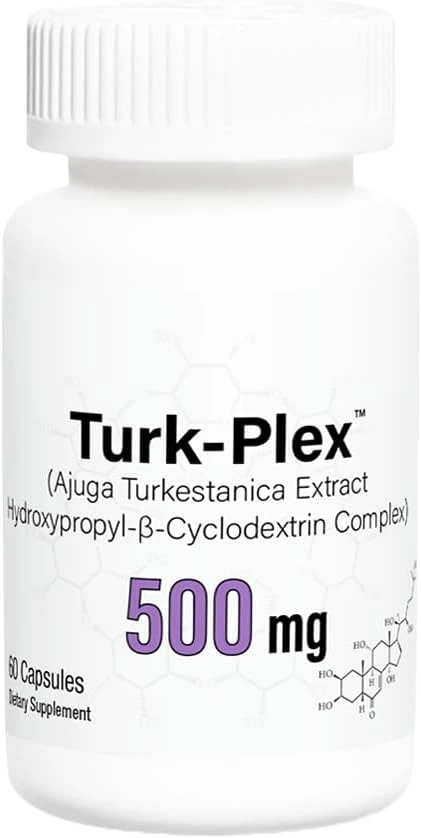 02
02Gorilla Mind Turk-Plex
Turk-Plex is the category's reference product: a clearly labeled 10% Ajuga turkestanica extract pre-complexed with hydroxypropyl-β-cyclodextrin — the absorption approach most turkesterone marketing points to — from the best-known brand in the space.
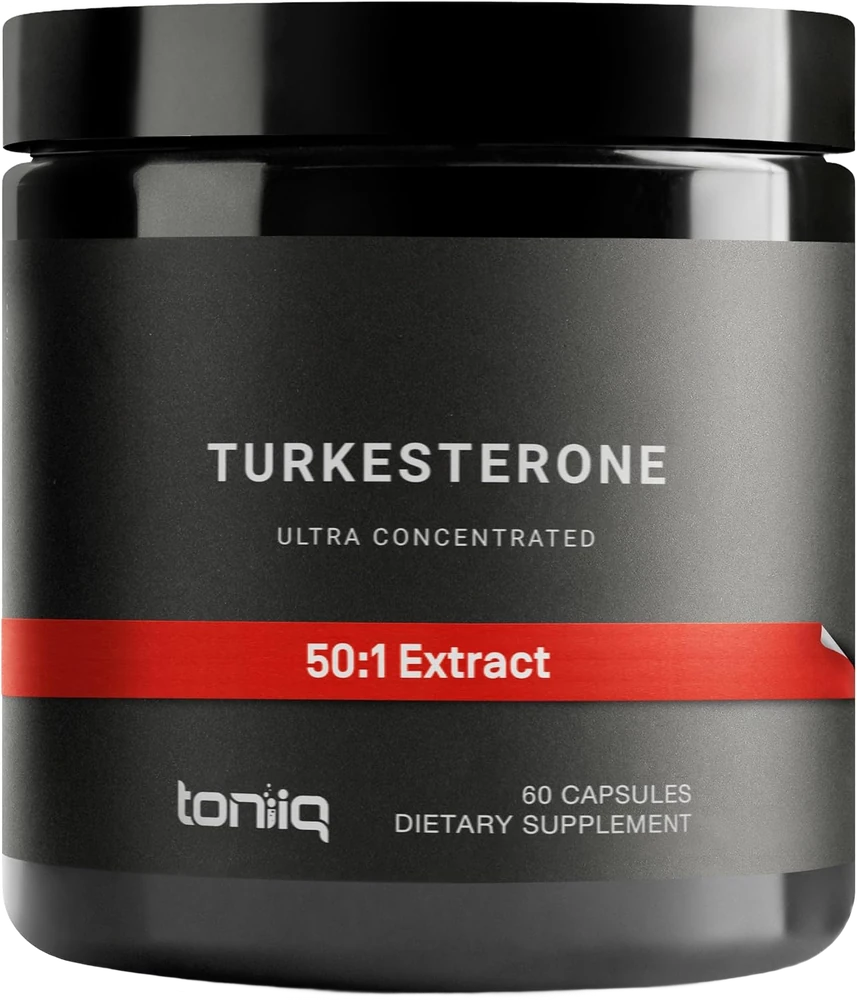 01
01Toniiq Turkesterone 50:1
Toniiq takes the top slot because it leans hardest on the only axis that actually separates real product from fake: its listing states every batch is third-party lab tested to a minimum 20% turkesterone, the highest standardization here.
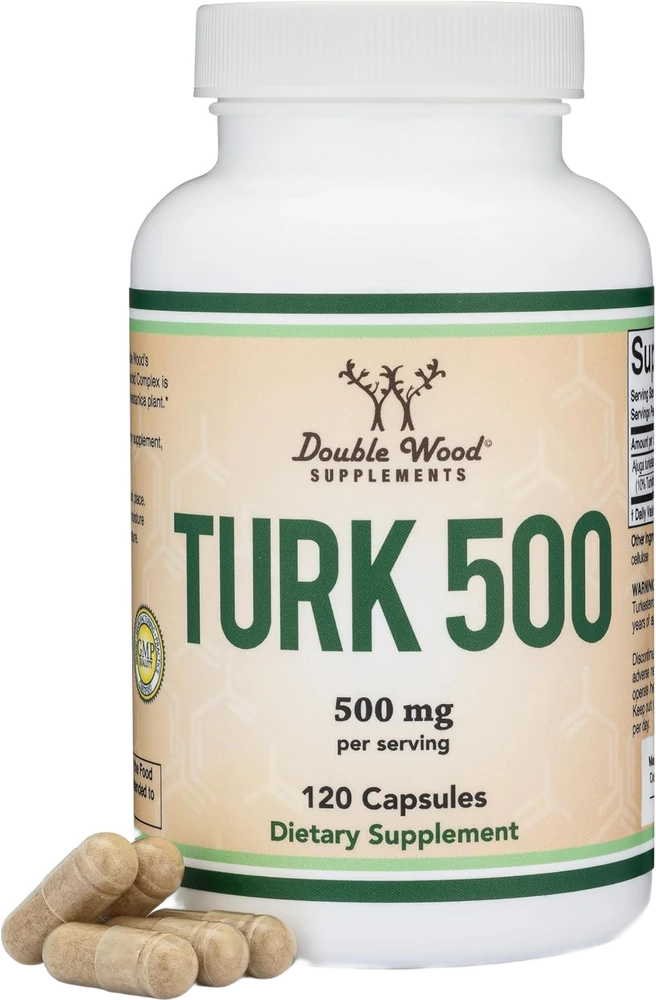 04
04Double Wood Turkesterone
Double Wood is the pick for buyers who want the standard turkesterone done plainly and cheaply: a conservatively labeled 500 mg / 10% Ajuga turkestanica extract, 120 capsules, manufactured and tested in the USA, at the best cost-per-capsule among the 10% options.
Quick Answers
What does 'liposomal' actually mean here, and does it work?
A liposome is a tiny phospholipid bubble that encapsulates a compound, in theory protecting it through digestion and improving absorption. Codeage stacks this on top of a hydroxypropyl-β-cyclodextrin complex, making it the most elaborate delivery system in our lineup. The theory is reasonable — turkesterone's bioavailability is genuinely poor. But 'liposomal' is also a heavily marketed term with limited independent verification for this specific ingredient: there's no published trial showing Codeage's liposomal turkesterone reaches the blood better than a plain extract, and none showing the ingredient builds muscle regardless of delivery. Treat the dual-delivery system as a sophisticated bet, not a proven advantage.
What's the actual turkesterone percentage?
That's the problem — the listing isn't prominent about it. It markets 500 mg of Ajuga turkestanica extract per serving and leads with the cyclodextrin-plus-liposomal delivery story, but a specific turkesterone standardization percentage isn't a headline figure. In a category where the percentage is the thing most likely to be inflated or fictional, a listing that foregrounds delivery tech while staying quiet on the standardization is exactly where buyers get short-changed. By contrast, Gorilla Mind (#2), Double Wood (#4) and Nutricost (#3) all state a clear 10%.
Is there a Certificate of Analysis?
No batch COA is posted on the listing. The page leans on delivery technology and cGMP-facility manufacturing rather than on a published independent assay of the actual turkesterone content. Across this whole category no product posts an actual batch HPLC Certificate of Analysis — but Codeage's situation is notable because it pairs that absence with a vague standardization figure, so you're trusting both that the extract is potent and that the elaborate delivery is doing something, with nothing independent confirming either.
Is the 120-count, four-month supply good value?
On cost-per-day, yes — it's a genuine strength. At 120 capsules taken one a day, a bottle lasts about four months, which works out to roughly $0.29 per serving and makes it one of the better cost-per-day options in the lineup despite the elaborate formulation. The caveat is that cheap servings of an extract with an unstated percentage and no COA are still unverified servings. Nutricost (#3) at about $0.18 is cheaper still and at least states a clear 10% and a testing claim.
Who is this pick actually for?
It's for the buyer who finds the absorption argument genuinely persuasive and wants the most elaborate delivery system available, plus a long supply at a low daily cost. If that's you, Codeage is the fullest expression of the delivery-tech approach. It's not for the buyer who prioritizes verification — the unstated turkesterone percentage and absence of a COA are real drawbacks in a category defined by adulteration. If you want a clear standardization and a stated testing claim instead, look at Toniiq (#1) or Nutricost (#3).
Sources & Further Reading
3 peer-reviewed sources, each linked to PubMed
- [1] Phytosteroid labeling RCT 2025 PMID 40781783 — How reliable is the labeling of a commercial phytosteroid product? A 12-week randomized double-blind training study. The most decision-relevant study in the category. A commercial phytosteroid supplement, when assayed, contained <0.1% of its labeled ecdysterone and produced no hypertrophy and no advantage over placebo. The clearest reason a delivery-forward listing that stays vague on its standardization percentage and posts no COA warrants real caution.
- [2] Parr 2015 PMID 26060342 — Ecdysteroids: a novel class of anabolic agents?. A review by leading ecdysteroid researchers weighing whether ecdysteroids (including turkesterone) act as anabolic agents. It compiles supportive animal and in-vitro data while making clear that rigorous human efficacy evidence was lacking — the balanced context for why even the most elaborate delivery system can't substitute for proof.
- [3] Parr 2014 PMID 24974955 — Estrogen receptor beta is involved in skeletal muscle hypertrophy induced by the phytoecdysteroid ecdysterone. A mechanistic rodent/in-vitro study: ecdysterone induced hypertrophy of rat soleus fibers and increased C2C12 myotube diameter via estrogen-receptor-beta signaling. The kind of animal and cell data the 'natural anabolic' claim is built on — biologically suggestive, conducted on ecdysterone in rats and cells, not turkesterone in humans, and no substitute for clinical efficacy data.
Affiliate disclosure: every Amazon link uses our Associates tag (superachieverclub-20). We earn a small commission at no cost to you; it funds independent reviews. We never accept payment to change a ranking.