
Nutricost Turkesterone 600 mg Review
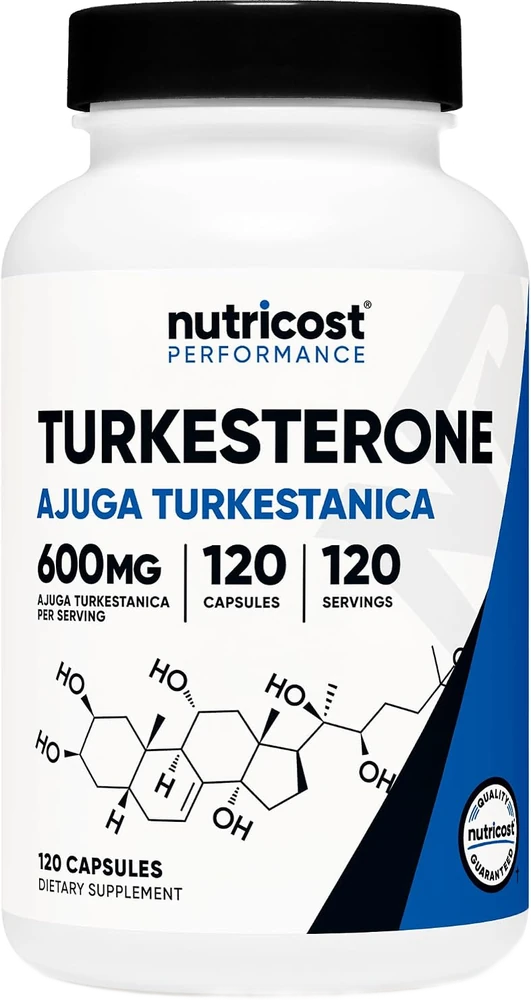 #3 of 8 · Best value✓ Label verified · Supplement Facts read Sep 7, 2026
Real retailer photo, cut out. Label unedited.
Consider it. The cheapest stated-tested extract per serving — sensible value, same evidence caveat. Nutricost is 600 mg of 10% Ajuga turkestanica extract at 120 count for about $0.18 a serving — the lowest cost per daily serving in the lineup — from a brand stating ISO-accredited third-party testing and GMP/FDA-registered manufacturing.
$22$0.18 / serving
Why It Scores 7.9 — And The Label Line Behind Each Number
Third-party verification & COA
30% of scoreBetter than most here on the decisive axis, but still not documented. The brand states third-party, ISO-accredited testing and GMP-compliant, FDA-registered manufacturing — a more specific assertion than Gorilla Mind (#2) or Double Wood (#4) make — yet no downloadable batch HPLC Certificate of Analysis for turkesterone is posted. So it earns more credit than a silent or vaguer competitor, while still falling short of the posted COA that would actually verify content in a category defined by adulteration.
- Source
- Ajuga turkestanica extract (stated on label)
- COA / testing
- Brand states third-party (ISO-accredited) testing; no posted batch HPLC COA on listing
Standardization & dose
25% of scoreClear and slightly above the norm: a 10% turkesterone standardization on a 600 mg Ajuga turkestanica extract, implying ~60 mg turkesterone per capsule — more per capsule than the usual 500 mg / 10% products. Scored as a label claim, since no assay confirms it, but the higher dose at a clearly stated standardization is a legitimate value point.
- Standardization
- 10% turkesterone (label) = ~60 mg turkesterone per 600 mg capsule
- Dose per serving
- 600 mg extract (1 capsule)
Formulation & delivery
20% of scoreBasic. A simple single-ingredient extract with no hydroxypropyl-β-cyclodextrin complex, liposomal system or softgel — so nothing addresses turkesterone's real bioavailability problem, unlike Gorilla Mind (#2). Consistent with the no-frills value positioning, but a clear point against it on this axis.
- Delivery
- No cyclodextrin complex — raw extract only
Value per serving
15% of scoreThe best in the lineup. At around $22 for 120 capsules of 600 mg / 10% extract (~$0.18 a serving), it's the lowest cost per daily serving here — and it carries the higher 600 mg dose and a stated testing claim while getting there. On pure cost-per-serving, nothing else in the category beats it, which is the heart of its case.
- Count
- 120 capsules
- Price
- ≈ $22 (~$0.18 per serving)
Label transparency
10% of scoreStrong. The listing clearly states the 600 mg extract, the 10% turkesterone standardization and the Ajuga turkestanica source, on a simple single-ingredient formula (vegetarian, non-GMO, gluten-free) with no proprietary blend or 'highest purity' hand-waving. The missing element is the COA that would turn its disclosure and testing claim into documented verification.
- More Specs
- Other
- Vegetarian, non-GMO, gluten-free; GMP-compliant, FDA-registered manufacturing (per listing)
Label verified. Every figure read from the Supplement Facts photo, Sep 7, 2026.
Marketing Claims Vs. Reality
Third-party (ISO-accredited) tested, GMP-compliant and FDA-registered.
This is a more specific testing assertion than most competitors make, and the GMP/FDA-registered manufacturing context is reassuring — so it earns real credit. But it stops at an assertion: no downloadable batch HPLC Certificate of Analysis for turkesterone is posted, so the actual content isn't independently documented. Partial, not verified; a posted COA would close the gap.
600 mg per capsule, standardized to 10% turkesterone.
The 600 mg dose and 10% standardization are clearly stated, and the higher dose is a genuine value advantage on cost-per-milligram. It's marked partial because, with no posted COA, the 10% remains a label claim in a category where assays routinely come in low — a bigger extract number only means more turkesterone if the standardization is real.
Supports muscle growth and strength as a natural anabolic.
No human efficacy evidence exists for turkesterone. The anabolic framing rests on rodent and in-vitro data plus one flawed ecdysterone study (a different compound); a 2025 RCT that assayed a commercial phytosteroid found <0.1% of the labeled active and no benefit over placebo. Not verified for Nutricost or for the ingredient, regardless of the dose.
What Our Test Actually Found
The lowest cost per serving in the category
Nutricost's case is value, and it's a strong one: 600 mg of 10% Ajuga turkestanica extract at 120 count for about $22 is roughly $0.18 a serving — the cheapest daily dose in the lineup — and it gets there while carrying a higher-than-usual dose and an explicit testing claim. For a budget buyer who's decided to try turkesterone, that combination of price, dose and a stated assay is hard to argue with on cost-effectiveness alone.
A more specific testing claim than most — but still no COA
Where Gorilla Mind (#2) makes no testing claim and Double Wood (#4) says 'tested in the USA,' Nutricost states third-party, ISO-accredited testing plus GMP/FDA-registered manufacturing — a notably more specific assertion. That earns it the edge on verification among the value picks. The hard limit is unchanged: it's an assertion, not a posted batch COA, so in a category defined by adulteration the actual content of the bottle is still taken on trust.
Read the 600 mg number carefully
The higher 600 mg dose is a real advantage on cost-per-milligram, but it's easy to over-read. More extract only means more turkesterone if the 10% standardization is genuine, and without a posted COA that figure is a label claim. So treat the 600 mg as a value lever — more stated extract per dollar — rather than as proof you're getting more verified active than a 500 mg product. The distinction is exactly the one this category punishes buyers for missing.
Plain extract, same evidence floor
Nutricost uses no cyclodextrin complex or other absorption aid, so it makes no attempt at turkesterone's bioavailability problem — a reasonable trade for its price, but a gap versus Gorilla Mind (#2). And like everything in the category, it rests on an ingredient with no human efficacy evidence: no well-conducted trial shows turkesterone builds muscle. Buy it as the value option in an unproven category, with expectations set low — not as a product demonstrated to work.
Full analysis: all pros & cons (7), buy if / skip if
- Lowest cost per daily serving in the lineup (~$0.18) — the clear value pick
- Higher 600 mg dose at a clearly stated 10% standardization
- States third-party (ISO-accredited) testing and GMP-compliant, FDA-registered manufacturing
- Vegetarian, non-GMO, gluten-free; simple single-ingredient formula
- An actual batch HPLC COA is not posted — testing is asserted, not documented
- No cyclodextrin or other absorption complex; raw extract only
- No human evidence that turkesterone builds muscle, regardless of the 600 mg dose
- You want the lowest cost per daily serving here for a stated-tested extract
- You want a higher 600 mg dose at a 10% standardization
- You value an explicit (ISO-accredited) third-party-testing claim plus GMP/FDA-registered manufacturing
- You accept turkesterone is unproven and you're buying on value, not evidence
- You require a downloadable batch COA — Nutricost asserts testing but posts no document
- You want a cyclodextrin or other absorption complex — see Gorilla Mind (#2)
- You want any human efficacy evidence — none exists for turkesterone
Nutricost is 600 mg of 10% Ajuga turkestanica extract at 120 count for about $0.18 a serving — the lowest cost per daily serving in the lineup — from a brand stating ISO-accredited third-party testing and GMP/FDA-registered manufacturing. A higher dose plus a testing claim at the best price is a smart budget combination. The limits are the category's: no posted batch COA, no absorption complex, and no human evidence the ingredient works. Consider it if cost-per-serving is your priority and you still want a stated testing assertion.
Nutricost is the value pick of the turkesterone lineup, and the math is straightforward: 600 mg of 10% Ajuga turkestanica extract per capsule at 120 count works out to roughly $0.18 a serving — the lowest cost per daily serving here — from a high-volume brand that states ISO-accredited third-party testing and GMP/FDA-registered manufacturing. For a budget buyer, a higher-than-usual dose paired with an explicit testing claim at the lowest price in the category is a genuinely sensible combination. The caveats are the ones that apply to everything in this category, stated plainly. The testing claim is asserted on the listing, not backed by a downloadable batch Certificate of Analysis — so it's more than most products offer, but still short of documented verification. There's no cyclodextrin or other absorption complex; it's a raw single-ingredient extract. And the bigger 600 mg number doesn't change the fact that no human trial supports turkesterone for muscle. Nutricost lands at #3 as the cheapest stated-tested option — the right call for value, with the same evidence caveat as the rest.
The value pick — cheapest stated-tested extract, same evidence caveat.

Nutricost is the budget call in turkesterone, and a sensible one: 600 mg of 10% Ajuga turkestanica extract at 120 count is the lowest cost per daily serving in the lineup (~$0.18), and it carries a higher-than-usual dose and a more specific testing claim — ISO-accredited third-party testing, GMP/FDA-registered manufacturing — than most of its peers. For a value-focused buyer who still wants a brand that asserts testing, that combination is the heart of the recommendation. The caveats are the category's universal ones, stated honestly. The testing is asserted on the listing, not a downloadable batch COA, so it's more than most offer but still short of documented verification. There's no absorption complex, and the bigger 600 mg number only means more turkesterone if the unverified 10% is real. Above all, no human trial supports the ingredient for muscle. If your priority is cost-per-serving and you'll take a specific testing claim over a higher claimed percentage or delivery tech, Nutricost is the pick. If you need a posted COA, a cyclodextrin complex, or actual efficacy evidence, nothing in this category — Nutricost included — can provide it.
If This Doesn’t Fit — Try These
 01
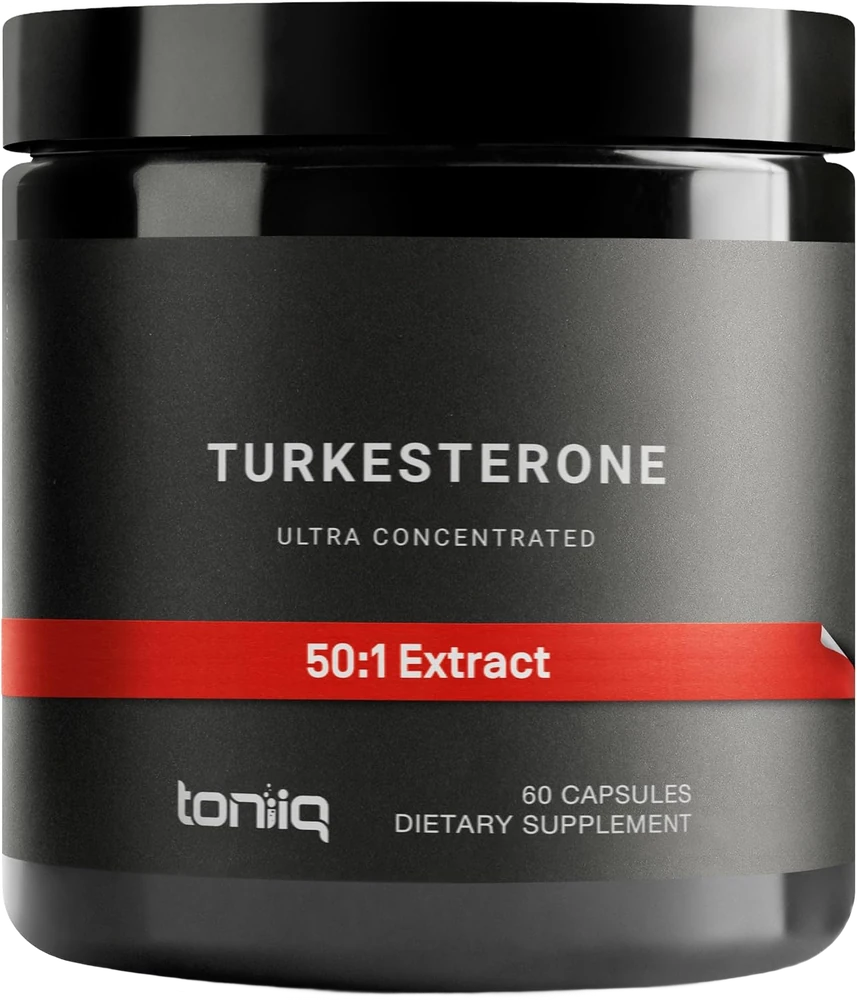
01Toniiq Turkesterone 50:1
Toniiq takes the top slot because it leans hardest on the only axis that actually separates real product from fake: its listing states every batch is third-party lab tested to a minimum 20% turkesterone, the highest standardization here.
03Nutricost Turkesterone 600 mg
Nutricost is the value pick: 600 mg of 10% Ajuga turkestanica extract per capsule at 120 count works out to the lowest cost per daily serving here, from a high-volume brand that states ISO-accredited third-party testing and GMP/FDA-registered manufacturing.
 02
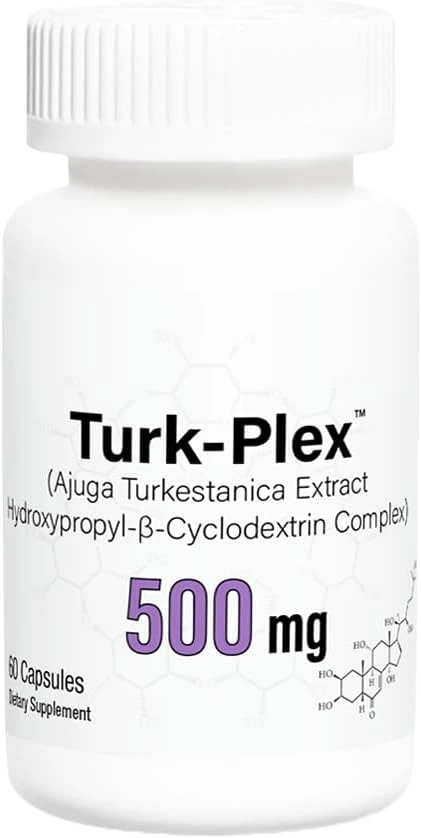
02Gorilla Mind Turk-Plex
Turk-Plex is the category's reference product: a clearly labeled 10% Ajuga turkestanica extract pre-complexed with hydroxypropyl-β-cyclodextrin — the absorption approach most turkesterone marketing points to — from the best-known brand in the space.
Quick Answers
Is Nutricost turkesterone third-party tested?
The brand states third-party, ISO-accredited testing and GMP-compliant, FDA-registered manufacturing — which is a more specific testing assertion than most products here make, and a point in its favor. But it stops at an assertion: no downloadable batch HPLC Certificate of Analysis for turkesterone is posted on the listing, so the actual content of your bottle is still taken on trust. In a category where independent labs keep finding products under 1% of label, that distinction matters. Nutricost says the right things about testing; it just doesn't show the document that would prove them.
Why is it the value pick?
At about $22 for 120 capsules of 600 mg / 10% extract, Nutricost works out to roughly $0.18 a serving — the lowest cost per daily serving in the entire lineup. It pairs that price with a higher 600 mg dose (versus the usual 500 mg) and an explicit third-party-testing claim, which is an unusually sensible combination for a budget buyer. If absolute cost-per-serving is your priority and you still want a brand that asserts testing, this is the pick.
Does the 600 mg dose mean more turkesterone than 500 mg products?
On paper, yes: 600 mg of a 10%-standardized extract implies ~60 mg of turkesterone per capsule, versus ~50 mg from a 500 mg / 10% product. But be careful with that logic — a bigger extract number only translates to more turkesterone if the standardization is real, and without a posted COA the 10% is a label claim. So the 600 mg is a genuine value advantage on cost-per-milligram, but it is not, on its own, evidence that you're getting more verified active.
Does it use a cyclodextrin or absorption complex?
No. Nutricost is a simple single-ingredient extract with no hydroxypropyl-β-cyclodextrin complex, liposomal system or softgel. Turkesterone has a real bioavailability problem, and a cyclodextrin complex — as Gorilla Mind (#2) uses — is the most-cited attempt to address it, so the raw extract is a point against Nutricost on formulation. It competes on price and a testing claim, not on delivery technology.
Will it build muscle?
There's no good human evidence that any turkesterone product builds muscle, Nutricost included. The 'natural anabolic' claim rests on rodent and in-vitro data plus one flawed human study on ecdysterone — a different compound — whose supplement was later shown to be under-dosed. A 2025 randomized trial that assayed a commercial phytosteroid product found under 0.1% of the labeled active and no benefit over placebo. The lowest price and a testing claim are real reasons to prefer Nutricost; proof the ingredient works is not on the table for anyone.
Sources & Further Reading
3 peer-reviewed sources, each linked to PubMed
- [1] Phytosteroid labeling RCT 2025 PMID 40781783 — How reliable is the labeling of a commercial phytosteroid product? A 12-week randomized double-blind training study. Researchers assayed a commercial phytosteroid supplement and found the actual ecdysterone content was <0.1% of the label claim, with no hypertrophy in a cell model and no advantage over placebo in human training groups. Hard evidence that label numbers in this category can be almost entirely fictional — which is why Nutricost's higher 600 mg dose and stated testing, lacking a posted COA, remain claims rather than verified content.
- [2] Isenmann 2019 PMID 31123801 — Ecdysteroids as non-conventional anabolic agent: performance enhancement by ecdysterone supplementation in humans. The single most-cited human study behind turkesterone hype — but it tested ecdysterone, a different compound. Ecdysterone-dosed groups showed greater muscle-mass gains over 10 weeks, yet the authors noted the supplements contained far less ecdysterone than labeled, dosing was uncertain, and the result has not been independently replicated. Not evidence that turkesterone supplements build muscle.
- [3] Parr 2015 PMID 26060342 — Ecdysteroids: a novel class of anabolic agents?. A review by leading ecdysteroid researchers weighing whether ecdysteroids (including turkesterone) act as anabolic agents. It compiles supportive animal and in-vitro data and notes their marketing as natural anabolics, while making clear that rigorous human efficacy evidence was lacking — a balanced read of why the category is plausible-but-unproven, regardless of dose or price.
Affiliate disclosure: every Amazon link uses our Associates tag (superachieverclub-20). We earn a small commission at no cost to you; it funds independent reviews. We never accept payment to change a ranking.